8 Quotes From “Transforming Grace”

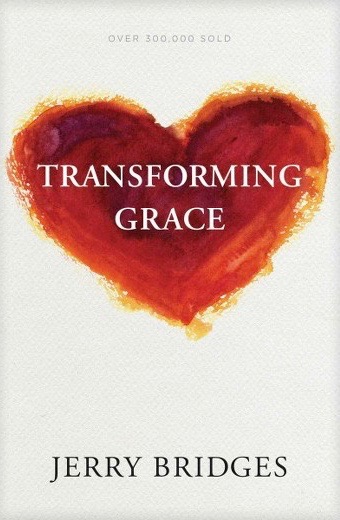
Jerry Bridges’ book Transforming Grace is an amazing read! Check out my book review by clicking here.

“One of the best-kept secrets among Christians today is this: Jesus paid it all. I mean all. He not only purchased your forgiveness of sins and your ticket to heaven, He purchased every blessing and every answer to prayer you will ever receive. Every one of them—no exceptions.

“Why is this such a well-kept secret? For one thing, we are afraid of this truth. We are afraid to tell even ourselves that we don’t have to work anymore, the work is all done. We are afraid that if we really believe this, we will slack off in our Christian duties. But the deeper core issue is that we don’t really believe we are still bankrupt. Having come into God’s kingdom by grace alone solely on the merit of Another, we’re now trying to pay our own way by our performance. We declared only temporary bankruptcy; we are now trying to live by good works rather than by grace.”

“To be justified means more than to be declared ‘not guilty.’ It actually means to be declared righteous before God.”

“God not only blots our sins from His record, He also remembers them no more. This expression means He no longer holds them against us. The blotting out of our transgressions is a legal act. It is an official pardon from the Supreme Governor. The remembering them no more is a relational act. It is the giving up by an injured party of all sense of being offended or injured. It is a promise never to bring up, either to Himself or to you, your sins.”

“God’s reward is out of all proportion to our service and sacrifice.”

“God often does bless people who seem to us to be quite unworthy. But that is what grace is all about, because we are all unworthy.”

“We all want grace, but we cannot enjoy grace when there is an attitude of comparing.”

“The Bible is full of God’s promises to provide for us spiritually and materially, to never forsake us, to give us peace in times of difficult circumstances, to cause all circumstances to work together for our good, and finally to bring us safely home to glory. Not one of those promises is dependent upon our performance. They are all dependent on the grace of God given to us through Jesus Christ.”

“Our love for God, expressed through obedience to Him, is to be a response to His love, not a means of trying to earn it.”

Transforming Grace (book review)

Not too long ago I read that the song “Amazing Grace” was the best-known song in the entire world. People who know Jesus as their Savior certainly can attest to how amazing grace is. But what about after someone becomes a Christian? What happens with grace then? Jerry Bridges dives into this topic with his eye-opening look at Transforming Grace.

In the opening lines of the preface, Bridges states, “The Bible teaches we are not only saved by grace, but we also live by grace every day of our lives.” This is a concept that many Christians miss, and as a result feel like they are living their lives on what Bridges calls “the performance treadmill.” In other words, far too many Christians mistakenly think that God’s grace saved them, but now it will be their own righteous works that will keep them saved.

In 13 chapters, Bridges dismantles the “performance” mindset and helps Christians see the freedom and joy that come from a proper understanding of how grace transforms and empowers our lives every day.

To help transfer Bridges’ lessons into everyday application, I also highly recommend getting a couple of friends together for this journey. Not only read Transforming Grace together, but then take some time to work through the discussion guides for each chapter. These guides will give you some Scriptures to ponder, and some discussion-starting questions to talk about with your friends. This time will help you go from learner-to-liver with the concepts of transforming grace.

I am a NavPress book reviewer.

10 Quotes From “Longing For A Changed World”

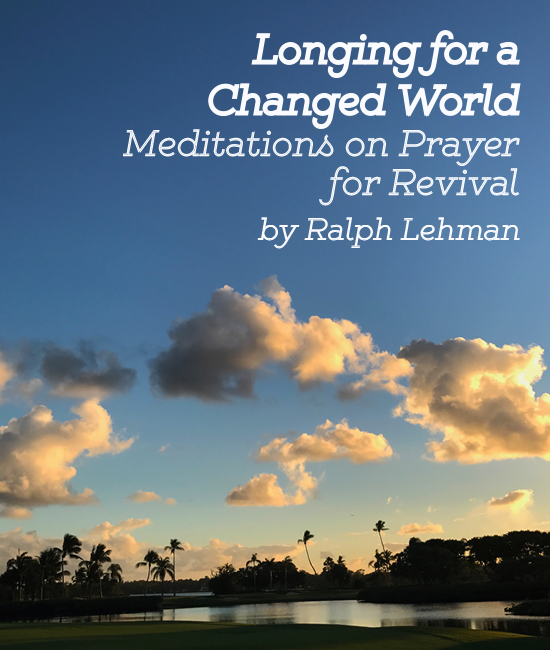
Longing For A Changed World will help you (re)establish a prayer focus that could be the beginning of the next great revival! You can check out my full book review here, and then enjoy some of the quotes that especially caught my attention.

“Our age, severed from its Biblical moorings, is neglecting history’s lessons.”

“Another characteristic of today’s Church is a lack of prayer. Instead of communing and listening to God, lifting our needs and concerns to the Lord, we rely on our own abilities and in technology to compensate for any inadequacy we may have. Thus armed, we are confident in taking on the challenges of our day, even those spiritual in nature.”

“True revival impacts all aspects of life, even to the concerns of the last, the least, and the lost. A people who uphold justice and righteousness and seeks to alleviate the plight of the poor and needy, are a people truly gripped with revival. For when we are consumed with God’s holiness and how blessed we are by His grace, we are compelled to take this Gospel to all aspects of our culture.”

“Our propensity is to focus on being doers—to be on the battlefield, sword in hand, fighting for the Kingdom and for righteousness. But as in the battle with the Amalekites, battles are won by God’s people lifting up their arms to the Lord.”

“I have been more focused on what I wanted to say in my prayer than on Whom I am approaching in prayer. This often leads to prayer that amounts to a tallying-up of my wants, without proper regard for the One into Whose presence I have come.”

“Our prayers as a whole, and prayers for revival, should reflect our poverty and powerlessness before a God who is forgiving and gracious.”

“Pray for boldness in the church—boldness to proclaim God’s Word and to firmly stand on it. Pray for boldness to confront sin yet boldness accompanied with humility as the church is aware (painfully aware) of its own sinfulness. And pray for boldness to present Christ as the Way and the Truth.”

“Praying expectantly requires us to pray to God in line with His Word and His promises. Thus a decline in biblical literacy has resulted in our prayer life wavering as well.”

“Our pleas for revival will go unheeded until we stand up for God’s Word, forsake the idols of our age, shake off the trappings of our secular and materialistic age, and embrace God’s truth.”

“As we pray for revival—for changed lives, renewed churches, and a transformed culture—our tendency might be to enlist the charismatic, the eloquent, and those who project confidence and success, traits that so readily appeal to us. But God’s manner of bringing revival has often been through ordinary people who endure affliction, hardship, and suffering, much as he did with Paul and Timothy and the Apostles.”

I’ll be sharing more resourced and thoughts from this book soon, so stay tuned!

Saturday In The Psalms—The Glory Due God’s Name

Give unto the Lord the glory due His name…. (Psalm 29)


How in the world can I do that?! How can a mere mortal possibly give the All-Glorious, All-Powerful God glory that is equal to His majesty?

Verses 3-9 try to capture God’s power—

  • His voice thunders in the powerful crash of ocean waves
  • His voice cracks like the lightning that snaps the mighty cedar trees as though they are mere twigs
  • His voice splits the earth like a volcano rips through rock
  • His voice rumbles and shakes the tectonic plates of the earth like an earthquake

How do I give this God the glory due His name? How can my voice of praise even be heard above the voice of His majestic voice?

How? By simply worshiping the Lord in the beauty of holiness.

That means I come into His presence in the holiness of Christ—I remain clothed in His righteousness—then I can stand in God’s presence and join my voice with the voices of the mighty ones (v.1), with all His people (v. 11).

I can stand unafraid and unashamed in the presence of the King of the Universe and declare, “How beautiful and powerful and majestic and magnificent and loving You are!”

And He hears me.

And the glory due His name that comes from my lips causes all the creatures in His temple to exclaim, “Glory!” (v. 9)

I can give God all the glory due His majestic name by simply realizing that I am only in His presence because He wants me there, and has made the way possible for me to be there through His Son Jesus.

7 Quotes On Hungering & Thirsting From “The Blessing Of Humility”

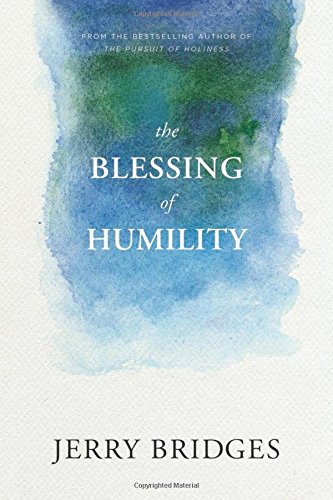
The Blessing Of HumilityAs I stated in my review of Jerry Bridges’ book The Blessing Of Humility, reading through these thoughts slowly—Beatitude by Beatitude—would bring about the most life-changing impact. In that spirit, I will be sharing some noteworthy quotes one Beatitude at a time. Here are some quotes on blessed are those who hunger and thirst for righteousness (Matthew 5:6)…

“To hunger and thirst for righteousness, then, indicates a strong overwhelming desire for righteousness. … Righteousness denotes the state of being right. Biblically, it means perfect according to God’s law in every way: thought, word, deed, and even motive.”

“At the moment we trusted Christ as Savior, we were justified—declared by God to be righteous. You will never be more or less righteous before God any day of your life than you were the moment you trusted Christ as your Savior. This raises another question: Why should I hunger and thirst for that which I already have? The answer is that the more we grow and mature in the Christian life, the more sensitive we become to the sin and failure we see in our lives. It is not that we necessarily sin more but rather that we become more aware of and mourn over the sin that is already there. As that happens, we hunger more and more after the righteousness we have only in Christ.”

“There is a legitimate sense in which we are to hunger and thirst for that perfect righteousness we already have in Christ. This should be a continual daily attitude of all growing Christians because we continue to sin every day.”

“There is a second righteousness that we should hunger and thirst for: the experiential righteousness we are to pursue every day. God has inextricably linked together the righteousness we have in Christ and the righteousness we should pursue. He does not give one without the other. Therefore, whoever hungers and thirsts after the righteousness we have in Christ will also hunger and thirst to be righteous in his or her daily experience.” [See 2 Timothy 2:2; 1 Peter 2:24; 1 John 3:10]

“It is clear from Scripture, then, that we are to pursue an experiential righteousness. But what will cause us to hunger and thirst for it? The answer is twofold. First, as we have already observed, the new nature is inclined by the Holy Spirit to pursue righteousness. … The second motivation is gratitude for the righteousness we have in Christ.”

“There will be no growth in experiential righteousness apart from a regular intake of the Word of God.”

“We are absolutely dependent on the Holy Spirit to work in us Himself and to enable us to work. We cannot make one inch of progress toward experiential righteousness without His divine enablement.”

I have previously shared quotes on:

Quotes on the remaining Beatitudes will be posted next week so stay tuned. Even better: subscribe to my blog, and you’ll receive the new quotes directly in your email inbox.

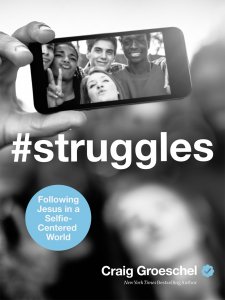
11 More Quotes From “#struggles”

#strugglesCraig Groeschel nailed the tension between technology and relationships in his timely book #struggles. He doesn’t advocate getting rid of technology, but he does make a great case for not allowing technology to diminish our flesh-and-blood relationships. You can read my review of #struggles by clicking here. Below are some more quotes that caught my eye from this book.

“The highest percentage of consumers of pornography our children aged twelve to seventeen.”

“We have access to many opportunities online that—without accountability—can turn technological blessings into curses.”

“Over time and with repeated use, technology is eroding both our moral beliefs and our commitment to acting on what we believe. According to one study, ‘Roughly two-thirds (67 percent) of young adult men and one-half (49 percent) of young adult women now believe that viewing pornography is acceptable.’ … Times have changed. But that doesn’t mean morality should.” 

“If you want to live in a way that honors our Savior—if you want to follow Jesus in a sin-saturated, selfie-centered world—then you will have to be different. … Our convictions must be guided by God’s timeless principles, not by the ever-eroding popular opinion on whatever happens to be acceptable now.”

“Most people I know you don’t plan to ruin their lives. I don’t know anyone who thinks, ‘If I can connect with an old boyfriend on Facebook, I can totally wreck my life. I can almost guarantee an ugly divorce full of expensive lawyers helping us fight over custody rights for the kids. I can devastate my husband and drop a nuclear bomb of pain into my kids’ lives. And I can spend the next years of my life trying to forgive myself, rebuild my life, and regain my name.’ No one plans like that, but these things happen every day. Same with pornography. I don’t know a single man who wanted to crush the wife he loves when she discovered his ‘little secret.’ But one glance followed by another click often leads to an addiction that seems impossible to overcome.”

“When you think about it, no one stumbles into righteousness. People fall into sin and every day. But no one just falls into holiness. It requires making deliberate, prayerful choices and walking an intentional path.”

“Here’s what many people miss: when we misuse technology, we’re robbing ourselves of the peace we so desperately crave, because even the momentary escape is followed by waves of intense guilt. We want to numb the pain, but on the other side of our binge, the pain is still there, only worse. We love the momentary distraction, but then reality screams at us and our responsibilities pile up. We love the thrill of the lust, but the fear of getting caught haunts us and robs us of sleep and peace. Like a person dying of thirst who gulps salt water, that which is supposed to satisfy only intensifies our need. So life goes on as usual. More stress. More anxiety. More worries. And less peace.”

“Now is a great time to be brutally honest. Are you addicted to something online? Looking lustfully? Spending uncontrollably? Surfing endlessly? Playing continually? Gambling consistently? Scrolling incessantly?”

“If you are checking multiple times a day to see what people are saying about you, let’s call that what it is: idolatry. If your identity comes more from who follows you, who Likes you, what they say and what they think about you rather than who God says you are, it’s time to take this issue to God.”

“When our minds are idle, we’re not thinking about anything meaningful, and when we’re not intentionally living, it can be so easy to shift into neutral. When we don’t have a specific destination in mind, any road will do. And if our time and our resources aren’t precious, if we’re not doing anything important, it can be so easy to just pick up our phone, unlock the screen, and wonder aimlessly through cyberspace, wasting our time and our thoughts.”

“Maybe it’s time to power down and take a cyber Sabbath. Maybe it’s time to remember what life is like without your phone, tablet, or laptop. Maybe it’s time for your soul to rest.”

You can check out the other quotes I shared from #struggles by clicking here.

14 Quotes From “Our Brilliant Heritage”

Our Brilliant HeritageAs I said in my book review of Oswald Chambers’ book Our Brilliant Heritage, it’s hard to come up with enough good words to say about this man’s insights! You can read my review of this book by clicking here, and check out my first batch of quotes below.

“The writer to the Hebrews does not tell us to imitate Jesus when we are tempted; he says—‘Come to Jesus, and He will succor [help] you in the nick of time.’ That is, all His perfect overcoming of temptation is ours in Him. … Jesus Christ does not give us power to work up a patience like His own. His patience is manifested if we will let His life dwell in us.”

“Paul does not say, nor does the Spirit of God say anywhere, that after we are born again of the Spirit of God, Jesus Christ is put before us as an Example and we make ourselves holy by drawing from Him. Never! Sanctification is Christ formed in us; not the Christ-life, but Christ Himself. In Jesus Christ is the perfection of everything, and the mystery of sanctification is that we may have in Jesus Christ, not the start of holiness, but the holiness of Jesus Christ.”

“The very spirit that ruled Jesus in His life now rules us. How has it come about? Read Romans 8:10. ‘And if Christ be in you, the body is dead because of sin; but the Spirit is life because of righteousness.’ John the Baptist said of Jesus—‘He shall baptize you with the Holy Ghost and with fire.’ The Spirit of God who wrought out that marvelous Life in the Incarnation will baptize us into the very same life, not into a life like it, but into His life until the very holiness of Jesus is gifted to us. It is not something we work out in Him, it is in Him, and He manifests it through us while we abide in Him.” 

“Some of us have never allowed God to make us understand how hopeless we are without Jesus Christ.”

“‘Wherefore if any man is in Christ, there is a new creation’! (2 Corinthians 5:17). … Those of us who are in the experience of God’s mighty salvation do not give ourselves half enough prayerful time, and wondering time, and studying time to allow the Spirit of God to bring this marvelous truth home to us.” 

“We are too free from wonder nowadays, too easy with the Word of God; we do not use it with the breathless amazement Paul does. Think what sanctification means—Christ in me; made like Christ; as He is, so are we.

“Men are apt to cry to God to stop—‘If only God would leave me alone!’ God never will. His passionate, inexorable love never allows Him to leave men alone, and with His children He will shake everything that can be shaken till there is nothing that can be shaken anymore; then will abide the consuming fire of God until the life is changed into the same image from glory to glory, and men see that strong family likeness to Jesus that can never be mistaken.”

“The marvelous thing about the inheritance of the saints in light is that when we take our part of the inheritance, everyone else is blessed in the taking; but if we refused to be partakers of the inheritance of the saints in light, we rob others of its glory and its wonder.”

“We cannot do what God does and God will not do what we can do. We cannot save ourselves or sanctify ourselves; God only can do that; but God does not give us good habits, He does not give us character, He does not make us walk aright; we must do all that.” 

“If, when no one is watching us, we are building ourselves up in the Word of God, then, when a crisis comes, we shall stand; but if we are not building on the Word of God, when a crisis comes we shall go down, no matter what our wills are like.”

“With Jesus it is never ‘Do, do,’ but ‘Be, be and I will do through you.’”

“One strong moral man will form a nucleus around which others will gather; and spiritually, if we put on the armor of God and stand true to Him, a whole army of week-kneed Christians will be strengthened.”

“The surest evidence that the nature of God has come into me is that I know I am a sinner.”

“The deepest repentance is not in the sinner, but in the saint. Repentance means not only sorrow for sin, it involves the possession of a new disposition that will never do the thing again.”

Holy Rescuers

QophThe Hebrew Aleph-Bet is nothing like the English alphabet. First of all, in English, letters are just letters; they don’t really mean anything. In Hebrew, every letter has its own definition and imagery. Second, in the English alphabet, the order of the letters doesn’t have any significance; but the order in Hebrew is of vital importance.

It is significant that qoph (vv. 145-152) comes after tsadhe (vv. 137-144) in Psalm 119. Tsadhe tells us about God’s righteousness, and how the Word gives us a reliable way to approach All-Righteous God as a humble, obedient servant. This must come before qoph, which encourages us to stay in the presence of Holy God for a specific reason.

Qoph is the second of two Hebrew letters that has two pen strokes that don’t touch. This is a reminder for us to stay close to God. But qoph is the only Hebrew letter that goes below the line. This is a reminder that God came down to rescue us!

Qoph is the first letter in the Hebrew word for holy. When Isaiah saw God, and heard the angels shouting, “Holy, Holy, Holy is the Lord God Almighty,” he saw himself unworthy to come into God’s presence, until his sin had been atoned for. After that, he was ready to be sent out as God’s messenger. (see Isaiah 6:1-8).

In the last book of the Bible, the picture in Heaven is similar, with angels still crying, “Holy!” (Revelation 4:8). As Christians, Jesus Christ has become our Atonement, so we can approach holy God’s throne with humble confidence.

Not only that, but Jesus sent us out as holy witnesses. He sent us “below the line.” Just like He came down to rescue us, He has commissioned us as holy rescuers (Proverbs 24:11-12; Jude 21-25).

As you stay close to God’s holiness, you become a more effective witness for Christ, a holy rescuer! What a privilege to be used by God in this way.

If you would like to watch the message I delivered yesterday on being holy rescuers, check this out—

If you have missed any of the messages in our P119 series, you can access them all by clicking here.

Humility Misunderstood

Tsadhe [close up]Humility has gotten a bad reputation. Many people think of a humble person as someone who never speaks up for himself, someone that can be taken advantage of, someone who becomes a doormat for everyone else. But the picture of a humble person in the Bible couldn’t be more different!

We all have to bow to someone or something. A godly humble person has chosen to bow to God and to follow God’s righteous standards.

One name for God is Jehovah Tsidkenu which means God is Righteous (see Psalm 119:137). The Hebrew word tsadhe is a part of God’s Righteous title, and it’s how we are called to live. Tsadhe means the humble, faithful servant.

In the section of Psalm 119 called tsadhe, the psalmist points out:

  • Your laws are right … they are fully trustworthy (vv. 137, 138).
  • Your promises have been thoroughly tested, and Your servant loves them (v. 140).
  • Your commands are my delight (v. 143).
  • The way You tell me to live is always right (v. 144).

Jesus lists a whole series of rewards for those who are humbly, faithfully dependent on God for help in Matthew 5:3-12. But I especially love how tsadhe looks when we zoom in on it—the Hebrew scribes wrote it with the faithful, humble, kneeling servant depicted with a crown! Rejoice and be glad, because great is your reward in heaven (Matthew 5:12).

Far from being pushed down, the humble person is the one God delights to exalt! God set the standard for righteousness, and then Jesus became our righteousness (Jeremiah 23:6; 1 Corinthians 1:30), so that we could receive the rewards of humble obedience to the Heavenly Father.

What a way to live!

If you have missed any of the messages in our P119 series, you can access them all by clicking here.

Links & Quotes

link quote

“You can’t love Christ too much. You can’t think about Him too much or thank Him too much or depend upon Him too much. All our justification, all our righteousness, is in Christ. This is the gospel—the good news that our sins are laid on Christ and His righteousness is laid on us, and that this great exchange happens for us not by works but by faith alone.” —John Piper

“The beginning of true revival comes when a godly company of believers takes on the Lord’s burden for a church or a city trapped in sin. This godly company fasts and prays, pleading with God to begin rebuilding the walls and gates that will protect His people from every enemy.” Read more in David Wilkerson’s post The Beginning Of Revival.

Even in the midst of ISIS persecution in the Middle East, there is some really good news!

[VIDEO] How do scientists come up with the date for Adam and Eve?