6 Quotes From “The Purpose Of Christmas”

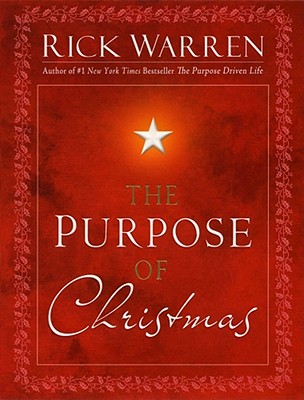
The Purpose Of ChristmasI mentioned in my book review of Rick Warren’s The Purpose Of Christmas that this might be a good book to help families recalibrate the meaning of Christmas each year. As you can see from the quotes I highlighted, this book doesn’t talk directly about Christmas trees, or gifts, or mistletoe, or carols. Rather it goes to the heart of the matter: Why did Jesus need to be born in a stable in Bethlehem? He was born for our salvation, and our reconciliation with God and our fellowman.

“Your capacity for enjoyment is evidence of God’s love for you.”

“No one wants what’s best for you more than God. No one knows better what will make you truly happy!”

“Our natural inclination is to want our own way instead of God’s way. This tendency to make wrong choices instead of right ones is called sin. The middle letter of sin is I, and whenever I place myself at the center of my life, I sin. It is any attitude or action that denies God His rightful place as first in my life.”

“Guilt is the mental price we pay for violating our God-given consciences.”

“I asked Peter Drucker, ‘How did you come to accept Jesus Christ as your Savior?’ He thought about it for a few seconds, then replied, ‘The day that I finally understood grace, I realized I was never going to get a better deal than that!’”

“Reconciliation focuses on the relationship, while resolution focuses on the problem. Always focus on reconciliation first.”

Gratitude Cancels Anxiety

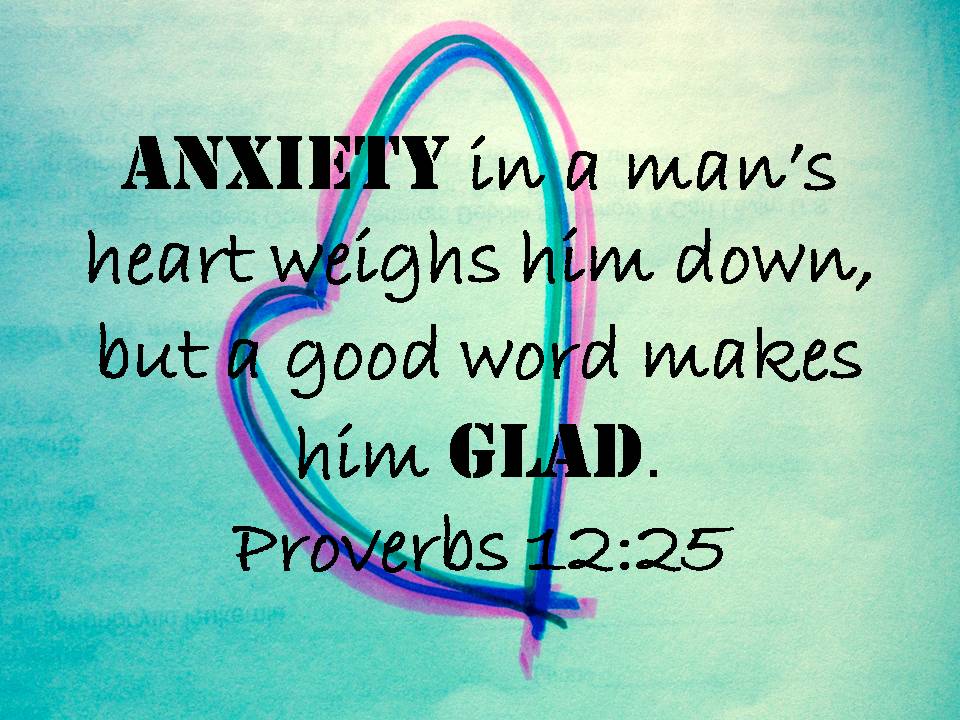
Gratitude cancels anxietyThe wise King Solomon said, “Anxiety in a man’s heart weighs him down…” (Proverbs 12:25). And now medical science proves it.

There’s the physical weight of anxiety:

  • Digestion of food is hindered
  • Sleep is disrupted
  • Short-term memory is hampered
  • Immune system is depressed
  • Heart disease risks are elevated
  • Not to mention the emotional and relational weights of anxiety

But do you know what brings an almost immediate bounce-back from these conditions? Feeling and expressing gratitude.

The feelings of gratitude…

  • Release endorphins (the feel-good hormone)
  • Make good memories easier to recall
  • Strengthen relationships
  • Improve overall physical health

The verse I quoted earlier from Proverbs was only the first half of the verse. The full verse says, “Anxiety in a man’s heart weighs him down, but a good word makes him glad.” Science tells us that it doesn’t matter if those good words are words others say to us, or words we say to ourselves, or words we say to others. Our bodies cannot tell the difference, so any grateful/thankful/positive words cancel out the heaviness of anxiety!

Try it! Keep a gratitude journal … write a letter to someone you haven’t properly thanked for their investment in your life … make it a point to compliment others … speak more positively to yourself. Those grateful words are not only the antidote to the anxiety weighing you down now but also the inoculation against future anxiety. 

We’ll be looking at more benefits of gratitude next week, as we continue our series A Grateful Heart Is A Strong Heart. Please join me!

13 Quotes From “The Bare Facts”

The Bare FactsJosh McDowell knows the mindset of today’s youth well, and he very ably lays out an honest discussion about sex in his book The Bare Facts: 39 Questions Questions Your Parents Hope You Never Ask About Sex. You can read my full book review by clicking here. Below are some of the quotes and statistics that especially stood out to me.

“Research by the National Center for Health Statistics and the University of Maryland found that women who save sex for marriage face a considerably lower risk of divorce than those who are sexually active prior to marriage. … Studies indicate that women who engage in early sexual activity and those who have had multiple partners are less satisfied with their sex lives than women who entered marriage with little or no sexual experience.”

“If you cannot define love, how do you know if you are in love? If you cannot define love, how can you know if you are being loved? If you cannot define love, how do you know if you have a loving, intimate relationship? … Love cannot be a feeling because you cannot command an emotion. … Love is more than a feeling. It is a series of choices. When we choose to love, our emotions can be transformed, but love is expressed by acts of the will.”

“When you have sex outside of marriage, the lines between love and lust are blurred. It is easy to misinterpret the chemical reactions in your brain for feelings of love. You can’t trust your feelings to verify if sex is right or wrong, and feelings of love aren’t proof that your relationship is mature or beneficial.”

“Since God designed sex to bind us to each other, when we choose to engage in sex outside of marriage it turns relationships upside down and confuses emotions to the point where a person can misinterpret sex for love. When we follow God’s plan, the love between a man and woman is already established before sex enters the equation.”

“Clearly, God doesn’t ask us to wait for sex in order to spoil our fun or restrict us unnecessarily. His commandments regarding sex are evidence of His love for us as He seeks to protect and provide for our good.”

“Female brains receive especially high doses of oxytocin whenever there is touching and hugging. Vasopressin is a hormone that does the same thing in the male brain. … When we continually change partners, oxytocin levels decrease and the brain’s oxytocin release function doesn’t work as it’s supposed to. Promiscuous sexual activity wears down vasopressin production in the male brain, causing men to become desensitized to the risk of short-term relationships.”

“Today, doctors recognize twenty-five major STDs, nineteen of which have no cure. In the 1960s one out of every sixty sexually active teens got an STD. By the 1970s that number jumped to one out of every forty-seven. Today one in four sexually active teenagers is infected.”

“While condoms offer only partial protection against HIV, gonorrhea, and chlamydia, they offer zero protection from many other STDs. In fact, for the most part, condoms do not reduce STDs, because most STDs are viruses. They are passed by areas of the body not covered by a condom. … With an average woman, between twenty and twenty-four years of age, when condoms were used 100 percent of the time, there was a 31 percent failure rate. … The FDA refuses to certify condoms. Why? Because the failure rate is off the charts. Another government agency, the CDC, says that abstinence is the only surefire way to prevent STDs.”

“Girls, imagine making the choice to become sexually active your sophomore year of high school. You never show any symptoms of an STD and you never get tested. Several years later you meet the man of your dreams. You marry and try to start a family, but you can’t get pregnant. When you go to the doctor to discuss your infertility, your doctor tells you that you have PID. You have had no symptoms but at one time you were infected with chlamydia. You now have to drive home and tell your husband that he will never have children of his own. Guys, imagine a similar scenario. You lose your virginity to a girl you thought you loved at age fifteen. Ten years later you learn what true love is when you meet and marry your wife. She is a virgin on your wedding day. Several years into your marriage your wife begins to experience abnormal bleeding. She goes to the doctor and discovers she has cervical cancer, likely caused by HPV that you unknowingly gave to her. Even though she chose to wait, she is forced to pay a huge price because you didn’t.”

“Sexually active teenage girls are 300 percent more likely to attempt suicide than their virgin peers. Sexually active teenage boys are more than twice as likely as sexually active girls to be suicidal. In fact, sexually active teenage boys are 700 percent more likely to attempt suicide than peers who are waiting.”

“Dr. Freda McKissic Bush of the Medical Institute for Sexual Health noted, ‘One of the greatest risk factors for depression, loss of self-esteem, and a lot of emotional consequences has to do with the number of people you have [sexual] relations with.’ She went on to say, ‘The more people you have [sexual] relations with, the more likely you are to have difficulty forming healthy relationships in the future when you are ready to be with one person.’”

“When it comes to sex, the mechanics almost always work. Bad sex isn’t the result of too little experience or sexual incompatibility. The problem is relationships. The problem is a lack of a character, trust, respect, and commitment. On your wedding night, experience is the last thing you need.”

“An article titled ‘Aha! Call It the Revenge of the Church Ladies,’ published in USA Today concluded that Christian woman (and the men who sleep with them) are among the most sexually satisfied people on the planet. … Men and women who test the waters of sexual compatibility before marriage are the least likely to be sexually fulfilled.”

11 Quotes From “Alone”

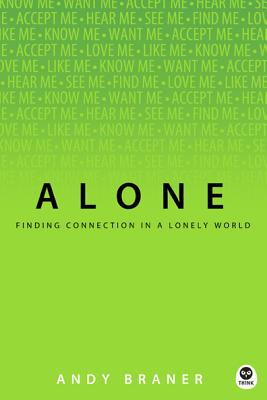
AloneAlone should be read and discussed by parents and teens to help find the right balance of technology usage in our lives. You can read my book review by clicking here. Below are some of the quotes that stood out to me from Alone.

“Maybe God created Adam to be needy. … Maybe Adam’s relationship with God was not built in fullness but contained a hole God created inside of humanity so we might recognize the importance of each other. It was (and is) brilliant.”

“Friendship has to be accompanied by experience. … The illusion of friendship is making everyone in the world think we’re perfect. … Instead of time spent experiencing life together, we’ve turned our world into a self-shaped, self-regulated, self-indulgent, me-centered life.”

“We are now a culture that wants to deal with relationships on our time. … Relationships are work. They’re inconvenient. They’re exciting and spontaneous. You can’t apply some formula for relationships and expect to walk out of the room with a load of friends.” 

“When you realize what role you have to play here on the planet, the most beautiful sense of belonging begins to awaken inside your soul. The world begins making sense. No matter what you’re doing, if God has gifted you in it, you’re going to have a high level of functioning.”

“Don’t get me wrong: Hard work and dedication are important factors as we help people understand significance, but in the end, our short lives are shaped by the relationships we make along our own journey. And if those relationships are filled with people who believe in us, the lonely factor fades away and we are recognized for the abilities we do have rather than the ones we don’t. Paul said it clearly: ‘I remind you to fan into flame the gift of God, which is in you through the laying on of my hands’ (2 Timothy 1:6). What can you do to fan someone else’s flame? Who in your life fans yours?”

“Maybe it’s because we’ve replaced the idea of risk and adventure with the idea of wealth and comfort. Loneliness begins to creep into a man’s life when adventure and risk are taken out of the equation, when men have to replace their God-given desires with something ‘more responsible.’ … Men need to sense that what they are doing in the world is courageous. They need to feel the sense of responsibility and freedom. They need to have opportunities to express their manhood.”

“There is no perfect girlfriend. There is no perfect employee. There is no perfect friend. There is no perfect body type or student or athlete. There’s no such thing as a perfect woman who finds the perfect role for her perfect situation. Those who continue to assign a high value to that mythical person who has it all together are driving themselves mad with the idea that they can achieve her. It’s from this feeling of failure, of never measuring up, that the loneliness sets in.” 

“The first step in understanding true joy is defining what joy actually is. It’s a feeling. It’s an emotion. It’s a state of mind. It’s the ability to know that the desires of your heart are being fulfilled. It’s not happiness. It’s not the constant state of euphoria. It’s not everything lining up perfectly. … In modern times, joy happens when we interact with each other. When we see a friend’s smile giving us validation that he or she is interested in being with us: joy. When we hear the words ‘How are you?’ in an honest tone, with honest body language behind it: joy. When we have an opportunity to rest in the fact that someone else wants us to be the person God created us to be: ultimate joy.”

“The quickest way to initiate friendship is to give people freedom to be themselves.”

“‘Oh, you did sooo well in your game,’ she said, walking past, rolling her eyes. Versus … ‘I can’t believe you! You’re the most awesome basketball player I’ve ever seen,’ she said, putting her arm around her friend in celebration. See the difference? Authentic versus agenda-driven. Caring for someone versus using someone. When a tribe is built … When experience glues relationships together … When you can rest in the joy that certain relationship gives you … Loneliness starts to fade away. But you can’t do that on Facebook.”

“If we can take the value of the social networking scene and combine it with real-time relationships, we might see this trend of loneliness take a positive direction. What would life look like if we could really experience life together? Community is important. To be able to contribute to the life of the community is even more fulfilling.” 

Alone (book review)

AloneIt’s weird to think this way in our highly-connected society, with the status symbol of getting as many friends, followers, and likes as possible, but more and more people feel disconnected and desperately alone. This is a serious subject that Andy Braner hits head-on in his book Alone.

Andy writes, “When people ask me, ‘What’s the biggest problem we can identify in the teenage nation today?’ it’s an easy answer: Teenagers are living all alone! … Even though Facebook gives us the ability to build a convenient corner of lives over the vast Web interface, the light of a computer screen isn’t bright enough to shine deep into our hearts and souls. We need real people. … Although this book is written for just the teen crowd, know that you’re not the only ones struggling.”

I love technology, and I’m very appreciative of the instant access to information and people. But I also know  the double-edged sword of too much technology means an increased connection to screens corresponding with a decreased connection with living human beings. There has got to be a healthy balance, and Andy makes some great suggestions for finding that balance.

I not only encourage teens to read this book, but parents of teens need to read it as well. Whether you read it together or not, find a way to discuss this content. Help your teenagers find healthy, fulfilling connections both through a screen and through face-to-face interactions.

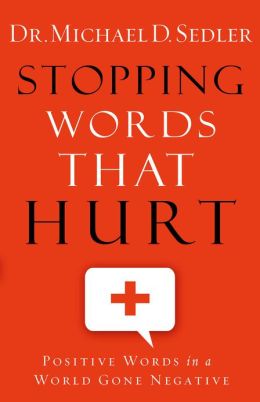
15 Quotes From “Stopping Words That Hurt”

Stopping Words That HurtThere was so much for me to process in Stopping Words That Hurt by Dr. Michael Sedler (you can read my full book review by clicking here). If you’ve ever been hurt by someone else’s words about you, there is help for you in this book. If you’ve ever hurt someone else with the words you’ve spoken, there is help for you in this book.

Bottom line: this book can help cut-off hurtful words and evil reports before they gain momentum. Please read this book!

Here are just a few quotes that stood out to me—

“We are so brainwashed into believing that it is permissible to violate one another verbally that it takes a concentrated effort to begin to have a new thought pattern.”

“It is imperative that you understand this truth: Just listening to an evil report can do tremendous damage to your perspective, viewpoint and overall spirit. … Joining in a negatively-driven conversation, no matter how small the participation, may destroy the testimony of a life. Listening to grumbling and ungodly attitudes eventually contaminates the spirit. The more we allow discontent to be taken in by our spirits, the greater the tendency to compromise our own speech patterns. We are being called to a high standard of living where the rewards for our faithfulness are eternal.”

“It is usual for most of us to listen without questioning. We oftentimes want to support a friend, supervisor or person of influence. In fact, a messenger may single us out because she knows we will not disagree with or question her. Are we being used because of our own gullibility and blindness to negative speech patterns?”

“We must have our antennas up and be prepared when we hear negative comments and subtle innuendos about others.”

“If we are unable to recognize the potential destruction caused by negative words, we will eventually cause injury to those around us. And, sadly, we often deceive ourselves into believing there was justification for our actions.”

“It is rude to knowingly be a part of gossip. It is not good manners to listen to verbal assaults and blatant character assassinations of people who are not present to defend themselves. It is foolishness and ignorance. We must open our eyes and discern when we are listening to evil reports in order to be accepted by the crowd.”

“A bold positive response can put out the fire.”

“Learn to avoid the trap of falling into emotional identification by getting information for yourself. Compare your feelings and thoughts with the Bible’s guidelines. Look for corroboration or contradictions as you assess the situation. And, finally, give a little more weight to the perspective of those who have been faithful, trustworthy and proven people of integrity than the words of a stranger or ‘expert’ who has no track record of honesty.”

“Fear can draw us toward God or pull us away. It can create a desire in us to cling to the truth or alter our perception of the truth. While satan wants to use fear to rob us of our faith in God, we need to continue to speak words of truth and confidence regarding our place with Christ.”

“Impurity occurs when we hear evil reports with our natural ears and minds without seeking spiritual wisdom and understanding. If we accept the words of others as truth, we will become filled with a mixture of philosophies, attitudes and beliefs.”

“A person who has responsibility over others also has great influence. If he or she shares a negative report with the general population, those with unguarded spirits will become contaminated.”

“I speak a strong word of caution to husbands and wives, significant others and close family members. We often take on the offense when a loved one is wronged or slighted. And though they may work through the issue, we still hold on to the anger and bitterness.”

“It is difficult to ‘have ears that hear’ at this point in the process. First of all, we do not see ourselves as defiled or polluted. We think we are right and can handle everything ourselves. We are suspicious about counsel. We question the motives of those giving it. We actually fight the process of cleansing using words such as manipulating, self-centered and controlling to describe the interventions of others. We accuse even our closest friends and supporters of being insensitive and uncaring. Whereas once we received challenges and guidance from others, now we meet each comment or suggestion with disdain and animosity. It is during this phase that people have a tendency to reject the process of cleansing, choosing instead to walk away from purity and to blame and curse others for their lack of support and love.”

“In order to heal with words, we must be willing to be persistent with them. Jesus frequently verbalized His love for His disciples. Once is not enough! Encouragement, praise and positive words continue to feed the soul in the same way water moistures the soil. Soil will eventually dry out and need another dose of fresh water.”

“Great people of God find a way to speak hope into others. They give a sense of purpose, of calling, of future, of destiny to those around them.”

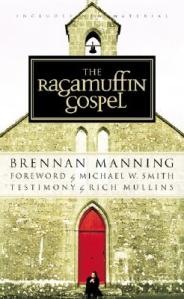
22 Quotes From “The Ragamuffin Gospel”

Ragamuffin GospelThe Ragamuffin Gospel by Brennan Manning really resonated with me. You can read my full book review by clicking here, but below are some of the quotes I especially appreciated.

“The institutional church has become a wounder of the healer rather than a healer of the wounded.” 

“Personal responsibility has replaced personal response. We talk about acquiring virtue as if it were a skill that can be attained, like good handwriting or a well-grooved golf swing. In the penitential seasons we focus on overcoming our weaknesses, getting rid of our hang-ups, and reaching Christian maturity. We sweat through various spiritual exercises as if they were designed to produce a Christian Charles Atlas. Though lip service is paid to the gospel of grace, many Christians live as if only personal disciplines and self-denial will mold the perfect me. The emphasis is on what I do rather on what God is doing. In this curious process God is a benign old spectator in the bleachers who cheers when I show up for morning quiet time.”

“God has a single relentless stance toward us: He loves us. He is the only God man has ever heard of who loves sinners. False gods—the gods of human manufacturing—despise sinners, but the Father of Jesus loves all, no matter what they do.” 

“Jesus comes not for the super-spiritual but for the wobbly and the weak-kneed who know they don’t have it all together, and who are not too proud to accept the handout of amazing grace.”

“The Word we study has to be the Word we pray.”

“We must never allow the authority of books, institutions, or leaders to replace the authority of knowing Jesus Christ personally and directly. When the religious views of others interpose between us and the primary experience of Jesus as the Christ, we become unconvicted and unpersuasive travel agents handing out brochures to places we have never visited.”

“Whatever past achievements might bring us honor, whatever past disgraces might make us blush, all have been crucified with Christ and exist no more except in the deep recess of eternity.” 

“It is unimaginable to picture a wooden-faced, stoic, joyless, and judgmental Jesus as He reclined with ragamuffins.”

“We miss Jesus’ point entirely when we use His words as weapons against others. They are to be taken personally by each of us.” 

“The saved sinner is prostrate in adoration, lost in wonder and praise. He knows repentance is not what we do in order to earn forgiveness; it is what we do because we have been forgiven. It serves as an expression of gratitude rather than an effort to earn forgiveness. Thus the sequence of forgiveness and then repentance, rather than repentance and then forgiveness, is crucial for understanding the gospel of grace.”

“Maybe this is the heart of our hang-up, the root of our dilemma. We fluctuate between castigating ourselves and congratulating ourselves because we are deluded into thinking we save ourselves. We develop a false sense of security from our good works and scrupulous observance of the law. Our halo gets too tight and a carefully disguised attitude of moral superiority results. Or we are appalled by our inconsistency, devastated that we haven’t lived up to our lofty expectations of ourselves. The roller coaster ride of elation and depression continues. Why? Because we never lay hold of our nothingness before God, and consequently, we never enter into the deepest reality of our relationship with Him. But when we accept ownership of our powerlessness and helplessness, when we acknowledge that we are paupers at the door of God’s mercy, then God can make something beautiful out of us.” 

“Honesty is such a precious commodity that it is seldom found in the world or the church. Honesty requires the truthfulness to admit the attachment and addictions that control our attention, dominate our consciousness, and function as false gods. I can be addicted to vodka or to being nice, to marijuana or being loved, to cocaine or being right, to gambling or relationships, to golf or gossiping. Perhaps my addiction is food, performance, money, popularity, power, revenge, reading, television, tobacco, weight, or winning. When we give anything more priority than we give to God, we commit idolatry. Thus we all commit idolatry countless times every day.”

“To be alive is to be broken. And to be broken is to stand in need of grace. Honesty keeps us in touch with our neediness and the truth that we are saved sinners. There is a beautiful transparency to honest disciples who never wear a false face and do not pretend to be anything but who they are. … Getting honest with ourselves does not make us unacceptable to God. It does not distance us from God, but draws us to Him—as nothing else can—and opens us anew to the flow of grace.” 

“When we wallow in guilt, remorse, and shame over real or imagined sins of the past, we are disdaining God’s gift of grace. Preoccupation with self is always a major component of unhealthy guilt and recrimination. … Yes, we feel guilt over sins, but healthy guilt is one which acknowledges the wrong done and feels remorse, but then is free to embrace the forgiveness that has been offered.”

“The evil one is the great illusionist. He varnishes the truth and encourages dishonesty. ‘If we say, “We have no sin,” we are deceiving ourselves, and the truth has no place in us’ (1 John 1:8). satan prompts us to give importance to what has no importance. He clothes trivia with glitter and seduces us away from what is real. He causes us to live in a world of delusion, unreality, and shadows.” 

“At Sunday worship, as in every dimension of our existence, many of us pretend to believe we are sinners. Consequently, all we can do is pretend to believe we have been forgiven. As a result, our whole spiritual life is pseudo-repentance and pseudo-bliss.”

“The way we are with each other is the truest test of our faith. How I treat a brother or sister from day to day, how I react to the sin-scarred wino on the street, how I respond to interruptions from people I dislike, how I deal with normal people in their normal confusion on a normal day may be a better indication of my reverence for life than the antiabortion sticker on the bumper of my car.” 

“A little child cannot do a bad coloring; nor can a child of God do bad in prayer.”

“The call asks, Do you really accept the message that God is head over heels in love with you? I believe that this question is at the core of our ability to mature and grow spiritually. If in our hearts we really don’t believe that God loves us as we are, if we are still tainted by the lie that we can do something to make God love us more, we are rejecting the message of the Cross.” 

“There are some real problems with projecting the perfect image. First of all, it’s simply not true—we are not always happy, optimistic, in command. Second, projecting the flawless image keeps us from reaching people who feel we just wouldn’t understand them. And third, even if we could live a life with no conflict, suffering, or mistakes, it would be a shallow existence. The Christian with depth is the person who has failed and who has learned to live with it.”

“We project into the Lord our own measured standard of acceptance. Our whole understanding of Him is based in a quid pro quo of bartered love. He will love us if we are good, moral, and diligent. But we have turned the tables; we try to live so that He will love us, rather than living because He has already loved us.” 

“No greater sinners exist than those so-called Christians who disfigure the face of God, mutilate the gospel of grace, and intimidate others through fear. They corrupt the essential nature of Christianity.”

Guys, It’s Not About The Nail

NailFellas, trust me on this one: the woman in your life doesn’t want you to fix her problems; she only wants you to listen and empathize.

So let her talk … Really hear what she’s saying … Really feel what she’s feeling. That’s what she really wants from you.

Perhaps this will help—

True Shepherds

T.M. Moore“True shepherds go to their sheep, where they are, to watch over their souls and equip them for ministry.” —T.M. Moore

Jesus said His sheep knew His voice. Pastor,

  • Do your sheep know your voice?
  • Are you accessible to them?
  • Do you initiate contact with them?
  • Do they see you laugh and play with them?
  • Do you know where they work, study, live, and play?
  • Can you pray for very specific needs in their lives?

Just something to think about…

UPDATE: This post was one of the seed thoughts that went into fashioning my book Shepherd Leadership: The Metrics That Really Matter.

The Price Of Divorce

There is a toll for divorce, and I think the price is higher than we want to pay. There is a price…

  • Michigan divorce rates…economically
  • …emotionally
  • …physically
  • …relationally
  • …spiritually

Wait, spiritually? Here’s what God says—

Here is another thing you do. You cover the Lord’s altar with tears, weeping and groaning because He pays no attention to your offerings and doesn’t accept them with pleasure. You cry out, “Why doesn’t the Lord accept my worship?” I’ll tell you why! Because the Lord witnessed the vows you and your wife made when you were young. But you have been unfaithful to her, though she remained your faithful partner, the wife of your marriage vows.

Didn’t the Lord make you one with your wife? In body and spirit you are His. And what does He want? Godly children from your union. So guard your heart; remain loyal to the wife of your youth. “For I hate divorce!” says the Lord, the God of Israel. “To divorce your wife is to overwhelm her with cruelty,” says the Lord of Heaven’s Armies. “So guard your heart; do not be unfaithful to your wife.” (Malachi 2:13-16, New Living Translation)