10 Ways Children Can Honor Their Parents

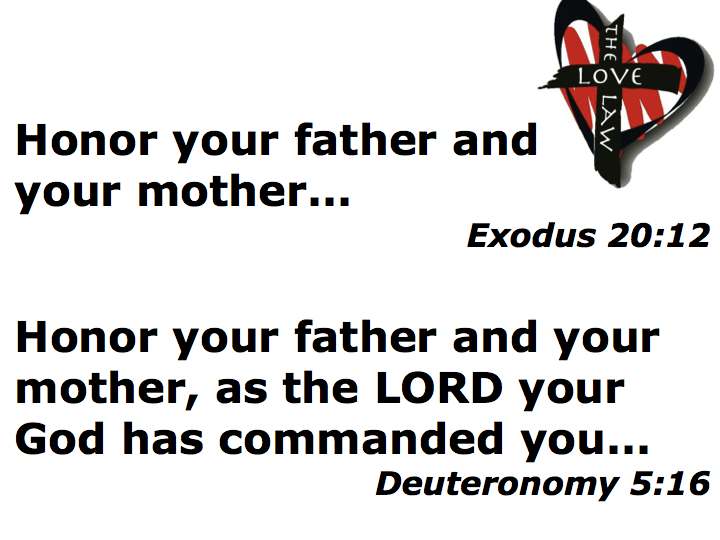
Honor your parentsThe Bible is fairly clear on a child’s relationship with his or her parents:

The Bible also gives some directives for parents:

So children are to honor their parents, and their parents are to behave honorably. This can be a virtuous cycle, if both parent and child are doing this correctly. But what if a parent is not behaving honorably? Does the child still have to honor that parent?

In a word: Yes. The Bible doesn’t give children an option on this command. Nowhere do we read, “Only obey your Christian parents,” or “Honor your father only if he’s godly,” or “Respect your mother only if she is virtuous.” Children are simply called upon to honor and obey.

I like what Dr. Laura Schlessinger wrote—

“Honor does not mean unquestioned obedience, we truly honor our parents when we hold them accountable to God’s law. If my parents abandon me, I will honor them by seeking, though not forcing, reconciliation. If my parents abuse me, I will honor them by praying for them, so that they might see their error – and by escaping, if possible, so that they cannot continue to sin upon me. If my parents are unfaithful, I will honor them by calling for righteousness and by being willing to forgive them when they repent. If they are breaking the law, I will honor them by calling the police. Making them accountable to the highest moral order is honoring them in that I esteem them capable of responsible action.

So here are 10 biblical ways children can honor their parents—

  1. Guard your thoughts about them.
  2. Obey their lawful commands.
  3. Submit to their correction.
  4. Hold them accountable to the moral law.
  5. Show appreciation for what they have given you.
  6. Keep them connected to the family (socially, emotionally, financially, physically).
  7. Don’t expect too much of them.
  8. Don’t resent them for what they aren’t, or for what they didn’t do.
  9. Forgive them and seek reconciliation.
  10. Emulate their virtues and reverse their shortcomings.

Not only does this please God, but it opens us up to the blessing He wants to give to children who honor their parents (Deuteronomy 5:16 and Ephesians 6:2-3).

If you have missed any of the messages in our series The Love In The Law, you can find them all by clicking here.

Come On In

Come On InThe Bible tells us that the Holy Spirit is constantly calling us to “Come!” He wants to draw us nearer to God’s presence. But sin separates. Let me be more specific and more personal: My sin can make me believe I can’t come closer to God.

In Psalm 99:8, notice how the psalmist focuses first on God’s forgiveness, and then on His punishment. It’s as though he is saying, “Yes, God punishes sin, but He is first and foremost a forgiving God”—

…You were to Israel a forgiving God, though You punished their misdeeds. (Psalm 99:8)

God is slow to anger, but He must punish sin. His punishment is always to encourage reconciliation. He wants to remove the sin that separates us. This has always been His focus since the very first sin.

In fact the next psalm celebrates coming into God’s presence with joy—

  • Shout for joy
  • Worship with gladness
  • Come in with joyful songs
  • Remember that God made us and we are His
  • Enter with thanksgiving
  • Enter with praise
  • Come give Him thanks
  • Praise Him
  • He is good
  • His love endures forever
  • His faithfulness never diminishes

This should encourage me all the more to quickly confess my sin and repent from it, so that I can once again answer the Holy Spirit’s call to come deeper into God’s presence.

Links & Quotes

link quote

These are links to articles and quotes I found interesting today.

May God have mercy! Belgium Parliament Approves Euthanasia For Children

[VIDEO] Nailed it: Jon Stewart Calls Out Obama For Corrupt Ambassador Choices

Watch out! 7 Times Obama Ignored The Law With His Executive Orders

“The Christian who goes out without faith in ‘wonders’ will return without fruit. No one dare be so rash as to seek to do impossible things unless he has first been empowered by the God of the impossible. ‘The power of the Lord was there’ is our guarantee of victory.” —A.W. Tozer

Tim Elmore prepares us: Welcome To Our McCulture

So excited!! The Assembly of God and the United Pentecostal Council of the Assemblies of God Unite

Ronald & Nancy Reagan loved each other deeply: Valentine′s Day Advice From Ronald Reagan

“Our blunder (or shall we frankly say our sin?) has been to neglect the doctrine of the Spirit to a point where we virtually deny Him His place in the Godhead. This denial has not been by open doctrinal statement, for we have clung closely enough to the Biblical position wherever our credal pronouncements are concerned. Our formal creed is sound; the breakdown is in our working creed. This is not a trifling distinction. A doctrine has practical value only as far as it is prominent in our thoughts and makes a difference in our lives. By this test the doctrine of the Holy Spirit as held by evangelical Christians today has almost no practical value at all. In most Christian churches the Spirit is quite entirely overlooked. Whether He is present or absent makes no real difference to anyone. Brief reference is made to Him in the Doxology and the Benediction. Further than that He might as well not exist. So completely do we ignore Him that it is only by courtesy that we can be called Trinitarian. The Christian doctrine of the Trinity boldly declares the equality of the Three Persons and the right of the Holy Spirit to be worshipped and glorified. Anything less than this is something less than Trinitarianism.” —A.W. Tozer

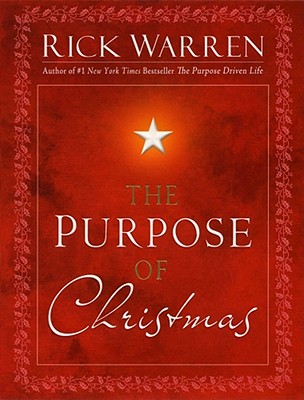
6 Quotes From “The Purpose Of Christmas”

The Purpose Of ChristmasI mentioned in my book review of Rick Warren’s The Purpose Of Christmas that this might be a good book to help families recalibrate the meaning of Christmas each year. As you can see from the quotes I highlighted, this book doesn’t talk directly about Christmas trees, or gifts, or mistletoe, or carols. Rather it goes to the heart of the matter: Why did Jesus need to be born in a stable in Bethlehem? He was born for our salvation, and our reconciliation with God and our fellowman.

“Your capacity for enjoyment is evidence of God’s love for you.”

“No one wants what’s best for you more than God. No one knows better what will make you truly happy!”

“Our natural inclination is to want our own way instead of God’s way. This tendency to make wrong choices instead of right ones is called sin. The middle letter of sin is I, and whenever I place myself at the center of my life, I sin. It is any attitude or action that denies God His rightful place as first in my life.”

“Guilt is the mental price we pay for violating our God-given consciences.”

“I asked Peter Drucker, ‘How did you come to accept Jesus Christ as your Savior?’ He thought about it for a few seconds, then replied, ‘The day that I finally understood grace, I realized I was never going to get a better deal than that!’”

“Reconciliation focuses on the relationship, while resolution focuses on the problem. Always focus on reconciliation first.”

The Purpose Of Christmas (book review)

The Purpose Of ChristmasAre retailers and Christians the only ones who think Christmas is a big deal? Why is it so important? Just in time for this year’s Advent celebration, Rick Warren reminds us of The Purpose Of Christmas.

In his typical style of helping folks clearly understand the meaning of things that sometimes we overlook or take for granted, Pastor Rick shows us that Christmas is a time for celebration, a time for salvation, and a time for reconciliation.

Blending together passages of Scripture throughout all of the Bible—not just the passages we usually associate with the birth of Christ—Pastor Rick powerfully illustrates why we needed God to send His One and Only Son to earth to rescue us. And also why we need to celebrate His birth correctly at this time each year.

This book is an easy-to-read, easy-to-understand recalibration of the meaning of Christmas. For anyone who has ever felt that the retailers are dominating the Christmas season, this is a welcome book to help you return to the foundational truths. It might be a good book for you to pull out each Christmas and read aloud with your family.

Set Them Free!

Jesus has some pointed words for us in Matthew 5—

Therefore, if you are offering your gift at the altar and there remember that your brother has something against you, leave your gift there in front of the altar. First go and be reconciled to your brother; then come and offer your gift. (vv. 23-24)

Notice that Jesus says that your brother has something against you. Since the first word of this verse is therefore, we have to back up a couple of verses to get the context. In the preceding two verses Jesus talks to us about our anger, our harsh words, and our rash judgments leveled at others. In other words, things we have done to others which has made them upset at us.

In our prayer time, the Holy Spirit will help us remember what we have done. Now what are you going to do about it? Excuse it? Justify it? Or will you rectify it? Will you be obedient to go and make it right?

Until we do, we’re keeping our offended brother or sister in bondage to us. But as soon as we ask forgiveness, we set them free.

I love what C.S. Lewis said about recognizing where we may have offended someone—

“When I come to my evening prayers and try to reckon up the sins of the day, nine times out of ten the most obvious one is some sin against charity; I have sulked or snapped or sneered or snubbed or stormed. And the excuse that immediately springs to mind is that the provocation was so sudden or unexpected. I was caught off my guard, I had not time to collect myself…. Surely what a man does when he is taken off guard is the best evidence of what sort of man he is. Surely what pops out before the man has time to put on a disguise is the truth. If there are rats in the cellar you are most likely to see them if you go in very suddenly. But the suddenness did not create the rats; it only prevents them from hiding. In the same way the suddenness of the provocation does not make me an ill-tempered man: it only shows what an ill-tempered man I am.

When the Holy Spirit shows you the rats in your cellar—when He helps you remember how your ratty words or behavior hurt someone else—take care of it immediately! It’s the fastest way to freedom!

I will be speaking on The Danger Of Prayerlessness again next Sunday. I hope you can join me.

Disagreeing Agreeably

Listen to the podcast of this post by clicking on the player below, and you can also subscribe on Apple or Spotify.

Why do disagreements have to become so, well, disagreeable?

Is it possible to disagree agreeably?

It’s not easy, but I think it’s possible.

When I was younger I couldn’t stand the idea of “losing” an argument: I always had to be right. I think I’ve matured a bit (at least, I hope I have), and I no longer feel the same way. So here are a few lessons I’ve learned:

(1) Remember the person I’m disagreeing with is my brother or sister. God has created both of us, so that makes us siblings.

(2) Always go for win-win. Don’t look out only for your own interests, but take an interest in others, too (Philippians 2:4).

(3) Choose your battles wisely. You can’t make everything an issue worth dying over. Thomas Jefferson wisely said, “In matters of principle, stand like a rock; in matters of taste, swim with the current.”

(4) Redefine the “win.” What does it mean to win? Is it to put someone else in their place? That doesn’t seem very healthy. Perhaps a “win” is when values or principles are agreed to, although the way they are applied may be very different from person to person.

(5) Leave the baggage behind. Don’t bring previous hurts into a new situation. Don’t assume this new person will act like someone else from your past.

We’re all different people, so we’re going to have disagreements. The key: let’s find a way to disagree agreeably.

If you have other thoughts about how to disagree agreeably, I would love it if you would share them in the comments.

►► Would you please prayerfully consider supporting this ministry? ◀︎◀︎

Once An Arafat Man (book review)

Tass Saada’s story reads like a screenplay for an upcoming movie! Once An Arafat Man is such a page-turner, that I could hardly put it down.

In a nutshell, Tass’s story is this: He was born in the Gaza Strip, but his family had to relocate to Saudi Arabia due to the turbulence in Gaza. The Saudi government, like many Arabic governments, talked about supporting the Palestinians, but they were more concerned about self-preservation; as a result, it was just talk and very little action. Tass became a disgruntled, disillusioned young man. As a  teenager, he had a chance to meet Yasser Arafat in Qatar and was enthralled with this dynamic Palestinian leader. So mesmerized, in fact, that Tass ran away from home to join Fatah with Arafat.

Once he was accepted into the Palestinian Liberation Organization (PLO), Tass was trained as a sniper. His mission: assassinate Jewish targets. He even served as Arafat’s personal chauffeur. But once again the unstable political and military conditions caused Fatah to pull out of Jordan and eventually Tass ended up fleeing to the United States of America.

Once in the US, he didn’t want to be forced to leave, so he married an American woman to get his green card. While working on his career, something Tass never expected happened: he became a Christian. As his friend Charlie was sharing with him from the Bible, Tass wrote:

Before I knew it, I was on my knees. I didn’t consciously decide to kneel; it just happened. I lost all awareness that Charlie was even in the room. A light came into my field of vision–a talking light….

The light said in an audible voice, “I am the way and the truth and the life. No one comes to the Father except through Me….”

In this indescribable moment, I knew something else: the triune God existed—Father, Son, and Holy Spirit. I knew that God loved me. “Oh, Jesus, come into my life!” I blurted out. “Forgive me and be my Lord and Savior!” I felt as if a heavy load went flying off my shoulders. A sense of peace and joy rushed into my heart. The presence of God was so real it seemed I could almost reach out and touch it.

Thus began a new journey for Tass, one of reconciliation. His wife and children eventually accepted Jesus Christ as their personal Savior too. But Tass’s family back in Qatar is a different story: they denounced him as an infidel

Tass felt compelled to take the good news of Jesus back to his family and to the very leader he used to work for: Yassar Arafat. The story of how God opened doors of opportunity, and provided supernatural protection, and allowed for reconciliation to occur is amazing.

Read this book. You will be blessed by this incredible story!

I’m a Tyndale book reviewer.