The Gift Promised

Listen to the podcast of this post by clicking on the player below, and you can also subscribe on AppleSpotify, or Audible.

Have you ever seen kids tearing into a Christmas present and then being disappointed that what they got wasn’t what they wanted? They may say something like, “This isn’t what I put on my wish list!” 

From the response of the religious leaders in the Gospels, it appears that the gift of Jesus on that original “Christmas morning” was very similar. It’s almost like they were saying, “This isn’t the type of Messiah we wanted!” They wanted someone to give them freedom from the Romans, but their Heavenly Father wanted them to have something far bigger and greater: Eternal freedom from the penalty of sin. 

The first humans had the joy of being innocent in God’s presence, where they had everything they needed. But satan got Adam and Eve to focus on something they wanted, and that sin of disobedience brought an immediate separation. They now feared the nearness of God. 

There were immediate and painful consequences for their sin, but God wanted the heaviest of penalties to fall on Himself. To foreshadow this, God sacrificed an innocent animal to cover their nakedness, showing us what the gift of Jesus would do for us (Genesis 3:1-21). 

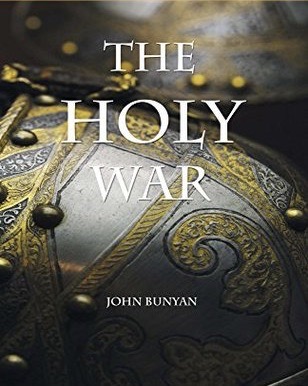
In The Holy War, John Bunyan tells the story of the town of Mansoul enslaved to Diabolus. The crafty serpent plays on their fears by reminding them how terrible it would be if they allowed Holy God to come near them while they were in their sinful state: 

“‘Gentlemen,’ quoth he, ‘and my faithful subjects, if it is true that this summoner hath said concerning the greatness of their King, by His terror you will always be kept in bondage, and so be made to sneak. Yea, how can you now, though He is at a distance, endure to think of such a Mighty One? And if not to think of Him while at a distance, how can you endure to be in His presence?’” 

Diabolus even tried to make their slavery to sin look like freedom: “I, your prince, am familiar with you, and you may play with me as you would with a grasshopper. Consider, therefore, what is for your profit, and remember the immunities that I have granted you.’”  

As John Piper reminds us, “Christmas is for freedom.” Indeed, that’s just what we see on the first “Christmas morning” in words like salvation, no fear, and great joy (Matthew 1:21; Luke 2:10-11). 

Turning again to The Holy War, here’s what the Father said to His Son: “Wherefore the King called to Him Emmanuel, His Son, who said, ‘Here am I, My Father.’ Then said the King, ‘Thou knowest, as I do Myself, the condition of the town of Mansoul, and what We have purposed, and what Thou hast done to redeem it. Come now, therefore, My Son, and prepare Thyself.’”  

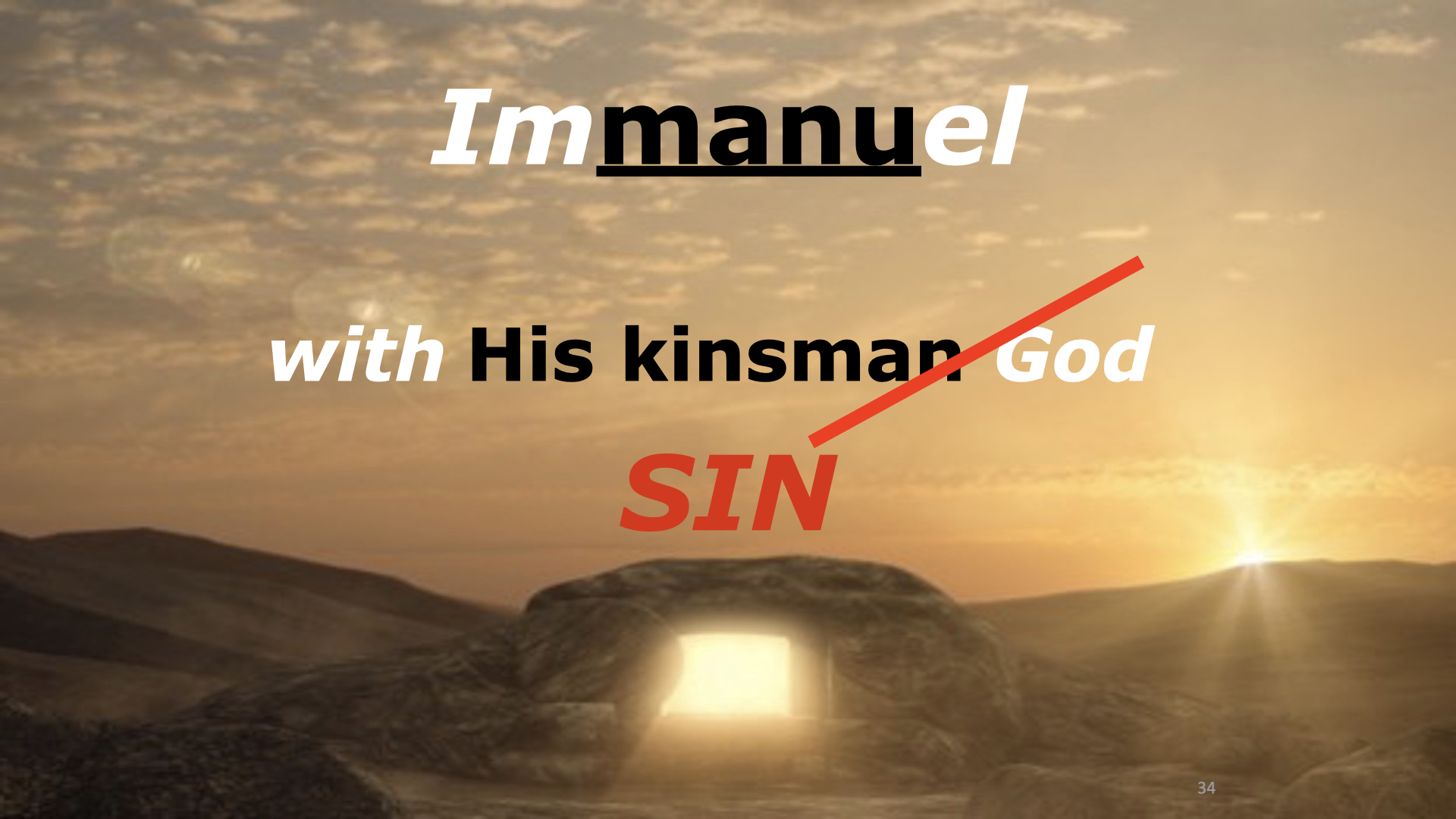
Immanuel (or the Romanized spelling Emmanuel) is the One who removes the separation caused by our sin, and rejoins us to God. That prefix “im” means with, and the suffix “El” means God. The root word means God’s kinsmen. Immanuel comes to repair what was severed by taking sin’s penalty on Himself, and allowing us to once again enjoy the closeness of kinship with our Heavenly Father (Matthew 1:22-23; Galatians 4:4-7). 

When the people saw this Gift on Christmas morning, they said, “This isn’t what we wanted! We wanted a rich, powerful, conquering King. One who would send the Romans running in fear!” As a result, very few unwrapped this Heavenly Gift. But God reminded them, “That may be what you wanted, but I have given what you need. I want you to have not just temporary freedom from the Romans, but eternal freedom from your sin so that you can be forever in My presence!” 

This is what Jesus rejoiced to do for us with the Gift of His life, death, and resurrection. One more passage from The Holy War tells us, “Then said the King’s Son, ‘Thy law is within My heart: I delight to do Thy will. This is the day that I have longed for, and the work that I have waited for all this while. … I will go and will deliver from Diabolus, and from his power, Thy perishing town of Mansoul. My heart has been often pained within Me for the miserable town of Mansoul; but now it is rejoiced, but now it is glad.’” (The timing for the Incarnation of Jesus and even these words of Immanuel Himself are found in Hebrews 2:14-15; 10:5-7). 

God’s love is too great to be limited to just meeting our wants because in our immaturity and sinfulness we don’t know what we really need—but He does. So His love sent Immanuel to us. 

The Gift was given to us at Christmas, but in our immaturity and shortsightedness, we didn’t realize the full impact of this Gift until Jesus rose victoriously from the grave! Now by placing our faith in His completed work, we can be rejoined to God and live in unshakable hope of an eternity with Him! 

If you would like to follow along with all of the messages in this series called Christmas Unwrapped At Easter, please check out the links I’ve shared here.

►► Would you please prayerfully consider supporting this ministry? My Patreon supporters get behind-the-scenes access to exclusive materials. ◀︎◀︎

Links & Quotes

I love the humanitarian work of Convoy of Hope wherever there is a need. They are on the front lines of Ukraine right now. If you are looking for a good organization to support financially, please check out their current efforts and click the Donate button on their page.

“[God] does not need us. If we stay away He is not impoverished. He does not need us in order to be happy in the fellowship of the Trinity. But He magnifies His mercy by giving us free access through His Son, in spite of our sin, to the one Reality that can satisfy us completely and forever, namely, Himself. ‘You make known to me the path of life; in Your presence there is fullness of joy; at Your right hand are pleasures forevermore’ (Psalm 16:11).” —John Piper 

“Good preachers are good learners, and not just of the Scriptures. They need to understand the times and the ways the times impact the people they are called to serve. Preachers who know their sheep well, as our Good Shepherd exemplified for us, will hear their concerns, understand their thoughts, discern their hopes and fears, and be able to preach in a way that speaks directly to their souls with transforming grace and power. Let us strive to be sons of Issachar when it comes to the ministry of God’s Word.” —T.M. Moore 

I love the Babylon Bee! Here is something that should make every pastor say, “Aha!”—Scholars Discover Introductory Notes To Paul’s Epistles That Dismissed The Children To Youth Ministry So The Adults Could Hear The Message

This week I shared another exclusive video with my Patreon supporters. Please consider supporting this ministry at just $5 per month. I also shared this public video especially for my fellow pastors:

John Stonestreet wrote about our amazing brain. What a marvelous thing our Creator has given us! Here is just one example: “In 2013, a collaboration between Japanese and German scientists created one of the most realistic brain simulations ever attempted. They used what was, at that time, the world’s fourth-largest computer, containing over 700,000 processor cores and producing an eye-popping 1.4 million gigabytes of RAM. The machine worked at top speed, crunching numbers for over 40 minutes. In the end, it produced just one second of simulated brain activity.”

Links & Quotes

I love the humanitarian work of Convoy of Hope wherever there is a need. They are on the front lines of Ukraine right now. If you are looking for a good organization to support financially, please check out their current efforts and click the Donate button on their page.

Dr. Roy Spencer always brings clarity to the climate change debate. Here is a post looking at the numbers behind the claims that climate change is largely man-made.

I love following the archeological and paleontological discoveries as they come to light. The Institute for Creation Research shares some enlightening news that comes from the discovery of a human vertebra.

Dan Reiland shares about 5 enemies of the soul that hurt your church.

Cold-case detective J. Warner Wallace talks about the evidence that makes the resurrection of Jesus a reasonable conclusion:

“For the diligent the week has seven todays, for the slothful seven tomorrows.” —Anonymous

In light of all the uncertainty around us, this quote is a good reminder. “I want you to pray about world events and pursue peace as you are able. However, it’s crucial to recognize what you can change and what you cannot. Fretting about things that are beyond your control will drain your energy and discourage you. Instead of this hurtful focus, endeavor to fix your thoughts on Me. … Remember that I am a God of justice and I know everything. Eventually I will right all wrongs. So be still in My presence—trusting in Me with a steadfast heart while waiting for Me to act.” —Sarah Young, in Jesus Always

10 Quotes From “The Roots Of Endurance”

John Piper’s intertwining of the biographies of John Newton, Charles Simeon, and William Wilberforce in The Roots Of Endurance was masterfully done! Especially because, unlink the previous books in Pastor John’s “The swans are not silent series,” all three of these men knew each other and interacted with each other. Check out my full book review by clicking here. 

“Simeon with us—his heart glowing with love of Christ. How full he is of love, and of desire to promote the spiritual benefit of others. Oh! that I might copy him as he Christ.” —William Wilberforce, writing in his journal about Charles Simeon 

“It is hoped and believed that the Lord has raised you up for the good of His church and for the good of the nation.” —John Newton, in a letter to William Wilberforce 

“Unless God has raised you up for this very thing, you will be worn out by the opposition of man and devils. But if God be for you, who can be against you.” —John Wesley, at 87 years of age, in a letter to William Wilberforce 

“Frustration is normal, disappointment is normal, sickness is normal. Conflict, persecution, danger, stress—they are all normal. The mind-set that moves away from these will move away from reality and away from Christ. —John Piper 

The remaining six quotes are exclusive content for my Patreon supporters. In addition to book quotes, there are videos and behind-the-scenes views that only these supporters have access to. I would love it if you would prayerfully consider supporting my ministry for just $5 per month.

The Danger In Multitasking

Listen to the podcast of this post by clicking on the player below, and you can also subscribe on AppleSpotify, or Audible. 

Peter Drucker noted, “It wasn’t until the twentieth-century that we pluralized the word priority. For most of its history, the word has been singular.” 

If we have too many priorities, we can frequently find them in conflict with each other. This forces us to make an extremely difficult decision: Which priority has a higher priority?! 

My friend Greg Heeres and I recently addressed this in an episode of our leadership podcast called The Craig And Greg Show.  

Ultimately, whatever business or industry or profession we are in, we are in the people business. All of our efforts fail without good investment in people. So our overriding priority must be on the people God has placed around us.

(I wrote post earlier about this called “Am I interruptible?” which is worth your time to check out.)

Marcus Buckingham noted, 

“The human brain is simply not designed to multitask. You can get by doing multiple things at once, but you can’t do them well. Your brain is physically unable to process more than one set of instructions at a time, so while you are juggling all of those actions at once, your brain is scrambling to keep up. Through a variety of experiments measuring brain activity, scientists have discovered that the constant switching back and forth from one activity to another energizes regions of the brain that specialize in visual processing and physical coordination, while simultaneously disrupting the brain regions related to memory and learning. According to the research, ‘We are using our mental energy to concentrate on concentrating at the expense of whatever it is that we’re supposed to be concentrating on.’ Got that? 

“More simply: when we multitask we’re dumber. How much dumber? A recent study for Hewlett Packard exploring the impact of multitasking on performance revealed that the average worker’s functioning IQ drops ten points when multitasking…. (The analogy the researchers used is that a ten-point drop in IQ is equivalent to missing one night of sleep.)”Marcus Buckingham  

The biggest victim of attempting to multitask is your relationships. Those closest to you suffer the most. If someone needs me and I’m too busy to give them me, then very busy has become too busy and it’s time for me to evaluate who—not what—is my highest priority.

►► Would you please prayerfully consider supporting this ministry? My Patreon supporters get behind-the-scenes access to exclusive materials. ◀︎◀︎

Links & Quotes

T.M. Moore wrote, “It’s not likely John the Baptist would be welcomed in many pulpits today. Even though Edwards used him as a model of ‘The True Excellency of a Gospel Minister,’ few and far between are the shepherds today who would even think of adopting his example.

“Edwards wrote, ‘He also shone bright in his conversation, and his eminent mortification and renunciation of the enjoyments of the world; his great diligence and laboriousness in his work, his impartiality in it, declaring the mind and will of God to all sorts without distinction; his great humility, rejoicing in the increase of the honour of Christ, though his honour was diminished, as the brightness of the star diminishes as the light of the sun increases; and in his faithfulness and courage, though it cost him his own life.’

“These days many pastors secure their ‘honor’ in subtle but significant ways. They go by ‘Reverend’ or ‘Doctor.’ Have reserved parking places and their name on the church sign. Adopt fashionable garb and speech. Try hard to be friends with all the right people. Such shepherds want to advance their honor; John worked to have his honor diminished, that the honor of Christ might increase.”

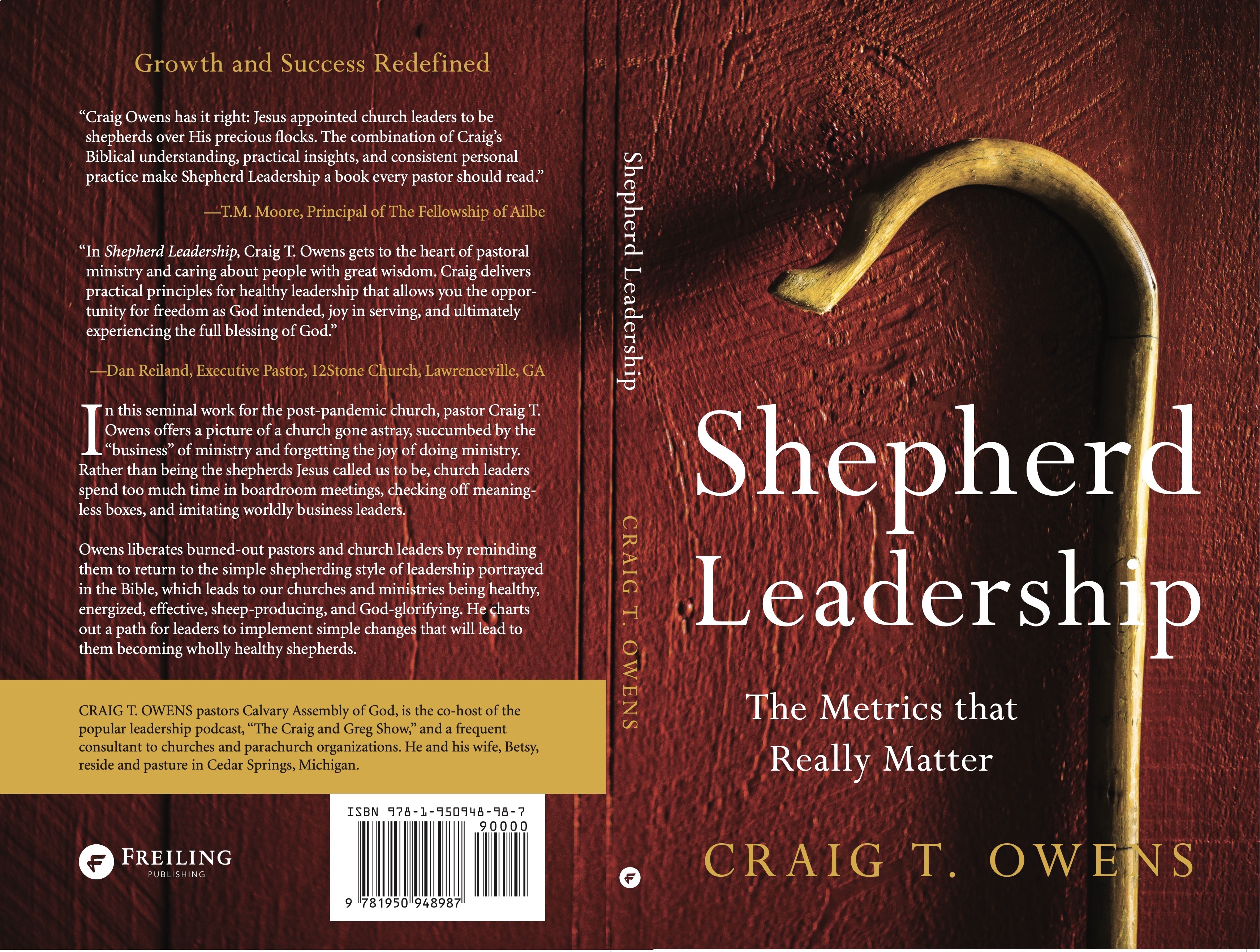
I share T.M.’s passion for shepherd in the Church, which is why he graciously wrote an endorsement for my book Shepherd Leadership: The Metrics That Really Matter.

Vaughn Shoemaker (1902-1991) was an American editorial cartoonist. He won the 1938 and 1947 Pulitzer Prizes for Editorial Cartooning for his work with the Chicago Daily News. He was the creator of the character, John Q. Public, and a faithful Assemblies of God layman. I am a fourth-generational Pentecostal in the Assembly of God fellowship, so I love studying more about the men and women who have made this such a robust missions-minded fellowship! Read more of this amazing man here.

Dan Reiland has an important list for leaders: 11 Leadership Mistakes To Avoid At All Costs.

This is a radical call for us to look hard at our present lives to see if they are shaped by the hope of the resurrection. Do we make decisions on the basis of gain in this world or gain in the next? Do we take risks for love’s sake that can only be explained as wise if there is a resurrection?” —John Piper

“Jesus will do the things we ask for if they make God’s greatness known. So how do we ask this way? We must ask from right relationships (Mark 11:24-25, 1 Peter 3:7), with right motives (James 4:3, Proverbs 16:2), through right living (James 5:16, Proverbs 15:29), in good faith (James 1:6-7), according to His will (1 John 5:14-15). In short, if you think Jesus would put His name on it, and it will make His Father famous, then ask and believe! But remember, we’re here for Him—He’s not here for us.” —Craig Groeschel, in Twisted 

For parents and anyone else who works with students, this is a segment from the Axis ministry’s Culture Translator newsletter:

In his book Man’s Search for Meaning, Viktor Frankl writes that “success, like happiness, cannot be pursued; it must ensue, and it only does so as the unintended side-effect of one’s personal dedication to a cause greater than oneself… Happiness must happen, and the same holds for success: you have to let it happen by not caring about it.”

An idea like that would likely seem counterintuitive to many of the students in Professor Santos’ classes—students who have been raised from young ages to pay careful and constant attention to their academic viability. Students like these grow up with a hope and an expectation that achieving perfection (whether academic, relational, spiritual, or other) will finally yield the happiness, satisfaction, and recognition they’ve been looking for. But after achieving perfection, the next source of anxiety is maintainingperfection. As Christopher Fry once put it, “What, after all is a halo? It’s only one more thing to keep clean.”

Jesus concludes Matthew 5 by saying to his hearers, “Be perfect, therefore, as your heavenly Father is perfect.” It’s a verse most Christians may not want to touch, and one that anxious overachievers might point to as justification for their continual striving. But as C.S. Lewis points out in Mere Christianity, Jesus’ words presuppose our dependence on Him. He writes, “The command Be ye perfect is not idealistic gas. Nor is it a command to do the impossible. He is going to make us into creatures that can obey that command… The process will be long and in parts very painful, but that is what we are in for. Nothing less. He meant what He said.”

In other words, our betterment is in partnership with our Creator, and happiness is merely a by-product of our total surrender. Whoever has ears, let them hear.

Is That In The Bible?

Listen to the podcast of this post by clicking on the player below, and you can also subscribe on AppleSpotify, or Audible.

A meme that makes me chuckle every time I see it is a “quote” attributed to Abraham Lincoln in which he says, “The problem with quotes found on the internet is that they are often not true.” 

(Not to spoil the joke for you, but unless Lincoln knew how to time travel to the future, I don’t think he knew about the modern internet! 😂) 

I love this meme because it captures something that so many people fall into: a quick acceptance of a statement without verifying its source or thinking through the implications of the statement’s truthfulness. 

Some insightful comments sound Shakespearean, but William never wrote them. 

Some pieces of wisdom sound Socratic, but Socrates never taught them. 

Some religious maxims sound godly, but the Bible never recorded them. 

I would like to invite you to join me as we relaunch this series called Is That In The Bible? I think you may be surprised to discover just how many phrases we call biblical aren’t, and how many phrases there are that we never realized are actually in the Bible. 

By the way, if you have a phrase that you would like to have us explore in this series, please leave it in a comment below. If you would like to check out the questions we addressed previously, please click here

In this installment of this series we asked: Is this in the Bible…

Links & Quotes

“If you want to make people happy, don’t be a leader. Sell ice cream.” —Steve Jobs

“Pride is the first chapter in the book of failure. Humility is the first chapter in the book of success.” —Mark Batterson

“Great shepherds seek daily to increase in the Good Shepherd and to lead the people they serve to feed on Him and grow in His salvation.” (T.M. Moore). I share T.M.’s passion for shepherd in the Church, which is why he graciously wrote an endorsement for my book Shepherd Leadership: The Metrics That Really Matter

Sobhi Malek has an excellent prayer guide which gives weekly prayer points for Muslims. Each week you will get more insight into the mindset of our Muslim friends, a prayer, and a passage of Scripture. I encourage you to subscribe to this page so you won’t miss any updates.

Links & Quotes

In 1 Timothy 3:1, Paul writes, “This is a faithful saying: If a man desires the position of a bishop [overseer], he desires a good work.” T.M. Moore commented on this verse—

“The Greek word for ‘bishop’ translates literally to ‘overseer.’ Overseers—pastors, elders, anyone in a leadership role in the congregation—is charged with watching over the souls of God’s people for good (Hebrews 13:17; Acts 20:28; 1 Thessalonians 5:12-13). While the primary duty of watching over the Lord’s flock falls on pastors and elders, all who serve with them function in a role of overseeing, that all the members of the congregation might benefit from the continuous care and shepherding of those who lead them.”

I am so grateful for T.M.’s endorsement of my book Shepherd Leadership: The Metrics That Really Matter in which I expound more on this 1 Timothy verse, and talk about how shepherd leaders should be raising up more leaders around them.

Our church purchased a building to use as our new homebase for ministry in our city. I am super excited about the possibilities!

Tiny bacteria declare loudly the genius of the Creator. This new study on the ability of bacterium to protect its own DNA from mutations is fascinating!

Dan Reiland says, “Good character takes a lifetime to build and a moment to destroy.” Dan shares 5 practices that build leadership character to last for a lifetime.

Amenhotep I was the second pharaoh of the 18th dynasty, and ruled from ca 1525-1504 BC during the time the Israelites were slaves in Egypt. Using 3-D CT scans, Amenhotep has been unwrapped for the first time in over 3000 years!

How are you supposed to follow God when obedience feels impossible? John Piper explains in this post

Thursdays With Spurgeon—Hypocrites Who Hurt The Church

This is a weekly series with things I’m reading and pondering from Charles Spurgeon. You can read the original seed thought here, or type “Thursdays With Spurgeon” in the search box to read more entries.

Listen to the podcast of this post by clicking on the player below, and you can also subscribe on AppleSpotify, or Audible. 

Hypocrites Who Hurt The Church

Only let your conversation be as it becometh the gospel of Christ (Philippians 1:27 KJV). 

     Dear friends, I might just continue, for the subject is a very wide one. But I stop because, unhappily for me, though perhaps happily for your patience, my time has gone. Having just indicated what the Christian life ought to be, I must, in a few words, plead with you that by the power of God’s Holy Spirit you will seek to make your lives such. I could mention many reasons, but I will only give you one or two. 

     The first is, if you do not live like this, you will make your fellow members who are innocent of your sin, suffer. … It is very hard when [skeptics] can say to you, ‘Look at So-and-So, he is a church member! Look at what he did. You are all a parcel of hypocrites!’ … 

     And then, remember, dear friends, unless your conversation is such, you will pull down all the witness that you have ever borne for Christ. … Oh, the great thing the church needs is more holiness! The worst enemies of the church are not the infidels. … No, the worst enemies of the church are the hypocrites, the formalists, the mere professors, and the inconsistent walkers. …  

     May the Eternal Spirit, Who still winnows His church, blow away the chaff and heave only the good golden wheat upon the floor! And if you know yourselves to be living in any sin, may God help you to mourn over it, to loathe it, to go to Christ about it….

From The Gospel’s Power In A Christian’s Life

I have defined a hypocrite as a Christian who carries the name of Jesus Christ but not the nature of Jesus Christ. 

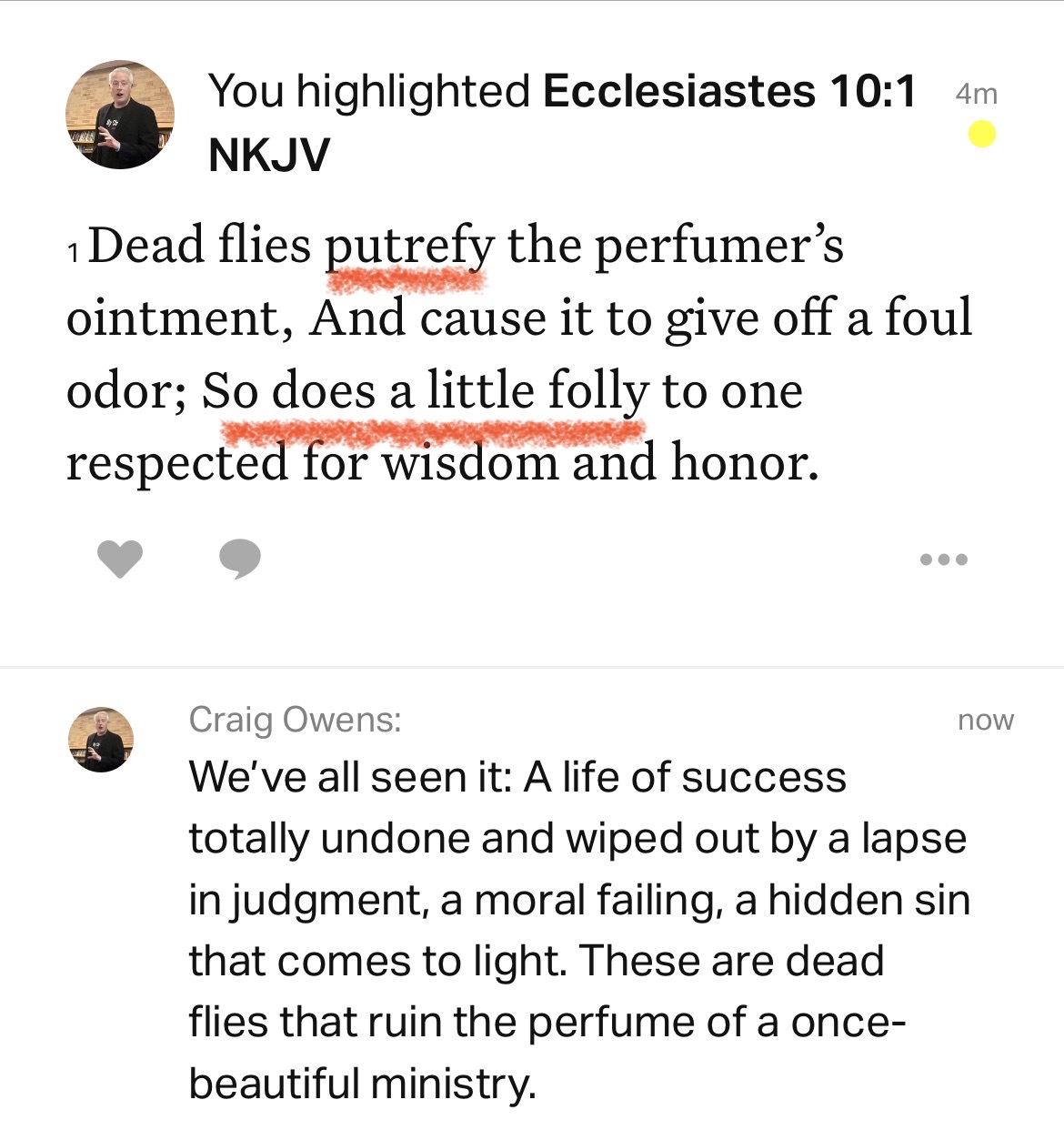
I remember once when a man who was virtually a stranger to me—but apparently knew that I was a pastor—walked up to me and said, “What do you think about your boy So-and-So?” The So-and-So he mentioned was a prominent pastor in another state who had just been caught doing some very sinful and embarrassing things. This stranger quickly painted me with the same brush! 

The phrase “one another” is so prominent in the New Testament, which means that we truly are all in this together. That’s why Charles Spurgeon warns us that a hypocritical lifestyle is not only damaging to the hypocrite’s life, but to the entire Christian community as well. 

So I also call for every Christian to “examine themselves” (1 Corinthians 11:28) for both known and hidden sins. We ought to regularly ask the Holy Spirit to point them out so that we can repent of them, make restitution, and strengthen the testimony of all Christians everywhere! 

Let me close with a final word from Dwight Moody, “The world finds plenty of difficulties on the way; let us see that we Christians do not add more stumbling-blocks by our un-Christlike walk.” 

To that I add a heartfelt “Amen!”

►► Would you please prayerfully consider supporting this ministry? My Patreon supporters get behind-the-scenes access to exclusive materials. ◀︎◀︎