Kenneth Blanchard and Randy Conley have given leaders a gift in Simple Truths of Leadership. Inside you will find 52 leadership lessons that can be immediately added to your leadership toolbox, and ample follow-up information if you want to dive deeper into any of these principles. Check out my full book review by clicking here.
“If today’s leaders had a more commonsense approach to leadership, we’d venture to say that 65 to 70 percent of the workforce would not be considered disengaged. That’s one reason our original title for this book was ‘DUH! Why isn’t commonsense leadership common practice?’”
“The most persistent barrier to being a servant leader is a heart motivated by self interest that looks at the world as a ‘give a little, take a lot’ proposition. … If leaders don’t get their heart right, they will never become servant leaders.”
“Organizational leaders often have an either/or attitude toward results and people. … You can get both great results and great relationships if you understand the two parts of servant leadership: the leadership aspect focuses on vision, direction, and results; the servant aspect focuses on working side-by-side in relationship with your people.”
“Empower your people by letting them bring their brains to work.”
“When people are off track, don’t reprimand them—redirect them.”
“The best minute servant leaders spend is the one they invest in people.”
“Ministers should be persons of the same quiet, lamb-like spirit that Christ was of, the same spirit of submission to God’s will, and patience under afflictions, and meekness towards men; of the same calmness and composure of spirit under reproaches and sufferings from the malignity of evil men; of the same spirit of forgiveness of injuries; of the same spirit of charity, of fervent love and extensive benevolence; the same disposition to pity the miserable, to weep with those who weep, to help men under their calamities of both soul and body, to hear and grant the requests of the needy, and relieve the afflicted; the same spirit of condescension to the poor and mean, tenderness and gentleness towards the weak, and great and effectual love to enemies.” —Jonathan Edwards
“God has promised to supply all our needs. What we don’t have now, we don’t need now.” —Elizabeth Elliot
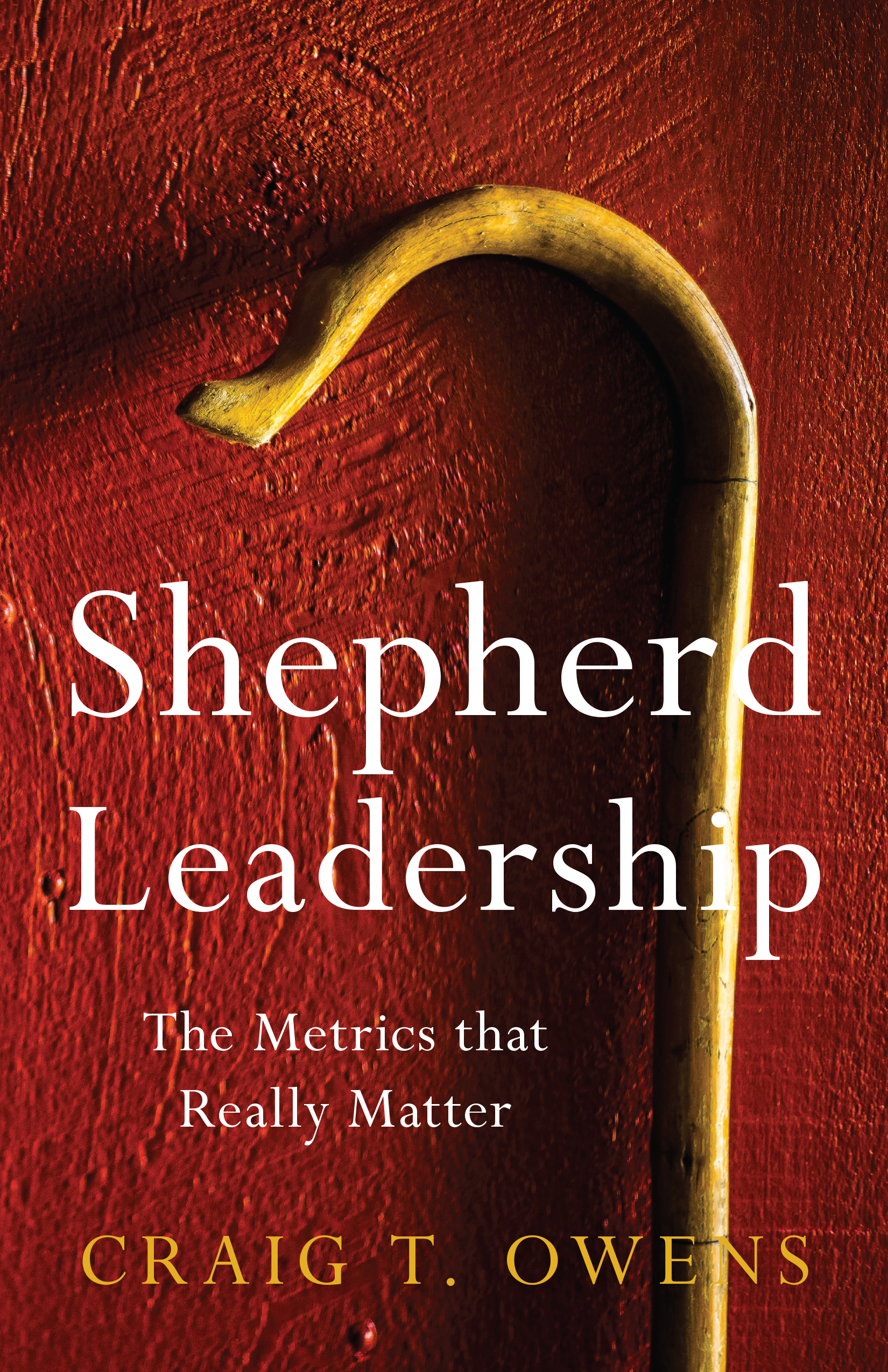
In my book Shepherd Leadership: The Metrics That Really Matter, I talk about how important it is for us to get a good night’s sleep to keep our leadership skills sharp. Sleep is also vitally important to help in the battle against overcoming temptations.
A groundbreaking paper was released this year that appears to debunk evolutionary theories once again. Check out this commentary from John Stonestreet’s podcast.
“There’s no such thing as a spiritual vacuum in the cosmos. Whatever of our time, attention, interest, or strength is not devoted to the Lord, and His Kingdom and glory, will become susceptible to being taken over by contrary interests. These often take the form of false teachers who appeal to our selfish interests and encourage us to make of the faith of Jesus Christ a kind of spiritual smorgasbord for whatever we think we need. We leave off the solid food of sound doctrine and dabble in the sweets and crunchies of mere self-interest—if we spend any time in the Word of God at all. Our mind enters a period of arrested development which will become permanent atrophy unless serious measures are engaged.” —T.M. Moore
“Always make your gratitude greater than your success.” —Dan Sullivan & Catherine Nomura
Listen to the podcast of this post by clicking on the player below, and you can also subscribe on Apple, Spotify, or Audible.
I am so grateful for the blessings of a godly mother and a godly wife! I can relate to Abraham Lincoln who said, “All I am, or can be, I owe to my angel mother. … I remember my mother’s prayers and they have always followed me. They have clung to me all my life.”
Mothers—both the natural, physical, and adoptive mothers—can save the rest of us from a world of hurt. We see this in a story in the Bible of a mother that saved innumerable people from the consequences of folly. This is an amazing story in 1 Samuel 25, so please take some time to read it for yourself.
King Saul and David have finally separated from each other, with Saul returning home to Gibeah and David returning to his stronghold at En Gedi. Eventually, David moved west from En Gedi to the Desert of Moan, where the town of Carmel was nearby.
A prominent citizen of Carmel was a man named Nabal. He is described as “very wealthy,” owning 1000 goats and 3000 sheep. But he apparently gained his wealth through less-than-honorable means because he is described as “surly and mean in his dealings.” We find out later in the story that he’s also hard-hearted and hard-headed, not listening to any counsel others may offer him.
That fits him because his name means “fool.” I find it hard to believe that his parents named him this from birth. If they did, it reminds me of the opening words of C.S. Lewis’ book The Voyage Of The Dawn Treader: “There was a boy named Clarence Eustace Scrubb, and he almost deserved it.” Instead, I think Nabal’s dealings were so mean, surely, and foolish that the name stuck. Perhaps he even wore that name as a badge of honor.
It came sheep-shearing time—which is really payday for shepherds—so David sends some of his servants to Nabal to ask for whatever he might find to give as a gift to “your servants and your son David.” David’s men had been a constant source of protection for Nabal’s herdsmen, so a gift of gratitude does seem appropriate.
Nabal doesn’t just say, “No,” but he insults David. As his foolish nature controlled him, he not only insulted David, but he insulted God too by implying that David wasn’t anointed by God, but was merely ruthlessly climbing a ladder of success. Probably Nabal thought this way because that’s how he himself gained his fortune.
Nabal’s response lit David’s fuse! In fact, David’s response to his men was just four words long: “Put on your swords!”
Fortunately, one of Nabal’s servants informed his wife Abigail of this.
In the same verse where Nabal is described as mean and surely, Abigail is described as “intelligent and beautiful.” Whereas Nabal’s name means fool, Abigail’s name means “my father’s joy.” She must have been born at just the right time for her father and she continues to be a just-in-time woman!
This servant brought Abigail word of Nabal’s foolish response, telling her that David’s men were indeed “a wall around us” while they were in the desert. And then he says, “Think carefully about what you should do because disaster is hanging over us!”
Abigail acts quickly, wisely, and humbly.
The first thing she does is send hundreds of pounds of food to David and his men. She sends the gift that Nabal probably should have sent. Then Abigail herself follows the gifts on her own donkey. When she encounters David and his armed men coming down the mountain pass, she humbly falls at his feet asking David to reconsider.
Abigail doesn’t tell David he shouldn’t be angry, but she points him to something bigger and more long-lasting than his immediate thought of revenge. She reminds him that he is God’s anointed leader, and she asks, “When you become king, do you want this bloodshed on your conscience?”
Abigail’s words have an immediate effect on David, who calls off the attack, praises Abigail, and praises God for sending Abigail to him. Abigail rescued Nabal’s family and workers from imminent destruction, and she saves David from the consequences of his rash response.
The next morning, when she relates this story to Nabal, he has either a stroke or a heart attack, and then dies ten days later. Justice is served, but it’s served by God and not by David.
Later on, David takes the now-widowed Abigail as his wife.
Abigail’s name scarcely appears anywhere else in the Bible, but there is one notable appearance:
Sons were born to David in Hebron: His firstborn was Amnon the son of Ahinoam of Jezreel; his second, Kileab the son of Abigail the widow of Nabal of Carmel; the third, Absalom the son of Maakah daughter of Talmai king of Geshur; the fourth, Adonijah the son of Haggith; the fifth, Shephatiah the son of Abital; and the sixth, Ithream the son of David’s wife Eglah. (2 Samuel 3:2-5)
Amnon, first in line for the throne, raped his half-sister Tamar and was then killed by Absalom, who was Tamar’s brother. Absalom, third in line for the throne, not only avenged his sister’s disgrace but led a coup against David, where he was killed in battle.
That leaves Kileab as the obvious heir to King David’s throne, yet this is the only place he is mentioned in the Bible. I think Abigail’s wise influence saved Kileab from the drama of aspiring to be king, a painful future, and perhaps a premature death.
From this amazing story, I would like to offer three takeaways for Moms:
Use your inner beauty to persuade foolhardy men—1 Peter 3:2-3
Use your Holy Spirit-given wisdom to dissuade foolishness—Matthew 10:19
Use your prayer life to bring a legacy of peace—Psalm 116:16
Godly mothers, please be encouraged today at how much influence you exert over others in your life. Your inner beauty, God-given wisdom, humility, and prayers are making more of an impact than you may ever know. I believe in heaven the full story will be shared, and you will be praised for being a wise and faithful servant.
May God continue to bless, empower, and use our Moms to save us from the consequences of our foolishness!
To fill the granaries of God! —Margaret J. Prescott
My friend and podcast partner Greg Heeres talked about growing and learning through change. You can check out the rest of this episode of The Craig And Greg Show here.
Sometimes the prophetic language in the Bible can be a bit confusing. Like the phrase: “A time, times, and half a time.” Here is how Dr. Henry Halley unpacks this—
“It denotes the duration of the other horn of the fourth beast (Daniel 7:25). It denotes the period from Daniel to the time of the end (Daniel 12:6–7). It is used in Revelation 12:14 as identical to 42 months and to 1260 days (Revelation 11:2–3; 12:6, 14; 13:5), the period of time the Holy City was trampled, the two witnesses prophesied, the woman was in the wilderness, and the revived beast was on the throne.
“The word ‘time,’ in the phrase ‘a time, times, and half a time’ is generally taken to mean year; the phrase thus means three and a half years, which is 42 months, or 1260 days.
“By some, this is taken to refer to a literal three and a half years. Others, on the year-day interpretation (Numbers 14:34; Ezra 4:6), take it to be a period of 1260 years. Still others look upon the figures, not as defining time limits or periods, but as being symbolic: 7 Is the symbol of completeness, while three and a half, which is half of 7, represents incompleteness—that is, the reign of evil will be only temporary.” —Halley’s Study Bible(check out all of the biblical references in this quote by clicking here)
“Ambivalence toward the Law of God is troubling. Theologians discard the Law, and pastors either reject or neglect it. Jesus said that keeping and teaching the Law of God was a mark of Kingdom greatness (Matthew 5:17-19). Apparently that’s not a goal many of us aspire to. He also said that when the Law of God is neglected, love grows cold (Matthew 12:24). The ubiquitous lack of love in our world today is undoubtedly related to our failure to teach and live according to the Law of God. …
“Pastors have three main resources for the work and business of ministry: The Word of God, prayer, and their personal example (Acts 6:4; 1 Peter 5:1-3). If any of these fails, their ministry will as well. Especially must pastors be seen to be men zealous for the Law of God, to obey all the counsel of the Lord in His Word and to resist the devil and overcome every temptation. Jesus did. Paul did. John said this is the way love flourishes (1 John 5:1-3). Throughout this generation, failures of obedience on the part of highly visible pastors have contributed to the Church’s becoming an object of scorn by many unbelievers, while believers have been largely silent about their failings. We must be diligent in obeying Christ if we would teach others to do so and thus fulfill our calling to the Kingdom and glory of God.” —T.M. Moore
Not all viruses need to be eliminated. A study has discovered 5500 new RNA viruses on the ocean, finding “an entire phylum, the Taraviricota . . . found all over the oceans, which suggests they’re ecologically important.” The Creator knew what He was doing!
I came across a passage from a blog post I wrote 10 years ago, but it is still so timely for today: “Pastors, we can become so focused on the next sermon, the next appointment, the next Board meeting, the next outreach that we are actually worshiping the ministry instead of worshiping God through our ministry. When we are more focused on the work than on God, we can easily begin to feel over-worked and under-appreciated.”
“Stay with your Lord, however long the night, for only in Him have you hope of the morning!” —Charles Spurgeon
“I shall not demean my own uniqueness by envy of others. I shall stop boring into myself to discover what psychological or social categories I might belong to. Mostly I shall simply forget about myself and do my work.” —Clyde Kilby
Jonathan Edwards wrote words that resonate with my message about pastors following the example of the Great Shepherd Jesus. “The ministers of Christ should be persons of the same spirit that their Lord was of: the same spirit of humility and lowliness of heart; for the servant is not greater than his Lord. They should be of the same spirit of heavenly-mindedness and contempt of the glory, wealth, and pleasures of this world: they should be of the same spirit of devotion and fervent love to God: they should follow the example of His prayerfulness; of whom we read from time to time of His retiring from the world, away from the noise and applauses of the multitudes, into mountains and solitary places, for secret prayer, and holy converse with his Father….” —Jonathan Edwards
“Wonderful things are told in this book [Daniel]. To those who find it difficult to believe these things, we say: let us remember that for one thousand years God had been nurturing the Hebrew nation for the purpose of establishing, through that nation, in a world of idol-worshiping nations, the idea that God is God. Now God’s nation had been destroyed by a nation that worshiped idols. That was plain evidence to all the world that the gods of Babylon were more powerful than the God of the Jews. It was a crisis in God’s struggle with idolatry. If ever there was a time when God needed to do something to show who He is, it was during the Babylonian exile. Strange indeed it would have been if nothing unusual had happened. Hard as it may be to believe these miracles, it would be harder to believe the rest of the story without them.
“At least the Jews, who from the very beginning had always been falling into idolatry, were now at last, in the Babylonian exile, convinced that their own God was the true God. These miracles also had a powerful influence on both Nebuchadnezzar and Darius (3:29; 6:26).” —Halley’s Study Bible
Listen to the podcast of this post by clicking on the player below, and you can also subscribe on Apple, Spotify, or Audible.
C.S. Lewis said, “Friendship is born at that moment when one person says to another, ‘What! You too? I thought I was the only one!’” Truly there is a special bond when we find someone who “gets” us—someone who not only knows what we’re feeling, but how to help us too.
Jesus is described as One who went through all of the human suffering we will ever have to go through (Hebrews 2:14, 17-18). So no matter what you’re going through, Jesus “gets” you. He’s been through it and He knows exactly what you’re feeling and what help you need.
This is wonderful news for all of us! But isn’t it also comforting when we have a human companion that “gets” us too? One that will come alongside us through the challenging and painful times to help us?
In His love for His sheep, Jesus has given us under-shepherds. These are sheep that He has called and equipped to care for His flock. He did this with David—
He chose David His servant and took him from the sheep pens; from tending the sheep He brought him to be the shepherd of His people Jacob, of Israel His inheritance. And David shepherded them with integrity of heart; with skillful hands he led them. (Psalm 78:70-72)
David never forgot that his source of strength was the Chief Shepherd, and he penned a beautiful psalm of praise and reliance on Him (Psalm 23). David also made it a priority to point the sheep under his care to the Chief Shepherd. He prayed:
The Lord is my strength and my shield; my heart trusts in Him, and He helps me. My heart leaps for joy, and with my song I praise Him. The Lord is the strength of His people, a fortress of salvation for His anointed one. Save Your people and bless Your inheritance; be their Shepherd and carry them forever. (Psalm 28:7-9)
David “got” the needs of the sheep and with skill and integrity he both shepherded them as he was strengthened by the Chief Shepherd, and he entrusted them into the care of the Chief Shepherd.
In the foreword to my book Shepherd Leadership, Dick Brogden wrote, “God plucked David from the sheepfold. God chose a sheep to be a shepherd. And though we all are stupid sheep, when God plucks us out of obscurity to serve others, we can have the humble confidence for as long as we are asked to lead that God has chosen us. That confidence both faithfully drives us to our knees and fearlessly propels us against our giants.”
If you have been called by the Chief Shepherd to be an under-shepherd, make sure you remain a sheepish shepherd—one that “gets” his or her sheep. Don’t be distant from the flock, but stay close by them in the pasture so that you can care for them, pray for them, and lead them to the Chief Shepherd.
I adapted David’s beautiful 23rd Psalm into a prayer that I hope all under-shepherds will use to gain the strength they need for the work to which the Chief Shepherd has called them—
BecauseYou are my Chief Shepherd, I lack nothing that is needed to care for the sheep You have placed under my care.
Just as You provide food for me in green pastures, and quiet waters for my thirst, I am equipped to feed the hungry and give drink to the thirsty.
You continually refresh my soul, so I can offer refreshing hospitality to those who have been beat up along life’s journey.
You guide me along the right paths for Your name’s sake, so I can show others the path into Your presence.
Even when I walk through the darkest valleys, I never fear because You are with me; You comfort me and provide all that I need so that I can care for the sick, the downhearted, and the weary without ever lapsing into my own pity party.
You continually prepare a table before me, even when I’m in the midst of enemies. You have anointed my head with oil and caused my cup of blessing to overflow, so I have more than enough to share with others.
I am secure that Your goodness and Your love will follow me all the days of my life, so I am equipped to lead others to the place where they too will dwell in Your house forever.
“It were a good strife amongst Christians, one to labor to give no offense, and the other to labor to take none. The best men are severe to themselves, tender over others.” —Richard Sibbes
Listen to the podcast of this post by clicking on the player below, and you can also subscribe on Apple, Spotify, or Audible.
King Solomon nailed it pretty succinctly with this verse: Dead flies putrefy the perfumer’s ointment, and cause it to give off a foul odor; so does a little folly to one respected for wisdom and honor. (Ecclesiastes 10:1)
As a Christian leader, I always have mixed emotions when I hear of another prominent Christian leader who has stumbled. Part of me is angry because I know that all Christian leaders will get painted with the same brush. Another part of me is incredibly sad to hear of a brother or sister who has squandered the trust that was placed in them. Finally, part of me becomes quite self-reflective, because I don’t want to repeat their mistakes.
Tom Peters said, “There are no minor lapses of integrity.” King Solomon would agree. And so do I.
Godly leadership can be such a beautiful thing, but just a couple of dead flies can putrefy the whole thing!
Here are four things that I have seen in the lives of those leaders who haven’t finished well. These are the things all of us need to watch carefully in our own lives.
(1) They compromised in “the little things.” None of them started off by saying, “I’m going to completely ruin my reputation as a godly leader.” But they allowed themselves to indulge in things that were just “little things” in their minds. Perhaps they thought, “It won’t hurt if I indulge in this one little thing.” The apostle Paul warns us, “So, if you think you are standing firm, be careful that you don’t fall!” (1 Corinthians 10:12).
(2) Pride crept in. They thought they were better than others. Peter said it this way: “All of you, clothe yourselves with humility toward one another, because, ‘God opposes the proud but shows favor to the humble’” (1 Peter 5:5). I addressed this topic in my book Shepherd Leadership: The Metrics That Really Matter like this—
Did you catch that? God stands back from the proud person who will not admit his error nor ask for help, let alone ask for forgiveness. On the other hand, God lavishes His grace on the humble one who admits both his error and his need for help. Admission of an inappropriate action or reaction brings God’s help!
Friends, the mark of a maturing shepherd is not one who never misspeaks or never makes a mistake. No, the mark of a maturing shepherd is the one who is closing the gap between his mess up and his confession.
Pride will keep us from confessing the “little sins” and keep us from God’s help. But humility quickly admits the smallest of slip-ups and therefore receives God’s grace and help.
(3) They lowered their standards. If anything, leaders should raise their standards as they become more successful. Think of it this way: when I was young and immature, I didn’t give much thought to my diet or my exercise routine. As I became older (and hopefully more mature), I became much more tuned-in to these things. Physically, the older I get, the more I need to pay attention to my health. The same thing is true in our leadership: maturity should lead to higher standards and higher levels of scrutiny.
(4) They stopped listening to others. The combination of little compromises, pride, and lowered standards doesn’t easily invite accountability nor transparency. The track record is pretty consistent among those who have fallen short: they stopped listening to people who tried to correct them.
I want to finish well. I don’t want a leadership stumble in my life to rob God of glory, nor to cause others to stumble in their Christian walk. I am committed to living my life in a way that will allow Jesus to say to me at the end, “Well done, good and faithful servant.”
I pray that all Christian leaders will join me in this.
Listen to the podcast of this post by clicking on the player below, and you can also subscribe on Apple, Spotify, or Audible.
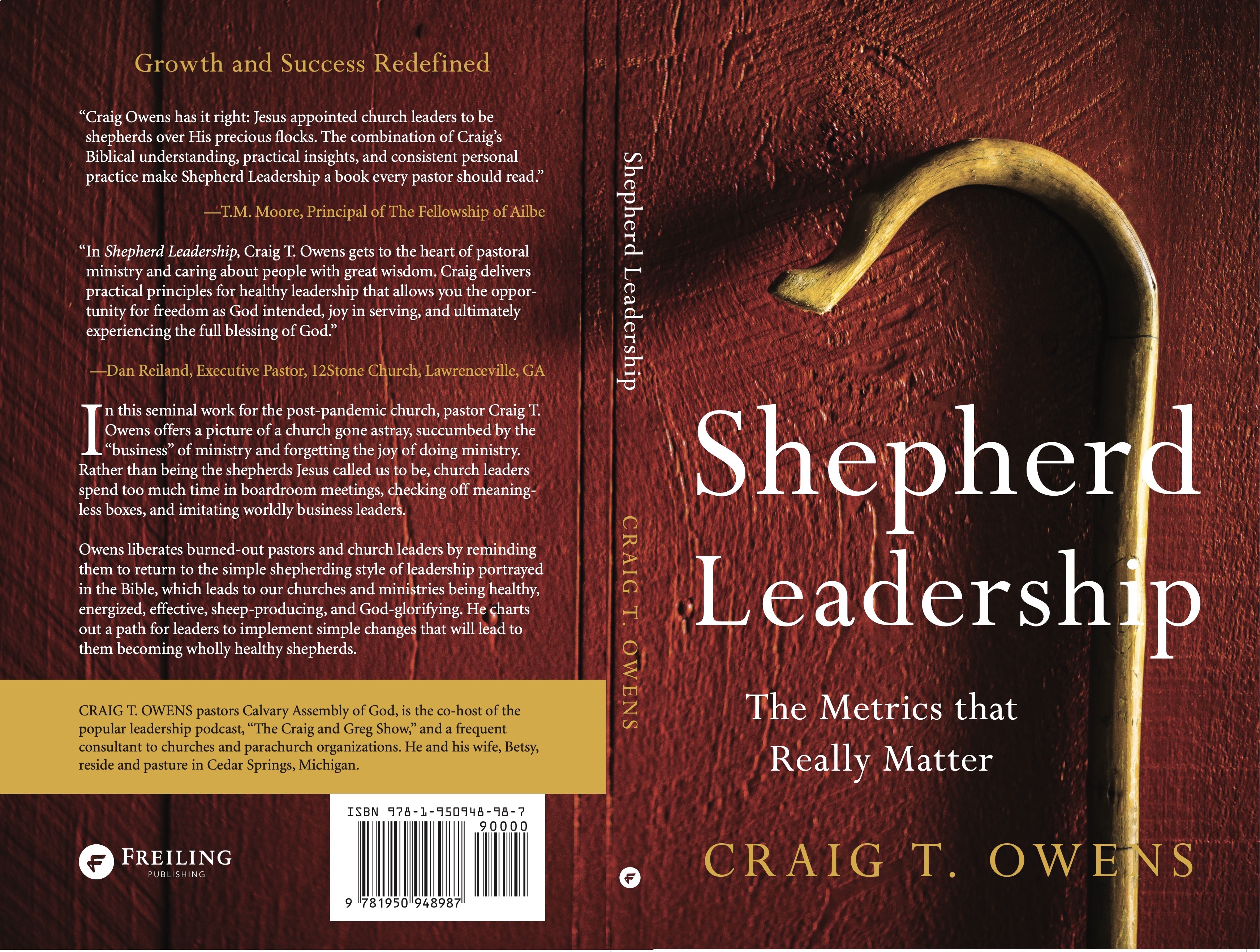
T.M. Moore shares my heartbeat for pastors to align their minds, hearts, and wills to leading as shepherds. T.M. graciously wrote one of the endorsements for my book Shepherd Leadership: The Metrics That Really Matter by saying,
“The combination of Craig’s Biblical understanding, practical insights, and consistent personal practice make this a book every pastor should read. Unless our goals and practices in ministry line up with those Jesus taught and exemplified, we cannot expect Him to bless us with world-uprighting power.”
“Many pastors today seek to model themselves and their ministries along the lines of whichever pastor and whatever church seem to be the most ‘popular’ or ‘successful’ in attracting people. The result is, increasingly, worship services are starting to look alike, and pastors are starting to preach alike. And those who aren’t are wondering what they might do to become more like everybody else.
“We ought not model ourselves on our contemporaries, be they ever so ‘successful.’ Such comparing and adjusting, Paul suggested, is not wise (2 Corinthians 10:12). Jesus is our great model for ministry, and we should look to Him to wash, shape, enliven, empower, and employ every aspect of our lives and ministries for His glory.
“In his sermon, ‘Christ the Example of Ministers,’ Jonathan Edwards offered a concise summary of the reason people submit themselves for ordination to ministry: ‘The work and business of ministers is as it were that of servants, to wash and cleanse the souls of men: for this is done by the preaching of the Word, which is their main business, Ephesians 5:26. “That He might sanctify and cleanse it with the washing of water by the Word.” … It is the duty of ministers of the gospel, in the work of their ministry, to follow the example of their great Lord and Master.’
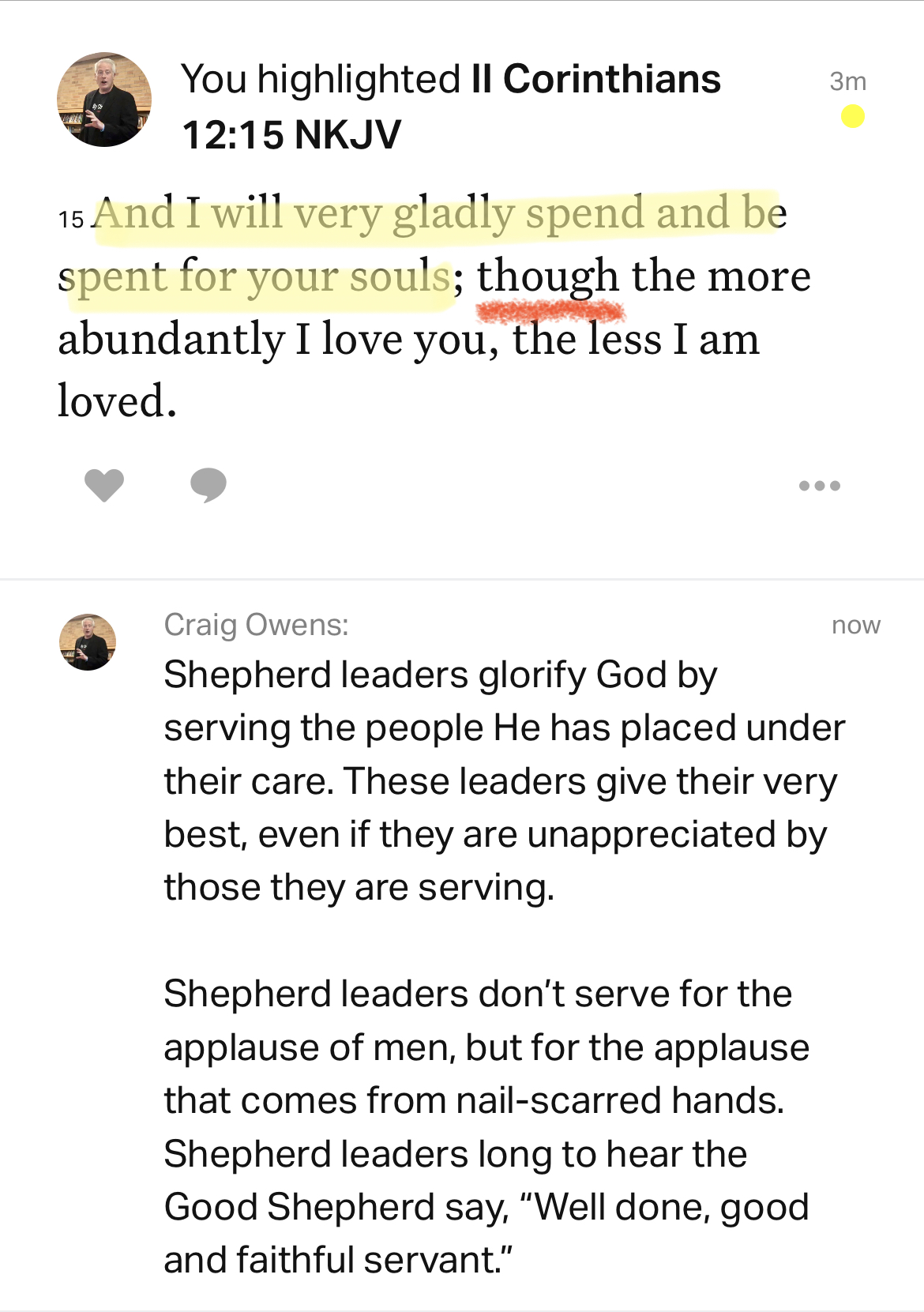
“Elsewhere Paul talked about spending and being spent for the souls of God’s people (2 Corinthians 12:15). The challenge that faces us who have accepted the call to ministry is to follow the example of Paul (1 Corinthians 11:1) and strive to see Jesus, become like Jesus, work and serve like Jesus, lay down our lives like Jesus, and trust in Jesus to make our labors fruitful for His glory.”



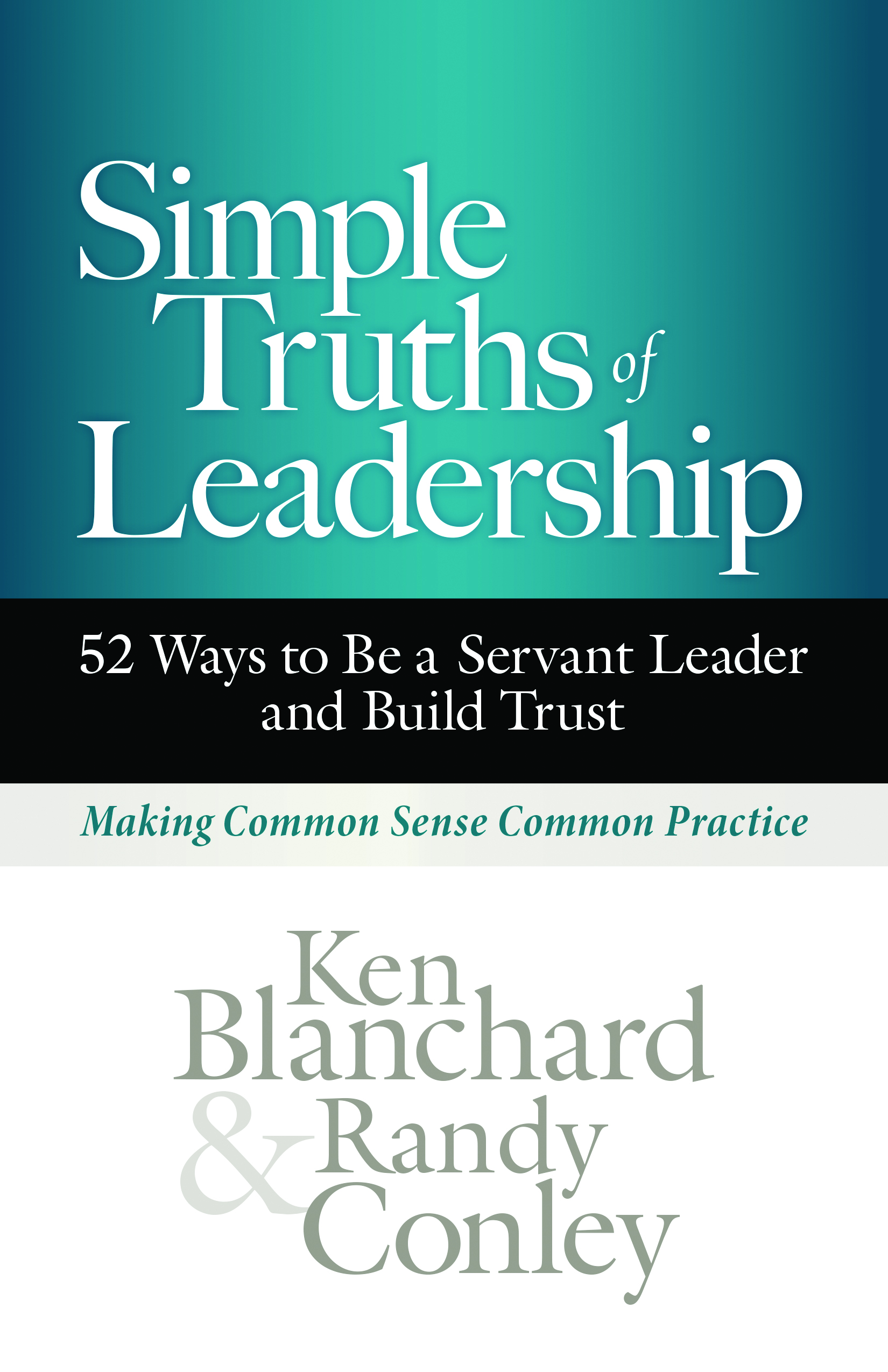 Kenneth Blanchard and Randy Conley have given leaders a gift in Simple Truths of Leadership. Inside you will find 52 leadership lessons that can be immediately added to your leadership toolbox, and ample follow-up information if you want to dive deeper into any of these principles. Check out my full book review by clicking here.







 Craig T. Owens