The Incomparable Jesus

Listen to the podcast of this post by clicking on the player below, and you can also subscribe on AppleSpotify, or Audible. 

C.S. Lewis, like many atheists, wondered if the God of the Bible might be an egomaniac because He is always encouraging people to praise Him. In his book Reflections on the Psalms, Lewis wrote a thoughtful response to this after he had become a Christian: 

“Just as men spontaneously praise whatever they value, so they spontaneously urge us to join them in praising it. ‘Isn’t she lovely? Wasn’t it glorious? Don’t you think that magnificent?’ … I think we delight to praise what we enjoy because the praise not merely expresses but completes the enjoyment; it is its appointed consummation. It is not out of compliment that lovers keep on telling one another how beautiful they are; the delight is incomplete till it is expressed. … This is so even when our expressions are inadequate, as of course they usually are. But how if one could really and fully praise even such things to perfection—utterly ‘get out’ in poetry or music or pain the upsurge of appreciation which almost bursts you? Then indeed the object would be fully appreciated and our delight would have attained perfect development. The worthier the object, the more intense this delight would be.” 

His phrase, “our expressions are inadequate” is especially true when we are attempting to appreciate and praise the Infinite, the Eternal, the Omnipresence, the Omnipotence of our God and Savior! But the biblical authors call for Christians to mature in this—we want to keep praising, keep expressing, until we finally find the perfect fulfillment in His presence. 

Paul talks about the maturing nature of love—when I was a child, I talked like a child, I thought like a child, I reasoned like a child (1 Corinthians 13:11)—but then he prays for us to grow in both our understanding and our expressions of our Savior’s love (Ephesians 1:17-19). 

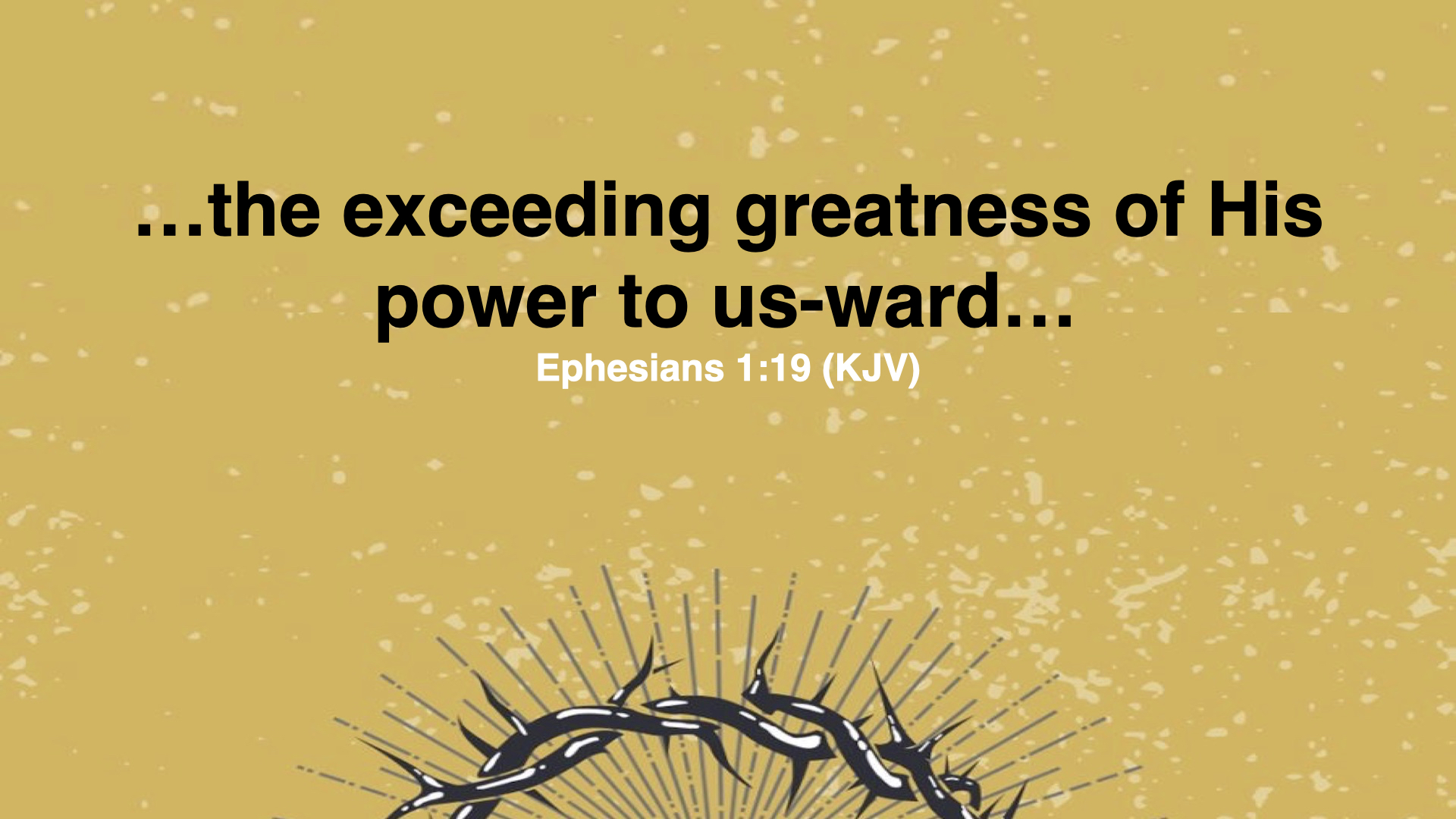
I like the wording of Ephesians 1:19 in the King James Version: the exceeding greatness of His power to us-ward. The word “exceeding” means God pours out in a way that is beyond human imagining. The Greek word that Paul uses for “greatness” is only used here, and it reinforces the truth that God is beyond our full comprehension. And then Paul adds that this overflowing, incomparable power is directed “to us-ward”! 

Paul then prays for us to be able to understand ever-increasing new dimensions of this transcendent power and ability that God directs to us through His Son Jesus, and for us to be able to express it (Ephesians 3:14-19). In other words, we are to grow in our experience of Jesus so that we can grow in our praise to Jesus. 

The incomparable Jesus means at least four things for us. It means Jesus is…

  1. …beyond comparison. Isaiah, God Himself, and the psalmists ask rhetorically, “Who is like God? Who could ever compare to Him?” (Isaiah 40:13-14, 18, 25; Psalm 89:5-8).  
  1. …matchless in His power. Isaiah 40:12 says God holds the waters of the world in the hollow of His hand. How much water is this? Scientists estimate the Earth’s water supply to be 326 quintillion gallons of water (that’s 326 followed by 18 zeros)! Not only does God hold all of the water, but He directs its activities on behalf of His children (Exodus 15:11-13). 
  1. …unequaled in knowledge. Isaiah 40:12, 26 tell us that all of the stars in our universe fit onto God’s outstretched hand, and that He knows all of the stars by name. How many stars is this? Astronomers calculate the heavens to contain 10 septillion stars (that’s 10 followed by 24 zeros)! Not only does God know each star by name, He knows each human by name, and the smallest of details about each of them (Isaiah 49:16; Matthew 10:29-31). 
  1. …inimitable in His care. We humans can get to the end of our strength, but God never does. He cares for us unlike anyone else or anything else ever can (Isaiah 40:28-31). The Lord hears His people when they call to Him for help. He rescues them from all their troubles (Psalm 34:17). 

Knowing we have a Savior like this, why would you ever settle for anything less The Genuine?! 

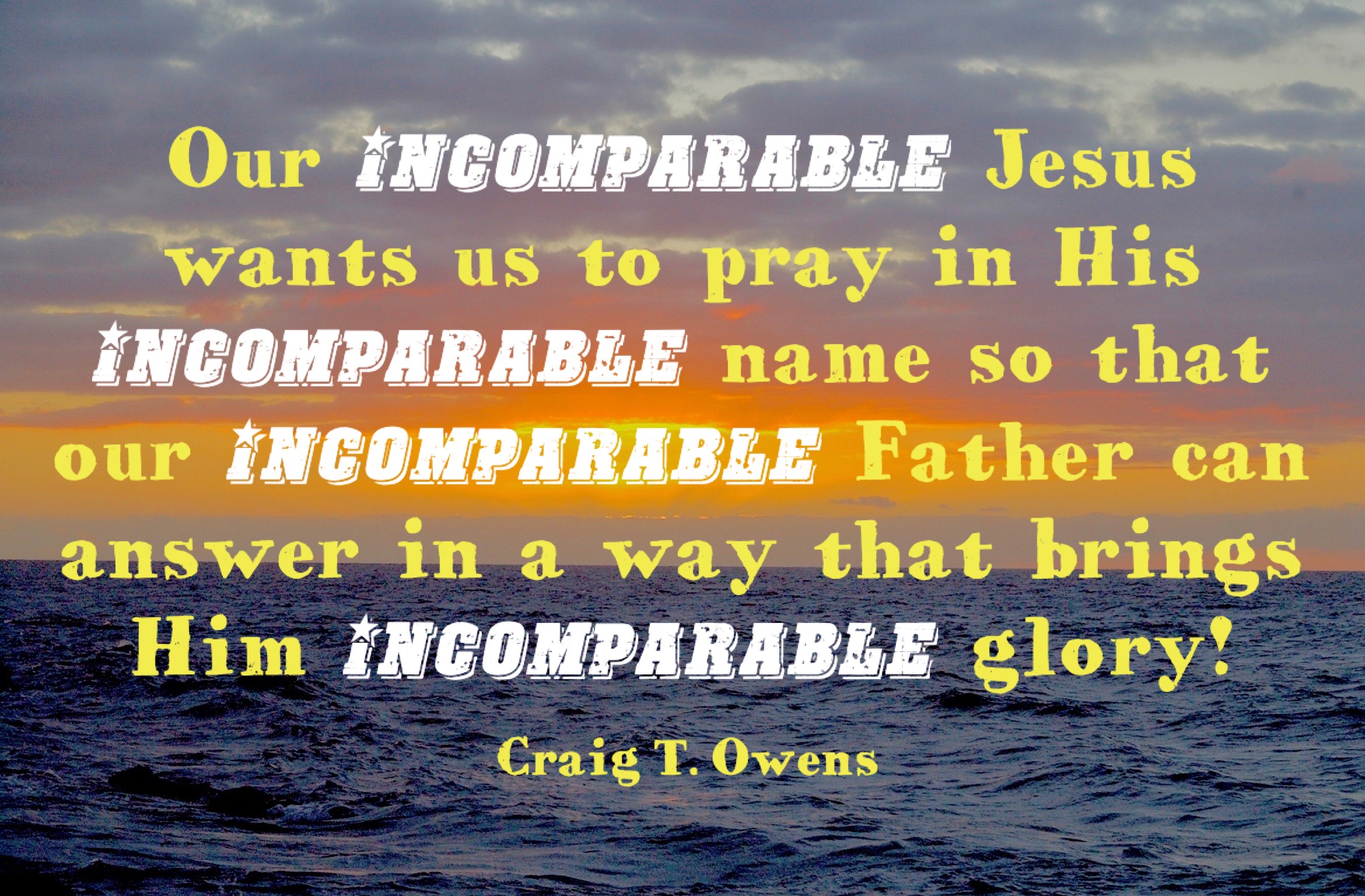
Our incomparable Jesus wants us to pray in His incomparable name so that our incomparable Father can answer in a way that brings Him incomparable glory! We’re helped, He’s lifted up, and others are drawn to Him. 

►► Would you please prayerfully consider supporting this ministry? My Patreon supporters get behind-the-scenes access to exclusive materials. ◀︎◀︎
If you’ve missed any of the messages in this series on prayer, you can find a list of all of the messages by clicking here. 

A Safe Place For Mistakes

Listen to the podcast of this post by clicking on the player below, and you can also subscribe on AppleSpotify, or Audible. 

Josh had just graduated from high school when I came to pastor in Cedar Springs. As I sat with this outstanding young man I asked him what he wanted to do next. 

“I’m not exactly sure,” he told me, “but I really feel like it’s something involved with ministry.” 

“Great!” I responded. “Let’s start experimenting.” 

I told Josh that our church was going to be a safe place to experiment: to plan new things, to try new things, to prayerfully evaluate the results, and then to use those results to plan new things. Josh jumped in right away, and over a short period of time we were eventually able to ascertain just how God had wired Josh for his niche of ministry. 

But this would have never happened without some missteps along the way. 

That’s okay. 

Leaders need to create an environment where it’s safe to make mistakes, because mistakes are a vital component of learning. 

My wife is a 3rd Grade teacher. A bulletin board in her classroom lovingly tells her students, “Our classroom is a safe place to make mistakes,” and then she gives them the keys to their successful learning. 

Leaders can help those around them grow through their mistakes by constantly reinforcing these six principles: 

  1. When someone complains, “This is too hard,” remind them, “This may take some time and effort.” 
  2. When someone says, “I’m not good at this,” prompt them to ask, “What am I missing?” and then encourage them to add, “I’m not good at this yet.” 
  3. When someone wants to settle with, “It’s good enough,” challenge them to ask themselves, “Have I given this my best effort?” 
  4. When someone wants to throw in the towel by saying, “I made a mistake,” remind them, “I failed is not the same thing as I am a failure,” and then remind them, “Mistakes help me learn.” 
  5. When someone is exasperated and says, “I give up,” come alongside them with, “Let’s try a strategy we’ve already learned.” 
  6. When someone says, “I can’t do this,” you need to lovingly encourage them with, “You can do this!” 

These responses will help foster an abundance-mindset environment where people aren’t defeated by their mistakes, but they’re energized to reengage and try again. As the brilliant inventor Thomas Edison quipped, “I’ve had a lot of success with failure.” 

Leaders, let’s make our spaces the safest places for the mistakes that lead to discovery, growth, and success. 

►► Would you please prayerfully consider supporting this ministry? My Patreon supporters get behind-the-scenes access to exclusive materials. ◀︎◀︎
The Divine Jesus

Listen to the podcast of this post by clicking on the player below, and you can also subscribe on AppleSpotify, or Audible. 

I was teaching a class for my team members, and at one of the breaks a new employee came up to me to say how much he was enjoying the day, and to tell me that he would like to do what I was doing. I asked him, “But do you want to do what I did in order to do what I’m doing?” When I explained that I read about 10-12 books for this training time, and that it took me about 40 hours to prepare for our 4-hour class, he didn’t seem as interested. 

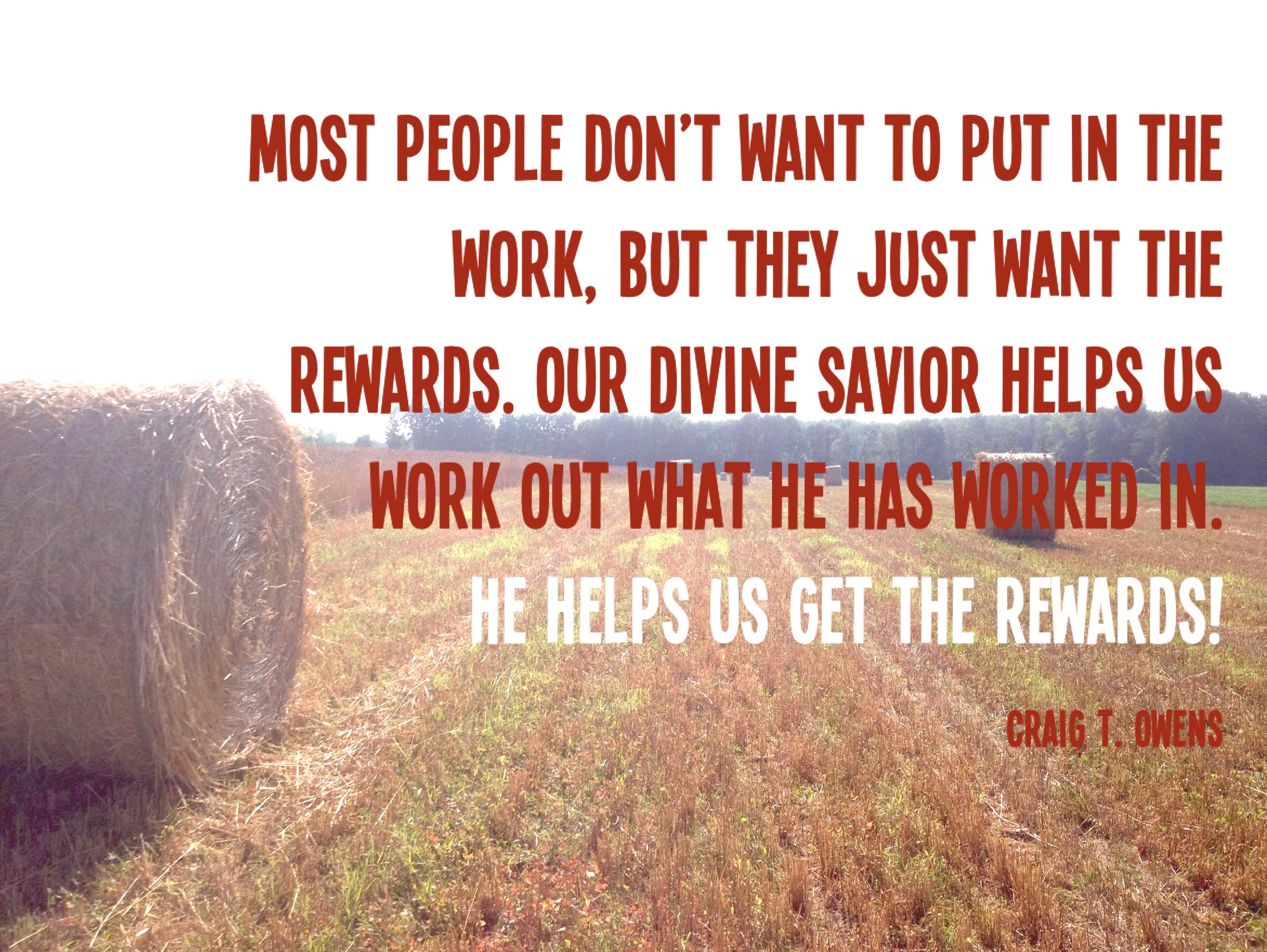
Most people don’t want to put in the work, but they just want the results. As Christians we need to remember these words from William Penn: “No pain, no palm; no thorns, no throne; no gall, no glory; no cross, no crown.” 

The human Jesus understands and empathizes with our painful struggles, and the divine Jesus helps us endure through these painful struggles to get the rewards on the other side. 

What do we mean by divine? The dictionary simply defines it as things relating to God or gods, so we need to use some context to help us understand who this divine Jesus is. After all, the New Testament refers to both Jesus and Artemis as divine (Romans 1:20; Hebrews 1:1-3; Acts 19:27). 

One way we can distinguish is by doing what the writer of Hebrews advised: “Remember your leaders, who spoke the word of God to you. Consider the outcome of their way of life and imitate their faith” (Hebrews 13:7). We see that the so-called worshippers of Artemis were more interested in their own financial gain than they were her divinity (Acts 19:23-27). In contrast, the apostle Paul demonstrated a totally Jesus-focused lifestyle: “However, I consider my life worth nothing to me; my only aim is to finish the race and complete the task the Lord Jesus has given me—the task of testifying to the good news of God’s grace” (Acts 20:24). 

Paul was following Jesus, and called all Christians to do the same. He noted that Jesus gave up all of His divine privileges to become our human Jesus, but because of this obedience, God made the divinity of Jesus shine more gloriously than anything else in creation! Then Paul transitioned to a word specifically for Christians: 

Therefore, my dear friends, as you have always obeyed—not only in my presence, but now much more in my absence—continue to work out your salvation with fear and trembling, for it is God who works in you to will and to act in order to fulfill His good purpose. (Philippians 2:12-13) 

In essence this is like Jesus saying, “I want you to have what I have, but you will have to do what I did to get it: That is, go through the painful struggles of life. But I will be right here with you every single step of the way!” 

The writer of Hebrews echoes this idea by reminding us that Jesus was made perfect through suffering, and so are we. So he calls us to “not throw away your confidence; it will be richly rewarded.” He also reminds us that although the times of suffering are not pleasant, there is an unimaginable reward on the other side (Hebrews 2:9-11; 10:35-39; 12:1-11).

I especially like this conclusion: “No discipline seems pleasant at the time, but painful. Later on, however, it produces a harvest of righteousness and peace for those who have been trained by it” (Hebrews 12:11).

The divine Jesus has made it possible for us to be rewarded as He was rewarded! His divine power leads to our divine nature. And His divine power helps us defeat the world’s weapons (2 Peter 1:3-4; 2 Corinthians 10:4) 

Jesus asks, “Do you want to do what I did in order to do what I’m doing?” The power of the divine Jesus can help us be perfected, but we only get to this perfected place by suffering as He suffered. That’s why we need to know our human Jesus understands, empathizes, and helps. 

Most people don’t want to put in the work, but they just want the rewards. Our divine Savior helps us work out what God has worked in us. He helps us get the rewards! 

If you’ve missed any of the messages in our series on prayer called Awesome: Learning to pray in the awesome name of Jesus, you can find all of the messages by clicking here. 

►► Would you please prayerfully consider supporting this ministry? My Patreon supporters get behind-the-scenes access to exclusive materials. ◀︎◀︎
The Beautiful Jesus

Listen to the podcast of this post by clicking on the player below, and you can also subscribe on AppleSpotify, or Audible. 

I think we all know the cliche, “Beauty is in the eye of the beholder.” But isn’t that too shallow? Are we really saying that beauty is only what we can see on the surface? Instead, I think we should say, “True beauty is in the heart of the beholder.”   

Where does beauty begin? What is its source? 

Jesus told us, “Love your neighbor as yourself.” I can only love others to the level that I love myself, and that also means that I can only see beauty in others as I see it in myself. But if I try to achieve this by just loving myself or telling myself how beautiful I am, my pride comes in and crumbles the whole foundation. 

So the first thing Jesus told us was to go to the Source—to Love Himself: “Love the Lord your God with all your heart and with all your soul and with all your mind and with all your strength” (Mark 12:30-31). When we come to our Heavenly Father through our beautiful Savior we discover how beautiful we are in Him. We are clothed in the righteous robes of Jesus, which makes us as beautiful as He is. Then our Father sings His love to us (see Song of Songs 2:10, 4:7). 

The dictionary defines beauty this way: “The quality present in a thing or person that gives intense pleasure or deep satisfaction to the mind.” But the word beauty originated from a Latin word that meant good or virtuous. Sadly, our vain world has made beauty something that is only skin deep, and very rarely is someone’s goodness or virtue described as beautiful. 

Let me say it again: “True beauty is in the heart of the beholder.” Peter and Jesus both make this same point, reminding us that something beautiful on the outside can actually be covering up something quite ugly on the inside, or to say it another way: true beauty is far deeper than merely what we see with our eyes (1 Peter 3:3-4; Matthew 23:27). 

On the other hand, Isaiah prophesied about Jesus that, “there was nothing beautiful or majestic about His appearance, nothing to attract us to Him” (Isaiah 53:2 NLT). Outwardly, especially at His crucifixion, Jesus was grotesque, but this ugliness was our ugliness—our sin, and our disease, and our pride that Jesus took on Himself. He willingly took on our ugliness to allow us to exchange ashes for beauty, mourning for rejoicing, and sin for righteousness (Isaiah 53:2-5; 61:1-2, 9-10). 

So in prayer, we go to the One who isn’t beautiful in the eyes of a vain world. Jesus made Himself nothing, taking on the very nature of a servant, He came not to be served but to serve, He washed dirty feet, He hung out with sinners, He didn’t stay at the Ritz (He didn’t even have a home of His own), and He had only one set of clothes to wear. But He willingly took on all of our pain and sin so that He could take away our ugly robes and clothe us in His beautifully perfect robe of righteousness. 

It’s only when I know how beautiful and loved I am in God’s sight that I can begin to love others and see the beauty in them. 

Looking at True Beauty is the only way I can see myself correctly. Looking at True Beauty I can see the intrinsic worth and beauty in others. 

Prayer takes me to the beautiful Savior. Prayer reveals Christ’s beauty in me. Prayer brings His beauty to a vain world. 

“Without prayer the Christian life, robbed of its sweetness and its beauty, becomes cold and formal and dead; but rooted in the secret place where God meets and walks and talks with His own, it grows into such a testimony of divine power that all men will feel its influence and be touched by the warmth of its love.” —E.M. Bounds 

I pray that we will know this truth—that true beauty is in the heart of the beholder—and that we will truly know that Real Beauty is only found when we gaze at our beautiful Savior. 

►► Would you please prayerfully consider supporting this ministry? ◀︎◀︎

If you’ve missed any of the messages in our series on prayer called Awesome: Learning to pray in the awesome name of Jesus, you can find all of the messages by clicking here.

The Awesome Jesus

Listen to the podcast of this post by clicking on the player below, and you can also subscribe on AppleSpotify, or Audible.

Comedian Brian Regan tells a story about people trying to one-up others with their stories. He explains that he has a “social fantasy” that he wishes he was one of the 12 people who have walked on the moon. How nice it must be, he says, that they can top any story!  

It’s one thing to read things, hear things, and even believe things, but it’s something completely different when you experience those things for yourself. 

The one with an experience…

  1. …is never at the mercy of the one with an argument 
  2. …gains the ear of others 
  3. …inspires others to desire a similar experience for themselves 

In the case of prayer, I feel bad for those who have heard that God no longer answers prayer, or no longer does the miraculous for His children. I have personally experienced God’s healing power as a direct result of someone praying for me. In fact, I’m alive today because of the prayers of my two grandmothers! 

When God answers prayer, it is awesome! 

The dictionary defines awesome with three main words: reverence, admiration, and fear. I think we can be a bit more specific with these definitions—

  • for saints: reverence 
  • for seekers: admiration 
  • for sinners: fear 

It is so important for Christians to personally experience the awesome deeds our God has done because we have prayed in the awesome name of Jesus! 

A.W. Tozer wrote, “There’s an awesomeness about God which is missing in our day altogether; there’s little sense of admiring awe in the Church of Christ these days.” 

I think this is because our prayers are too tame. 

The writer of Hebrews tells us about the powerful personal relationship we can have to Almighty God through Jesus Christ. His conclusion is, “Therefore, since we are receiving a kingdom that cannot be shaken, let us be thankful, and so worship God acceptably with reverence and awe, for our ‘God is a consuming fire’” (Hebrews 12:28-29). 

When Christians pray in the awesome name of Jesus, and God does awesome things in response, the saints stand in reverent worship of Him. God told Moses, “The people you live among will see how awesome is the work that I, the Lord, will do for you,” and David exclaimed, “You answer us with awesome and righteous deeds” (Exodus 34:10; Psalm 65:5). 

These awesome answers that we personally experience gain the attention and admiration of seekers. Again, David said, “Come and see what God has done, His awesome deeds for mankind!” (Psalm 66:5). 

But God showing up in His awesome strength will also create fear in sinners. The prophet Joel said, “The day of the Lord is an awesome, terrible thing” (Joel 2:11). The righteous judgment of God is awesome, but so is the love of God: “Lord, the God of heaven, the great and awesome God, who keeps His covenant of love with those who love Him and keep His commandments” (Nehemiah 1:5). We need to use the awesomeness of God as a means to tell both sinners and seekers how they can know the awesome love of God.  

Remember that Tozer said “there’s little sense of admiring awe in the Church of Christ these days.” So I think we need to pray this, “God, forgive us for expectations of You that are too low.” 

I challenge you: 

  • Let’s pray bolder prayers this year to our awesome God. 
  • Let’s worship in reverence of His awesome deeds. 
  • Let’s create a sense of admiration in seekers which will lead them to reverence as saints. 
  • Let’s address the fear of sinners, and lead them to admiration as seekers, and to reverence as saints. 

If you’ve missed any of the messages in our series on prayer called Awesome, you can find all of the messages by clicking here. 

►► Would you please prayerfully consider supporting this ministry? ◀︎◀︎

Sermon Prep 101

Listen to the podcast of this post by clicking on the player below, and you can also subscribe on AppleSpotify, or Audible. 

Go down to the potter’s house, and there I will give you My message (God speaking to Jeremiah).

Jesus was masterful in using visual illustrations—common, everyday things—to illustrate the biblical truth He wanted to teach. God does the same thing with Jeremiah. 

God instructs Jeremiah to simply go to the potter’s house and watch. Jeremiah obeyed: “I went down to the potter’s house, and I saw him working” (v. 3). It was after taking in this scene that God could speak to Jeremiah a sermon illustration. Jeremiah says, “Then the word of the Lord came to me” (v. 5). 

Not only did God help Jeremiah prepare his sermon with a visual illustration, but God also prepared Jeremiah for the follow up conversation. God knew how the people would respond to Jeremiah’s message, and He again gave him the words to speak ahead of time (vv. 12-17). 

God knows His sheep better than we do. He knows what they need to hear, and how best to make His message stick. Jesus said, 

“I have never spoken on My own authority or of My own accord or as self-appointed, but the Father Who sent Me has Himself given Me orders concerning what to say and what to tell. And I know that His commandment means eternal life. So whatever I speak, I am saying exactly what My Father has told Me to say and in accordance with His instructions.” (John 12:49-50 AMP) 

We pastors and evangelists dare not try to prepare a message on our own! 

Samuel Johnson prayed something that I pray every time I sit down to prepare a sermon: “Almighty God, my Heavenly Father, without Whose help labor is useless, without Whose light search is in vain, invigorate my studies.” 

Seeking God’s help in our sermon preparation should be our very first action every single time. 

►► Would you please prayerfully consider supporting this ministry? ◀︎◀︎

Thursdays With Spurgeon—Beautiful Homegoing

This is a weekly series with things I’m reading and pondering from Charles Spurgeon. You can read the original seed thought here, or type “Thursdays With Spurgeon” in the search box to read more entries.

Listen to the podcast of this post by clicking on the player below, and you can also subscribe on AppleSpotify, or Audible. 

Beautiful Homegoing

You shall come to the grave at full age, as a sheaf of grain ripens in its season. (Job 5:26) 

     The Christian’s death is always timely. ‘You shall come to the grave at full age. 

     ‘Ah,’ says one, ‘that is not true. Good people do not live longer than others. The most pious man may die in the prime of his youth.’ But look at my text. It does not say you will come to your grave in old age, but in a ‘full age.’ … All fruits do not get ripe and mellow at the same season. So it is with Christians. They are at a ‘full age’ when God chooses to take them home. … 

     There are two mercies to a Christian. The first is that he will never die too soon. And the second is that he will never die too late. … 

     ‘But,’ say some, ‘how useful might they have been had they lived.’ Ah, but how damaging they might have been! And were it not better to die than to do something afterward that would disgrace them and bring disgrace to the Christian character? Were it not better for them to sleep while their work was going on than to break it down afterward? … 

     Again, the Christian never dies too late. … God is too good a Husbandman to leave His wheat in the field too long and let it shale out. …  

     Now the last thing is that a Christian will die with honor. … I think there are two funerals for every Christian: one is the funeral of the body, and the other of the soul. Funeral, did I say, of the soul? No, I meant not so. I meant not so. It is a marriage of the soul. For as soon as it leaves the body, the angel reapers stand ready to carry it away. They may not bring a fiery chariot as they had for Elijah. But they have their broad spreading wings. I rejoice to believe that angels will come as convoys to the soul across the ethereal plains. … I think the most honorable and glorious thing we will ever behold, next to Christ’s entrance into heaven and His glory there, is the entrance of one of God’s people into heaven.

From The Death Of The Christian

As I mentioned last week, this sermon was so providential in its timing for me because my precious mother went Home to be with Jesus just days before I opened to this sermon from Charles Spurgeon. 

We are comforted by the promises Rev. Spurgeon shares because they are based on the truth in God’s Word. “Good people pass away; the godly often die before their time. But no one seems to care or wonder why. No one seems to understand that God is protecting them from the evil to come. For those who follow godly paths will rest in peace when they die” (Isaiah 57:1-2). 

At my Mom’s graveside committal service I shared this—

One of my favorite authors C.S. Lewis made a comment, “You don’t have a soul. You are a soul. You have a body.” 

This part that we called Claudia Owens was just the body that carried around who she really was. What a beautiful soul that we got to experience for 78 years. What shined through was so sweet and graceful and wonderful. What a glimpse we got! But a joy to know that it was only a glimpse. That the part of my Mom that was so beautiful that we got to see, was only a fraction of her full beauty! The part that was really her, that is at Home with her Savior Jesus now is shining in all its brilliance. … 

We will all miss her and we will grieve our loss. But as the apostle Paul reminded us, we don’t grieve as those who have no hope. We know that to be absent from the body is to be present with the Lord. We know that this body is sown perishable ravaged by the disease of cancer, but that my Mom is now in a place with no more tears or disease. We know that the same Savior that prepared a place for Claudia has prepared a place for us.

And we concluded with this prayer that can be offered up for every Christian who has died at their “full age”: 

Heavenly Father, 

We commit this body to the ground with the full assurance that her soul is in your everlasting presence. Holy Spirit, help us in our grief to be reminded of the hope of eternal life that we all share. Thank You, Jesus, for purchasing this hope on which we stand.

As I mentioned last week, if you don’t have this blessed assurance of the marriage of your soul when you take your last breath here on earth, please don’t hesitate to contact me.

►► Would you please prayerfully consider supporting this ministry? ◀︎◀︎

Rules Of Evidence

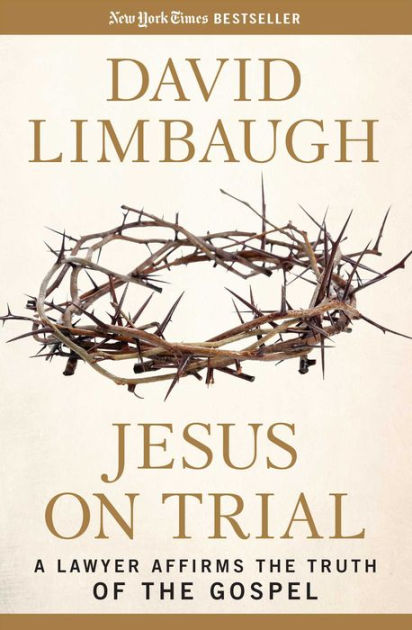
As I mentioned in my book review of David Limbaugh’s Jesus On Trial, he presents the evidence for the validity of the Bible and the historicity of Jesus Christ as if he were presenting a cae before the jury. As a trial begins, a judge will share with the jurors the rules for considering the evidence that is being presented. Here is a fantastic summary from Mr. Limbaugh—

“Applying the rules of evidence. … These rules are the ancient documents rules, the parole evidence rule, the hearsay rule, and the principle of cross-examination. 

“The common law ancient documents rule presumes a document is truthful unless it is self-contradictory, inaccurate, or there is internal evidence of text tampering. The one challenging the document generally shoulders the burden of proof. Unsolved problems or lack of clarity in the document don’t necessarily invalidate it as erroneous or unreliable. …

“The parole evidence rule provides that external, oral testimony or tradition will not be admitted into evidence to add to, subtract from, vary, or contradict an executed written instrument such as a will or a contract. This means the document, absent any applicable exceptions, will stand on its own. … 

“The hearsay rule precludes a witness from testifying as to what others may have said and, generally speaking, requires the witness to have firsthand knowledge of the matter to which he is testifying. As applied to the New Testament documents, this rule lends credence to New Testament authors who say they were eyewitnesses to the events they recorded. 

“The cross-examination principle holds that the more the testimony holds up once it is subjected to rigorous cross examination, the more credible we deem it to be, which, incidentally, is one reason for the hearsay rule, i.e., it excludes testimony from witnesses that can’t be subjected to cross-examination. … Law professor and historian John Warwick Montgomery, who rigorously applied all these evidentiary rules to an examination of the Bible, finds the witnesses who were challenged to confirm having witnessed Jesus’ resurrected body did so ‘in the very teeth of opposition, among hostile cross-examiners who would certainly have destroyed the case of Christianity’ had such accounts been contradicted by the facts. 

Josh McDowell summarizes Montgomery’s approach to New Testament examination as giving the document the benefit of the doubt, which is another way of saying the burden of proof is on the critic or challenger. So, Montgomery writes, ‘One must listen to the claims of the document under analysis, and not assume fraud or error unless the author disqualifies himself by contradiction or known factual inaccuracies.’ Applying this approach and similar ones, McDowell argues that we can’t just assume that what appears to be a difficult passage constitutes a valid argument against it. We must be sure we correctly understand the passage using accepted rules of interpretation.”

I present some evidence for the inspiration and validty of the Bible in these two posts: The inspiration of Scripture and Can we really know if the Bible is God’s Word?

Heart Rate Recovery

Listen to the podcast of this post by clicking on the player below, and you can also subscribe on AppleSpotify, or Audible. 

A few years ago Mark Schultz wrote a song about someone living a go-go-go, overly-busy life and he entitled the song “Running just to catch myself.” Ever been there? 

There’s a Hebrew word that shows up 70 times in the Bible (mostly in the Psalms) that, sadly, many English translations of the Bible have relegated to a footnote. That’s too bad because Selah is such a powerful word. Unless we want to live our lives “running just to catch myself,” we all need a take time to Selah. Look how some have translated this word:

  • “Stop there and consider a little” (Matthew Henry) 
  • “the sacred pause” (Charles Spurgeon) 
  • “pause and calmly think of that” (AMP) 

Whether it’s a planned exercise time or just something that frightens or excites us, our heart rate is designed by God to increase—this is how we prepare for fight-or-flight. Doctors say that one of the most vital statistics they now look at to gauge overall cardio health is heart rate recovery (HRR). Doctors want to see a significant increase in HRR after exercise, fright, or excitement. 

A few of the factors that boost HRR:

  • Regular, planned exercise 
  • Getting the proper amount of quality sleep 
  • Reducing stress 

Respond-and-recover is part of a health-building cycle. But if we’re “running just to catch myself” all the time, this time of recovery isn’t happening. Not only are we not recovering well, but we are not properly prepared for the next time our heart needs to start beating faster.   

This HRR is just as vital for us emotionally and spiritually as it is physically: We cannot always be stressed or always be “on.” We need a Selah—a time to stop and consider, a time to take a sacred pause to calmly think. 

This is what David teaches us in Psalm 68. Check out the “bookend verses” where he reminds us that when God arises His enemies are scattered, and that God is awesome and He gives power and strength to His people (vv. 1, 35). And look a the middle verse where David says that when God ascends in victory He gives gifts (v. 18). 

This tells me two things: (1) God is sovereignly in charge (not me or anyone else), and (2) In His love, God delights to use His sovereign power to bless His children. 

The question is not IF I’m going to be confronted by difficult things or difficult people, but HOW will I recover from these confrontations? 

May I suggest a 3-step process to increase your spiritual HRR? 

  1. Acknowledge your situation—don’t try to cover it up or justify it 
  2. Selah—pause to take a deep breath  
  3. During that breath, redirect your thoughts from the difficulty to your awesome God (see 2 Corinthians 10:5; Philippians 4:4-8)

Look at David’s example in this psalm:

Reflect Worship
God defeats enemies (vv. 1-2) Be glad, rejoice, sing (vv. 3-4)
God is a Father and Deliverer (vv. 5-7) Selah (v. 7)
God is sovereignly in control (vv. 8-18) Praise and Selah (v. 19)
God defeated Death (vv. 20-23) Join the procession of worshippers (vv. 24-27) 
God uses His strength to care for His people (vv. 28-31) Sing praises and Selah (vv. 32-35)

As you breathe deeply in this worship of recovery, think on this: “Your sigh can move the heart of Jehovah; your whisper can incline His ear to you; your prayer can stay His hand; your faith can move His arm.” —Charles Spurgeon 

Our Selah pause leads to proper perspective, which allows us to recover more quickly. That, in turn, helps us to be better prepared for the next time we’re confronted by difficulties. 

To check out the other lessons we’ve learned in our ongoing series called Selah, please check out the list I’ve compiled here.

►► Would you please prayerfully consider supporting this ministry? ◀︎◀︎

Thursdays With Spurgeon—Value The Scriptures

This is a weekly series with things I’m reading and pondering from Charles Spurgeon. You can read the original seed thought here, or type “Thursdays With Spurgeon” in the search box to read more entries.

Listen to the podcast of this post by clicking on the player below, and you can also subscribe on iTunes or Spotify.

Value The Scriptures

     John wrote to believers, ‘These things I have written to you who believe in the name of the Son of God’ (1 John 5:13). It is worthy of note that all the Epistles are so written. … 

     We do not wonder that certain men do not receive the Epistles, for they were not written to them. … Here is a will and you begin to read it. But you do not find it interesting. It is full of words and terms that you do not take the trouble to understand because they have no relation to yourself. But should you, in reading that will, come upon a clause in which an estate is left to you, I guarantee you that the nature of the whole document will seem changed to you.

You will be anxious now to understand the terms and to make sure of the clauses, and you will even wish to remember every word of the clause that refers to yourself. O dear friends, you may read the testament of our Lord Jesus Christ as a testament of love to yourselves, and then you will prize it beyond all the writings of the sages. … 

     But as these things are written to believers, believers ought especially to make themselves acquainted with them and to search into their meaning and intent. … Do not, I beseech you, neglect to read what the Holy Spirit has taken care to write to you. …  

     Value the Scriptures. … The saint can say, ‘Oh, how I love Your law!’ (Psalm 119:97). If we cannot say so, something is wrong with us. If we have lost our relish for Holy Scripture, we are out of condition and need to pray for spiritual health.

From The Blessing Of Full Assurance 

The Bible is God’s love letter to you. I love what Smith Wigglesworth said about the Word of God: 

“Never compare this Book with other books. Comparisons are dangerous. Never think or say that this Book contains the Word of God. It is the Word of God. It is supernatural in origin, eternal in duration, inexpressible in value, infinite in scope, regenerative in power, infallible in authority, universal in interest, personal in application, inspired in totality. Read it through. Write it down. Pray it in. Work it out. And then pass it on.”

I spent a whole week blogging about my favorite Book. You can check out those posts by clicking here. In the meantime, let me encourage you in the strongest possible terms: Make the time to read your Bible every single day. Doing so will totally transform your life!

►► Would you please prayerfully consider supporting this ministry? ◀︎◀︎