


 “I saw more clearly than ever, that the first great and primary business to which I ought to attend every day was, to have my soul happy in the Lord. The first thing to be concerned about was not, how much I might serve the Lord, how I might glorify the Lord; but how I might get my soul into a happy state, and how my inner man may be nourished…. I saw that the most important thing I had to do was to give myself to the reading of the Word of God and to meditation on it. The first thing I did, after having asked in a few words for the Lord’s blessing upon His precious Word, was to begin to meditate on the Word of God, searching, as it were, into every verse to get blessing out of it; not for the sake of the public ministry of the Word, not for the sake of preaching on what I had meditated on, but for the sake of obtaining food for my own soul. … So that, though I did not, as it were, give myself to prayer, but to meditation, yet it turned almost immediately more or less into prayer.” —George Mueller, in his Autobiography (emphasis mine)
George Mueller On Meditation
February 19, 2020 — Craig T. OwensThe Need For Confession
February 17, 2020 — Craig T. Owens Jesus taught us to pray to OUR Father. This speaks of community and accountability. Ken Blanchard noted: “Accountability means: We owe each other for something we’ve agreed upon.” What have the saints of God agreed upon? That God is our Father, that Jesus is His Son and our Brother, and that the Holy Spirit is our Helper. We’ve agreed that if we are brothers and sisters in God’s family, we are mutually accountable to one another.
The part of accountability that some people don’t like is the realization that I make mistakes: I let people down; I sin. In a community of saints, my shortfall not only affects me but the rest of the community too. But there is a remedy—The remedy for my sin starts with my confession of my sin.
If people like David, Isaiah, Daniel, Nehemiah, and Paul confessed their sin and called themselves sinners, what makes me think that I’m exempt from that diagnosis or that cure?!
Confession is an owning of my sin. It’s saying to God, “I have sinned. I need forgiveness. I will repent of this. I need Your mercy.” And it’s saying to my fellow saints, “I need your help so I don’t have to repeat this sin.”
Unconfessed sin is life-draining (Psalm 32:1-5). The word confess in the Old Testament Hebrew means to “throw out your hand.” Expose it all! In the New Testament Greek confess means to acknowledge that my life does not measure up to God’s standard.
Confession may start in my personal prayer closet, but it needs to move to the public domain of the community of saints. Jesus made it plural, “Forgive US OUR debts, as WE have forgiven OUR debtors.”
Sometimes I cannot see my own debts that need to be forgiven (Psalm 19:12), so I need the conviction of the Holy Spirit and the loving confrontation of someone who loves me (Psalm 139:23-24; Proverbs 27:6, 2 Samuel 12:1-13).
The apostle James helps us see how a loving community brings healing, deliverance, and restoration. The key components that James lists are prayer and confession (James 5:13-16).
Dietrich Bonhoeffer echoed James when he wrote, “A man who confesses his sins in the presence of a brother knows that he is no longer alone with himself; he experiences the presence of God in the reality of the other person. As long as I am by myself in the confession of my sins everything remains in the dark, but in the presence of a brother the sin has to be brought into the light.”
Confession may be the most under-used resource for Christians to gain power in prayer and victory over falling into temptation!
Let’s continually make use of this wonderfully freeing discipline.
Hard Work, Not Good Luck
January 15, 2020 — Craig T. Owens “The thoughtless, the ignorant, and the indolent, seeing only the apparent effects of things and not the things themselves, talk of luck, of fortune, and chance. Seeing a man grow rich, they say, ‘How lucky he is!’ Observing another become intellectual, they exclaim, ‘How highly favored he is!’ And noting the saintly character and wide influence of another, they remark, ‘How chance aids him at every turn!’ They do not see the trials and failures and struggles which these men have voluntarily encountered in order to gain their experience; have no knowledge of the sacrifices they have made, of the undaunted efforts they have put forth, of the faith they have exercised, that they might overcome the apparently insurmountable, and realize the Vision of their heart. They do not know the darkness and the heartaches; they only see the light and joy, and call it ‘luck.’ They do not see the long and arduous journey, but only behold the pleasant goal, and call it ‘good fortune,’ do not understand the process, but only perceive the result, and call it chance.” —James Allen, in As A Man Thinketh
Our Prayer Coach
January 6, 2020 — Craig T. Owens I love football!
The plays that the quarterback calls in the huddle are very creative. It may sound something like this: “soultrain alert 13 trap on 1.” Then after the team breaks the huddle with the play that they just know will be successful, the quarterback may look over the other team’s defense and callout something like, “check” or “sally” or “Omaha.” This is called an “audible” and it’s communicating to the team how they are now going to modify the play that they just called. The quarterback calls this audible because it appears to him that the defense may know what sort of play they were planning to run.
The teams that can adjust better on-the-fly—or call audibles—usually win the game.
None of this happens without lots of practice! Practice builds good habits. Practice helps teams learn from their mistakes and develop even better habits. All of this practicing also requires a good coach overseeing the process, and individual team members who are willing to submit to the coach’s direction and correction.
Have you noticed that there are some Christians who “audible” well? Unexpected things pop up that seem to throw many people off their game plan, but these Christians seem to adapt so easily. Why is that? It’s definitely not because they are wired that way, or have a higher spiritual IQ, or they can think faster. It’s because they’ve practiced good habits, they’ve learned from past experiences which have developed better “audibling” habits, all under the guidance of a perfect Coach.
Jesus told us about the amazing prayers that we would be able to pray, and how the Holy Spirit can be our perfect Coach in this process (John 14:12-17, 26; 16:13-15).
There are some incredible things that happen when we pray consistently, when we pray boldly, and when we pray in the character of Jesus.
John Piper asks, “Why do God’s children so often fail to have consistent habits of happy, fruitful prayer?” He answers his own question like this: “Unless I’m badly mistaken, one of the reasons is not so much that we don’t want to, but that we don’t plan to.”
Successful football teams don’t simply show up on game day and compete successfully. They plan to be successful. They practice and study the coach’s game plan so that they can be ready to audible when necessary. So too for Christians—we can’t just show up for spiritual battle and expect to be successful. We must also practice, and study the game plan laid out in the Bible, and listen to the Holy Spirit as He coaches us. That’s the only way we can successfully handle all that life and even the devil throws at us.
Over the next couple of weeks, I’m going to be sharing some hindrances that I see that can derail our practice of prayer. In the meantime, I want to challenge you—as I’ve challenged myself personally—to think on three questions:
- Do I really want to pray effectively?
- Am I willing to put in the energy necessary to pray this way?
- Am I willing to let the Holy Spirit coach and discipline me in my prayer practice?
If you can, please join me at Calvary Assembly of God on Sunday as we continue our series called Prayer Plan.
Freed From A Self-Made Prison
December 4, 2019 — Craig T. Owens“Sickly thoughts will express themselves through a sickly body. Thoughts of fear have been known to kill a man as speedily as a bullet, and they are continually killing thousands of people just as surely though less rapidly. The people who live in fear of disease are the people who get it. Anxiety quickly demoralizes the whole body, and lays it open to the entrance of disease; while impure thoughts, even if not physically indulged, will soon shatter the nervous system.
“Strong, pure, and happy thoughts build up the body in vigor and grace. The body is a delicate and plastic instrument, which responds readily to the thoughts by which it is impressed, and habits of thought will produce their own effects, good or bad, upon it. …
“To live continually in thoughts of ill will, cynicism, suspicion, and envy, is to be confined in a self-made prison-hole. But to think well of all, to be cheerful with all, to patiently learn to find the good in all—such unselfish thoughts are the very portals of heaven; and to dwell day by day in thoughts of peace toward every creature will bring abounding peace to their possessor.” —James Allen, As A Man Thinketh (emphasis mine)
You can check out other quotes from As A Man Thinketh by clicking here.
Linger In Gratitude
November 26, 2019 — Craig T. Owens I just finished a series of messages at Calvary Assembly of God called Fading Gratitude. It was intended to give some practical thoughts that would stimulate our continual gratitude—not just thankfulness on a day called Thanksgiving.
Sarah Young does a masterful job speaking the words of Scripture as though it were Jesus speaking first-person to us. This word is so appropriate on the heels of this series and on the eve of our Thanksgiving celebration.
“I want you to linger in gratitude. This is a most delightful place—where the joy of My presence shines warmly upon you.
“You often and pray fervently for something until you receive the answer you desire. When I grant your request, you respond joyfully and thankfully. But your tendency is to move on rather quickly to the next matter. I want you to remain for a while in an attitude of grateful joy. Instead of experiencing only a short-lived burst of gratitude, let this pleasure flow freely into the future by training yourself to recall what I have done. One way is to tell others about it. This blesses both them and you, and it pleases Me. Another way is to write down the prayer-answer someplace where you will see it again and again.
“Keep bringing your gratitude to Me. This thankfulness will bless you doubly—with happy memories of answered prayer and with the delight of sharing enjoy it with Me.” —Jesus (in Sarah Young’s Jesus Always, emphasis mine)
A Radical Change In Perspective
November 25, 2019 — Craig T. Owens My friend Josh Schram shared a great message yesterday, wrapping up our series called Fading Gratitude.
Josh was transparent about some of the struggles he overcame during his younger years, explaining how his decision to be grateful even for those roadblocks completely changed his perspective.
When we’re not intentional, our gratitude naturally begins to fade. It’s not that we’re intentionally ungrateful, but we just merely forget to be thankful.
Our fading gratitude creates a domino effect. When gratitude fades we live with…
- … regret in the past
- … discontented entitlement in the present
- … overwhelming worry about the future
Anxiety can keep us from even trying to pursue what God has planned for our lives.
When a large group of people needed to be fed, a couple of Jesus’ disciples forgot about the miracles Jesus had already done in the past, and as a result, they became anxious about what to do next.
Philip replied, “Even if we worked for months, we wouldn’t have enough money to feed them!” Then Andrew, Simon Peter’s brother, spoke up. “There’s a young boy here with five barley loaves and two fish. But what good is that with this huge crowd?” (John 6:7-9)
Yet Jesus multiplied more than enough for everyone to eat AND there were more leftovers than there was food that they originally started with! “So they picked up the pieces and filled twelve baskets with scraps left by the people who had eaten from the five barley loaves” (John 6:13).
That’s why Jesus tells us, “So don’t worry about tomorrow, for tomorrow will bring its own worries. Today’s trouble is enough for today” (Matthew 6:34). When we’re grateful for what God provided yesterday, and we’re thankful for what He’s providing today, it will cut short any feelings of anxiety about what God will do again tomorrow!
“No amount of regret changes the past, no amount of anxiety changed the future, but any amount of gratitude changes the present.” —Ann Voskamp
Gratitude can radically change our perspective!
If I’m not choosing gratitude, then gratitude is fading. I can be grateful for things I originally thought were holding me back. I can give those things to Jesus—He is not only more than enough but He also gives back to me more than I gave to Him.
Ingratitude Can Mess Us Up
November 11, 2019 — Craig T. Owens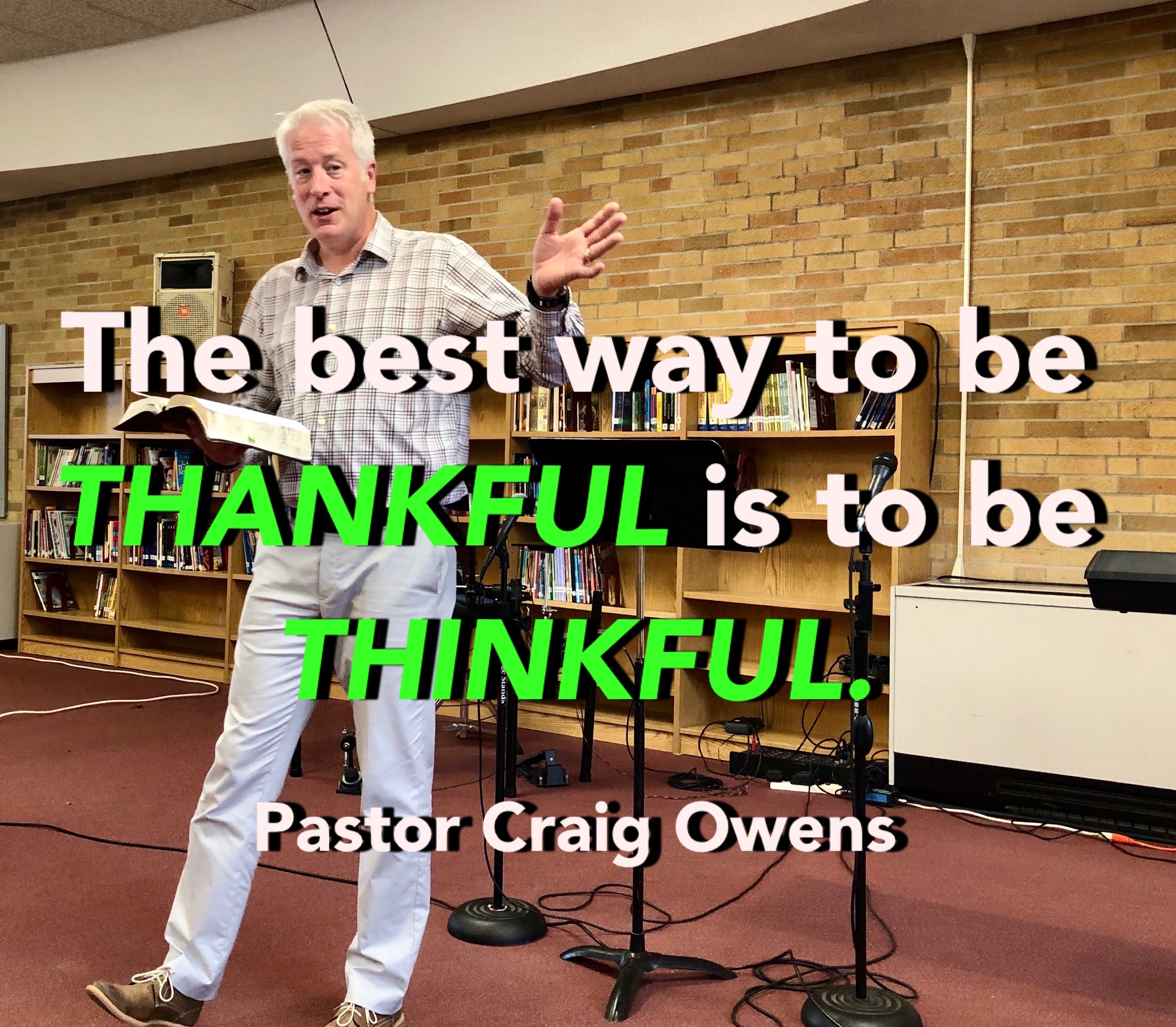 Fading gratitude can negatively impact our past, present, and future. Because when our gratitude to God begins to fade, so does our understanding of what God has already done for us, our appreciation of what He is still doing for us today, and our hope for what He will provide for us tomorrow. But we can flip the script—Our continual gratitude can begin to positively impact our past, present, and future!
“Gratitude is from the same root word as ‘grace,’ which signifies the free and boundless mercy of God. Thanksgiving is from the same root word as ‘think,’ so that to think is to thank.” —Willis P. King
The more we THINK about God’s grace in our lives, the more we can give THANKS for all He has done. Or said another way…
The best way to be THANKFUL is to be THINKFUL!
In Psalm 78, Asaph gives us a two-word reason for the up-and-down history of the Israelites: they forgot. The Israelites’ forgetfulness led to their lack of gratitude, which then caused yet another downward turn away from God. One of the examples he gives us is very informative: the daily provision of manna while the Israelites were in the wilderness (see Psalm 78:11-25; Exodus 16:4, 14-18).
Every day God’s people had their food needs miraculously supplied for them, yet they begin to take this gift of God for granted. They stopped thinking about His provision, and then they began to ungratefully grumble (Numbers 11:4-6). Their grumbling actually caused them to want to return to slavery in Egypt!
With fading gratitude, we can get stuck in the past. We even end up looking back at slavery and scarcity and call it “the good old days”! With fading gratitude for the past, sometimes we beat ourselves up. We say things like, “If I would have known then what I know now….” But you couldn’t know then what you know now. You only know now because of what you went through then, which makes another reason to be grateful. After all, God is using everything we have gone through to work out His plan (see Isaiah 46:9-10; Romans 8:28).
We need to be thinkful about our past so that we can be thankful for what God is doing with it today.
Manna provided food every single day the whole time the Israelites were in the wilderness. It stopped immediately after they entered the Promised Land. For that daily provision, they should have been thankful but it was when they forgot to be thankful that they longed for the past and tried to do things on their own.
The manna is a picture of Jesus. Not only is He our daily bread for today, but He is also our hope for eternity with God in Heaven. And for that, we should be daily thinkful AND thankful.
If you’d like a fun idea of how to stay thinkful AND thankful, check this out.
Join us this Sunday as we learn more about the dangers of our fading gratitude.
Consequences For Children
November 5, 2019 — Craig T. OwensDr. Kathy Koch has some great insights in her book Start With The Heart for anyone who works with children.
“Rather than using the words ‘rewards’ and ‘punishments,’ I recommend using the word ‘consequences.’ This small change helps children own their responsibility in changing negative behavior and maintaining positive behavior. Rewards and punishments are things we give children. Consequences are what children earn because of their choices.” —Dr. Kathy Koch
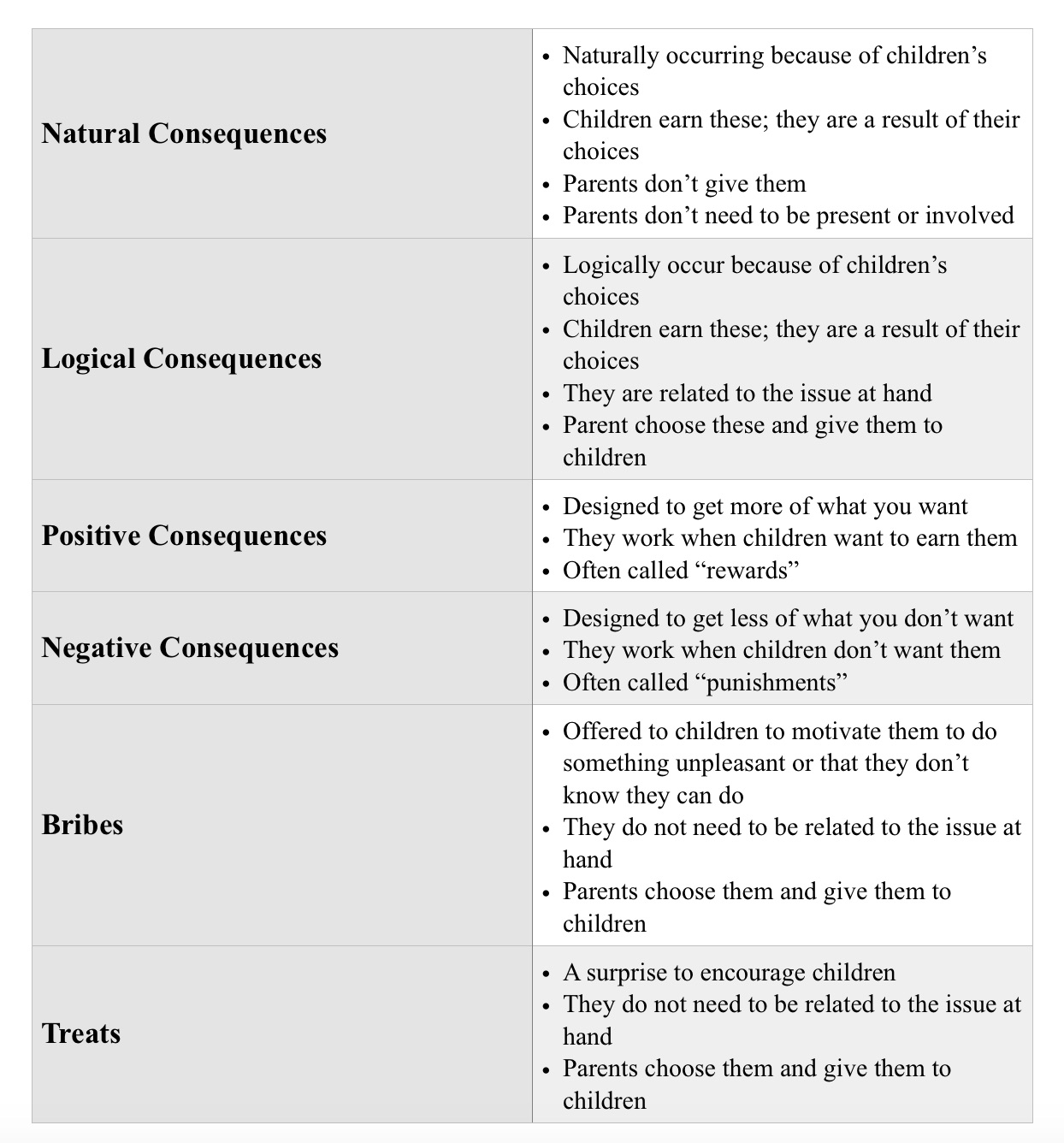
Check out my book review of Start With The Heart by clicking here. You can also read some other quotes from this book here and here.
Forgetfulness Can Be Fatal
November 4, 2019 — Craig T. Owens Have you ever noticed the up-and-down track record of the Israelites? We see them worshiping God, enjoying His abundance, with their enemies on the run in one chapter, only to see them worshiping idols, barely scraping by, with their enemies closing in on them.
What led to the downturn from freedom and abundant blessing to slavery and scarcity? I think it’s summed up in two words: They forgot.
Asaph captures this idea in the 78th Psalm. And if we’re honest with ourselves, Israel’s history is our history too.
There is a peril in our forgetfulness!
“When we have much of God’s providential mercies, it often happens that we have but little of God’s grace, and little gratitude for the bounties we have received. We are full and we forget God: satisfied with earth, we are content to do without Heaven. Rest assured it is harder to know how to be full than it is to know how to be hungry—so desperate is the tendency of human nature to pride and forgetfulness of God.” —Charles Spurgeon (emphasis added)
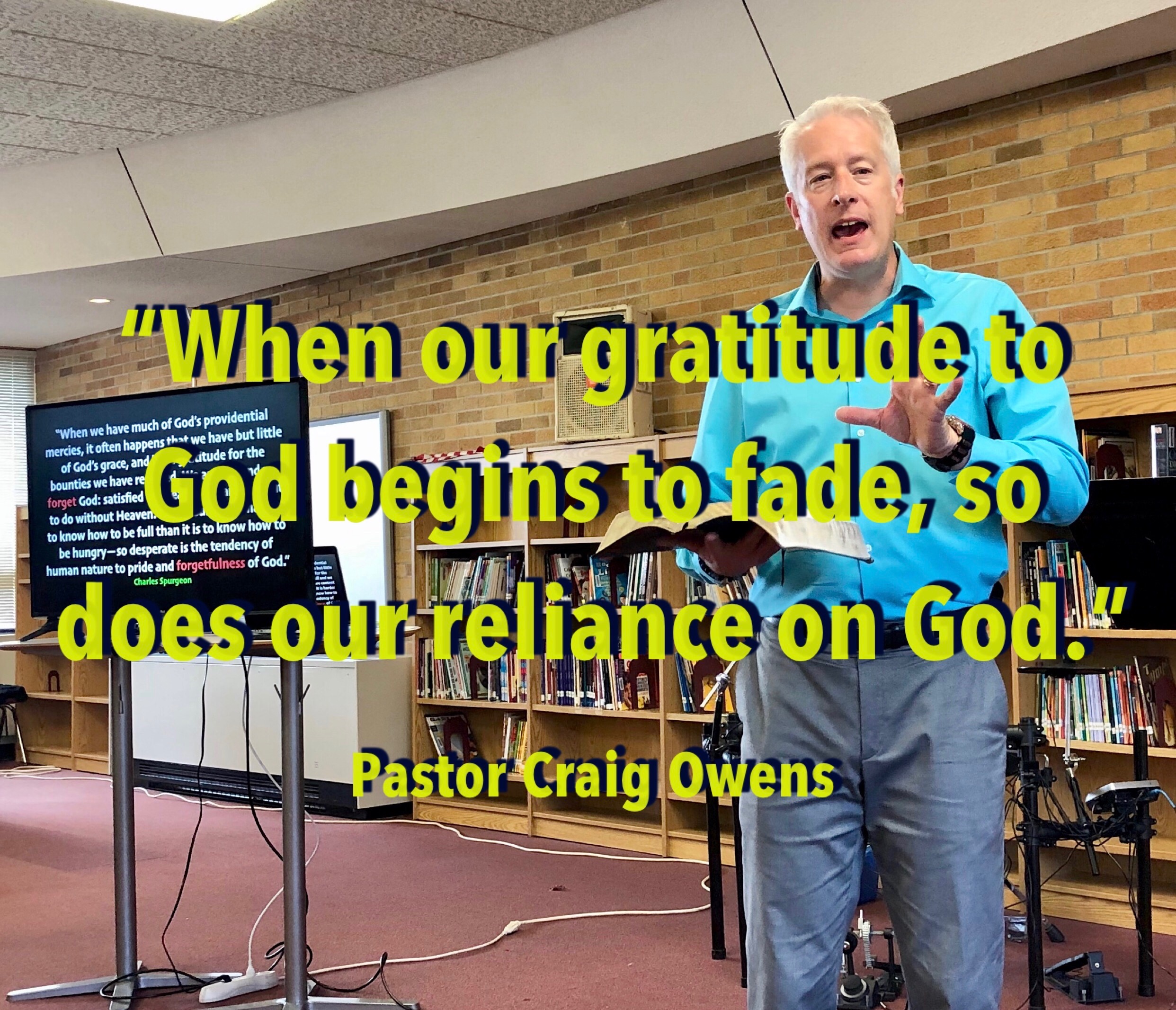 When our thoughts about God begin to fade, so does our gratitude to God. When our gratitude to God begins to fade, so does our reliance on Him.
The dictionary defines some important terms:
- Ungratefulness—not giving due return for benefits conferred
- Unthankfulness—not repaying the blesser with thanks
I don’t think anyone consciously chooses to be ungrateful, but if we don’t choose to actively remember our blessings—and our Blesser—we will become ungrateful. So what if we began to think differently about the definition of gratitude?
- Forgetfulness—to cease to think of something
- Gratitude—to continue to think of Someone (with that Someone being God!)
 When we are continually thankful—when we don’t let our gratitude fade—it keeps God’s blessings at the forefront of our minds. Gratitude—continuing to think of Someone—makes us completely God-reliant.
Moses had a good idea to help us to continue to think of God’s blessings—
Impress them on your children. Talk about them when you sit at home and when you walk along the road, when you lie down and when you get up. Tie them as symbols on your hands and bind them on your foreheads. Write them on the doorframes of your houses and on your gates. (Deuteronomy 6:7-9)
What if you posted reminders of God’s blessings all over the place? What if you made it almost impossible to forget God? What if you were constantly thinking of your blessings?
Join us for our series called Fading Gratitude during the month of November.
My most-viewed posts


 Craig T. Owens