Time For A Self-Check

Listen to the podcast of this post by clicking on the player below, and you can also subscribe on AppleSpotify, or Audible. 

Have you ever heard this little saying: “To live above with saints we love, oh, that will be glory. But to live below with saints we know, well, that’s a different story”? I’ve found that it’s sometimes true! 

We love Psalm 133:1-3 when the saints are all together. What a great “selling point” to invite someone to be a part of the Christian community! But Psalm 41:7-9 is kind of embarrassing as David talks about former friends who have hurt him deeply. 

(Check out all of the Scriptures in this post by clicking here.)

But being bitten by a fellow sheep is a reality we all have experienced, and, sadly, we will probably have to deal with again in the future. There is a natural way we tend to react when we’ve been bitten, but there is also a supernatural response that the Bible consistently calls us to. This is the God-glorifying way we all need to strive for. 

In Acts 23, Paul is standing before the Sanhedrin. He opens his remarks by simply saying he has a clear conscience before God, and the high priest immediately orders that Paul be smacked on the mouth! That seems like a bit of an over-reaction on the part of the high priest, but maybe it was a bit of show of force to let Paul know who was really in charge. Paul responded with an immediate—and natural—reaction when he says, “God will slap you!” 

Paul is an old man by this time. He’s been through shipwrecks, beatings, imprisonments, gone without food, traveled more miles than he can count, and preached more sermons than he can remember. His body was giving out on him, and his eyesight was especially weak. Clearly, Paul didn’t realize to whom we was addressing his remarks. But when he became aware, he immediately owned up to his mistake. Paul offered no excuses or justifications, just a quick, simple, sincere apology. 

When you have been bitten (slapped) by another sheep, you should ask: 

  • Could I have provoked them by something I said or did? 
  • Could I have hurt them by something I didn’t say or do? 

David prayed a great prayer in Psalm 139:23. But this prayer is only effective if we are willing to accept that we may have been the agitator that led to the bite. In the last words that Job speaks in the Book of Job, he is very introspective. Check out all of the “If I have” statements throughout Job 31. 

In Psalm 26:2, David invites the Holy Spirit to check him three times! 

  • test me = scrutinize me 
  • try me = assay me 
  • examine me = refine me in the fire 

When we are bitten, we should be open to the possiblity that God is using this bite to get my attention—to make me aware of a fault in my life or something that’s been in a blind spot. 

So we should consider the following: 

  1. Has this kind of bite happened more than once? From different sheep? 
  2. Has a spiritually wise person attempted to address this with me before? 
  3. Do I ever admit that I’m at fault, or is it always the other person’s fault? 
  4. Do I find myself making a list of why they should apologize to me? 
  5. When was the last time I apologized to someone else? 

If the Holy Spirit reveals something in us, He will also empower us to make the change and make amends. The natural response is to place all the blame on others. The supernatural response to pray Psalm 26:2 before responding. 

If we react only the natural way, it is a lose-lose for us and for the whole pasture. But if we learn to respond in a supernatural way, it becomes a win-win for everyone. Listen to the wise words of King Solomon—

He who heeds instruction and correction is not only himself in the way of life but also is a way of life for others. And he who neglects or refuses reproof not only himself goes astray but also causes to err and is a path toward ruin for others. (Proverbs 10:17 AMPC) 

Let’s all strive for the supernatural response that is a win-win for the whole Kingdom of God! 

Please follow along with all of the messages in this series by clicking here. 

P.S. If you are a pastor, you may want to check out my book When Sheep Bite.

►► Would you please prayerfully consider supporting this ministry? My Patreon supporters get behind-the-scenes access to exclusive materials. ◀︎◀︎

Blessing The Blesser

Listen to the podcast of this post by clicking on the player below, and you can also subscribe on AppleSpotify, or Audible. 

We’ve made it to the top step after a long climb. We’ve arrived! But arrived for what? Not for taking it easy, but for serving.  

Jesus was at the top, and consider what He did with that position:

  • He laid aside His prerogatives as God to serve us—Philippians 2:6-8 
  • He demonstrated this by becoming a servant of the servants—John 13:3-5 
  • He said, “For who is greater, the one who is at the table or the one who serves? Is it not the one who is at the table? But I am among you as One who serves.” (Luke 22:27) 

(Check out all of the Scriptures in this post by clicking here.) 

We strive for the top not to be served, but to serve. This is why the final Song of Ascent addresses those at the top as “servants of the Lord” (Psalm 134:1). 

The first duty of the servants is to praise (2x in vv. 1, 2). The KJV actually renders this word “bless,” which I believe is a good way for us to think about this. The word means: 

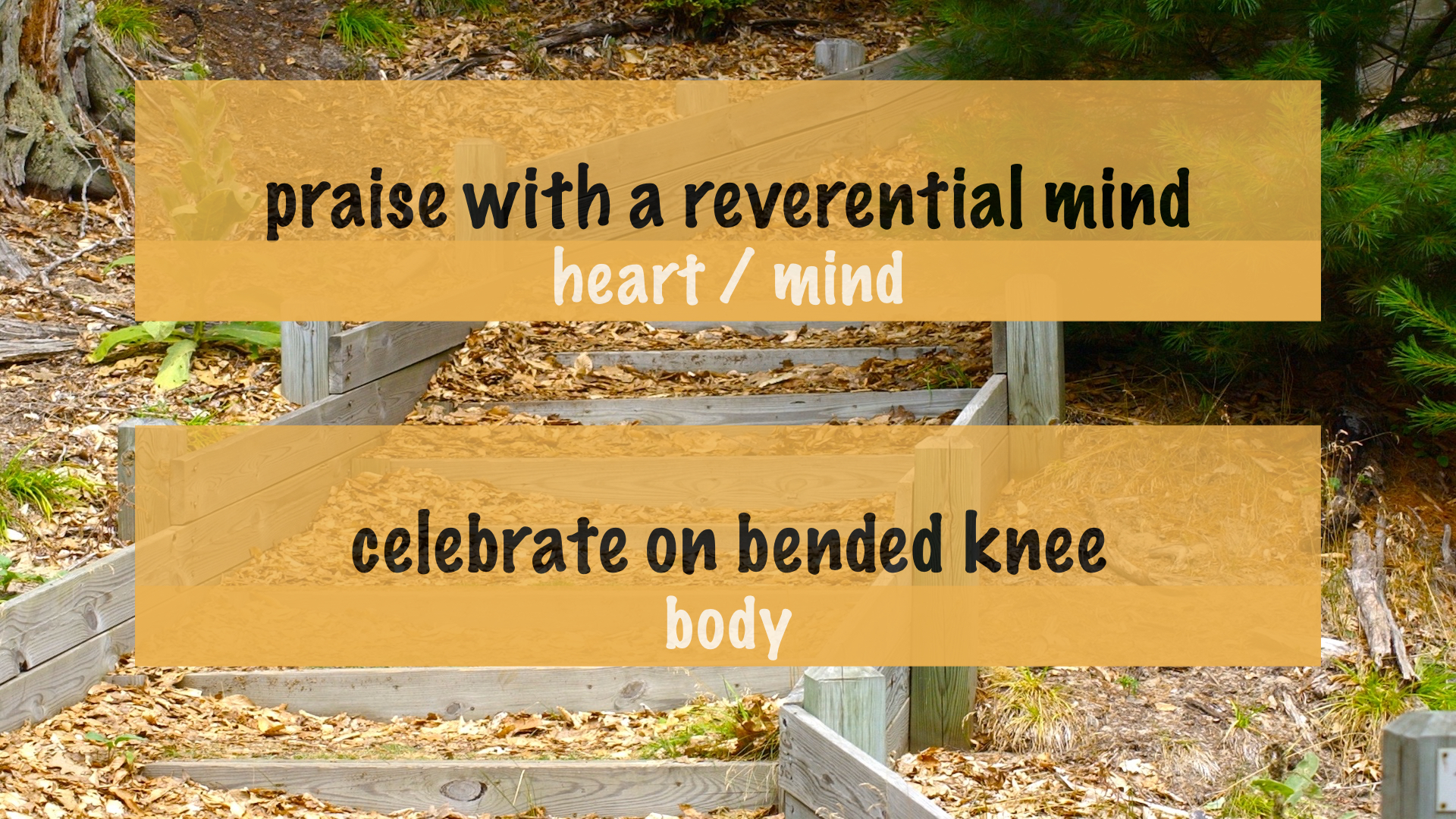
  1. praise God with a reverential mind and 
  2. celebrate God on bended knee 

In other words, both our heart and our body need to be in a posture of a praising servant. In the Septuagint, the word used for praise / bless is eulogeo, which means to say good words. In putting the two parts of the definition together, it mean we aren’t grumbling about our service (like “I have to do this”), but we are thankfully and worshipfully serving (as in “I get to do this!”). 

These servants are called to “minister…in the house of the Lord [and] in the sanctuary” (134:1-2), just as the priests in the tabernacle (1 Chronicles 9:33; Leviticus 6:13; 24:2, 4). 

This blessing and serving is itself a blessing which unlocks even more blessing. The final words of the final Song of Ascent is a prayer request (notice the word “may” in v. 3). 

The word bless in this final is the same word translated praise in vv. 1-2, except here the form of the verb means “to be shown divine favor”! 

We don’t get blessed by God because we have blessed God, but we bless God because He has already blessed us. I don’t command His blessing, but I bless Him in recognition of the blessing that continually flows from Him to me. 

To word minister as in v. 1 means to: 

  • endure all hardships 
  • continue until the task is done 
  • cause or help others to stand too 

God loves to bless people who love to bless people! 

As long as we’re here, keep blessing and serving others as your act of worship to God. Say good words to people about God and say good words to God about people. Lift up your hands, fall on your knees, sing out loud, or worship quietly in your heart. But keep on serving like Jesus. All of this blesses God. 

Your final and eternal reward in the Heavenly Zion is coming and it is beyond compare—

It will be good for those servants whose Master finds them watching when He comes. Truly I tell you, He will dress Himself to serve, will have them recline at the table and will come and wait on them. It will be good for those servants whose Master finds them ready, even if He comes in the middle of the night or toward daybreak. (Luke 12:37-38) 

In blessing others, we are blessing the God who has already blessed us and who longs to bless us for all of eternity! 

If you’ve missed any of the messages looking at the fifteen Songs of Ascent, you can find them all here. 

►► Would you please prayerfully consider supporting this ministry? My Patreon supporters get behind-the-scenes access to exclusive materials. ◀︎◀︎

Strength In Unity

Listen to the podcast of this post by clicking on the player below, and you can also subscribe on AppleSpotify, or Audible. 

The 12th Song of Ascent (Psalm 131) was written by David to remind us to rely on God’s help even more as we progress on the journey (or mature in our faith). In the 13th Song (Psalm 132), the psalmist says, “Remember David” and his passion for God’s people to experience God’s righteousness and joy. In order for us to know that, we have to remember Jesus. 

Those who put this collection of Songs of Ascent together now include David’s fourth song (Psalm 133) in this collection which expresses his desire for unity among God’s people. 

(Check out all of the Scriptures in this post by clicking here.)

Can you imagine the pilgrims starting out from their individual villages? Maybe there’s not very many of them to begin with and traveling is pretty easy, but they do have to be vigilant against dangers on the road. 

As they progress, they begin to join with pilgrims from other villages. Maybe these are from the same tribe, perhaps even distant relatives. The journey may go a bit slower now that there are more people to keep track of, and some complications of personality may start to arise. But the level of safety and assistance also increases. 

Soon the group is getting larger as they now join with pilgrims from other tribes. These aren’t near relatives at this point, so there may be more complications, but there is even greater encouragement, safety, and potential. 

Aha! Potential. 

We’ve gone singing with a small ensemble to singing in a choir. And David is anticipating us singing in an even larger, majestic choir! There will undoubtedly be more problems, but there is also assuredly so much more potential, beauty, and strength in their combined worship. 

My friend Dan Chastain has over 20 years of experience in the United States Army. He points out that the Army did the same things in his day as we read in the Old Testament. 

The unity of a fighting force, Dan said, is a blessing. David was a professional soldier. Many people today join the military because of this professional, unity, and camaraderie. Maintaining this unity is the responsibility of everyone, because disunity leads to mistrust, chaos, and defeat. 

David says this choir paints a picture—“it is like” (v. 2) and “it is as if” (v. 3). He is saying that God desires overflowing blessings on His people (v. 2), and that God desires saturating blessings on His people (v. 3). Why? Because God wants to give us more than enough for our needs so that there is plenty left for those who aren’t brothers and sisters yet. He longs for our choir to include people from every tribe, race, and nation. 

Just as we said last week that a Christian’s joy is a testimony, a choir of Christians is an even more compelling testimony! 

David calls this unity “good” which really means so much better than the alternative. And he calls this unity “pleasant.” The Hebrew word literally means singing a sweet sound! 

The Hebrew word for “unity” here is also instructive. It means to be together in the same place—not just in spirit and desire—but in physical proximity. This is exactly the picture we see in the first Church (Acts 2:44, 46-47), as well as the picture of the choir from every nation, tribe, people, and language singing around God’s throne in Heaven (Revelation 7:9-10). 

In order to navigate all of the differences of personality that could keep us from this unity, we have to work at. We need the attitude of Jesus (Philippians 2:1-5). This requires a daily transformation of our minds (Romans 12:1-3), and this transformed mind is what helps us move from a small ensemble to a majestic choir (Romans 12:4-5, 16-18). 

Remember the word “saints” is always plural in the New Testament. You and I each have a vital part to play in helping other saints! 

If you’ve missed our look at any of the other Songs of Ascent, you can find them all listed here. 

►► Would you please prayerfully consider supporting this ministry? My Patreon supporters get behind-the-scenes access to exclusive materials. ◀︎◀︎
Assured Expectation

Listen to the podcast of this post by clicking on the player below, and you can also subscribe on AppleSpotify, or Audible. 

A recent movie set box office records. Many Hollywood commentators are surmising that it is because the unlikely duo in the movie does something so noble at the end of the movie. Throughout the movie one of the main characters takes to calling himself “Jesus.” At the end of this movie, this character and his friend take the full brunt of the evil on them in the hopes of saving the universe. 

Of course, this storyline isn’t new to Hollywood or even in ancient literature. This epic quest is longed for in the human heart, looking for a hero to selflessly sacrifice himself to save everyone else around them. 

The only problem is that these heroes aren’t sure if their sacrifice is actually going to work. 

This, of course, isn’t the case with Jesus. Angels announce before His incarnation that He will save His people. Jesus Himself says, “I will lay down My life for My friends and I will take it up again.” And in the very last book of the Bible we read that before Time even began, Jesus was already seen as the sacrificial Lamb slain for the deliverance of His people. 

This story doesn’t start in Bethlehem, but when John 1:1 says, “In the beginning,” the language there is really saying, “From before there was a beginning, Jesus our Hero already knew the outcome of His selfless sacrifice.”  

We see hints and foreshadowing of this Most Epic Story all throughout history and throughout Scripture. Like in Psalm 132—the longest of the Songs of Ascent (at 18 verses, the next longest song is only half its length). 

(Check out all of the Scriptures in this post by clicking here.) 

The key verse (v. 10) is in the middle: it connects David and Jesus. The words “Anointed One” is one word in Hebrew: Masiah which is Messiah. In the New Testament,  the word Christ also means Anointed One. 

What do we learn in the first half of this song. It opens with the words, “O LORD, remember David…” (v. 1). 

Because this psalmist mentions the same incident that we discussed in Psalm 131, this is another reason why I think David had the incident of moving the ark of the covenant to Jerusalem in mind when he wrote the previous song (see Psalm 132:2-5; 2 Samuel 6:17). The people continued to rejoices as David made arrangements and provided building materials for his son Solomon to build the temple (vv. 6-9). 

Look at how verse 10 connects David to Jesus the Messiah. In verse 2, David swore an oath to the Lord, but he was physically unable to fulfill his promise. In verse 11 (also see 2 Samuel 7:11-16), “The Lord swore an oath to David.” 

God was able to fulfill His promise, which we see in the life, death, resurrection, and  ascension of Jesus, and then in the promised outpouring of the Holy Spirit. On the Day of Pentecost, Peter declares this in his sermon—connecting the work of Jesus to the prophesy of King David (Acts 2:22-36). 

We can sum up the first half of Psalm 132 with the words “Remember David.” And we can sum up the second half of this song of ascent with the words “Remember Jesus.”  

Remember Jesus [the] Christ, raised from the dead, descended from David (2 Timothy 2:8). 

I like this verse from the Amplified Bible: Constantly keep in mind Jesus Christ (the Messiah) as risen from the dead, as the prophesied King descended from David, according to the good news (the Gospel) that I preach.  

David swears an oath (v. 2) but has no power to fulfill it. God swears an oath (v. 11-12) and fulfills it (Luke 1:33; Revelation 11:15). 

David longs for blessings for the priests and saints (v. 10) but has no power to make it happen. God says, “I will” bless the priests and saints (vv. 13-18; 1 Peter 2:5-9; Revelation 1:6). 

All of our longings for a Hero—for salvation, for purpose, for meaning—are fulfilled in Jesus. All of God’s promises for these things are fulfilled in Jesus. All of our life should be lived in this joyful assurance (Hebrews 10:35-39; Revelation 3:11)! 

Not only should we not stumble in the homestretch, but we should live in such joyful assurance of God’s promises that we soar across the finish line! 

If you cannot remember anything else, remember David and remember Jesus. 

Check out all of the other Songs of Ascent by clicking here. 

►► Would you please prayerfully consider supporting this ministry? My Patreon supporters get behind-the-scenes access to exclusive materials. ◀︎◀︎
Don’t Stumble In The Homestretch

Listen to the podcast of this post by clicking on the player below, and you can also subscribe on AppleSpotify, or Audible. 

We’re up to Psalm 131. After this step, only three more steps to go until we reach the top! We’re almost there. We started in a dark valley surrounded by enemies that wanted to keep us in the valley, but we persevered, we matured, and now the end it almost in sight! 

Notice that David wrote this Song of Ascent, and I think he may have had a particular instance from his history in mind when he did. 

(Check out all of the verses in this post by clicking here.)

At the height of David’s success, the Bible says that, “David knew that the LORD had established him as king over Israel and that his kingdom had been highly exalted for the sake of His people Israel” (1 Chronicles 14:2). So David used his position to do something very noble: return the ark of the covenant of the Lord to Jerusalem. This was a popular decision that “seemed right to all the people” (13:3). 

But it turned out disastrously! 

One of the priests overseeing the transportation of the ark of the covenant was killed, and as a result David became angry at God and fearful of Him. 

After a cooling off time, David humbled himself. He admitted that he hadn’t “inquired of the Lord” before undertaking this task and then he looked to the Scriptures to find out how to move the ark the correct way (15:12-15). 

It’s quite possible David had this incident in mind when he wrote the Song of Ascent for people coming to worship God in the temple where the ark of the covenant of the Lord would be housed. 

The opening words sound the tone of humility—“my heart is not proud” and “my eyes are not haughty.” I think in the context of this opening verse of Psalm 131, pride can be defined as:

  1. trying to handle things on my own 
  2. concerning myself with things outside my control 

That means that humility is trusting that God is in total control. 

Verse 2 starts with an important word: But. Instead of the fretting of pride, David chooses the trusting of childlike humility. David says that he has “stilled and quieted my soul.” He has chosen childlike humility. 

This is exactly what Jesus told us: “Truly I tell you, unless you change and become like little children, you will never enter the kingdom of heaven.Therefore, whoever takes the lowly position of this child is the greatest in the kingdom of heaven” (Matthew 18:3-4). 

Just look at the differences between childlike and childish! 

The consistent message throughout Scripture—from Creation in Genesis 1 until the realization of our eternal reward in Heaven in Revelation 22—is childlike trust in our Heavenly Father. 

We can trust God to handle…

  • …every care—1 Peter 5:7 
  • …every step—Proverbs 3:5-6 
  • …every reward—Luke 12:32 

Don’t let pride cause you to stumble in the homestretch. The closer we get to the end of the journey, the more childlike we should become. 

If you’ve missed any of the other messages on the Songs of Ascent, you can find them all here. 

►► Would you please prayerfully consider supporting this ministry? My Patreon supporters get behind-the-scenes access to exclusive materials. ◀︎◀︎

How To See A National Revival

Listen to the podcast of this post by clicking on the player below, and you can also subscribe on AppleSpotify, or Audible. 

After making it up to the 11th step—so close to the top now—how could the psalmist be saying, “Out of the depths I cry to You, O LORD”? (Psalm 130:1) 

I think that the more we ascend in God, the more sensitive we should be to any semblance of sin in our lives that would offend Him. The mark of a maturing Christian is one who is constantly closing the gap between sin and confession. 

(You can check out all of the biblical references in this post by clicking here.)

I like the bridge in the song I Keep Falling In Love With Him

When I first fell in love with Jesus,
I gave Him all my heart
And I thought I couldn’t love him more
than I did right at the start.
But now I look back over the mountains,
and the valleys where I’ve been
And It makes me know I love Him so much
more than I did then


Out of the depths—Think how far we’ve come on this climb. In the first Song of Ascent, we were experiencing the woes of being in the valley (Psalm 120:5-7). But now in this song, the feelings of being in the depths are not from someone else’s sinful activity. 

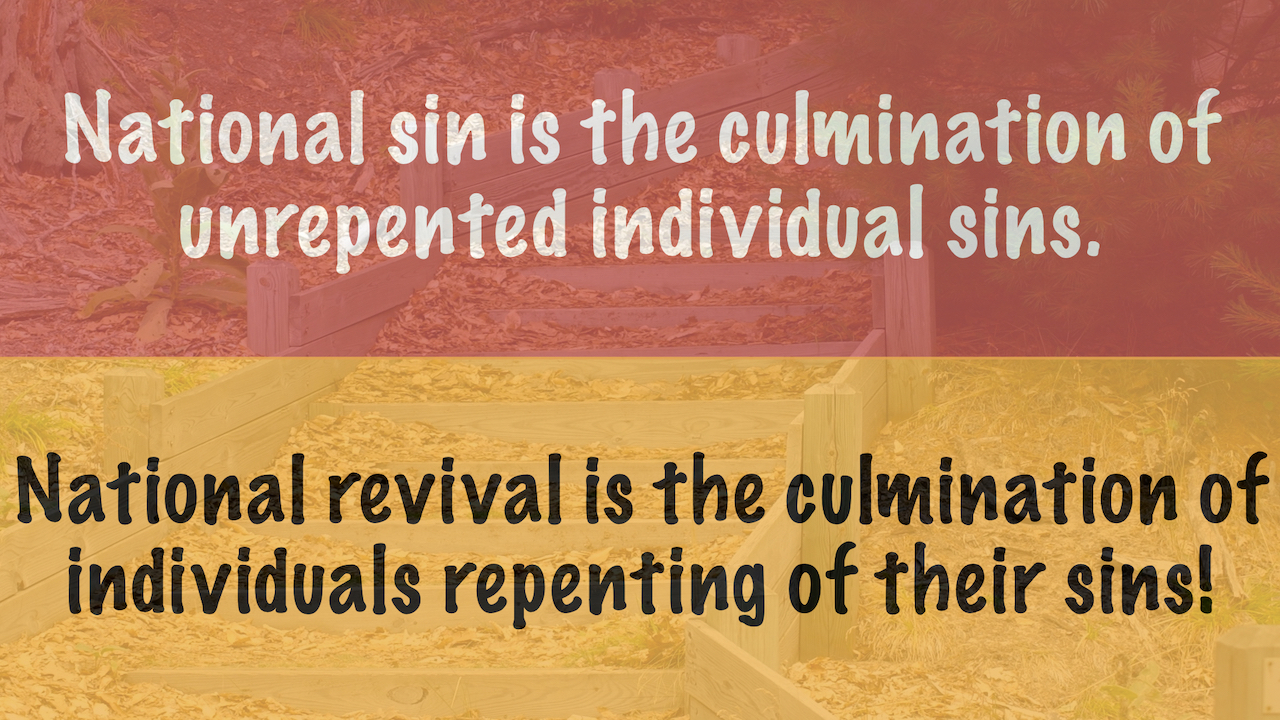
The psalmist is pointing out that national sin is the culmination of unrepented individual sins. God addressed this in Leviticus 20:22—Keep all My decrees and laws and follow them, so that the land where I am bringing you to live may not vomit you out.  

Even in these depths, the psalmist is confident that God will hear—let Your ears be attentive (v. 2). Nehemiah was confident too. Look how he joins his personal sin to the national sin after Israel had be vomited out of the land (Nehemiah 1:1-7). 

Our confidence comes from the rock-solid assurance that God completely forgives our sins and then forgets all that He forgives (vv. 2-3; Psalm 103:10-12). 

The middle verses (vv. 5-6) have the key words wait, watch, and hope. This middle part comes down to: (1) What I’m going to pay attention to, and (2) What God pays attention to. 

God is attentive to our cries for mercy, and He is watchful for our care, not for our punishment! 

We are called to wait and watch in hope because God has proven that He is all in for us. Look at this completeness:  

  • full forgiveness (v. 3) 
  • unfailing love (v. 7a) 
  • full redemption (v. 7b) 
  • all their sins (v. 8) 

Notice in v. 7 the phrase “all THEIR sins” is now corporate (not singular, personal as in the opening verses). 

We’ve gone FROM my voice, my cry TO your hope, O Israel and redemption of their sins. 

If national sin is the culmination of unrepented individual sins, then national revival is the culmination of individuals repenting of their sins! 

National revival starts with you and with me. 

If you’ve missed any of the Songs of Ascent we’ve looked at, you can find them all here. 

►► Would you please prayerfully consider supporting this ministry? My Patreon supporters get behind-the-scenes access to exclusive materials. ◀︎◀︎
Ascending (part 2)

Every year, Jews from around the world made four pilgrimages up to Jerusalem for various feasts and sacrifices. These journeys reminded them of God’s goodness as they went to the Temple to worship, and they helped refocus on God’s ways as they returned to their regular routines.

Jerusalem is over 2500 feet above sea level, so the pilgrimage there was a physical workout as well as a spiritual workout. These workouts were beneficial for God’s people, preparing them to minister in their cities in the following months.

The Book of Psalms contains 15 songs that these pilgrims would sing to and with each other as they traveled up to Jerusalem. These Psalms of Ascent are still instructive for Christians today.

As we resume this series this summer, I hope you can join me for this look at the life-changing truths these pilgrimage songs can still teach today to all of God’s people. We would love to have you join us in person, but if you are unable to do so you can watch the videos of these messages on my YouTube channel.

You can check out the messages we shared last summer from Psalms 120-127 here. And the current series of messages include:

The Wait Of Parenting

Listen to the podcast of this post by clicking on the player below, and you can also subscribe on AppleSpotify, or Audible. 

I’ve been called to some challenging leadership roles in my life—many of which made me feel like I was in way over my head! But without a close second, the heaviest mantle I’ve ever felt is the one called “Father.” Holding my firstborn son in my arms was indescribable, and it didn’t feel any lighter or less daunting when our other children arrived.  

The rabbis saw something significant in the Ten Commandments. Some people have noted that the first four Commandments are about our vertical relationship with God, while the next six are about our horizontal relationships with people. But the rabbis saw the Fifth Commandment as the linchpin—with parents in a creator-like role and as the first leader our children will be exposed to, and parents taking on the role as the first and most significant instructor for our children to know God for themselves. 

God gives us the example to follow: He instructs us gently but firmly, anticipating our needs, and giving us exactly what we need (Psalm 103:13-14; Luke 6:36, 12:32; Matthew 6:8).  

And then Jesus tells us to follow this example: “Be perfect, therefore, as your heavenly Father is perfect” (Matthew 5:48). Yikes, talk about a heavy weight! 

In the only song of ascent attributed to King Solomon (Psalm 127) we read both a longing for our families to be with us at the end of our journey to Zion, but also a hint of the difficulty of this. 

In the middle verse of this song, we are assured that our children are given to specific parents by God on purpose. He knew what He was doing in giving them into our care. That means each parent is uniquely equipped for each child’s unique personality, temperament, and gift package. 

Twice in the opening verse, Solomon uses the word “unless.” Unless we seek God’s help in building our children and watching over them, our efforts on their own will be “in vain.” That phrase (“in vain”) is used three times in the opening two verses. Solomon wrote a lot about vanity in the Book of Ecclesiastes. But it’s important to note that Solomon always uses this word in association with the phrase “under the sun.” Unless we get help from God—unless we lift our eyes up higher than this earth—our efforts alone will be frustrating and anxiety-inducing. 

Remember that parents are the linchpin in the Ten Commandments? Those first four Commandments tell us to put God first, don’t create any idols to rival Him, don’t misuse His name, and trust Him enough to rest from your labors (Exodus 20:1-11). That means that we parents cannot put our kids ahead of God (Luke 14:26). Unless God is our first priority, we won’t have the spiritual, emotional, or mental stamina to parent well. Or, as C.S. Lewis noted,  “When I have learned to love God better than my earthly dearest, I shall love my earthly dearest better than I do now.” 

In his collection of proverbs, Solomon told us, “Start children off on the way they should go, and even when they are old they will not turn from it” (Proverbs 22:6). Jesus said there is only one sure foundation, and that is knowledge and obedience of God’s Word (Matthew 7:24-27). 

The final two verses of Psalm 127 assure parents that when we commit our children to God’s hands, He blesses them and uses them as His weapons, His leaders, and His culture changers. 

There is not only a weight in parenting, but there is also a wait in parenting. In the last song of ascent we studied, we learned that we have a promise two times that we will (not “might”) reap a harvest, even if we have to sow seeds in tears (Psalm 126:5-6). 

In the Bible, waiting is never passive. It’s an active watching to see how God will move. We see this in the story of the prodigal son (Luke 15:11-32) where the father waited expectantly for his wayward son to return. This Dad had given his son a firm foundation at the start of his life, and then he waited in prayer until his son “came to his senses”—until he realized that all other ways of living away from God were vanity. 

In the midst of her prayers for her own prodigal son, Monica shared her concerns with Ambrose, bishop of Milan, and he said, “It cannot be that the son of those tears be lost.” Monica continued to wait for her son Augustine, sowing her seeds in tears but fully expecting the song of joy that would come with the harvest. 

Years later, in his autobiography called Confessions, Augustine wrote of his mother, “My mother, Your faithful servant, wept to You for me, shedding more tears for my spiritual death than others shed for the bodily death of a son. You heard her.” 

Parents, as you call out to God on behalf of your children, shed those tears in the joy of the anticipated harvest, knowing that God hears you! 

If you’ve missed any of the other messages in our series looking at these songs of ascent in the Book of Psalms, you can find them all here.  

►► Would you please prayerfully consider supporting this ministry? My Patreon supporters get behind-the-scenes access to exclusive materials. ◀︎◀︎
Our Musical Testimony

Listen to the podcast of this post by clicking on the player below, and you can also subscribe on AppleSpotify, or Audible.  

As these songs of ascent are reminding us, we’re trying to ascend into God’s presence. But it seems like the forces pulling us back downward are so strong! The lyrics in the most popular songs are getting more and more raunchy, the blockbuster movies routinely celebrate sin, TV shows increasingly push a decidedly unbiblical agenda, government leaders are caught in scandals, and church leaders are “de-transitioning” from their Christian testimony. 

It doesn’t seem like there is much to celebrate. 

Just like the Jews who found themselves defeated and living in a foreign land, or fighting opposition to rebuild their way of life, or contending with occupying forces that were hostile to their religion, we, too, find ourselves in a very similar place—even in a country that was supposedly built on godly principles. 

The worldly-minded and irreligious have always tried to pull down the godly. When they do, it makes it hard to even worship God (Psalm 137:1-4). 

I’ve been reminding you that in Hebrew literature we can usually get our perspective from the middle of the story. So before we look at this next song of ascent, let’s look at the middle of the Jewish story—the middle of their time of exile, when things seemed darkest. 

Jeremiah wrote a book of Lamentations which was in the middle of the exile. In the middle of his tears and gall and bitterness he wrote this—

I remember my affliction and my wandering, the bitterness and the gall. I well remember them, and my soul is downcast within me. Yet this I call to mind and therefore I have hope: Because of the Lord’s great love we are not consumed, for His compassions never fail. They are new every morning; great is Your faithfulness. I say to myself, “The Lord is my portion; therefore I will wait for Him.” … I called on Your name, Lord, from the depths of the pit. You heard my plea: “Do not close your ears to my cry for relief.” You came near when I called You, and You said, “Do not fear.” (Lamentations 3:19-24, 55-57) 

Jeremiah said when he called God, He came near. He’s not saying that God had left him, but instead, Jeremiah is saying that he got his eyes off the ever-present God. As soon as he put his eyes back on God, he could feel His nearness. 

Our next song of ascent (Psalm 126) opens with the word “when.” This is a celebration of how God kept His word that the exiles would be released from Babylon and return to Jerusalem. As the Jews praised God for keeping His Word, then the surrounding nations saw and heard the testimony in the songs of joy that were being sung. 

God’s people were both singing for joy for God’s deliverance AND they were singing in joyful anticipation of what was still to come. 

They make a request in prayer for God to “restore our fortunes” (v. 4). This phrase always means that God is going to bring back everything that was taken away and then some. 

We have a promise two times in the next two verses that God will (not might) bring in these restored fortunes. In the midst of darkness or drought, it may seem hopeless to keep sowing seed. God sees your tears, and He will use your tears to water that seed and He will bring a harvest. 

The New Testament assures us of the same promise: “Let us not become weary in doing good, for at the proper time we will reap a harvest if we do not give up” (Galatians 6:9). 

We show our faith in God’s eternal victory by lifting up our voices in song today. That song is a testimony to the nations around us and an encouragement to other saints who may be struggling with weariness (see Ephesians 5:18-20). We keep on singing these songs of joy in anticipation of the final and eternal song we will sing in Heaven. 

God is near. He hears your sighs. He sees your tears. He is watering the seeds you are sowing, and He will bring a harvest. As you sow in tears, sow also with songs of joy! 

If you’ve missed any of the other messages in our Ascending series, you can find them all here. 

►► Would you please prayerfully consider supporting this ministry? My Patreon supporters get behind-the-scenes access to exclusive materials. ◀︎◀︎
Don’t Fight Fire With Fire

Listen to the podcast of this post by clicking on the player below, and you can also subscribe on AppleSpotify, or Audible. 

The events in the Bible are rooted in history. These are actual events in which real people lived in a moment in recorded history. The songs of ascent were sung both pre-exile and post-exile. The post-exile pilgrims were returning to Jerusalem after the edict of King Cyrus (2 Chronicles 36:22-23). 

The first pilgrims to go up to Jerusalem after the exile were the rebuilders of both Jerusalem and the temple, and they faced heavy opposition (Ezra 4:1-5; Nehemiah 4:1-3, 7-8). In light of these events, I think the song of ascent in Psalm 125 is especially pertinent to this situation. 

The middle verse of Psalm 125 contains a warning to godly people. God’s followers may be tempted to grab earthly political power to try to make things right—to “fight fire with fire.” The phrase “the scepter of the wicked” symbolizes the royal authority of a foreign conqueror. In other words, we might justify using the scepter of the wicked because we think “the ends justify the means.” But notice the warning if we do: “the righteous might use their hands to do evil.” 

You can see this in a couple of other biblical translations. The Amplified Bible says, “lest the righteous (God’s people) stretch forth their hands to iniquity and apostasy,” and the New Living Translation says, “the godly might be tempted to do wrong.” 

Instead, we are called to look to God for our security. Psalm 125:1-2 sounds like an echo of Psalm 121, in which we are reminded that our God is unshakable, unrivaled, and eternal. Political parties come and go, even evil dictators and tyrannical regimes come and go, but the Sovereign God remains forever. All of History is His story! 

Chuck Colson used to frequently remind his audiences, “Salvation does not arrive on Air Force One!” 

The motto on our US currency is still accurate: In God we trust! Psalm 125:4 says the same thing: God does good to those who trust Him. 

Earlier I mentioned the opposition that Ezra and Nehemiah recorded. Let me also share with you how these God-fearing men instructed the Jewish people to respond. Ezra says that the prophets called them to remember “the name of the God of Israel, who was over them,” and three times Nehemiah records that their response was prayer to God (Ezra 5:1; Nehemiah 4:4, 9; 6:9). 

In God we trust, not in political power. On the flip side, Psalm 125:5 warns us that God treats as evildoers those who look to the worldly scepter to try to get ahead. 

So when opposition and even persecution come, we should pray to God and ask for Him to remove the scepter of the wicked. Let’s pray for God to put His favor in the hearts of even ungodly leaders. Ezra recognized this when he said—

Praise be to the Lord, the God of our ancestors, who has put it into the king’s heart to bring honor to the house of the Lord in Jerusalem in this way and who has extended His good favor to me before the king and his advisers and all the king’s powerful officials. Because the hand of the Lord my God was on me, I took courage and gathered leaders from Israel to go up with me. (Ezra 7:27-28)

The New Testament calls on Christians to pray for those in governmental leadership over us (1 Timothy 2:1-2). But perhpas you ask, “What exactly are we to pray for these leaders?” Solomon wrote, “The king’s heart is like channels of water in the hand of the Lord; He turns it wherever He wishes” (Proverbs 21:1). So perhaps a God-honoring prayer is to ask for our leaders’ hearts to be moved as King Cyrus’ heart was. 

Commenting on this verse from Proverbs 21, Dick Brogden wrote:

“God is King of kings and ultimately always wins, always gets His way. Even when it seems that earthly authorities continually rebel against the Lord and His Anointed, the reality is that even their most heinous acts are turned against them. It must be very frustrating to be the devil and to constantly see how God turns situations to gospel good and God’s unique glory. God is so wise that He turns the hearts of authorities without them knowing it. Smug on their decaying thrones, the power brokers of this world revel in their supposed autonomy and imagined resistance, never realizing how foolish they look to the angel hosts who are privy to God’s unmatched strategic dominance.”

Let’s never try to fight fire with fire, but let’s turn repeatedly to God in prayer whenever opposition arises against God-fearing people anywhere. 

If you’ve missed any of the messages in our Ascending series, you can find all of the previous messages here. 

►► Would you please prayerfully consider supporting this ministry? My Patreon supporters get behind-the-scenes access to exclusive materials. ◀︎◀︎