Now And Not Yet

Psalm 68 is a Christological Psalm. That means it points to Jesus and it is fulfilled through Christ’s First and Second Advents. These types of psalms don’t make sense if they are restricted strictly to the Old Testament. 

As I have explained previously, Hebrew literature often puts the key point in the middle—in the case of this psalm, that’s verses 18-20. The opening verse sets the stage, or the scene of battle, and then right in the middle of this psalm of David is the description of God’s victory won through Jesus. 

There are three Selahs in this psalm, and I want you to notice what’s happening at each one: 

  • When You marched through the wasteland (v. 7) 
  • Who daily bears our burdens (v. 18) 
  • Sing praise to the Lord (v. 32) 

Do you remember the three definitions of Selah? A pause to consider; a breath before the crescendo; a time to weigh what’s valuable. In this case, I believe we should lean more to the second definition. Why? Because all three of these Selahs shows us what God has done, what He is still doing, and what He will ultimately do in the eternity of Heaven. I believe we are living in the breath/Selah after Christ’s First Advent and leading up to the crescendo of His Second Advent. 

Jesus is BOTH the Immanuel that came to earth at His First Advent AND the returning King at His Second Advent. We are living in an era of BOTH “now” AND “not yet.” 

The apostle Paul looks back to this psalm (especially those middle verses of 18-20) even as he looks forward to the Second Advent. He captures the essence of “now” and “not yet” in all these passages:  

Jesus paid the price for our sin.
He broke the bonds of hell and death.
He prepared the way to Heaven.
He showed the way to Heaven.
He built our mansions in Heaven.
He WILL return to take us to be with Him in Heaven!


So how shall we now live in this time of “now” and “not yet”? In a word: AWARE… 

  • …of His ultimate victory (Psalm 68:1) 
  • …of the desperation of the enemy. Death, sin, and the devil have been defeated! We now deal with a broken army, a scattered foe in the final death throes, a wounded, dying warrior desperately lashing out. The prince of this earth is quickly failing, while God is liberally pouring out rewards that were purchased by Christ our King! 
  • …of the brevity of this life (v. 2)
  • …of the joy of living in God’s presence (v. 3) 
  • …of the power of worship (v. 4) 
  • …of our confidence in being heirs of God and co-heirs with Christ (vv. 5-6) 

Now is not the time for fainting, but fighting the good fight. Our Immanuel has won the battle, He will continue to strengthen us every day that we walk this Earth, and He will keep us by His side as He reigns for all eternity as King of kings and Lord of lords! 

If you’ve missed any of the previous posts in this series, you can check out the full list by clicking here. 

Thursdays With Spurgeon—Be A Reflector

This is a weekly series with things I’m reading and pondering from Charles Spurgeon. You can read the original seed thought here, or type “Thursdays With Spurgeon” in the search box to read more entries.

Be A Reflector 

For it is the God who commanded light to shine out of darkness, who has shone in our hearts to give the light of the knowledge of the glory of God in the face of Jesus Christ. (2 Corinthians 4:6) 

     It is by the heart that we know God and Christ, and as our affections are purified, we become sensible of God’s presence in Christ. … Our beholding Him has purified the eyes that have gazed upon His purity. His brightness has helped our eyesight so that we see much already and will yet see more. …  

     Why did not everybody see the glory of God in Jesus Christ when He was here? It was conspicuous enough. Answer: It matters not how brightly the sun shines among blind men. … What, then, has happened to us? To eternal grace be endless praise! God Himself has shined into our hearts. That same God who said, ‘Light be,’ and light was, has shined into our hearts! … If you can delight in God in Christ Jesus, then remember, no man can say that Jesus is the Christ but by the Holy Spirit, and you have said it [Matthew 16:13-17]! …  

     You must not hoard up the light within yourself—it will not be light to you if you do. Only think of a person when his room is full of sunlight saying to his servant, ‘Quick, now! Close the shutters and let us keep this precious light to ourselves.’ Your room will be in the dark, my friend! … 

     A man of God, when he receives the light of Christ, can become so perfect a reflector that to common eyes, at any rate, he is brightness itself! … Scatter your light in all unselfishness. Wish to shine, not that others may say, ‘How great he is,’ but that they, getting the light, may rejoice in the Source from which it came to you and to them.

From The Glory Of God In The Face Of Jesus Christ

As the old hymn reminds us, “’Twas grace that taught my heart to fear, and grace my fears relieved; how precious did that grace appear the hour I first believed.” It is by God’s grace alone that we have been given light to see Jesus and to place our faith in Him! 

That light continues to grow within us the longer we gaze at the glory of God in the face of Jesus. Immerse yourself in the Gospels. Don’t read your Bible just to know the Word of God, but read to get to know the God of the Word better. Let the Holy Spirit purify your vision. 

Then you will become a reflector of God’s glory. The love and light of God are too wonderful to hoard to yourself! Ask God to bless you with a greater capacity to reflect the light of His Son to a dark, groping world.


The EGO That God Blesses

Have you ever noticed that it seems a lot easier to say, “God bless you” than it does to say, “God bless me”? Why is that? 

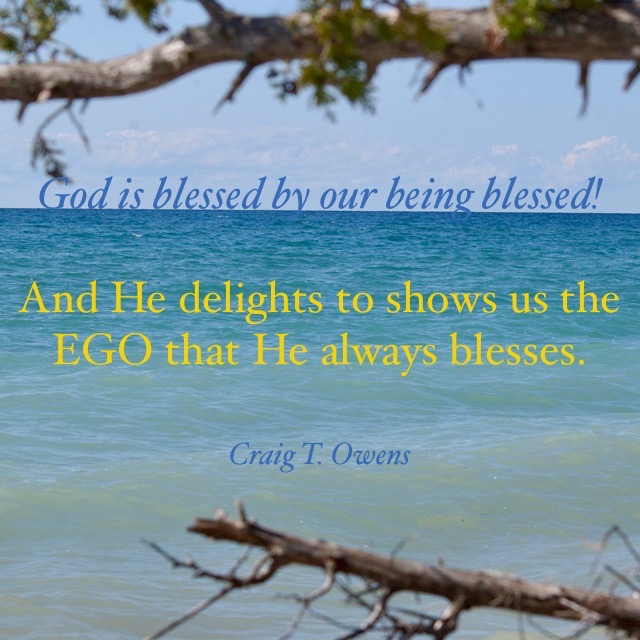
Do I feel unworthy of His blessing? If I am a Christian, I need to remind myself that I am in Christ, and He is in me, and He has brought me into the Father. This means that I am as blessed as the Father blesses the Son (John 14:20; Ephesians 1:3-6). God is blessed by our being blessed! 

Or perhaps I feel that “God bless me” is an arrogant prayer, while saying “God bless you” is a humble prayer. There is an EGO that God always blesses, and He delights to show us what that is!   

In Hebrew literature, the key point is found in the middle of a poem or story. In Psalm 67, that would make the middle verse: May the nations be glad and sing for joy, for You rule the peoples justly and guide the nations of the earth. Selah. (v. 4)

The nations rejoice because God judges fairly and God guides the nations. Selah—pause and take that in. The natural attitude is actually a God-negative attitude—“I prefer to be in charge … I don’t like anyone telling me what to do!” But the unnatural attitude is a God-positive attitude—“I trust God more than I trust me, so I’m glad He is in charge … I trust God to judge justly more than I trust world institutions, so I’m glad He is the final Judge!” 

This is very good news: Only God can rule and judge correctly! Men have biases and agendas; men are selfish and self-seeking; men seek their own glory and their own advancement. So the psalmist wants us to Selah/pause to remember that only God can lead and judge in a way that brings Him glory and brings us blessing. God is blessed by our being blessed! 

Working outward from verse 4, we see verses 3 and 5 are identical, teaching us that our God-honoring desire should be for all peoples in all nations to experience the blessing of an intimate relationship with God. 

A similar theme is sounded in the “bookend” verses of 1-2 and 6-7: We are asking God to bless us so that “all the ends of the earth will fear Him.” Once again we Selah/pause to consider this: Do I have the right EGO to request this blessing? Remember: There is an EGO that God always blesses.  

In his book Lead Like Jesus, Ken Blanchard identifies two types of E.G.O.s in our relationship with God:

  • Negative E.G.O.—Edging God Out 
  • Positive E.G.O.—Exalting God Only

The negative EGO says things like, “Bless me” and “Shine on me.” The positive EGO says, “Bless me so that I can be a blessing to others” and “Shine Your light on me so that others will see You.” 

Jesus told us to not let the light of our life be hidden. We are blessed by God so that we can be a blessing to all of the peoples in all of the nations. We desire that all may know the joy of serving a Righteous King. We want everyone to know the praise that comes from Exalting God Only. 

Oh God, be merciful to me. Cause Your face to shine on me. Bless me indeed so that I may teach others to fear You, so that they may come to know You as their All-Righteous, Good, and Loving King! 

If you have missed any of the messages in this series exploring the Selahs in the Psalms, you can find the full list of messages by clicking here. 

Not Shaken

“Anyone have a nice, neat, organized life that never gets rocked by anything unexpected?” he asked, not expecting anyone to answer. Let’s be honest: There’s a whole lot of shaking going on!  Not just now, but it’s always been this way. Even in 1000 BC when David wrote Psalm 62. 

Let me walk you through this psalm and offer a couple of observations. 

In the first two verses, David’s declaration sounds very religious. It sounds like what he’s supposed to say in difficult times. Yet some doubt is obviously creeping in because David refers to himself as a leaning wall and a tottering fence. It’s here that David has his first Selah pause. 

Selah—pause and calmly consider what’s happening. “If God is really such a strong rock and fortress, could bad guys really slip by Him? Is it likely that they could be trying to knock me over without God knowing about it?” Of course not! God knows exactly what is happening to me, and He’s allowed it to happen for a reason.  

After pausing to consider this, David makes a statement that sounds like he’s repeating the first verse. But notice that this time David is talking to himself: “I don’t believe God is my refuge just because my parents believed it, or just because it sounds religious. I declare it because it is true!” It’s good to preach the Word of God to our shaking souls! 

Verse 6 is a word-for-word repeat of verse 2 with one minor exception. Look at it in the NKJV: “I shall not be greatly moved” (v. 2). This means that in David’s mind there is still a possibility of getting knocked over. But then in verse 6: “I shall not be moved” has no qualifiers. Or as Matthew Henry commented, “I may be shocked, but I shall not be sunk.” 

After making the declarations of verses 1-2 his own in verses 5-6, David can no longer be called a hypocrite when he now encourages others to declare God’s salvation for themselves (vv. 7, 8). Then he invites everyone to Selah again, this time to weigh the Rock of God with the ways of men. He declares that mankind and his plans are only a breath, not even close to the weightiness of God! 

The word alone” dominates the first eight verses of this psalm. David is emphasizing that God alone is our refuge. As Augustine wrote, “God, You arouse us so that praising You may bring us joy, for You have made us for Yourself, and our hearts are restless until they find rest in You.” And C.S. Lewis added, “So few of us will really rest all on Him if He leaves us any other support.” 

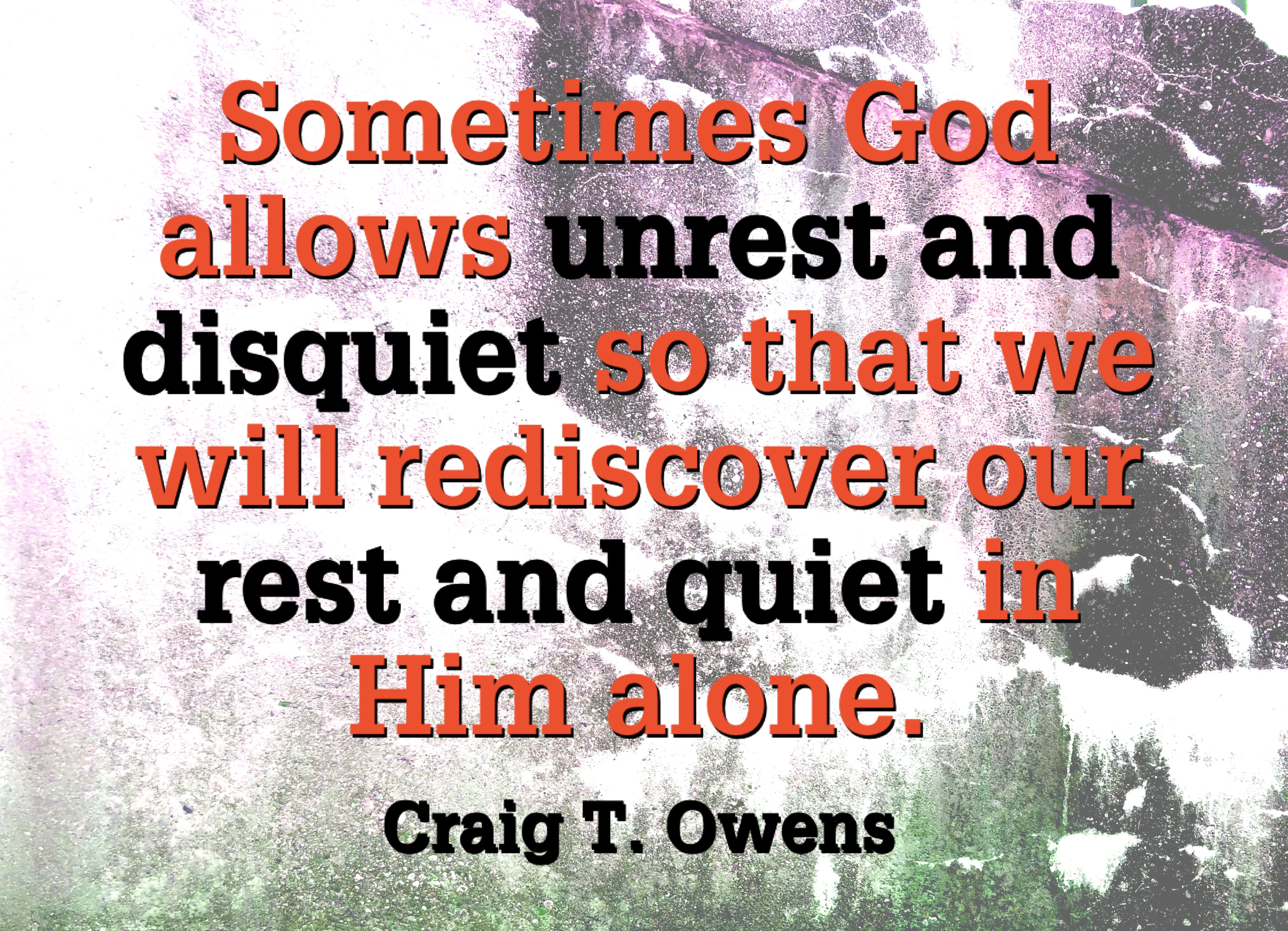
Sometimes God allows unrest or disquiet SO THAT we will rediscover our rest and quiet in Him alone. 

During times of shaking, David calls us twice to Selah pause to reach the same conclusion he has reached—

  • Nothing is stronger than our God
  • No one is more loving than our God

You can stand firm on a God that is powerful enough to help, and loving enough to want to help. HE ALONE is our security! Let times of shaking reveal to you the flimsy supports of this world that you may have come to rely on, and then run to THE strongest, most loving place possible: God’s presence! 

If you’ve missed any of the other posts in our Selah series, you can find the complete list of them by clicking here. 

The Core Curriculum Of The Spirit

“The Law of God teaches us how to love Him and our neighbors (Matthew 22:34-40). The Law of God is critical for seeking the Kingdom of God (Matthew 5:17-19). The Law of God liberates us from the blinding and binding power of sin (James 2:8-13). The Law of God marks the path of love that Jesus walked, and that all must walk who would follow Him (1 John 2:1-6; 5:1-3). The Law of God provided the framework within which the apostles ordered their churches (cf. 1 Corinthians 5, 9; James 2:5; 1 John 5). The Law of God is the core curriculum of the Spirit, as He brings us into the presence of God’s glory and transforms us into the image of Jesus Christ (Ezekiel 36:26-27; 2 Corinthians 3:12-18). Neglecting the Law of God is a major cause for the decline of true and selfless love in the world; it licenses the progress of evil; and it threatens to render the prayers of Law-neglecting believers an ‘abomination’ or, we might say, ‘a dead and a useless thing’ (Matthew 24:12; Proverbs 28:4, 9). 

[all Scriptures from the above paragraph are here]

“It’s no wonder the psalmist, echoing Moses, insisted that the righteous person, the one who embodies the goodness of God in all his ways, meditates on the Law of God day and night, hides it in his heart and embodies it in all his ways (Psalm 119:9-11; Deuteronomy 6:1-9), keeps it diligently, delights in and loves it, and hastens to make sure his feet follow in its path (cf. Psalm 1; Psalm 119:4, 5, 35, 59, 60, 97). 

[all Scriptures from the above paragraph are here]

“If you are missing the Law of God in your relationship with Jesus, you are depriving yourself of a most important resource for bringing the goodness of God to light in the land of the living. The good works outlined in the Law of God are those ‘ordained of old’ which God intends us to do in all our ways (Ephesians 2:10). Yes, understanding the Law can be difficult. But we can learn from the prophets, Jesus, and the apostles how to read, study, and meditate in this most important corpus of Biblical literature, and thus we can discover the true freedom for goodness and love that God has prepared for us.” —T.M. Moore 

Run To The Banner

Psalm 60 may have the longest introduction of any of the psalms, and it gives us some key historical information. David has been successful against the Philistines and the Moabites, and now he is fighting in Mesopotamia. While the army was focused elsewhere, the Edomites must have seen an opportunity to attack Israel, where they won a temporary victory (see the intro to Psalm 60 and 2 Samuel 8:1-3). 

David’s reflexive response to this temporary setback was not retaliation or blaming, but remorse and repentance. In verses 1-4 he says “You have” five times, acknowledging that God allowed this temporary defeat. He also acknowledges that only God can restore. 

Then David comes to the Selah pause: But You have raised a banner for those who fear You—a rallying point in the face of attack. Selah. (NLT) 

The Selah here is David calling us to evaluate our options just as he did. We are to consider things like: 

  • God’s help vs. our own strength 
  • the benefits of righteousness vs. the consequences of sin
  • depending on God vs. depending on man 
  • rallying under God’s banner vs. rallying under our own banner 

It’s interesting to note that in the list of David’s long string of victories in 2 Samuel 8, we read this: “The Lord gave David victory wherever he went” (v. 6). But how can that be since the Israelites were temporarily defeated by the Edomites? 

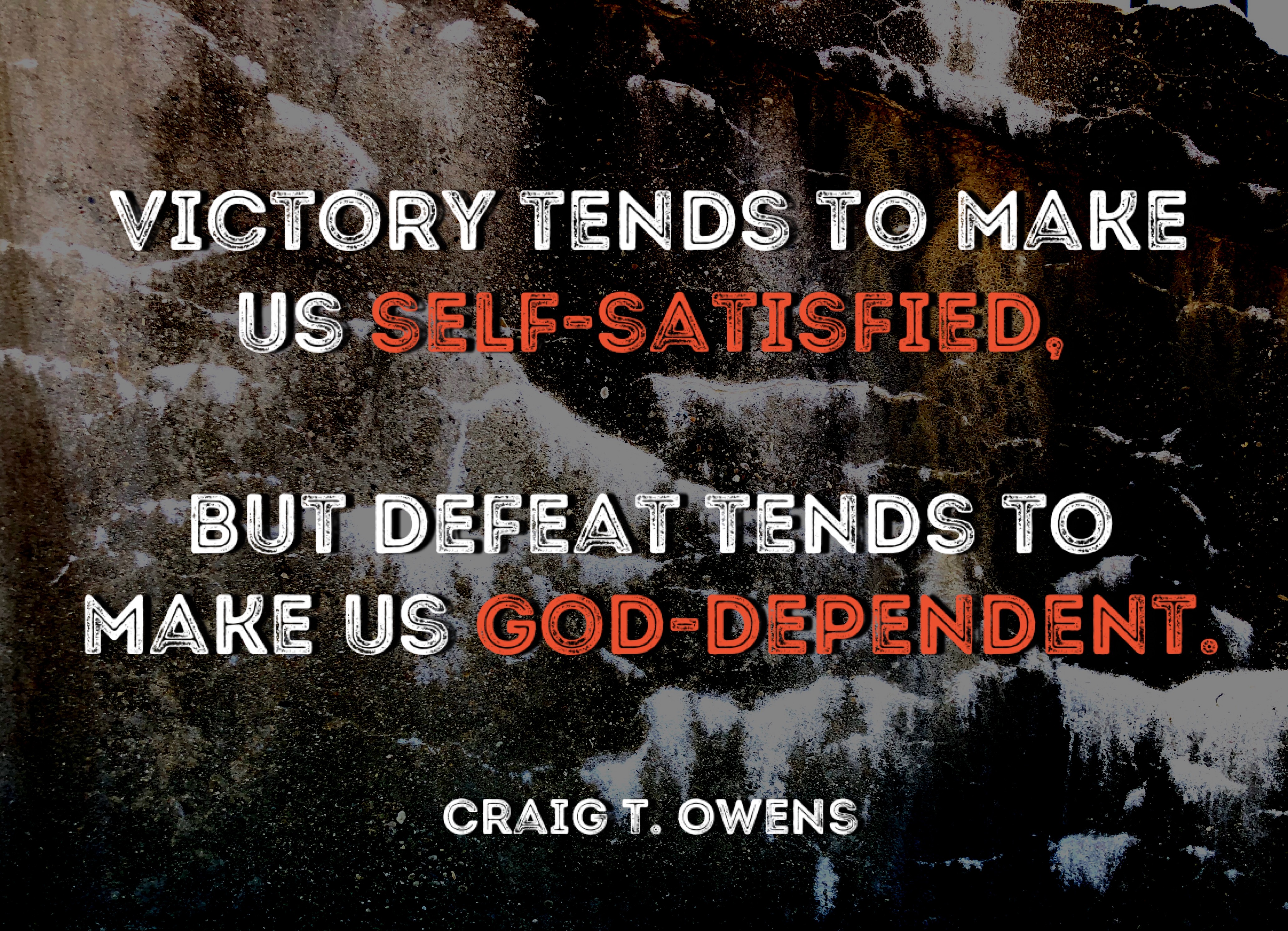
I think this is the key principle—We are more vulnerable to an attack (and a temporary defeat) after a victory than after a defeat. Why is that? Because victory tends to make us self-satisfied, but defeat tends to make us God-dependent. 

When David confesses that God has allowed this temporary defeat, he is really confessing that he had attempted to navigate things on his own. Perhaps he thought his strategy would keep Israel secure, or that his men were trained and resourced enough to be victorious, or that David didn’t even have to pay attention to the Edomites any longer. 

Whatever went through David’s mind, it was clear that he had become more self-satisfied than he was God-dependent. So David correctly recognized that he needed to run to God’s banner. He recognized that was the only secure place for him to stay. 

The Bible DOESN’T say “resist the devil and he will flee from you,” but it DOES say “submit yourself to God—run to His banner and stay under His banner—and then you can resist the devil and he will flee from you.” 

Look at the keywords in the final verse of Psalm 60: “With God we will gain the victory, and He will trample down our enemies.” 

WE WILL only because HE WILL. 

Has there been a temporary setback in your life? Repent and run to the banner of God. 

Have you felt under attack? Humble yourself and run to the banner of God. 

Have you recently won a victory? Stay humble and keep on running to the banner of God! 

If you have missed any of the other posts in this Selah series, you can find the full list by clicking here.
Trespassers

Psalm 59 is the prequel to David being betrayed by the Ziphites as well as the incident in the cave between himself and King Saul. 

This psalm is also called an imprecatory psalm, which is the theological way of saying, “Get ‘em, God!” Since King Saul has sent assassins to try to kill David, you can understand why David is praying this way. But I sort of wonder why he inserts a Selah pause after two rather angry-sounding sentences in verses 5 and 13. 

When we are reading—or even praying—an imprecatory prayer, here are some important things to keep in mind: 

  • This prayer is inspired by the Holy Spirit. All of the words in the prayer, including the Selah pauses, are directed by the Holy Spirit. Getting our angry thoughts out in God’s presence is the safest place to vent. 
  • This is a prayer for justice because an injustice has been done, not just a prayer because David is upset with someone. 
  • Since this prayer says, “Get ‘em, God,” it’s a prayer that turns matters over to God as the Ultimate Judge, taking the judgment out of my hands. 

Really this is a prayer that seeks to balance something vital: The desire to see evil punished while at the same time desiring to see all evildoers come to salvation. 

Think of it this way: When I sin, do I want to meet a God of justice or a God of mercy? Since we are to treat others the way that we would want to be treated, if I want to receive God’s mercy, I have to desire that for others too. Even those evildoers who have hurt me. 

David’s first Selah pause comes after saying that he is innocent of any offense or wrongdoing. When we pray an imprecatory prayer, we would do well to ask the Holy Spirit to search our hearts to reveal any trespasses we have committed (see Psalm 19:12-13; 139:23-24). 

David’s second Selah pause comes after he says, “Then it will be known to the ends of the earth that God rules over Jacob.” Is my “Get ‘em, God” prayer a desire for me to be seen as the overcomer or for God to be seen as glorious? 

As long as my focus is on my trespassers, my focus is off my God. 

I cannot be consumed by thoughts of “them” because then I rob myself of thoughts of Him! 

So when you get angry enough at someone who has trespassed against you that you want to pray a “Get ‘em, God” prayer, Selah pause and pray, “Holy Spirit… 

  • …show me my trespasses; 
  • …help me forgive my trespassers; and
  • …help me to focus on my God, and not on my trespassers or my forgiven trespasses.” 

If you have missed any of the other messages in our Selah series, you can find links to all of them listed here. 

Messes

My good friend Josh Schram shared a powerful message in our Selah series. 

David is the anointed king, but instead of living in a palace, he’s living in a cave. From this cave, David gave us Psalm 57. 

Here are some of my takeaways from Josh’s message, but I would encourage you to watch this 20-minute video for yourself

Takeaways: 

  • To get where God needs me to be, I often have to go through things I never expected. 
  • Even my “cave times” are directed by God. 
  • “David didn’t get down on Saul’s level; he got down on his knees.” —Josh Schram 
  • If David had taken matters into his own hands, what would his legacy have been? Instead, he worshiped God, and let God take care of Saul. 
  • “We don’t worship God because our circumstances are good but because our God is good.” —Josh Schram 
  • My little messes become big messes when I try to handle them myself. I need to run to my Heavenly Father for help with all of my messes! 

If you have missed any of the messages in our Selah series, you can access all of them by clicking here. 

Interrupt Your Anxious Thoughts

Listen to the podcast of this post by clicking on the player below, and you can also subscribe on Apple or Spotify.

David taught us how to pray after we’ve been stabbed in the back. Aren’t you glad that you can pray this prayer just once and everything is all better?! 

Oh, wait. It doesn’t really work that way, does it? At least it hasn’t for me. After I’ve been hurt, it takes quite a while to get to a place of healing. We have cliches for this sort of thing—phrases like “Once bitten, twice shy” and “Fool me once, shame on you; fool me twice, shame on me.” 

We begin to react to the past instead of reflecting and responding in the present.  

It’s interesting that those who compiled the Psalter placed Psalm 55 where they did. There is no introduction that gives us a background or setting, but David still seems to be looking for those “Ziphites” that betrayed him to King Saul. 

Here’s an important physiological and psychological truth: Our brains cannot tell the difference between a real threat and an imagined threat. Our physical bodies react the same way in response to any threat. 

It’s interesting to note that both Selahs in Psalm 55 are in the middle of a sentence, almost as if David is interrupting his own thoughts. Which, I believe, is exactly what he’s doing. 

As this psalm opens David is still praying, but he’s praying about his internal threats: 

  • my thoughts trouble me 
  • I am distraught 
  • I notice the conversations and the stares of potential enemies  
  • my heart is in anguish 
  • I feel like terrors of death, fear and trembling, and horror are closing in on me! 

This leads to David’s fight/flight response (although really, it’s his flight response): “Oh, that I had the wings of a dove! I would fly away and be at rest—I would flee far away and stay in the desert.

David has been listening to himself, and he finally at least attempts to put a halt to these distressing thoughts with his first Selah—which means “pause, and calmly think of that.” 

Most of our natural reactions are driven by fear. But fear—by its very nature—is limiting. Fear keeps us tunnel-visioned on the perceived threat. Fear closes us off to accepting any new information. Fear limits our creative responses. Fear perpetuates more fear. 

So David tries a second time to Selah. He is attempting to interrupt his negative thoughts—to stop listening to himself and start talking to himself. To move from a self-preserving reaction to a God-glorifying response requires a Selah pause to reflect. Reflecting on things like:

  • Where will these thoughts ultimately take me? 
  • How has God responded before? 
  • What does God’s Word say? 
  • Could I imagine Jesus responding the way I’m responding? 
  • What changes can I make? 

I love David’s conclusion: “But as for me, I TRUST IN YOU.” He’s saying, “I’m not going to listen to those negative fears anymore. It’s time to put my trust in God.”  

David had to do this “evening, morning, and noon”—again and again and again! Until finally he could say, “I will cast all my cares on the Lord and He will sustain me; He will never let me fall” (Psalm 55:22). 

This is what Jesus promises us, “Come to Me, all of you who are tired and have heavy loads, and I will give you rest” (Matthew 11:28). 

If you’ve missed any of the messages in our Selah series, you can access them all by clicking here. 

How To Pray When You’ve Been Stabbed In The Back

Sadly, some of the people who do us the most harm are those whom we least expected to hurt us. They seemed to have our back, but then they are stabbing us in the back! 

It’s sad, but it shouldn’t be totally unexpected. Matthew Henry said it well: “Never let a good man expect to be safe and easy till he comes to heaven. … It is well that God is faithful, for men are not to be trusted. 

David learned that lesson. He rescued the town of Keilah from the Philistines, only to hear that King Saul has called out his army to destroy Keilah and kill David. This prompted David to leave Keilah and flee to the Desert of Ziph. It appears that David has given Saul the slip, but the Ziphites send a message to the king saying, “We know where David is hiding, and we’ll gladly hand him over to you.” 

Here’s the painful part for David: Both Keilah and Ziph were in Judah—David’s tribe! His own family—that should have had his back—stabbed him in the back instead! 

I wish I could say this was a once-in-awhile thing, but we all know that it’s not. In fact, this sort of betrayal probably happens more often than we would care to admit. 

It was during this time of betrayal by the Ziphites that David wrote the 54th Psalm. In the opening verses, David laments the ruthless, Godless men that have betrayed him. And then comes that word of pause: Selah. 

I believe this Selah may have come when “Jonathan went to David at Horesh and helped him find strength in God” (1 Samuel 23:16). One of the definitions of Selah is to weigh things to see what is more valuable. Notice that Jonathan took David’s attention off his evil betrayers and turned it to his loving God. So in the very next phrase after the Selah we read David saying, “Surely God is my help; the Lord is the One who sustains me.” 

Notice four key components of David’s prayer—

  1. David’s motive for praying. In the opening verse, he says, “Your Name…Your might.” To me, that sounds a lot like the opening words to the model prayer Jesus taught us: “Hallowed be Your Name.” 
  2. David’s prayer. He said, “Hear my prayer, O God; listen to the words of my mouth.” It’s interesting to note that David says nothing to the Ziphites themselves, but he only speaks of them when he is alone with God in prayer.  
  3. Prayer’s result. David didn’t have to try to make things right on his own because God took care of it—evil recoiled on those who stabbed David in the back. 
  4. David’s praise. Notice the words “I will praise Your Name…[You] have delivered me.” Again, this praise and focus on God sounds like the end of the model prayer Jesus taught us: “Yours is the kingdom, and the power, and the glory forever!” 

When enemies assail, when you have been stabbed in the back, don’t look to men for help and don’t take matters in your own hands. Instead take a Selah. Consider that God is worthy of your attention, and not the “ruthless men” who hurt you. Turn your pain over to God and say with David: Surely God is my help; the Lord is the One who sustains me. 

Evil will recoil on evildoers, you will be kept safe, and you will be vindicated by God’s might! 

If you missed any of the messages in our Selah series, you can find them all by clicking here.