Thursdays With Spurgeon—Our Prayer Helper

This is a weekly series with things I’m reading and pondering from Charles Spurgeon. You can read the original seed thought here, or type “Thursdays With Spurgeon” in the search box to read more entries.

Our Prayer Helper 

Likewise the Spirit also helps in our weaknesses. For we do not know what we should pray for as we ought, but the Spirit Himself makes intercession for us with groanings which cannot be uttered. Now He who searches the heart knows what the mind of the Spirit is, because He makes intercession for the saints according to the will of God. (Romans 8:26-27) 

     God helps our infirmity, and with a Helper so divinely strong, we need not fear the result! … We take our burden to our heavenly Father and tell Him in the accents of childlike confidence, and we come away quite content to better whatever His holy will may lay upon us. … 

     We bathe our wounds in the lotion of prayer and the pain is lulled; the fever is removed. But the worst of it is that in certain conditions of heart we cannot pray. We may be brought into such perturbation of mind and perplexity of heart that we do not know how to pray. … We fall into such heaviness of spirit and entanglement of thought that the one remedy of prayer, which we have always found to be unfailing, appears to be taken from us. Here, then, in the nick of time, as a very present help in time of trouble, comes in the Holy Spirit! He draws near to teach us how to pray, and in this way He helps our infirmity, relieves our suffering, and enables us to bear the heavy burden without fainting under the load. … 

     He will guide you both negatively and positively. Negatively, He will forbid you to pray for such and such a thing, even as Paul essayed to go into Bithynia, but the Spirit would not allow him. And, on the other hand, He will cause you to hear a cry within your soul that will guide your petitions, even as He made Paul hear the cry from Macedonia, saying, ‘Come over to Macedonia and help us’ (Acts 16:6-10). …  

     If I am a true believer, there dwells the Holy Spirit, and when I desire to pray, I may ask Him what I should pray for as I ought and He will help me! He will write the prayers that I ought to offer upon the tablets of my heart, and I will see them there and so I will be taught how to plead! It will be the Spirit’s own Self pleading in me and by me and through me before the throne of grace!

From The Holy Spirit’s Intercession

Oh, how many times I’ve been in desperate need but cannot find the right words to pray. The Holy Spirit understands even groans that come from my anguished heart and can help me turn those groans into perfect prayers. 

Jesus said the Holy Spirit would remind us of His words and would guide us into truth. I’ve experienced this for myself: I’m at an utter loss of what or how to pray, and then a passage of Scripture comes to my mind. I start there with that phrase. Often I will begin to read the surrounding passage from the Bible out loud and feel the gentle affirmation from the Holy Spirit as I begin to personalize that portion of Scripture into my own prayer. As Spurgeon put it, this is “the Spirit’s own Self pleading in me and by me and through me before the throne of grace!” 

What a Helper we have in the Holy Spirit!
8 Quotes From “Words To Winners Of Souls”

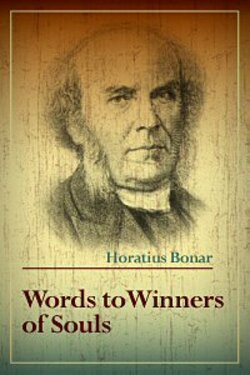
I don’t say this very often, but Words To Winners Of Souls by Horatius Bonar is a must-read for those in pastoral ministry. You can check out my full book review by clicking here. 

“The question, therefore, which each of us has to answer to his own conscience is, ‘Has it been the end of my ministry, has it been the desire of my heart to save the lost and guide the saved? Is this my aim in every sermon I preach, in every visit I pay? Is it under the influence of this feeling that I continually live and walk and speak? Is it for this I pray and toil and fast and weep? Is it for this I spend and am spent, counting it, next to the salvation of my own soul, my chiefest joy to be the instrument of saving others? Is it for this that I exist?’” 

“It is not opinions that man needs: it is truth. It is not theology: it is God. It is not religion: it is Christ. It is not literature and science; but the knowledge of the free love of God in the gift of His only-begotten Son.” 

“Our power in drawing men to Christ springs chiefly from the fullness of our personal joy in Him, and the nearness of our personal communion with Him.” 

“Why so many meetings with our fellow men, yet so few meetings with God?” 

“Our life has not been a lying-in-wait for the voice of God. ‘Speak, Lord; for Thy servant heareth,’ has not been the attitude of our souls, the guiding principle of our lives. Nearness to God, fellowship with God, waiting upon God, resting in God, have been too little the characteristic either of our private or our ministerial walk. Hence our example has been so powerless, our labors so unsuccessful, our sermons so meager, our whole ministry so fruitless and feeble.” 

“It is easier to speak or write about revival than to set about it. There is so much rubbish to be swept out, so many self-raised hindrances to be dealt with, so many old habits to be overcome, so much sloth and easy-mindedness to be contended with, so much of ministerial routine to be broken through, and so much crucifixion, both of self and of the world, to be undergone. As Christ said of the unclean spirit which the disciples could not cast out, so we may say of these: ‘This kind goeth not out but by prayer and fasting.’” 

“These must be days of strenuous, ceaseless, persevering, and, if God bless us, successful toil. We shall labor till we are worn out and laid to rest.” 

“It is unbelief that makes ministers handle eternal realities with such irreverence. It is unbelief that makes them ascend with so light a step ‘that awful place the pulpit,’ to deal with immortal beings about heaven and hell.” 

Thursdays With Spurgeon—God’s Part, Our Part

This is a weekly series with things I’m reading and pondering from Charles Spurgeon. You can read the original seed thought here, or type “Thursdays With Spurgeon” in the search box to read more entries.

God’s Part, Our Part

     The lesson is clear to all: The wind turns mills that men make. It fills sails that human hands have spread. And the Spirit blesses human effort, crowns with success our labors, establishes the work of our hands upon us, and teaches us all through that ‘the hand of the diligent makes rich’ (Proverbs 10:4). And ‘if anybody will not work, neither shall he eat’ (2 Thessalonians 3:10). … 

     Let us do our part faithfully, spread every sail, make all as perfect as human skill and wisdom can direct, and then in patient continuance in well-doing await the Spirit’s propitious gales, neither murmuring because He tarries nor being taken unawares when He comes upon us in His sovereign pleasure to do that which seems good in His sight.

From The Holy Spirit Compared To The Wind 

We cannot do what only God can do, and God will not do what we are supposed to do. It is the Holy Spirit who can help us keep those two thoughts clear. 

It’s wrong to say, “God only helps those who help themselves.” But it’s equally as wrong to say, “I don’t need to do anything except wait for God.” In example after example in the Bible we see people doing their part while at the same time believing for God to do something miraculous:

We don’t take matters into our own hands, but neither do we sit idle waiting for something miraculous to happen. We plant, and water, and tend, and then God brings the harvest.

Why Couldn’t This Be Said Of You?

“Never before had there been a man/woman like ___________, who turned to the Lord with all his/her heart and soul and strength, obeying all the laws of Moses. And there has never been a man/woman like him/her since.” (2 Kings 23:25 NLT) 

What would it take to put your name in the blank? 

God wants you to put your name there, and He will help you if you will ask Him! 

A Hideous Strength

“…Come, let us face each other in battle” (2 Kings 14:8). 

Based on Amaziah’s request and Jehoash’s unusual parable-based response, it appears that this is the chronology of what happened:

  • Amaziah requests that Jehoash give him one of his daughters in marriage
  • Jehoash refuses
  • Amaziah attacks and defeats Edom 
  • Amaziah, feeling very proud of himself, then repeats his request to Jehoash, who again refuses
  • Amaziah begins to muster his troops to attack Jehoash and Israel
  • Jehoash defeats in Amaziah battle

Jehoash correctly diagnosed Amaziah: “You have indeed defeated Edom and now you are arrogant. Glory in your victory, but stay at home” (v. 10). 

Pride makes us think we are better than we are. Pride leads us to believe that we are owed something more. Pride comes before a fall. 

Amaziah’s pride had an expensive price tag:

  • he lost the battle
  • the walls around Jerusalem were torn down
  • the temple at Jerusalem was plundered
  • he was assassinated by his own military leaders

Pride is a hideous strength because it is a deceptive and short-lived strength.

C.S. Lewis described pride so well: “Pride gets no pleasure out of having something, only out of having more of it than the next man. We say that people are proud of being richer, or cleverer, or better looking than others. If everyone else became equally rich, or clever, or good looking, there would be nothing to be proud about. It is the comparison that makes you proud: the pleasure of being above the rest. Once the element of competition has gone, pride has gone. That is why I say that Pride is essentially competitive in a way the other vices are not. … Nearly all those evils in the world which people put down to greed or selfishness are really far more the result of Pride. … Pride is ruthless, sleepless, unsmiling concentration on the self.” —C.S. Lewis 

Oh my! We must pray: “Holy Spirit, help me guard my heart against this propensity to pride. Yes, a victory can lead to pride and a false sense of strength, but it is a hideously deceptive strength. Please remind me that: 

  • victory makes me susceptible to pride 
  • pride makes me think I’m better (stronger, more impressive, more spiritual) than I really am 
  • this hideously deceptive vice makes me forget to remain dependent on God 
  • the dependence on myself makes me vulnerable to attack and defeat.” 

Don’t let Pride be your undoing, as it was for Amaziah. 

Poetry Saturday—A Lost Opportunity

It came and went so quickly,
   My sluggish soul saw not
The Master stand and beckoning
   Toward one of humble lot.

And I rose not up to follow,
   So slow was I to see,
Till the help I might have given
   Forever fled from me.

And often I am grieving,
   And longing all in vain,
For a blessed opportunity
   That will not come again.

Dear Lord, give Thine anointing,
   And make mine eyes to see;
And make me swift in doing
   The work Thou givest to me. —L. Adda Nichols

The EGO That God Blesses

Have you ever noticed that it seems a lot easier to say, “God bless you” than it does to say, “God bless me”? Why is that? 

Do I feel unworthy of His blessing? If I am a Christian, I need to remind myself that I am in Christ, and He is in me, and He has brought me into the Father. This means that I am as blessed as the Father blesses the Son (John 14:20; Ephesians 1:3-6). God is blessed by our being blessed! 

Or perhaps I feel that “God bless me” is an arrogant prayer, while saying “God bless you” is a humble prayer. There is an EGO that God always blesses, and He delights to show us what that is!   

In Hebrew literature, the key point is found in the middle of a poem or story. In Psalm 67, that would make the middle verse: May the nations be glad and sing for joy, for You rule the peoples justly and guide the nations of the earth. Selah. (v. 4)

The nations rejoice because God judges fairly and God guides the nations. Selah—pause and take that in. The natural attitude is actually a God-negative attitude—“I prefer to be in charge … I don’t like anyone telling me what to do!” But the unnatural attitude is a God-positive attitude—“I trust God more than I trust me, so I’m glad He is in charge … I trust God to judge justly more than I trust world institutions, so I’m glad He is the final Judge!” 

This is very good news: Only God can rule and judge correctly! Men have biases and agendas; men are selfish and self-seeking; men seek their own glory and their own advancement. So the psalmist wants us to Selah/pause to remember that only God can lead and judge in a way that brings Him glory and brings us blessing. God is blessed by our being blessed! 

Working outward from verse 4, we see verses 3 and 5 are identical, teaching us that our God-honoring desire should be for all peoples in all nations to experience the blessing of an intimate relationship with God. 

A similar theme is sounded in the “bookend” verses of 1-2 and 6-7: We are asking God to bless us so that “all the ends of the earth will fear Him.” Once again we Selah/pause to consider this: Do I have the right EGO to request this blessing? Remember: There is an EGO that God always blesses.  

In his book Lead Like Jesus, Ken Blanchard identifies two types of E.G.O.s in our relationship with God:

  • Negative E.G.O.—Edging God Out 
  • Positive E.G.O.—Exalting God Only

The negative EGO says things like, “Bless me” and “Shine on me.” The positive EGO says, “Bless me so that I can be a blessing to others” and “Shine Your light on me so that others will see You.” 

Jesus told us to not let the light of our life be hidden. We are blessed by God so that we can be a blessing to all of the peoples in all of the nations. We desire that all may know the joy of serving a Righteous King. We want everyone to know the praise that comes from Exalting God Only. 

Oh God, be merciful to me. Cause Your face to shine on me. Bless me indeed so that I may teach others to fear You, so that they may come to know You as their All-Righteous, Good, and Loving King! 

If you have missed any of the messages in this series exploring the Selahs in the Psalms, you can find the full list of messages by clicking here. 

How Big?

…your servant has nothing there at all…except a small jar of olive oil (2 Kings 4:2). 

This widow made the right move in going to Elisha for help. The situation seemed impossible, so she had nowhere else to go but to God.

Instead of giving her immediate relief, God asks this widow to extend her faith. The steps she takes next will determine how big of a blessing she will receive. God frequently does this:

  • how many ditches am I willing to dig (3:16)? 
  • how many doors am I willing to knock on to ask for empty jars (4:3)?
  • how many times am I willing to strike the ground with my arrows (13:18-19)?

The ditches were filled with water until they could hold no more.

The jars were filled with oil until they could hold no more.

Joash only struck the ground three times, so he only received three victories.

Jesus told us…

…ask, and keep on asking 

…seek, and keep on looking 

…knock, and keep on knocking 

God IS going to answer. The question is: HOW BIG do I want Him to answer? 

Now all glory to God, who is able, through His mighty power at work within us, to accomplish INFINITELY MORE than we might ask or think. (Ephesians 3:20) 

Thursdays With Spurgeon—“The Hour Has Come”

This is a weekly series with things I’m reading and pondering from Charles Spurgeon. You can read the original seed thought here, or type “Thursdays With Spurgeon” in the search box to read more entries.

“The Hour Has Come” 

After Jesus said this, He looked toward heaven and prayed: “Father, the hour has come. Glorify Your Son, that Your Son may glorify You. (John 17:1) 

     ‘Father, the hour is come.’ This is the hour ordained in the eternal purpose. The hour prophesied of which Daniel sought to know. The hour toward which all hours had pointed. The central hour—the hour up to which man dated and from which they will date again if they read time right. The hinge, pivot, and turning point of all human history! The dark yet delivering hour! The hour of vengeance and of acceptance! ‘The hour is come.’ …  

     You and I look into the hour of darkness, as a frequent rule, and see no further, for our eyes are dim through unbelief. But [Jesus] goes on beyond the hour and His prayer is, ‘Glorify Your Son, that Your Son also may glorify You.’ He fixes His eyes upon the glory that was yet to be revealed and for joy of which He counts even His death to be but an hour—looking upon it as soon to be over and lost in the glory of His Father! 

     In all this, brothers and sisters, let us imitate our Lord and let us keep our eyes not on the present, but on the future; not on this light affliction, which is but for a moment, but on the far more exceeding and eternal weight of glory that will come of it. And let us with holy confidence, whenever our hour of darkness arrives, resort to our God in secret. The best preparation for the worst hour is prayer! The best remedy for a depressed spirit is nearness to God! 

From The Son Glorified By The Father And The Father Glorified By The Son 

Solomon became depressed when his gaze went no higher than “under the sun.” We, too, can become quite overwhelmed by our trials if our eyes only look at the present hour of darkness. 

The writer of Hebrews tells us to keep our eyes on Jesus who conquered in His hour of darkness—Fixing our eyes on Jesus, the pioneer and perfecter of faith. For the joy set before Him He endured the Cross, scorning its shame, and sat down at the right hand of the throne of God. Consider Him who endured such opposition from sinners, so that you will not grow weary and lose heart (Hebrews 12:2-3). 

No matter what you are going through, keep your eyes on Jesus. Don’t give in to the darkness because Jesus has made you more than a conqueror if you will remain in Him (Romans 8:37-39). 


Loitering Words

These are the last words of David: “The inspired utterance of David son of Jesse, the utterance of the man exalted by the Most High, the man anointed by the God of Jacob, the hero of Israel’s songs. The Spirit of the Lord spoke through me; His word was on my tongue. The God of Israel spoke, the Rock of Israel said to me: ‘When one rules over people in righteousness, when he rules in the fear of God, he is like the light of morning at sunrise on a cloudless morning, like the brightness after rain that brings grass from the earth.’” (2 Samuel 23:1-4) 

Look how David describes himself: 

  • Inspired by God
  • Exalted by the Most High 
  • Anointed by God 

This statement by David reminds me of the words Moses spoke about himself: “Moses was a very humble man, more humble than anyone else on the face of the earth” (Numbers 12:3)! 

David also said that he was the hero of Israel’s songs. The King James Version says he was “the sweet psalmist of Israel.” However he is described, these are his last words. Literally, that means that his words loitered. They hung around. They continued to impact people’s lives long after he was gone.

Look how long his words loitered. When the Church prayed in Acts 4, they quote David’s prophetic words, stating that they were spoken through the Holy Spirit. David said that’s exactly how he was speaking—“the Spirit of the Lord spoke through me; His word was on my tongue” (v. 2), and God Himself is recorded as speaking through David in verse 3.

God’s words were on David’s lips because God’s Spirit was in David’s heart.

David was both confident of this and humbled by this.

  • Confidently he said he “rules over people in righteousness” and “my house [is] right with God” (v. 5). 
  • Humbly he said “he rules in the fear of God” and God was the One who “brought to fruition my salvation” (v. 5). 

God is still looking for people through whom He may speak loitering words.

May our prayer be—God, You are still looking for men and women through whom You can impart loitering words. You want to put Your words in the mouth of those who are righteous in Your sight and who walk in reverent fear of Your holiness, those who acknowledge Your love and Your sovereignty. O God, make me that person! I don’t want to speak idle words, but life-changing, God-glorifying, Spirit-empowered words that will loiter, and impart truth, and bring people to Jesus. Show me what I need to change to be the one through whom You will speak Your loitering words.