Unexpected Faithfulness

Listen to the podcast of this post by clicking on the player below, and you can also subscribe on AppleSpotify, or Audible. 

Imagine you just preached a sermon that was so Holy Spirit-anointed that crowds of people turned to Jesus. This kind of activity made a big stir in town, and some supposedly religious people became quite jealous of the fruit of your ministry. In their jealousy, they begin slandering you to others in town, causing a huge backlash against your ministry. 

How would you respond? Would you give those jealous slanderers a piece of your mind? Would you give them some of their own medicine? Would you leave town?

The scenario I described isn’t make believe; it actually happened to Paul and Barnabas in the city of Iconium (Acts 14:1-2). In the very next verse, Luke describes Paul and Barnabas’ response: some biblical translations use the word “so” and some use the word “therefore” to indicate the natural connection—

So Paul and Barnabas stayed on there for a long time, speaking freely and fearlessly and boldly in the Lord” (v. 3). 

They didn’t fight their slanderers nor did they flee from Iconium; they remained faithful to the task to which God had called them! 

Fighting and fleeing are natural responses. 

Faithfulness, however, is a supernatural response. 

God honored the faithfulness of Paul and Barnabas by demonstrating His own supernatural power through them: “[God] continued to bear testimony to the Word of His grace, granting signs and wonders to be performed by their hands” (v. 3b). 

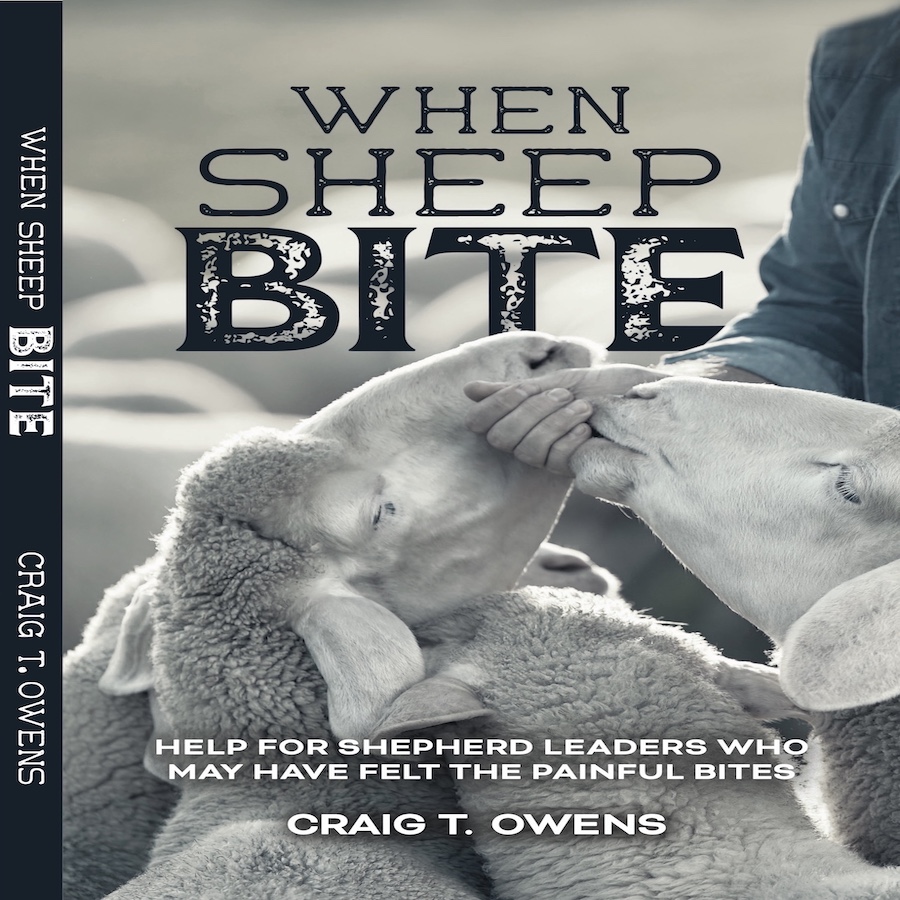
The scenario I described isn’t just something from long ago history, but it was a scene from my personal history too. In the Introduction of my book When Sheep Bite I wrote—
   I cannot pinpoint exactly what triggered their outburst or when their attacks started, but it seemed like almost overnight their teeth were bared. I was completely taken aback! I had assumed that seeing the new life and vitality in this pasture would be celebrated. When the exact opposite happened, I must admit that my knee-jerk reactions probably weren’t very Christlike. … 

     This was something I never imagined. I never saw anything like this in my home, nor had I experienced anything like this in my associate pastor’s role. In fact, even in the business world I had never seen people behave this egregiously. 

In the final chapter of my book I shared this thought, “Yes, fight-or-flight is our natural response, but with the empowerment of the Holy Spirit, we can respond in supernatural faithfulness. We don’t have to sit unmoving and unfeeling, but we can continue to serve even biting sheep until God removes us or them.” 

This whole idea of supernatural faithfulness to God’s calling versus giving in to the natural reactions of fight-or-flight is why I wrote this book. Once again, let me take you back to an excerpt from the Introduction—

     Would I ever want to relive this experience? No way! But there were lessons I learned during this walk through hell that I could have learned in no other way. It is those lessons that I hope to be able to unpack for you, my shepherding friends, in this book. … I would say to you something that C.S. Lewis wrote, “Think of me as a fellow-patient in the same hospital who, having been admitted a little earlier, could give some advice.” 

When you are under attack, I know it seems like you are alone, but you are not. Don’t give in to fight-or-flight, but ask God to supernaturally empower you to remain faithful. I believe When Sheep Bite can be a huge assistance to you as well. Please pick up a copy and reach out to me if I can be of assistance to you. 

►► Would you please prayerfully consider supporting this ministry? My Patreon supporters get behind-the-scenes access to exclusive materials. ◀︎◀︎
A Different Response To Attacks

Listen to the podcast of this post by clicking on the player below, and you can also subscribe on AppleSpotify, or Audible. 

Sir Isaac Newton may have said for every action there was an equal and opposite reaction, but that’s not true for God-fearing leaders. 

Check out this episode of The Podcast. 

The story of Paul and Barnabas that I reference in this video is found in Acts 14:1-21. 

My book When Sheep Bite is divided into three section. In the first section I talk about a shepherd leader’s heart and section two diagnosis the sheep bites leaders endure. The final section is all about the faithfulness to finish well—not giving in to the natural responses of fight or flight. 

I open that final section of the book like this—

     Psychologists and medical doctors have all described what happens to our minds and bodies when we are under attack. They are universal responses that our loving Creator has implanted in all of us to be able to respond to threats that come at us. When confronted with a biting sheep, without consciously thinking about it our minds and bodies prepare for fight or flight. 

     But let’s consider those responses in the context of a shepherd pasturing his sheep. Is it an effective strategy for the shepherd to fight his sheep? No, of course not. Paul told Timothy that a shepherd is “not quarrelsome but forbearing and peaceable” (1 Timothy 3:3 AMPC). 

     Is it allowable for the shepherd to run away from the threat, leaving the flock without a shepherd? Again, no, as Jesus told us that one who resorts to flight isn’t worthy to be called a shepherd but is considered a mere “hired hand [who] cares nothing for the sheep” (John 10:12-13). 

     So if godly shepherds cannot give in to the natural responses of fight or flight, what are we to do? Since we serve an all-power, all-loving Chief Shepherd we must look to Him for the supernatural response of faithfulness. 

     Not fight. Not flight. But faithfulness. 

Check out some of my other posts about godly leadership too. 

►► Would you please prayerfully consider supporting this ministry? My Patreon supporters get behind-the-scenes access to exclusive materials. ◀︎◀︎
Bites Hurt!

Listen to the podcast of this post by clicking on the player below, and you can also subscribe on AppleSpotify, or Audible. 

When people attack their leader—or when sheep bite—it hurts! 

Our first best response is to acknowledge, “That hurt!” but then we need to pause. Our natural response to an attack is fight-or-flight, but healthy leaders take time to learn why that bite occurred. 

This is an excerpt from an episode of The Craig and Greg Show where Greg interviewed me about my new book When Sheep Bite.

If you would like to watch the full episode of our leadership podcast, you can find that here. 

I am getting ready to facilitate a cohort for pastors who have gone through painful sheep bites—or perhaps they are feeling them right now! If you are a pastor, or if you know of a pastor who has been bitten, please check out this cohort here. 

And if you would like to pick up a copy of When Sheep Bite for yourself, you can get that here. 

►► Would you please prayerfully consider supporting this ministry? My Patreon supporters get behind-the-scenes access to exclusive materials. ◀︎◀︎

Our Safe Healing Place

I cry out with my voice to the Lord; with my voice I implore the Lord for compassion. I pour out my complaint before Him; I declare my trouble before Him. (Psalm 142:2)

David knew the release and healing that would come after he poured out his complaint in God’s presence. The injuries others have done to us afflict our thoughts and emotions, and we need a safe place to get that poison out of our mind and heart.

God’s presence is that safe place, that healing place. 

God already knew what was in David’s heart, but David still verbalized it before God—not before his attackers or even his friends. We need to follow this example when we, too, are injured.

When You’re Unfairly Attacked

Listen to the podcast of this post by clicking on the player below, and you can also subscribe on Apple or Spotify.

Contend, Lord, with those who contend with me; fight against those who fight against me. (Psalm 35:1). 

This psalm is in a category called an imprecatory psalm, which is the theological way of saying, “Get ‘em, God!” 

Does it sound unusual to your ears to pray a prayer like that? After all, aren’t we as Christians commanded to forgive those who offend us? How do we square that teaching of Jesus with these brutally honest prayers that David offers up? 

Always remember that imprecatory psalms are spoken exclusively to God, not to our enemies. So when we pray these prayers, we are really turning the matter over to God. God does the contending and the vindicating—He knows best how to dispense the appropriate judgment. 

David also shares with us several introspective prayers throughout the Book of Psalms, where he asks the Holy Spirit to search him. This heart-searching is interwoven in this imprecatory prayer of Psalm 35, as it should be with our prayers too. 

Notice that David can only say these things with integrity because he had already allowed the Spirit to search his heart, and then he had asked forgiveness and he had repented from any sin (see Psalm 139:23-24; Matthew 5:22-24; 6:12, 14-15). David could point out with a clear conscience what his enemies were doing because David was innocent of these actions himself. Things like… 

  • their attack was without cause (v. 7) 
  • their accusations were purposefully designed to entrap him (v. 11) 
  • they were repaying David’s good work with evil deeds (v. 12) 
  • David had attempted to treat them well (vv. 13-14) 
  • they gleefully piled on more slander when David stumbled (v. 15) 
  • the enemy’s mocking was malicious (v. 16) 
  • they hated me without reason (v. 19) 
  • they invented false accusations against David (v. 20)

After his imprecatory prayer, David resolves to turn his eyes from the bad guys to God. He declares that worship of God will be his comfort (v. 28). What a great example for us still today! 

When you are falsely, unfairly attacked, take these three actions: 

  1. Introspection. Ask the Holy Spirit to search your heart, and then quickly take action where necessary: Ask forgiveness, and repent from sinful thoughts, words, and actions. 
  2. Pray. Remember to share your hurts with God alone. There is no need to unleash your anger on those who have attacked you. 
  3. Worship. As long as my focus is on my trespassers, my focus is off my God. I cannot be consumed by thoughts of “them” because then I rob myself of thoughts of Him! 

Please keep these God-honoring action steps in mind the next time you are unfairly attacked. 

►► Would you please prayerfully consider supporting this ministry? ◀︎◀︎

Handling Personal Attacks

So the people grumbled against Moses … The people gathered in opposition to Moses and Aaron (Exodus 15:24; Numbers 20:2). 

People with limited vision have limited faith too. As a result, they frequently grumble when things don’t go their way. Ironically, their grumbling is almost always directed at the leader who does have far-reaching vision and God-honoring faith! 

For most of his tenure as leader, Moses handled the grumbling of the people well. Sometimes, though, the complaints seemed more personal:

  • …in opposition to Moses and Aaron
  • …they quarreled with Moses
  • …“Why did you…?” 

These complaints may seem like a personal attack, but in the end, we find out that these attacks weren’t really against Moses at all—“the Israelites quarreled with the Lord” (Numbers 20:13). 

God tried to help Moses and Aaron see that this was not a personal attack on them. He instructed them to “speak to that rock” so that water would be provided for the grumbling people. But sadly, Moses and Aaron missed this point. They said to the Israelites, “must we bring you water out of this rock?” And then in total frustration with the quarrelsome Israelites, Moses “struck the rock” instead of speaking to it.

Moses made himself the focal point, not God. God responded: “you did not trust in Me enough to honor Me as holy in the sight of the Israelites” (v. 12).

A mark of a godly leader is one who doesn’t take personal attacks personally.

Previously, Moses responded to the grumblers better—

  • He “cried out to the Lord” and received directions
  • He obeyed God’s directions to the letter
  • He reminded the people that their grumbling was really “against the Lord” (Exodus 16:6-8)
  • He humbled himself before the people and pleaded with them not to rebel against God
  • He humbled himself before God and interceded for the people

If God has called you to lead, people will bring their quarrels and complaints to you. It will feel like a personal attack, but it’s not. When attacked or when people grumble, you need to humble yourself before the Holy Spirit and ask, “Did I do something wrong?” and then listen attentively for His answer.

If the answer is yes: repent, ask forgiveness, make things right.

If the answer is no: don’t take it personally, stay humble before God and the people, and obey the specific directions God will give you. Don’t get frustrated and cut short your tenure as a leader.

This is part 44 in my series on godly leadership. You can check out all of my posts in this series by clicking here.

Say What?

I know that you had a very important conversation yesterday. And I also know that you are going to have an extremely important conversation again today. The question is not if you had the conversation, it’s whether or not you heard the conversation clearly?

The most important conversation you will have today is the ongoing conversation you will have all day long with yourself.

But are you clearly listening to what you are saying to yourself?

I was helping Betsy grade some papers from her fourth-grade students and I noticed something consistently appearing on one of her student’s papers. This student performs well academically, and Betsy says her behavior in the classroom is “angelic.” So I don’t think it’s coincidental that this young lady talks to herself positively all day long. On her papers she writes notes to herself like “You R The Best” and “I rock!”

The way you speak to yourself matters.

The way you speak to yourself determines your attitude.

The way you speak to yourself will determine how you treat others.

Jesus said it this way, “Love the Lord your God with all your heart and with all your soul and with all your mind and with all your strength. …[And] love your neighbor as yourself” (Mark 12:30-31).

The way you love yourself determines how you love others.

The way you speak to yourself determines your performance. Dr. James Hardy of the University of Wales says, “Athletes who talk to themselves in a positive way perform better. Thinking good thoughts isn’t enough you have to say them, either muttered or out loud.”

Some of you may be saying some really harsh things to yourself. Some of the things you say to yourself would earn someone else a smack in the mouth if they said the same thing to you.

Listen to what you are saying to yourself! Stop beating yourself up!

Maybe like Betsy’s student, you might even have to write yourself a note or two to remind yourself how valuable you are. You are one-of-a-kind—there’s never been anyone like you before, no one is like you now, and no one will duplicate you in the future.

Make sure that’s the message that’s getting through loud and clear today.

What Jesus Didn’t Say

All throughout the first four books of the New Testament—Matthew, Mark, Luke, and John—there are lots of “red letters” (words spoken by Jesus). But as each of these gospel writers begins to recount the arrest and sham trial of Jesus, I’m struck by how many “black letters” there are. This fulfilled an Old Testament prophesy—

He was oppressed and treated harshly, yet He never said a word. He was led like a lamb to the slaughter. And as a sheep is silent before the shearers, He did not open His mouth (Isaiah 53:7).

The chief priests and the Sanhedrin brought out a string of witnesses to falsely accuse Jesus, but even then these witnesses couldn’t get their stories to jive, so Jesus remained silent. In exasperation the chief priest Caiaphas lashed out at Jesus, “Aren’t You going to answer these charges? Don’t You hear what they’re saying about You? Why won’t You defend Yourself?”

So here’s how Jesus responded to His accusers: But Jesus remained silent (Matthew 26:63). His silence resonated louder than any words could have!

How could Jesus do this? How could He stand silently when all of these nasty things were being said about Him?

He looked back—”…He had done no violence, nor was any deceit in His mouth…” (Isaiah 53:9). All four Gospels record Jesus saying, “You heard Me speaking in public all the time. My life has been on display for You. If I had said or done anything wrong, you could have arrested Me earlier, but the facts are: I haven’t said or done anything sinful.”

He looked forward—”…Because of the joy awaiting Him, He endured the Cross, disregarding its shame…” (Hebrews 12:2). He knew that one wrong word could undo all of the good words which He previously spoke, so He looked forward to the joy that would come after this was over.

I just went through a period of my life where people threw incredibly hurtful lies at me, but what was that compared to the horrific abuse heaped upon Jesus? If He could remain silent, how much more should I?

While I was in the midst of this difficult time, a prayerful friend handed me a notecard which I have kept close to me. Perhaps these words will be helpful to you, too—

May kindness be the response in you
where such a response is not expected.
May gentleness have the power
to overrule an offense and the power to heal. (David Teems)

May this Good Friday be a time of reflection in what Jesus didn’t say. And may I, along with you, learn this power of silence when falsely accused.

Do I Know Too Much?

Thomas Huxley wrote, “I object to Christians: they know too much about God.”

When Job was going through his trials, his “friends” showed up with all kind of knowledge about God. They knew that God would never allow the innocent to go through difficulty. They knew Job had sinned somewhere along the way. They knew that God always answers a righteous man‘s prayers exactly as he had prayed it.

They knew too much about God.

They put God in their box, telling Him how to behave the way they knew He should.

They became their own god.

Job didn’t know all that God was doing, but he did know, “He does great things too marvelous to understand” (Job 9:10). The Apostle Paul echoed the same thought: “Oh, how great are God‘s riches and wisdom and knowledge! How impossible it is for us to understand His decisions and His ways!” (Romans 11:33).

As I go through my own trials, I‘m learning a little more about the depths of God‘s love for me everyday—“We can rejoice, too, when we run into problems and trials, for we know that they help us develop endurance. And endurance develops strength of character, and character strengthens our confident hope of salvation. And this hope will not lead to disappointment. For we know how dearly God loves us, because He has given us the Holy Spirit to fill our hearts with His love” (Romans 5:3-5).

How about you: Do you know too much about God? Or are you still open to learn more?

Getting Away With Evil?

I’ve had some particularly mean and untrue words fired at me recently.

It hurts.

Especially because so many of these barbs have no redemptive quality to them—there is no attempt at even trying to bring about restoration. The statements are intended merely to harm me, not to help me.

During these times I’m especially drawn to the psalms; even more specifically to the psalms written by David.

Psalm 10 captures the emotion I sometimes struggle with when these unwarranted attacks come in. David asks, “Why do these people get away with evil? God, don’t You see what they’re doing? Don’t You hear what they’re saying? How can You let them spew such venom and not bring them to account for it?”

My feelings exactly!

Psalm 10 ends with, “God hears, He is aware, He will defend.”

But I find myself wanting more than that!

Then I noticed the footnote in my NIV Bible. It says that Psalm 9 and 10 form one psalm in the Septuagint (Greek) Bible; that they were originally written as a single poem.

Ah hah!

In Psalm 9, David tells us why he can praise God and rejoice in Him and sing praises to Him:
• God turns back David’s enemies
• God upholds David’s cause
• God judges righteously
• God completely uproots the wicked
• God is a refuge for the oppressed
• God never forsakes those who seek Him
• God avenges
• God does not ignore the cries of the afflicted
• God is known by His justice
• God makes sure the hope of the afflicted never perishes
• God lets men know He is God and they are just men

The wicked may seem to gain the upper hand, but it’s only for a moment. God’s righteousness will always prevail. What a comfort to know God is my Defender!

Why do I need to go through these tough times? Because when (not if!) God delivers me, I can praise Him with even greater zeal! He is exalted even more highly when people see His justice and righteousness.

My friend, if you are going through a battle right now, run to God. Don’t attack your enemies. Let God be God and let Him deal with men in His righteous justice. Praise Him for He will prevail mightily!