Links & Quotes

God’s blessings are not primarily for me, but they are through me for His glory. This is a short clip from an exclusive video I shared with my Patreon supporters. Become a supporter todayI have lots of new content every week, which you can check out on my YouTube channel.

“What to do with a mistake: recognize it, admit it, learn from it, forget it.” —Dean Smith

Until the mid-1800s, the historicity of King Sargon II (mentioned by Isaiah) was in doubt. Not only has archeology again affirmed the historical statements made in Scripture, but “the way Isaiah spelled Sargon’s name is an indicator that the prophet lived at the time of Sargon II, and that the book was not penned hundreds of years later.” Check out this archeological biography of Sargon II.

And then there is this archeological report about the destruction of Sodom and Gomorrah. Fascinating!

How sweet and gracious even in common speech,
Is that fine sense which men call Courtesy!
Wholesome as air and genial as the light,
Welcome in every clime as breath of flowers—
It transmutes aliens into trusting friends,
And gives its owner passport round the globe. —James T. Fields

“A person always doing his or her best becomes a natural leader, just by example.” —Joe DiMaggio

Not using the spiritual gift God has given you is selfish. He gave you these gifts on purpose so that His kingdom could be made more visible and desirable.

Links & Quotes

Some of our best lessons are learned in difficult places, so let’s not be too quick to rush in and soften the blow for someone who has taken a tumble. Check out the full conversation I had with my podcast partner Greg. And be sure to check out all of my videos on my YouTube channel.

“A champion is one who gets up when he can’t.” —Jack Dempsey

Once again, archeological finds in Israel confirm the historicity of the biblical accounts of the kings of Judah and Israel. John Stonestreet shares some of the most recent finds. Jewish archeologist Nelson Gluek states, “It may be stated categorically that no archaeological discovery has ever controverted a biblical reference.”

“The reward for work well done is the opportunity to do more.” —Jonas Salk

Scott Hubbard writes, “Stepping into leadership means stepping into mistakes, regrets, and many small but stinging failures. And surviving in leadership, I am learning, means stepping upward on those mistakes—owning them, learning from them, and having the stability in Christ to keep leading after them.” Read more about how leaders can fail well.

J. Warner Wallace addresses the claim that all religions are true or are essentially the same.

“The Scriptures represent the Holy Spirit, not only as moving, and occasionally influencing, the saints, but as dwelling in them as His temple, His proper abode, and everlasting dwelling-place. And He is represented as being there so united to the faculties of the soul, that He becomes there a principle or spring of a new nature and life.” —Jonathan Edwards

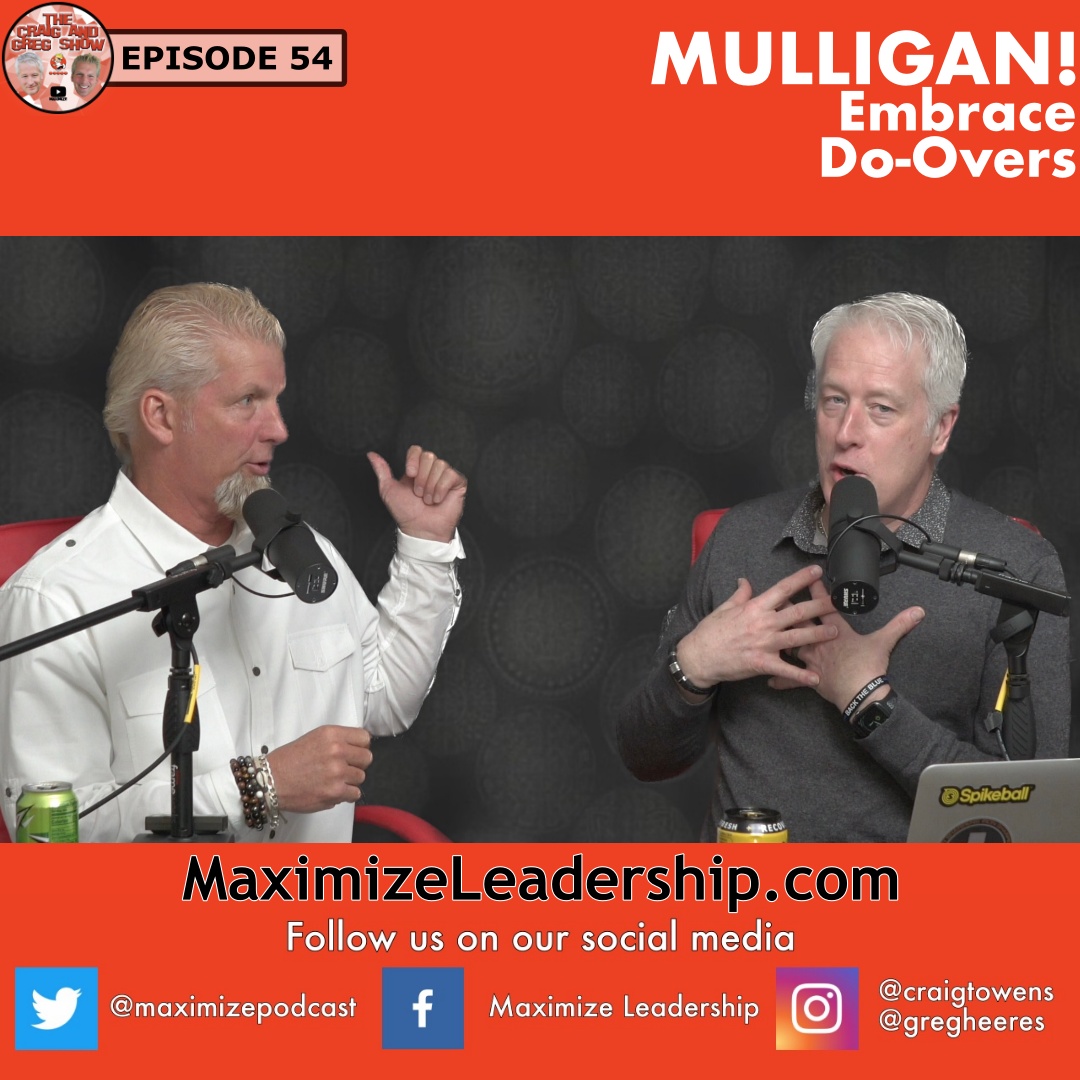
The Craig And Greg Show: Mulligan! Embrace Do-Overs

Listen to the audio-only version of this podcast by clicking on the player below, or scroll down to watch the video.

I am not a very good golfer, so when Greg and I hit the course together Greg is generous enough to give me a mulligan—sometimes a lot of them! In the same way, we as leaders need to be willing to give our team members chances to learn from and improve upon their mistakes. In this episode, we discuss how embracing a “mulligan culture” in your organization helps everyone grow and thrive.

  • [0:22] I explain what Greg gives me that is a huge blessing
  • [1:25] Leaders need to be gracious.
  • [2:56] What is the goal of mulligans?
  • [4:10] Mulligans can cost our business something. How do we calculate that?
  • [7:18] Success usually goes up with the mulligan attempt.
  • [9:54] Expect greater success in the second chances.
  • [11:04] Mulligans need to be given in a safe environment.
  • [13:06] Second chances and comeback stories are inspiring!
  • [14:31] Remember that people are the focal point of our mulligans.
  • [14:55] Greg shares about an unusual phobia with which many people struggle.
  • [16:50] An important reminder seasoned leaders need to share with emerging leaders.
  • [18:22] High-performing leaders make it look easy because of the mulligans other people gave them along the way.

Check out this episode and subscribe on YouTube so you can watch all of the upcoming episodes. You can also listen to our podcast on Spotify and Apple.

The Craig And Greg Show: Mistake Your Way To Success

Listen to the audio-only version of this podcast by clicking on the player below, or scroll down to watch the video.

On this episode of “The Craig And Greg Show” we talk about: 

  • [0:20] Craig shares an insightful quote from John Maxwell 
  • [0:45] The guys claim to have never made a mistake, and we definitely believe them…
  • [1:12] Mistakes help both individuals and teams grow 
  • [2:12] Craig shares a lesson from his wife’s classroom about it being a safe place to make mistakes 
  • [3:06] Leaders need to distinguish between success and perfection 
  • [3:50] What do our faces show when others make mistakes? 
  • [4:40] Greg explains how grace and humility from the leader will help other teammates deal with their mistakes 
  • [6:16] Sports show us how mistakes can lead to excellence 
  • [7:24] Greg’s football mistakes led to his high level of success 
  • [11:06] Leaders have to remind everyone that mistakes aren’t fatal 
  • [13:30] Thomas Edison gave us a good example about success coming from failure 
  • [15:31] When leaders share their mistakes, it’s freeing for the rest of the team
  • [17:26] Leaders need to take initiative—as the leader goes, so goes the team

Check out this episode and subscribe on YouTube so you can watch all of the upcoming episodes. You can also listen to our podcast on Spotify and Apple.

A Safe Place For Mistakes

Listen to the podcast of this post by clicking on the player below, and you can also subscribe on AppleSpotify, or Audible. 

Josh had just graduated from high school when I came to pastor in Cedar Springs. As I sat with this outstanding young man I asked him what he wanted to do next. 

“I’m not exactly sure,” he told me, “but I really feel like it’s something involved with ministry.” 

“Great!” I responded. “Let’s start experimenting.” 

I told Josh that our church was going to be a safe place to experiment: to plan new things, to try new things, to prayerfully evaluate the results, and then to use those results to plan new things. Josh jumped in right away, and over a short period of time we were eventually able to ascertain just how God had wired Josh for his niche of ministry. 

But this would have never happened without some missteps along the way. 

That’s okay. 

Leaders need to create an environment where it’s safe to make mistakes, because mistakes are a vital component of learning. 

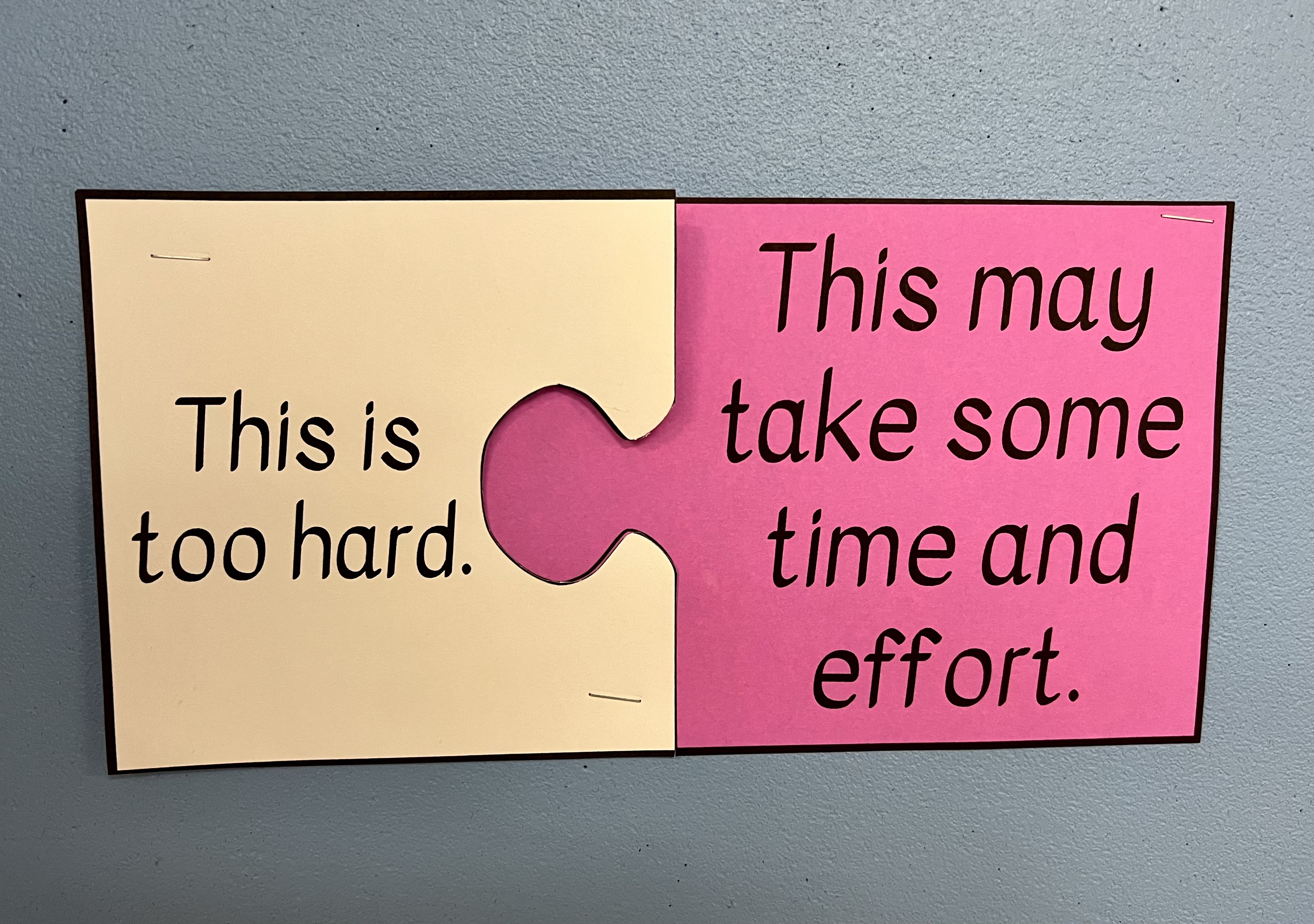
My wife is a 3rd Grade teacher. A bulletin board in her classroom lovingly tells her students, “Our classroom is a safe place to make mistakes,” and then she gives them the keys to their successful learning. 

Leaders can help those around them grow through their mistakes by constantly reinforcing these six principles: 

  1. When someone complains, “This is too hard,” remind them, “This may take some time and effort.” 
  2. When someone says, “I’m not good at this,” prompt them to ask, “What am I missing?” and then encourage them to add, “I’m not good at this yet.” 
  3. When someone wants to settle with, “It’s good enough,” challenge them to ask themselves, “Have I given this my best effort?” 
  4. When someone wants to throw in the towel by saying, “I made a mistake,” remind them, “I failed is not the same thing as I am a failure,” and then remind them, “Mistakes help me learn.” 
  5. When someone is exasperated and says, “I give up,” come alongside them with, “Let’s try a strategy we’ve already learned.” 
  6. When someone says, “I can’t do this,” you need to lovingly encourage them with, “You can do this!” 

These responses will help foster an abundance-mindset environment where people aren’t defeated by their mistakes, but they’re energized to reengage and try again. As the brilliant inventor Thomas Edison quipped, “I’ve had a lot of success with failure.” 

Leaders, let’s make our spaces the safest places for the mistakes that lead to discovery, growth, and success. 

►► Would you please prayerfully consider supporting this ministry? My Patreon supporters get behind-the-scenes access to exclusive materials. ◀︎◀︎

Think, Do, Evaluate, Propose

Listen to the podcast of this post by clicking on the player below, and you can also subscribe on AppleSpotify, or Audible.

The seed thought for me was this quote from John Maxwell: 

“Nothing you do will be perfect, so embrace the reality and benefits of failure by releasing yourself from the burden of not making mistakes.” 

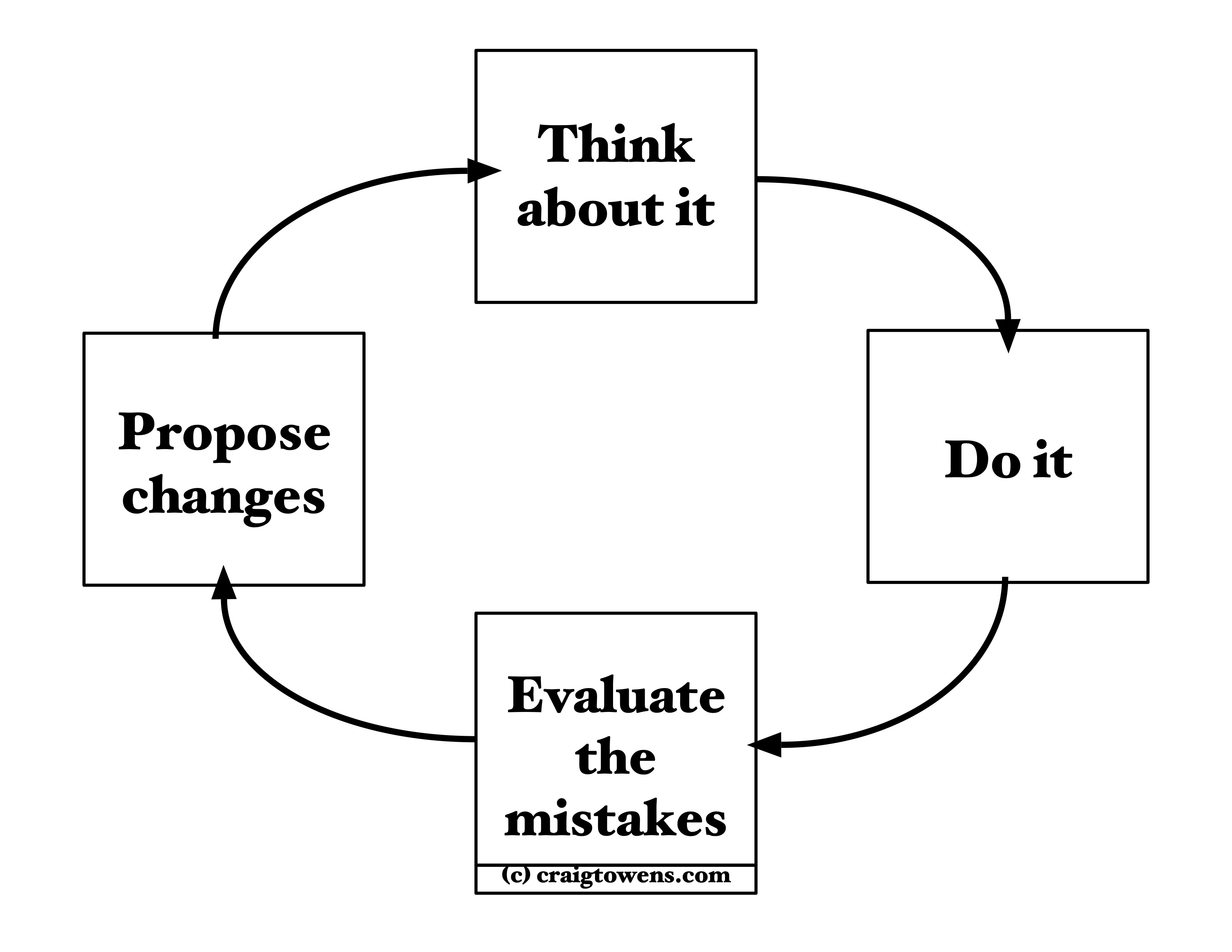
Here’s what I am endeavoring to implement: Think, Do, Evaluate, Propose. And then Repeat. 

THINK ABOUT IT—It’s important to put some thought into what you want to do before you do it, but we cannot camp-out here forever. I like to think in terms of goals I want to accomplish, whether those are for me personally or for organizations I lead. 

DO IT—At some point, I must launch out. Many people point out that Peter began to sink under the waves when he took his eyes off Jesus and began to look at the storm. But let’s not forget that Peter was the only one of the disciples who actually got out of the boat and walked on water! I often remind people who are hesitant to begin something that you cannot steer a parked car. We have to get moving first. 

EVALUATE THE MISTAKES—Let’s remove all doubt: you will make mistakes. But those mistakes are beneficial because it gives you something on which to work. Get some wise friends around you that can help you evaluate your mistakes. And always remember I failed ≠ I am a failure (here’s another post where I elaborate on this point). 

PROPOSE CHANGES—After evaluating your mistakes or shortcomings, you now have evidence that can be processed for your next attempt. This evidence can be taken back into the laboratory of the “Think” box as you prepare to try again, except now you are more informed than you were in your first attempt. 

REPEAT THE PROCESS AGAIN—No one is an overnight success, so keep trying again and again and again.

Leaders, walk through this process with your team members. Help guide their thinking, and then move them to action. Let them know that mistakes are okay because they have given you some invaluable feedback you can use as you make your proposals for your next attempt. 

Success is a continual run through the Think-Do-Evaluate-Propose cycle, with each revolution moving you closer to success. 

►► Would you please prayerfully consider supporting this ministry? My Patreon supporters get behind-the-scenes access to exclusive materials. ◀︎◀︎

The Craig And Greg Show: Winning Teams

On this episode of “The Craig And Greg Show” we talk about: 

  • Greg’s college football experiences  
  • how do teammates get along better?  
  • the 3 Ts that help make teams stronger and more effective  
  • how leaders can help teammates who make a mistake  
  • the strategic importance of “timeouts” 
  • the importance of a leader’s confident humility 
  • the attractiveness of a team’s enthusiasm  
  • an insightful quote from Rich DeVos 

Check out this episode and subscribe on YouTube so you can watch all of the upcoming episodes. You can also listen to our podcast on Spotify and iTunes. 

Get more information at Maximize Leadership.

Everyone’s A Critic

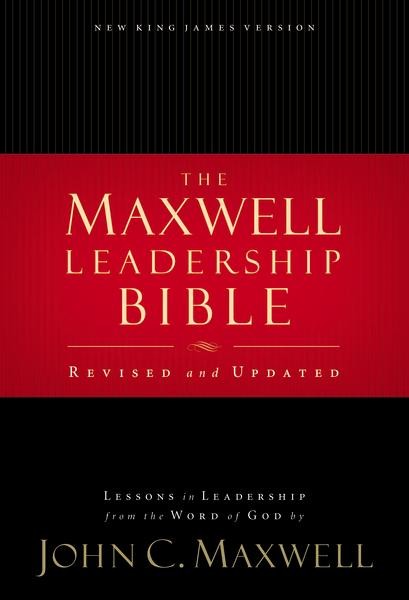
These are wise words from John Maxwell in The Maxwell Leadership Bible

Then Miriam and Aaron spoke against Moses because of the Ethiopian woman whom he had married; for he had married an Ethiopian woman. (Numbers 12:1)

Leaders can bank on two truths. First, they will be criticized. Second, criticism always changes the leader. Unhappy people tend to attack the point person.

Moses’ only family criticized him. Notice what God and Moses teach us on how to handle criticism (Numbers 12):

  1. Maintain your humility. (v. 3)
  2. Face the criticism squarely. (v. 4)
  3. Be specific about the issue. (vv. 5-8)
  4. Lay out consequences. (vv. 9, 10)
  5. Pray for the criticizers. (vv. 12, 13)
  6. Restore them when appropriate. (v. 14)

Beyond that, consider the ways leaders should handle criticism:

  1. Understand the difference between constructive and destructive criticism.
  2. Look beyond the criticism to see the critic.
  3. Guard your own attitude toward the critic.
  4. Keep yourself spiritually in shape. Associate with people of faith.
  5. Wait for time to prove the critic wrong.
  6. Concentrate on your mission; change your mistakes.

You might also want to check out—

11 More Quotes From “The Broken Way”

Ann Voskamp’s book The Broken Way wrecked me … in a good way! Ann shows us how Jesus steps into our brokenness, and how He then prepared us to take His love into other people’s brokenness. It’s a fantastic book, so you really should check out my book review by clicking here.

“I am not the mistakes I have made; I am the righteousness He has made. I am not the plans I have failed; I am the perfectness He has finished. I am not the wrongs I have done; I am the faultlessness He has been. I am not the sins I have chosen; I am chosen by the Beloved, regardless of my sins. In Christ, I am chosen, accepted, justified, anointed, sealed, forgiven, redeemed, complete, free, Christ’s friend, God’s child, Spirit’s home.”

“You’ve got to give your gifts or they may become your idols.”

“The thread of your life becomes a tapestry of abundant colors only if it ties itself to other lives. The only way to strengthen the fabric of society is to let the threads of your life break away to let Christ, who is in us, weave around other threads. … The strong must disadvantage themselves for the weak, the majority for the minority, or the community frays and the fabric breaks.”

“We will be known for our actual fruits, not the intentions of our imaginations.”

“Don’t we all have to unlearn fear before we can truly learn to love?”

“Jesus comes to give you freely through His passion what every other god forces you to try to get through performance.”

“Compassion says there will only be abundance for me when there is abundance for you.”

“Instead of flexing His muscle, Jesus surrendered His muscle to the nail. Instead of leveraging His position, He leveraged Himself out on a Cross. He made sacrifice His default position. Instead of stonewalling people with His authoritative power, He laid down His authority, lay down in a tomb, lay in a suffering death till the stone was rolled away.”

“The focus of God’s people is not to create explanations for suffering, but to create communities around suffering, co-suffering communities to absorb suffering and see it transform into cruciform grace.”

“Suffering is not a problem that needs a solution as much as it’s an experience that needs compassion.”

“Faith is confidence in the kindness of God, no matter the confusion of circumstances.”

You can read other quotes I’ve shared from The Broken Way here and here.

Thursdays With Oswald—Miracle Of Grace

This is a weekly series with things I’m reading and pondering from Oswald Chambers. You can read the original seed thought here, or type “Thursdays With Oswald” in the search box to read more entries.

Miracle Of Grace 

   The miracle of the grace of God is that He can make the past as though it had never been.

From Run Today’s Race

Run Today’s Race contains short statements from Oswald Chambers intended to stimulate Christians to ponder things like:

  • Do I realize how much God’s grace is an undeserved miracle given to me?
  • Am I being held hostage by my past mistakes, or am I allowing grace to forgive and forget those mistakes?
  • Do I extend the same grace to others that God extends to me?