Links & Quotes

I am really looking forward to a new series of sermons that I am launching this Sunday. This will be a once-per-month series for the remainder of the year and it’s simply called A Christian’s Mental Health. If you don’t have a home church in the west Michigan area, I would love for you to join me in person, but the sermons will also be posted on my YouTube channel.

T.M. Moore has an outstanding post called The Essence of the Lie. In one part, Moore writes, “Thus the lie claims to be the truth, but, at the same time, it insists that truth is personal, relative, pragmatic, and utilitarian. Truth, from this perspective, is not absolute, but dynamic, changeable rather than fixed. It is conditioned by circumstances of time and place. At the end of the day, people are the final arbiters of truth, and truth is whatever they find to be useful for their purposes. Ultimate truth is that which people impose on others by one or another kind of force, whether intellectual, political, or physical.” Check this one out!

Harvard University has been studying a group of individuals since 1938 to try to determine the main factors that contribute to a long and healthy life. The director and assistant director of this study just published an article that sums up what they have learned over all these years—“[If] we had to take all 85 years of the Harvard Study and boil it down to a single principle for living, one life investment that is supported by similar findings across a variety of other studies, it would be this: Good relationships keep us healthier and happier. Period. If you want to make one decision to ensure your own health and happiness, it should be to cultivate warm relationships of all kinds.”

“The battle for control and leadership of the world has always been waged most effectively at the idea level. An idea, whether right or wrong, that captures the minds of a nation’s youth will soon work its way into every area of society, especially in our multimedia age. Ideas determine consequences.” — The American Covenant 

“The storms of life are no longer our point of reference when [Jesus] is our focal point.” —Dutch Sheets

John Stonestreet was intrigued by a street reporter asking, “What are men good for?” There were a lot of soft, ambiguous answers given, but John quipped, “Men are good for fathering, protecting, loving, providing, leading, fighting for what’s right with their lives if need be, and obeying, in a masculine way, the creation mandate of the God who made us male and female and declared both ‘very good.’ Was that so hard?” Amen!

Dan Reiland identifies four common mistakes that will cause your church to struggle.

When leaders quit growing, they in essence have “quiet quit” on their team. If the leader’s not growing, what is the incentive for anyone else in the organization to improve themselves or work hard? Leaders quiet quit long before their teammates do! Check out the full conversation Greg Heeres and I had on avoiding quiet quitting by clicking here.

Don’t Dwell On The “What Ifs”

Listen to the podcast of this post by clicking on the player below, and you can also subscribe on AppleSpotify, or Audible. 

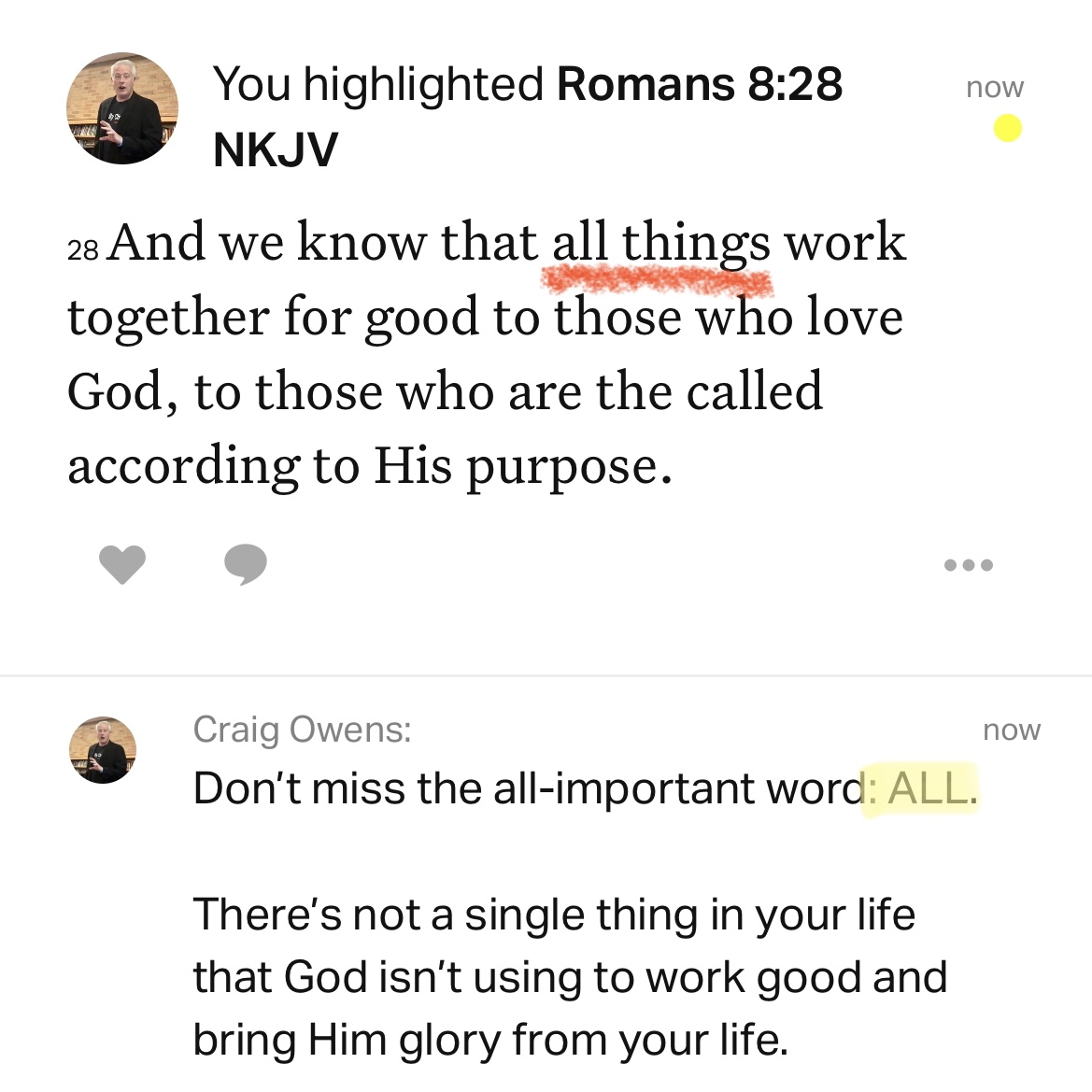
Romans 8:28 has a small but extremely powerful word in it: ALL. 

“And we know that ALL things work together for good to those who love God, to those who are called according to His purpose.” 

The verb tense here would probably be more accurate to say “are working.” God never wastes an experience, but He is using ALL those things to prepare you for the next assignment He has for you. 

Check out this brief clip from a training time I was able to share with some young ministry interns. 

Don’t dwell on the “what ifs” but let’s remind ourselves that God is sovereignly in control. Let’s learn to take God at His word—He IS WORKING ALL OF THOSE EXPERIENCES together for your good and for His glory.

►► Would you please prayerfully consider supporting this ministry? My Patreon supporters get behind-the-scenes access to exclusive materials. ◀︎◀︎

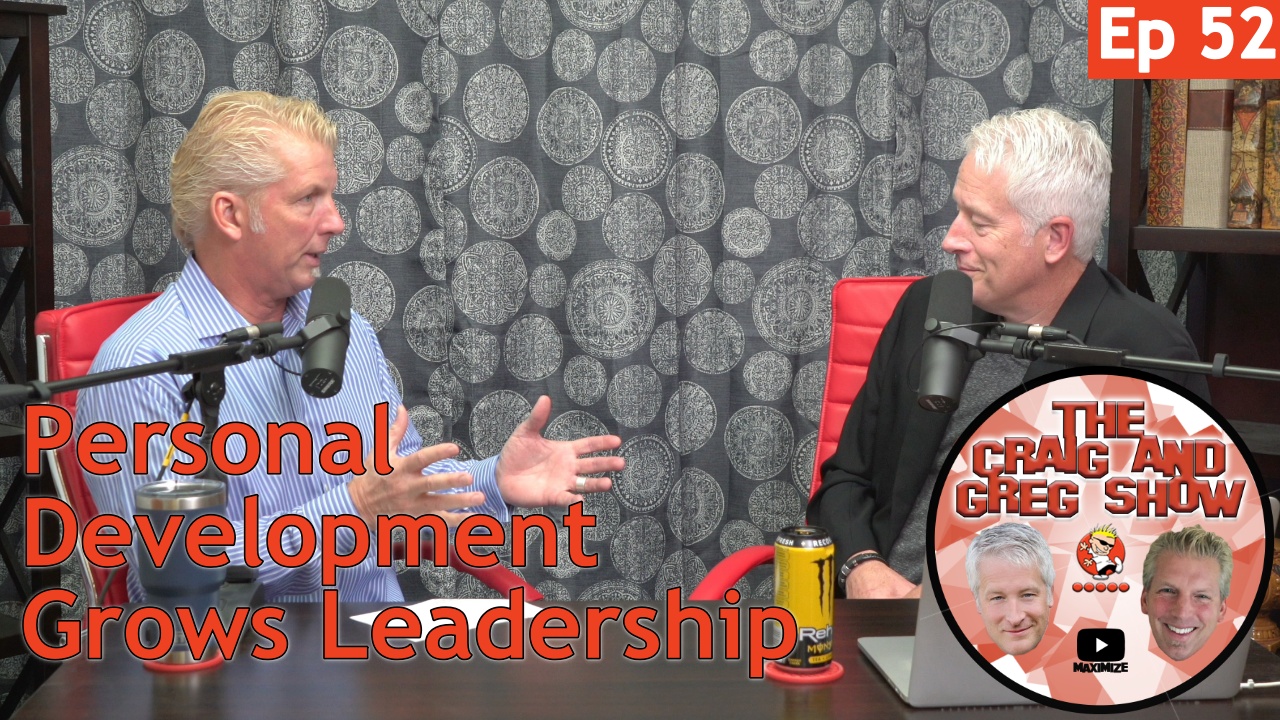
The Craig And Greg Show: Personal Development Grows Leadership

Listen to the audio-only version of this podcast by clicking on the player below, or scroll down to watch the video.

As leaders, it’s our responsibility to help our organization grow. As Greg and I discuss in this episode of The Craig And Greg Show, one of the best ways to do that is by focusing on your own personal development. It might seem counterintuitive, but by focusing inward we make ourselves more flexible, robust, and prepared leaders. This, in turn, enables us to better influence and encourage others in our leadership roles.

  • [0:20] Why should leaders set goals?
  • [0:45] What do we mean by “personal development”?
  • [2:15] I discuss healthy personal development in Shepherd Leadership.
  • [3:38] Greg wonders why personal development takes us so far.
  • [6:19] Why do people procrastinate on their own personal development? 
  • [8:29] Where does delayed gratification come in when we are growing and learning?
  • [10:50] Personal development is not about fixing something in ourselves.
  • [12:54] The book Strengths Finder can help leaders know where they should develop themselves .
  • [13:21] How can we identify and lift lids in our lives?
  • [16:04] Watch your self-talk!
  • [17:21] Check out some of the benefits of personal development.
  • [19:15] It’s important to self-reflect on the areas where we’ve already grown.
  • [20:34] More benefits that come with personal development.
  • [23:10] Personal development is the best resume.

  • [25:07] I have seen that as I develop myself I am able to be a greater help for my team’s development.
  • [26:14] Comparing is a personal development killer.
  • [27:24] Progress is exciting!
  • [29:22] Greg and I would love to help coach you in your personal development.

Check out this episode and subscribe on YouTube so you can watch all of the upcoming episodes. You can also listen to our podcast on Spotify and Apple.

The Self-Aware Leader (book review)

Listen to the podcast of this post by clicking on the player below, and you can also subscribe on AppleSpotify, or Audible. 

Leaders never “arrive” at a place where they have accomplished everything they want to accomplish. John Maxwell helps leaders keep pressing on in their personal growth in his book The Self-Aware Leader. 

This book is largely autobiographical, as Maxwell leads us through lessons that he learned by not being self-aware. His leadership stumbles served as a wake-up call that allowed him to reflect, learn, and then correct his technique. Then after decades of honing these techniques, he shares with his readers the practical steps for them to become self-aware of a potential stumbling point before it actually trips them up. 

I also appreciated the self-aware leader’s questions for reflection at the end of each chapter. To me, this is an ideal place for leaders who are in mutual accountability to focus their discussion as they meet together. My biggest takeaway from this book is that I cannot become self-aware nor correct the things that could derail my leadership solely on my own. Reading The Self-Aware Leader is a good starting point, but I also highly recommend reading this book with another leader that also desires to grow and improve. 

Leaders who want to uncover the things that could be holding them back will really benefit from reading and applying this book. For my Patreon supporters, I have also shared several noteworthy quotes from this book here. 

►► Would you please prayerfully consider supporting this ministry? My Patreon supporters get behind-the-scenes access to exclusive materials. ◀︎◀︎

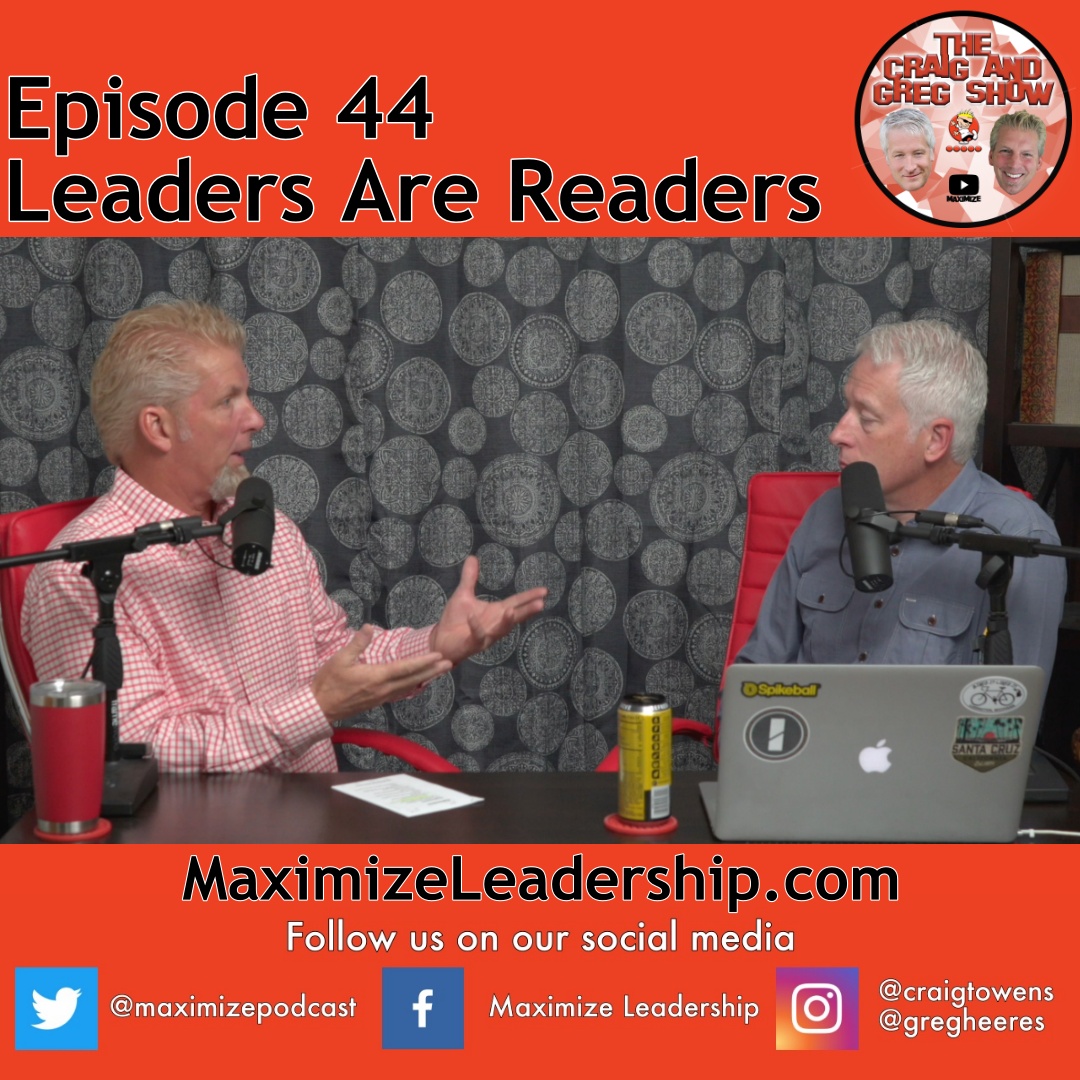
The Craig And Greg Show: Leaders Are Readers

Listen to the audio-only version of this podcast by clicking on the player below, or scroll down to watch the video.

On this episode of “The Craig And Greg Show” we talk about: 

Check out this episode and subscribe on YouTube so you can watch all of the upcoming episodes. You can also listen to our podcast on Spotify and Apple.

Is That In The Bible?

Listen to the podcast of this post by clicking on the player below, and you can also subscribe on AppleSpotify, or Audible.

A meme that makes me chuckle every time I see it is a “quote” attributed to Abraham Lincoln in which he says, “The problem with quotes found on the internet is that they are often not true.” 

(Not to spoil the joke for you, but unless Lincoln knew how to time travel to the future, I don’t think he knew about the modern internet! 😂) 

I love this meme because it captures something that so many people fall into: a quick acceptance of a statement without verifying its source or thinking through the implications of the statement’s truthfulness. 

Some insightful comments sound Shakespearean, but William never wrote them. 

Some pieces of wisdom sound Socratic, but Socrates never taught them. 

Some religious maxims sound godly, but the Bible never recorded them. 

I would like to invite you to join me as we relaunch this series called Is That In The Bible? I think you may be surprised to discover just how many phrases we call biblical aren’t, and how many phrases there are that we never realized are actually in the Bible. 

By the way, if you have a phrase that you would like to have us explore in this series, please leave it in a comment below. You may want to check out the questions we addressed in both the first installment and second installment of this series. 

In this installment of this series, we asked: Is this in the Bible…

Thursdays With Spurgeon—Blessed Discipline

This is a weekly series with things I’m reading and pondering from Charles Spurgeon. You can read the original seed thought here, or type “Thursdays With Spurgeon” in the search box to read more entries.

Listen to the podcast of this post by clicking on the player below, and you can also subscribe on AppleSpotify, or Audible. 

Blessed Discipline

Blessed is the man whom You instruct, O Lord, and teach out of Your law, that You may give him rest from the days of adversity, until the pit is dug for the wicked. For the Lord will not cast off His people, nor will He forsake His inheritance. But judgment will return to righteousness, and all the upright in heart will follow it. (Psalm 94:12-15) 

     First, I will ask you to notice that God’s children are under instruction. Other children may run about and take holiday. They may wander into the woods, gather the flowers, and do very much what they like, but God’s own children have to go to school. This is a great privilege for them, although they do not always think so. Children are not often good judges of what is best for themselves. … 

     Some of us have learned much from the Lord’s chastening rod! For instance, we have learned the evil of sin. ‘Before I was afflicted I went astray, but now I keep Your Word’ (Psalm 119:67). … Do we not also learn by affliction our own frailty and our own impatience? We are wonderfully patient when we have nothing to suffer, and we are all great heroes and very courageous when there is no fighting to be done. … 

     Do we not, then, learn also the value of prayer? … Do we ever pray in such dead earnest as when everything seems to be sinking from under our feet and our sweetest cups are full of bitterness? … And then how precious the promises become! As we only see the stars when the shadows gather at night, so the promises shine out like newly kindled stars when we get into the night of affliction! …  

     And, oh, dear friends, how should we ever know the faithfulness of God if it were not for affliction? We might talk about it and theoretically understand it, but to try to prove the greatness of Jehovah’s love and the absolute certainty of His eternal faithfulness—this comes not except by the way of affliction and trial! … 

     O Lord, still use the rod if You see that it is necessary. But go on teaching us out of Your Word! We are slow to learn and poor scholars at best, but You may yet make something of us.

From Blessed Discipline

I have learned that there are many lessons that I can learn in no other way than to go through the furnace of affliction. During those dark times, I’ve learned the closeness and the sweetness of God—His presence and His promises became even more precious to me. 

In one of my darkest times of affliction, I stumbled upon this poem from Robert Browning Hamilton:

I walked a mile with Pleasure—
She chattered all the way
But left me none the wiser
For all she had to say.
I walked a mile with Sorrow
And ne’er a word said she,
But, oh, the things I learned from her
When Sorrow walked with me.

If you’re going through a difficult time, don’t try to get out of it, but get closer into God’s presence. He is teaching you invaluable lessons during this trial.

►► Would you please prayerfully consider supporting this ministry? My Patreon supporters get behind-the-scenes access to exclusive materials. ◀︎◀︎

Links & Quotes

T.M. Moore wrote to pastors, “Effective ministry and fruitful Christian living are not automatic. They don’t just happen. Each requires that we receive the gifts of God, develop them according to His Word, and put them to proper use day by day. We must work out our salvation and work at our calling with focus and vigor.” Check out the rest of his post 

Speaking of pastors: In order for us pastors to be at our peak, we need to take care of ourselves. Here is a short video where I talk about the principle of sabbathing (a topic I explore in-depth in my book Shepherd Leadership: The Metrics That Really Matter).

This study from PennMedicine tells us that our brains can continue to learn new things until the day we die. So apparently you can teach an old dog new tricks!

My friend Greg and I have always tried to combine work and play. We’ve found that fun can really help leadership lessons stick. Check out this clip from a recent Craig And Greg Show leadership podcast.

Some really fast-moving stars in our Milky Way galaxy have further called into question the dating of our universe. These stars seem to indicate a universe that was created by God recently.

“When you’re good at something, you’ll tell everyone. When you’re great at something, they’ll tell you.” —Walter Payton

How does the word of man become the Word of God? Great teaching from John Piper in his “Look at the Book” series.

Lifelong Preparation

Listen to the podcast of this post by clicking on the player below, and you can also subscribe on AppleSpotify, or Audible. 

I had a great time on the Thriving In Ministry podcast with Kyle Willis and Dace Clifton. 

Dace asked me what I wished I had learned earlier on in my pastoral career. The answer that sprang quickly to my mind is this: God takes me through things on purpose. 

At the time we may not be able to see what God is teaching us, but He wastes no opportunities. Everything we have gone through has a purpose.

How true it is: God doesn’t prepare the path for me, but He prepares me for the path. 

The same is true for you, my friend! You may not know why during the time of your difficult trial, and you may not even know why on this side of Heaven. But God’s Word assures us that He is using every single thing to prepare us and to bring Him glory. 

My book Shepherd Leadership: The Metrics That Really Matter is proof of this! I never thought God would call me to pastor a church—let alone write a book about pastoral leadership—but as I wrote the book, the Holy Spirit brought back to my remembrance so many lessons that I learned along the way. 

I’ve already shared several clips from this Thriving In Ministry interview which you can find by clicking here, and I’ll be sharing more clips soon, so please stay tuned. 

Shepherd Leadership: The Metrics That Really Matter is available in print or ebook, and in audiobook through either Audible or Apple. 

►► Would you please prayerfully consider supporting this ministry? My Patreon supporters get behind-the-scenes access to exclusive materials. ◀︎◀︎

Is That In The Bible?

Listen to the podcast of this post by clicking on the player below, and you can also subscribe on AppleSpotify, or Audible.

A meme that makes me chuckle every time I see it is a “quote” attributed to Abraham Lincoln in which he says, “The problem with quotes found on the internet is that they are often not true.” 

(Not to spoil the joke for you, but unless Lincoln knew how to time travel to the future, I don’t think he knew about the modern internet! 😂) 

I love this meme because it captures something that so many people fall into: a quick acceptance of a statement without verifying its source or thinking through the implications of the statement’s truthfulness. 

Some insightful comments sound Shakespearean, but William never wrote them. 

Some pieces of wisdom sound Socratic, but Socrates never taught them. 

Some religious maxims sound godly, but the Bible never recorded them. 

I would like to invite you to join me as we relaunch this series called Is That In The Bible? I think you may be surprised to discover just how many phrases we call biblical aren’t, and how many phrases there are that we never realized are actually in the Bible. 

By the way, if you have a phrase that you would like to have us explore in this series, please leave it in a comment below. If you would like to check out the questions we addressed previously, please click here

In this installment of this series we asked: Is this in the Bible…