Finishing Well Is Better

Listen to the podcast of this post by clicking on the player below, and you can also subscribe on iTunes or Spotify.
The land was at peace… (2 Chronicles 14:6).

King Asa started out so well. The beginning of his reign could best be described by the word “peace”:

  • The land was at peace 
  • No one was at war with him 
  • The Lord gave him rest 
  • “[God] has given us rest on every side”  
  • The Lord his God was with him

When Cush attempted to attack the nation of Judah, Asa called on God: “Lord, there is no one like You to help the powerless against the mighty. … Do not let mere mortals prevail against You” (14:11). God gave Asa a great victory over Cush, and other God-fearing people from Israel began flocking to Judah “when they saw that the Lord his God was with [Asa]” (15:9). 

This peace lasted for 35 years!

And then came one poor decision from which Asa never recovered. 

The king of Israel began to make preparations for war against Judah. Instead of calling on God as he did when Cush was preparing to attack, Asa reverted to political maneuvering. He sent a bribe to a rival nation, enticing them to attack Israel. 

The prophet Hanani told Asa, “The eyes of the Lord range throughout the earth to strengthen those whose hearts are fully committed to Him. You have done a foolish thing, and from now on you will be at war” (16:9). 

From “the land was at peace” to “from now on you will be at war” came about because Asa…

  • …trusted his own ingenuity instead of relying on God 
  • …calculated his odds instead of calling on his God 
  • …forgot about God’s past provision 
  • …refused to confess his sin and repent from it, even when the prophet called him out
  • …utterly abandoned his God (16:2-12) 

Starting well is good, but finishing well is far better! 

A mark of a godless leader is one who refuses to confess and repent from his sin. 

Asa’s refusal to admit his sin resulted in the end of his life being spent afflicted with disease and his country being surrounded and oppressed by enemies. 

This is part 54 in my series on godly leadership. You can check out all of my posts in this series by clicking here.
The Craig And Greg Show: Thoughts On Setting Goals

On this episode of “The Craig And Greg Show” we talk about: 

  • Greg and I follow up on the last episode where we talked about how leaders need to be healthy in every area of their lives  
  • repetition and habits are a leader’s friends 
  • we need specific goals  
  • Greg tosses his Mt. Dew can (literally!)
  • it’s more challenging to set goals in the areas of mental, emotional, and social health than it is for physical health
  • as leaders get healthy, it encourages their teammates to get healthy  
  • small goals done daily have a huge cumulative effect
  • leaders need to be around other leaders that can invest in them
  • on our website we have added a new page about our coaching huddles 
  • leaders should set only 1-2 goals per area of their lives—physical, mental, emotional, spiritual 
  • leaders need to think about their nutritional “diet” in every area 
  • an accountability friend will help you stick with your goals 
  • I unpack Stephen Covey’s Urgent/Important quadrants and how to find the time necessary to make necessary changes
  • Greg and I discuss what helps us decompress

Check out this episode and subscribe on YouTube so you can watch all of the upcoming episodes. You can also listen to our podcast on Spotify and iTunes.

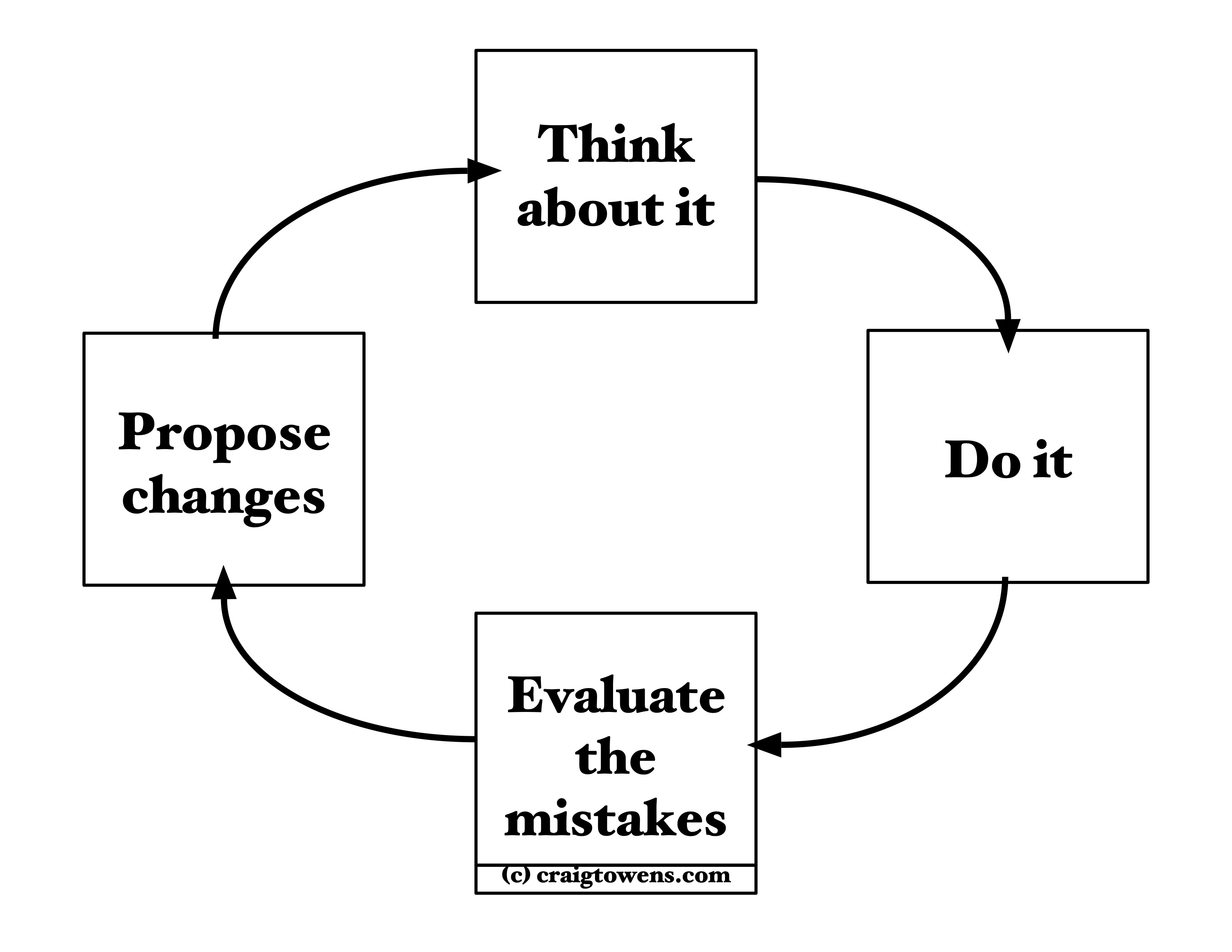
Think, Do, Evaluate, Propose

Listen to the podcast of this post by clicking on the player below, and you can also subscribe on AppleSpotify, or Audible.

The seed thought for me was this quote from John Maxwell: 

“Nothing you do will be perfect, so embrace the reality and benefits of failure by releasing yourself from the burden of not making mistakes.” 

Here’s what I am endeavoring to implement: Think, Do, Evaluate, Propose. And then Repeat. 

THINK ABOUT IT—It’s important to put some thought into what you want to do before you do it, but we cannot camp-out here forever. I like to think in terms of goals I want to accomplish, whether those are for me personally or for organizations I lead. 

DO IT—At some point, I must launch out. Many people point out that Peter began to sink under the waves when he took his eyes off Jesus and began to look at the storm. But let’s not forget that Peter was the only one of the disciples who actually got out of the boat and walked on water! I often remind people who are hesitant to begin something that you cannot steer a parked car. We have to get moving first. 

EVALUATE THE MISTAKES—Let’s remove all doubt: you will make mistakes. But those mistakes are beneficial because it gives you something on which to work. Get some wise friends around you that can help you evaluate your mistakes. And always remember I failed ≠ I am a failure (here’s another post where I elaborate on this point). 

PROPOSE CHANGES—After evaluating your mistakes or shortcomings, you now have evidence that can be processed for your next attempt. This evidence can be taken back into the laboratory of the “Think” box as you prepare to try again, except now you are more informed than you were in your first attempt. 

REPEAT THE PROCESS AGAIN—No one is an overnight success, so keep trying again and again and again.

Leaders, walk through this process with your team members. Help guide their thinking, and then move them to action. Let them know that mistakes are okay because they have given you some invaluable feedback you can use as you make your proposals for your next attempt. 

Success is a continual run through the Think-Do-Evaluate-Propose cycle, with each revolution moving you closer to success. 

►► Would you please prayerfully consider supporting this ministry? My Patreon supporters get behind-the-scenes access to exclusive materials. ◀︎◀︎

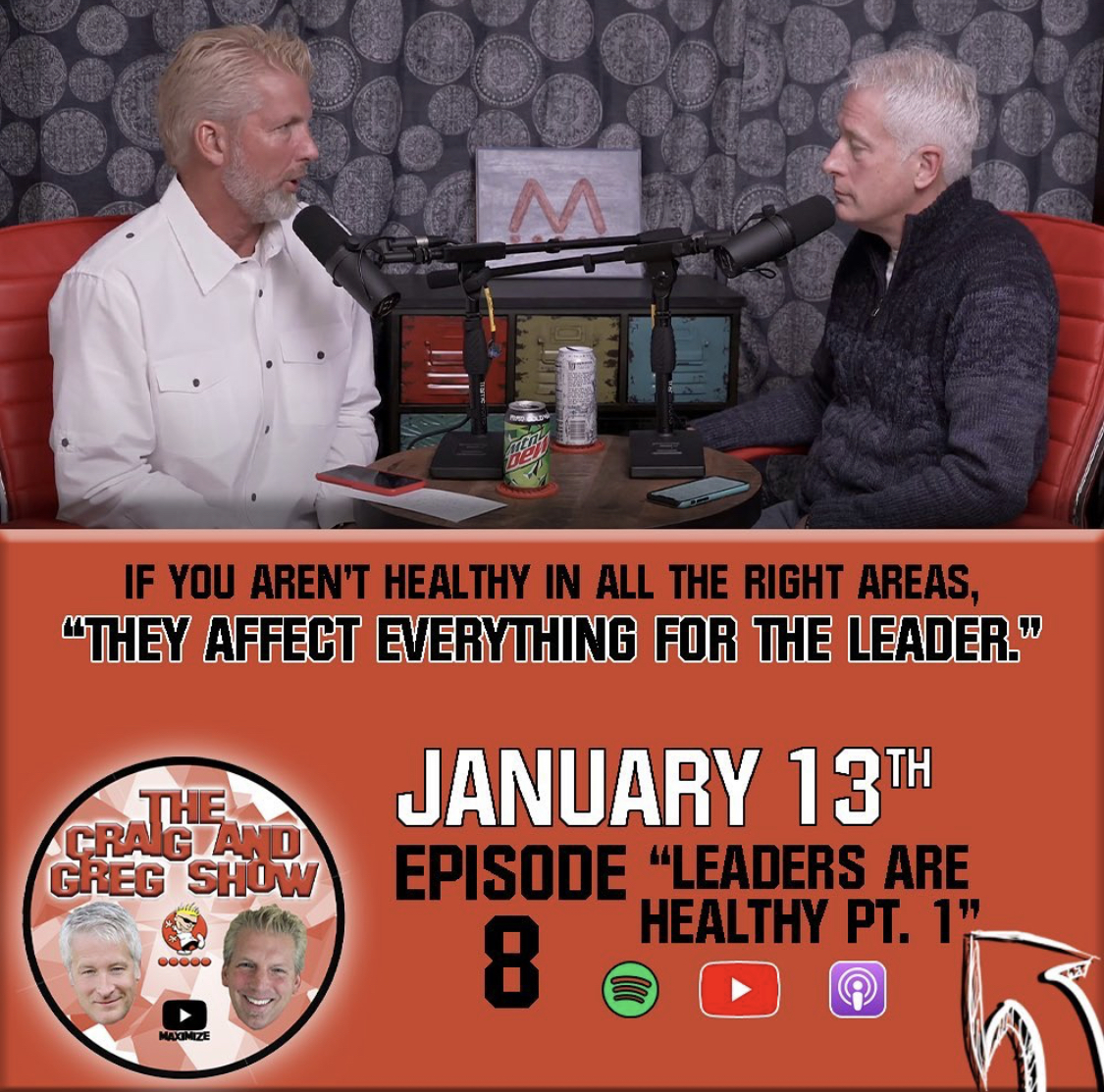
The Craig And Greg Show: Leaders Are Healthy

On this episode of “The Craig And Greg Show” we talk about: 

  • the premier biblical historian Luke tells us how important it was that Jesus grew wholly healthy 
  • unhealthiness in one aspect affects every area of a leader’s life 
  • we need to guard against what we let in our minds and bodies  
  • our emotional/social health is what really shows our leadership health  
  • self-care is never selfish; it’s vital  
  • leaders can only give health to others when they are first healthy themselves 
  • stress can erode a leader’s health, so leaders need to be self-aware
  • the importance of getting feedback
  • most of us won’t change until the pain of staying the same becomes greater than the pain of changing

Check out this episode and subscribe on YouTube so you can watch all of the upcoming episodes. You can also listen to our podcast on Spotify and iTunes.

Obedience Is Success

David said, “…I had it in my heart to build a house as the place of rest for the ark of the covenant of the Lord. … But God said to me, ‘You are not to build a house for My name…’” (1 Chronicles 28:2-3).

David’s son Solomon would later write about how we make plans in our hearts, but God directs all our steps (Proverbs 16:9, 19:21). 

David not only had the desire to build this temple for God but he said the Holy Spirit gave him the plans (1 Chronicles 28:12, 19). As a result of this, David began amassing resources and organizing personnel. All of this David could then hand over to Solomon, the man who would build the house for the ark of the covenant of the Lord. 

I am sure David felt a twinge of disappointment when God said “no.” Still, David continued to work the plan the Spirit had given him. Who knows how Solomon would have begun his reign as king if David hadn’t done all of this for him. Many of the plans God gives me will not be for me but for the following generations who will benefit from my diligence in those plans.

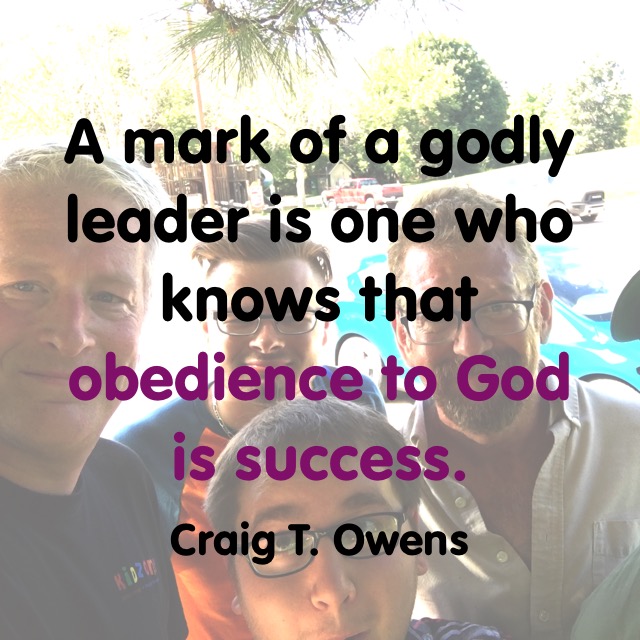
A mark of a godly leader is one who knows that obedience to God IS success. 

In one of David’s psalms, he prays for success and for his heart’s desire to be fulfilled, but he also acknowledges God’s sovereignty over these things (Psalm 20). May I always keep in mind that obedience IS success. Success isn’t limited only to what I can see and measure during my lifetime.

This is part 53 in my series on godly leadership. You can check out all of my posts in this series by clicking here.
The Craig And Greg Show: Leaders Vs. Loneliness

On this episode of “The Craig And Greg Show” we talk about: 

  • the winner of last month’s winner of our drawing  
  • busyness can actually lead to loneliness 
  • how leaders can guard against loneliness  
  • insight from Josh McDowell on how coronavirus impacts feelings of loneliness  
  • some strategies to eliminate busyness  
  • how leaders can empower others to overcome isolation
  • the importance of a leader’s presence
  • the New Testament only uses “saints” in the plural because we need each other
  • Greg tries to get me to name names
  • leaders need to boldly initiate even with people who seem closed off
  • the new coaching page on our website
  • more ways to be entered into our January drawing

Check out this episode and subscribe on YouTube so you can watch all of the upcoming episodes. You can also listen to our podcast on Spotify and iTunes.

Authority To Serve

And David knew the Lord has established him as king over Israel and that his kingdom had been highly exalted for the sake of His people Israel. (1 Chronicles 14:2) 

“David knew” reminds me of “Jesus knew” in John 13:3.

Both knew God had placed them exactly where they were supposed to be. 

Both knew the authority God had given them. 

Both knew the power that was theirs to use.

Both knew they could do self-glorifying, self-promoting things with their power. Yet both used their authority and power to serve others: “for the sake of His people.”

Jesus gave His authority to us (Matthew 28:18). 

Do I know that? 

I mean, really know that? 

If so, am I using His authority to serve others?

A mark of a godly leader is one who uses his God-given authority to serve others. 

This is part 53 in my series on godly leadership. You can check out all of my posts in this series by clicking here.
In Such Good Company (book review)

I grew up watching The Carol Burnett Show. The interaction between Carol, her special guests, and regular cast members Harvey Korman, Vicki Lawrence, Lyle Waggoner, and Tim Conway, were always enjoyable. In In Such Good Company, Carol takes us behind the scenes to tell us how the magic happened. 

What goes into such a successful show that won 25 Emmy Awards over its 11-year run? Is it good fortune? Lots of talented people? Hard work? The answer is quite simply: Yes. Of course, those of us enjoying the show week after week were unaware of the hard work and good fortune that was at play. And although we saw several talented actors, musicians, and dancers on stage each week, there were dozens of unseen, talented people that were just as crucial to the show’s success. 

I choose the audiobook version, and I’m glad I did. Carol read her own book, adding a personal touch that I would have otherwise missed by reading it myself. In addition, the audiobook also includes interviews with some of the key personnel that made the show what it was. 

Carol and her team loved what they were doing. They were talented people who continued to work extremely hard to hone their craft. All of us who watched the show were beneficiaries of these talented people. I loved going behind all of the lights and cameras to hear from Carol herself how this all came together. 

If you enjoyed watching The Carol Burnett Show, I’ll bet you will find yourself appreciating it even more after you hear/read Carol’s recollections. 

The Craig And Greg Show: The Importance Of Gratitude

On this episode of “The Craig And Greg Show” we talk about: 

  • the importance of a leader’s gratitude  
  • team members need to hear genuine words 
  • how Chick-fil-A onboards grateful employees 
  • Ken Blanchard teaches us to catch people doing something right 
  • the lasting impact of a simple text I sent to a teammate  
  • Greg says gratitude is both an attitude and an action  
  • being ungrateful makes people feel like products
  • when gratitude fades, entitlement takes its place
  • you cannot compliment too often: more people die from a broken heart than from a big head
  • being around grateful people is energizing 
  • Greg says being grateful leads to great-filled leaders
  • more ways to be entered into our November drawing

Check out this episode and subscribe on YouTube so you can watch all of the upcoming episodes. You can also listen to our podcast on Spotify and iTunes.

The Craig And Greg Show: A Salute To Veterans

On this episode of “The Craig And Greg Show” we talk about: 

  • a question from a viewer about job interviewing 
  • how to get in the drawing for a special monthly prize 
  • helping wounded veterans stay on the move through the Oscar Mike organization 
  • some astounding stats about our veterans 
  • how we can best show gratitude to our veterans 
  • Greg and I share some cool stories of our interactions with veterans 
  • some insights into true sacrifice

Check out this episode and subscribe on YouTube so you can watch all of the upcoming episodes. You can also listen to our podcast on Spotify and iTunes.