The Craig And Greg Show: Generous Leaders Unleash Potential

Listen to the audio-only version of this podcast by clicking on the player below, or scroll down to watch the video.

On this episode of “The Craig And Greg Show” we talk about: 

  • [0:15] I adapt a verse from the Bible to talk about generosity and Greg agrees with me. 
  • [1:00] Generosity is so much more than donating money.
  • [2:15] Generous leaders are proactive, and have appropriate boundaries.
  • [2:48] Leaders cannot fake generosity.
  • [3:42] Generosity isn’t in the big things, but the everyday things.
  • [4:25] Time, talent, treasure are all important components in generosity.
  • [6:00] Greg shares a telling statistic about how Americans give to charities.
  • [6:45] Greg says giving your network can be one of the most generous things a leader does. 
  • [7:37] Generosity requires an abundance mindset.
  • [8:52] What holds us back from being generous?
  • [10:00] Comparisons kill generosity.
  • [10:27] Being generous expands our influence, but stinginess strangles it.
  • [12:55] Our teammates are looking for places to be generous.
  • [13:53] Generosity opens doors for new opportunities.
  • [14:51] Greg shares an insightful quote from Anne Frank 
  • [15:17] I make a connection to the change in Ebenezer Scrooge’s life.
  • [16:11] How we define a generous leader.
  • [17:38] Our leadership challenge: how can you view generosity differently?

Check out this episode and subscribe on YouTube so you can watch all of the upcoming episodes. You can also listen to our podcast on Spotify and Apple.

Links & Quotes

Dan Reiland shares 5 reasons leaders stumble and fall.

Max Lucado addresses the sickening news of sexual abuse coverups in the church. He wrote, “[Jesus] defended the weak, stood up for the forgotten. The idea that His church would be unsafe for His sons and daughters disturbs Him deeply. And you can bet your Bible that He’ll turn a few tables. If history teaches us anything it is this: Jesus will not sit idle while His church drifts from His cause. ‘I will rescue My flock from their mouths,” He declared through a prophet. ‘It will no longer be food for them’ (Ezekiel 34:10). 

“Repentance is necessary; heartfelt, tear-stained, face-on-the floor repentance. By all of us in positions of leadership. Will we see it? I pray so. Regardless, I pray that you will pursue the difficult path of seeking Christ in spite of Christians who have let you down. His pastors have failed to pastor. But when they don’t, He still does. Let Him pastor you.”

Darren Carlson wrote, “Healthy pastors experience the fullness and complexity of their emotions, and then hold them up against the sinlessness of Christ. How might Jesus respond to the pain and loss and victory and neediness in front of me? We grow emotionally as leaders by studying the heart of Jesus as he walks among sinners and sufferers.” His post ‘Healthy Pastors Have Emotions: How to Test and Cultivate Your Feelings’ is an excellent read. I explore the emotional health of shepherd pastors in my book.

Nicky Cruz’s story is a fascinating one. His message for America today should be heeded!

My friend Greg Heeres and I had a helpful discussion about leaders and forgiveness on our Craig And Greg Show podcast. Here is a brief snippet:

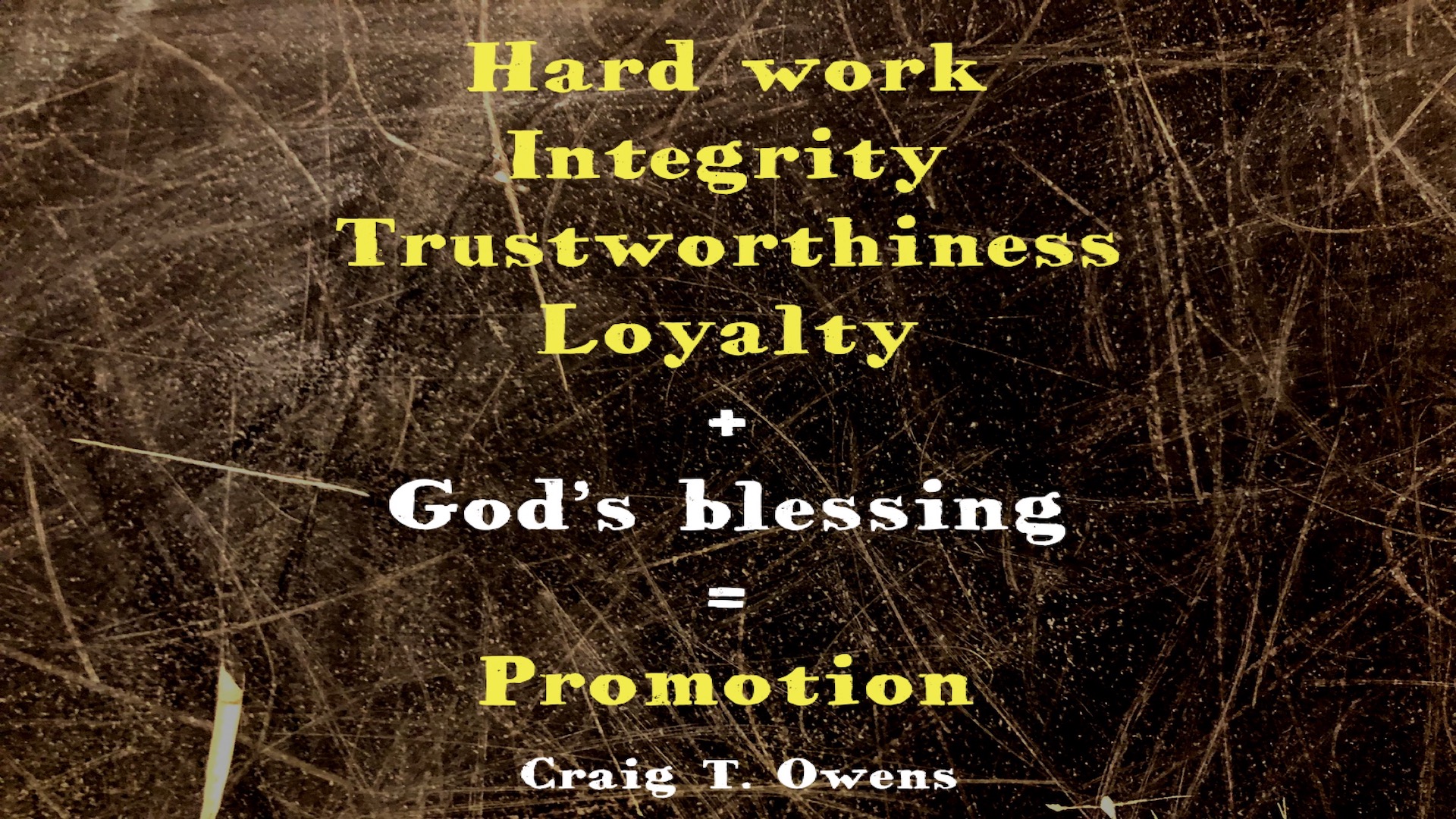
How Godly Leaders Prosper

Listen to the podcast of this post by clicking on the player below, and you can also subscribe on AppleSpotify, or Audible. 

I’ve been presenting a series of exclusive leadership lessons to my Patreon supporters, but I wanted to make this particular lesson available to everyone because of its overlap with my book Shepherd Leadership: The Metrics That Really Matter.

I would be honored if you would support this ministry through your support on Patreon. Your gift of just $5/month helps me to keep providing all of the free content that’s on my blog and my YouTube channel. In addition to these leadership lessons from Daniel, you will also receive book quotes, Bible study tools, and a whole host of other helpful items. 

You can check out more information about my book Shepherd Leadership by clicking here. 

Links & Quotes

C.S. Lewis identifies one of the harmful effects of pornography. “For me the real evil of masturbation would be that it takes an appetite which, in lawful use, leads the individual out of himself to complete (and correct) his own personality in that of another (and finally in children and even grandchildren) and turns it back: sends the man back into the prison of himself, there to keep a harem of imaginary brides. And this harem, once admitted, works against his ever getting out and really uniting with a real woman. For the harem is always accessible, always subservient, calls for no sacrifices or adjustments, and can be endowed with erotic and psychological attractions which no woman can rival.” —C.S. Lewis

“Joy is not a requirement of Christian discipleship; it is a consequence.” —Eugene Peterson

Dan Reiland has an excellent post for leaders entitled 4 Layers To Gaining Wisdom.

In my personal devotional time, I came across a sobering idea in the book of Amos about God’s love. I am reading through the Bible in Halley’s Study Bible, where I also read this: “The basket of ripe fruit [Amos 8] is another symbol that the sinful kingdom was ripe for ruin. And Amos reiterates the causes: greed, dishonesty, and merciless brutality toward the poor. Over and over, through many images, the Bible makes it plain that there is no possible way to escape the consequences of persistent sin.” —Dr. Henry Halley

The Institute for Creation Research has a powerful post explaining how seafloor spreading matches Creation predictions.

J. Warner Wallace wrote, “The historic development of language and communication prepared the way for the birth of Jesus. God orchestrated this timing, along with the development of roads, postal services and a 200-year period peace within the Roman Empire (known as the Pax Romana) to prepare the world for the arrival of Jesus.”

Our church is taking time on Fridays to fast and pray. Here is a reminder of the expected results that I shared with our church family—

A Leader’s Daily Guide

Listen to the podcast of this post by clicking on the player below, and you can also subscribe on AppleSpotify, or Audible. 

Sometimes it’s best just to let the Bible speak for itself. 

As Moses was preparing the Israelites for life in the land God has promised them, he had these words for them about their leaders—

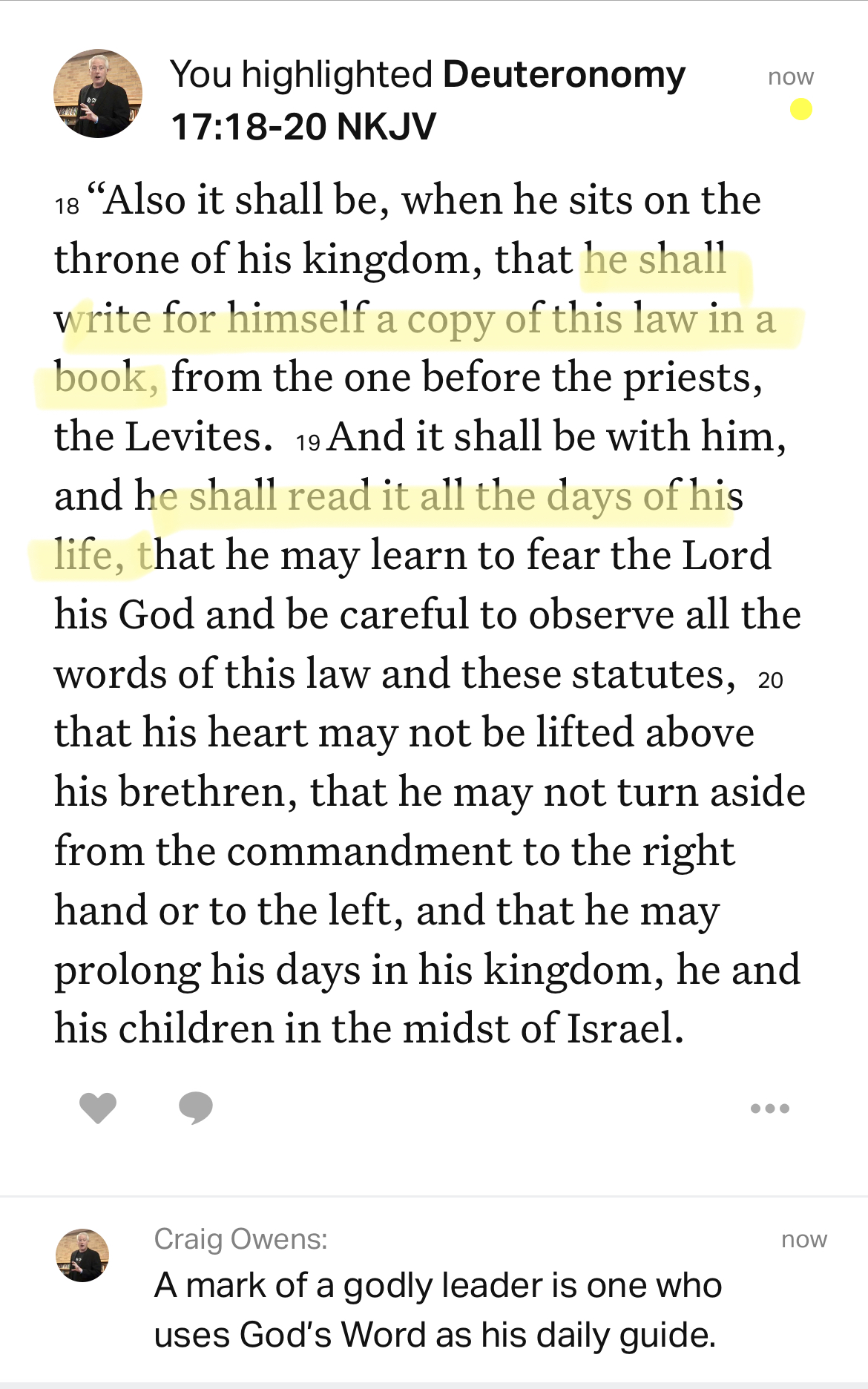
When you enter the land the Lord your God is giving you and have taken possession of it and settled in it, and you say, “Let us set a king over us like all the nations around us,” be sure to appoint over you a king the Lord your God chooses. … When he takes the throne of his kingdom, he is to write for himself on a scroll a copy of this law, taken from that of the Levitical priests. It is to be with him, and he is to read it all the days of his life so that he may learn to revere the Lord his God and follow carefully all the words of this law and these decrees and not consider himself better than his fellow Israelites and turn from the law to the right or to the left…. (Deuteronomy 17:14-15, 18-20) 

A mark of a godly leader is one who uses God’s Word as his daily guide.

This is part 64 in my series on godly leadership. You can check out all of my posts in this series by clicking here. 

►► Would you please prayerfully consider supporting this ministry? My Patreon supporters get behind-the-scenes access to exclusive materials. ◀︎◀︎

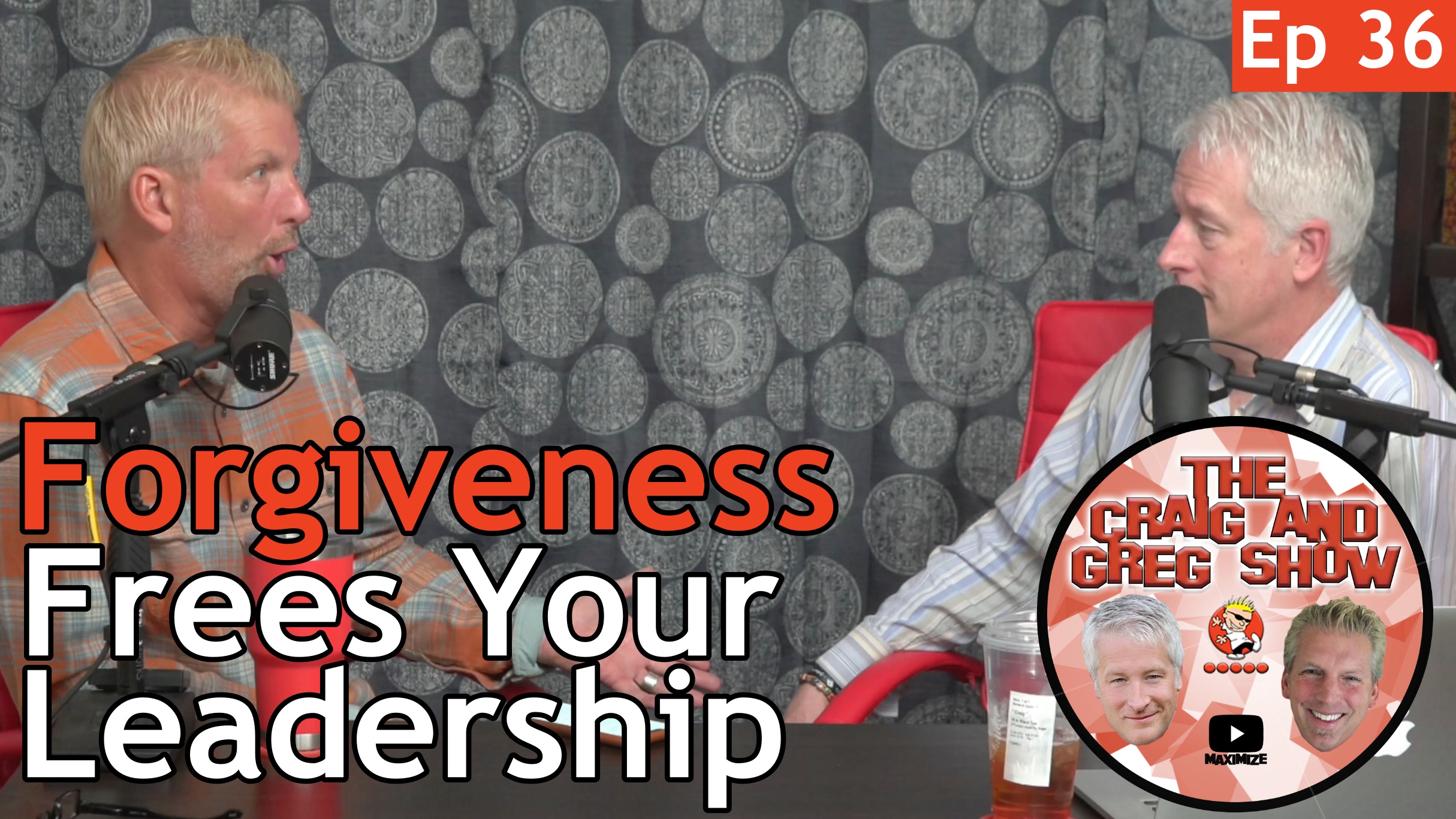
The Craig And Greg Show: Forgiveness Frees Your Leadership

Listen to the audio-only version of this podcast by clicking on the player below, or scroll down to watch the video.

On this episode of “The Craig And Greg Show” we talk about: 

  • [0:41] Greg and I talk about what may be the most overlooked leadership builder a leader’s toolbox. 
  • [1:34] What is it about forgiveness that people struggle with?
  • [2:34] How can leaders make forgiveness a core value in their organizations?
  • [3:40] I share a memorable joke about unforgiveness.
  • [5:10] Grudges prohibit followers from freely following because suspicion becomes the dominating factor in the organization.
  • [6:13] Forgiven faults need to be forgotten faults.
  • [6:41] Unforgiveness leads to stunted growth both personally and organizationally.
  • [8:25] Does unforgiveness undermine trust? I shares a painful time I experienced attacks.
  • [10:00] I named my dog as a personal reminder of how to handle difficult people.
  • [10:50] Forgiveness is paramount to servant leadership.
  • [12:58] The Bible calls our hypocritical unforgivers.
  • [13:37] An example of a petty leader’s strategy of unforgiveness.
  • [14:21] Forgiveness isn’t easy, but it takes maturity to do it.
  • [14:46] Both forgiveness and holding grudges are barometers of leadership.
  • [15:22] There is incredible freedom in forgiveness.
  • [16:09] There is a perceived power in holding grudges.
  • [16:38] Forgiveness serves others on our team.
  • [17:06] Forgiveness looks forward to better things.
  • [17:59] The personal experiences that Craig and Greg have had make them well-equipped to work as your coach. Check out our coaching huddles!

Check out this episode and subscribe on YouTube so you can watch all of the upcoming episodes. You can also listen to our podcast on Spotify and Apple.

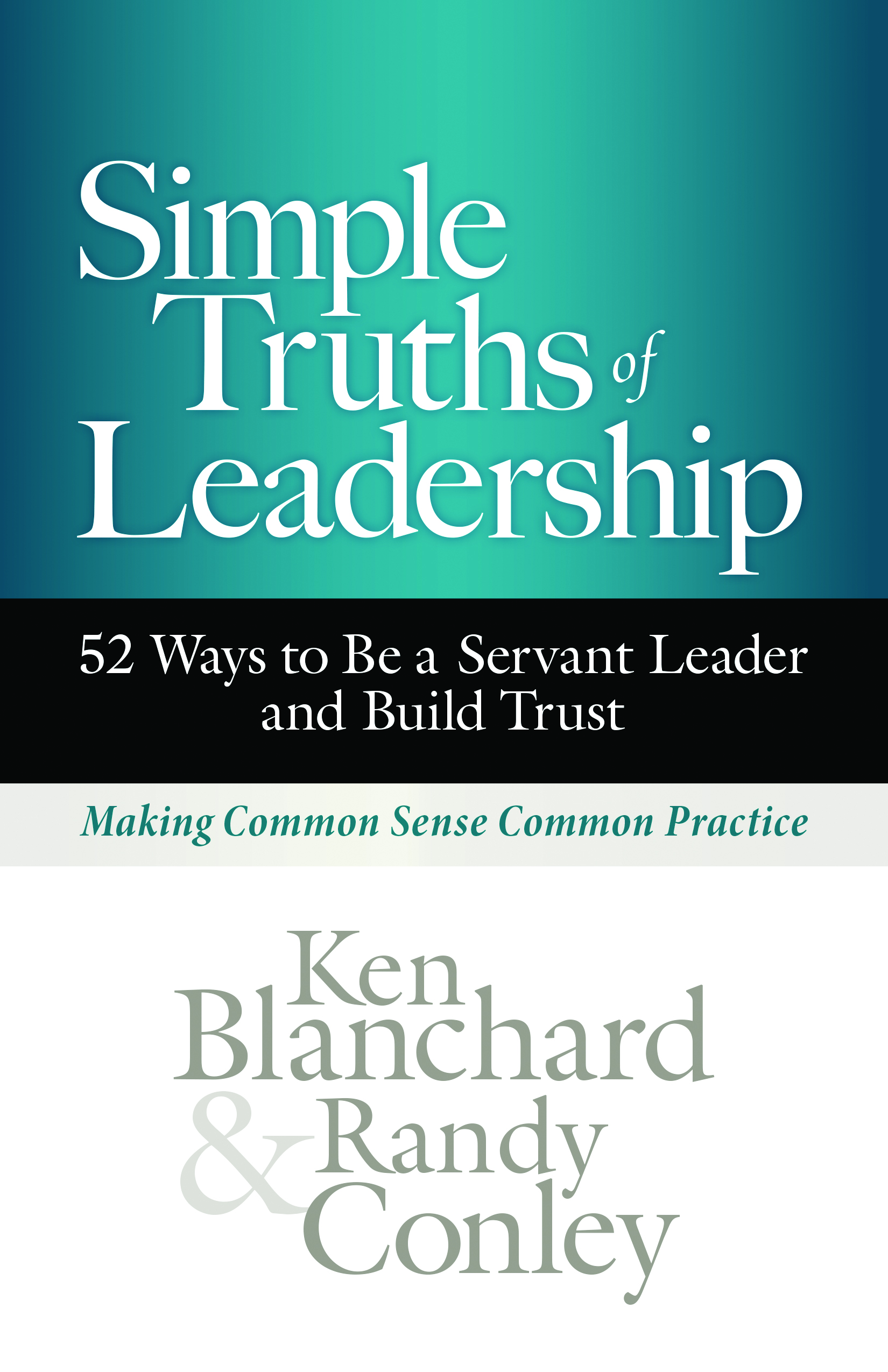
13 Quotes From “Simple Truths Of Leadership”

Kenneth Blanchard and Randy Conley have given leaders a gift in Simple Truths of Leadership. Inside you will find 52 leadership lessons that can be immediately added to your leadership toolbox, and ample follow-up information if you want to dive deeper into any of these principles. Check out my full book review by clicking here. 

“If today’s leaders had a more commonsense approach to leadership, we’d venture to say that 65 to 70 percent of the workforce would not be considered disengaged. That’s one reason our original title for this book was ‘DUH! Why isn’t commonsense leadership common practice?’” 

“The most persistent barrier to being a servant leader is a heart motivated by self interest that looks at the world as a ‘give a little, take a lot’ proposition. … If leaders don’t get their heart right, they will never become servant leaders.” 

“Organizational leaders often have an either/or attitude toward results and people. … You can get both great results and great relationships if you understand the two parts of servant leadership: the leadership aspect focuses on vision, direction, and results; the servant aspect focuses on working side-by-side in relationship with your people.” 

“Empower your people by letting them bring their brains to work.” 

When people are off track, don’t reprimand them—redirect them.” 

“The best minute servant leaders spend is the one they invest in people.” 

The remaining seven quotes are exclusive content for my Patreon supporters. In addition to book quotes, there are also videos and behind-the-scenes views that only these supporters have access to. I would love it if you would prayerfully consider supporting my ministry for just $5 per month.

Am I Really Ready For Anything?

Listen to the podcast of this post by clicking on the player below, and you can also subscribe on AppleSpotify, or Audible. 

“Ezekiel will be a sign to you…” —God (Ezekiel 24:24). 

How many times have I told God, “I am Your servant. Use me as You know best”? 

But do I really want that?

Ezekiel is told by God in the ninth year of their captivity in Babylon, on the tenth day of the tenth month, that the siege of Jerusalem had begun that very day. Ezekiel is then instructed to share this news with his fellow exiles. God tells Ezekiel that after he shares this news, he will be unable to speak until a messenger arrives in Babylon to confirm the report. 

That same day, God also tells Ezekiel that his wife will die, but that he is not to mourn over this loss. God had grieved for years over Judah’s slide away from Him, but He could no longer grieve because it was now time for Judah’s punishment. Perhaps just like Judah’s slow downward slide, Ezekiel’s wife had been in declining health too, but now Ezekiel was called to obey God in this second illustrated sermon. 

About seven months later, Jerusalem’s walls were broken through, King Zedekiah was captured, and about three weeks later Nebuzaradan torched the city. On that day, Ezekiel lost his power to speak, just as God said he would, and Ezekiel remained mute for nearly two years (2 Kings 25:1-10; Ezekiel 24:1-2, 15-27; 33:21-22). 

This is what it means to be used by God. He used Ezekiel as His illustrated sermons to vividly show the exiles the consequences of their sinful choices.

But we don’t read a single word of complaint or bargaining from Ezekiel—just complete obedience.

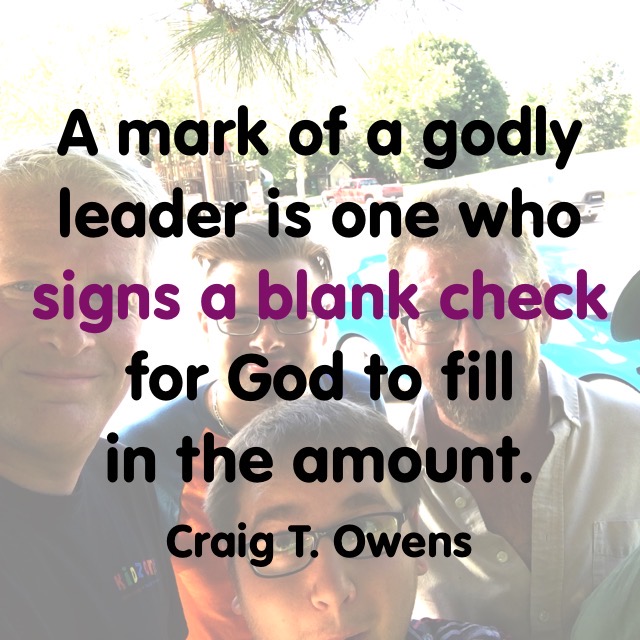
A mark of a godly leader is one who signs a blank check for God to fill in the amount.

The leader that serves God in this obedient way is one who is highly esteemed by both God and men. God said, “As for you, son of man, your people are talking together about you by the walls and at the doors of the houses, saying to each other, ‘Come and hear the message that has come from the Lord.’ … When all this comes true—and it surely will—then they will know that a prophet has been among them” (Ezekiel 33:30, 33). 

I want to believe that I am willing to serve God this way but am I truly willing? Perhaps my prayer should be, “Father I want to be able to be used by You. I want to say that I am ready for You to use me as You see best. But You alone truly know my heart. Holy Spirit, if I am not as committed as Ezekiel was, please do Your work in me so that I can truly say, ‘I am ready to be used.’” 

This is part 63 in my series on godly leadership. You can check out all of my posts in this series by clicking here. 

►► Would you please prayerfully consider supporting this ministry? My Patreon supporters get behind-the-scenes access to exclusive materials. ◀︎◀︎

The Craig And Greg Show: Efficient Quantity Needs Effective Quality

Listen to the audio-only version of this podcast by clicking on the player below, or scroll down to watch the video.

On this episode of “The Craig And Greg Show” we talk about: 

  • [0:20] Quality vs. Quantity is a struggle all leaders have to address 
  • [0:55] Quantity is easier to measure, which is why leaders tend to lean this way
  • [1:45] I share a funny story about working with a church board
  • [2:53] Leadership is about quality—how do leaders focus on this?
  • [3:33] I share an insightful story from the Chick-fil-A boardroom
  • [4:21] Greg talks about his leadership struggle with silos
  • [5:27] I share a story from my book Shepherd Leadership: The Metrics That Really Matter
  • [6:30] Efficiency and effectiveness don’t have to compete with each other
  • [7:11] Quality is never an accident
  • [7:50] Greg shares a helpful list of three items, but to stay on track you can only pick 2-of-the-3
  • [8:45] What distracts us from pursuing quality?
  • [10:00] Both quality and quantity have their places, but the leader needs to determine which one takes the priority
  • [10:47] Greg shares a comical conclusion he made after overhearing a break room conversation
  • [12:27] Why do leaders find security in “more”?
  • [13:55] There is one key place where quantity should probably come first
  • [14:48] Numbers are easy to use to measure quantity, but quality is much harder to measure
  • [16:38] An important lesson for leaders
  • [18:14] A leader’s words need to be more qualitative than quantitative
  • [19:15] Our coaching huddle clients get both quantity and quality

Check out this episode and subscribe on YouTube so you can watch all of the upcoming episodes. You can also listen to our podcast on Spotify and Apple.
Simple Truths Of Leadership (book review)

Listen to the podcast of this post by clicking on the player below, and you can also subscribe on AppleSpotify, or Audible. 

Kenneth Blanchard cranks out the leadership books! What I love about his writing style is how he makes his leadership principles so accessible in just a few words. Most of his books contain an overarching concept that’s easy to grasp and immediately applicable. But Simple Truths Of Leadership, which he co-wrote with Randy Conely, is a slight departure from this predictable style. 

Simple Truths—as its title implies—still presents easy-to-grasp principles, but this book has a different feel to it. I think the best way I can describe this book is as an index to Blanchard’s earlier leadership books. 

The overall emphasis of this book is servant leadership, with all of these simple truths being presented to us in 52 snippets. Each snippet gives the reader more than enough information to get to work, but then there is a reference given to a book previously written or co-written by Kenneth Blanchard to allow for a deeper study of that principle. This is why the overall feel of this book is as an index to the other books. 

Whether you’ve read Kenneth Blanchard’s leadership books before, or if this is your first time picking up something he’s written, Simple Truths is a great book to add to your leadership library. 

►► Would you please prayerfully consider supporting this ministry? My Patreon supporters get behind-the-scenes access to exclusive materials. ◀︎◀︎