10 Quotes From “Jesus’ Terrible Financial Advice”

I loved the financial insights that John Thornton presented in Jesus’ Terrible Financial Advice. The advice is “terrible” in that it flies in the face of conventional financial wisdom and puts it in the proper biblical light. Check out my full review of this book by clicking here.

“As God waits patiently to receive our all, wonder, and appreciation for all He is and does, an idol steps in to accept our applause. Like an insidious illusionist, the idol misdirects our attention to itself. … What does an idol do? Nothing. That’s all an idol can do. Nothing. Nothing but steal God’s glory.”

“Jesus is not trying to impoverish us when He tells us to store up treasures in heaven.”

“Here is where some people mistakenly make it about the money. They wrongly conclude that rich people can’t make it to heaven, but poor people can. This is a grave error. In truth, no one can enter the kingdom of heaven, rich or poor, without God.”

“If we are seeking heaven because our life here is so good that we don’t want it to end, or simply because we don’t want to go to hell, we’ve missed the point. We’ve made the same mistake this young man made [Mark 10]. So doing what Jesus always did, He redirected the young man to the right thing. The greatest good. He redirected the young man to God. Jesus clarifies that no one is good but God Himself. … What makes eternal life good isn’t the length. It’s the company. God Himself is what is good about heaven [John 17:3].”

“Regardless of how much of a blessing of wealth has the potential to be, it becomes a curse for us when it separates us from the love of God.”

“Don’t wrongfully conclude that rich people can’t make it, but poor people can. Or that poor people are godly, but rich people are not. If we do this, we miss the point entirely. We think that Jesus is just calling out rich people. We think He is talking about people’s financial position, when He’s really talking about our heart condition. … At the end of the day, answer to the question ‘Does Jesus want you rich or poor?’ is obvious. The answer is yes! Jesus wants you. And the answer is all about God’s goodness, not ours.”

“The number one theme related to wealth in the Bible is that it is a blessing from God.” 

“Whenever we conclude that the plans we have for our lives are better than the plans God has for us, or that the gifts we have for ourselves are better than His gifts, the false master Money steps up. Money promises to put us in charge. With it, we can smooth the way or save the day. Don’t worry. Be happy. But God has a better plan for our lives. We were made to live for so much more. And He is more. God wants us to understand and know Him, His ‘kindness, justice and righteousness,’ for in these He delights (Jeremiah 9:24). God’s plan is to complete us.”

“Wealth becomes a curse for us when we choose it over God.” 

“In a society where we have taken independence, individual freedom, and self-love to cult status, submission is taboo. We want to be our own master. Money offers us what we want, so we love it or fear it, trading in the true God for a false one. But Jesus shows us we have it all wrong. He shows us that submission to His Father is the only way to be truly free. Free to live life to the full. The only way to live a life that matters is to find our sole purpose in Him.”


Jesus’ Terrible Financial Advice (book review)

When a trained and certified financial advisor says you’re making a mistake with your finances, you will probably listen to him. But what if the one giving the terrible financial advice is Jesus? John Norton (a CPA with a Ph.D. in accounting) looks at the financial advice of Jesus in a whole new light in his book Jesus’ Terrible Financial Advice.

I’ll be honest with you: this book is not at all what I expected. When I hear someone say that Jesus gave “bad financial advice,” I just assume it’s a tongue-in-cheek lead in to a discussion on tithing or giving to missions. But as the subtitle of the book hints, John Norton flips the table on every financial concept that you’ve ever heard taught by the world’s financial experts.

Many people wrongly think that Jesus was anti-wealth, and that to be a truly “sold-out” follower of Jesus, Christians have to give up all semblance of nice things. But that’s not what Jesus taught or lived! Neither did Jesus say that Christians are to pursue wealth on earth. Does that sound like confusing double-talk? Far from it! It’s the truth that John unpacks in this very readable book. John tells us right up front, “I relied on just one rule while writing this book: ‘If my theology disagrees with God, one of us is wrong, and it’s not Him.’”

If you’ve ever struggled with how a Christian is supposed to handle the wealth and possessions of this world, this book will come as a welcome insight into what Jesus really wants for His children: freedom to glorify God!

“Like Jesus’ early followers, we are at a crossroads. He flips the tables on everything we thought we knew about peace, prosperity, and the pursuit of happiness. Jesus’ teachings about money and wealth hit us where we live, shake us free from a life that leads to death, and leave us immeasurably more blessed than we ever imagined. All with the single-minded purpose of bringing glory to His Father.” (John Thornton)

I believe you will be as pleasantly surprised at this book as I was.

I am a Moody Publishers book reviewer.

How Confident Are Your Prayers?

David hasn’t done anything wrong. He’s never tried to lead a rebellion against King Saul. In fact, he’s never even talked poorly about Saul. And yet Saul is out to kill David!

David tries to get as far away as he can, choosing to live in the desert so that he might get some relief from Saul. Still Saul comes after him with a force of 3000 men! Every time David moves, Saul’s men are hot on his trail. David described his situation like this

My mortal enemies surround me. Their hearts are cold and calloused toward me, and they speak terrible things about me. They track me down and surround me. They are like hungry lions, crouching, waiting to pounce on me!

If you were in David’s sandals, how confident would you be that God could get you out of the situation? Remarkably, David’s confidence was as high as it could be!

David not only was confident that God would hear him, but that He would listen to him. More than that, David knew God would pay attention to him. And then David boldly said, “I call on You, O God, for you WILL answer me.”

How could David pray such a confident prayer? The answer is in this principle…

There is a direct correlation between intimacy and confidence.

David made two very intimate claims about his relationship with God:

  1. You will keep me as the apple of Your eye
  2. You hide me in the shadow of Your wings

The apple of the eye is the pupil. Our eyes are amazingly designed to not only take in information but to protect themselves. If something is getting too close to our eye, the eyelids blink in protection faster than we can consciously tell them to. So David was claiming that God would protect him by reflex!

The shadow of Your wings was a reference to the top of the Ark of the Covenant; a place called the mercy seat. Here is where the priest sprinkled the blood of a sacrificial lamb to atone for the people’s sin and to appeal to God’s mercy. The mercy seat was over-shadowed by two angels’ wings.

David was saying that God kept him in this intimate place—covered by God’s mercy and protection!

Jesus also told us about intimate confidence when He said, “If you remain in Me, and My words remain in you, ask whatever you wish, and it will be given you” (John 15:7).

  • Intimacy: remain IN Jesus, and let His words remain IN you
  • Confidence: ask whatever you wish, and it will be given you

Are your prayers this confident? If not, don’t work on raising your confidence, but work on increasing your intimacy. Check your intimacy level with questions like:

  • Am I abiding in Jesus?
  • Are His words abiding in me?
  • Do I have any unconfessed sin?
  • Is my prayer a “Your kingdom come, Your will be done” prayer?

Focus on intimacy, and then watch your confidence soar! 

If you are interested in learning more about the prayers of David, I have also discussed his prayer for help, his prayer of crying out loud, and his prayer of praise.

Charles Spurgeon Prays For Revival

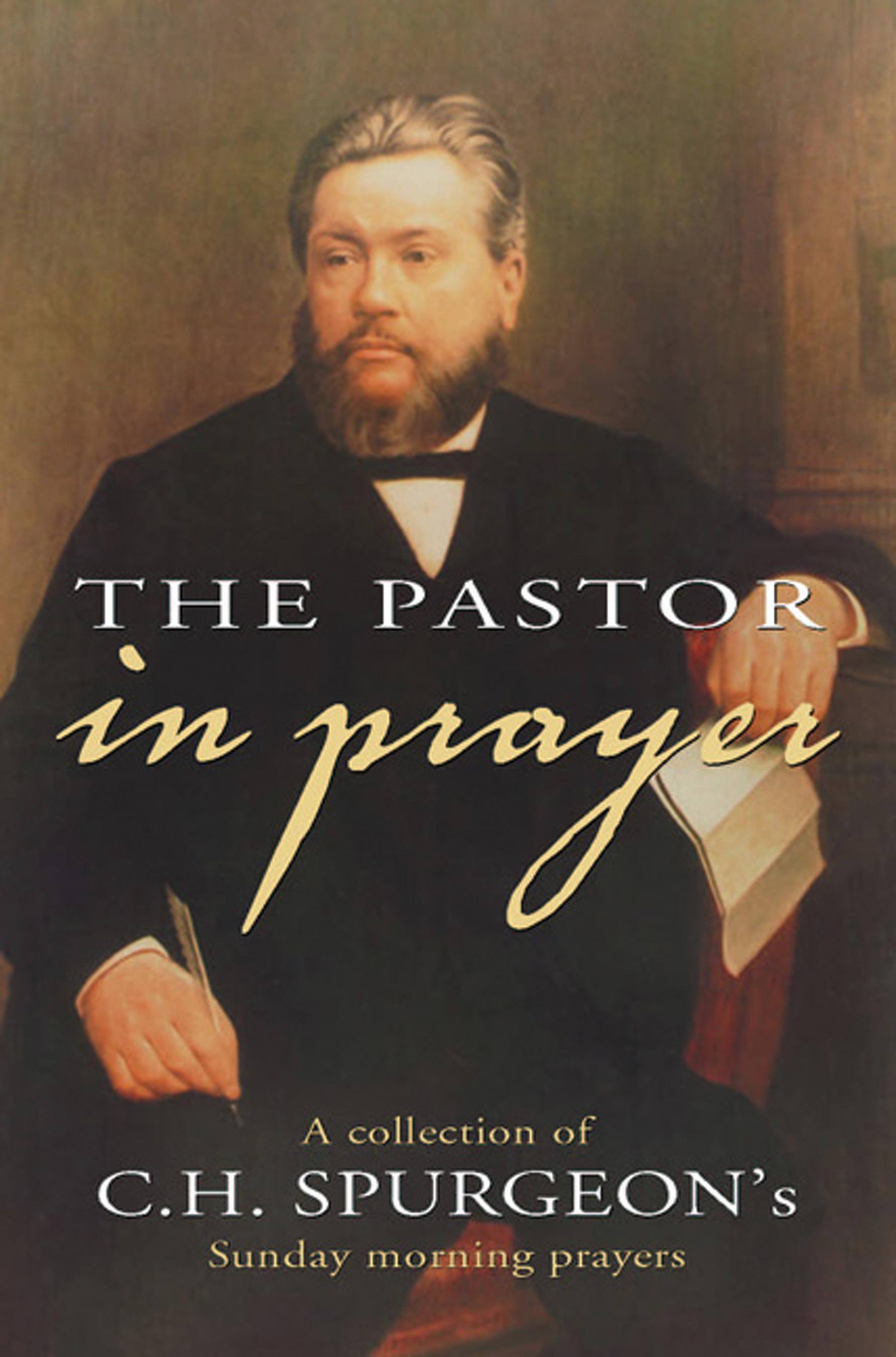
These are from The Pastor In Prayer by Charles Spurgeon…

“Send us, Lord, a mighty ground-swell of intense desire for the glory of God, and may these Thy servants banded together in church fellowship recognize their sweet obligations to their dying Lord, and determine that the prayers of the church shall go up before Him like sweet perfume.”

“We have trusted Thee now for many years, and Thy faithfulness has never been under suspicion, nor Thy love a matter of question. We therefore leave every concern about our families or about ourselves, about our business, or about our souls, entirely with our God. … Still, Lord, we have a burden which we must now lay before Thee, and ask Thee to help us in it. We mourn over the condition of Thy church, for on every side as we look around we see men endeavoring to undermine the doctrines of the everlasting Gospel.”

“O Lord, the multitude delight in sin. Drunkenness defiles our city, and filthy words are heard on every side. Be not wroth with this nation, we beseech Thee. It has been entrusted with wondrous privileges. Forgive it and have mercy upon its aggravated sin. Lay not its heavy responsibilities to its charge, but let this nation be saved. We pray for it as we are in duty-bound to do, and as our love constrains us to do. Oh let the masses of the people yet come to seek after Christ, or by some means, by all means, by every means, may the ears of men be reached and then their hearts be touched. May they hear, that their souls may live; and may the Lord who in everlasting covenant sets forth His Son, glorify Him in the midst of the nations.”

“We ask Thee, O God, at this time to revive religion in our land. Oh that Thou wouldst be pleased to speak by the Holy Ghost that the gospel’s power may be known: there be many that run away from the truth; Lord, hold us fast to it, bind us to it. May there be a people found in this place, and throughout this land, that will abide by the doctrines of the gospel, come what may. May we not be ashamed to be old fashioned and to be thought fanatical. May we not wish to be thought cultured, nor aim to keep abreast of the times. May we be side by side, with Thee, O bleeding Savior; and be content to be rejected, be willing to take up unpopular truth, and to hold fast despised teachings of sacred writ even to the end. Oh make us faithful, faithful unto death.”

“We do repent of sin—give us a deeper repentance! May we have a horror of it, may we dread the very approach of it, may we chastely flee from it and resolve, with sacred jealousy, that our hearts shall be for the Lord alone.”

“We wish that we had greater power in private prayer, that we were oftener wrestling with the covenant angel. We would that the Word of God were more sweet to us, more intensely precious, that we had a deeper hunger and thirst after it.”

“God bless our country! May faith be multiplied in the land! Preserve our nation at this juncture. Guide, we pray Thee, the deliberations of councilors and princes. May peace be preserved, and at the same time may the great purposes of God with regard to the spread of liberty and of the gospel be subserved by every decree of the council. O God, we beseech Thee, ease the world of the sway of every evil principle. Let the day come when all classes of men shall study the interest of others as well as their own, when the various nations shall yield to the one scepter of Christ and like kindred tribes shall melt into one. Yea, hasten His coming and His reign when the shout shall go up to heaven that the ‘Lord God omnipotent reigneth.’”

“We specially pray for our country that God would bless it; and oh, that we might have a season of revival of pure and undefiled religion in the land. We perceive that Thou canst turn the hearts of the people, as the trees of the wood are moved in the wind. Oh that there might come a deep searching of heart, great thoughtfulness of the Scriptures, reverence of God and the principles of justice and peace and may this land make another stride in onward progress, and out of it may there be gathered a people whom Thou hast chosen, who shall show forth Thy praise.”

You can check out my review of The Pastor In Prayer by clicking here, and you can read some other quotes I shared from this book by clicking here.

Thursdays With Oswald—How God Prepares His Workers

Oswald ChambersThis is a weekly series with things I’m reading and pondering from Oswald Chambers. You can read the original seed thought here, or type “Thursdays With Oswald” in the search box to read more entries.

How God Prepares His Workers

     If the worker for God is going to go all lengths for God for the cure of souls, he has to allow God to examine to deep down the possibilities of his own nature. That is why it is hard to deal with the “two-faced.” That is why, Christian worker, God will take you through disciplines and experiences that are not meant for your particular life; they are meant to make you ready for God to send as He sent Nathan [2 Samuel 12:1]. … 

     Worker for God, before you go among the infirm, the sick, the subtle, the hypocritical, let God deal with you. A child cannot wield the sword of the Spirit; it must be wielded by one fed on strong meat, one who has been deeply dealt with and examined by God’s Spirit, in whom the last springs and possibilities of iniquity and wrong in his own nature have been disclosed to him that he may understand the marvel of God’s grace. …  

     God grant that we may understand that working for the cure of souls is not a babe’s work; it is a man’s work, requiring man’s power, grasped and transformed by God Almighty, so that God can get straight through the worker to the man He is waiting for. 

From Workmen Of God

Being used by God is no light, trivial matter. God wants to use you to reach those “He is waiting for.” But in order for you to “wield the sword of the Spirit,” you first have to allow God to strengthen and prepare you.

Are you willing to let God prepare you for His service? It will require us to pray, as Jesus did, “Father, not My will, but Yours be done.”

11 Quotes From “Brothers, We Are Not Professionals”

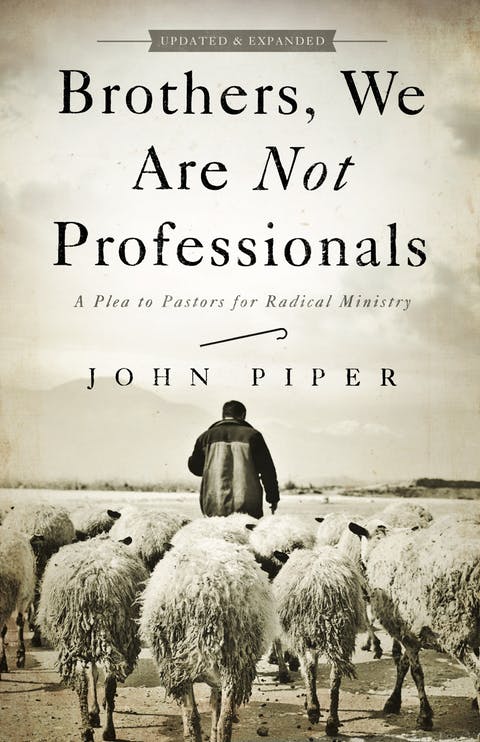
John Piper has written a book that I think every pastor should read: Brothers, We Are Not Professionals. You can read my review of this book here. Below are just a few quotes that caught my attention.

“We pastors are being killed by the professionalizing of the pastoral ministry. The mentality of the professional is not the mentality of the prophet. … The professionalization of the ministry is a constant threat to the offense of the gospel.”

“I defined spiritual leadership as ‘knowing where God wants people to be and taking the initiative to get them there by God’s means in reliance on God’s power.’ …  So the goal of spiritual leadership is to muster people to join God in living for God’s glory.”

“The Son of Man has not come seeking employees. He has come to employ Himself for our good.”

“In this fallen world, the tide is always going out. That is, the affections of our people have for God Himself (as distinct from His gifts) are continually prone to shrink. Our job is to tilt the world, by the power of the Spirit and the Word, so that the tide rolls in again.”

“A pastor who feels competent in himself to produce eternal fruit knows neither God nor himself.”

“Salvation is a gift of God (Ephesians 2:8). Love is a gift of God (1 Thessalonians 3:12). Faith is a gift of God (1 Timothy 1:14). Wisdom is a gift of God (Ephesians 1:17). Joy is a gift of God (Romans 15:13). Yet as pastors we must labor to ‘save some’ (1 Corinthians 9:22). We must stir up the people to love (Hebrews 10:24). We must advance their faith (Philippians 1:25). We must impart wisdom (1 Corinthians 2:7). We must work for their joy (2 Corinthians 1:24). We are called to labor for that which is God’s alone to give. The essence of the Christian ministry is that its success is not within our reach.”

“Are not our people really yearning to be around a man who has been around God? Is it not the lingering aroma of prayer that gives a sense of eternity to all our work?”

“Few things frighten me more than the beginnings of barrenness that come from frenzied activity with little spiritual food and meditation.”

“The domestication of God is a curse on preaching in our day. We need to recover reality and the language of majesty and holiness and awe and glory.”

“He knows that the only way he can deliver God’s message to God’s people is by being rooted in it and by saturating his sermon with God’s own revelation in the Bible. The Bible-oriented preacher wants the congregation to know that his words, if they have any abiding worth, are in accord with God’s words. He wants this to be obvious to them. That is part of his humility and his authority. Therefore, he constantly tries to show the people that his ideas are coming from the Bible. He is hesitant to go too far toward points that are not demonstrable from the Bible.”

“Our salvation and the salvation of those who hear us week after week depend in large measure on our faithful attention to personal holiness and sound teaching” [see 1 Timothy 4:16]. … Oh, how earnest we should be in attending to ourselves and the soundness and helpfulness of our teaching!”

Brothers, We Are Not Professionals (book review)

I’ll state it right up front—every pastor should read Brothers, We Are Not Professionals by John Piper.

The pastor is called upon to do lots of things, some of which are considered by both pastor and parishioner to more “spiritual” or more “business.” But in reality, all that a pastor (or any Christian for that matter) does is spiritual, because it is all to be done for the glory of God. Over time, many pastors have lost sight of the sacred nature of their calling, turning what they do into a professional pursuit.

Piper explains, “First, professionalism should always be marginal, not central; optional, not crucial. And second, the pursuit of professionalism will push the supernatural center more and more into the corner while ministry becomes a set of secular competencies with a religious veneer. … When I look back, my regret is not that I wasn’t more professional but that I wasn’t more prayerful, more passionate for souls, more consistent in personal witness, more emotionally engaged with my children, more tender with my wife, more spontaneously affirming of the good in others.”

Every chapter is chockfull of biblical insights, personal examples from John Piper’s ministry, and historical sources that have stood the test of time. I’ll say it again: every pastor should read this book!

I’ll add my own “amen” this prayer John Piper offers: “Banish professionalism from our midst, O God, and in its place put passionate prayer, poverty of spirit, hunger for God, rigorous study of holy things, white-hot devotion to Jesus Christ, utter indifference to all material gain, and unremitting labor to rescue the perishing, perfect the saints, and glorify our sovereign Lord. In Jesus’ great and powerful name. Amen.”

C.S. Lewis On Christ’s Second Coming

“The idea which here shuts out the Second Coming from our minds, the idea of the world slowly ripening to perfection, is a myth, not a generalization from experience. And it is a myth which distracts us from our real duties and our real interest. It is our attempt to guess the plot of a drama in which we are the characters. But how can the characters in a play guess the plot? We are not the playwright, we are not the producer, we are not even the audience. We are on the stage. …

“The doctrine of the Second Coming teaches us that we do not and cannot know when the world drama will end. The curtain may be rung down at any moment: say, before you have finished reading this paragraph. This seems to some people intolerably frustrating. So many things would be interrupted. Perhaps you were going to get married next month, perhaps you were going to get a raise next week: you may be on the verge of a great scientific discovery; you may be maturing great social and political reforms. Surely no good and wise God would be so very unreasonable as to cut all this short? Not now, of all moments!

“But we think thus because we keep on assuming that we know the play. We do not know the play. We do not even know whether we are in Act I or Act V. We do not know who are the major and who the minor characters. The Author knows.” —C.S. Lewis, in The World’s Last Night

This is a great portrayal of a conversation between J.R.R. Tolkien and C.S. Lewis on the value of myths…

8 More Quotes From “Whisper”

In Whisper, Mark Batterson gives us seven love languages which God uses to speak to us (check out my review of Whisper here). Mark always does a masterful job of weaving together Scripture, quotes from other authors, historical and his own personal accounts. Here are some of the quotes he shared from others.

“The voice of the Spirit is as gentle as a zephyr. So gentle that unless you are living in a perfect communion with God, you never hear it.” —Oswald Chambers

“The sole cause of man’s unhappiness is that he does not know how to stay quietly in his room.” —Blaise Pascal

“The best translation of the Hebrew in Genesis 1 was not ‘and God said’ but ‘and God sang.’” —Leonard Bernstein

“How much happier you would be, how much more of you there would be, if the hammer of a higher God could smash your small cosmos!” —G.K. Chesterton

“Vocatus atque non vacates, Deus aderit. Bidden or not bidden, God is here.” —Desiderius Erasmus

“A Bible that’s falling apart usually belongs to someone who isn’t.” —Charles Spurgeon

“The Christian shoemaker does his duty not by putting little crosses on the shoes, but by making good shoes, because God is interested in good craftsmanship.” —Martin Luther

“No crooked table legs or ill-fitting drawers ever, I dare swear, came out of the Carpenter’s shop at Nazareth.” —Dorothy Sayers

For more quotes from Whisper, click here.

7 Quotes From “The Pastor In Prayer”

In The Pastor In Prayer we discover that Charles Spurgeon is not only the prince of preachers, but the prince of pray-ers as well. Check out my review of this fabulous book by clicking here.

“Thy grace must give us even to know our need of grace. We are not willing to confess our own sinfulness until Thou dost show it to us. Though it stares us in the face our pride denies it, and our own inability is unperceived by us. We steal Thy power and call it our own till Thou dost compel us to say that we have no strength in ourselves.”

“Thy grace has almost out-graced itself, Thy love has reached its height love to rebels; so to love that even Thy Son could not be spared. O God, we are afflicted in our hearts to think we do not love Thee more after such love as this.”

“O God, we beseech Thee bring men away from all their false trusts to rest in the great sacrifice of Thy dear Son.”

“Oh that we might live so near to the great Shepherd as to be familiar with His voice, to know its tones, that so a stranger we may not follow, for we know not the voice of strangers.”

“Thou art good when Thou givest, and Thou art good when Thou takest away. Thou art good when the night gathers heavy about us. Thou art good when the sun shineth and gladdeneth our pathway. Thou art always good and doest good, and blessed be the name of the Lord from the rising of the sun unto the going down thereof, and through the night watches let His praise be still celebrated.”

“And truly since we have received so many mercies at Thy hand, we do feel that Thou wilt never forsake us in any darkness which may be in our path in the future. Thou hast done too much for us to desert us now. We have cost Thee so much—Oh wondrous price that Thou hast paid for us—and Thou hast spent so much of wise thought, and gracious act upon us, that we are persuaded Thou wilt go through with the work which Thy wisdom has undertaken. But give us faith to believe this when the stormy times come, let us not doubt.”

“Lord, while we work for Thee, always keep us sitting at the feet of Jesus. Let our faith never wander away from the simplicity of its confidence in Him. Let our motive never be anything but His glory; may our hearts be taken up with His love, and our thoughts perpetually engaged about His person.”