Brothers, We Are Not Professionals (book review)

I’ll state it right up front—every pastor should read Brothers, We Are Not Professionals by John Piper.

The pastor is called upon to do lots of things, some of which are considered by both pastor and parishioner to more “spiritual” or more “business.” But in reality, all that a pastor (or any Christian for that matter) does is spiritual, because it is all to be done for the glory of God. Over time, many pastors have lost sight of the sacred nature of their calling, turning what they do into a professional pursuit.

Piper explains, “First, professionalism should always be marginal, not central; optional, not crucial. And second, the pursuit of professionalism will push the supernatural center more and more into the corner while ministry becomes a set of secular competencies with a religious veneer. … When I look back, my regret is not that I wasn’t more professional but that I wasn’t more prayerful, more passionate for souls, more consistent in personal witness, more emotionally engaged with my children, more tender with my wife, more spontaneously affirming of the good in others.”

Every chapter is chockfull of biblical insights, personal examples from John Piper’s ministry, and historical sources that have stood the test of time. I’ll say it again: every pastor should read this book!

I’ll add my own “amen” this prayer John Piper offers: “Banish professionalism from our midst, O God, and in its place put passionate prayer, poverty of spirit, hunger for God, rigorous study of holy things, white-hot devotion to Jesus Christ, utter indifference to all material gain, and unremitting labor to rescue the perishing, perfect the saints, and glorify our sovereign Lord. In Jesus’ great and powerful name. Amen.”

C.S. Lewis On Christ’s Second Coming

“The idea which here shuts out the Second Coming from our minds, the idea of the world slowly ripening to perfection, is a myth, not a generalization from experience. And it is a myth which distracts us from our real duties and our real interest. It is our attempt to guess the plot of a drama in which we are the characters. But how can the characters in a play guess the plot? We are not the playwright, we are not the producer, we are not even the audience. We are on the stage. …

“The doctrine of the Second Coming teaches us that we do not and cannot know when the world drama will end. The curtain may be rung down at any moment: say, before you have finished reading this paragraph. This seems to some people intolerably frustrating. So many things would be interrupted. Perhaps you were going to get married next month, perhaps you were going to get a raise next week: you may be on the verge of a great scientific discovery; you may be maturing great social and political reforms. Surely no good and wise God would be so very unreasonable as to cut all this short? Not now, of all moments!

“But we think thus because we keep on assuming that we know the play. We do not know the play. We do not even know whether we are in Act I or Act V. We do not know who are the major and who the minor characters. The Author knows.” —C.S. Lewis, in The World’s Last Night

This is a great portrayal of a conversation between J.R.R. Tolkien and C.S. Lewis on the value of myths…

8 More Quotes From “Whisper”

In Whisper, Mark Batterson gives us seven love languages which God uses to speak to us (check out my review of Whisper here). Mark always does a masterful job of weaving together Scripture, quotes from other authors, historical and his own personal accounts. Here are some of the quotes he shared from others.

“The voice of the Spirit is as gentle as a zephyr. So gentle that unless you are living in a perfect communion with God, you never hear it.” —Oswald Chambers

“The sole cause of man’s unhappiness is that he does not know how to stay quietly in his room.” —Blaise Pascal

“The best translation of the Hebrew in Genesis 1 was not ‘and God said’ but ‘and God sang.’” —Leonard Bernstein

“How much happier you would be, how much more of you there would be, if the hammer of a higher God could smash your small cosmos!” —G.K. Chesterton

“Vocatus atque non vacates, Deus aderit. Bidden or not bidden, God is here.” —Desiderius Erasmus

“A Bible that’s falling apart usually belongs to someone who isn’t.” —Charles Spurgeon

“The Christian shoemaker does his duty not by putting little crosses on the shoes, but by making good shoes, because God is interested in good craftsmanship.” —Martin Luther

“No crooked table legs or ill-fitting drawers ever, I dare swear, came out of the Carpenter’s shop at Nazareth.” —Dorothy Sayers

For more quotes from Whisper, click here.

7 Quotes From “The Pastor In Prayer”

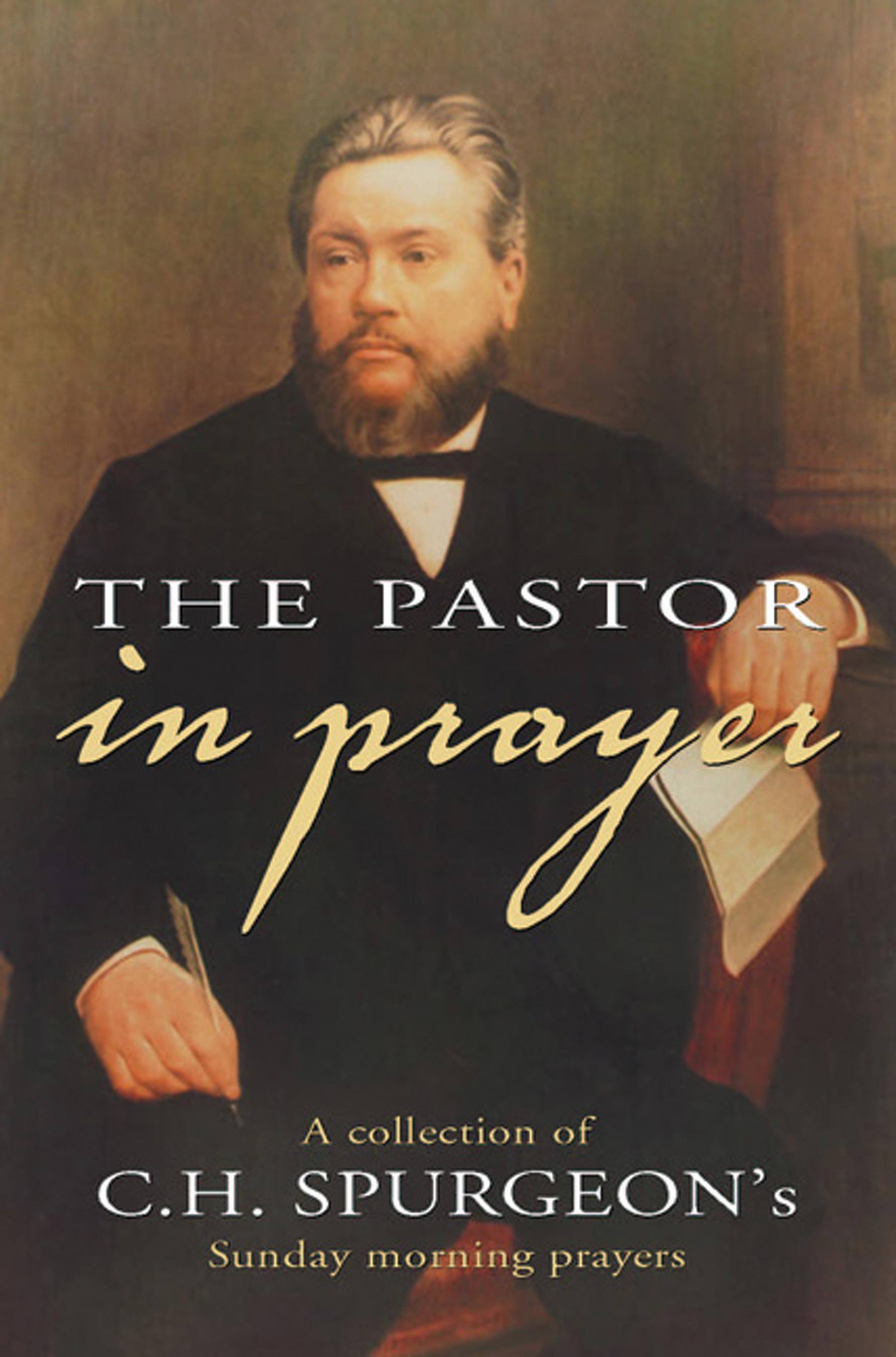
In The Pastor In Prayer we discover that Charles Spurgeon is not only the prince of preachers, but the prince of pray-ers as well. Check out my review of this fabulous book by clicking here.

“Thy grace must give us even to know our need of grace. We are not willing to confess our own sinfulness until Thou dost show it to us. Though it stares us in the face our pride denies it, and our own inability is unperceived by us. We steal Thy power and call it our own till Thou dost compel us to say that we have no strength in ourselves.”

“Thy grace has almost out-graced itself, Thy love has reached its height love to rebels; so to love that even Thy Son could not be spared. O God, we are afflicted in our hearts to think we do not love Thee more after such love as this.”

“O God, we beseech Thee bring men away from all their false trusts to rest in the great sacrifice of Thy dear Son.”

“Oh that we might live so near to the great Shepherd as to be familiar with His voice, to know its tones, that so a stranger we may not follow, for we know not the voice of strangers.”

“Thou art good when Thou givest, and Thou art good when Thou takest away. Thou art good when the night gathers heavy about us. Thou art good when the sun shineth and gladdeneth our pathway. Thou art always good and doest good, and blessed be the name of the Lord from the rising of the sun unto the going down thereof, and through the night watches let His praise be still celebrated.”

“And truly since we have received so many mercies at Thy hand, we do feel that Thou wilt never forsake us in any darkness which may be in our path in the future. Thou hast done too much for us to desert us now. We have cost Thee so much—Oh wondrous price that Thou hast paid for us—and Thou hast spent so much of wise thought, and gracious act upon us, that we are persuaded Thou wilt go through with the work which Thy wisdom has undertaken. But give us faith to believe this when the stormy times come, let us not doubt.”

“Lord, while we work for Thee, always keep us sitting at the feet of Jesus. Let our faith never wander away from the simplicity of its confidence in Him. Let our motive never be anything but His glory; may our hearts be taken up with His love, and our thoughts perpetually engaged about His person.”

A Christian Should Be Neither Boasting Nor Belittling

“Boasting is an evidence that we are pleased with self; belittling, that we are disappointed in it. Either way we reveal that we have a high opinion of ourselves.

The victorious Christian neither exalts nor downgrades himself. His interests have shifted from self to Christ. What he is or is not no longer concerns him. He believes that he has been crucified with Christ and he is not willing either to praise or deprecate such a man.” —A.W. Tozer, in Man—The Dwelling Place Of God (emphasis mine)

A.W. Tozer On How To Try The Spirits

“I make available here a little secret by which I have tested my own spiritual experiences and religious impulses for many years. Briefly stated the test is this: This new doctrine, this new religious habit, this new view of truth, this new spiritual experience—how has it affected my attitude toward and my relationship to God, Christ, the Holy Scriptures, self, other Christians, the world and sin.

“Christless Christianity sounds contradictory but it exists as a real phenomenon in our day. Much that is being done in Christ’s name is false to Christ in that it is conceived by the flesh, incorporates fleshly methods, and seeks fleshly ends. Christ is mentioned from time to time in the same way and for the same reason that a self-seeking politician mentions Lincoln and the flag, to provide a sacred front for carnal activities and to deceive the simplehearted listeners. This giveaway is that Christ is not central: He is not all and in all. …

“Whatever originates outside the Scriptures should for that very reason be suspect until it can be shown to be in accord with them. … However high the emotional content, no experience can be proved to be genuine unless we can find chapter and verse authority for it in the Scriptures. …

“The Bible does not teach that there will be new light and advanced spiritual experiences in the latter days; it teaches the exact opposite.

“A growing acquaintance with the Holy Spirit will always mean an increasing love for the Bible. The Scriptures are in print what Christ is in Person.” —A.W. Tozer, in Man—The Dwelling Place Of God

Thursdays With Oswald—The Hardy Annuals

Oswald ChambersThis is a weekly series with things I’m reading and pondering from Oswald Chambers. You can read the original seed thought here, or type “Thursdays With Oswald” in the search box to read more entries.

The Hardy Annuals

     By “hardy annuals” I mean the healthy-minded sinners. … How are we to get these irreligious people who are quite happy and healthy-minded to the place where they want Jesus? … 

     I want us to look at three types of pagans—Gallio, Herod and Pilate. …. 

     “And Gallio cared for none of those things” [Acts 18:12-15]. He said in effect, “I have nothing whatever to do with your religious quarrels, I am not here to decide questions of your law for you.” The opponents of Christianity are not weak, they are opponents who are able to ignore us; so the first thing to do is to examine and see what kind of Gospel we are preaching. … Have I a pet doctrine I am lifting up? If I have, then these healthy-minded folk will simply heap ridicule on me; but immediately I preach Christ, something happens—the Spirit of God begins to work where I cannot. …

     Herod is a rare type of pagan, he is obscene; he was bad, unmentionably bad, and you will find that when he saw Jesus Christ face to face he was not the slightest bit troubled. Why? He had heard the voice of God before through John the Baptist, and he had ordered that voice to be silent [Mark 6:17-18]. Herod is the presentation of the awful possibility of a fixed character, absolutely fixed in immorality. Jesus Christ did not awaken one tremor of conscience in him….  Did you ever notice what is recorded? “Now when Herod saw Jesus, he was exceeding glad” [Luke 23:8-9]—why? For the same reason that people go to a picture show, they want to see things. We read that Herod questioned Jesus in many words; “but He answered him nothing.” … 

     Pilate represents the type of pagan who always seeks his own interests; that type is known to us all today. People belong to certain churches because it is better for their business; or they shift their membership to other churches because it is more convenient for business. A once-born man, who acts from this point of view is an opportunist. “If it is Jesus Christ’s Gospel that is in the ascendancy, then I will use it to serve my own ends.” You have to bring that man face to face with Christ, not with your experience, but with Jesus Christ Himself. … 

     Rely on the Holy Ghost as the most practical Being you ever knew, and live among the facts of God’s Word and among human facts, and people will recognize Jesus Christ through you. … The next time you come across a ‘hardy annual,’ see that you lay hold of God for that one until Jesus Christ is presented by the power of the Holy Ghost, and then you will see the altered face, the altered attitude, and the altered life. 

From Workmen Of God

Well said!

For Crying Out Loud!

There’s a time when David was fainting and had no one to help him—my spirit was overwhelmed and fainted, throwing all its weight on me. I look for someone to come and help me, but no one gives me a passing thought! No one will help me; no one cares a bit what happens to me (Psalm 142:3-4).

Here’s the backdrop to this prayer. King Saul has tried to kill David twice, not including the time Saul sent assassins to David’s house to kill him there. Even Jonathan, Saul’s son, was embarrassed and grieved at his father’s shameful treatment of David.

David runs away from Saul so quickly that he doesn’t take any food or even a weapon. He literally only has the clothes on his back and the sandals on his feet. He’s able to get some day-old bread from Ahimelech the priest, and he also takes Goliath’s sword from the temple.

David is clearly not thinking clearly. He is wearing Goliath’s sword on his side. Remember that David killed Goliath. Goliath is from Gath. And where does David run? To Gath!! He has to pretend he’s gone insane in order to escape from Gath, and he flees to the cave of Adullam.

It’s here that he prays an intense prayer. How intense? David literally shouts this prayer. He uses phrases like:

    • I cry aloud to the Lord
    • I lift up a thundering voice to God to plead for mercy
    • I let my complaint gush out in front of God, not holding anything back
    • He cries to God, “You are all I really want in life” and “You’re my last chance, my only hope for life”
    • After he did all that, he still says, “God, listen to my even louder cry!

Just how desperate is your situation? Just how heavy is your burden? Have you come to the realization that God is your ONLY help? Then, like David, cry out louder and louder to Him until He answers you!

A blind man got the attention of Jesus by yelling at the top of his lungs, “Jesus, Son of David, have mercy on me!!” Jesus said that this man’s faith healed him. What was the demonstration of his faith? It was the persistent calling out to the only One who could help him.

Earlier in this chapter, Jesus says this: So what makes you think God won’t step in and work justice for His chosen people, who continue to cry out for help? Won’t He stick up for them? I assure you, He will. He will not drag His feet. But how much of that kind of persistent faith will the Son of Man find on the earth when He returns? (Luke 18:7-8).

Once again Jesus links a continual cry for help to the definition of persistent faith. 

So I’ll ask again: just how desperate are you for God to answer you? If you will cry out loud to Him, God will see your persistent faith and will step in and work for you.

Please join me on Sunday as we continue to learn more lessons from David’s prayers.

The Embers Of Church Contention

“When such embers of contention begin to smoke among Christians, we can be sure satan planted the spark; he is the one great kindle-coal of all strife.

“Whenever there is a storm in the spirits of saints, and the winds of emotions are high and loud, it is easy to see who has stirred up the tempest. The devil practices his black art on unmortified lusts, that enable him to raise easily many storms of division among believers. …

“There is nothing, next to Christ and heaven, which satan begrudges believers more than their peace and mutual love. If he cannot separate them from Christ, and stop them from getting to heaven, he takes sinister pleasure in watching them get there in a storm. …

“Saints who live in strife and contention are sinning against the strong prayers which Christ Himself uttered on their behalf [John 17:11, 21].” —William Gurnall, The Christian In Complete Armor

(I have many more quotes from this classic book posted here, here, here, and here.)

Thursdays With Oswald—Thawing Those ‘Frozen’ Toward God

Oswald ChambersThis is a weekly series with things I’m reading and pondering from Oswald Chambers. You can read the original seed thought here, or type “Thursdays With Oswald” in the search box to read more entries.

Thawing Those ‘Frozen’ Toward God

     The “lost” from the Bible standpoint are not doomed. The lost, Jesus Christ is seeking for… To Jesus Christ, all men are lost, and the worker who is going to work for the cure of souls must have the same outlook. …  

     In Luke 19 we find a specimen of a lost man. “The Son of Man is come to seek and to save that which was lost.” Notice the setting of this statement. Zacchaeus was a chief publican and as such he would be possessed of many ill-gotten gains; he was a man of wealth and position, a dishonorable man, but perfectly content with his dishonor. … This man Zacchaeus was frozen towards God, his conscience did not bother him, he was “lost,” quite contented, quite happy, and quite curious. When Jesus Christ came his way, the man’s nature unfroze, something began to work at once. … 

     Look what happened to Zacchaeus—“Zacchaeus stood up and said to the Lord, ‘Look, Lord! Here and now I give half of my possession to the poor; and if I have cheated anybody out of anything, I will pay back four times the amount.’” Who had been talking to him about his doings? Not a soul. Jesus had never said a word about his evil doings. What awakened him? What suddenly made him know where he was? The presence of Jesus! 

     Wherever a worker for God goes, the same thing will happen if the Spirit of God is getting His way through that man or woman. … The Holy Spirit’s presence through you has brought the atmosphere that Jesus Christ’s presence always brought, and has thawed the ice around their mind in their conscience and they are beginning to be convicted. … 

     Oh, do let us get back to this tremendous confidence in the Lord Jesus Christ’s power! Back to reliance on the Holy Spirit, and to remembering that Jesus came to seek the lost. 

From Workmen Of God

Is this an amazing thought?!

If Christians will just approach their “frozen” friends and loved ones with the knowledge that Jesus Christ loves them and wants to save them—and with the expectation that Jesus can save them—then the Holy Spirit can work through our presence to begin the thaw around their heart.

“Oh, do let us get back to this tremendous confidence in the Lord Jesus Christ’s power! Back to reliance on the Holy Spirit, and to remembering that Jesus came to seek the lost.” Amen!