Thursdays With Oswald—Isaiah 30

Oswald ChambersThis is a weekly series with things I’m reading and pondering from Oswald Chambers. You can read the original seed thought here, or type “Thursdays With Oswald” in the search box to read more entries.

Isaiah 30 

[These are the notes on Oswald Chambers’ lecture on Isaiah 30.] 

     The test of true religion is the knowledge of the character of God. As long as you think of God in the quietness of a religious meeting you will never know God—what kind of God have you got when you are in touch with the wrong, bad, evil things? God’s Book reveals that it is right in the midst of the very opposite of God that His blessings occur. The very things which seem to be making for destruction become the revealers of God. It is an easy business to preach peace when you are in health and have everything you want, but the Bible preaches peace when things are in a howling tumult of passion and sin and iniquity; it is in the midst of anguish and terror that we realize Who God is and the marvel of what He can do. …  

     God makes His people sing where in the eyes of the world it seems ironical to sing—in a besieged city where things are going to ruin, in the suburbs of hell, in the valley of the shadow of death. When you see lives in the midst of turmoil and anguish full of amazing brightness and uncrushable elasticity of faith in God, if you do not know God you will say, “However can they go through it? how is it that they remain undiscouraged and undismayed?” The explanation is the presence of God made real in His promises.” 

From Notes On Isaiah 

When you go through a “howling tumult” there are some things to remember:

  1. God is with you
  2. God is in control 
  3. God will help you sing through the storm
  4. Others are watching you
  5. God can be glorified in your undismayed faith in His presence through the tumult 

15 Reasons Not To Fear

Listen to the podcast of this post by clicking on the player below, and you can also subscribe on AppleSpotify, or Audible.

In the first 39 chapters of Isaiah, there is a lot of doom-and-gloom prophecy about coming judgment. But as the fortieth chapter opens, there is a decidedly more upbeat outlook as prophecies about the Messiah and the coming of God’s Kingdom unfold before us. 

Fittingly, there is a recurring phrase that wasn’t heard in the first 39 chapters of Isaiah—FEAR NOT. 

Why does Isaiah tell us so many times to banish fear? Here are 15 reasons that God gives: 

  1. God says, “I am with you.” 
  2. God says, “I will strengthen you.” 
  3. God says, “I will uphold you.” 
  4. God says, “Those who contended with you shall be as a nonexistent thing.” 
  5. God says, “I will hold your hand.” 
  6. God says, “I am in control.”
  7. God says, “I will make you into something irresistible.” 
  8. God says, “Everyone will see the amazing things I will do for you.” 
  9. God says, “Anything apart from Me is worthless.” 
  10. God says, “I have redeemed you.” 
  11. God says, “You are Mine.” 
  12. God says, “I know you by name.” 
  13. God says, “I will go through floods and flames with you and you will not be drowned or burned.” 
  14. God says, “Nothing ever takes Me by surprise.” 
  15. God says, “I alone am God and everyone else is a mere man.” 

Bottom line: God’s Word gives us ample reasons to root out fear from our heart. 

Read these promises for yourself in Isaiah 41:10, 13, 14; 43:1-2; 44:8; 51:12.

►► Would you please prayerfully consider supporting this ministry? My Patreon supporters get behind-the-scenes access to exclusive materials. ◀︎◀︎

God Is For You!

I’m going to make a statement that might shock some people. 

Some of you who have been around Christianity might have heard this before, and you may even mentally agree with it. But even people who mentally agree with it want to add a “Yeah, but…” to it. Or they mentally agree with it but don’t live like it’s true. 

Ready? Here it is … 

God is for you.

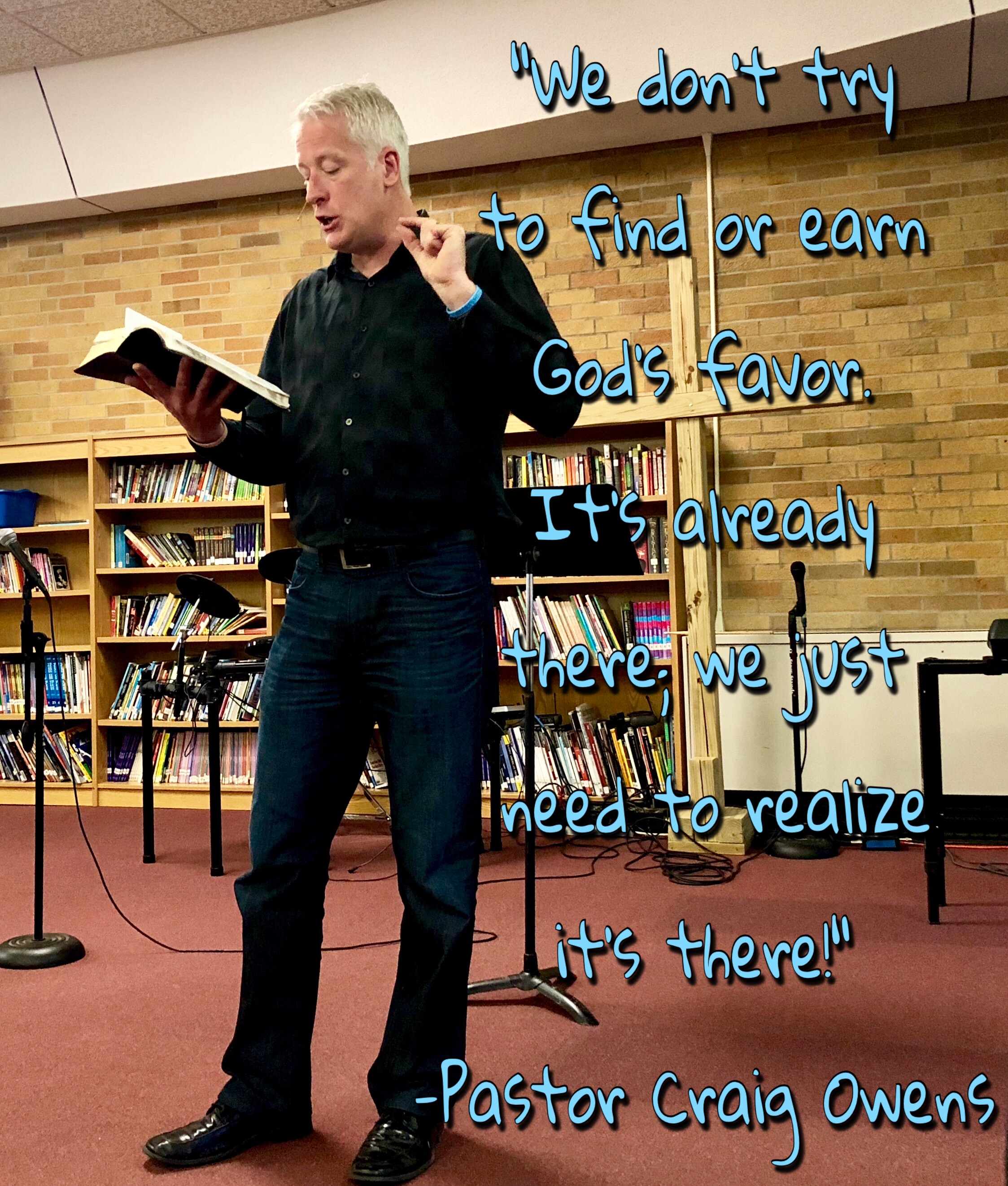
Far too many people mistakenly think God is looking for an opportunity to punish them; He’s trying to catch them doing something wrong; He’s perched on the edge of heaven with lightning bolts of judgment in His hand. God doesn’t want to blast you; He wants to bless you! 

Although the word favor appears quite frequently in Scripture, God’s favor is also implied in the word grace, which means God’s unmerited favor. 

It’s unmerited because none of us is worthy of God’s favor; it’s not something anyone can earn. We have all sinned, and therefore we’re all worthy of the death penalty. Every single one of us! 

I have worshipped idols, I have blasphemed God’s name, I have broken the Sabbath, I have dishonored my parents, I have coveted, I have lied, I have committed adultery, and I have murdered. And so have you (see James 2:10).

Do you understand what Jesus did for us on the Cross? HE SWITCHED PLACES WITH US!

Jesus became my sin, and He made it possible for me to become His righteousness (2 Corinthians 5:21). Check this out: 

For God took the sinless Christ and poured into Him our sins. Then, in exchange, He poured God’s goodness into us!

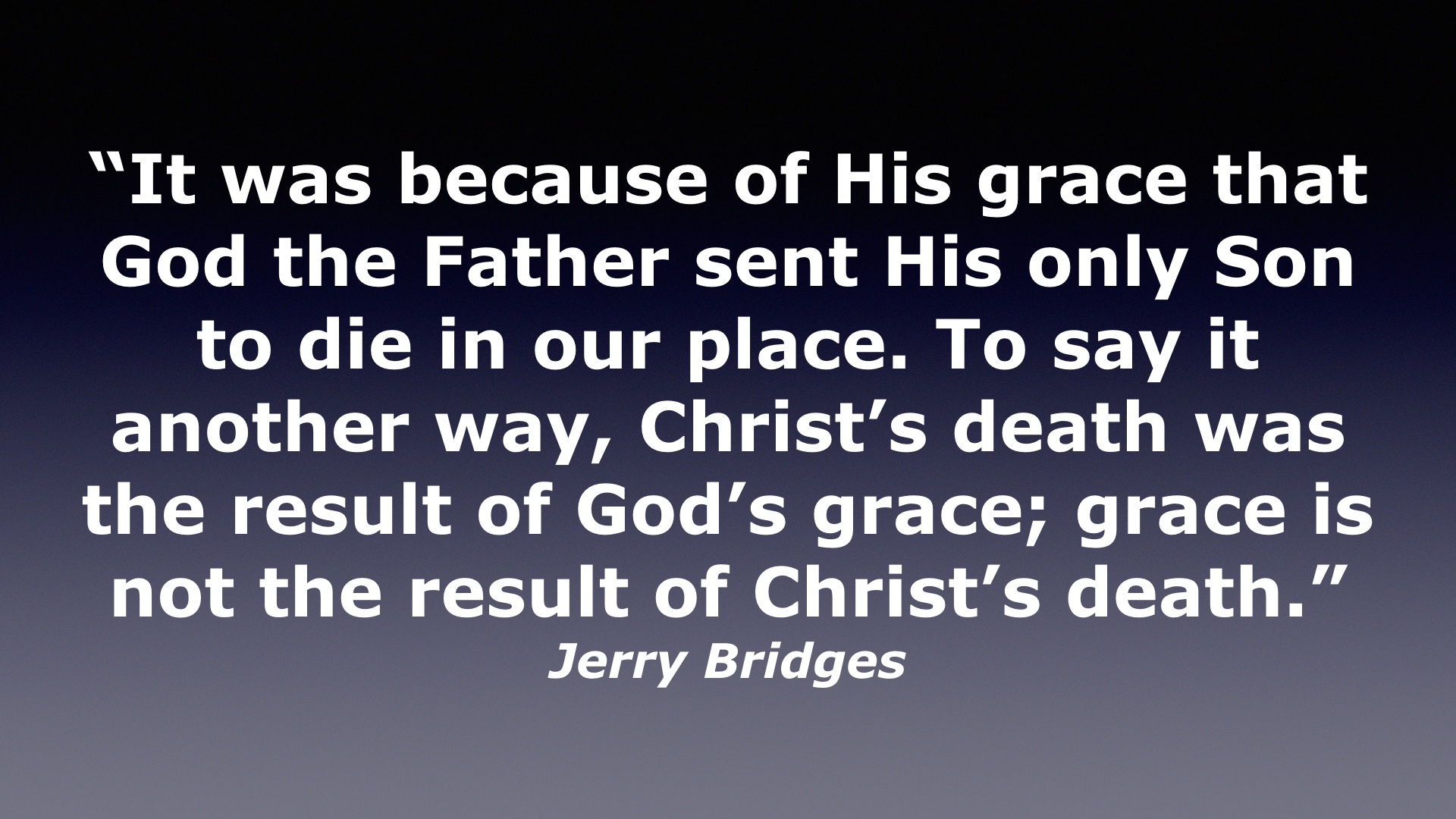
“It was because of His grace that God the Father sent His only Son to die in our place. To say it another way, Christ’s death was the result of God’s grace; grace is not the result of Christ’s death.” —Jerry Bridges

Don’t allow the devil’s lies of your unworthiness keep you from missing out on this truth. All of us are unworthy of God’s favor. But God demonstrated that He was for us when Jesus died on the Cross in our place. Now there is no more guilt, no more condemnation, absolutely nothing standing in the way of all of God’s unmerited favor because 

GOD IS FOR YOU! 

Join me next Sunday as we continue with our series called God’s Favor. You can either join me in person or on Facebook Live.

Thursdays With Oswald—Isaiah 24-29

Oswald ChambersThis is a weekly series with things I’m reading and pondering from Oswald Chambers. You can read the original seed thought here, or type “Thursdays With Oswald” in the search box to read more entries.

Isaiah 24-29

[These are notes on Oswald Chambers’ lecture on Isaiah 24-29.] 

     The Bible reveals that the material world has been blighted by reason of man’s sin. … Man was intended by God to govern Nature (see Genesis 1:26); instead, he has infected it with his sin and it has become a partaker of the curse with him, so that “the whole creation groans and travails in pain together until now.”

     Men say “We are going to build a holy city on this earth”—you cannot; the earth is infected, it is a diseased chamber, and the holy city will never be on it until God has purged it with fire and taken the epidemic out of it. … God cannot bring in the Millennium by moral renovation, but only by cremation…. 

     The great note of the Bible revelation is not immortality but Resurrection. The doctrine of the Resurrection is that something comes from God Himself direct into the dust of death. … He has swallowed up death forever, the sovereign Lord will wipe away the tears from all faces; He will remove the disgrace of His people from all the earth. The Lord has spoken. In that day they will say, ‘Surely this is our God; we trusted in Him, and He saved us. This is the Lord, we trusted in Him; let us rejoice and be glad in His salvation’ (Isaiah 25:8-9). … 

     The judgments of God are for another purpose than the vindictive spirit of man would like to make out. … You never find that spirit in the prophets; if there is destruction and death it is for one purpose only—deliverance. God is on the line of salvation, not of damnation; He only damns the damnable things. … 

     In our own day we seem to have come to the conclusion that God has made a number of blunders and we have to put them right; we have private notions of our own which if put down in black and white would prove that we do not believe God is intelligent in allowing the history of the world to go on as it has, in allowing sin and war. … We won’t see that behind the whole thing is the wisdom of God, that neither bad men nor the devil himself can do one thing without the direct permission of God. … 

     The devil likes to make us believe that we are in a losing battle. Nothing of the sort! We have to overcome all the things that try to obscure God. The rugged truths of Isaiah point out not only the appalling state of the world as it is, but that we have to live a holy life in it by the power of God, not a sequestered life in particular temples or rituals, but real genuine magnificent men and women of God, no matter what the devil or the world or the flesh may do.

From Notes On Isaiah 

Are you letting God be God? Are you letting God resurrect you and make you holy? Are you giving in to the lie of the devil that you are losing the battle, or are you letting God speak to your mind that you are one of the real genuine magnificent men and women of God who are shining His light and love in a diseased world? 

Thursdays With Oswald—Isaiah 13-23

Oswald ChambersThis is a weekly series with things I’m reading and pondering from Oswald Chambers. You can read the original seed thought here, or type “Thursdays With Oswald” in the search box to read more entries.

Isaiah 13-23

[These are the notes on Oswald Chambers’ lecture on Isaiah 13-23.]

     Isaiah’s message needs to come home to us today—that God is behind the devil, not the devil behind God; all the great world forces are in front of God, and they cannot do a thing without His permission. Today we are so emphasizing the freedom of the human will that we are forgetting the sovereignty of God, consequently when we come up against the forces at work in the world we are paralyzed by fear and get into despair, which we need never have done if we had been built up in faith in God. … Stand strong in faith in God—“I don’t understand this, but I know God is behind it.” … 

     There is no cowardice about Isaiah or about his message. He never lost his faith in God or got discouraged, and when the things he foretold happened, he did not desert the people. …  

     Behind everything stands God; behind the tumult and the confusion God is bringing out everything according to His will. The great thing about faith in God is that it keeps a man undisturbed in the midst of disturbance. … All the forces outside you are futile because they are less powerful than the indwelling of God (see 1 John 4:4). … Discouragement comes when we say what God will do—that God will always keep me healthy, that He will always be bringing me into the land of Canaan where I will eat honey; well, He won’t. God is concerned about only one thing—getting me into a personal relationship with Himself. There is no possibility of discouragement if we will only remember that this is the relationship, not God’s blessings, but Himself.

From Notes On Isaiah

When the news of the day, or events in the world, or even what’s happening in your personal life starts to rattle you, consider how Isaiah handled himself. Isaiah knew enemies were closing in, and that the day of God’s judgment was fast approaching too, but he never got fretful. Why? He kept his eyes on God.

God is sovereign. He is in control. Nothing ever takes Him by surprise. Keep your eyes on Him. And remember: “All the forces outside you are futile because they are less powerful than the indwelling of God.”

Both Immovable And Flexible

The vision of Isaiah…in the days of Uzziah, Jotham, Ahaz, and Hezekiah, kings of Judah (Isaiah 1:1). 

Israel (the 10 northern tribes) was in the final stages of collapse, with kings only serving short spans, idolatry running rampant, and enemies closing in on every side. Isaiah boldly proclaimed that Judah was on the same path unless she repented and turned wholly to God.

Isaiah had the same message for four kings:

  • Uzziah—who started off well, but fell away from God
  • Jotham—who faithfully served God
  • Ahaz—who never wanted to serve God
  • Hezekiah—who led a powerful revival in the return to worshiping God alone

Isaiah’s message never waivers. Through 66 chapters, 4 monarchs, and 60 years of ministry, Isaiah never compromises, waters down, nor alters the message God has given him.

But he does use different methods to deliver God’s consistent message—sometimes he thunders, sometimes he weeps, sometimes he uses illustrated messages, sometimes he speaks plainly, and sometimes he uses word pictures.

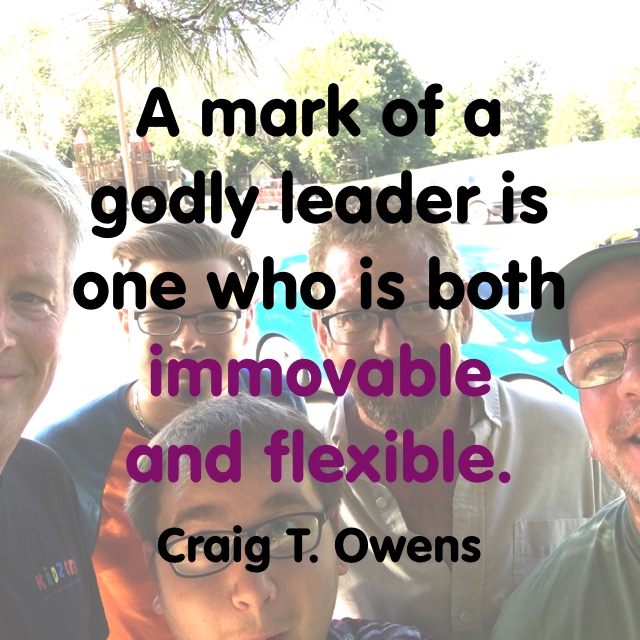
A mark of a godly leader is one who is both immovable and flexible.

Immovable on God’s principles; flexible on his delivery.

Can that be said of you and me?

This is part 21 in my series on godly leadership. You can check out all of my posts on this topic by clicking here.

Thursdays With Oswald—Isaiah 8-11

Oswald ChambersThis is a weekly series with things I’m reading and pondering from Oswald Chambers. You can read the original seed thought here, or type “Thursdays With Oswald” in the search box to read more entries.

Isaiah 8-11

[These are notes from Oswald Chambers’ lecture on Isaiah 8-11.]

     God did not give a progressive revelation of Himself through the Old Testament: the people progressively grasped the revelation, which is very different. …

     The remarkable thing is that when Jesus Christ comes, every one of the things the prophets have been saying fit in with one Personality, the Being whom we know as the Lord Jesus Christ. Isaiah never saw Jesus Christ, he could not have imagined Him, then what inspired him? The very Mind of God (see 2 Peter 1:20). … 

     Fear is apt to make us atheistic and in our outlook we enthrone the devil, not God. God is behind it all, not a thing happens but He knows all about it. …

     If we try to draw our breath from any other source we instantly get diseased. By prayer and communion with God we live out in God’s moral open air, consequently we can live in the cities and amongst the places of men and maintain the life which is in accordance with the Messiah’s life…. The enemy of our souls goes for all he is worth against our praying, against our solitudes with God, he tries to prevent us drawing our breath in the fear of the Lord. The great need is to bring every thought and imagination into captivity to the obedience of Christ until every bit of our nature is reconstructed. 

From Notes On Isaiah

In these four chapters of Isaiah, the kings of Judah are facing enemies closing in from all sides and fear is mounting. Isaiah keeps speaking a word from the Lord that amounts to God saying this: Stop focusing on your troubles and focus on Me instead!

It’s a good reminder for us still today. God is in control. Let me say that again: God is in control! Let His perfect love and His perfect power drive out fear from your heart. Keep your eyes on Him, not on the problems coming against you. Let your thoughts be captivated by Jesus, and you will be reconstructed from the inside out with the nature of Christ.

A.L.I.V.E.—The “I” Is For It Is Finished

Throughout history, lots of martyrs have died for what they believe. But only One had been resurrected from the dead to prove that what He believed and taught was true.

Jesus, however, is not a martyr. His life and His work weren’t cut short. Calvary didn’t happen to Jesus, but He came specifically to die on a Cross. He knew what was going to happen to Him. Check this out…

So we can know Jesus is alive by His “It is finished” declaration from the Cross—

Later, knowing that everything had now been finished, and so that Scripture would be fulfilled, Jesus said, “I am thirsty.” … When He had received the drink, Jesus said, “It is finished.”

Actually His “It is finished” wasn’t just a statement, it was a yell that reverberated throughout the countryside. The Greek words Mark uses are megas phōnē, which sounds a lot like our word megaphone. Jesus wanted to make sure everyone heard Him, and then look at the result:

Then Jesus uttered another loud cry and breathed His last. And the curtain in the sanctuary of the Temple was torn in two, from top to bottom.

The curtain that separated God’s presence from mankind was torn in two. The writer of Hebrews notes, “Our High Priest offered Himself to God as a single sacrifice for sins, good for all time. Then He sat down in the place of honor at God’s right hand.”

What do you conclude from all this? C.S. Lewis offered this challenge:

“A man who was merely a man and said the sort of things Jesus said would not be a great man or a moral teacher. He would either be a lunatic—on the level with the man who says he is a poached egg—or else he would be the devil of hell. You must take your choice. Either this was, and is, the Son of God; or else a madman or something worse. You can shut Him up for a fool… or you can fall at His feet and call Him Lord and God. But let us not come with any patronizing nonsense about His being a great human teacher. He has not left that open to us.”

Jesus told us that He would die, how He would die, when He would die, why He would die, and that He would be resurrected. If you heard all of these claims before His crucifixion, you might think He was a lunatic or a braggart. But after His It Is Finished! declaration, we have only one logical conclusion: Jesus is exactly who He said He was. It was out of love for you that Jesus laid down His life and picked it up again. Will you put your faith in Him today?

We are working our way through 5-parts of this series: “I can know Jesus is A.L.I.V.E. because of….” We’ve already covered:

Thursdays With Oswald—Isaiah 6

Oswald ChambersThis is a weekly series with things I’m reading and pondering from Oswald Chambers. You can read the original seed thought here, or type “Thursdays With Oswald” in the search box to read more entries.

Isaiah 6

[These are the notes on Oswald Chambers’ lecture on Isaiah 6.]

     My vision of God depends upon the state of my character. Character determines revelation. … Until I am born again and enter the Kingdom of God I see only along the line of my prejudices. …  

     The purpose of the vision is to enable me to see “the arm of the Lord” behind all circumstances (see Isaiah 53:1). God never gives a man the power to say “I see” until his character proves itself worthy of its purification. What hinders the purging of our perception is that we will build our faith on our experiences instead of on the God who gave us the experiences. My experience is the evidence of my faith, never the ground of it, and is meant to reveal to me a God who is bigger than any experience. …  

     The symbol of the live coal ‘from off the altar’ represents the twofold nature of the substitution of Christ, not only Christ for me, but Christ in me. … 

     God only gives us visions of Himself for one purpose, that we may work them out into character. … After God has given us a time of face-to-face contact with Himself and then puts us into tumults, the temptation is to sit down and say “Where is the blessedness I had when I first knew the Lord?” The Spirit of God holds us steady until we learn to know God, and the details of our lives are established before Him, then nothing on the outside can move us.

From Notes On Isaiah

There are specific reasons God will give us a clearer revelation of Himself—

  1. to purify godly character in us
  2. to help us deal with our own sin
  3. to see God at work in everyday affairs
  4. to keep us energized through trying times
  5. to make us more aware of what Jesus has done for us and in us
  6. to be His messenger among needy people

God doesn’t give visions or revelations just to thrill us or give us an experience. God is perfectly purposeful in everything He does. His visions are for His glory.

Thursdays With Oswald—Isaiah 1

Oswald ChambersThis is a weekly series with things I’m reading and pondering from Oswald Chambers. You can read the original seed thought here, or type “Thursdays With Oswald” in the search box to read more entries.

Isaiah 1

[These are notes from Oswald Chambers’ lecture on Isaiah 1.]

     There is no such thing as fate; a human being always has the power to do the incalculable thing. There are fatal issues, not fate. When God’s decrees come to pass it is because men will not turn. God’s will is supreme, but God never fights against us; it is self-will that fights against God. …  

     If God were love according to our natural view of love He ought never to cause us pain, He ought to allow us to be peaceful; but the first thing God does is to cause us pain and to rouse us wide awake. He comes into our lives all along with ideals and truths which annoy and sting us and break up our rest, until He brings us to the one point, that it is only moral and spiritual relationships which last. That is why God looks cruel judged from the human sentimental standpoint; He loves us so much that He will not prevent us being hurt. …  

     Many a life is paralyzed because this is not realized—“I know God has forgiven me, I know I am right with God, but every now and again I remember the things I did that damaged other lives.” If I put the wrong right with my fellow men, have I become right with God? No, get right with God and He will put you on the way to be right with your fellow men. 

From Notes On Isaiah

Isaiah 1 opens with God taking His people to task for merely going through the motions of worship, with their hearts being far away from Him. Chambers reminds us that this self-will that fights against God will often bring its own pain. Why? Because God loves us too much to let us go unmolested down the path to eternal destruction. Instead, God longs for us to turn our hearts unreservedly to His love and purpose for our lives.