Isaac Newton said, “This most beautiful system of the sun, planets, and comets, could only proceed from the counsel and dominion of an intelligent and powerful Being.” Isaac Newton and Johannes Kepler are two gigantic figures in the world of science. These men were both devout Christians. Check out these mini-biographies from the ICR.
“What made David’s heart remarkable wasn’t the absence of sin but his unrelenting pursuit of restoration with God.” —YouVersion reading plan Men of God: Ancient Virtues for Modern Warriors
It’s always fascinating to read about archeological discoveries that overlap with the historical accounts of the Bible.
Whether you are a pastor, a Sunday School teacher, or just a Christian sharing your testimony with your friend, we need to handle God’s Word correctly. John Piper’s lesson on 2 Timothy 2:14-15 is spot-on.
Listen to the podcast of this post by clicking on the player below, and you can also subscribe on Apple, Spotify, or Audible.
Sir Isaac Newton may have said for every action there was an equal and opposite reaction, but that’s not true for God-fearing leaders.
Check out this episode of The Podcast.
The story of Paul and Barnabas that I reference in this video is found in Acts 14:1-21.
My book When Sheep Bite is divided into three section. In the first section I talk about a shepherd leader’s heart and section two diagnosis the sheep bites leaders endure. The final section is all about the faithfulness to finish well—not giving in to the natural responses of fight or flight.
I open that final section of the book like this—
Psychologists and medical doctors have all described what happens to our minds and bodies when we are under attack. They are universal responses that our loving Creator has implanted in all of us to be able to respond to threats that come at us. When confronted with a biting sheep, without consciously thinking about it our minds and bodies prepare for fight or flight.
But let’s consider those responses in the context of a shepherd pasturing his sheep. Is it an effective strategy for the shepherd to fight his sheep? No, of course not. Paul told Timothy that a shepherd is “not quarrelsome but forbearing and peaceable” (1 Timothy 3:3 AMPC).
Is it allowable for the shepherd to run away from the threat, leaving the flock without a shepherd? Again, no, as Jesus told us that one who resorts to flight isn’t worthy to be called a shepherd but is considered a mere “hired hand [who] cares nothing for the sheep” (John 10:12-13).
So if godly shepherds cannot give in to the natural responses of fight or flight, what are we to do? Since we serve an all-power, all-loving Chief Shepherd we must look to Him for the supernatural response of faithfulness.
I’m concerned that some people might be confused about what I mean by “gifts.” Some people look at someone who can preach, or write, or sing, or compose music, or paint, and say, “They are so gifted! I could never do anything like that.” Yes, those are very visible gifts, but let’s not limit “gifts” to just those kinds of things.
God has designed our physical bodies to do some astounding things! We see some people using their bodies to run fast, jump high, lift heavy things, or catch a ball, and we may marvel at their talents. These amazing feats are only possible because of a thousand other gifts. Even the simplest of tasks is far from simplistic. Isaac Newton noted, “In the absence of any other proof, the thumb alone would convince me of God’s existence.”
Something that is invisible to the human eye but indispensable to absolutely everything that happens in our physical bodies is the vital functions of enzymes.
Enzymes are proteins that help facilitate metabolism, or coordinate a chemical reaction. Some enzymes build things up and some break things down. Enzymes help with things like…
turning the food we eat into energy
breathing
building muscle
nerve function
ridding our bodies of toxins
There are thousands of individual enzymes in the body. Each type of enzyme only has one job.
For example, consider the enzyme sucrase. If it is deficient in the body, sucrose from food isn’t broken down to glucose and fructose. As a result we would experience dehydration, malnutrition, and developmental delay.
Every enzyme is vital. It’s not coincidental at all the the New Testament uses the analogy of our physical bodies to portray the Body of Christ (Romans 12:3-6; 1 Corinthians 12:6, 18, 27).
In the New Testament church it’s easy to spot the highly visible gifts like preaching, evangelism, and church leadership, just as it’s easy to spot physical accomplishments like a professional athlete or a world-class pianist. But let’s not overlook the thousands of indispensable “enzymes” in the Church that allow the Body of Christ to function in a healthy way.
Read through the Book of Acts and you will see gifts in the form of people who…
agreed together in prayer
affirmed God-honoring, biblical decisions
organized feeding programs
hosted people in their homes (house churches)
prepared food for others
handed out that food
sewed clothes for those who needed them
faithfully visited the sick and imprisoned
earned a paycheck to pay for ministry expenses
distributed funds to those in need
used their official positions open doors or provide protection
wrote important correspondence
Peter wrote, “God has given each of you a gift from His great variety of spiritual gifts. Use them well to serve one another” (1 Peter 4:10).
What happens if an “enzyme” is missing? Quite simply: The Church cannot grow to our full potential (1 Corinthians 12:26 AMPC; Ephesians 4:12-13).
Each of us needs all of us. All of us needs each of us. Jesus hasn’t just saved you from death, He has also saved you to life—an abundant life for you, for the Body of Christ, and for those who don’t know Him as their Lord and Savior yet.
You are gifted. More precisely said: You ARE a gift!
Quite frequently God’s measurement of success is nothing like our measurements. “More” doesn’t always mean success. Check out this example which I unpack in my book Shepherd Leadership.And be sure to check out all of my videos on my YouTube channel.
Living in the Great Lakes state my whole life, I have always been fascinated by the huge bodies of water which surround us—they are almost like mini-oceans. As a result, there have been nearly 600 shipwrecks on our lakes. Check out the history of these wrecks here.
In spite of what some skeptics claim, Christianity is not anti-science. In fact, J. Warner Wallace lays out the evidence that shows that Christ-followers have fueled the major scientific advancements of history.
“Always be a first-rate version of yourself, instead of a second-rate version of somebody else.” —Judy Garland
Isaac Newton said, “Atheism is so senseless. When I look at the solar system, I see the earth at the right distance from the sun to receive the proper amounts of heat and light. This did not happen by chance. … This most beautiful system of the sun, planets, and comets, could only proceed from the counsel and dominion of an intelligent and powerful Being.” Check out the amazing symmetries in our solar system that Copernicus, Kepler, and Newton all identified.
“The truth is the kindest thing we can give folks in the end.” —Harriet Beecher Stowe
God will give you everything you need to minister to others. But there’s one thing you have to do first…
“He who thinks half-heartedly will not believe in God; but he who really thinks has to believe in God.” —Isaac Newton
Back in 1929, Donald Gee shared three temptations that Pentecostals needed to be cautious of avoiding: (1) selfish satisfaction, (2) fanaticism, and (3) the temptation to forsake the pure worship of God in exchange for popularity. Check out the full article here.
I really appreciate the leadership insights from Dan Reiland. That’s why I was so honored to have him write such a nice endorsement of my book Shepherd Leadership! Here is an important post Dan wrote for leaders, warning us of 5 ways we can misuse our spiritual authority.
Listen to the podcast of this post by clicking on the player below, and you can also subscribe on Apple or Spotify.
…God has done marvelous things; His right hand and His holy arm have wrought salvation for Him (Psalm 98:1 AMP).
I like The Message paraphrase of this verse too: “Sing to God a brand-new song. He’s made a world of wonders! He rolled up His sleeves, He set things right!”
This psalmist happily extols all of the ways God the Creator has revealed Himself to mankind:
He has done marvelous things
the Lord has made His salvation known
He has revealed His righteousness to the nations
the ends of the earth have seen the salvation of our God
let the sea resound, and everything in it
let the world praise, and all who live in it
let the rivers clap their hands
let the mountains sing together for joy
This tells me how fitting it is for us to use all of the sciences—every “ology” to declare God’s greatness: biology, astronomy, cosmology, chemistry, psychology, anthropology, and even theology. All observations point to the glory of God.
C.S. Lewis wrote,
“If I swallow the scientific cosmology as a whole (that excludes a rational, personal God), then not only can I not fit in Christianity, but I cannot even fit in science. If minds are wholly dependent on brains, and brains on biochemistry, and biochemistry (in the long run) on the meaningless flux of the atoms, I cannot understand how the thought of those minds should have any more significance than the sound of the wind in the trees. And this is to me the final test. … Christian theology can fit in science, art, morality, and the sub-Christian religions. The scientific point of view cannot fit in any of these things, not even science itself. I believe in Christianity as I believe that the Sun has risen not only because I see it but because by it I see everything else.”
The apostle Paul agreed with this psalmist, telling us that creation itself is enough proof that there is a God. But God went further: He gave us His word, He gave us prophets to remind us of His word, and ultimately, He sent His Son Jesus to earth. Paul concluded that “men are without excuse—altogether without any defense or justification” for refusing to believe in God.
Don’t ever buy into the lie that science and Christianity are incompatible. All of the discoveries of science point to a Creator. We use all of these “ologies” because we never know which one may eventually get someone’s attention.
Famed scientist Sir Isaac Newton noted, “In the absence of any other proof, the thumb alone would convince me of God’s existence.”
Let’s join our minds, our hearts, and our voices in declaring the greatness of our Creator at every opportunity we have!
Some of the greatest discoveries and revelations came about because people were curious. They refused to just go along with what they had always been told, what they grew up believing, or what the conventional wisdom told them was impossible.
Archimedes had his “Eureka!” moment because he refused to believe that it was impossible to measure the volume of an irregularly-shaped object.
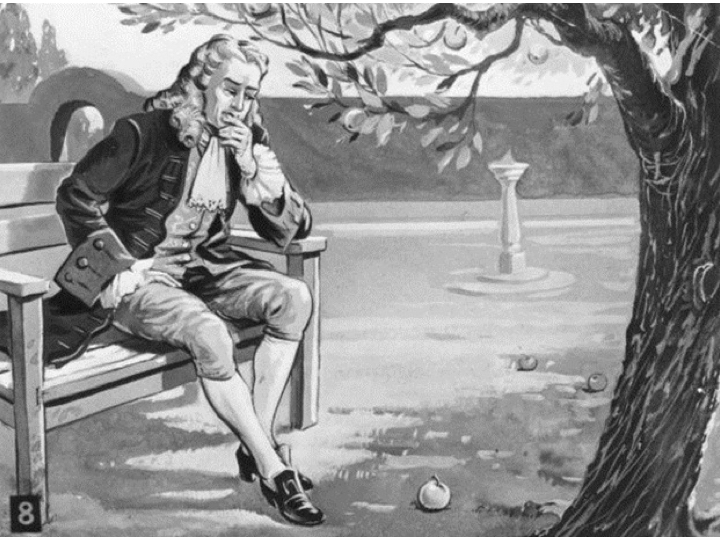
Isaac Newton formulated the laws of gravitation because he curiously wondered about why apples fell perpendicular and at the same velocity.
The Apostle Peter saw a vision from God with animals, but didn’t stop there. His openness helped him realize that God didn’t have “favorites.”
Far too many people live their lives cursed with low expectations. They say, “That’s all there is.” and they put a period on it.
God wants us to soar above those low expectations! He tells us things like:
Come now, let us reason together… (Isaiah 1:18).
Call to Me and I will answer you and tell you great and unsearchable things you do not know (Jeremiah 33:3).
Are you listening to this? Really listening? … The knowledge of the secrets of the kingdom of heaven has been given to you… (Matthew 13:9, 11)
But we are trapped in the curse of low expectations when we put a period on things, when we refuse to learn more, see more, hear more.
Most people—“That’s all there is.” (period)
What if we changed it up—“Is this all there is?” (question mark)
Perhaps you might get—“There is so much more!” (exclamation point)
For example, Paul uses the word “mystery” multiple times in his letter to the Ephesians. He explains that a mystery is something hidden from those who have it all figured out (the “period” people), but is revealed to those who will ask God (the “question mark” people). Only the “question mark” people get to see the “exclamation points” God has for them. Things like…
God has a plan, and it is His pleasure to reveal it to me (Ephesians 1:9-10; 2:10).
God’s revelation is fully revealed to me in His Word (3:3-5).
Faith in Jesus makes Christians co-heirs and sharers in all God’s promises (3:6).
I have access to God’s inexhaustible riches, His immense wisdom, and I may approach Him with freedom and confidence (3:8-12).
Don’t stop with “.” but go on to “?” and experience “!”
With great expectation, read God’s Word, approach His throne, dig into His riches, wrestle with the difficult things, learn more of God’s purpose for your life. He wants to give you so much more “!”
“Atheism is so senseless & odious to mankind that it never had many professors. … Whence is it that the eyes of all sorts of living creatures are transparent to the very bottom & the only transparent members in the body, having on the outside an hard transparent skin, & within transparent juyces with a crystalline Lens in the middle & a pupil before the Lens all of them so truly shaped & fitted for vision, that no Artist can mend them? Did blind chance know that there was light & what was its refraction & fit the eyes of all creatures after the most curious manner to make use of it? These & such like considerations always have & ever will prevail with mankind to believe that there is a Being who made all things & has all things in His power & who is therefore to be feared.” —Isaac Newton
Modern-day scientists want to exclude the very mention of God from anything. This is not science, but scientism. It is a belief system as surely as any religion is.
But the one thing scientism overlooks is the reliance on God that the greatest scientific minds in the world had.
“Oh You who through the light of nature has aroused in us a longing for the light of grace, so that we may be raised in the light of Your Majesty, to You, I give thanks, Creator and Lord, that You allow me to rejoice in Your works. Praise the Lord you heavenly harmonies, and you who know the revealed harmonies. For from Him, through Him and in Him, all is, which is perceptible as well as spiritual; that which we know and that which we do not know, for there is still much to learn.” —Johannes Kepler, the astronomer who discovered the laws of planetary motion
“It is reasonable to believe, however, that the Creator, if He paid attention to the relation of the orbits [of the planets] in their general aspect, paid attention also to the relation of the varying distances of the individual orbits in detail….” —Johannes Kepler
“Nevertheless, all the observations which could possibly be made in so short a time, I was enabled, by Divine Providence, to complete….” —Jeremiah Horrox, astronomer who used Kepler’s principles to chart the orbit of Venus
“All these facts were discovered and observed a few days ago by the help of a telescope devised by me, through God’s grace first enlightening my mind.” —Galileo Galilei, mathematician, philosopher and astronomer
“I do not feel obliged to believe that the same God who has endowed us with sense, reason, and intellect has intended us to forgo their use.” —Galileo Galilei
“In the absence of any other proof, the thumb alone would convince me of God’s existence.” —Sir Isaac Newton, physicist and mathematician
“Gravity explains the motions of the planets, but it cannot explain who set the planets in motion. God governs all things and knows all that is or can be done.” —Isaac Newton
“This most beautiful system of the sun, planets, and comets, could only proceed from the counsel and dominion of an intelligent and powerful Being.” —Isaac Newton
“We are compelled to acknowledge the effect of a cause; chance alone could not have given a form nearly circular to the orbit of all the planets.” —Pierre Simon, one of the fathers of the scientific revolution
“Why did Saul obey the people instead of God? Because he feared the people instead of God. He feared the human consequences of obedience more than he feared the divine consequences of sin. He feared the displeasure of the people more than the displeasure of God. And that is a great insult to God. … To turn from Him out of fear of what man can do is to discount all that God promises to be for those who fear Him It is a great insult. And in such an insult God can take no pleasure. On the other hand when we hear the promises and trust Him with courage, fearing the reproach brought upon God by our unbelief, then He is greatly honored. And in that He has pleasure.” —John Piper
“In the absence of any other proof, the thumb alone would convince me of God’s existence.” —Sir Isaac Newton
“No man knows how bad he is till he has tried very hard to be good. … We never find out the strength of the evil impulse inside us until we try to fight it: and Christ, because He was the only man who never yielded to temptation, is also the only man who knows to the full what temptation means—the only complete realist.” —C.S. Lewis
“What, sirs, is your wisdom? Your wisdom dwells in denying what your eyes can see—a God; in denying what your consciences tell you—that you are guilty; in denying what should be your best hope, what your spirit really craves after—redemption in Christ Jesus. Your folly lies in following a perverted nature, instead of obeying the dictates of One Who points you to the right path. You are wise and you drink poison; we are fools and we take the antidote. You are wise and you hunt the shadow; we are fools and we grasp the substance. You are wise, and you labor and put your money into a bag which is full of holes, and spend it for that which is not bread, and which never gives you satisfaction; and we are fools enough to be satisfied, to be happy, to be perfectly content with heaven and God.” —Charles Spurgeon
Seth Godin says, “Those critical choices you made then, they were based on what you knew about the world as it was.” Now check out his post New Times Call For New Decisions.
J. Warner Wallace, a cold-case detective, wrote, “I’ve worked more cases involving witnesses than I can even count. A career in law enforcement will put you in direct contact with eyewitnesses on a daily basis, starting with your very first night on the job. After interviewing literally thousands of witnesses over the course of twenty five years, I think I’ve learned something about reliable eyewitness testimony.” Check out more in his post Why We Should Expect Witnesses To Disagree.
Such a sweet video from a boy with Down Syndrome to his Dad on Fathers Day. I love the ending tag line: “Love doesn’t count chromosomes”—



 Whether we see the world through a naturalistic lens or a biblical lens makes all the difference!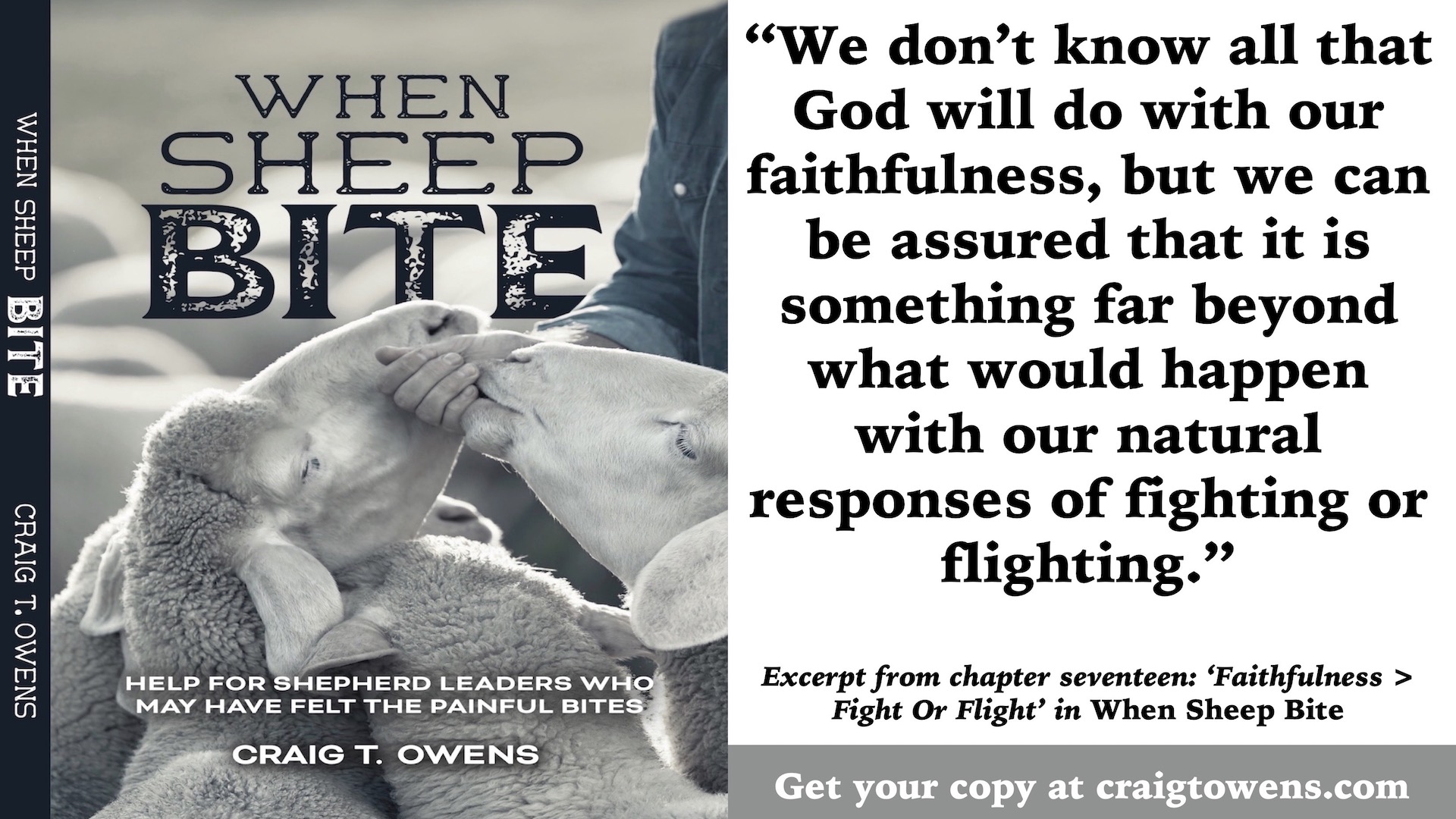





 Craig T. Owens