Thursdays With Oswald—Jeremiah 11

Oswald ChambersThis is a weekly series with things I’m reading and pondering from Oswald Chambers. You can read the original seed thought here, or type “Thursdays With Oswald” in the search box to read more entries.
Jeremiah 11 

[These are notes from Oswald Chambers’ lecture on Jeremiah 11.]

     Misapprehensions of God arise from not understanding that His way for us is obedience until we discern, not waiting to obey until we know. The only way to know God more fully is to obey what we have discerned, then we shall know something more. …  

     If we will obey, we are backed by Omnipotence; but if once we begin to be cunning and suspicious and to doubt, we are backed by diabolical inspiration as compelling on the wrong side as obedience is on the right. … 

     Unless we keep in touch with God by obedience it is possible to pray for a wrong thing. In this case [Jeremiah 11:9-11] the people have rebelled and do not intend to obey, they only pray because they are suffering, not because they want God’s will to be done in them. … 

     “My Lord and I” is a very beautiful sentiment, but before we know it as a living experience we have to fight our way through all the contradicting things to the un-afraid, simple life that trusts in God. 

From Notes On Jeremiah

Most of us have an attitude that says, “As soon as I understand, I will fully believe.” But Oswald Chambers points out that the Scriptures teach that we are to be fully obedient to what has already been revealed to us in order to receive more revelation. 

A loving God would not reveal things to us that we are not yet ready to obey. So if you want God to show you deeper things, obey what He’s already shown you. 

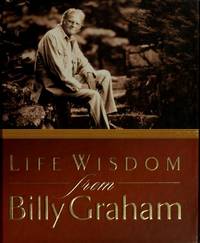
Life Wisdom From Billy Graham (book review)

Sometimes I need a dose of wisdom from someone who can be trusted—someone who has been-there-done-that and handled it all with the utmost integrity. No one better exemplified that in my lifetime than Billy Graham. 

Life Wisdom From Billy Graham is a quick read, but it is packed with timeless insights from a man who lived his life only for God’s glory. Billy had opportunities to talk to the most influential people during his lifetime, and yet he never used that open door to gain privilege for himself. His ministry had a worldwide reach, yet there was never a question about how he handled the finances. He was revered by millions, and never let that go to his head. 

In Life Wisdom, Billy gives words of truth on financial and moral integrity, staying true to what God has called you to, friendships, stewardship, vision, power, influence, and so much more. Anyone who wants to grow in wisdom will benefit from this book. 

The Heart Of A Leader (book review)

Kenneth Blanchard has delivered to us some game-changing books over his years of writing. He has challenged us to do business in a different way, he has coached us on how to take control of our lives, and he has equipped us to better invest in the lives of the people around us. But ultimately he tells us that leadership is an issue of the heart. The Heart Of A Leader is a collection of quotes and insights from Ken Blanchard which go right to the heart of a leader.

Time and time again Blanchard uses the phrase “an effective leader.” He is not primarily concerned with leaders being efficient, and he certainly doesn’t define leadership success by an organization’s financial wellbeing. In his mind, an effective leader engages his heart first to serve those whom he leads.

Throughout his career, Blanchard has partnered with some amazingly insightful co-authors to bring a fresh perspective on how leaders can lead best from the heart. Many of these co-authors are featured in The Heart Of A Leader, which will help you see new paradigms of leadership acumen.

If you’ve never read anything from Ken Blanchard before, this book is a good sampler that will help you choose a book to read in its entirety. If you are already a fan of Blanchard’s writings, this book will help you see the consistency of his work. In either case, you cannot go wrong in reading these helpful words!

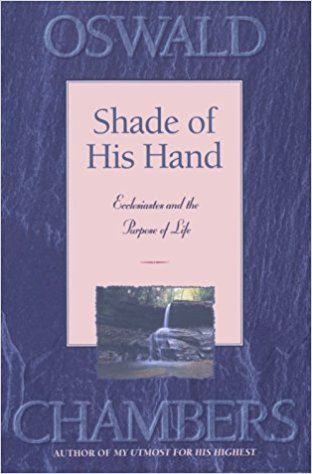
Shade Of His Hand (book review)

Most of Oswald Chambers’ books weren’t originally in book form, but were given as lectures or sermons which were recorded in shorthand by his wife. Shade Of His Hand contains the last messages given by Oswald Chambers before his death. It’s a series of lectures on each chapter of the book of Ecclesiastes.

For many people (even seasoned Christians) the message in Ecclesiastes in a challenging one. Solomon is the wisest man who ever lived, yet in this book of the Bible he records his observations of the world in what seems to be a very “non-Christian” (to use a New Testament term) sort of way. Then along comes Oswald Chambers with insight into this book unlike anything you’ve seen before!

One of Chambers’ longtime friends was David Lambert. Commenting on Shade Of His Hand, Lambert wrote, “Oswald Chambers interprets [Ecclesiastes’] message as being—Life is not worth living apart from Redemption. … Life apart from Redeeming Love is full of sin and sorrow, guile and cruelty, callous selfishness and numbing despair. This book takes full account of all that. It anticipates many of the problems facing the young life of today, and brings to their solution the one and only key, the realization of the Lord Jesus Christ in every relationship of life.”

Indeed, Chambers doesn’t flinch one bit in addressing the complex issues Solomon brings up, and he does so in a way that is easy to grasp for all of us. I read each chapter of Ecclesiastes before each chapter in this book, and then I re-read the same chapter in Ecclesiastes again afterwards. Wow, what a transformation in my understanding of the biblical text!

If you would like to gain some life-changing insight on this valuable book of biblical wisdom, I urge you to check out Shade Of His Hand.

Thank God For The Hammers And Axes

romans-8-28“If you should get up some morning and hear men on your house tearing off the tiles and taking down the roof with hammers and axes, you might think a gang of vicious enemies had come to destroy your home. But as soon as you understand that these workmen have been sent by your father to mend your house, you gladly endure the noise and trouble. Indeed, you thank your father for his care and expense. The very hope of the advantage that will come from the repairs makes you willing to dwell awhile in the inconvenient rubble of the old house.

“The promise [in Romans 8:28] assures the believer that the Heavenly Father intends no harm, only good, as He rebuilds the ruined frame of your soul into a glorious temple. And afflictions have a hand in the work. This insight frees you to pray, ‘Lord, cut and shape me however You will, that at last I may be framed according to the pattern which Your love has drawn for me!’” —William Gurnall (emphasis added)

Don’t Settle For Low Expectations

isaac-newtonSome of the greatest discoveries and revelations came about because people were curious. They refused to just go along with what they had always been told, what they grew up believing, or what the conventional wisdom told them was impossible.

Archimedes had his “Eureka!” moment because he refused to believe that it was impossible to measure the volume of an irregularly-shaped object.

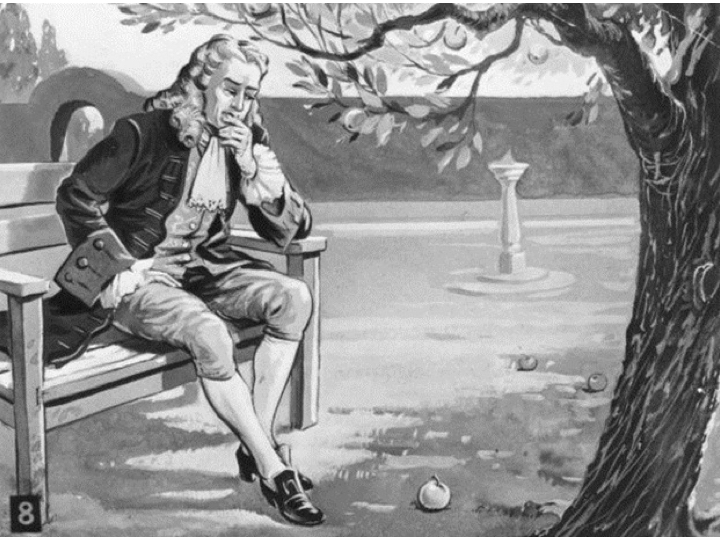
Isaac Newton formulated the laws of gravitation because he curiously wondered about why apples fell perpendicular and at the same velocity.

The Apostle Peter saw a vision from God with animals, but didn’t stop there. His openness helped him realize that God didn’t have “favorites.”

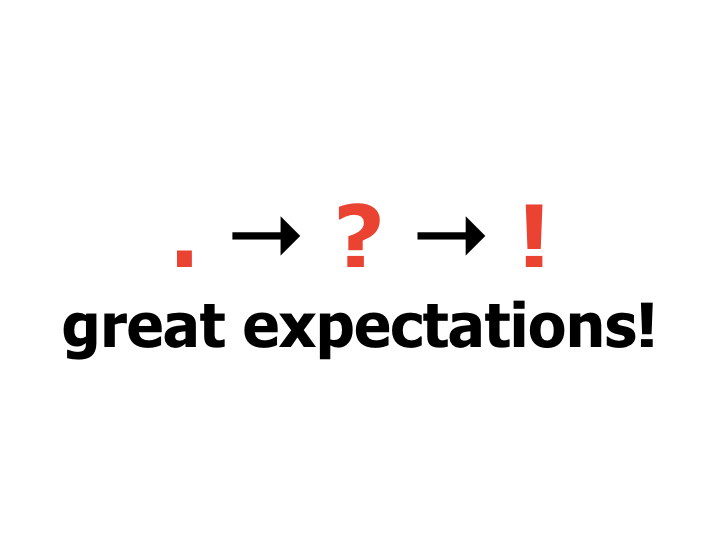
Far too many people live their lives cursed with low expectations. They say, “That’s all there is.” and they put a period on it.

God wants us to soar above those low expectations! He tells us things like:

  • Come now, let us reason together… (Isaiah 1:18).
  • Call to Me and I will answer you and tell you great and unsearchable things you do not know (Jeremiah 33:3).
  • Are you listening to this? Really listening? … The knowledge of the secrets of the kingdom of heaven has been given to you… (Matthew 13:9, 11)

great-expectationsBut we are trapped in the curse of low expectations when we put a period on things, when we refuse to learn more, see more, hear more.

  • Most people—“That’s all there is.” (period)
  • What if we changed it up—“Is this all there is?” (question mark)
  • Perhaps you might get—“There is so much more!” (exclamation point)

For example, Paul uses the word “mystery” multiple times in his letter to the Ephesians. He explains that a mystery is something hidden from those who have it all figured out (the “period” people), but is revealed to those who will ask God (the “question mark” people). Only the “question mark” people get to see the “exclamation points” God has for them. Things like…

  • God has a plan, and it is His pleasure to reveal it to me (Ephesians 1:9-10; 2:10).
  • God’s revelation is fully revealed to me in His Word (3:3-5).
  • Faith in Jesus makes Christians co-heirs and sharers in all God’s promises (3:6).
  • I have access to God’s inexhaustible riches, His immense wisdom, and I may approach Him with freedom and confidence (3:8-12).

Don’t stop with “.” but go on to “?” and experience “!

With great expectation, read God’s Word, approach His throne, dig into His riches, wrestle with the difficult things, learn more of God’s purpose for your life. He wants to give you so much more “!” 

Culture (book review)

cultureThe dictionary defines culture as “a particular stage of civilization.” In other words, culture is constantly being molded by those who are exercising influence on it at a particular moment. What about Christians? How are they supposed to influence culture? That is a subject that can be so perfectly addressed by A.W. Tozer in a collection of insights in the book with the apropos title Culture.

A.W. Tozer was a man ahead of his time. Although born in 1897, he had a God-given knack for reading the current culture, ascertaining how the church was influencing or being influenced by civilization, and making accurate predictions of what was coming next. This amazing foresight was on display throughout his long and extensive preaching and writing ministry.

Culture is a collection of chapters from more than a dozen of his books. Time and time again you will read how accurately he read the trends in civilization and warned the church how she should respond. Today we have the advantage of looking around us to see how many of his unheeded warnings have come to make up our current culture.

I love the sub-title for this book: Living as Citizens of Heaven on Earth. Although Tozer is no longer with us, his wise words still are. And it’s still not too late for the church to heed his words and make the changes he outlined. Anyone who believes that Christians can still make a difference in our culture will enjoy reading Culture.

I am a Moody Press book reviewer.

Light & Truth—Acts And the Larger Epistles (book review)

Light & Truth [Acts]Horatius Bonar has given us a fantastic companion for our Bible reading time. This is my second review of his Light And Truth series (the first review on the Gospels may be read here). This installment covers the biblical books of Acts, Romans, and 1 & 2 Corinthians.

Bonar grew up in a pastoral home, with plenty of other pastors and evangelists in his family tree. You might say that he was weaned on Scripture and its application to our lives. This Bible-based heritage comes through in all he writes. By no means, though, does Bonar simply ride the coattails of his esteemed family, but he is quite brilliant in his own Holy Spirit-inspired insights.

Bonar’s commentaries are not a verse-by-verse exposition of the Scripture. Instead, he may just take one or two verses and “go deep” with them. A short passage may be taken apart word by word, and many rich applications are thus brought forth.

As I am reading through the New Testament, I am finding Horatius Bonar to be a helpful “tour guide” on my journey.

5 Differences Between Wisdom And Folly

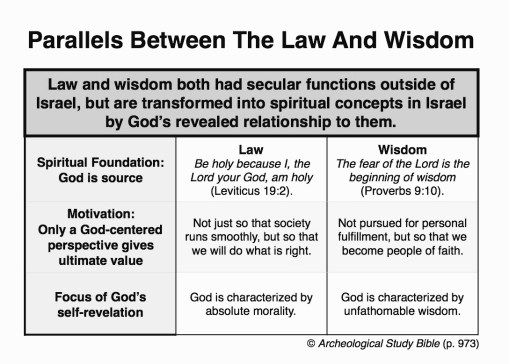
Parallels between law and wisdomIn Proverbs 9, Wisdom and Folly are both personified as women. And both of them call out the same thing to their would-be followers: “Let all who are simple come in here!” (vv. 4, 16). They both claim to have ‘the goods’ for those searching for truth, but here are five things that separate them.

  1. Wisdom has built her own house (v. 1); but Folly merely occupies someone else’s house (v. 14).
  2. Wisdom has like-minded “maids” who support her (v. 3); but Folly has no supporters.
  3. Wisdom serves what she has prepared herself (vv. 2, 5); but Folly steals from others because she has nothing original to offer (v. 17).
  4. Wisdom corrects, and that correction leads to deeper knowledge (vv. 8-10); but Folly lets people do whatever they wish, which only leads to deeper suffering (v. 13).
  5. Wisdom offers life (vv. 6, 11), insight (v. 9), the fear of God (v. 10), and rewards (v. 12); but Folly only offers suffering (v. 12) and death (v. 18).

How ironic that some people respond to Folly’s call, “Let all who are simple come in here,” and yet they act like they know it all already, not wanting to learn anything new.

Bottom line: If you are willing to learn, Wisdom has much to teach you. But if you know it all already, best to just hang out with Folly.

14 Quotes From “Beyond IQ”

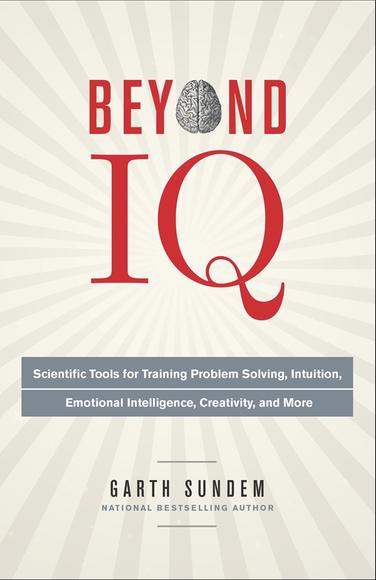
Beyond IQI found Beyond IQ by Garth Sundem to be engaging because of both the research he presents, and the engaging exercises he incorporates to make the research applicable to us. You can read my full book review by clicking here. Here are some of the quotes I especially appreciated.

“First, here’s why insight can be difficult: it requires a paradoxical mix of experience with openness. Usually, experience leads to set-in-stone ways of doing things. Typically, openness is only present when you’re forced by inexperience to remain available in your search for solutions. Experience mixed with openness is a rare cocktail. … Rather than opening your mind to insight, [John] Kounios and [Mark] Jung-Beeman show that if you want insight, the best thing you can do is to close it. A closed mind shows up on an fMRI as activation of the anterior cingulate cortex, your brain’s home of inhibiting distraction. It’s as if your ACC is a pair of noise-canceling headphones, and with these headphones in place you’re more able to hear your brain’s quiet, insightful whispers.” 

“Science has known that during sleep the brain’s hippocampus—the structure responsible for encoding new memories—replays the day’s experiences from short-term storage and filters them into the neocortex, where experiences are integrated into… ‘pre-existing knowledge representations.’ Insight is the novel connection of knowledge, and sleep knocks knowledge into new configurations.”

“[Robert] Sternberg and his frequent collaborator, Richard Wagner, showed that situational judgment tests…designed to measure practical intelligence are a much better predictor then IQ of job performance in business managers, bank managers, and graduate students. IQ doesn’t lead to success. Practical intelligence does.” 

“The language of problem-solving is: initial state, constraints, operations, and goal state. … [Richard] Mayer says that the most striking feature of people who successfully solve real-world problems is the time they spend studying the initial state and the constraints—the extra time they spend clarifying the problem.”

“University of California-San Bernardino researcher James Kaufman knows the recipe for creativity. It’s equal parts intrinsic motivation, experience, and something he calls low personal inhibition. Intrinsic motivation is pretty self-explanatory, but beware of the danger of ‘replacing intrinsic motivation and a natural curiosity with external rewards,’ says Kaufman. If a parent wants a child to become a creative pianist, the parent should encourage interest in the piano but not incentivize this interest with ice cream. Creativity blooms in fields you’re drawn to, not in fields into which you’re pushed. … Kaufman’s research has shown that creative people are hard workers with background knowledge and expertise in their creative domains. ‘It’s the “learn the rules so you can break them” approach,’ he says.” 

“Dean Keith Simonton of UC Davis found that the nineteenth-century scientists who wrote the most-cited papers also wrote the least-cited papers. … The more scientific papers or sonatas or sonnets a person writes, the greater chance that one or more will be especially creative.”

“In any kind of cognitive activity you have two kinds of things going on. You have intelligence, but there’s also learning and skill and knowledge based on practice. The more the second develops, the less important the first becomes. … Even more importantly, we’ve shown that with enough practice and hard work, you can actually change the neurophysiology of the brain. For example, practice can encourage the brain to grow greater myelin coating on neurons. Thus our behaviors become literally hard-wired. Developing expertise literally makes certain thought patterns more efficient than others.” —Paul Feltovich 

“Florida State researcher K. Anders Ericcson shows that it’s not only experience that creates expertise but a step-by-step method of sculpting experience that he calls deliberate practice. To Ericsson, famous for his theory that 10,000 hours of practice creates expertise in any field, the four-step path to expertise includes performing your skill, monitoring your performance, evaluating your success, and figuring out how to do it better next time. Completing only the first step—performing the skill itself—leads to automated, low-level, rote performance in which you perform the skill the same way every time. Monitoring, evaluating, and adjusting your skill allows you to modify it after every pass, helping skill evolved toward expertise.”

“The more you use your brain, the longer you’ll be able to use it. … People with ‘cognitively protected’ brains were those who challenge themselves through a lifestyle that included reading, writing, attending lectures, and doing word puzzles—in other words, they followed a self-imposed regimen of cognitive involvement. … Cognitive involvement is only one tine of a three-pronged approach to brain health in later life. The second tine is a healthy body. … In fact, your cardiovascular health in middle age is even more important for your later brain health than the same risk factors in old age itself. … The third tine: social interaction. … Nothing forces the brain to work like interacting with other brains.” 

“Moral reasoning and wisdom are linked. Specifically (and this is kind of cool albeit technical), for those who possess strong moral reasoning, wisdom increases with age. If you have lower moral reasoning, you gain no wisdom as you get older. So if you want wisdom later, train your moral reasoning now.”

“Wisdom requires thought and action without yourself in mind, and sociologist Monika Ardelt of the University of Florida shows that selflessness is also the best predictor of successful aging. In fact, the wisdom born of selflessness beats out physical health, income, socioeconomic status, physical environment, and even social relationships in predicting life satisfaction in old age.”

“Pressure…sits like a lead weight in your working memory, claiming space that could otherwise hold useful information. And because working memory is a mainline to general intelligence, space claimed by pressure makes you measurably dumber. … Pressure flips a mental switch from implicit to explicit thought, making you apply a layer of analysis to things that should be automatic. … Chronic pressure can make you chronically prioritize the quick rewards of drugs and alcohol while discounting their long-term risk. … So beware. Stress plugs your working memory, analysis paralysis forces you to try to use it anyway, and your dopamine circuits cry for a quick, risky solution.”

“Students with high emotional intelligence (EI) have lower rates of drug use and teachers with high EI get more support from their principals. Employees with high EI have higher job performance, especially when their IQ is low (implying that emotional intelligence can help compensate for low general intelligence—and also that these skills are distinct). EI is even implicated in resilience—the more EI you have, the higher your chances of bouncing back after trauma or negative life events.” 

“If IQ is the strength of the bulb in your lighthouse, willpower is the lens that focuses it into a beam.”