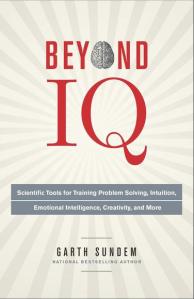
 I found Beyond IQ by Garth Sundem to be engaging because of both the research he presents, and the engaging exercises he incorporates to make the research applicable to us. You can read my full book review by clicking here. Here are some of the quotes I especially appreciated.
“First, here’s why insight can be difficult: it requires a paradoxical mix of experience with openness. Usually, experience leads to set-in-stone ways of doing things. Typically, openness is only present when you’re forced by inexperience to remain available in your search for solutions. Experience mixed with openness is a rare cocktail. … Rather than opening your mind to insight, [John] Kounios and [Mark] Jung-Beeman show that if you want insight, the best thing you can do is to close it. A closed mind shows up on an fMRI as activation of the anterior cingulate cortex, your brain’s home of inhibiting distraction. It’s as if your ACC is a pair of noise-canceling headphones, and with these headphones in place you’re more able to hear your brain’s quiet, insightful whispers.”
“Science has known that during sleep the brain’s hippocampus—the structure responsible for encoding new memories—replays the day’s experiences from short-term storage and filters them into the neocortex, where experiences are integrated into… ‘pre-existing knowledge representations.’ Insight is the novel connection of knowledge, and sleep knocks knowledge into new configurations.”
“[Robert] Sternberg and his frequent collaborator, Richard Wagner, showed that situational judgment tests…designed to measure practical intelligence are a much better predictor then IQ of job performance in business managers, bank managers, and graduate students. IQ doesn’t lead to success. Practical intelligence does.”
“The language of problem-solving is: initial state, constraints, operations, and goal state. … [Richard] Mayer says that the most striking feature of people who successfully solve real-world problems is the time they spend studying the initial state and the constraints—the extra time they spend clarifying the problem.”
“University of California-San Bernardino researcher James Kaufman knows the recipe for creativity. It’s equal parts intrinsic motivation, experience, and something he calls low personal inhibition. Intrinsic motivation is pretty self-explanatory, but beware of the danger of ‘replacing intrinsic motivation and a natural curiosity with external rewards,’ says Kaufman. If a parent wants a child to become a creative pianist, the parent should encourage interest in the piano but not incentivize this interest with ice cream. Creativity blooms in fields you’re drawn to, not in fields into which you’re pushed. … Kaufman’s research has shown that creative people are hard workers with background knowledge and expertise in their creative domains. ‘It’s the “learn the rules so you can break them” approach,’ he says.”
“Dean Keith Simonton of UC Davis found that the nineteenth-century scientists who wrote the most-cited papers also wrote the least-cited papers. … The more scientific papers or sonatas or sonnets a person writes, the greater chance that one or more will be especially creative.”
“In any kind of cognitive activity you have two kinds of things going on. You have intelligence, but there’s also learning and skill and knowledge based on practice. The more the second develops, the less important the first becomes. … Even more importantly, we’ve shown that with enough practice and hard work, you can actually change the neurophysiology of the brain. For example, practice can encourage the brain to grow greater myelin coating on neurons. Thus our behaviors become literally hard-wired. Developing expertise literally makes certain thought patterns more efficient than others.” —Paul Feltovich
“Florida State researcher K. Anders Ericcson shows that it’s not only experience that creates expertise but a step-by-step method of sculpting experience that he calls deliberate practice. To Ericsson, famous for his theory that 10,000 hours of practice creates expertise in any field, the four-step path to expertise includes performing your skill, monitoring your performance, evaluating your success, and figuring out how to do it better next time. Completing only the first step—performing the skill itself—leads to automated, low-level, rote performance in which you perform the skill the same way every time. Monitoring, evaluating, and adjusting your skill allows you to modify it after every pass, helping skill evolved toward expertise.”
“The more you use your brain, the longer you’ll be able to use it. … People with ‘cognitively protected’ brains were those who challenge themselves through a lifestyle that included reading, writing, attending lectures, and doing word puzzles—in other words, they followed a self-imposed regimen of cognitive involvement. … Cognitive involvement is only one tine of a three-pronged approach to brain health in later life. The second tine is a healthy body. … In fact, your cardiovascular health in middle age is even more important for your later brain health than the same risk factors in old age itself. … The third tine: social interaction. … Nothing forces the brain to work like interacting with other brains.”
“Moral reasoning and wisdom are linked. Specifically (and this is kind of cool albeit technical), for those who possess strong moral reasoning, wisdom increases with age. If you have lower moral reasoning, you gain no wisdom as you get older. So if you want wisdom later, train your moral reasoning now.”
“Wisdom requires thought and action without yourself in mind, and sociologist Monika Ardelt of the University of Florida shows that selflessness is also the best predictor of successful aging. In fact, the wisdom born of selflessness beats out physical health, income, socioeconomic status, physical environment, and even social relationships in predicting life satisfaction in old age.”
“Pressure…sits like a lead weight in your working memory, claiming space that could otherwise hold useful information. And because working memory is a mainline to general intelligence, space claimed by pressure makes you measurably dumber. … Pressure flips a mental switch from implicit to explicit thought, making you apply a layer of analysis to things that should be automatic. … Chronic pressure can make you chronically prioritize the quick rewards of drugs and alcohol while discounting their long-term risk. … So beware. Stress plugs your working memory, analysis paralysis forces you to try to use it anyway, and your dopamine circuits cry for a quick, risky solution.”
“Students with high emotional intelligence (EI) have lower rates of drug use and teachers with high EI get more support from their principals. Employees with high EI have higher job performance, especially when their IQ is low (implying that emotional intelligence can help compensate for low general intelligence—and also that these skills are distinct). EI is even implicated in resilience—the more EI you have, the higher your chances of bouncing back after trauma or negative life events.”
“If IQ is the strength of the bulb in your lighthouse, willpower is the lens that focuses it into a beam.”



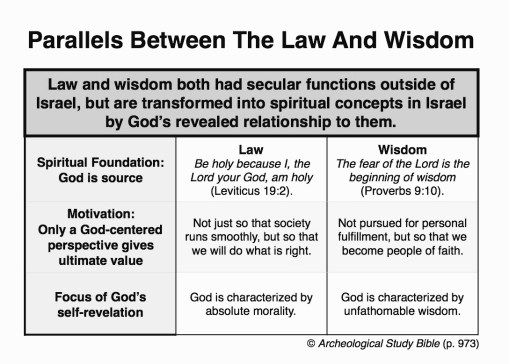 In Proverbs 9, Wisdom and Folly are both personified as women. And both of them call out the same thing to their would-be followers: “Let all who are simple come in here!” (vv. 4, 16). They both claim to have ‘the goods’ for those searching for truth, but here are five things that separate them.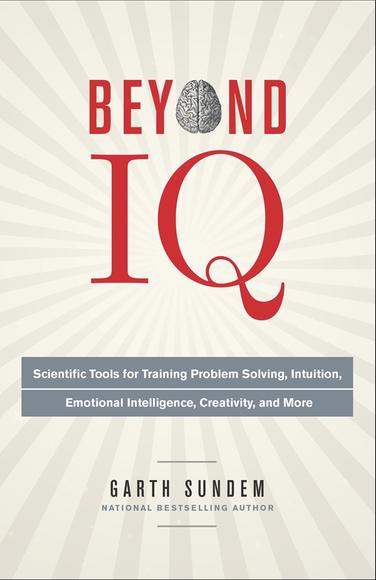
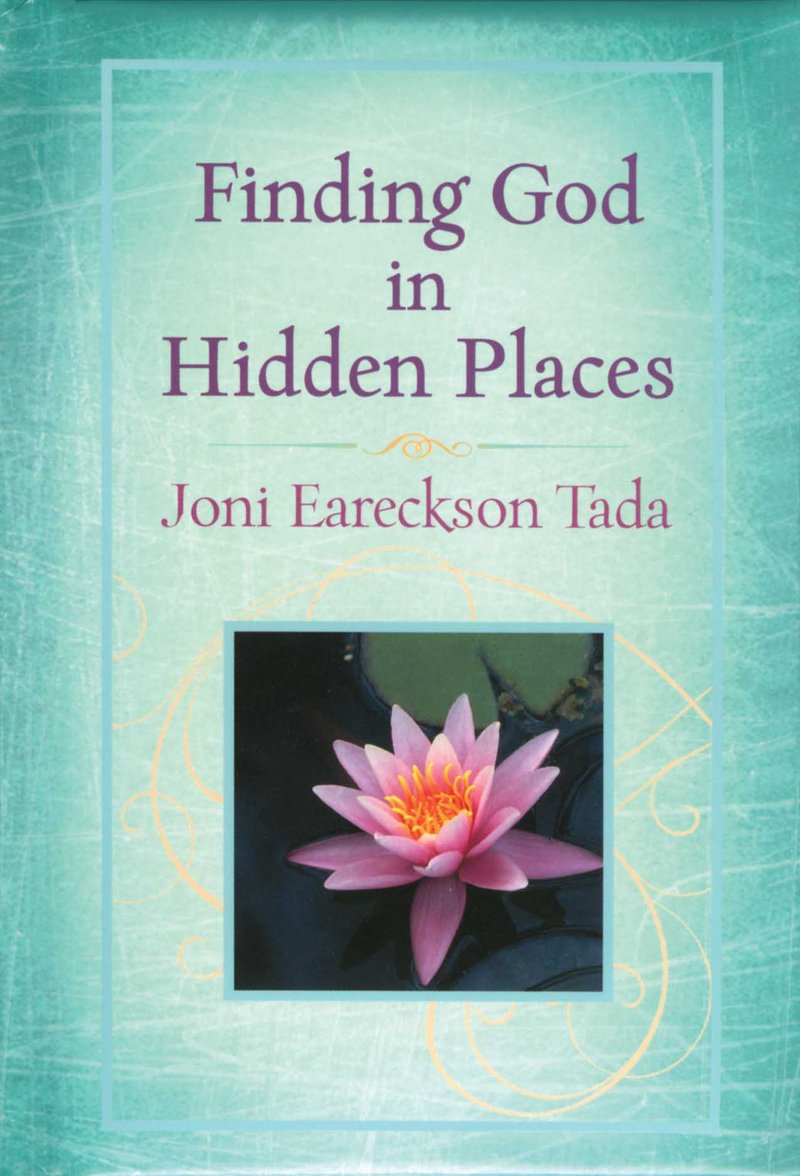



Light & Truth—Acts And the Larger Epistles (book review)
February 9, 2016 — Craig T. OwensBonar grew up in a pastoral home, with plenty of other pastors and evangelists in his family tree. You might say that he was weaned on Scripture and its application to our lives. This Bible-based heritage comes through in all he writes. By no means, though, does Bonar simply ride the coattails of his esteemed family, but he is quite brilliant in his own Holy Spirit-inspired insights.
Bonar’s commentaries are not a verse-by-verse exposition of the Scripture. Instead, he may just take one or two verses and “go deep” with them. A short passage may be taken apart word by word, and many rich applications are thus brought forth.
As I am reading through the New Testament, I am finding Horatius Bonar to be a helpful “tour guide” on my journey.
Share this: