20 Helpful Thoughts On Criticism

“Criticism is something you can avoid easily—by saying nothing, doing nothing and being nothing.” —Aristotle 

“The Lord uses critics to show us our own hearts, even if what they say is not fully true, informed, or even fair. There is almost always a germ of truth in what our critics (in their own pain and disappointment) shout at us. The wise leader will humble himself and look for the truth embedded in every oppositional interaction.” —Dick Brogden [see 2 Samuel 16:5-12] 

“Feedback is the breakfast of champions.” —Ken Blanchard 

“Criticism can be received as a gift from God. It is an opportunity to pray, search Scripture, evaluate your own heart, and offer grace to others. The right response to criticism should not be retaliation or pride (which just perpetuates hurt), but rather humility.” —Jeremy Carr

“There is a growing trend to attack, criticize, and resent anyone who has talent or achievements that sets them apart from others. This tendency extends to those who resent the efforts of leaders who challenge the status quo. Opponents of change initiatives often attempt to marginalize leaders by attacking their character and questioning their motives. If the messenger is flawed, then the message and vision they offer cannot be trusted. As disappointing as it is, these challenges come with the territory of leadership.” —Dr. J. Lee Whittington

“If I were to attempt to answer all the criticisms and complaints I receive, I would have no time for any other business. From day to day I do the best I can and will continue to do so till the end. If in the end I come out all right, then the complaints and criticisms and what is said against me will make no difference. But, if the end brings me out wrong, then ten angels coming down from heaven to swear I was right would still make no difference.” —Abraham Lincoln

“If a ministry is God-anointed, it doesn’t matter who criticizes it. If it’s not anointed, it doesn’t matter who praises it.” —Rick Warren 

“Your critics have information that your friends are withholding.” —John Maxwell 

“God never gives us discernment so that we may criticize, but that we may intercede.” —Oswald Chambers 

“No leader is exempt from criticism and his humility will nowhere be seen more clearly than in the manner in which he accepts and reacts to it.” —J. Oswald Sanders 

“Criticism may not be agreeable, but it is necessary. It fulfills the same function as pain in the human body: It calls attention to an unhealthy state of things.” —Winston Churchill 

“Every man needs a blind eye and a deaf ear, so when people applaud, you’ll only hear half of it, and when people salute, you’ll only see part of it. Believe only half the praise and half the criticism.” —C.H. Spurgeon 

“Any fool can criticize, condemn and complain—and most fools do. But it takes character and self-control to be understanding and forgiving.” —Dale Carnegie

“A mark of a godly leader is one so focused on God’s plan that he pays no attention to his critics or enemies.” —Craig T. Owens

“Never be afraid of honest criticism. If the critic is wrong, you can help him; and if you’re wrong, he can help you. Either way, somebody’s helped.” —A.W. Tozer 

“It’s so much easier to teach correct principles than it is to know and love a person. It’s so much easier to give brilliant advice than to empathize and be open. It’s so much easier to live independently than to live interdependently. It’s so much easier to be a judge than to be a light. It’s so much easier to be a critic than to be a model.” —Stephen Covey

“When is it inappropriate to praise a critical person? One: When you are being criticized for outright sin, and the criticism is accurate. If what is said is true, the tension you feel will be relieved only one way: confession. Two: when you are falsely accused of sin. Sin is a serious charge, obviously more serious than those ‘against you’ realize or they would have done their homework.” —Blaine Allen

“Don’t let an arrow of criticism pierce your heart unless it first passes through the filter of Scripture.” —Mark Batterson

“There is no better antidote for unjust criticism than a clear conscience before God.” —James Hernando

“It is not the critic who counts; nor the many who point out how the strong man stumbles, or where the doer of deeds could have done them better. The credit belongs to the man in the arena, whose face is marred by dust and sweat and blood, who strives valiantly… who knows the great enthusiasms, the great devotions, who spends himself in a worthy cause, who at the best knows in the end the triumph of high achievement, and who at the worst, if he fails, at least fails while daring greatly, so that his place shall never be with those cold and timid souls who have never known neither victory nor defeat.” —Teddy Roosevelt 

9 Quotes From “Surprised By Paradox”

Jen Pollock Michel has given us a thought-provoking look into her thoughts of some of the and solutions to the either-or challenges many Christians face. Please be sure to check out my full book review by clicking here. 

“Allowing for paradox does not represent a weakened approach to theological understanding. On the contrary, it allows for a robust theology, one that is filled with the sort of awe that not only regards God as unimaginably wondrous but also awakens in us the same desire Moses had to see Him as He is.” 

“As psychologists have described it, awe is ‘the experience of encountering something so vast—in size, skill, beauty, intensity, etc.—that we struggle to comprehend it and may even adjust our world to accommodate it.’ Awe is our slack-jawed response to natural phenomena like waterfalls and childbirth. To feel awe is to confirm a beautiful, wild universe, a world we neither made nor control. … For those of us inclined to religious belief, awe nurtures our certainty about God.”

“Modernity gave us more certainty than uncertainty—or at the very least certainty in certainty. We’ve come to an unassailable confidence that mystery, by dint of inquiry and scientific effort, can be wrestled and pinned down and made to cry uncle. We are no longer victims of the unknowable: we are masters of our own understanding. The great modern lie is one of infinite human autonomy and control.” 

“It is an old sin seduced by an old lie that we can be like God, perfectly knowing as He knows.… As soon as we think we have God figured out, we will have ceased to worship Him as He is.” 

“I also get tricked into thinking that the world must quiet around me if I mean to meet God. I forget the paradox of the burning bush: that Moses met God at Horeb on an unspectacular day, that his encounter with God was less planned and more happenstance. God did not speak to Moses as the prophet sat cross-legged and silent, his hands folded in reverent to prayer. God blazed up in the landscape of an ordinary Wednesday afternoon. This seems to be how it goes with God: a spiritual life is a material one.” 

“The paradox of God’s story is that He’s chosen to write its timelessness in the ticking heart of His Son and that He’s choosing to write it in our ticking hearts too.” 

“If the kingdom is good news, it surely isn’t safe. Because there is no square inch of our lives Jesus doesn’t intend to rule.” 

“To define grace apart from the Cross would be to say that God is simply given to leniency. It would be to essentially say that there are rules which we break and break badly, but God reassures us kindly that ‘it’s no big deal.’… The Cross speaks a thundering word about the cosmic big deal that is sin.” 

“To receive grace, we need humility. The only prerequisite for grace is empty hands. We have done nothing to make God notice us, and He is not impressed by us.” 

The Fire Of Greatness

“It is not wrong to aspire to greatness. The warning here is to be careful to never confuse fame with greatness. Otherwise, you may be aspiring to what is not really greatness at all. Fame is what you do for yourself; greatness is what you do for others. Jesus has unveiled to us how greatness is achieved in His kingdom. To be great, you must serve. So don’t give up on your ambition to be great; instead, change your definition of what it means to be great and how greatness is achieved. … 

“The words samurai and deacon have the same core meaning. They both mean ‘servant.’ … Too often we have confused humility with powerlessness. Humility cannot be achieved from a posture of powerlessness. As long as we see ourselves as victims, humility does not come from a position of strength. True humility can be experienced only when we have come to know our power and use it for the good of others and not for ourselves. … 

“Greatness is never found; it is gained. Greatness never comes easy; it’s always the outcome of great discipline and hard work. If you’re comfortable with where you are, if you’re complacent, you will never discover the greatness that lies within. Complacency is like pouring water on coals. It is so important not to misunderstand the words of Jesus. Remember, He never said, ‘Don’t be great.’ In fact, His invitation was for only those who aspire to greatness: ‘Whoever wants to become great among you must be your servant.’ You will never know the power of servanthood until you know the fire of greatness. …

“Whatever God has placed within you that could ever be described as great was never meant for you, anyway. It’s a stewardship that has been given to you. Greatness never belongs to the one who carries it; it belongs to the world that needs it.” —Erwin McManus, The Way Of The Warrior (emphasis mine)

You can read other quotes from The Way Of The Warrior here and here.

9 Quotes From “The Way Of The Warrior”

Erwin McManus leads us through the codes that define a true God-honoring warrior. It’s a fascinating journey of discovery! Check out my full book review by clicking here. 

“There will never be peace on earth until there is peace in us.” 

“We have no control over the reality that in this world we will have trouble, but we have control over whether we decide to allow our hearts to be troubled.” 

“Every battle is first fought within. Jesus was never powerless. He was the epitome of controlled strength. While He was always meek, He was never weak. He knew His power but He never abused it. The warrior knows that peace does not come from control but from relinquishing control. Everything in life that you try to control that is outside your control will steal from you your peace. You must choose to take hold of what you can control and let go of what you cannot. You cannot control your circumstances, but you can control your character. You cannot control the actions of others, but you can control the choices you make. You cannot control the outcome, but you can control the process.” 

“The warrior does not wield a weapon; they are a weapon. Their strength does not come from the weapons they hold but from the wisdom that has taken hold of them.” 

“Wisdom is the warrior’s greatest weapon. When you have wisdom, you are never unarmed, you are never defenseless, and you are never powerless. You need skill to know how to shoot an arrow straight, but only wisdom can teach you how to never need to shoot it.” 

“While the warrior is informed by the past, they are not formed by it. The warrior is not formed by what has been done and what can’t be done; the heart of the warrior is formed by what must be done.” 

“The warrior is always first a servant. … The warrior does not serve because they cannot lead; they know that a person cannot lead if they do not serve.” 

“We are to do nothing out of selfish ambition or vain conceit, but without ambition we will find ourselves doing nothing and calling it humility.” 

“Whatever God has placed within you that could ever be described as great was never meant for you, anyway. It’s a stewardship that has been given to you. Greatness never belongs to the one who carries it; it belongs to the world that needs it.” 

More quotes from The Way Of The Warrior are coming soon! 

People Are Watching 👀

 “…they watched Him closely… (Luke 14:1). 

The skeptics were always watching Jesus. As with our Master, so with us.

They wanted to find an inconsistency with which they could discount all that Jesus stood for. Thankfully, they found none! May the same be said of you and me.

May our lives and speech (or silence) never cause skeptics to discount the Gospel or—even worse—blaspheme God, nor may our lives cause a weak Christian to doubt or stumble.

This requires from us—

  • Self-awareness … I have to know my tendencies and avoid those things that cause offense.
  • Boldness … to speak the truth in love.
  • Knowledge of the Scripture … and its correct application.
  • God-confidence … so that we’re not intimidated by man’s disapproval.
  • Humility … to not seek things for our own benefit.
  • Charity … as we demonstrate our faith in loving action.
  • Focus … on eternity and on the greater treasure in Heaven.

Holy Spirit, empower us to live like our Master every day. “Adam’s likeness now efface, stamp Thine image in its place.” May people see and hear Jesus in us. No matter how closely they watch us, may they see no inconsistencies.

Poetry Saturday—I Am Praying


I am praying, blessed Savior,

To be more and more like Thee;
I am praying that Thy Spirit
Like a dove may rest on me.

Thou who knowest all my weakness,
Thou who knowest all my care,
While I plead each precious promise,
Hear, oh hear, and answer prayer.

I am praying to be humbled
By the power of grace divine,
To be clothed upon with meekness,
And to have no will but Thine. —Fanny Crosby

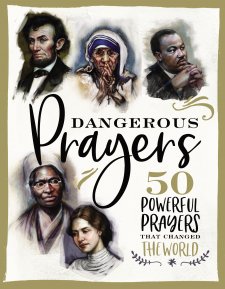
8 Prayers From “Dangerous Prayers”

Dangerous Prayers give a brief biography of 50 culture-shifting people, and the world-changing prayers they prayed. Check out my full book review by clicking here, and then enjoy just a few of the prayers from this excellent book. 

“Listen to my supplication, Master, so that my soul doesn’t stagger under Your instruction, so that I don’t stumble in testifying to Your mercies, by which You tore me away from all my ruinous pathways. Thus You’ll grow sweet to me beyond all that led me wrong, in my willingness to follow it. Thus I’ll love You most mightily, and grasp Your hand with all the strength of my inmost being. Thus You’ll tear me away from every trial, clear to the end.” —Augustine 

“Restore me to liberty, and enable me so to live now that I may answer before Thee and before the world. Lord, whatever this day may bring, may Thy name be praised. Amen.” —Dietrich Bonhoeffer, while awaiting execution in a Nazi concentration camp 

“Give us grace, O God, to dare to do the deed which we well know cries to be done. Let us not hesitate because of ease, or the words of men’s mouths, or our own lives. Mighty causes are calling us—the freeing of women, the training of children, the putting down of hate and murder and poverty—all these and more. But they call with voices that mean work and sacrifice and death. Mercifully grant us, O God, the spirit of Esther, that we may say: ‘I will go unto the king and if I perish, I perish.’” —W.E.B. DuBois 

“Because we have need continually to crave many things at Your hands, we humbly beg You, O heavenly Father, to grant us Your Holy Spirit to direct our petitions, that they may proceed from such a fervent mind as may be agreeable to Your holy will.” —John Knox 

“O keep us, we beseech Thee, Lord, for without Thy keeping we cannot keep ourselves.” —Charles Spurgeon 

“Oh Jesus, You who suffer, grant that today and every day I may be able to see You in the person of Your sick ones and that, by offering them my care, I may serve You. Grant that, even if You are hidden under the unattractive disguise of anger, of crime, or of madness, I may recognize You and say, ‘Jesus, You who suffer, how sweet it is to serve You.’” —Mother Teresa 

“I now make it my earnest prayer, that God would have you, and the State over which you preside, in His holy protection, that He would incline the hearts of the Citizens to cultivate a spirit of subordination and obedience to Government, to entertain a brotherly affection and love for one another, for their fellow Citizens of the United States at large, and particularly for their brethren who have served in the Field, and finally, that He would most graciously be pleased to dispose us all, to do Justice, to love mercy, and to demean ourselves with that charity, humility, and pacific temper of mind, which were the Characteristics of the Divine Author of our blessed Religion, and without an humble invitation of whose example in these things, we can never hope to be a happy Nation.” —George Washington 

“God give me a deep humility, a well-guided zeal, a burning love, and a single eye, and then let men or devils do their worst.” —George Whitefield 

19 Quotes From Other Authors In “Love Like That”

As Dr. Les Parrott presented the five ways Jesus showed His love to us, he supported his thoughts with some insightful quotes from other authors. Check out my full book review of Love Like That by clicking here.

“If you stop to be kind, you must swerve often from your path.” —Mary Webb 

“We may ignore, but we can nowhere evade, the presence of God. The world is crowded with Him. He walks everywhere incognito.” —C.S. Lewis 

“Pride is our greatest enemy and humility our greatest friend.” —John R.W. Stott 

“Jesus was the Man for others.” —Dietrich Bonhoeffer 

“Jesus was able to love because He loved right through the layer of mud.” —Helmut Thielicke 

“They that know God will be humble; they that know themselves cannot be proud.” —John Flavel 

“Those who judge will never understand, and those who understand will never judge.” —Wilson Kanadi 

“Mercy gave the Prodigal Son a second chance. Grace gave him a feast.” —Max Lucado 

“Christ accepts us as we are, but when He accepts us, we cannot remain as we are.” —Walter Trobisch 

“Jesus did not identify the person that with his sin, but rather saw in this sin something alien, something that really did not belong to him, something…from which He would free him and bring him back to his real self.” —Helmut Thielicke 

“While every other religion offers a way to earn approval, only Christianity dares to make God’s love unconditional.” —Philip Yancey 

“Judgmentalism finds its identity in what is not. … Rare is the person who can weigh the faults of others without putting his thumb on the scale.” —Byron Langenfeld 

“To love a person means to see him as God intended him to be.” —Fyodor Dostoevsky 

“I do not at all understand the mystery of grace—only that it meets us where we are but does not leave us where it found us.” —Anne Lamott 

“All human nature vigorously resists grace because grace changes us and the change is painful.” —Flannery O’Connor 

“Those who make peaceful revolution impossible will make violent revolution inevitable.” —John F. Kennedy 

“We often err not because we find it hard to perceive the truth (it is often right there, at the surface), but because it is easier and more pleasant to be guided by our feelings, especially if self-centered.” —Alexander Solzhenitsyn 

“A ‘no’ uttered from deepest conviction is better and greater than a ‘yes’ merely uttered to please, or what is worse, to avoid trouble.” —Mahatma Gandhi 

“Every time you listen with great attentiveness to the voice that calls you the Beloved, you will discover within yourself a desire to hear that voice longer and more deeply.” —Henri Nouwen 

Check out some of Dr. Parrott’s quotes from Love Like That which I shared here. 

Saturday In The Proverbs—This Is What Virtue Looks Like (Proverbs 31)

[Each chapter in the Book of Proverbs contains thoughts that fit into a theme; they are not just random thoughts gathered together. In this “Saturday In The Proverbs” series, I will share a theme that I see in each chapter. But the cool thing about God’s Word is that you may see an entirely different theme. That’s great! If you do, I would love for you to share it in the comments below.]

Do not give your strength to women … Who can find a virtuous wife…? (Proverbs 31:3, 10).

This proverb shows virtue on display in both a man and a woman. A man or woman of virtue…

… is a loyal spouse (vv. 3, 10, 12, 23, 28, 30)

… uses their strength appropriately (vv. 3, 17)

… avoids controlling substances (v. 4)

… upholds justice (vv. 5, 26)

… takes care of others (vv. 8, 9, 15, 20-21)

… is trustworthy (v. 11)

… has a good work ethic (vv. 13-15, 18-19, 24, 27, 31)

… exercises good stewardship (vv. 16, 18, 25)

… renews themselves (v. 22)

… handles praise well (vv. 28-30)

How beautiful is a man or woman living out God’s virtue! 

Saturday In The Proverbs—Lifelong Learning (Proverbs 30)

[Each chapter in the Book of Proverbs contains thoughts that fit into a theme; they are not just random thoughts gathered together. In this “Saturday In The Proverbs” series, I will share a theme that I see in each chapter. But the cool thing about God’s Word is that you may see an entirely different theme. That’s great! If you do, I would love for you to share it in the comments below.]

Surely I am more stupid than any man… (Proverbs 30:2).

That’s what he said, and then Agur records some incredibly wise words for us! I think Agur is a man who is continually learning, and realizing how little he knew before he learned something new. 

He’s learning things like…

…how vast, and powerful, and wise God is (vv. 3-6).

…how frail and dependent on God he is (vv. 7-9). 

…how disrespectful people undermine their own success and happiness (vv. 10-14, 17).

…how destructive greed is (vv. 15, 16).

…how wonderfully God has made things (vv. 18, 19).

…how sin deceives (vv. 20-23). 

…how observing even the littlest of things can teach big lessons ( vv. 24-28).

…how boastful proud people are (vv. 29-33). 

What lessons are you learning? 

When was the last time you learned something new?