The Counselor

The CounselorThere are several people in the Bible that are called “a counselor.” But there is only One Who is called “the Counselor.” This is the title Jesus gave to the Holy Spirit, when He said One was coming Who would be of invaluable help to us.

This Sunday is Pentecost Sunday. On that first Pentecost after Christ’s ascension, something amazing happened to the followers of Jesus—they were baptized in the Holy Spirit. The Counselor saturated their lives with His wisdom.

From this moment the Christians operated in extraordinary wisdom, power, discernment, boldness, and effectiveness.

Josh McDowell points out, “By AD 100, the apostles had died, but the Christian Church was still in its infancy, with fewer than twenty-five thousand proclaimed followers of Christ. But within the next two hundred years, the fledgling church experienced explosive multiplication of growth, to include as many as twenty million people. This means the church of Jesus Christ quadrupled every generation for five consecutive generations!” (emphasis added)

This type of growth was only possible because of the counsel The Counselor imparted every day to these new Christians. And this same counsel and help and empowerment is available to all Christians today!

This Sunday at Calvary Assembly of God we begin a new series called “The Counselor.” If you are in the Cedar Springs area and don’t have a home church, I invite you to come join us to learn more about this power that is for you.

12 Quotes From “God-Breathed”

God-BreathedJosh McDowell has given us another outstanding Christian apologetic. In God-Breathed, Josh shares with us some astounding facts that show the amazing reliability of the Bible. You can read my book review of God-Breathed by clicking here. Below are some of the quotes I especially appreciated.

“The doctrines and commands of Scripture act as two guardrails to guide us down the right path of life. The teachings of Scripture (doctrine) keep us thinking and believing rightly. The instructions of Scripture (commands) keep us acting and living rightly. But without the proper context, we can miss the true purpose of Scripture, which is to guide us into keeping right thinking and right living in balance. … Scripture was given to lead us into a deeper love relationship with the One Who wrote the Book, and then also with everyone around us.” 

“The infinite God is personal. And because He is personal, we can love Him, worship Him, and please Him with our trust and obedience. Because He is personal, He can love us, rejoice with us, comfort us, and reveal Himself and His ways to us.”

“What is it that really parents our children? Is it the directives, instructions, and commands we give them? Those are behavioral guidelines, but they are not what raises our kids. It is not ‘parenting,’ as a concept, that brings up children; it is the parents themselves—relational human beings—who do the work and perform that role. That is the way God designed it. He wants kids to be brought up in loving relationships. Without relationship with another person, all attempts to instill right beliefs and right behavior will be ineffective, because they are detached from the necessary elements of personal love and care. … The Holy Spirit administers Scripture to us like a loving parent, in order to provide us with wisdom through its lessons (Proverbs 3:5), security through its boundaries (Exodus 20), caution through its warnings (Ephesians 4:17-22), and reproof through its discipline (Philippians 2:3-4).” 

“By AD 100, the apostles had died, but the Christian Church was still in its infancy, with fewer than twenty-five thousand proclaimed followers of Christ. But within the next two hundred years, the fledgling church experienced explosive multiplication of growth, to include as many as twenty million people. This means the church of Jesus Christ quadrupled every generation for five consecutive generations!”

“In AD 367, Athanasius of Alexandria compiled the first official list of books that we know today as the New Testament. There were twenty-seven books listed in all. These books were then canonized officially by the church at the councils of Hippo (AD 393) and Carthage (AD 397). Again, these councils didn’t authorize which writings were God-breathed works; rather, they recognized that these writings were authorized by God Himself.” 

“The Old Testament, comprised of thirty-nine books, was officially recognized as God-breathed Scripture as early as the fourth century BC and certainly no later than 150 BC.”

“The Bible is now the most translated book of all-time. The United Bible Society reports that, as of 2014, the Bible or portions of the Bible has been translated into 2,650 languages. Their Digital Bible Library now hosts more than 800 translations in 636 languages spoken by 4.3 billion people.” 

“Compared with other ancient writings, the Bible has more manuscript evidence to support it then the top ten pieces of classical literature combined.”

“No other work in all literature has been so carefully and accurately copied as the Old Testament.”

“Once archaeologists completed their search of the Qumran caves—eleven caves in all—almost 1,050 scrolls have been found in about 25,000 to 50,000 pieces (a number that varies depending on how the fragments are counted). Of these manuscripts, about 300 were texts from the Bible, and many of the rest had ‘direct relevance to early Judaism and emerging Christianity.’ Every book of the Old Testament was represented, except for the book of Esther, and the earliest copies dated from about 250 BC. … Once the Dead Sea Scrolls were translated and compared with modern versions of the Hebrew Bible, the text proved to be identical, word for word, in more than 95% of the cases. (The 5 percent deviation consists mainly of spelling variations. For example, of the 166 words and Isaiah 53, only seventeen letters are in question. Of those, ten are a matter of spelling, and four are stylistic differences; the remaining three letters comprise the word light, which was added to Isaiah 53:11.)”

“The writings of the most authoritative writers of the early church—the leaders scholars referred to collectively as the Apostolic Fathers—give overwhelming support to the existence of the twenty-seven authoritative books of the New Testament. Some Apostolic Fathers produced extensive, highly accurate quotes from the text of the New Testament. … Early church writers provide quotations so numerous and widespread that if no manuscripts of the New Testament were extant, ‘the New Testament could be reproduced from the writings of the early Fathers alone.’” —Norman Geisler and William Nix 

“The earliest preachers of the gospel knew the value of…first-hand testimony, and appealed to it time and again. ‘We are witnesses of these things,’ was there constant and confident assertion. And it can have been by no means so easy as some writers seem to think to invent words and deeds of Jesus in those early years, when so many of His disciples were about, who could remember what had and had not happened. … One of the strong points in the original apostolic preaching is the confident appeal to the knowledge of the hearers; they not only said, ‘We are witnesses of these things,’ but also, ‘As you yourselves also know’ (Acts 2:22). Had there been any tendency to depart from the facts in any material respect, the possible presence of hostile witnesses in the audience would have served as a further corrective.” —F.F. Bruce

No, Virginia, Pentecostals Do Not Swing From Chandeliers

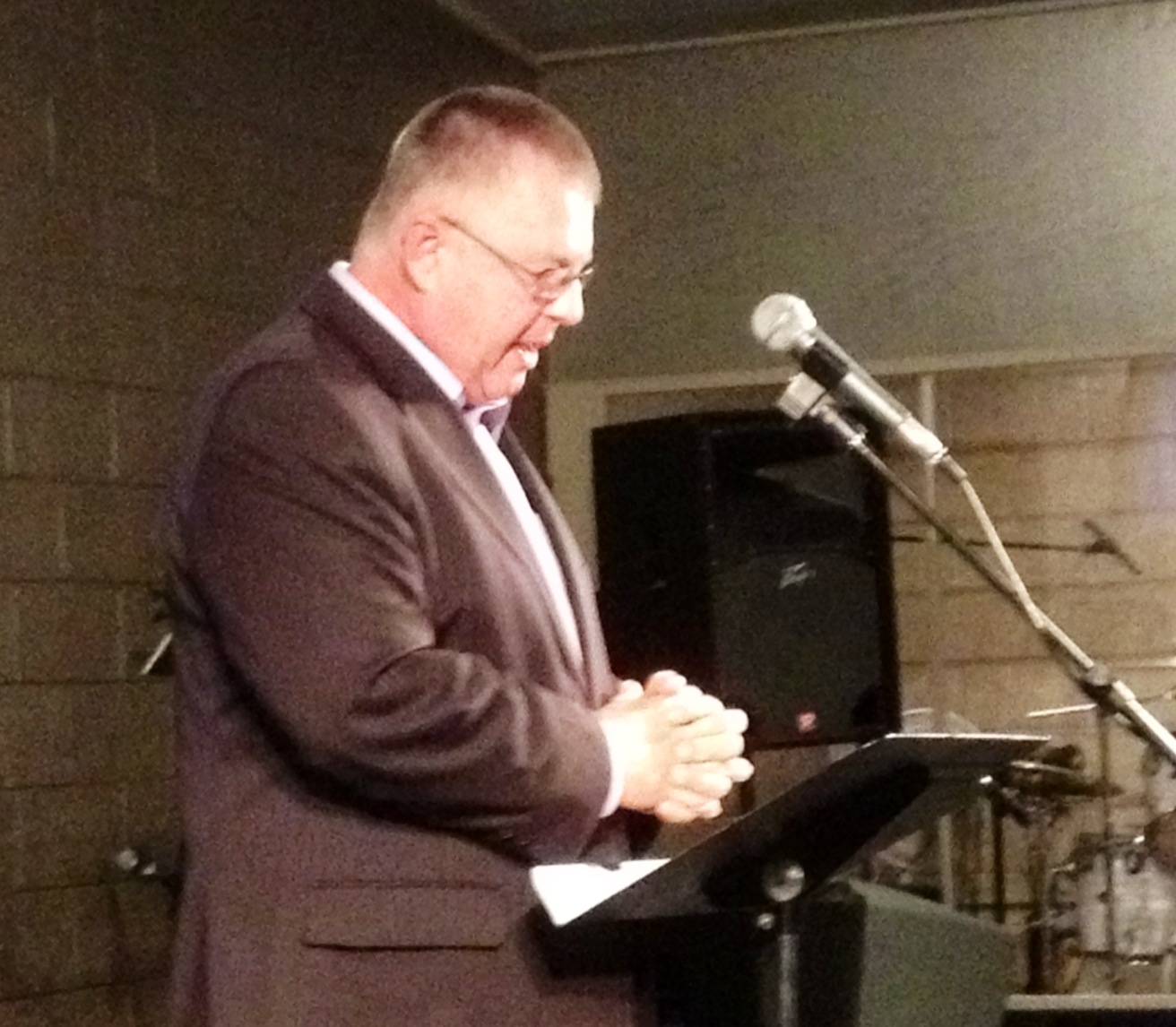
Pastor Bill LeachWow! We had an absolutely amazing service yesterday morning at Calvary Assembly of God! All throughout the service we could feel that the Holy Spirit was moving, and we were all blessed by His presence.

Pastor Bill Leach was our guest speaker, and he used Acts 2 as his text to talk about some of the misconceptions people have about the baptism in the Holy Spirit, and the correct biblical perspective of this empowerment for a Christian’s life. I tried to take notes as fast as I could, so below are the thoughts which especially caught my attention. Pastor Leach’s message was entitled “No, Virginia, Pentecostals Do Not Swing From Chandeliers.”

Our Pentecostal experience must be firmly established in the Word of God. Peter made this clear in his Day of Pentecost sermon (Acts 2:16, 25, 30, 34). This experience is not a fad, but we are involved in the eternal plan of God. So it is an important movement for us to be a part of (Acts 2:39).

When Jesus said “stay in the city until you have been clothed with power from on high” (Luke 24:49; Acts 1:4), He said it in the form of a command. Our Savior commands us to receive this Holy Spirit empowerment.

Luke describes the followers of Jesus as being “all together in one place” (Acts 2:1). In other words they were together together. This is a characteristic of followers of Jesus.

God’s temple is not a house, but people. Just as the fire was to be kept burning in King Solomon’s temple, God’s eternal fire fell on His followers on the day of Pentecost (Acts 2:3), symbolizing His abiding presence in Christians.

The whole Godhead continually points to and glorifies the other aspects of the Godhead—“This is My Son in Whom I am well pleased”; “The Holy Spirit will testify about Me; and “I have come to glorify the Father.” When man was created God said, “Let Us make man in Our image—worshiping along side Us and enjoying Us!” The baptism in the Holy Spirit empowers us to do this!

Impossible obstacles must give way to the Spirit-anointed trod of the Spirit-baptized Church.

Pentecostals do not swing from chandeliers, but they have yielded their lives to the Holy Spirit’s empowerment, to be Christ’s witnesses and to display God’s glory throughout His creation.

This coming Sunday (May 24) is Pentecost Sunday, and I will be launching a new series about the Holy Spirit called simply The Counselor. Check back on my blog later this week for more details.

Thursdays With Oswald—Christ’s Perfection In You

Oswald ChambersThis is a periodic series with things I’m reading and pondering from Oswald Chambers. You can read the original seed thought here, or type “Thursdays With Oswald” in the search box to read more entries.

Christ’s Perfection In You

     Paul does not say, nor does the Spirit of God say anywhere, that after we are born again of the Spirit of God, Jesus Christ is put before us as an Example and we make ourselves holy by drawing from Him. Never! Sanctification is Christ formed in us; not the Christ-life, but Christ Himself. In Jesus Christ is the perfection of everything, and the mystery of sanctification is that we may have in Jesus Christ, not the start of holiness, but the holiness of Jesus Christ. …  

     Those of you who are hungering and thirsting after holiness, think what it would mean to you to go out tonight knowing that you may step boldly into the heritage that is yours if you are born of the Spirit, and realize that the perfections of Jesus are yours by His sovereign gift in such a way that you can prove it experimentally!

From Our Brilliant Heritage (emphasis added)

Oswald Chambers says there are three Mysteries that are impossible for us to fully grasp with our natural minds: (1) The Triune God—Father, Son and Spirit all equally God; (2) The Incarnation of Jesus—fully Man and fully God; and (3) Christ in us.

Yes, it’s a mystery, but it’s true! Jesus doesn’t want to be your Example. He wants to be in you, and wants you to be in Him. His desire is that you are at-onement (that’s what the word atonement means) with Him, so that when people look at you they see Jesus.

You don’t have to earn this, or try to work it up in your life. If you have invited Jesus into your life, He truly is IN you—all of His perfection is IN you! Ask the Holy Spirit to make this real to you today.

17 Final Quotes From “Not Knowing Where”

Not Knowing WhereI’ve been sharing some of the amazing quotes from Oswald Chambers’ book Not Knowing Where. Here is the last set of quotes from this book.

“The natural life is not spiritual, it can only be made spiritual by deliberately casting it out and making it the slave instead of the ruler. … Jesus Christ cannot give me a meek and quiet spirit, I have to take His yoke upon me; that is, I have to deliberately discipline myself. … If we do not resolutely cast out the natural, the supernatural can never become natural in us.”

“Remember, Abraham had to offer up Ishmael before he offered up Isaac. Some of us are trying to offer spiritual sacrifices before we have sacrificed the natural. The only way we can offer a spiritual sacrifice to God is to do what He tells us to do, discipline what He tells us to discipline.”

“Common sense is not faith and faith is not common sense; they stand in the relation of Ishmael and Isaac, of the natural and spiritual, of individuality and personality, of impulse and inspiration. Faith in antagonism to common sense is fanaticism, and common sense in antagonism to faith is rationalism. The life of faith brings the two into right relationship.”

“We have the idea that the body, individuality, and the natural life are altogether of the devil; they are not, they are all of God, designed by God, and it is in the human body and in the natural order of things that we have to exhibit our worship of God. The danger is to mistake the natural for the spiritual, and instead of worshiping God in my natural life to make my natural life God.”

“How am I going to find out what the will of God is? In one way only, by not trying to find out. If you are born again of the Spirit of God, you are the will of God, and your ordinary common sense decisions are God’s will for you unless He gives an inner check. When He does, call a halt immediately and wait on Him. Be renewed in the spirit of your mind that you may make out His will, not in your mind, but in practical living. God’s will in my common sense life is not for me to accept conditions and say—‘Oh well, it is the will of God,’ but to apprehend them for Him, and that means conflict, and it is of God that we conflict. Doing the will of God is an active thing in my common sense life.”

“As Abimelech rebuked Abraham when he was in the wrong (see Genesis 20), and Abraham in his turn rebuked Abimelech, so in the same way the children of men from time to time rebuke the children of God, and the children of God rebuke the politics of natural men. Compromise with each other or unity between them is immoral. Arbitration until He comes Whose right it is to reign is the God-ordained program.”

“The very nature of faith is that it must be tried; faith untried is only ideally real, not actually real. Faith is not rational, therefore it cannot be worked out on the basis of logical reason; it can only be worked out on the implicit line of living obedience.”

“God does not further our spiritual life in spite of our circumstances, but in and by our circumstances.”

“To say ‘Here I am’ when God speaks, is only possible if we are in His presence, in the place where we can obey.” 

“God never fits His Word to suit me; He fits me to suit His Word.”

“True faith does not so much take God at His Word as take the Word of God as it is, in the face of all difficulties, and act upon it, with no attempt to explain or expounded.”

“The path to God is never the same as the path of God. When I am going on with God in His path, I do not understand, but God does; therefore I understand God, not His path.”

“Christ died in the stead of me. I, a guilty sinner, can never get right with God, it is impossible. I can only be brought into union with God by identification with the One Who died in my stead. No sinner can get right with God on any other ground than the ground that Christ died in his stead, not instead of him.” 

“The maturity of character before God is the personal channel through which He can bless others. If it takes all our lifetime before God can put us right, then others are going to be impoverished.”

“The genius of the Spirit of God is to make us pilgrims, consequently there is the continual un-at-home-ness in this world (cf. Philippians 3:20).”

“It is impossible for a saint, no matter what his experience, to keep right with God if he will not take the trouble to spend time with God. In order to keep the mind and heart awake to God’s high ideals you have to keep coming back again and again to the primal source.”

“Bitterness and cynicism are born of broken gods; bitterness is an indication that somewhere in my life I have belittled the true God and made a god of human perfection.”

You can read other quotes I’ve shared from Not Knowing Where by clicking here, here, and here.

And my book review of Not Knowing Where is here.

Augustine On Prayer

AugustineSome great quotes from Augustine on prayer…

“O Lord, the house of my soul is narrow; enlarge it that You may enter in. It is ruined, O repair it! It displeases Your sight; I confess it, I know. But who shall cleanse it, or to whom show I cry but unto You? Cleanse me from my secret faults, O Lord, and spare Your servant from strange sins.” —Augustine

“Grant us in all our duties Your help, in all our perplexities Your guidance, in all our dangers Your protection, and in all our sorrows Your peace.” —Augustine

“Grant unto me Your servant: To my God—a heart of flame. To my fellow man—a heart of love. To myself—a heart of steel.” —Augustine

“Hear, Lord, my prayer; let not my soul faint under Your discipline, nor let me faint in confessing unto You all Your mercies, whereby You have drawn me out of all my most evil ways, that You might become a delight to me above all the allurements which I once pursued; that I may most entirely love You, and clasp Your hand with all my affections, and You may yet rescue me from every temptation, even unto the end. O Lord, my King and my God, for Your service be whatever useful thing my childhood learned; for Your service, that I speak, write, read, reckon. For You did grant me Your discipline, while I was learning vanities; and my sin of delighting in those vanities You have forgiven. In them, indeed, I learned many a useful word, but these may as well be learned in things not vain; and that is the safe path for the steps of youth.” —Augustine

“He should be in no doubt that any ability he has and however much he has derives more from his devotion to prayer than his dedication to oratory; and so, by praying for himself and for those he is about to address, he must become a man of prayer before becoming a man of words. As the hour of his address approaches, before he opens his thrusting lips he should lift his thirsting soul to God so that he may utter what he has drunk in and pour out what has filled him.” —Augustine, writing to pastors

“And he [the preacher] should not doubt that [God] is able to do these things, if he is at all able and to the extent that he is able, more through the piety of his prayer than through the skill of his oratory, so that, praying for himself and for those whom he is to address, he is a petitioner before he is a speaker.” —Augustine, writing to pastors

“Breathe in me, O Holy Spirit, that my thoughts may all be holy.
Act in me, O Holy Spirit, that my work, too, may be holy.
Draw my heart, O Holy Spirit, that I love but what is holy.
Strengthen me, O Holy Spirit, to defend all that is holy.
Guard me, then, O Holy Spirit, that I always may be holy.
Amen.” —Augustine

11 More Quotes From “Not Knowing Where”

Not Knowing WhereHere are even more quotes from Oswald Chambers in his book Not Knowing Where, using the life of Abraham as the basis for a great study of our lives of faith. You can read my review of this book by clicking here, and you can see other quotes by clicking here and here.

“By means of intercession we understand more and more the way God solves the problems produced in our minds by the conflict of actual facts and our real faith in God. … Repetition in intercessory importunity is not bargaining, but the joyous insistence of prayer.” 

“If I cannot see God in others, it is because He is not in me. If I get on my moral high horse and say it is they who are wrong, I become that last of all spiritual iniquities, a suspicious person, a spiritual devil dressed up as a Christian. Beware of mistaking suspicion for discernment, it is the biggest misunderstanding that ever twisted Christian humility into Pharisaism. When I see in others things that are not of God, it is because the Spirit of God has revealed to me my own meanness and badness; when I am put right with God on the basis of His Redemption and see those things in others, it is in order that God may restore them through my intercession.”

“The tendency to do instead of to devote oneself to God, is nearly always the sign of a smudged purity of relationship to God.” 

“The error is putting prudence in competition with God’s will, weighing pros and cons before God when He has spoken. Always beware when you want other people to commend the decision you have made, because it is an indication that you have trusted your wits instead of worshiping God. … We have to watch that we use our wits to assist us in worshiping God and caring out His will, not in carrying out our own will and then asking God very piously to bless the concoction. Put communion with God on the throne and then ask God to direct your common sense to choose according to His will. Worship first and wits after.”

“We have to be careful lest we blind ourselves by putting up our own standards instead of looking at the standard God puts up. If we put a saint up as a standard, we blind ourselves to ourselves; it is personal vanity makes us do it. When we put God’s standard up, viz., Himself, there is no room for personal vanity.”

“The grace of God makes us honest with ourselves.”

“Always beware when you are perfectly certain you are right, so certain that you do not dream of asking God’s counsel.”

“Sanctification is not something our Lord does in me; sanctification is Himself in me.”

“The majority of us know nothing about waiting, we don’t wait, we endure. Waiting means that we go on in the perfect certainty of God’s goodness—no dumps or fear.”

“Your anxiety proves that you do not believe in the goodness of God an atom, and it postpones the time of His performance.”

“God’s ways turn man’s thinking upside down.” 

Links & Quotes

link quote

Today is Thomas Jefferson’s birthday (born April 13, 1743). Inscribed on the Jefferson Memorial are these fitting words from the author of the Declaration of Independence: “I have sworn, upon the altar of God, eternal hostility against every form of tyranny over the mind of man.”

“God will look to every soul like its first love because He is its first love. Your place in heaven will seem to be made for you and you alone, because you were made for it—made for it stitch by stitch as a glove is made for a hand.” —C.S. Lewis

“A good character is the best tombstone. Those who loved you and were helped by you will remember you when forget-me-nots have withered. Carve your name on hearts, not on marble.” —Charles Spurgeon

A very interesting look at demographics in this post: What will world religions look like in 2050?

“But certainly that expression of seeking the Lord, is very commonly used to signify something more; it implies that God Himself is the great good desired and sought after; that the blessings pursued are God’s gracious presence, the blessed manifestations of Him, union and intercourse with Him; or, in short, God’s manifestations and communications of Himself by His Holy Spirit.” —Jonathan Edwards

Links & Quotes

link quote

“Prayer for your enemies (Matthew 5:44) is one of the deepest forms of love, because it means that you have to really want that something good happen to them. You might do nice things for your enemy without any genuine desire that things go well with them. But prayer for them is in the presence of God Who knows your heart, and prayer is interceding with God on their behalf.” —John Piper

“The only thing one can usually change in one’s situation is oneself. And yet one can’t change that either—only ask Our Lord to do so….” —C.S. Lewis

“God cannot give us a happiness and peace apart from Himself, because it is not there. There is no such thing.” —C.S. Lewis

“The world is not looking for more doctrinal proof of the reality of God! It is not looking for greater proof of the resurrection or better arguments about creation. The world is looking for Christians who can stand up to every crisis, fear, trouble and difficulty and remain calm and at rest in the midst of it all. The world needs to see God’s children trusting wholly in their Lord.” —David Wilkerson

“I would then that the quickening Spirit would come down upon me, and upon you, upon every one of us in abundance, to create men valiant for truth and mighty for the Lord.” —Charles Spurgeon

I know I have said this before, but I love the infographics and study tools from the folks at The Overview Bible Project. Here is a sample of their overview of Deuteronomy.

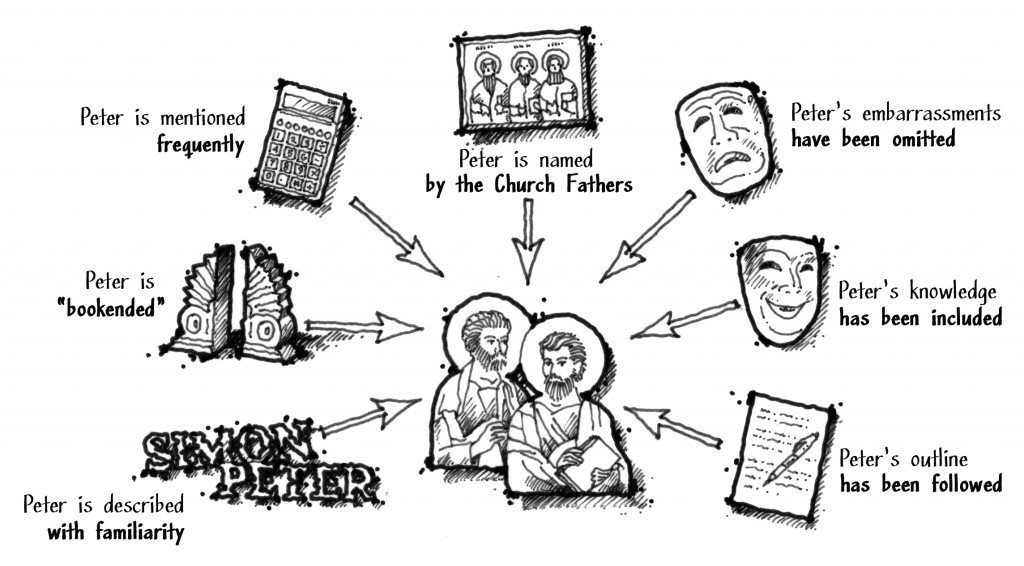
Illustration-11-1024x566Another great Bible study resource is the work of former cold case detective J. Warner Wallace. Here is a cool article and infographic on the authorship of the Gospel of Mark.

Jim Cymbala says, “The Scriptures are not so much the goal as they are an arrow that points us to the life-changing Christ.” Read more in his post The Limits Of Teaching.

Rosaria Butterfield wrote, “Unbelievers don’t ‘struggle’ with same-sex attraction. I didn’t….” Read more in her post The Dead End Of Sexual Sin.

GREAT NEWS: Kansas passes the nation’s first ban on abortion by dismemberment.

14 Quotes From “Not Knowing Where”

Not Knowing WhereNot Knowing Where is the first Oswald Chambers book I ever read, and I was instantly hooked. I recently re-read this book and found new gems I hadn’t seen before. You can read my full book review by clicking here, and then enjoy a few of the many, many quotes I highlighted this time around.

“To debate with God and trust common sense is moral blasphemy against God. … When God calls us He does not tell us along the line of our natural senses what to expect; God’s call is a command that asks us, that means there is always a possibility of refusal on our part. Faith never knows where it is being led, it knows and loves the One Who is leading.”

“The call of God only becomes clear as we obey, never as we weigh the pros and cons and try to reason it out.”

“God will never allow you to hold a spiritual blessing for yourself, it has to be given back to Him that He may make it a blessing to others. If you hoard it, it will turn to spiritual dry rot.”

“There is a difference between circumstances and environment. We cannot control our circumstances, but we are the deciders of our own environment. … ‘Circumstances over which I have no control’ is a perfectly true phrase, but it must never be made to mean that we cannot control ourselves in those circumstances.”

“At times it appears as if God has not only forsaken His Word, but has deliberately deceived us. We asked Him for a particular thing, or related ourselves to Him along a certain line, and expected that it would mean the fullness of blessing, and actually it has meant the opposite—upset, trouble and difficulty all around, and we are staggered, until we learn that by this very discipline God is bringing us to the place of entire abandonment to Himself.”

“God holds His children responsible for the way in which they interpret His will. We only discern God’s will by being renewed in the spirit of our minds in every circumstance we are in. We must learn to tell ourselves the truth on the basis of God’s Word.”

“In worship I deliberately give back to God the best He is given me that I may be identified with Him in it.”

“The greatest enemy of the life with God is not sin, but the good that is not good enough. … Many of us do not go on in our spiritual life because we prefer to choose what is our right instead of relying upon God to choose for us.”

“Reality is not found in logic; Reality is a Person.” 

“Spiritual fatigue comes from the unconscious frittering away of God’s time. When you feel weary or are exhausted, don’t ask for hot milk, but get back to God.”

“To say ‘I have got the victory’ is a selfish testimony; the testimony of the Spirit of God is that the Victor has got me.”

“A saint is not an angel and never will be; a saint is the flesh and blood theater in which the decrees of God are carried to successful issues. All of which means that God demands of us the doing of common things while we abide in Him.”

“Self-pity is satanic.”

“There is nothing more heroic than to have faith in God when you see so many better things in which to have faith.”