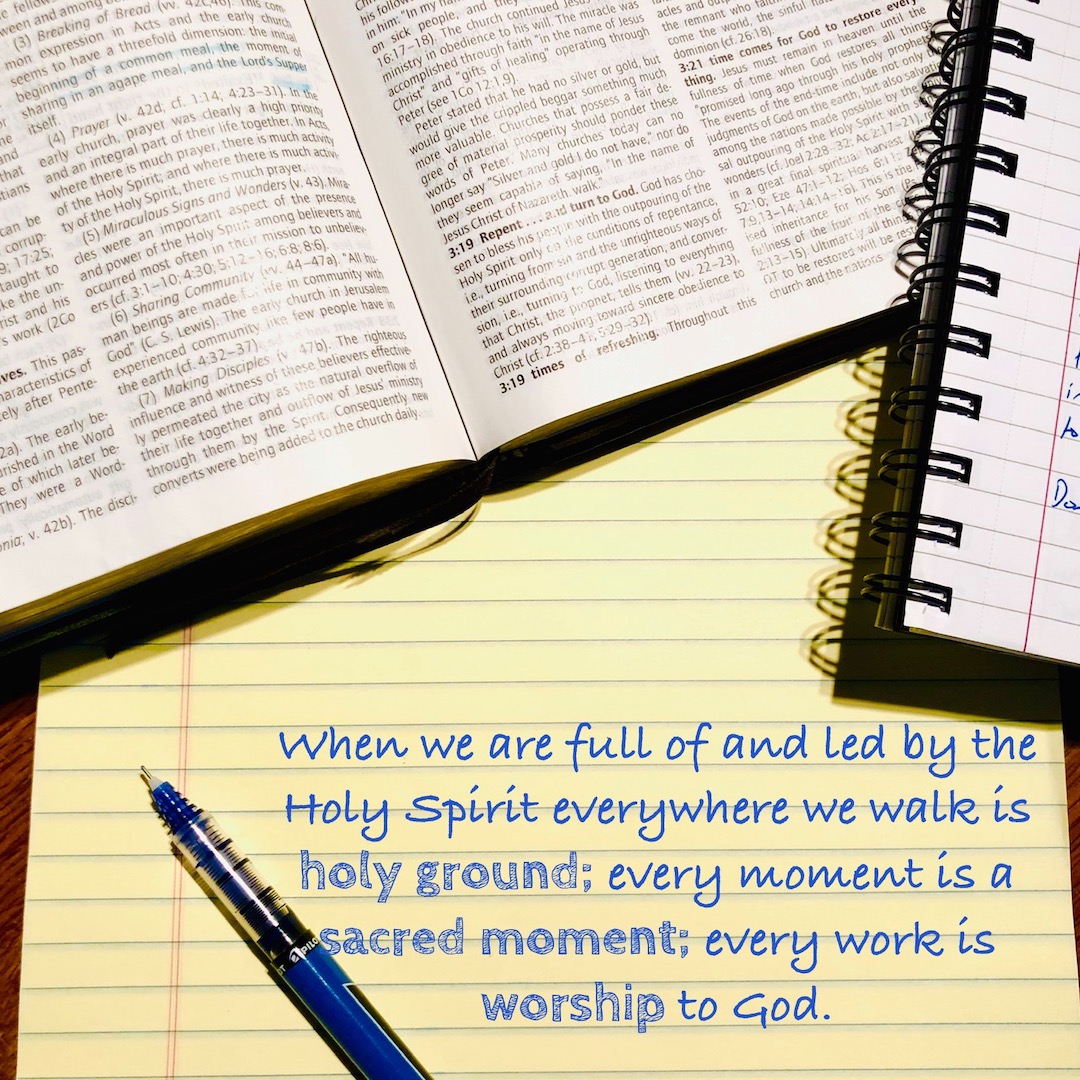
Like Jesus, when we are full of and led by the Holy Spirit everywhere we walk is holy ground; every moment is a sacred moment; every work is worship to God because we are occupied about the Father’s business.
Check out the full series of messages about the empowerment of the Holy Spirit in the series We Are: Pentecostal.
Listen to the podcast of this post by clicking on the player below, and you can also subscribe on Apple, Spotify, or Audible.
When people lash out at us—when they bite us—they could be giving us invaluable insight into what is truly in our heart. Before we respond too quickly, we need to take some time for introspection.
Check out this part of my conversation with John Opalewski and Jim Wiegand on the Leading From Alignment podcast.
Chapter 2 of When Sheep Bite is entitled ‘Is God Trying to Get My Attention?’ I tell a story about two similar bites I received from two totally different people who didn’t even know each other. I wrote—
As I drove back across the state, I kept the radio off and my ears open. I could feel the Holy Spirit asking me, “Why do you think two different people have called you the same nasty word?” The only honest answer I could give was, “Because it’s true.”
I wasn’t wrong in the way I held to the rules, but my overly-confident attitude had definitely crossed the line to become an in-your-face arrogance. I learned two lessons from this experience. First, if I do the right thing the wrong way, I’ve really done the wrong thing. Second, when similar attacks come, I need to pay attention.
Now, when a painful attack suddenly confronts me, I go to the mirror. Instead of asking, “What’s wrong with them that they would bite me like this?” I go to prayer to ask, “Did I do something that provoked this?” Sometimes I have literally gone into my bathroom, closed the door, and gotten nose-to-nose with myself to ask this question, and then listened for the Holy Spirit to speak to my heart.
My cousin Dick Brogden wrote, “Critics and skeptics are gifts to us, for in their aspersions they often bring to light a brokenness or a liability early on in its development in us. If we are secure enough to ferret out the truth through the condemnation of others, we remain healthy in the long term as our malady is exposed and dealt with before it becomes too serious.”
Remember that we are naturally self-protective, so this time of introspection will need to be supernaturally empowered by the Holy Spirit if we are going to see the true prompter of the attack.
Please check out my book When Sheep Bite to both heal from past bites and prepare yourself for the bites which are inevitably coming in the future.
Listen to the podcast of this post by clicking on the player below, and you can also subscribe on Apple, Spotify, or Audible.
As Paul is coming to the close of his letter to the believers in Rome, he writes these beautiful words, “I myself am convinced, my brothers and sisters, that you yourselves are full of goodness, filled with knowledge and competent to instruct one another” (Romans 15:14).
I love the high esteem Paul has for the Christians in Rome. He’s not looking for what’s wrong with them, but for what’s praiseworthy in them.
A mark of a godly leader is one who is always looking for the best in the people around him.
Leaders see the best in people—even if the people don’t see it in themselves yet.(Check out this short video.)
Leaders point out the specific qualities they see in their people—virtues like goodness, knowledge, and competence.
Leaders continue to sharpen their people, challenging them to excel even more. “Yet I have written you quite boldly on some points to remind you of them again” (v. 15).
Leaders enjoy spending time with their people and are refreshed by them.
But now that there is no more place for me to work in these regions, and since I have been longing for many years to visit you, I plan to do so when I go to Spain. I hope to see you while passing through and to have you assist me on my journey there, after I have enjoyed your companyfor a while. … So that I may come to you with joy, by God’s will, andin your company be refreshed (vv. 23-24, 32).
Leaders pray for their people and ask their people to pray for them. “I urge you, brothers and sisters, by our Lord Jesus Christ and by the love of the Spirit, tojoin me in my struggle by praying to God for me. Pray that I may be kept safe from the unbelievers in Judea and that the contribution I take to Jerusalem may be favorably received by the Lord’s people there” (vv. 30-31; see Paul’s prayer for them in 16:25-27).
Leaders publicly compliment their people (16:1-15).
And leaders protect and empower their people. “I urge you, brothers and sisters, to watch out for those who cause divisions and put obstacles in your way that are contrary to the teaching you have learned. Keep away from them. … The God of peace will soon crush satan under your feet. The grace of our Lord Jesus be with you” (16:17, 20).
I want to be this kind of leader. In order to do that, I need the help of the Holy Spirit. I must listen to His voice in order to make the changes I need to make so that I may lead in the most Christ-glorifying way possible, and help those around me live even more in their God-given gift zone.
This is part 85 in my series on godly leadership. You can check out all of my posts in this series by clicking here.
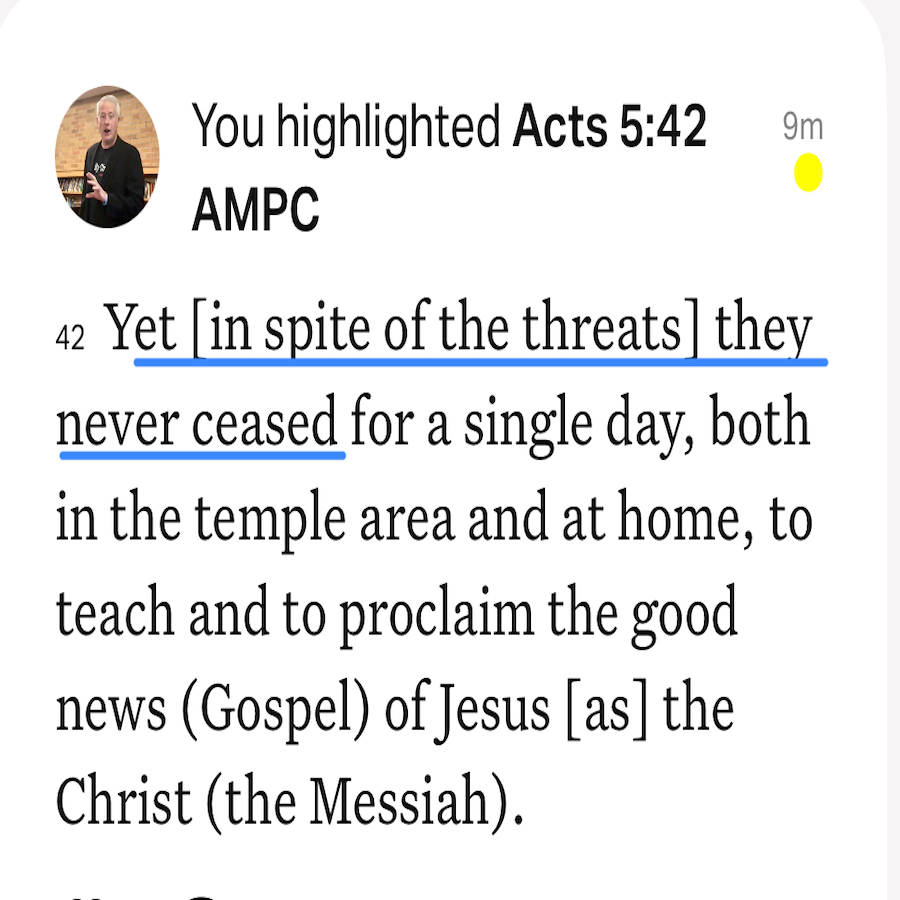
Yet [in spite of the threats] they never ceased for a single day, both in the temple area and at home, to teach and to proclaim the good news (Gospel) of Jesus [as] the Christ (the Messiah). (Acts 5:42 AMPC)
On the one hand, the apostles were sent by God to proclaim the name of Jesus; on the other hand, the Sanhedrin commanded them not to proclaim the name of Jesus (vv. 20, 28).
Not only had the Holy Spirit empowered and emboldened these men to testify, but Jesus also said (in John 14:26) that at key moments the Spirit would remind them of His words. One word Jesus had given them, which the Spirit undoubtedly brought to their remembrance, was this: “And do not be afraid of those who kill the body but cannot kill the soul; but rather be afraid of Him who can destroy both soul and body in hell (Gehenna)” (Matthew 10:28).
God is glorified when we give greater weight and reverence to His words than we do to the words of mere humans.
Listen to the podcast of this post by clicking on the player below, and you can also subscribe on Apple, Spotify, or Audible.
The Holy Spirit’s involvement in our lives isn’t reserved for just the “big” things, but He wants us to be aware of and tuned in to His voice and His thoughts all the time. There shouldn’t be a secular-sacred divide in our activities, but we should make every place holy ground and every moment a divine opportunity for God to be glorified. Or said another way, we shouldn’t have times of work and times of worship, but our worship should be seen in every single thing we do.
I think everyone of us has experienced at one time or another a poor employer or manager. Maybe it’s an employer that demands results but doesn’t give you the training or the tools to do the job. Or maybe you have the training and tools but you don’t know exactly how much you are able to use these things without crossing a line.
Maybe you have known a boss that is barely present, but when they do stop by the worksite, they aren’t happy with the work that has been done. On the opposite side, maybe it’s a boss who does everything and then gets mad that you aren’t keeping up or working as hard as them. It’s drudgery working for someone like this!
But, somewhat surprisingly, Jesus used more work examples to talk about the Kingdom of God than He did worship examples. He talked about farmers, bakers, builders, employers, managers, and employees way more than about worshiping, singing, or preaching.
One of the few glimpses we have of the early life of Jesus shows Him talking about His mission while on earth. Consider the story of Jesus in the temple in Jerusalem when He was 12 years old (Luke 2:41-49). The phrase in the NIV where Jesus says that He must be “in My Father’s house” can be translated…
Jesus was consistent about this idea of working while He was on earth (John 5:17, 36; 9:4; 17:4). For Jesus, His work was a delight because it was directed by the Holy Spirit (Luke 3:21-22; 4:1, 18-19; Acts 10:38).
Remember that I mentioned the unreasonable employer that gives us no training, no tools, no goals for which to aim, but expects us to work for his benefit alone. This was not the case with Jesus! He trained us, provided us with the Holy Spirit to guide us, told us the goal for which we were to aim, and said that both His Father would be glorified and we would be rewarded by our Kingdom work done on earth.
Jesus wants us to work as He did, and He promised that the Holy Spirit would help us in this (John 14:10-12, 24:49; Mark 16:19-20).
We saw that Luke 2:49 in the AMPC has Jesus saying, “occupied about My Father’s business.” In Luke 19:13 Jesus tells us to “occupy till I come” (KJV). This word is also translated into phrases like:
put this money to work (NIV)
do business (NKJV)
invest this (NLT)
Jesus is talking about the “talents” given to His stewards (Luke 19:11-13, 16-23). Every servant received the same thing: one mina. We all have been given one life to live; we all have been given 24 hours in a day; we all have been given opportunities to be occupied about our Father’s business.
The Holy Spirit as our Counselor is there at every moment, every conversation, every decision to help us hear His voice, think His thoughts, and sanctify every experience. Jesus says that He will reward our occupying until He returns. Just doing things like feeding the hungry, giving water to the thirsty, taking care of those in need. This sounds a lot like the work of Jesus in Luke 4:18-19 and Acts 10:38. This Spirit-empowered work earns the commendation from our Master, “Well done, good and faithful servant! Enter into your Master’s happiness!”
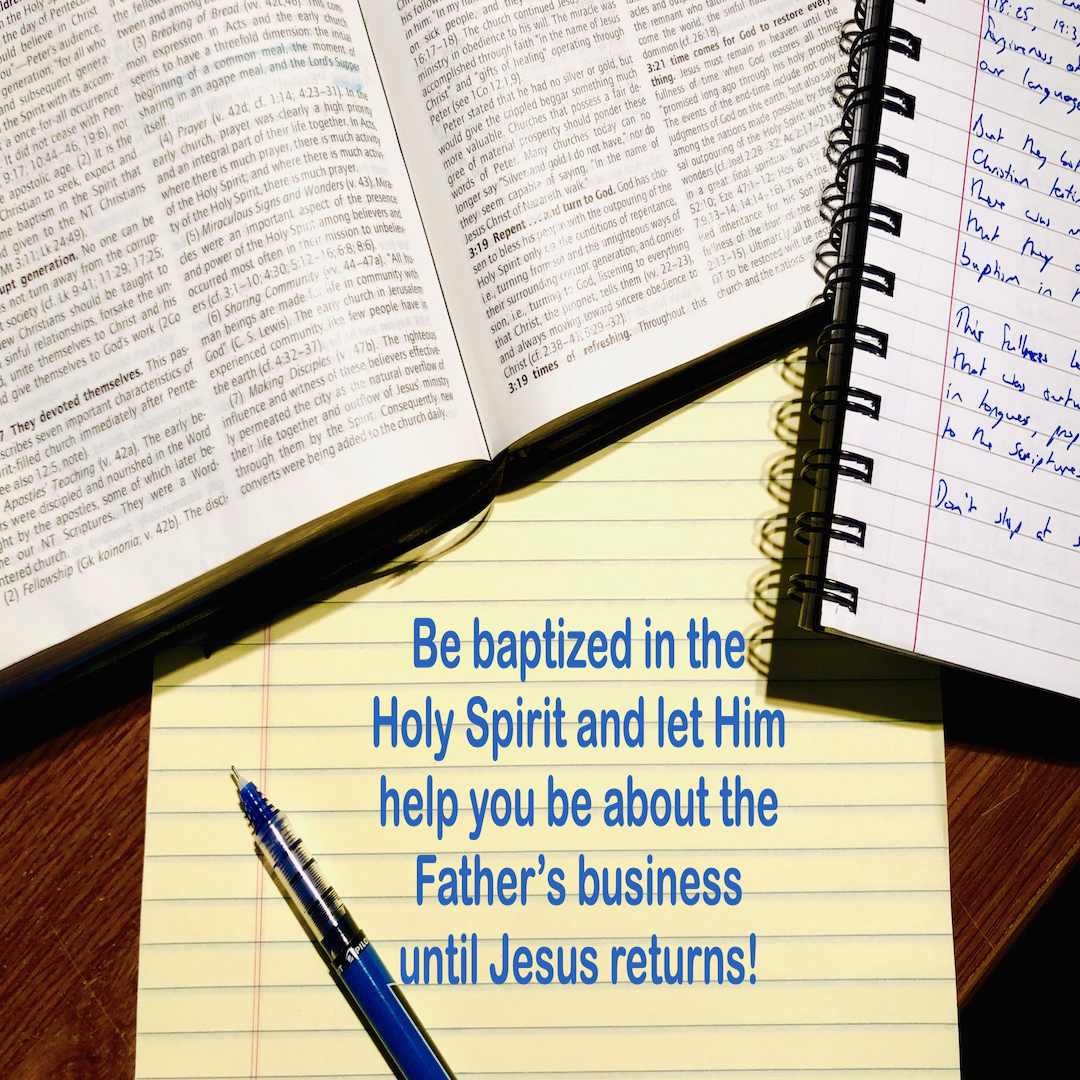
Be baptized in the Holy Spirit and let Him help you be about your Father’s business until Jesus returns.
Listen to the podcast of this post by clicking on the player below, and you can also subscribe on Apple, Spotify, or Audible.
Even with the Voice of the Holy Spirit in our ear and the Mind of God giving us insight, we still “miss it” sometimes. Maybe it’s fear or impatience or immaturity, but we try something on our own and the results are painful.
I like the maxim, “Sometimes you win, sometimes you learn.” It’s true, but in order to learn I need a proper lens or a wise tutor to help discover those lessons from my experiences. This is what the Holy Spirit does for us: He helps us make senses of our “misses.” Otherwise, if I don’t learn from these painful experiences I will become either arrogant and God opposes this kind of pride (Proverbs 14:7; James 4:6a), or I remain ignorant (Proverbs 15:32; James 4:6b).
Peter heard from Jesus that the baptism of the Holy Spirit was intended to empower the Christians to take the Good News of Jesus to all people—including Gentiles. Peter struggled with this part, as would all good Jews. In their minds, Gentiles weren’t eligible for the blessings of God, especially not the gift of eternal life which would allow them to be in God’s presence forever!
Before we look at Peter, we need to remember what was happening with Saul/Paul at the same time. Saul met Jesus (Acts 9:3-15), and he then went to Jerusalem (vv. 26-28; Galatians 1:13-19).
Now let’s go back to Peter. He had just seen a vision from God and heard the Voice of the Spirit (Acts 10:9-16, 19-20). In obedience to this Voice, he went to Cornelius’ house and was given the Mind of God to preach to them. These Gentiles not only accepted Jesus as their Savior but were baptized in the Holy Spirit (vv. 44-48).
Now let’s switch back to Paul for a moment. Antioch became the home base for Paul and Barnabas (where the believers were first called Christians), and apparently there was a large Gentile population there. At one point, Peter came to visit and struggled with whether or not the Gentile Christians must then convert to Judaism. Peter was struggling with obedience to the vision that God had shown him, his disobedience was beginning to affect others (including Barnabas), and Paul called Peter out on this (Galatians 2:1, 7-14).
Back in Jerusalem, the Jewish Christians were insisting that the Gentile Christians become Jews. It was this controversy that prompted the Jerusalem Council. At this Council, Peter responded like one who had throughly learned a lesson from his previous “miss” (Acts 15:5-11).
I like this verse in the Amplified Bible, particularly one phrase: I will praise and give thanks to You with uprightness of heart when I learn by sanctified experiences Your righteous judgments (Psalm 119:7 AMPC).
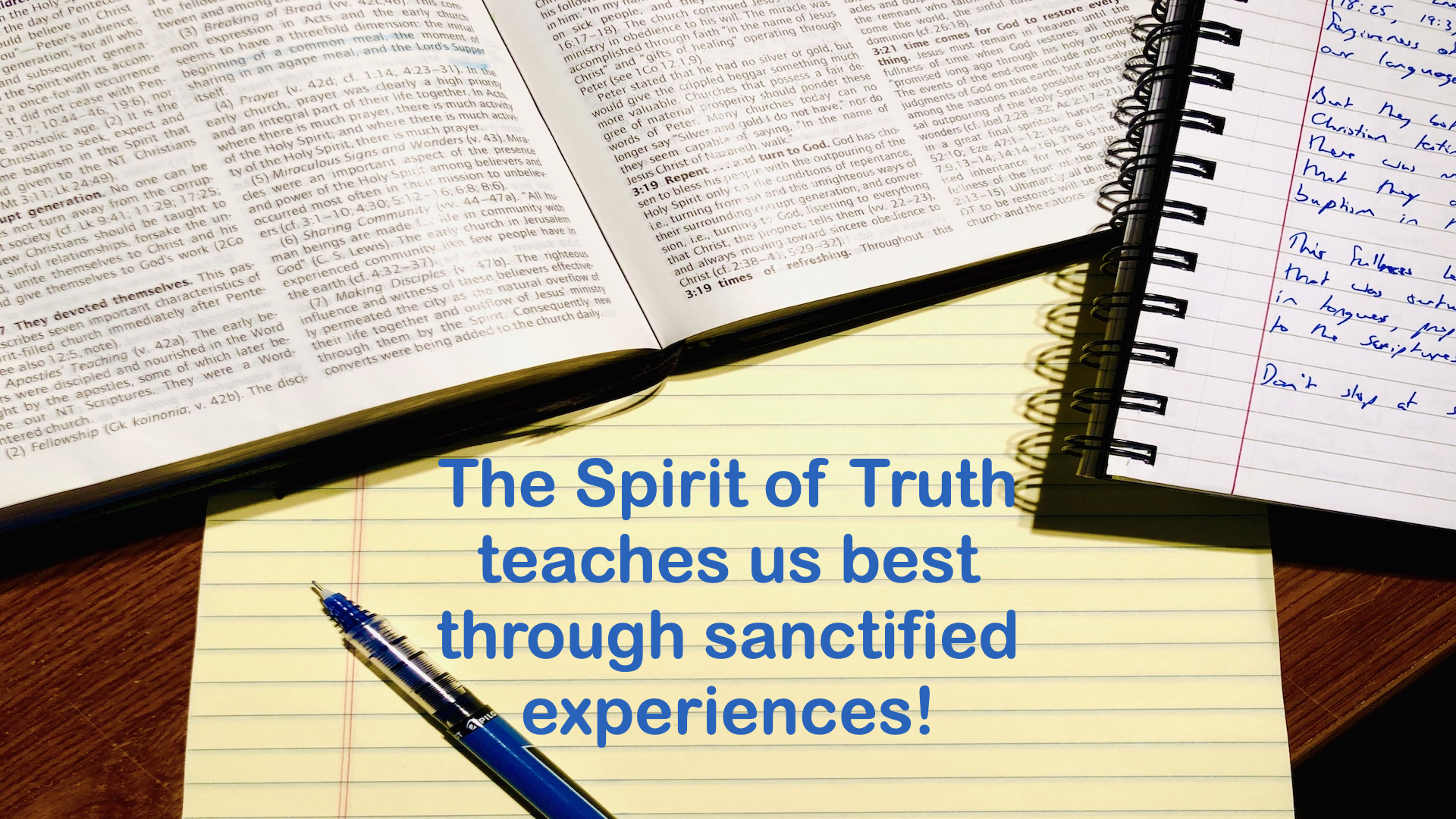
Sanctified experiences. A “miss” that the Holy Spirit uses to teach us. The “miss” has been sanctified to become a learning experience. This is what Jesus said the Spirit of Truth would do for us (John 16:13).
There are things we simply experience, and then there are “sanctified experiences” where the Holy Spirit teaches us an invaluable lesson. These sanctified experiences are what the Holy Spirit uses to bring our thought and conduct into alignment with the perfect standard of God’s Word.
The Holy Spirit never condemns us for our missteps (Romans 8:1), but uses them for God’s glory (v. 28).
Just as Paul had to help Peter learn to pay attention to the Voice of the Spirit, the Holy Spirit wants to make us learner-teachers as well. In Psalm 119:7 the Hebrew word for “learn” is lamad which is also the word for “teach.” In other words, I’ve learned it well enough to teach it to another person. Even David with his sinful behavior—a really big “miss”—learned from the lesson from the Spirit of God so well that he could teach others (Psalm 51:10-13).
Spirit-baptized Christians can lean into the Spirit of Truth to help them learn sanctified experiences from even the difficult things that have happened to them.
When there is a misunderstanding between the leader and a team member, insecure leaders want the other person to change. Secure leaders, however, take ownership and ask, “What do I need to do differently?” Check out more from The Craig and Greg Show.
In elaborating on the words of Jesus in Matthew 5:13 about Christians being the salt of the earth, T.M. Moore wrote, “In Jesus’ day, salt had three primary functions. Most people would have understood two of these, but only those raised in an Old Testament framework would have known about the third.” Read more about what churches should be considering about how they season the community around them.
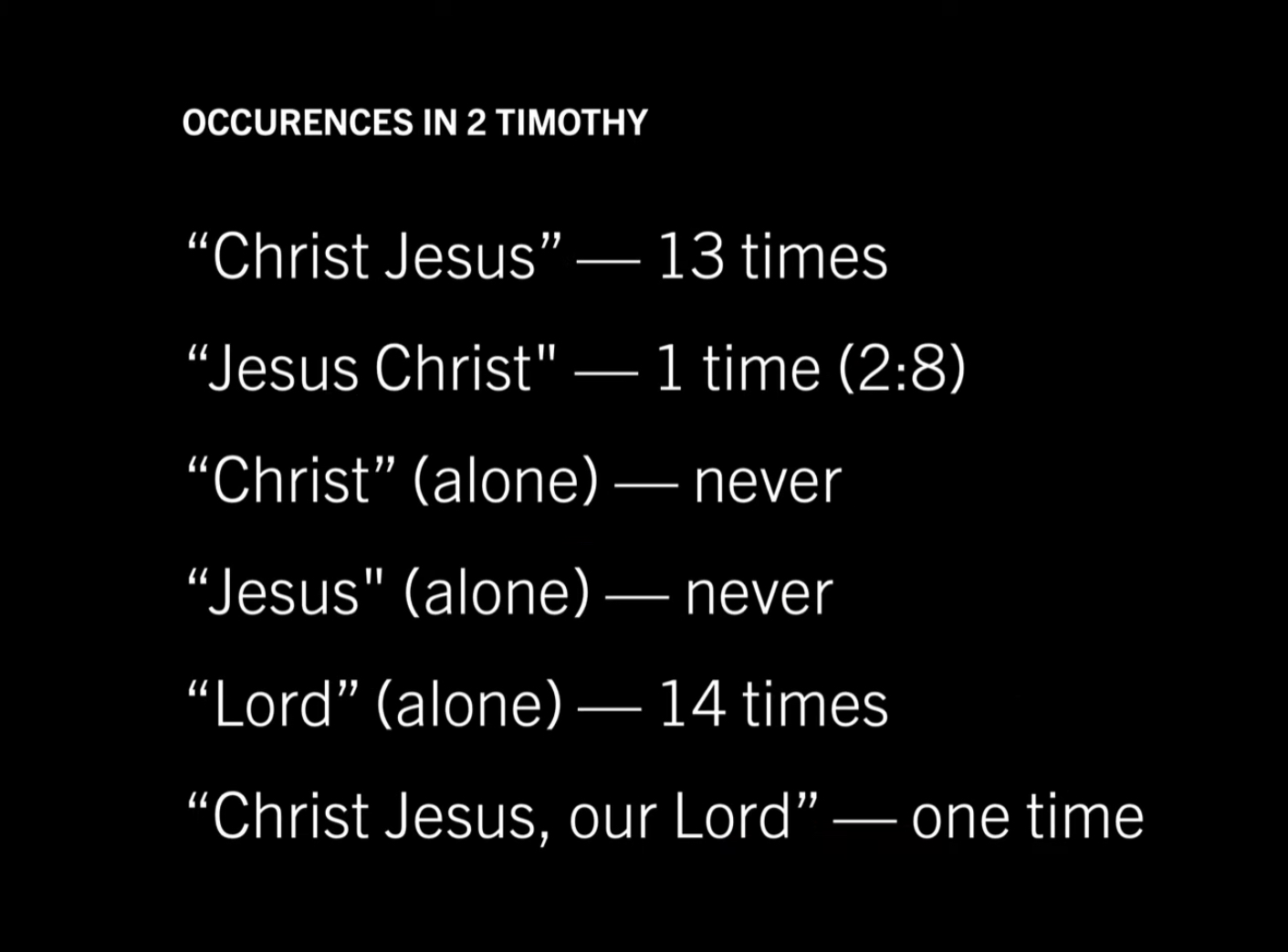
In his “Look at the Book” series, John Piper expounds on the many ways Paul refers to Jesus in his second letter to Timothy. There are several ways, but Paul’s preferred way is “Christ Jesus.” Pastor John unpacks the Hebrew and Greek origins of these words and titles, and why he thinks Paul especially gravitated toward this title.
“Aerosols from penguin excrement may help trigger cloud formation, reducing solar heating and helping stabilize local areas of the Antarctic climate, study finds.” Hmmm, it’s almost like God designed His creation to take care of itself—because He did!
And an article in Science says, “According to secular models of Solar System formation, Earth, as an inner Solar System planet, should have little to no water.” And yet more than 70% of Earth is covered with water!
Aelred of Rievaulx wrote, “In friendship there is nothing more outstanding than faithfulness, which seems to be both the nurse and guardian of friendship. In all of life’s turns, in adversity and prosperity, in joy and sadness, in delightful and bitter circumstances, it reveals itself to be comparable to friendship, holding in the same regard both the humble and the exalted, the poor and the rich, the strong and the weak, the well and the infirm.”
Commenting on Aelred’s words, T.M. Moore observed, “Don’t we all want friends like that, who not only will provoke and prod us to grow in the Lord, but will stand by us in good times and bad, when we’re up and when we’re down? But if we would have such friends, we must be good stewards of their trust. This, again, is why spiritual friendships must be grounded in the Lord and focused on Jesus if they are going to bear the fruit of His indwelling Spirit.”
Evolutionary scientists claim to have made some steps forward in their understanding of the origins of life by using “the last universal common ancestor (LUCA).” But creationists like those at ICR observe that, “This mysterious LUCA is an unknown entity that existed from an unknown time ago at an unknown place by an unknown chain of unknown processes.” Clearly, the hypothesis that is the most straightforward and explainable is that God created the life in our universe just as the Bible states.
Along the same lines, Glenn Schrivener asks, “What do you think was there ‘in the beginning’—before peoples, planets, and protons? If you could hit rewind on the history of the universe and go back as far as possible, what would you find?” Then he gives us four possible things we may consider.
Listen to the podcast of this post by clicking on the player below, and you can also subscribe on Apple, Spotify, or Audible.
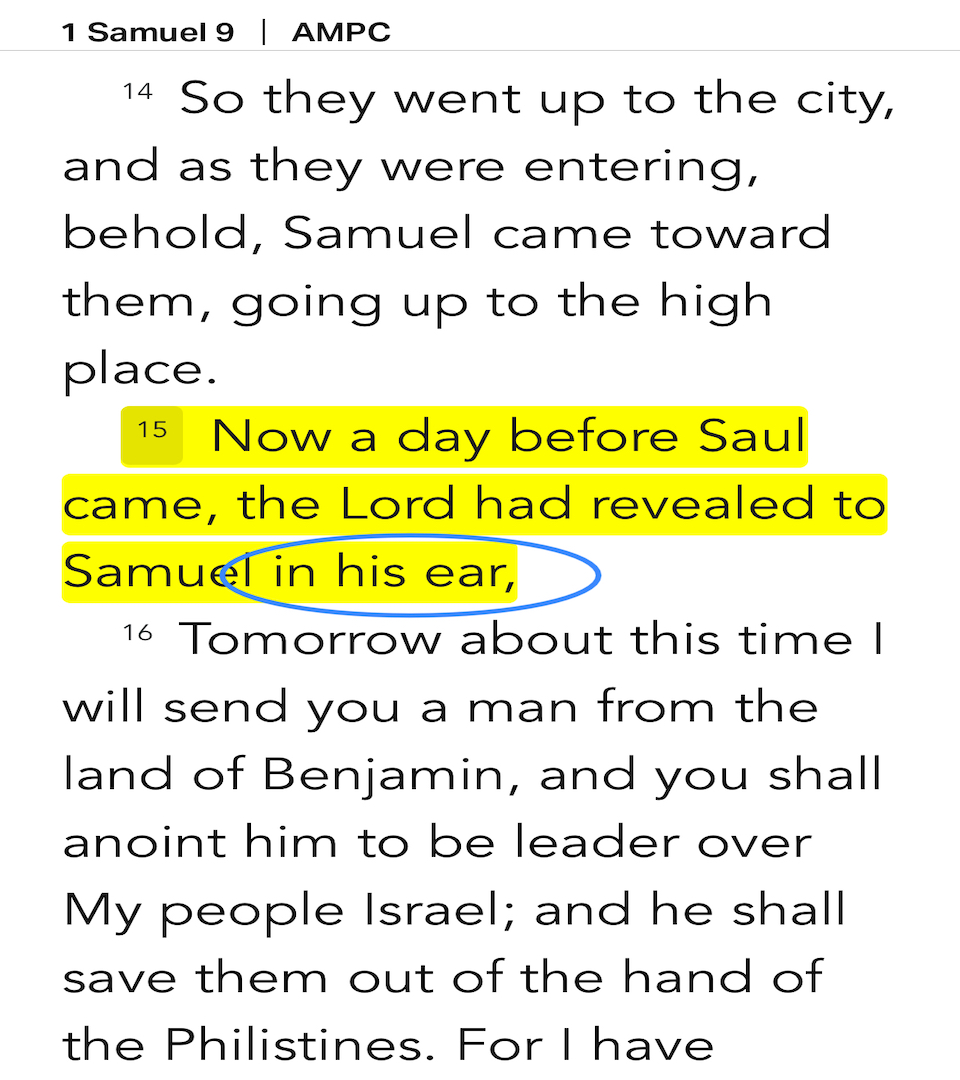
Last week we talked about the Voice of the Holy Spirit. I love the phrase from 1 Samuel 9:15 where God “told Samuelin his ear” about Saul’s arrival and what he should say to Saul. Then the Holy Spirit’s Voice for all of us is foretold in Isaiah 30:21.
It’s great hearing the Spirit’s Voice, but He also empowers us to know the Mind of God.
This is not something that automatically comes to every Christian at the moment they invite Jesus to be their Lord and Savior, as we see mention of immature Christians throughout the New Testament.
Even after Jesus is resurrected from the dead, we see His followers as unsure, troubled men. We meet their…
This is all post-resurrection but pre-conversion, but look at what happens next. After Jesus breathes on them (John 20:22), they are peaceful (vv. 19, 21, 26) and they can now understand the Scriptures (Luke 24:45-48).
As we’ve said, we shouldn’t stop at salvation. Certainly, Jesus wanted more for His followers than merely salvation. He wants His disciples empowered for witnessing and disciple-making (Luke 24:48; Acts 1:4-5, 8).
Check out these examples of the Holy Spirit sharing with us the mind of God:
Joseph—Genesis 41:16, 38-40
Daniel—Daniel 2:19-23, 27-28, 47
Peter—Acts 2:14f; 3:17-26; 4:8-12
Stephen—Acts 7
Philip—Acts 8:30-35
And just in case you think this is just for “super spiritual” people, look how the Holy Spirit helps the whole Church share the Gospel—
After they prayed, the place where they were meeting was shaken. And they were all filled with the Holy Spirit and spoke the Word of God boldly. … Those who had been scattered preached the word wherever they went. (Acts 4:31, 8:4).
This was always God’s plan! Paul harkens back to prophecies like Isaiah 55:8-9, Isaiah 40:13, and Jeremiah 31:33 when he writes about Christians having “the mind of God” in 1 Corinthians 2:6-16.
He says, “These are the things revealed to usby His Spirit” (v. 10).
What things? “Things God has prepared for those who love Him”—things which human eyes haven’t seen, human ears haven’t heard, human minds haven’t conceived (v. 9). These are the the very thoughts of God Himself!
Just as my spirit is the only one that knows what’s really in my mind, the Holy Spirit is the only One Who knows the mind of the Father and Son (v. 11). We have been given the Holy Spirit “so that we may understand what God has freely given us” (v. 12). Contrast this with the dull, unfruitful minds of both unbelievers (2 Corinthians 4:4) and carnal Christians (Philippians 3:18-19).
This mind of God is given to us for our edification so that we can be empowered witnesses and disciple-makers. So don’t stop at salvation, but be baptized in the Holy Spirit, and then keep on being filled with the Spirit.
Listen to the podcast of this post by clicking on the player below, and you can also subscribe on Apple, Spotify, or Audible.
I would like you to think about a wise, loving friend. One who has years of godly wisdom, empathy, loads of patience, and loving boldness. When you talk with them, you know that you will always get good counsel—even if you may not like exactly what they have shared with you, deep down you know it is still sound wisdom. This is what the Holy Spirit—as our Counselor—does for us.
The Holy Spirit is not merely a force, but He is a Person. Jesus Himself give the Spirit the pronouns “He / Him / His.”
I especially want to key in on those last two attributes where the Holy Spirit is speaking to us.
Samuel grew up during the time of the judges, where everyone did whatever they thought best. This is a time that is described like this, “In those days the word of the Lord was rare; there were not many visions” (1 Samuel 3:1). Visions in the Hebrew language is two words: open communication. In other words, people just weren’t listening for God’s voice.
Samuel had to learn to hear God’s voice as well (see this passage and all of the other biblical references in this post by clicking here).
God doesn’t reveal His heart to those who are unwilling to obey. His persistent call is for obedience to His Word and reliance on His provision. So the word of the Lord had to be revealed to Samuel (v. 7). When Samuel said he was listening (v. 10), that was a posture of readiness to obey.
God wants to reveal His heart to His obedient people. I love how God does this later for Samuel, “Now the Lord had told Samuel in his earthe day before Saul came…” (1 Samuel 9:15).
This is how Jesus described the Holy Spirit in John 7:37-39, as streams that flow continuously out of our being. And Jesus also calls Him Counselor (John 14:16).
Isaiah described our Counselor like this, “Whether you turn to the right or to the left, your ears will hear a Voice behind you, saying, ‘This is the way; walk in it’” (Isaiah 30:21).
Let’s call this GPS = God’s Personal Spirit in us!
Those who are baptized in the Holy Spirit—utterly yielded to His wisdom—will experience:
More insight into God’s Word—Psalm 119:18
More timely application of God’s Word—2 Timothy 3:16-17
More boldness in prayer—2 Samuel 7:27 (same word for in his ear as Samuel experienced)
All Christians have a deposit of the Holy Spirit in their lives at the moment of salvation. The baptism in the Holy Spirit is a completed yielding to the Counselor’s influence. So don’t stop at salvation, but ask Jesus to send you what the Father has promised (Luke 24:49; Acts 2:33).
Check out all of the messages in our series leading up to Pentecost Sunday by clicking here.
Pentecost for over 1500 years was a celebration in Jerusalem that brought in Jews from all over the world. But on the Day of Pentecost which came just ten days after Jesus ascended back into heaven, the meaning of Pentecost was forever changed!
Followers of Jesus—now empowered by an infilling of the Holy Spirit—began to take the good news of Jesus all over the world. These Spirit-filled Christians preached the Gospel and won converts to Christ even among hostile crowds, performed miracles and wonders, stood up to pagan priests and persecuting governmental leaders, and established a whole new way of living as Christ-followers.
We, too, can be Pentecostal followers of Jesus Christ today. We can experience an anointing and an empowering in our lives that turns ordinary Christianity into extraordinary Christianity!
Please join me this Sunday at Calvary Assembly of God as we rejoin this series. You can check out what I taught in this series in 2023 by clicking here.



 Like Jesus, when we are full of and led by the Holy Spirit everywhere we walk is holy ground; every moment is a sacred moment; every work is worship to God because we are occupied about the Father’s business.







 Craig T. Owens