Listen to the audio-only version of this podcast by clicking on the player below, or scroll down to watch the video.
I am not a very good golfer, so when Greg and I hit the course together Greg is generous enough to give me a mulligan—sometimes a lot of them! In the same way, we as leaders need to be willing to give our team members chances to learn from and improve upon their mistakes. In this episode, we discuss how embracing a “mulligan culture” in your organization helps everyone grow and thrive.
[0:22] I explain what Greg gives me that is a huge blessing
[1:25] Leaders need to be gracious.
[2:56] What is the goal of mulligans?
[4:10] Mulligans can cost our business something. How do we calculate that?
[7:18] Success usually goes up with the mulligan attempt.
[9:54] Expect greater success in the second chances.
[11:04] Mulligans need to be given in a safe environment.
[13:06] Second chances and comeback stories are inspiring!
[14:31] Remember that people are the focal point of our mulligans.
[14:55] Greg shares about an unusual phobia with which many people struggle.
[16:50] An important reminder seasoned leaders need to share with emerging leaders.
[18:22] High-performing leaders make it look easy because of the mulligans other people gave them along the way.
Check out this episode and subscribe on YouTube so you can watch all of the upcoming episodes. You can also listen to our podcast on Spotify and Apple.
Listen to the audio-only version of this podcast by clicking on the player below, or scroll down to watch the video.
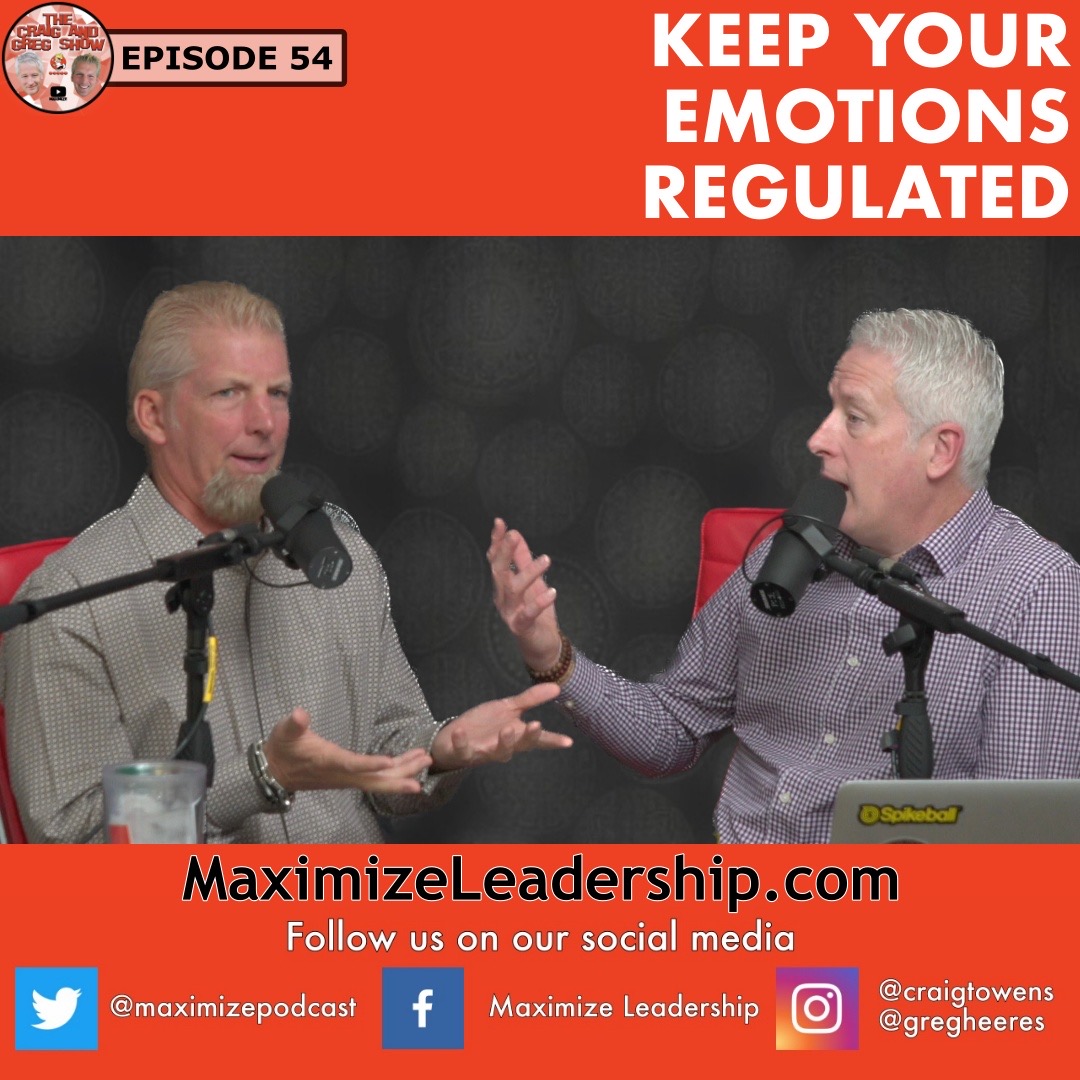
As a leader, you will have to deal with very emotional situations from time to time. While you may not always have control over when these situations arise, you do have the ability to control your reaction to them. In this episode of The Craig and Greg Show, we discuss emotional regulation and how keeping your emotions managed can be a powerful tool for leaders.
[0:34] Well-regulated emotions are powerful.
[0:55] How do we keep emotions in check?
[2:52] Greg thinks of emotional regulation as a throttle.
[3:31] What are the messes created by unregulated emotion?
[5:59] The triggers of emotional response.
[8:35] We can’t control situations, but we can control our responses.
[9:06] The four categories of regulation.
[10:52] What should you look for to help you be more self-aware?
[13:25] Don’t give up how you feel.
[14:12] Self-awareness doesn’t come from a book, it takes practice and reflection.
[16:10] Slow down!
[16:40] Dis-regulated emotions hurt your ability to influence.
[19:05] How to improve your emotional regulation skills.
[22:48] I discuss the difference between responding and reacting.
[24:02] Greg says people are sensitive and the damage done can be lasting.
[25:27] Greg shares an insightful quote from Viktor Frankl.
[26:45] We would love to coach you if you need help with emotional regulation.
Check out this episode and subscribe on YouTube so you can watch all of the upcoming episodes. You can also listen to our podcast on Spotify and Apple.
Listen to the podcast of this post by clicking on the player below, and you can also subscribe on Apple, Spotify, or Audible.
Sometimes people say it would be nice to live a carefree, never-have-troubles life. But I think we would rob ourselves of so many lessons if we avoided all of the difficult things.
I’m not saying to seek out things that are difficult, but instead of trying to get out of those difficult things, try to see what lessons you can get out of those difficult things.
Listen to the audio-only version of this podcast by clicking on the player below, or scroll down to watch the video.
When we think about leadership, we often envision the people in organizationally designated leadership roles “leading down” to the people on their team. In this episode of The Craig And Greg Show, we flip the script, discussing how you can “lead up” to those above you and help your team achieve greater levels of success.
[0:30] This is part 1 of a new series of periodic episodes of how to lead at all levels of your organization.
[1:07] What is the real definition of a leader?
[1:55] You need different skills to lead up based on how receptive your leader is.
[3:31] Do you have the right tools to lead up, or do you need to fill your toolbox first?
[5:30] What happens when the leadership above you changes?
[6:35] There are two really important words when leading up: stewardship and accountability.
[7:59] “I told you so” doesn’t help you lead up, nor does withholding information from your up-leader.
[11:55] What are the best ways to talk to your up-leader?
[14:35] Everyone in the organization already knows when you have the good ideas, so you don’t have to announce it.
[15:05] How do you balance being proactive with being too aggressive?
[16:05] What lessons can you learn from working with your difficult up-leader?
[17:42] You shouldn’t try to “fix” your up-leader, but help your up-leader.
[19:34] I share how I kept my attitude in check with my difficult up-leader.
[22:00] Coaches can help you do what you’re already doing better than you’re currently doing it
Check out this episode and subscribe on YouTube so you can watch all of the upcoming episodes. You can also listen to our podcast on Spotify and Apple.
I am really looking forward to a new series of sermons that I am launching this Sunday. This will be a once-per-month series for the remainder of the year and it’s simply called A Christian’s Mental Health. If you don’t have a home church in the west Michigan area, I would love for you to join me in person, but the sermons will also be posted on my YouTube channel.
T.M. Moore has an outstanding post called The Essence of the Lie. In one part, Moore writes, “Thus the lie claims to be the truth, but, at the same time, it insists that truth is personal, relative, pragmatic, and utilitarian. Truth, from this perspective, is not absolute, but dynamic, changeable rather than fixed. It is conditioned by circumstances of time and place. At the end of the day, people are the final arbiters of truth, and truth is whatever they find to be useful for their purposes. Ultimate truth is that which people impose on others by one or another kind of force, whether intellectual, political, or physical.” Check this one out!
Harvard University has been studying a group of individuals since 1938 to try to determine the main factors that contribute to a long and healthy life. The director and assistant director of this study just published an article that sums up what they have learned over all these years—“[If] we had to take all 85 years of the Harvard Study and boil it down to a single principle for living, one life investment that is supported by similar findings across a variety of other studies, it would be this: Good relationships keep us healthier and happier. Period. If you want to make one decision to ensure your own health and happiness, it should be to cultivate warm relationships of all kinds.”
“The battle for control and leadership of the world has always been waged most effectively at the idea level. An idea, whether right or wrong, that captures the minds of a nation’s youth will soon work its way into every area of society, especially in our multimedia age. Ideas determine consequences.” — The American Covenant
“The storms of life are no longer our point of reference when [Jesus] is our focal point.” —Dutch Sheets
John Stonestreet was intrigued by a street reporter asking, “What are men good for?” There were a lot of soft, ambiguous answers given, but John quipped, “Men are good for fathering, protecting, loving, providing, leading, fighting for what’s right with their lives if need be, and obeying, in a masculine way, the creation mandate of the God who made us male and female and declared both ‘very good.’ Was that so hard?” Amen!
There has never been anyone as perfectly healthy as Jesus. He was wise, physically healthy, spiritually strong, and emotionally resilient. My co-host Greg and I talked about this on a recent episode of our leadership podcast The Craig And Greg Show. Check out this snippet. I dive deeper into this topic in five chapters in my book Shepherd Leadership.
Fight The New Drug reports how easily sex trafficking happens in the porn industry. They also share a recent survey of how many teens are watching pornography while at school.
Listen to the audio-only version of this podcast by clicking on the player below, or scroll down to watch the video.
As leaders, it’s our responsibility to help our organization grow. As Greg and I discuss in this episode of The Craig And Greg Show, one of the best ways to do that is by focusing on your own personal development. It might seem counterintuitive, but by focusing inward we make ourselves more flexible, robust, and prepared leaders. This, in turn, enables us to better influence and encourage others in our leadership roles.
[17:21] Check out some of the benefits of personal development.
[19:15] It’s important to self-reflect on the areas where we’ve already grown.
[20:34] More benefits that come with personal development.
[23:10] Personal development is the best resume.
[25:07] I have seen that as I develop myself I am able to be a greater help for my team’s development.
[26:14] Comparing is a personal development killer.
[27:24] Progress is exciting!
[29:22] Greg and I would love to help coach you in your personal development.
Check out this episode and subscribe on YouTube so you can watch all of the upcoming episodes. You can also listen to our podcast on Spotify and Apple.
Listen to the podcast of this post by clicking on the player below, and you can also subscribe on Apple, Spotify, or Audible.
There are so many things a leader can do to develop themselves and develop the people around them. In fact, at times there may be too many things from which we could choose!
So how do we narrow it down? How do we know which things to guard in our schedule, which things to drop, and which things to add?
One thing that has been immensely helpful for me is asking the question, “Why do I want to do this, or learn this, or make a commitment to this?” And then answer the question with these two words, “So that….”
What is the “so that” I am aiming for? How will that thing enhance my leadership or develop me personally? I need to keep asking that question again and again until I hit upon the key factor that needs to be added to my schedule and then guarded in my schedule.
I co-host a leadership podcast called The Craig And Greg Show with my lifelong friend Greg Heeres. On a recent episode, we were discussing the value of personal development and we got into this “so that” topic.
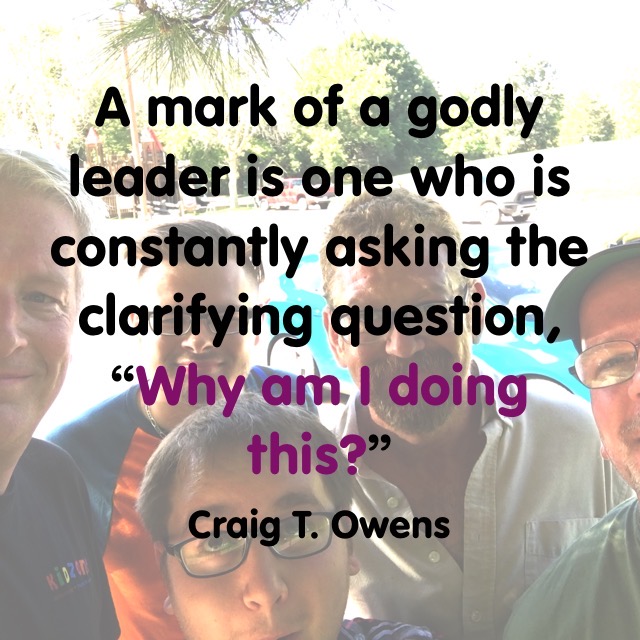
A mark of a godly leader is one who is regularly asking the question, “Why am I doing this?” and then continually drilling down to a solid “so that” reason.
If I can help coach you through this process in your leadership journey, please reach out to me.
This is part 68 in my series on godly leadership. You can check out all of my posts in this series by clicking here.
[1:47] What are some reasons people don’t set goals?
[3:10] The trap of comfort zones.
[5:14] Are you afraid of achievement?
[5:57] The balance of internal and external discipline.
[9:21] We would love to help you stretch to the next level!
[10:30] Why do people set goals?
[13:42] Why are goals hard to attain?
[14:31] Time is not manageable.
[15:30] Self-awareness and clarity are tools to help set goals.
[17:48] Be a goal-influencer by supporting others’ goals.
[19:20] Take time to celebrate reaching goals.
[22:40] Sharing goals with others lets them know what’s important to you.
[23:31] Celebrating steps toward a goal helps maintain motivation.
[25:00] I love this quote from Andrew Wood on incremental steps.
Check out this episode and subscribe on YouTube so you can watch all of the upcoming episodes. You can also listen to our podcast on Spotify and Apple.
Listen to the podcast of this post by clicking on the player below, and you can also subscribe on Apple, Spotify, or Audible.
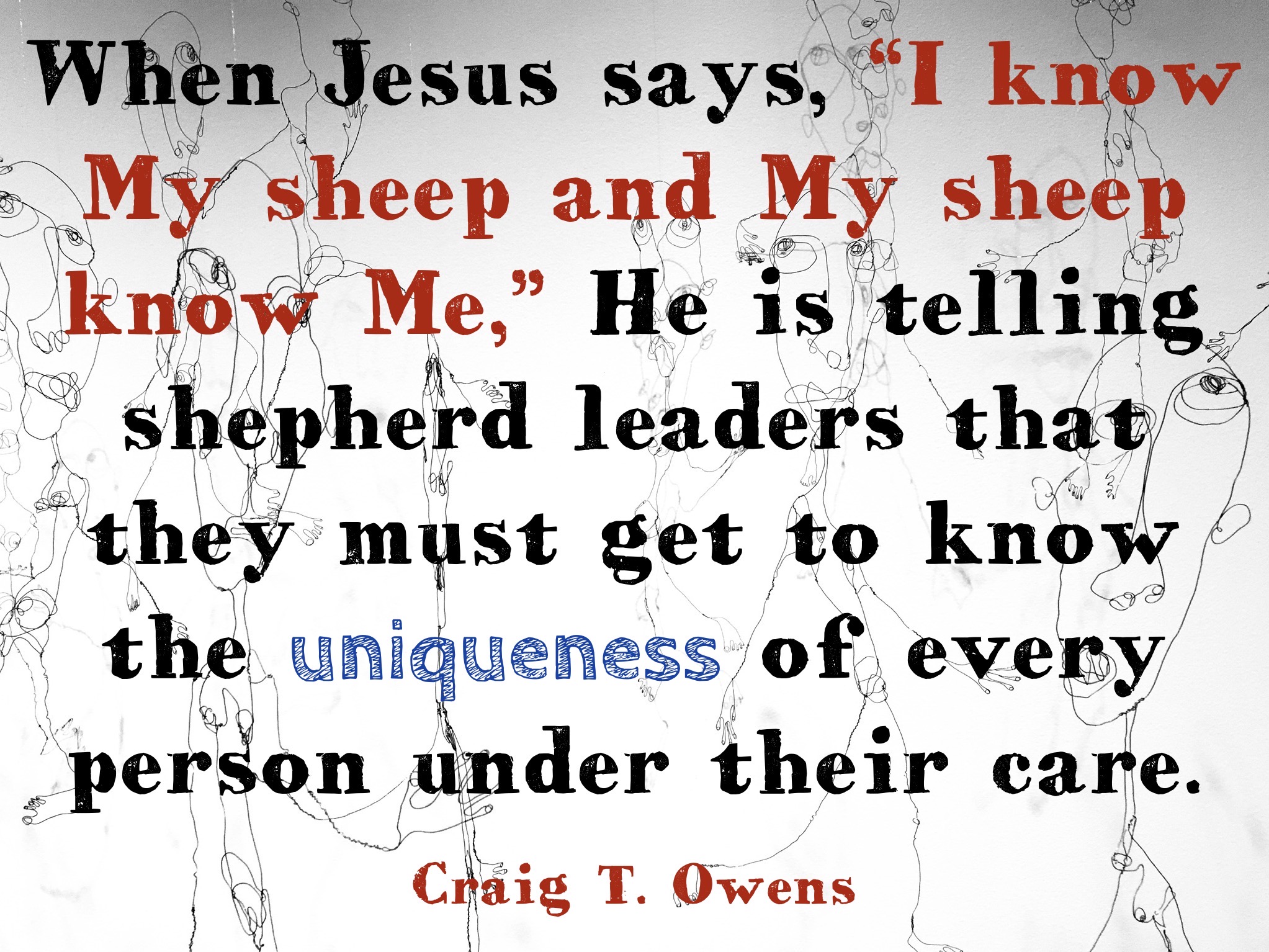
An interesting comment that Jesus made that should catch the attention of every leader is this: “I know My sheep and My sheep know Me” (John 10:14). Jesus is telling us that He knows the uniqueness of every person.
Combine this with David’s encouraging words about Jesus as our Good Shepherd in the opening words of Psalm 23, “The Lord is my shepherd; I have all that I need” (Psalm 23:1 NLT).
This tells me that quality shepherd leaders…
…are around their teammates enough to know them personally.
…can quickly ascertain when their teammates are feeling stress or anxiety.
…know how to give their teammates what they need to destress in a healthy way.
My friend Greg and I discussed how leaders can use playtime as an effective tool to keep their teammates at their healthiest. Check out this short clip—
If you would like to watch this full episode from The Craig And Greg Show, please click here.
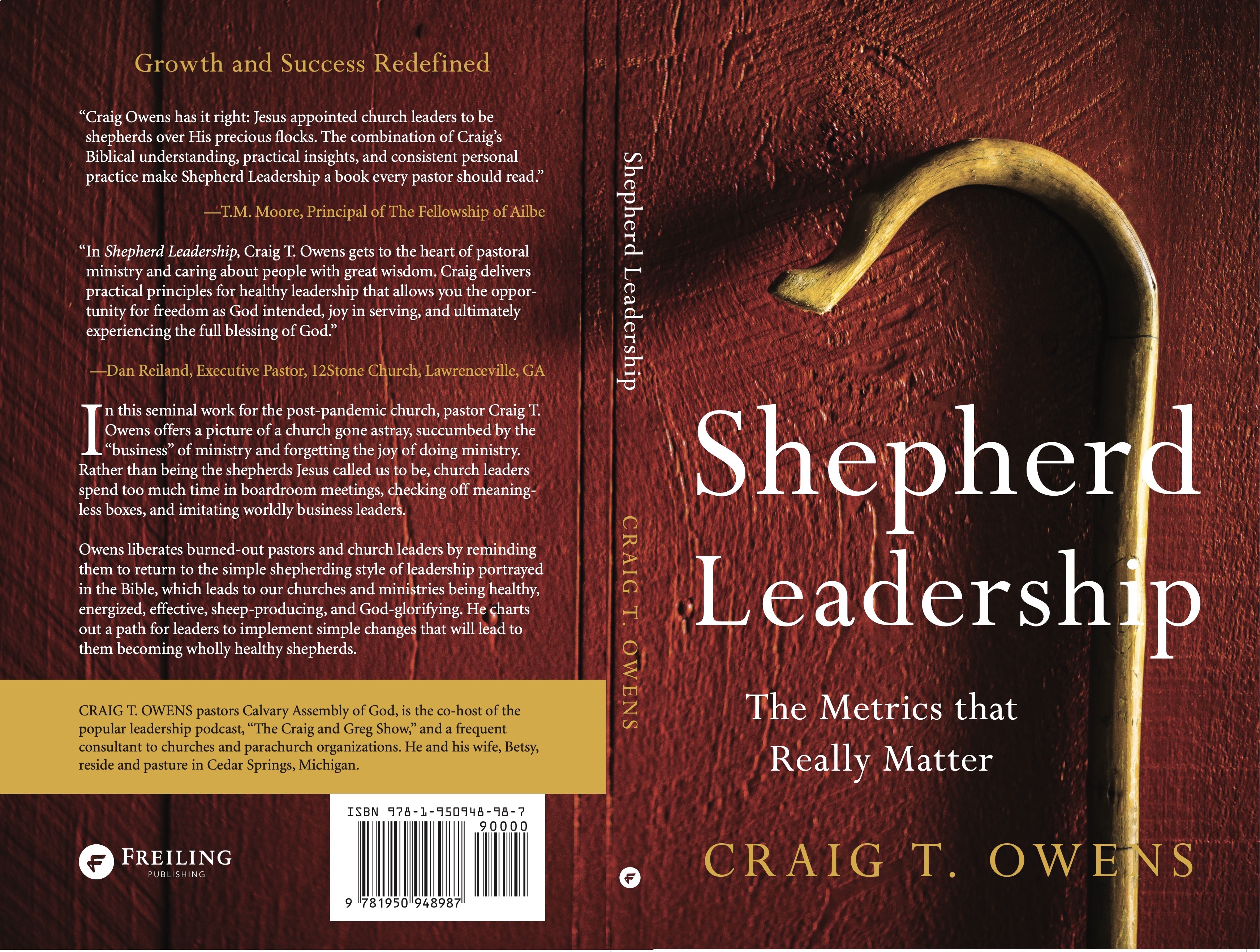
I also talk about how wise leaders take care of those under their care in my book Shepherd Leadership: The Metrics That Really Matter. It’s available in print or ebook, and in audiobook through either Audible or Apple.



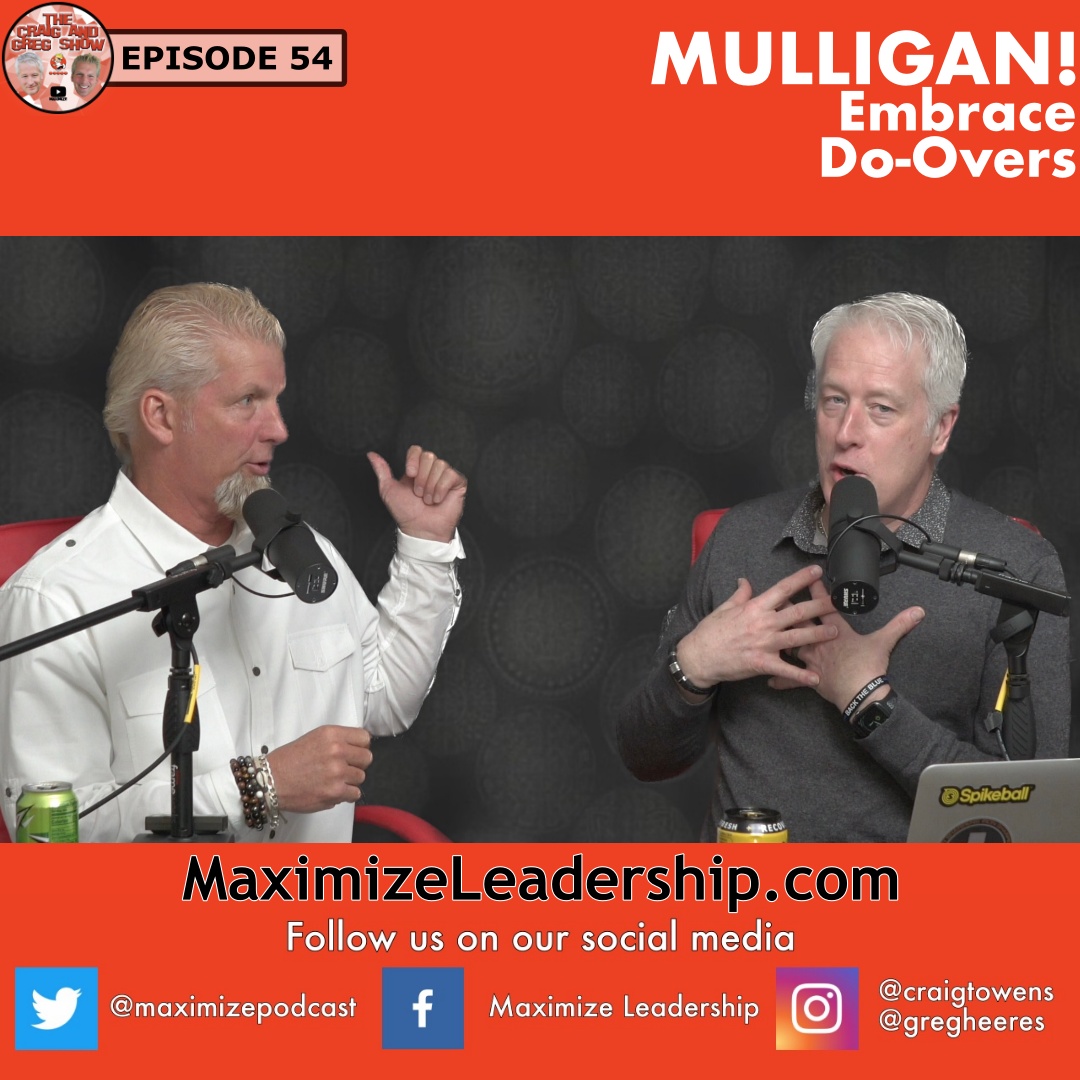 I am not a very good golfer, so when Greg and I hit the course together Greg is generous enough to give me a mulligan—sometimes a lot of them! In the same way, we as leaders need to be willing to give our team members chances to learn from and improve upon their mistakes. In this episode, we discuss how embracing a “mulligan culture” in your organization helps everyone grow and thrive.