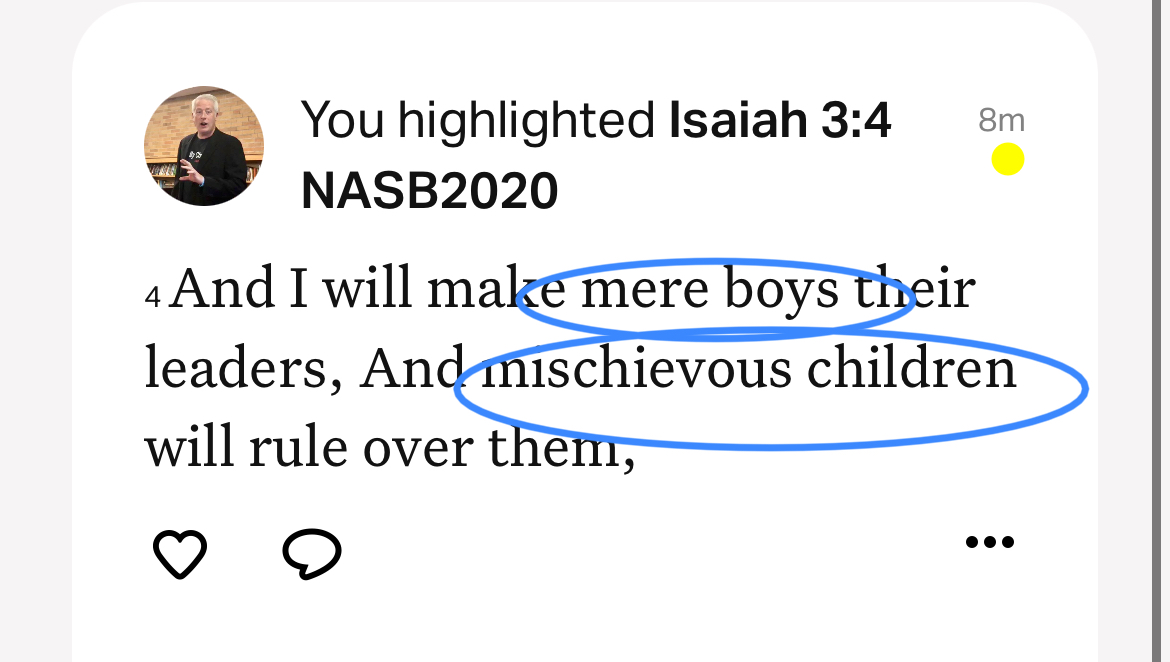
“And I will make mere boys their leaders, and mischievous children will rule over them, and the people will be oppressed, each one by another, and each one by his neighbor; the youth will assault the elder, and the contemptible person will assault the one honored.” (Isaiah 3:4-5)
God gives nations the “leaders” they deserve. They are leaders in that they occupy an office, but they don’t lead people nor care for the citizens—they don’t have wisdom to lead nor do they care about anyone but themselves. This is the inevitable result for a nation that turns its back on God!
In Hebrew, “mere boys” and “mischievous children” are defined as arbitrary, unprepared, unskilled, immature people. The AMPC translation says, “And I will make boys their princes, and with childishness shall they rule over them with outrage instead of justice” (Isaiah 3:4).
If we think our political and civic leaders are self-focused, unskilled, and childish, we should look in the mirror. We must be the leaders in confession and repentance if we want to see a change “downstream” in our governmental leaders. It’s not “them,” it’s us. We have to change—turning wholeheartedly to God—and only then God can change our leadership.
In the New Testament, we are told to pray for those in leadership positions: “I urge, then, first of all, that petitions, prayers, intercession and thanksgiving be made for all people—for kings and all those in authority, that we may live peaceful and quiet lives in all godliness and holiness” (1 Timothy 2:1-2).
Here in Psalm 72, we find a good source to form our petitions for our leaders:
🙏🏻 Give Your judgment to our leaders
🙏🏻 May our leaders follow Your righteousness
🙏🏻 May our leaders rely on Your righteousness to make laws and judgments that honor You
🙏🏻 May our leaders exercise godly justice for those in need
King Solomon has two phrases that help us keep a biblical perspective. If we miss this, Solomon says, we are going to experience a lot of frustration. I have lots of new content every week, which you can check out on my YouTube channel.
The angel told Joseph what he needed to do, and Joseph responded immediately. This is how we should live too—No complaints, no excuses, just obedience.
“If we as leaders do not model, we lose moral authority. … The goal of teaching and preaching is not to inspire, but to transform, and transformation at the spiritual and moral level can only be instigated and maintained if the speaker is authentic. We cannot call others to abide if we do not abide, to holiness if we are not holy, to sacrifice if we do not sacrifice, to evangelism if we do not evangelize, or to Jesus if we are not with Him ourselves. … The steady legitimacy of our deeds prove the worth of our words. We demonstrate our words are worthy by living them.” —Dick Brogden, in Proverbs: Amplified and Applied
T.M. Moore writes, “In ancient Israel the tithe was a uniform rate for all people, regardless of income, social standing, or need. Everyone was expected to bring a tenth of his wealth—much of this in the form of property (animals or harvests)—to be administered by priests and Levites for the upkeep of the spiritual life of the nation. In our country, graduated tax rates, accompanied by a variety of flat taxes, have become the means for creating an ever-expanding central government and an entitlement society in which nearly half the population pay no income taxes at all and, thus, receive many services from the State at the expense of those who do pay taxes. (As an aside, it’s interesting to note that one of the early arguments for a graduated income tax appeared not in The Federalist Papers but in The Communist Manifesto.) It’s not difficult to see how such a system of taxation can be used to curry favor and purchase political power.” Check out all of T.M.’s posts in this excellent series.
J. Warner Wallace proposes that we should look at the fact that our Earth is “just right” as evidence of an intelligent Creator.
“Always be sure of your ground and be sure that you are honoring God. If there is anything about the situation that will make you special, it will bring you sorrow. Your whole ministry has to be along the lines of His grace and blessing.” —Smith Wigglesworth
“Leaders have the responsibility to keep evil out. Government is incapable of making men and women moral and, in fact, it is not given that assignment, for it does not have that power. God grants government the right to make laws to hold back the power of evil, for only the church through the gospel can help men and women be good. Conversely, leadership and government can do much harm if they, through injudicious application or partial enforcement of law, let evil in. Government cannot make people good, but it can certainly make them bad. We need leadership and government to build barriers against what is wrong, but neither leaders nor external human powers can usher us to what is right. Only Jesus, full of grace and truth, can do that.” —Dick Brogden, in Proverbs: Amplified and Applied
The celebration of Christmas is obviously not seen in the Bible, but it has always seemed to be closely connected to the church’s calendar. Scott Hubbard has an eye-opening history of Christmas in his post The Curious History of Christmas.
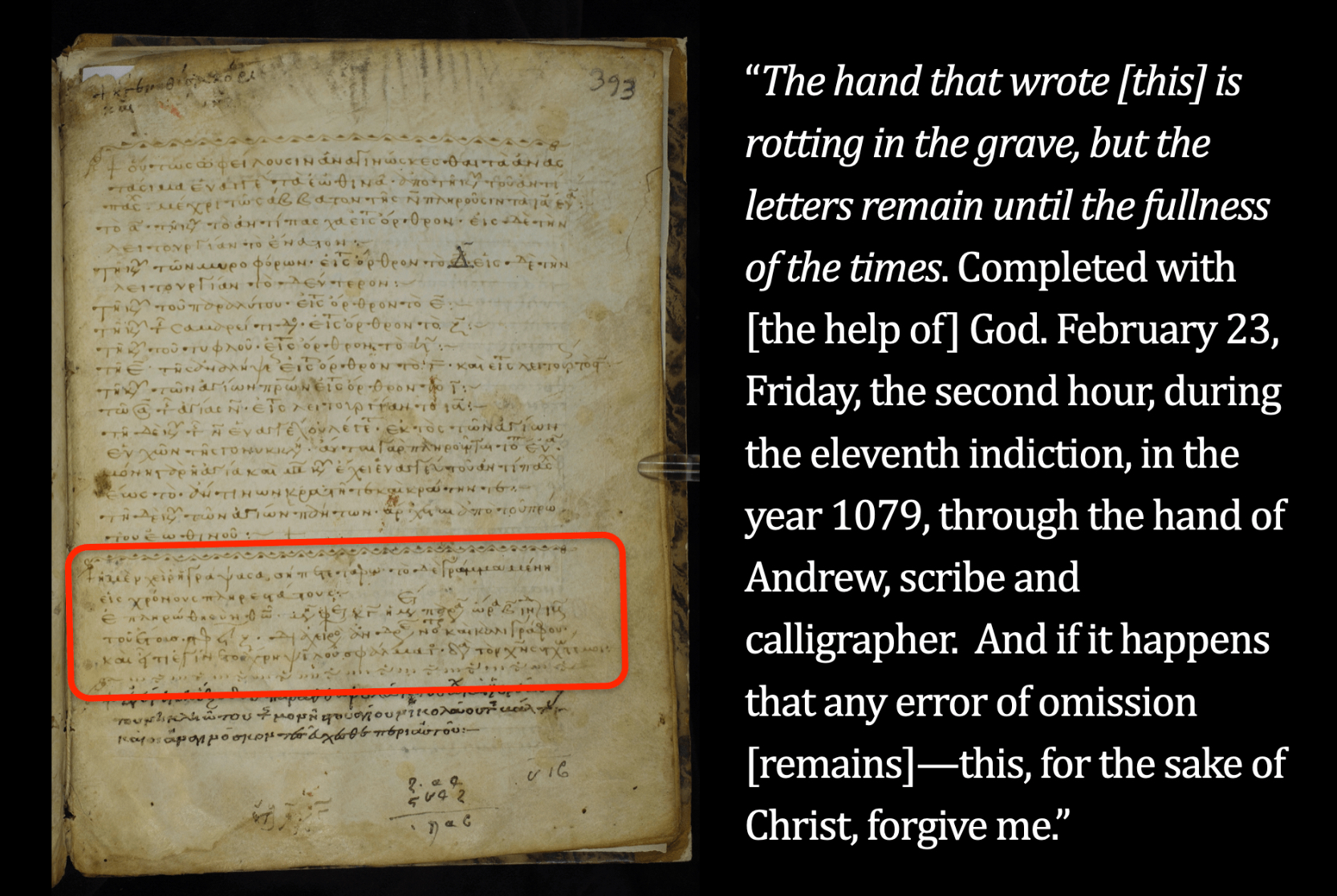
The ways the biblical text has been preserved and transmitted down to us today is nothing short of miraculous! Daniel Wallace is at the forefront of continuing to preserve the Word of God for future generations. Here is an example of the dedication of the biblical scribes: “The hand that wrote [this] is rotting in the grave, but the letters remain until the fullness of the times. Completed with [the help of] God. February 23, Friday, the second hour, during the eleventh indiction, in the year 1079, through the hand of Andrew, scribe and calligrapher. And if it happens that any error of omission [remains|—this, for the sake of Christ, forgive me.”
T.M. Moore is sharing a thought-worthy series of posts on the biblical view of our economic activities, including a look at how governments and businesses should operate under God’s laws. Moore says, “Since God has written the works of the Law on the heart of all His image-bearers (Romans 2:14, 15), we should expect that awareness (if only subconsciously) to find expression. Put another way, whether they know it or not, people long for an economy guided by Biblical principles and guidelines.”
“When we are foolish and young, we need more rules. As we mature, we can be trusted with extended boundaries. The wiser we are, the more we appreciate those boundaries and the less they offend us. Offense at law, accountability, hedges, and boundaries is an indicator of immaturity. The wiser we are, the more unafraid and appreciative we are of those who hold us to account.” —Dick Brogden, in Proverbs: Amplified and Applied
“When public policy begins to encroach on the Christian’s freedom and duty to proclaim the Good News, or to bring the benefits of the Gospel to the community, believers must continue our mission nonetheless and be ready to bear whatever punishments those in authority may choose to inflict. Christians do not seek suffering, but we must not shun it, particularly when by our suffering we can work for public policies more in line with the centrality of the Gospel for the wellbeing of all people.” —T.M. Moore
The Golden Rule—treat others as you would want to be treated—applies to the way you treat yourself too. Stop beating yourself up when you make a mistake. You probably don’t beat up others when they stumble, so extend the same grace to yourself. Practice healthy, affirming self-talk. Check out this full conversation from episode 68 of The Craig And Greg Show.
“A thought, a sword, and a spade should never be allowed to rust.” —Irish Proverb
Dr. C. John “Jack” Collins uses some thoughts from C.S. Lewis to help us learn a little better how to read Genesis 1-11. He writes, “We should approach any biblical passage with the conviction that God inspired the Bible to be the right tool for its job. If we can get a good idea of what kind of tool our passage is, we can discern what job God intended it to perform. And that means we need to be willing to adjust what we’re looking for and be willing to find other ways of addressing some questions.”
“Failure to pray is simple unbelief. We must repent of our unbelief and take up the work of prayer with greater devotion and dedication. We shall not be able to realize progress in Christ’s Kingdom, or in returning our nation to a greater experience of justice and goodness, apart from prayer. Prayer is the starting point for public policy. Prayer must be the sustaining power of public policy. And prayer in the form of worship will be the outcome of public policies, forged in prayer, which lead to a peaceful, godly, dignified, true, and Gospel-friendly society.” —T.M. Moore
Healthy leaders look in the mirror first before they confront a teammate on something that needs to change. Check out the full conversation Greg and I had on The Craig and Greg Show about defeating the two-headed leadership killer of ignorance and arrogance. I have lots of new content every week, which you can check out on my YouTube channel.
“I am often, I believe, praying for others when I should be doing things for them. It’s so much easier to pray for a bore than to go and see him.” —C.S. Lewis, Letters to Malcolm: Chiefly on Prayer
“The greatest weapon against stress is our ability to choose one thought over another.” —William James
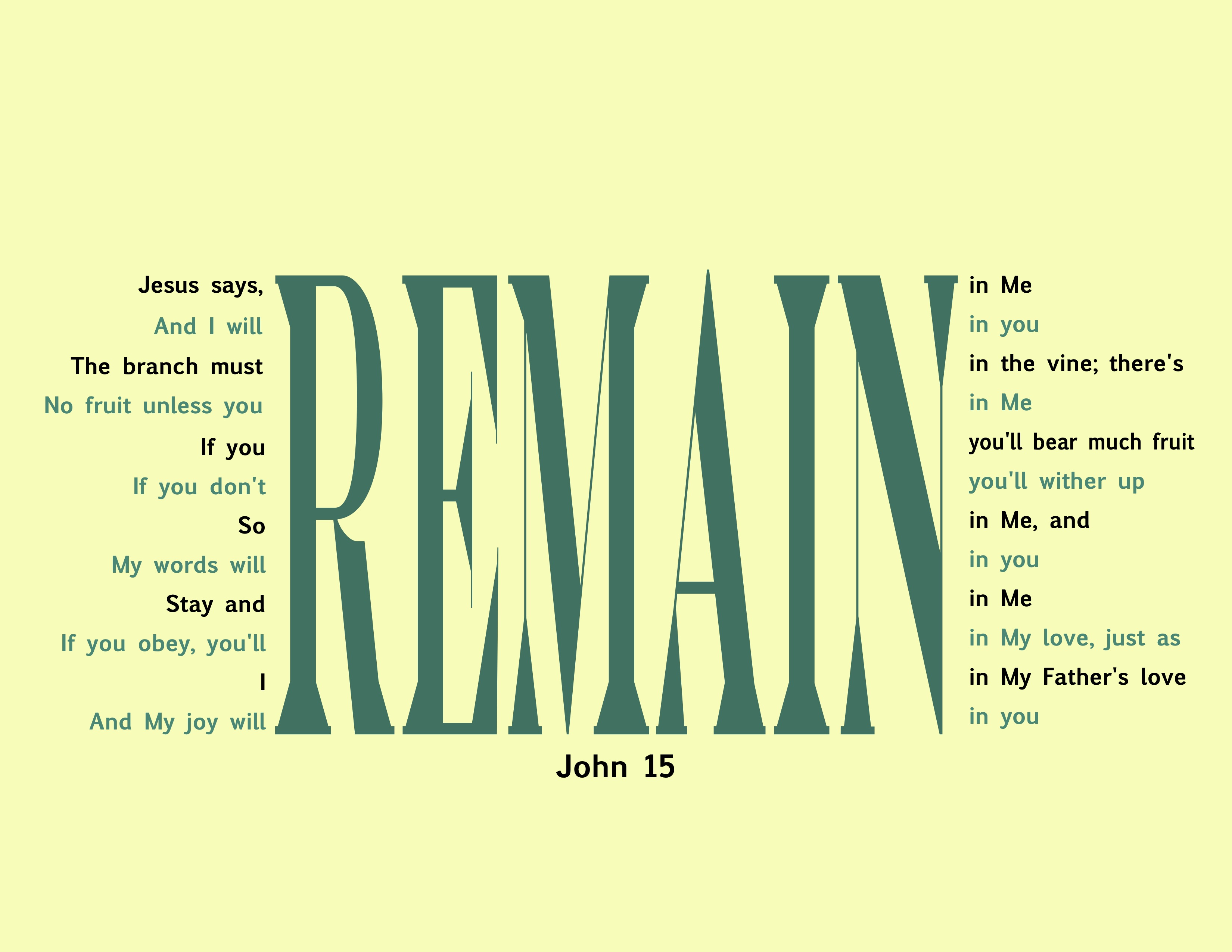
The most empowered and empowering person is the one who remains in Jesus.
“Whereas three or more incidents of intense stress within a year (say, serious financial trouble, being fired, or a divorce) triple the death rate in socially isolated middle-aged men, they have no impact whatsoever on the death rate of men who cultivate many close relationships.” —Daniel Goleman, Richard Boyatzis & Annie McKee, Primal Leadership
T.M. Moore has an outstanding series of posts on how Christians should interact with the governments in the lands in which they live. I highly recommend this series to you. T.M. wrote, “We have seen that justice is a jewel of many facets. In its obligatory facet, justice requires that we love our neighbors simply because they are made in the image of God. We must regard them, and do with them, as we wish to be regarded and done with ourselves. In its preventive facet, justice demands that we use forethought in all our actions to make sure, as far as possible, that our neighbor or his property is not injured by what we do. Distributive justice encourages us to share generously with our neighbors and others in need. Restorative justice comes into play when the balance of neighbor love has become disturbed and the one guilty of disturbing it is required to set things right again. Each of these forms of justice, grounded in the Law of God, is very much a part of life in our society today. It is simply mindless or prejudicial to insist that we should have no input from Scripture or the Law of God, either in the public square or in the making of public policy. Our nation was founded on Biblical principles of justice, and to deny this is to rewrite history past and to put in jeopardy history to come.”
The Greek word translated as “consider” in Hebrews 3:1 means to observe closely, to consider attentively, to fix your eyes or mind upon it. In its context, this verb is usually directing us to the end result of being in awe, kindling a renewed faith, and being rejuvenated with a new resolve to move forward.This is what happens especially when we consider Jesus❣️
Put the good stuff from the Bible in your heart and mind regularly. When you do, the Holy Spirit can remind you of what you’ve studied and help you apply it to your daily situations. I have lots of new content every week, which you can check out on my YouTube channel.
“It pays to know the enemy—not least because at some time you may have the opportunity to turn him into a friend.” —Margaret Thatcher
John Stonestreet and Dr. Glenn Sunshine shared this, “The despicable and horrendous attacks by Hamas against civilians last week, including beheading children and kidnapping the elderly, seems a throwback to some distant, barbaric past of human history. We may have thought the world had long ago outgrown such barbarity, but it hasn’t. In fact, as shocking as it is, the kinds of atrocities carried out by the Hamas terrorists are the norms of warfare, at least throughout most of human history.” What changed this? Quite simply: a Christian worldview of just warfare.
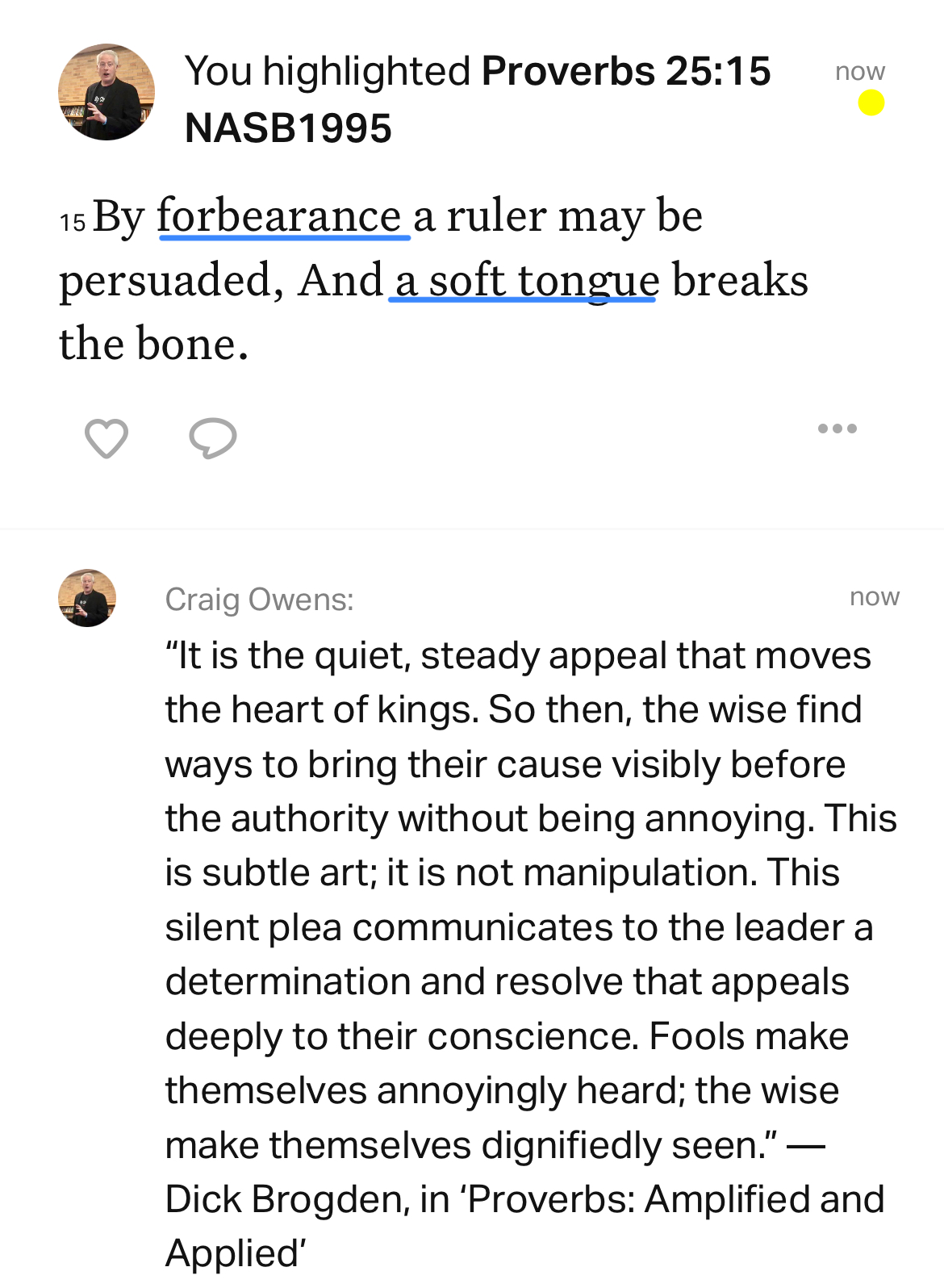
“It is the quiet, steady appeal that moves the heart of kings. So then, the wise find ways to bring their cause visibly before the authority without being annoying. This is subtle art; it is not manipulation. This silent plea communicates to the leader a determination and resolve that appeals deeply to their conscience. Fools make themselves annoyingly heard; the wise make themselves dignifiedly seen.” —Dick Brogden, in Proverbs: Amplified and Applied
Listen to the podcast of this post by clicking on the player below, and you can also subscribe on Apple, Spotify, or Audible.
You may have heard it said that Christians are supposed to pray for those who are in governmental leadership positions over them. Is that really true? And if it is, what exactly are we supposed to pray for them?
►► Would you please prayerfully consider supporting this ministry? My Patreon supporters get behind-the-scenes access to exclusive materials. Become a supporter today and get access to all of my previous posts plus have instant access to all of the new materials that are being posted weekly. ◀︎◀︎
Sextortion is when someone demands money or other favors in exchange for not sharing an explicit photo or video of the targeted victim. The sextortion of minor children runs into the thousands every month. Axis reported, “Most targets of sextortion are teen boys, who seem to be more likely than girls to send an explicit selfie to someone they aren’t having a romantic relationship with. Anonymous scammers will reach out to their target over social media, engaging in a flirtation and eventually asking for nudes.” Axis also shared these helpful resources, “Families can prepare by telling their teens about resources like TakeItDown, a free service which will remove nudes from the internet within two days, and the 24/7 Crisis Text Line, which connects teens with professional counselors via text at any time.”
“First, government is not God; instead, government is God’s servant for the good of those served. And second, the people are not God, and therefore must not be allowed the last word on what defines the terms of ‘good’ public policy. Only God can define what is good for people, for He alone is good (Mark 10:18; Psalm 119:68).” —T.M. Moore
“Since the Roe v. Wade U.S. Supreme Court decision more than 50 years ago, almost 40% of all abortions in America have been in the Black community, resulting in erasing the lives and destinies of an estimated 23 million Black babies.” The National Black Fellowship is aggressively working to change this.
“You gain strength, courage and confidence by every experience in which you really stop to look fear in the face. You are able to say to yourself, ‘I have lived through this horror. I can take the next thing that comes along.’ You must do the thing you think you cannot do.” —Eleanor Roosevelt
J. Warner Wallace uses forensic evidence to demonstrate why we should believe the New Testament was written much closer to the time of the actual event than most skeptics believe. Check out this video.



 This is God speaking—






 Craig T. Owens