Some of the greatest discoveries and revelations came about because people were curious. They refused to just go along with what they had always been told, what they grew up believing, or what the conventional wisdom told them was impossible.
Archimedes had his “Eureka!” moment because he refused to believe that it was impossible to measure the volume of an irregularly-shaped object.
Isaac Newton formulated the laws of gravitation because he curiously wondered about why apples fell perpendicular and at the same velocity.
The Apostle Peter saw a vision from God with animals, but didn’t stop there. His openness helped him realize that God didn’t have “favorites.”
Far too many people live their lives cursed with low expectations. They say, “That’s all there is.” and they put a period on it.
God wants us to soar above those low expectations! He tells us things like:
Come now, let us reason together… (Isaiah 1:18).
Call to Me and I will answer you and tell you great and unsearchable things you do not know (Jeremiah 33:3).
Are you listening to this? Really listening? … The knowledge of the secrets of the kingdom of heaven has been given to you… (Matthew 13:9, 11)
But we are trapped in the curse of low expectations when we put a period on things, when we refuse to learn more, see more, hear more.
Most people—“That’s all there is.” (period)
What if we changed it up—“Is this all there is?” (question mark)
Perhaps you might get—“There is so much more!” (exclamation point)
For example, Paul uses the word “mystery” multiple times in his letter to the Ephesians. He explains that a mystery is something hidden from those who have it all figured out (the “period” people), but is revealed to those who will ask God (the “question mark” people). Only the “question mark” people get to see the “exclamation points” God has for them. Things like…
God has a plan, and it is His pleasure to reveal it to me (Ephesians 1:9-10; 2:10).
God’s revelation is fully revealed to me in His Word (3:3-5).
Faith in Jesus makes Christians co-heirs and sharers in all God’s promises (3:6).
I have access to God’s inexhaustible riches, His immense wisdom, and I may approach Him with freedom and confidence (3:8-12).
Don’t stop with “.” but go on to “?” and experience “!”
With great expectation, read God’s Word, approach His throne, dig into His riches, wrestle with the difficult things, learn more of God’s purpose for your life. He wants to give you so much more “!”
Have you ever noticed that kids would prefer to eat dessert more than vegetables? Well, maybe you’re an adult and you still feel the same way! But “veggies before dessert” is still a good motto to live by.
Why?
What happens if you eat only dessert? Do you eventually get healthier or are you setting yourself up for some unfavorable health conditions? What about if you only eat vegetables? The flavor may not be as good, but at least you’ll be getting healthier.
Jesus told His followers to expect the “veggie” times in time. He said, “In this world you will have trouble.” And He told us, “Then you will be handed over to be persecuted and put to death, and you will be hated by all nations because of Me.” There were no ifs or maybes in those statements!
As Christians living on Earth, the Apostle Peter calls us “aliens and strangers.” That means that both our attitude and our lifestyle should be, well, alien compared to Earthlings. Especially when we’re in a veggie time of life.
Jesus was the Perfect Man. He never said anything wrong, and He never did anything wrong. Yet He was insulted, persecuted, and eventually killed in the most horrific way imaginable. But here’s the amazing thing: Jesus went through all of this without retaliating or threatening judgment on His persecutors. Peter said that the way Jesus went through this was intended to be an example for us.
The writer of Hebrews agreed—Let us fix our eyes on Jesus, the Author and Perfecter of our faith, Who for the joy set before Him endured the Cross, scorning its shame, and sat down at the right hand of the throne of God. Consider Him Who endured such opposition from sinful men, so that you will not grow weary and lose heart.
Notice it says, “for the joy set before Him.” Other translations say “because of the joy awaiting Him” or “He never lost sight of where He was headed” or “He never lost sight of the joy ahead of Him.” In other words, Jesus knew what God’s plan was from before the beginning of time, so He—as Peter said—kept on entrusting Himself to God.
We have to do the same thing!
I have to confess something. When I quoted the “veggie” part of a couple of verses earlier in this post, I left off the “dessert” part…
“I have told you these things, so that in Me you may have peace. In this world you will have trouble. But take heart! I have overcome the world.” (John 16:33)
“Blessed are those who are persecuted because of righteousness, for theirs is the kingdom of heaven. Blessed are you when people insult you, persecute you and falsely say all kinds of evil against you because of Me. Rejoice and be glad, because great is your reward in heaven….” (Matthew 5:10-12)
It’s no secret that being tired can lead to a lot of not-so-nice consequences. Everything from automobile crashes, to poor work performance, to foot-in-mouth statements, to giving in to temptations, to health issues are all traced back to not getting enough peaceful sleep.
But did you know that sweet sleep is something God wants to give you?
Psalm 127 says, “God grants sleep to those He loves.” Guess what? God loves you, and wants you to have a peaceful night’s sleep!
Here are some benefits to getting solid sack time:
Muscles are repaired—the body “turns off” muscles during sleep so they can repair themselves.
The hormone leptin, that regulates your appetite, is adjusted.
Your blood pressure is lowered.
Your heart rate is lowered.
The energy-producing cells we all need are restocked.
Your immune system is re-energized.
Memories are consolidated from short-term memory banks to long-term memories.
The hormones that allow you to concentrate are replenished.
Your “database” of decision-making options is re-calibrated.
Bottom line—you get healthier physically, mentally, emotionally, relationally, and spiritually.
All of this God wants to give to those He loves. “God loves me, so I’m going to sleep peacefully tonight!”
The problem is we often sabotage God’s blessing of sweet sleep by our own poor decisions during the day. So here are seven things you can do to cooperate with God’s blessing of sleep:
Reduce stress. Stress causes your body to release cortisol, which prepares your body for fight-or-flight. This means when you’re trying to quiet down for the night, your body is still screaming, “Go, go go!” Stress is mainly triggered by worrying over things outside of our control, so check out what Jesus said to us about not worrying—Matthew 6:25-34.
Reduce late-day caffeine. Caffeine has a half-life of six hours, so if you are pouring it into your body late in the date, you might fall into bed exhausted but the caffeine is keeping your brain buzzing. As a result, you don’t have the normal deep sleep patterns.
Eliminate emotional caffeine. Arguments with other people release cortisol and adrenaline in your bloodstream. If these disagreements are happening later in the day, your body is fighting against God’s plan for your tranquil sleep. So take care of any disagreements quickly (Ephesians 4:26).
Exercise. Getting some movement into your daily routine flushes cortisol and adrenaline from your bloodstream.
Go to bed and get up at the same time. There’s a reason God made the sun to rise and set at predictable times. Your body also functions best on a predictable schedule.
Reduce “blue lights” close to bed time. The blue light waves of dawn tell our bodies to stop releasing melatonin, the sleepy hormone. The red light waves of dusk tell our bodies to increase melatonin so we can go to sleep. But when we’re staring into the blue light of our phones and tablets, our body is being sent a conflicting signal.
Pray. Two great passages you can pray before bedtime are Psalm 4:8 and Proverbs 3:24. Claim those promises of sweet sleep!
God loves you. He wants to give you the blessing of peaceful sleep. If you’re going to sleep peacefully tonight, make sure you are not sabotaging what God wants to give you.
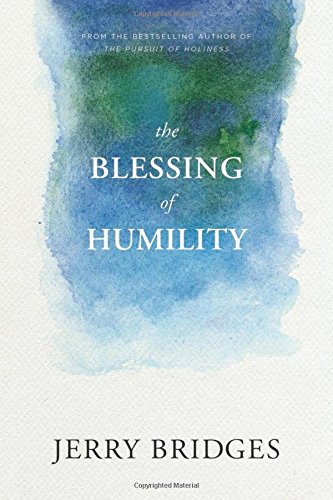
As I stated in my review of Jerry Bridges’ book The Blessing Of Humility, reading through these thoughts slowly—Beatitude by Beatitude—would bring about the most life-changing impact. In that spirit, I will be sharing some noteworthy quotes one Beatitude at a time. Here are some quotes on blessed are those who are persecuted because of righteousness (Matthew 5:10-12)…
“There is no doubt that the culture is becoming more and more antagonistic toward biblical values. For some years I have thought our American culture to be ungodly; that is, to believe and act as if God is irrelevant. Now I believe we have become not just ungodly but actually anti-God. An increasing number of those who most influence our culture—such as academia, the media, and the entertainment industry—are openly hostile to the whole idea of God or of biblical values.”
“I suspect that our own court system will eventually fail us, as more and more judges are appointed who have been trained in law schools that at best are indifferent to biblical righteousness and at worst are openly hostile to it. Even our Supreme Court seems to be rendering decisions based on the mores of popular culture rather than on a principled application of the Constitution.”
“There is a sense in which this eighth Beatitude is the climax of several preceding ones dealing with our response to the way others treat us. … In this eighth Beatitude Jesus has in mind persecution rooted in the hostility of the anti-God culture we live in.”
“Keep in mind these words from Jesus [Luke 6:27-28] are precepts—authoritative commands of God. Furthermore, they address more than our attitude toward those who persecute us. They are action steps: we are to love our enemies, do good to them, bless them, and pray for them.”
As I stated in my review of Jerry Bridges’ book The Blessing Of Humility, reading through these thoughts slowly—Beatitude by Beatitude—would bring about the most life-changing impact. In that spirit, I will be sharing some noteworthy quotes one Beatitude at a time. Here are some quotes on blessed are the pure in heart (Matthew 5:8)…
“The word pure is used of clothing that has been washed, of grain from which all chaff has been removed, and of gold that has been refined until all impurities have been removed. A pure heart, then, is one from which all sinful desires have been removed. Positively it means to love God with all my heart, soul, and mind (Matthew 22:37). It means to live all of my life to the glory of God (1 Corinthians 10:31).”
“Once we acknowledge God’s ownership of us, our responsibility becomes clear: Whatever we do must serve God’s purposes. And central among God’s purposes, as demonstrated throughout the Scriptures, is God’s glory.”
“To present our bodies (and our hearts also) is to recognize Christ as the ‘Owner’ of our lives [Romans 12:1]. It is the subjective, experiential response to the objective truth that we are His own possession.”
“Our minds can only be transformed as they are regularly exposed to the Word of God. This means we need to regularly read and study our Bibles and apply what we find there to our daily lives.”
“To be—or better, to seek to be—pure in heart produces humility in action as we become more God-focused in our daily lives.”
“To acknowledge how far short we fall from purity of heart will send us back to the first Beatitudes: to be poor in spirit and to mourn because our hearts are so often divided. That is humbling. But that honest humility should drive us back to the gospel, where we see ourselves united to the One Who had the only perfectly pure heart in all of history. This will motivate us and empower us to see what we can never fully attain: to be pure in heart.”
As I stated in my review of Jerry Bridges’ book The Blessing Of Humility, reading through these thoughts slowly—Beatitude by Beatitude—would bring about the most life-changing impact. In that spirit, I will be sharing some noteworthy quotes one Beatitude at a time. Here are some quotes on blessed are the merciful (Matthew 5:7)…
“The first four character traits of the Beatitudes…all address our internal character and our relationship to God. Here in this Beatitude, ‘Blessed are the merciful,’ Jesus begins to address our relationship with other people.”
“Note the subtle distinction between compassion and mercy. The Samaritan had compassion [Luke 10:33] and then showed mercy [v. 34-35].”
“Mercy expresses itself in two general areas: In the temporal sense, mercy seeks to meet the physical needs of others, as the Good Samaritan did in Jesus’ parable. The second way mercy expresses itself is granting forgiveness to those who have sinned against us.”
“The magnitude of our sin is not measured by its effects on other people but by its assault upon the infinite majesty and holiness of God.”
“To forgive others means we regard ourselves as ten-thousand-talent debtors [Matthew 18:23-35].”
As I stated in my review of Jerry Bridges’ book The Blessing Of Humility, reading through these thoughts slowly—Beatitude by Beatitude—would bring about the most life-changing impact. In that spirit, I will be sharing some noteworthy quotes one Beatitude at a time. Here are some quotes on blessed are those who hunger and thirst for righteousness (Matthew 5:6)…
“To hunger and thirst for righteousness, then, indicates a strong overwhelming desire for righteousness. … Righteousness denotes the state of being right. Biblically, it means perfect according to God’s law in every way: thought, word, deed, and even motive.”
“At the moment we trusted Christ as Savior, we were justified—declared by God to be righteous. You will never be more or less righteous before God any day of your life than you were the moment you trusted Christ as your Savior. This raises another question: Why should I hunger and thirst for that which I already have? The answer is that the more we grow and mature in the Christian life, the more sensitive we become to the sin and failure we see in our lives. It is not that we necessarily sin more but rather that we become more aware of and mourn over the sin that is already there. As that happens, we hunger more and more after the righteousness we have only in Christ.”
“There is a legitimate sense in which we are to hunger and thirst for that perfect righteousness we already have in Christ. This should be a continual daily attitude of all growing Christians because we continue to sin every day.”
“There is a second righteousness that we should hunger and thirst for: the experiential righteousness we are to pursue every day. God has inextricably linked together the righteousness we have in Christ and the righteousness we should pursue. He does not give one without the other. Therefore, whoever hungers and thirsts after the righteousness we have in Christ will also hunger and thirst to be righteous in his or her daily experience.” [See 2 Timothy 2:2; 1 Peter 2:24; 1 John 3:10]
“It is clear from Scripture, then, that we are to pursue an experiential righteousness. But what will cause us to hunger and thirst for it? The answer is twofold. First, as we have already observed, the new nature is inclined by the Holy Spirit to pursue righteousness. … The second motivation is gratitude for the righteousness we have in Christ.”
“There will be no growth in experiential righteousness apart from a regular intake of the Word of God.”
“We are absolutely dependent on the Holy Spirit to work in us Himself and to enable us to work. We cannot make one inch of progress toward experiential righteousness without His divine enablement.”
Quotes on the remaining Beatitudes will be posted next week so stay tuned. Even better: subscribe to my blog, and you’ll receive the new quotes directly in your email inbox.
As I stated in my review of Jerry Bridges’ book The Blessing Of Humility, reading through these thoughts slowly—Beatitude by Beatitude—would bring about the most life-changing impact. In that spirit, I will be sharing some noteworthy quotes one Beatitude at a time. Here are some quotes on blessed are the meek (Matthew 5:5)…
“Meekness is not being timid, spineless, unassertive, and easily dominated. It is not a natural niceness. In fact, it has nothing to do with one’s personality or temperament.”
“There is then a twofold expression of meekness: first toward God and then toward other people. Meekness toward God involves: (1) responsiveness to His Word; (2) submission to His Providence.”
“As I reflect on our evangelical community to the extent I am aware of it, it seems we are more knowers of the Word than doers of the word. … Instead we too often use the Scriptures not as a means of judging ourselves but as a means of judging others, especially those whose sins are more flagrant than ours. The meek person, in contrast, searches the Scriptures (or listens to it taught) not to judge others but to allow the Holy Spirit to judge him or her. In fact, the meek person earnestly desires the Spirit to use His Word to effect a deep change in his or her inner being.”
“Thomas Watson wrote that meekness toward other people consists of three things: the bearing of injuries, the forgiving of injuries, and the returning of good for evil.”
“Because we have been forgiven so much, we have an obligation to forgive those who sin against us. Yet our motive for forgiving should not be our obligation but the realization of how much we have been forgiven.”
“Meekness towards man means bearing patiently with the hurtful actions of others and dealing gently with their failures, not only in the assurance that all of these are under God’s providential control, but in the knowledge that, left to ourselves, we have no claim to be any stronger than the weakest of our friends or any better than the worst of our enemies.” —John Blanchard
As I stated in my review of Jerry Bridges’ book The Blessing Of Humility, reading through these thoughts slowly—Beatitude by Beatitude—would bring about the most life-changing impact. In that spirit, I will be sharing some noteworthy quotes one Beatitude at a time. Here are some quotes on blessed are those who mourn (Matthew 5:4)…
“The word that Jesus used in this Beatitude is the strongest word in the Greek language for mourning. It is the word for Jacob’s morning over what he thought was the death of Joseph (Genesis 37:35). … Jesus uses this word to show the intensity of mourning He blesses here. He is, however, actually talking about mourning not over death but over our sin.”
“To be ‘poor in spirit’ is to be convicted of one’s sin, whereas to ‘mourn’ is to be contrite for it.” —John Blanchard
“King David committed two sins: first adultery, and then (essentially) murder to try to cover up his adultery. God sent the prophet Nathan to confront him, and in his skillful accusation of David, Nathan twice used the word despised (2 Samuel 12:7-11). First, David despised the Word of the Lord—that is, he despised the law of God (verse 9). In so doing, he also despised the Person of God (verse 10). Why is this true? Despising the law of God is not only an expression of rebellion. It is also a despising of His very character, since His law is a reflection of His character. This is true not only of such heinous sins as adultery and murder, but also of our more refined sins: pride, selfishness, gossip, and the like. So let us pray that God will indeed allow us to see our sin as rebellion against the rule of God—a despising of God’s law and even of His character.”
“Failure to see our sin as primarily against God is, I believe, the reason we experience so little heartfelt grief over it. … But be it ever so small in our own eyes, whenever we sin we also break God’s law. And Scripture says, ‘Whoever keeps the whole law but fails in one point has become accountable for all of it’ (James 2:10). God’s law is seamless, one complete whole. So when we break any of it, we break the whole law.”
“Is mourning over sin just for those first coming to Christ? No, Jesus’ words are in the present active tense. We could literally translate them as ‘blessed are those who continue to mourn.’ He is pronouncing a blessing on those whose attitude toward their sin is characterized by mourning. One mark of a growing Christian, then, is a growing sense of his or her sin, and an attitude of mourning over it.”
“So mourning over our sin is truly a display of humility in action. We cannot be proud and mourn over sin at the same time. We cannot be judgmental toward other believers, or even toward unbelievers, if we are truly contrite and brokenhearted over our own sin.”



 “Mercy means…