Listen to the podcast of this post by clicking on the player below, and you can also subscribe on Apple, Spotify, or Audible.

If we’re not careful, we can get so focused on our own appointments that we will miss out on the amazing opportunities God sends our way to show His love to others.
Listen to the podcast of this post by clicking on the player below, and you can also subscribe on Apple, Spotify, or Audible.
I’ve always loved this stanza from a William Cowper poem:
Restraining prayer, we cease to fight
Prayer makes the Christian’s armor bright
And satan trembles when he sees
The weakest saint upon his knees.
Prayer is indispensable in spiritual warfare! Prayer is where we fight best for those we love.
Have you ever heard the question, “Are you a lover or a fighter?” I don’t believe this is an either-or answer, both both-and. I’m a fighter because I’m a lover. I love Jesus and I am loved by Jesus.This fuels my passion to fight for His glory to be seen. This drives me to fight against the powers that keep others from knowing this love for themselves.
T.M. Moore wrote, “If we want God to bring revival and save the world from its many and increasing troubles, we must give ourselves to extraordinary efforts in prayer before we enter the conflict.” Prayer isn’t preparation for the fight; prayer is the fight that has been lovingly empowered. This is why our fifth spiritual discipline of prayer is so vital.
As we have seen with giving and fasting, Jesus also has some don’ts and dos for us about praying (Matthew 6:5-8):
don’t pray publicly for earthly recognition or human applause (v. 5)
do pray privately (v. 6)
don’t pray robotically—And when you pray, do not heap up phrases—multiply words, repeating the same ones over and over—as the Gentiles do, for they think they will be heard for their much speaking (v. 7 AMP)
do pray intimately (v. 8)
Jesus practiced what He preached about praying in secret: Jesus was praying in private (Luke 9:18). He must have prayed so differently than anyone else the disciples had ever heard because they asked Him, “Lord, teach us to pray” (Luke 11:1).
There is a way I speak to my wife in private that I don’t typically say in public. If I didn’t speak intimately to her in private, others would notice a difference in public. When I do have intimate, private, regular conversations with her, it also shows publicly.
So too with prayer. The New Testament doesn’t record very many of the prayers of Jesus for us. In fact, many of things we might think of as prayers sound more like commands from Jesus—“Lazarus, come forth,” “Little girl, get up,” “Be clean,” and similar phrases. We see the public display of power because Jesus had been empowered in private by His Father.
Private prayer is noticed publicly in the lives of the followers of Jesus too (see Acts 4:13; 6:15).
I don’t pray privately so that I can show off publicly. I pray in intimate privacy so that I can publicly show off Jesus!
All of our spiritual disciplines are for us individually so that we have something to give corporately. For instance—
As we are built up in private prayer, there is a greater unity in corporate prayer, and Jesus is lifted up for the world to see. We love Jesus and we love others, so we fight for the glory of God and the strengthening of our brothers and sisters. We are loving fighters!
So let me encourage you to make private, intimate conversation with Jesus a priority in your life.
Listen to the podcast of this post by clicking on the player below, and you can also subscribe on Apple, Spotify, or Audible.
I find it interesting how many spiritual disciplines have both a physical and spiritual impact on our lives. Bible study, solitude, and giving all have benefits in both the physical and spiritual realms. This is even more apparent in spiritual discipline #4—fasting.
As we saw with giving last week, fasting is another one of the spiritual activities that Jesus has a cautionary word for us (Matthew 6:16-18). As with giving and praying, Jesus notes that there are only two categories: true fast-ers and hypocrites. Of course, hypocrite means someone simply playing a role—it’s not who they really are.
In Matthew 9:14-17, Jesus is asked about fasting and He uses some unusual analogies about fabrics and wineskins to teach us two don’ts about fasting:
Don’t fast if you’re not ready for it. Jesus notes that “the unshrunken cloth” will do damage to both the new and old pieces of fabric. This goes back to the get-to vs. have-to attitude we should have about spiritual discipline.
Don’t try to add a new religious practice to a religion-hardened heart. Jesus addresses this using the analogy of new wine ruining old wineskins.
These fasting thoughts aren’t a teaching that is exclusive to the New Testament, but through the prophet Isaiah, God addressed it in the exact same way (Isaiah 58:5-9). In this passage we can learn the dos about fasting:
Do fast when my heart’s motivation is a hunger for more of God.
Do fast as the Holy Spirit directs you, not in a formulaic, lifeless ritual.
I’m not a big fan of diets that are no-no diets because telling people what they cannot eat isn’t a good motivator. But telling people what they can eat brings joy and freedom.
The insidious nature of junk food is not so much the fat, sugar, and other unhealthy ingredients, but the fact that junk food is really empty calories. Your body needs a certain amount of fuel to operate. Junk food contains calories but lacks nutrients. You eat junk food, your body sends a signal to your brain that you’re no longer hungry, and then you never eat the nutrient-rich food. This is why your Mom may have told you something like, “Broccoli first, then dessert.”
The Hebrew word for “fast” literally means to cover the mouth, but I think fasting is more than that. Just as we said money was one aspect of giving, so food is one aspect of fasting. The idea behind fasting is to be able to identify the “empty calories” of some of our lifestyle choices so that we can feast on the rich “nutrients” that God has for us.
Just as junk food with its empty calories keeps us from nutrient-rich food, hours of video games or TV binge watching keeps us from mind-enriching learning, endless social media scrolling keeps us from developing real relationships with real people, and obsessive news gathering keeps us from focusing on God’s promises.
Periodically fasting from these things will allow us to spot the junk food we’ve been consuming. Our so that statement for this spiritual discipline says: I fast so that I can identify the junk food that is keeping me from feasting on Jesus.
Can I give you a brief assignment for this spiritual discipline? After making sure your heart attitude about fasting is God-honoring, add regular fasting to your life so that you can use that time to feast on Jesus.
Listen to the podcast of this post by clicking on the player below, and you can also subscribe on Apple, Spotify, or Audible.
In our series on six important spiritual disciplines, our key phrase is “so that”—
I get stronger so that we can get stronger.
For discipline #1: I study my Bible so that I have something to apply to my life.
For discipline #2: I take time for solitude so that I can respond in a God-glorifying way in stressful situations.
Our third spiritual discipline makes people nervous: Giving. So perhaps if I give you the “so that” up front that will help you stick with me. Here it is: I practice the spiritual discipline of giving so that I can encourage others and experience God’s greater blessings.
Jesus has a caution about giving: Don’t give to get earthly recognition (Matthew 6:1-4). He states this with two don’ts and one do:
do not announce your giving
do not calculate or reckon your reward for giving
do expect God’s reward for your giving
The stark contrast is seen between Joseph Barnabas and Ananias and Sapphira in Acts 4:34-5:4. Barnabas gave everything he had received from the sale of a piece of property without expecting anything in return. Ananias and Sapphira pretended to give everything they had received from the sale of a piece of property fully expecting some sort of recognition. The results are just as stark and clear: Barnabas was honored by both the church and God, while Ananias and Sapphira were severely punished by God.
When Jesus tells us in Matthew 6 that our giving should be in “secret,” He clearly doesn’t mean that no one knows that we have given. Clearly, in our examples in Acts, people knew that Barnabas had given money to the church.
In two of his public letters, Paul gave public thanks to the church at Philippi for their financial gifts to him, and he called out the church at Corinth for their failure to give as they had promised they were going to (Philippians 4:10; 2 Corinthians 8:11).
Paul noted that the Philippians gave because they knew there was a need, and Paul praised them for this and told them that they would see God’s reward for their generosity (Philippians 4:10-20). We can see our “so that” idea here: Paul was encouraged, he said that the Philippians would have all their needs met, and God was glorified.
Paul used this example of the Philippians as an encouragement to the Corinthians (see 2 Corinthians 8:1-12, 9:5-8). Paul encouraged them to make sure they had a “get to” attitude about giving, not a “have to” obligation. He noted that God blesses the cheerful, get-to giver.
Notice how similar the blessings of God sound to these two churches:
And God is able to bless you abundantly, so that in all things at all times, having all that you need, you will abound in every good work. (2 Corinthians 9:8)
And my God will meet all your needs according to the riches of His glory in Christ Jesus. (Philippians 4:19)
When the Bible talks about giving, it is never restricted to money, although that is part of it. The Bible talks about giving in three categories. We could call these The three Ts—
Treasure—our tithes and offerings.
Time—giving our service to those in need.
Talent—using the abilities God has given each believer to build up the Kingdom of God.
How much of our treasure, time, and talent should we give? We should never look for the bare minimum, but we should be lavish givers. C.S. Lewis said it this way in his book Mere Christianity:
“I do not believe one can settle how much we ought to give. I am afraid the only safe rule is to give more than we can spare. In other words, if our expenditure on comforts, luxuries, amusements, etc., is up to the standard common among those with the same income as our own, we are probably giving away too little. If our charities do not at all pinch or hamper us, I should say they are too small. There ought to be things we should like to do and cannot do because our charities expenditure excludes them.”
For myself, I am trying to think of spiritual discipline #3 as this prayerful declaration:
I will allow the Holy Spirit to show me how much of my time, talent, and treasure I am privileged to invest in the Kingdom of God. I will gladly do this so that God will meet all my needs here, He will reward me in Heaven, and other saints will be encouraged by my giving.
I hope you will join me in making this your declaration as well.
Listen to the podcast of this post by clicking on the player below, and you can also subscribe on Apple, Spotify, or Audible.
I know you want to lash out against those evil people who come at you—just to say something that will “put them in their place.”
I get it. I feel like that at times too.
But pause.
Think about the last rain storm that came your way. The rain beat down on your roof and the wind blew against the walls of your house. You knew that there was no reason to yell at the rain because you were safe in your house. You also knew that yelling at the wind and the rain wouldn’t do a thing to it.
Therefore everyone who hears these words of Mine and acts on them, may be compared to a wise man who built his house on the rock. And the rain fell, and the floods came, and the winds blew and slammed against that house; and yet it did not fall, for it had been founded on the rock. (Matthew 7:24-25)
When you abide in Jesus—when His words are the foundation of your life—you are safe and secure. There is no reason to fret about the breath of the ruthless, there is no reason to lash out at them. In fact, there might not be any reason to speak to them at all.
Let the evildoers rage, but you can save your breath. Instead of using your breath to respond to their howling words, use your breath to praise the One who holds you securely forever!
Listen to the podcast of this post by clicking on the player below, and you can also subscribe on Apple, Spotify, or Audible.
I was sitting with a couple of ladies in our school district who were trying to figure out the logistics for a food distribution program. I was offering them a couple of suggestions when one of them asked me, “Have you ever had any experience with something like this?”
I told her that I had, and then she responded, “But this is going to be pretty big. Probably about 40 families.”
I smiled and told her that the food distribution program I helped coordinate fed nearly 5000 people.
She said, “Well, I guess we don’t have to worry anymore!” And from then on, whenever any logistical concerns came up, these ladies confidently handed off the situation to me. Once they knew that I had some relevant experience, they didn’t have any more moments of questioning.
Unlike Jesus, I didn’t create all of the food from a few loaves and fish. I simply organized the distribution of the food others had donated. I am glad these ladies had confidence in me, but at the same time, I had to guard my heart against the pride that can so easily puff up my ego.
Can you imagine if you were one of the disciples of Jesus, and had seen all of the miraculous things He had done and heard all of the profound things that He had said, and then still had the audacity to ask, “Who is the greatest”?!
And yet that is exactly what they did (Mark 9:33-35).
How in the world could they argue about something like this when Jesus was right there with them? Maybe this thought finally sunk in a little because later on they pivoted a bit in their argument to ask who was the greatest after Jesus (Matthew 20:20-28).
Jesus minced no words and left nothing vague in His answer: “Anyone wants to be first must be the very last, and the servant of all” (Mark 9:34).
This is exactly what Jesus embodied. He literally lived and died to prove that the highest greatness is measured by the lowest of servanthood.
…Christ Jesus: Who, being in very nature God, did not consider equality with God something to be used to His own advantage; rather, He made Himself nothing by taking the very nature of a servant, being made in human likeness.And being found in appearance as a man, He humbled Himself by becoming obedient to death—even death on a Cross! (Philippians 2:5-8)
The very last. Jesus made Himself nothing.
Not above some and beneath some, but the servant of all.
A mark of a godly leader is one who strives to be last.
Not: “I am second.” But: “I am last.”
This is not just a declaration, but it is a declaration followed by a lifetime of submitting and serving. Not trying to lead others, but trying to out-serve all.
This is part 74 in my series on godly leadership. You can check out all of my posts in this series by clicking here.
Listen to the podcast of this post by clicking on the player below, and you can also subscribe on Apple, Spotify, or Audible.
I’ve been called to some challenging leadership roles in my life—many of which made me feel like I was in way over my head! But without a close second, the heaviest mantle I’ve ever felt is the one called “Father.” Holding my firstborn son in my arms was indescribable, and it didn’t feel any lighter or less daunting when our other children arrived.
The rabbis saw something significant in the Ten Commandments. Some people have noted that the first four Commandments are about our vertical relationship with God, while the next six are about our horizontal relationships with people. But the rabbis saw the Fifth Commandment as the linchpin—with parents in a creator-like role and as the first leader our children will be exposed to, and parents taking on the role as the first and most significant instructor for our children to know God for themselves.
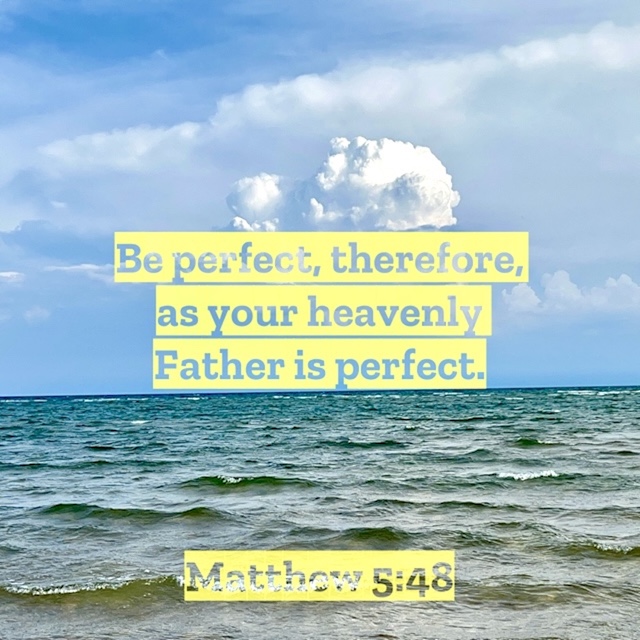
And then Jesus tells us to follow this example: “Be perfect, therefore, as your heavenly Father is perfect” (Matthew 5:48). Yikes, talk about a heavy weight!
In the only song of ascent attributed to King Solomon (Psalm 127) we read both a longing for our families to be with us at the end of our journey to Zion, but also a hint of the difficulty of this.
In the middle verse of this song, we are assured that our children are given to specific parents by God on purpose. He knew what He was doing in giving them into our care. That means each parent is uniquely equipped for each child’s unique personality, temperament, and gift package.
Twice in the opening verse, Solomon uses the word “unless.” Unless we seek God’s help in building our children and watching over them, our efforts on their own will be “in vain.” That phrase (“in vain”) is used three times in the opening two verses. Solomon wrote a lot about vanity in the Book of Ecclesiastes. But it’s important to note that Solomon always uses this word in association with the phrase “under the sun.” Unless we get help from God—unless we lift our eyes up higher than this earth—our efforts alone will be frustrating and anxiety-inducing.
Remember that parents are the linchpin in the Ten Commandments? Those first four Commandments tell us to put God first, don’t create any idols to rival Him, don’t misuse His name, and trust Him enough to rest from your labors (Exodus 20:1-11). That means that we parents cannot put our kids ahead of God (Luke 14:26). Unless God is our first priority, we won’t have the spiritual, emotional, or mental stamina to parent well. Or, as C.S. Lewis noted,“When I have learned to love God better than my earthly dearest, I shall love my earthly dearest better than I do now.”
In his collection of proverbs, Solomon told us, “Start children off on the way they should go, and even when they are old they will not turn from it” (Proverbs 22:6). Jesus said there is only one sure foundation, and that is knowledge and obedience of God’s Word (Matthew 7:24-27).
The final two verses of Psalm 127 assure parents that when we commit our children to God’s hands, He blesses them and uses them as His weapons, His leaders, and His culture changers.
There is not only a weight in parenting, but there is also a wait in parenting. In the last song of ascent we studied, we learned that we have a promise two times that we will (not “might”) reap a harvest, even if we have to sow seeds in tears (Psalm 126:5-6).
In the Bible, waiting is never passive. It’s an active watching to see how God will move. We see this in the story of the prodigal son (Luke 15:11-32) where the father waited expectantly for his wayward son to return. This Dad had given his son a firm foundation at the start of his life, and then he waited in prayer until his son “came to his senses”—until he realized that all other ways of living away from God were vanity.
In the midst of her prayers for her own prodigal son, Monica shared her concerns with Ambrose, bishop of Milan, and he said, “It cannot be that the son of those tears be lost.” Monica continued to wait for her son Augustine, sowing her seeds in tears but fully expecting the song of joy that would come with the harvest.
Years later, in his autobiography called Confessions, Augustine wrote of his mother, “My mother, Your faithful servant, wept to You for me, shedding more tears for my spiritual death than others shed for the bodily death of a son. You heard her.”
Parents, as you call out to God on behalf of your children, shed those tears in the joy of the anticipated harvest, knowing that God hears you!
If you’ve missed any of the other messages in our series looking at these songs of ascent in the Book of Psalms, you can find them all here.
Listen to the podcast of this post by clicking on the player below, and you can also subscribe on Apple, Spotify, or Audible.
King Herod Antipas was the son of King Herod the Great. Herod the Great is the one who tried to kill Jesus shortly after He was born, and in the process murdered numerous infant boys in and around Bethlehem (Matthew 2:16).
Herod Antipas seduced his sister-in-law Herodias (who was married to his brother Philip), who then divorced her husband to marry Antipas, who had also divorced his own wife (Matthew 14:3). This is also the Herod who so desperately wanted to see Jesus perform a miracle (Luke 9:7-9, 23:6-10).
Antipas was no choir boy! And yet he had a strange fascination with spiritual matters. Not only did he want to see Jesus, but he liked hearing John the Baptist preach. At the same time, he hated John’s message that said he was living in sin (Mark 6:17-18; Leviticus 20:21). Herod wanted John dead, but he also feared the backlash from the people who thought John was God’s prophet. Later on, he tried to protect John from death, but in trying to save face with his guests, he had to have John killed (Mark 6:26; Matthew 14:5).
Herod Antipas continually flirted with sin—never killing it, never running away from it. And this eventually caught up with him.
The Gospel of Mark records, “Finally the opportunity came” (Mark 6:21). Herodias’ daughter performed a seductive dance for Herod on his birthday, which cause him to say in front of everyone, “I’ll give you whatever you want.” Prompted by her mother, this young lady seized the opportunity and said, “I want the head of John the Baptist on a platter!” Following in his father’s footsteps, Herod Antipas became a murderer.
If sin is left close, it will kill you. The Bible tells us sin is crouching nearby, always looking for an opportunity, always a part of the devil’s scheming plan to destroy us (Genesis 4:7; Luke 4:13; Ephesians 6:11; 1 Peter 5:8).
Let us not make the same fatal mistake that Herod Antipas made by flirting with our sin instead of killing it. Paul wrote, “So put to death the sinful, earthly things lurking within you. Have nothing to do with sexual immorality, impurity, lust, and evil desires. … [N]ow is the time to get rid of anger, rage, malicious behavior, slander, and dirty language” (Colossians 3:5, 8).
Or, as John Owen put it, “Be killing sin, or it will be killing you.”