Protected To Be Fruitful 

Listen to the podcast of this post by clicking on the player below, and you can also subscribe on AppleSpotify, or Audible. 

We just finished a 2-week look at Psalm 88 & Psalm 89 which reminded us of the reality of temporary darkness and the certainty of eternal light. We said our dark days are meant to get our attention to rely on God’s covenant promise. 

Something else we should be aware of: Whenever we run to or return to Jesus, the enemy of our souls prepares an attack (1 Samuel 7:3-10; 1 Peter 5:8). 

The next psalm with a Selah is David’s prayer in Psalm 140. Selah appears 3 times in this short, 13-verse psalm. 

We’ve said that Selah can mean a pause to carefully consider, a pause to observe the contrasts, or a pause to prepare for a crescendo. The Selahs after verses 3 and 5 don’t appear to fit the second or third definitions, but why would David ask us to pause to consider what wicked men are doing? I believe it is because we need to pause to contemplate two vital things, which I’ll share with you in a moment. 

But first, notice the wicked men and evil times that David is confronting. He speaks of evildoers, violent people, wicked men, arrogant people, and slanderers (vv. 1, 4-5, 8, 11). 

Surrounding the first two Selahs, check out David’s prayer for God to…

  • …rescue me (v. 1a)—get me out of here, or take the evil away from me  
  • protect me (v. 1b, 5b)—don’t let me be defeated or even diminished  
  • keep me (v. 4a)—we might say David is asking God to “watch my six” or guard the places I cannot see (notice the words net and traps in v. 5b) 

The first Selah lesson we should take away is: There, but for the grace of God, go I. 

If I hadn’t accepted Jesus as my Savior and had a new nature imparted to me, I would be doing exactly what these wicked people are doing. Paul tells Timothy what evil people will do, and he tells the Corinthian Christians that they used to be those same kinds of people (2 Timothy 3:1-5; 1 Corinthians 6:11). 

When I see evil men, men of violence, and wicked people who are proud and slandering, I need to Selah to pray that the light and love of Jesus will be revealed to them. 

The second Selah lesson we should take away is: God is doing something in my life through wicked men and evil times. 

The words the Holy Spirit prompted David to pen have a richer definition than what I previously shared with you. Check this out…

  • rescue me (v. 1a) also means make me strong and well-armed for battle  
  • …protect me (v. 1b, 5b) envisions a gardener carefully watching over his vineyard to bring the plants to fruitful maturity (like in John 15:1-2)  
  • keep me (v. 4a) can mean “fight for me”  

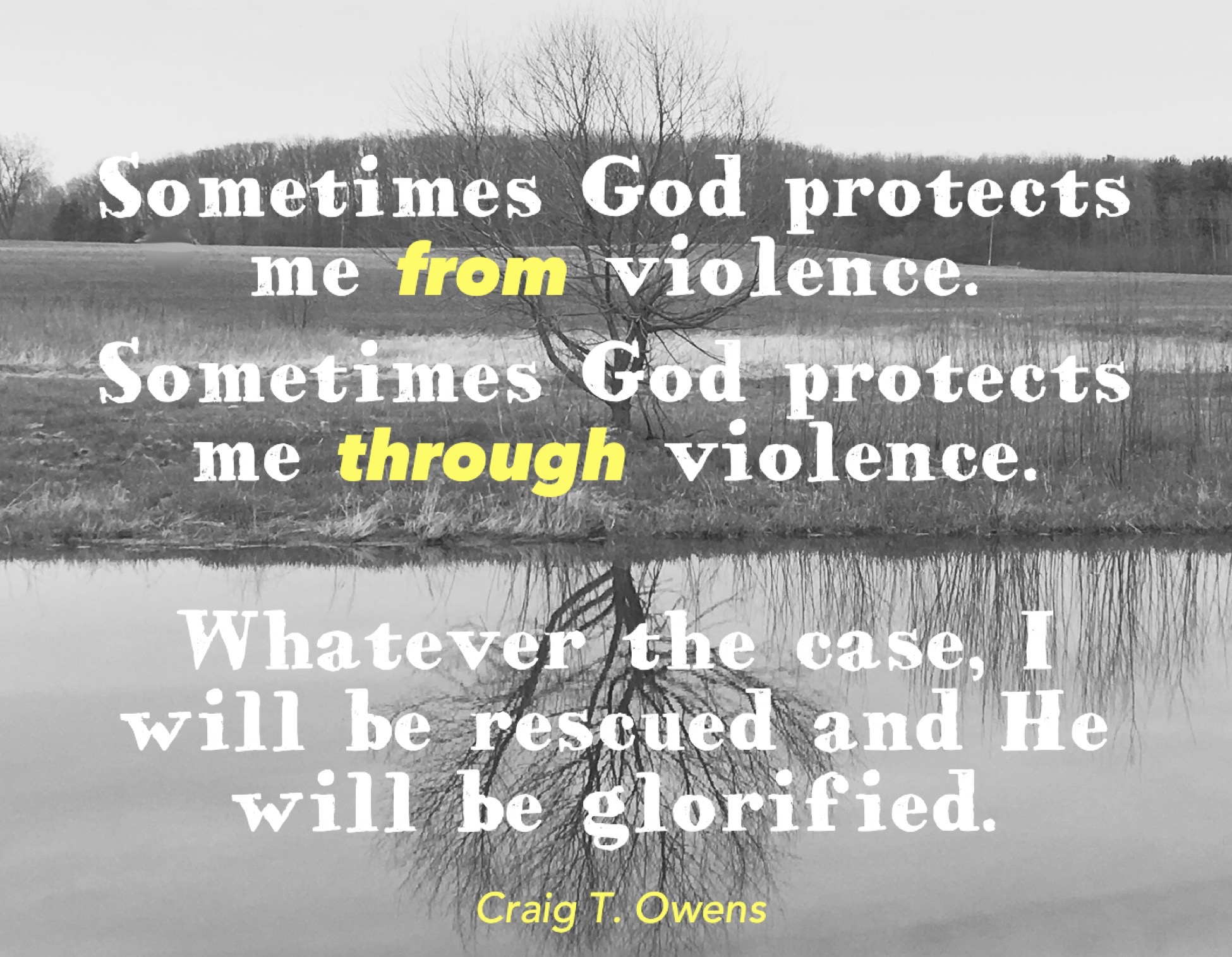
Sometimes God protects me from violence. Sometimes God protects me through violence. Whatever the case, I can be assured that I will be rescued and He will be glorified. This prayer in Psalm 140 is a prayer for protection so that we can be fruitful for God’s kingdom.

We need to Selah during the evil times we live in and whenever we have to endure wicked attacks. 

  1. Selah to thank God that you have been redeemed from that evil lifestyle by your faith in Jesus, and then pray for your attackers (Matthew 5:44). 
  2. Selah to thank God that He is using even evil people to make you more fruitful, to arm you for battle, and to glorify His name (Mark 13:9). 

If you’ve missed any of the messages in our Selah series, you can check them all out by clicking here. 

►► Would you please prayerfully consider supporting this ministry? My Patreon supporters get behind-the-scenes access to exclusive materials. ◀︎◀︎
…The Certainty Of Eternal Light

Listen to the podcast of this post by clicking on the player below, and you can also subscribe on AppleSpotify, or Audible.

Even though Jesus explicitly told His followers about His crucifixion, it was clear on that Friday on Golgotha that they didn’t fully grasp what was going on. 

We see the same thing in Heman’s maskil of Psalm 88: The faint hope that his Savior would rescue him from death, but still not fully grasping what was happening. Just as Jesus cried out, “It is finished” and His disciples thought the darkness had fallen, Heman ends his psalm with, “You have taken my companions and loved ones from me; the darkness is my closest friend” (Psalm 88:18). 

There is the reality of darkness in this world—but it is only temporary darkness. This is why I entitled our look at Psalm 88 as “The reality of temporary darkness” because, in the second part of this couplet of maskil psalms, Ethan moves right into the light of Resurrection Sunday: “I will sing of the Lord’s great love forever” (Psalm 89:1). 

Consider this Good Friday-to-Resurrection Sunday thought from Jesus: “…In the world you will have tribulation; BUT be of good cheer, I have overcome the world” (John 16:33). This tells us of both the temporary darkness and the conquering Light. But also notice that Jesus said our peace would come from knowing that both darkness and light are realities: “These things I have spoken to you, that in Me you may have peace.” Whether we are in temporary darkness or looking forward to the eternal light, our peace is only found in Jesus. 

When the followers of Jesus came to His tomb on Sunday morning, the angels asked them a penetrating question, “Why are you looking for a living Person in a place where there are dead people?” Then they began to stimulate their memory to get them to recall Christ’s words. Finally, we read, “THEN they remembered” (Luke 24:5-8). Then they had to choose to obey the word of God. 

Ethan recalls God’s words and uses his “will” three in the opening two verses. 

The disciples also could bank on Christ’s words, just as Ethan chose to bank on Jehovah’s words. The central part of Psalm 89 is God speaking: Check out His assurance in the “I will” statements within the quotation marks in verses 19-37. Then we are called to Selah to let that soak in. 

Notice what radiates out from this foundational assurance:

  • Ethan uses the pronouns You/Your 20 times in reference to God to assure us that God is in sovereign control (vv. 8b-14). Then he tells us of the blessings of God’s favor on our obedience to His word (vv. 15-18). 
  • On the other side of the central quotation from God, Ethan again uses the pronouns You/Your 13 times in vv. 38-45, but then he tells us of the blessing of God’s discipline on our disobedience.
  • Radiating out further, Ethan asks seven questions—much like his brother Heman did in Psalm 88—in verses 5-8 and 46-48. 
  • Finally, we see the psalm both opening and closing with praising God as we remember His covenant word (vv. 1-4, 49-52). 

Remember we said the darkness cannot prevail. The darkness is temporary (Romans 8:18) but Ethan repeatedly reminds us of God’s foreverness (vv. 1, 2, 4, 29, 52). 

  • The Selah after v. 4 is to pause in wonder at God’s words and break into rejoicing!
  • The Selah after v. 37 is again to pause after remembering God’s covenant, and to reflect on our own obedience or disobedience. 
  • The Selah after v. 45 is a pause to mourn and repent from our disobedience. 
  • The Selah after v. 48 is to pause to reflect on the forgiveness purchased on Calvary and the eternal light and life that bought. 
  • Finally, v. 52 harkens back to v. 1 as the praise is restored and the cycle begins all over again. In fact, the praise of God’s light continues forever! 

Heman and Ethan both remind us of this important truth—

My dark days are meant to get my attention. Are they dark because I live in an evil world, or because I have sinned? In either case, my only remedy is to rely on God’s covenant promise fulfilled in the death and resurrection of Jesus. 

If you’ve missed any of the other messages in our Selah series, you can find a complete list by clicking here.

►► Would you please prayerfully consider supporting this ministry? My Patreon supporters get behind-the-scenes access to exclusive materials. ◀︎◀︎
The Reality Of Temporary Darkness…

Listen to the podcast of this post by clicking on the player below, and you can also subscribe on AppleSpotify, or Audible.

A father came home from work and noticed a note addressed to him taped to his teenage son’s door:

Dear Dad, 

Jason and I borrowed Mom’s car to go to Taco Bell. I know I didn’t have permission, but I thought we’d be back before you and Mom got home. Unfortunately, I hit a pothole and blew out the front right tire. 

We jacked up the car to put on a spare tire, but the jack slipped and the car rolled backward into the ditch. 

Bill came with his pickup to pull us out, but the tow strap pulled off the front bumper and the car rolled further down the hill and sunk in the pond. 

I bought a bus ticket to get out of town and go enlist in the Army. Give Mom a hug and I’ll see you both in about 2 years. 

Love, your son

P.S. None of the above is true. Mom took her car to Aunt Jan’s house and I rode my bike to Jason’s house. However, I hope the fact that none of these bad things actually happened will help you put in perspective the D+ on my report card. 

We like to manage expectations, don’t we? We frequently deliver bad news with the good news close by. 

Psalms 88 and 89 are written by brothers: both of them are called Ezrahite, and both of them were worship leaders in the tabernacle. And until Solomon, these guys were considered the wisest in the land (1 Chronicles 2:6; 15:19; 1 Kings 4:29-34). 

I believe these two psalms form a couplet. They make up the last two psalms of Book III in the Psalter, with Psalm 89 ending with, “Amen and Amen.” Both of them label their psalms a maskil which means “a poem of contemplation” (NKJV). And look how Psalm 88 leaves us in the dark, while Psalm 89 shines a light in the dark.

In Psalm 88, Heman soberly prepares us for his two-Selah psalm in his introductory remarks. He uses a phase mahalath leannoth which means someone who is so physically weak from emotional grief that they are now battling depression. The NLT calls it “the suffering of affliction.”  

Heman is describing a reality: We will all experience pain in this life. Maybe even for our entire earthly life—from my youth I have been afflicted and close to death (v. 15). Heman’s reality is seen in his words in the first five verses of this psalm. 

His first Selah is breathtaking because he wants us to pause to realize that God has allowed all of this (notice the pronoun You in vv. 6-8, 16-18). But still, Heman knows God saves because he has made a decision to continue to praise Him even in the dark times (vv. 1-2, 9, 13).  

Heman’s second Selah comes in the middle of a series of five questions (vv. 10-14) that sound a lot like both questions Jesus asked in Gethsemane and from the Cross, and the reality of the temporary darkness He was facing (Psalm 22:1-2; Luke 22:53; John 19:11). 

Even the way Heman closes his psalm foreshadows the darkness surrounding the death of Jesus: “My God, My God, why have You forsaken Me? 

Jesus tasted all of this darkness for us so that He could be our perfect and empathetic High Priest (Hebrews 5:7, 4:15-16). 

Psalm 88 shows us the reality of temporary darkness (like Good Friday), but Psalm 89 points us to the certainty of eternal light (like Resurrection Sunday)! 

So when you are battling your dark times, let me give you these assurances: 

  1. This darkness is only temporary (Romans 8:18) 
  2. Jesus walks with us in our dark times (Romans 8:26-39)
  3. The darkness cannot prevail—Jesus tasted all of this temporary darkness for us so that He could be our eternal High Priest!

If you’ve missed any of the messages in our Selah series, you can check them out by clicking here. Please join me on Sunday when we will look at Ethan’s words in Psalm 89 about the certainty of the eternal light. 

►► Would you please prayerfully consider supporting this ministry? My Patreon supporters get behind-the-scenes access to exclusive materials. ◀︎◀︎
Thursdays With Spurgeon—God Means What He Says

This is a weekly series with things I’m reading and pondering from Charles Spurgeon. You can read the original seed thought here, or type “Thursdays With Spurgeon” in the search box to read more entries.

Listen to the podcast of this post by clicking on the player below, and you can also subscribe on AppleSpotify, or Audible. 

God Means What He Says

…For the mouth of the Lord has spoken (Isaiah 1:20).

     You talk about God as being ‘love,’ and if you mean by this that He is not severe in the punishment of sin, I ask you what you make of the destruction of Jerusalem? Remember that the Jews were His chosen nation and that the city of Jerusalem was the place where His temple had been glorified with His presence. Brethren, if you roam from Edom to Zion and from Zion to Sidon and from Sidon to Moab, you will find, amid ruined cities, the tokens that God’s words of judgment are sure. Depend on it, then, when Jesus says, ‘These will go away into everlasting punishment’ (Matthew 25:46), it will be so. When He says, ‘If you do not believe that I am He, you will die in your sins’ (John 8:24), it will be so. … 

     It is of no avail to sit down and draw inferences from the nature of God and to argue, ‘God is love, and therefore He will not execute the sentence upon the impenitent.’ He knows what He will do better than you can infer. He has not left us to inferences, for He has spoken pointedly and plainly. He says, ‘He that believes not shall be damned’ (Mark 16:16), and it will be so, ‘for the mouth of the Lord has spoken.’ Infer what you like from His nature. But if you draw an inference contrary to what He has spoken, you have inferred a lie and you will find it so. …

     I know why you do not believe in the terrible threats. It is because you want to be easy in your sins. … Yet if you do not believe its loving warnings nor regard its just sentences, they are true all the same. If you dare its thunders, if you trample on its promises, and even if you burn it in your rage, the Holy Book still stands unaltered and unalterable. ‘The mouth of the Lord has spoken.’ Therefore, I pray you, treat the sacred Scriptures with respect and remember that ‘these are written that you may believe that Jesus is the Christ, the Son of God, and that believing you might have life through His name’ (John 20:31).

From The Infallibility Of Scripture

Spurgeon delivered this sermon on March 11, 1888. Nearly 2000 years earlier, Asaph delivered a similar message from God—

“Call upon Me in the day of trouble; I will deliver you, and you shall glorify Me.” But to the wicked God says: “What right have you to declare My statutes, or take My covenant in your mouth, seeing you hate instruction and cast My words behind you? When you saw a thief, you consented with him, and have been a partaker with adulterers. You give your mouth to evil, and your tongue frames deceit. You sit and speak against your brother; you slander your own mother’s son. These things you have done, and I kept silent; you thought that I was altogether like you; but I will rebuke you, and set them in order before your eyes. Now consider this, you who forget God, lest I tear you in pieces, and there be none to deliver: Whoever offers praise glorifies Me; and to him who orders his conduct aright I will show the salvation of God.” (Psalm 50:15-23) 

Commenting on this passage from Psalm 50, T.M. Moore wrote, “Surely, this is the most fundamental error of thinking humans ever make: To think of God, spiritual things, worship, human life, the world, and everything else from our vantage point rather than His. … Asaph could see what was happening. And even though the nation was safe, strong, and surfeited with wealth, he knew that, spiritually, things were going awry. The people had persuaded themselves that God was just like them, that He thought like they did, and so was agreeable to their doing things their own way, indulging all their base desires, and pursuing their schemes for success—all the while continuing an outward show of faith.”

Let us take the Bible as what it truly is: Words the mouth of God has spoken. Let us not play games with them, changing the message to words we like. But if the Word of the Lord makes us uncomfortable, let us repent and return to Him. It is those who accept God’s Word as His Word, and obey it, that will see the salvation of God.

►► Would you please prayerfully consider supporting this ministry? My Patreon supporters get behind-the-scenes access to exclusive materials. ◀︎◀︎

The Path To Revival

Listen to the podcast of this post by clicking on the player below, and you can also subscribe on AppleSpotify, or Audible. 

As we rejoin our series looking at the Selahs in the Psalms, let me remind you of the definition of Selah: (a) a pause to reflect—or “pause, and calmly think of that,” as the Amplified Bible says; (b) notice the contrasts; or (c) get ready for a crescendo. 

Psalm 85 is a longing for revival. Not only longing for it but giving us the path to revival. 

Many Christians say they want revival, but I’m not so certain they have the biblical definition in mind. When most people define revival, they use descriptions about exuberant worship, manifestations of the gifts of the Holy Spirit, the church reenergized for ministry, and non-believers flocking to see what’s happening and then accepting Jesus into their hearts as a result. 

But those are actually the results of revival, not the revival itself. 

Take a look at this overview of Psalm 85: 

  • a look back (vv. 1-3) 
  • a look around (vv. 4-6) 
  • a look ahead (vv. 8-13) 

I am aware that I skipped verse 7 in that overview. That is the middle verse of this psalm, so it is presenting us with the main idea. It’s a longing to see the path forward, the path to revival. It’s not about “getting saved” again because verses 1-3 already thank God for His salvation. 

But let’s notice the Selah. It seems to come mid-thought in the backward look. I think this is both a pause to consider deeply, and also a pause to look at the contrasts. It’s almost as if the sons of Korah, who wrote this psalm, have their breath taken away as they consider the immensity of God’s love that covers our sins! 

That word “cover” means to cover our nakedness, conceal our shame, and hide us from our forgiven sins. The alternative is to live in fear of God’s righteous judgment on our unforgiven sin. 

The sons of Korah long for this again. They long for a crescendo of righteousness, which is why in the “look around” section we see the phrases “restore us again” (v. 4) and “revive us again” (v. 6). 

This Hebrew word for “restore” always means a turning:

  • men turning back from God (apostasy) 
  • men turning away from God (backsliding) 
  • men turning away from evil (repentance) 
  • men turning back to God (revival) 

The ball is in our court. God has remained faithful; we are the ones who have sinned and turned away from Him. God hasn’t gone anywhere; we have! 

So revival begins with the recognition of our sin and profound repentance from that sin. Revival is a recognition that I have turned back from God, and now I need to turn away from evil and turn wholeheartedly back to God. 

Immediately following that middle verse notice the personal, singular pronoun “I” in verse 8. Revival starts with my recognition of my sin and then my repentance of that sin quickly follows. 

The “show us the way” prayer of verse 7 is answered in verse 13: “Righteousness will go before Him, and shall make His footsteps our pathway” (NKJV). God Himself shows us the way! His footsteps mark the path for us to walk! 

Just as Jesus told us He was the way (John 14:6). 

When we repent from following any other path, revival and restoration happen. The fruit of revival is then a life sustained, quickened, and equipped by God’s presence that will draw others to Him too! 

Let us SELAH—pause and consider the forgiving love of God, the need for my repentance, and then let us enjoy the crescendo of living in daily revival! 

If you have missed any of the other messages in our Selah series, you can find all of those messages by clicking here. 

►► Would you please prayerfully consider supporting this ministry? My Patreon supporters get behind-the-scenes access to exclusive materials. ◀︎◀︎
Expecting Miracles

Listen to the podcast of this post by clicking on the player below, and you can also subscribe on AppleSpotify, or Audible. 

Last week we saw the in-ness of the Holy Spirit guiding us, teaching us, and empowering us to overcome evil. For what purpose? Why does the Holy Spirit lead us this way? Because the Spirit desires to draw everyone into this in-ness. His work in and through our lives is always unmistakable and irrefutable. 

A good word to describe the unmistakable and irrefutable work of the Spirit is: Miracles. 

Miraculous signs characterized the earthly ministry of Jesus, and they also should to the hallmark of Spirit-baptized Christians today who are sharing the Gospel with others (Acts 10:38; 2:43; Mark 16:20). 

Some may ask, “Why don’t we see as many miracles today?” And some skeptics even point to a decrease in miracles as proof of their cessationist paradigm. But consider this: Has God’s power been diminished? Have all needs been met? Are there no more sickness or unsolvable problems of human suffering? Is everyone free of the power of the devil? 

No, of course not! 

So that would mean if there is any diminishment in miracles, the diminishment would seem to be in us! Particularly I think it is that we no longer expect miracles to happen.

Not only should we expect miracles, but we should also expect to be the vessel through which the Holy Spirit demonstrates the miracle. 

Here are 8 miracles that we should be expecting:

  1. Minds opened that were blinded to the Gospel message—2 Corinthians 4:4-6 
  2. Thoughts transformed—Romans 12:2-3; Philippians 2:5 
  3. Invincible words spoken by us to others—Acts 6:10 
  4. Love tangibly expressed through our spiritual gifts—John 13:34-35; 1 Corinthians 12:1, 31—13:3 
  5. Gifts of the Spirit used constructively in the church to both evangelize the sinner and edify the saint—1 Corinthians 14
  6. Compassionate actions constantly initiated to address areas of human suffering—Philemon 4-7, 17
  7. Powerful prayers prayed and answered—Acts 3:6, 4:31, 13:2-3 
  8. Miracles consistently seen as authenticating the Gospel message—Acts 10:38, 19:11-12 

(Check out all of the above scripture verses by clicking here.) 

Don’t limit the Supernatural power of the Holy Spirit in you to only natural expressions. Constantly expect miracles! 

If you’ve missed any of the messages in our series We Are: Pentecostal, you can find them all by clicking here.

►► Would you please prayerfully consider supporting this ministry? My Patreon supporters get behind-the-scenes access to exclusive materials. ◀︎◀︎
In-ness

Listen to the podcast of this post by clicking on the player below, and you can also subscribe on AppleSpotify, or Audible. 

We said that when it comes to the Holy Spirit’s involvement in a Christian’s life: In > On. For instance, in our learning we don’t have to go to a tutor or attend classes only at set times, but we have The Tutor IN us. Or when need wisdom for decisions we don’t have to seek out the right advisors and try to coordinate their schedule with ours, but we have The Counselor IN us. 

As we saw with Samson, many times in the Old Testament we read of the Holy Spirit coming ON someone. But throughout that First Testament we also see people longing for the Spirit to be IN them. David, especially, recognized the value of the “in-ness” of the Holy Spirit in both his prayer of repentance (Psalm 51, especially vv. 10-11) and again in his beautiful prayer in Psalm 25. 

Let me point out the in-ness that permeates this 25th Psalm and then show you its fulfillment when the Holy Spirit comes to baptize believers in the New Testament. 

(1) “IN You I trust” (v. 2). Not in human abilities or personal pedigree or earthly riches, but IN the in-ness of the Holy Spirit. Jesus said, “He who believes IN Me—who cleaves to and trusts IN and relies on Me—as the Scripture has said, ‘From his INNERmost being shall flow continuously springs and rivers of living water.’ But He was speaking here of the Spirit, Whom those who believed (trusted, had faith) IN Him were afterward to receive…” (John 7:38-39 AMP). 

(2) “my hope is IN You” (vv. 3, 5, 21). A natural fruit of trusting IN the Holy Spirit’s empowerment is the hope that only that relationship brings. Paul talks abut this twice in his letter to the Romans. First, even in the midst of trials, Paul says we have this hope: “And hope does not put us to shame, because God’s love has been poured out INto our hearts through the Holy Spirit, who has been given to us” (Romans 5:5). And then Paul prays for his friends to experience this same in-ness of hope: “May the God of hope fill you with all joy and peace as you trust IN Him, so that you may overflow with hope by the power of the Holy Spirit” (Romans 15:13). 

(3) “guide me IN Your truth … guide me IN what is right” (v. 5, 9). Jesus identified the Holy Spirit as the Spirit of Truth Who guides us INto truth (John 14:17, 16:13). This is how Jesus lived (Matthew 4:1) and it’s how we can live too: “But I say, walk and live habitually IN the Holy Spirit—responsive to and controlled and guided by the Spirit—then you will certainly not gratify the cravings and desires of the flesh…” (Galatians 5:16 AMP). 

(4) “He instructs sinners IN His ways” (v. 8, 12). The Hebrew word David uses for “teach” in vv. 4, 5, 9 is “lamad.” It means being taught in a way that equips us to teach others. Jesus “gave instructions through the Spirit” to His disciples, and then He commanded them to teach others the same way (Acts 1:2; Matthew 28:20). The Spirit of Truth that inspired the Word of God can illuminate it to our hearts as He instructs us (see 2 Timothy 3:16-17). 

(5) “the Lord confides IN those who fear Him” (v. 14). The KJV says, “The secret of the Lord is with those who fear Him.” Isaiah said, “Whether you turn to the right or to the left, your ears will hear a voice behind you, saying, ‘This is the way; walk in it’” (Isaiah 30:21). And Jesus said that every word He spoke was directed by the Holy Spirit IN Him (John 12:49). 

(6) “I take refuge IN You (v. 20). We can take refuge IN the One whom we trust and hope, the One who leads us INto truth and instructs us, the One who confides IN us. This in-ness helps us thwart the enemy’s attacks against us. As John wrote, “But you belong to God, my dear children. You have already won a victory over those people, because the Spirit who lives IN you is greater than the spirit who lives in the world” (1 John 4:4 NLT). 

Don’t stop at salvation, but allow the Holy Spirit to baptize you and fill you. Don’t be satisfied with merely experiencing God’s presence ON you, but let His Spirit come IN you. 

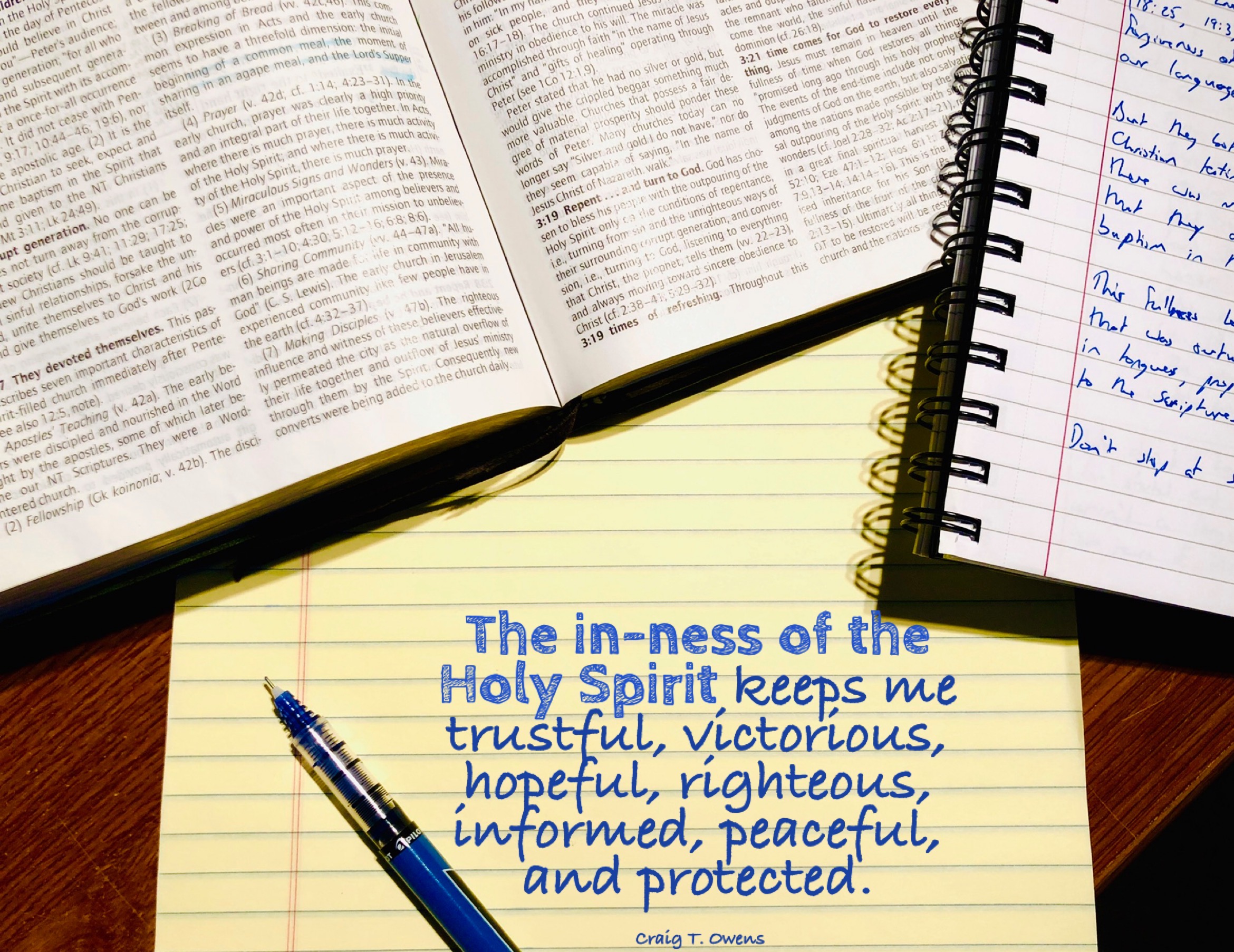
This in-ness keeps us trustful of God, victorious over the devil, hopeful of our future, righteous in a wicked world, informed of God’s ways, peaceful in trials, and fully protected from the enemy of our souls. 

If you’ve missed any of the messages in our series called We Are: Pentecostal, you can check out all of the messages by clicking here. 

►► Would you please prayerfully consider supporting this ministry? My Patreon supporters get behind-the-scenes access to exclusive materials. ◀︎◀︎
Thursdays With Spurgeon—The Final, Authoritative Word

This is a weekly series with things I’m reading and pondering from Charles Spurgeon. You can read the original seed thought here, or type “Thursdays With Spurgeon” in the search box to read more entries.

Listen to the podcast of this post by clicking on the player below, and you can also subscribe on AppleSpotify, or Audible. 

The Final, Authoritative Word

…For the mouth of the Lord has spoken (Isaiah 1:20).

     It would not be worth our while to speak what Isaiah had spoken if in it there was nothing more than Isaiah’s thought—neither should we care to meditate hour after hour upon the writings of Paul, if there was nothing more than Paul in them. … 

     It is not mine to amend or adapt the gospel. What? Shall we attempt to improve upon what God has revealed? The Infinitely Wise to be corrected by creatures of a day? Is the infallible revelation of the infallible Jehovah to be shaped, moderated, and toned down to the fashions and fancies of the hour? God forgive us if we have ever altered His Word unwittingly. … 

     One Word of God is worth more than libraries of human lore. ‘It is written’ is the great gun which silences all the batteries of man’s thought.

From The Infallibility Of Scripture

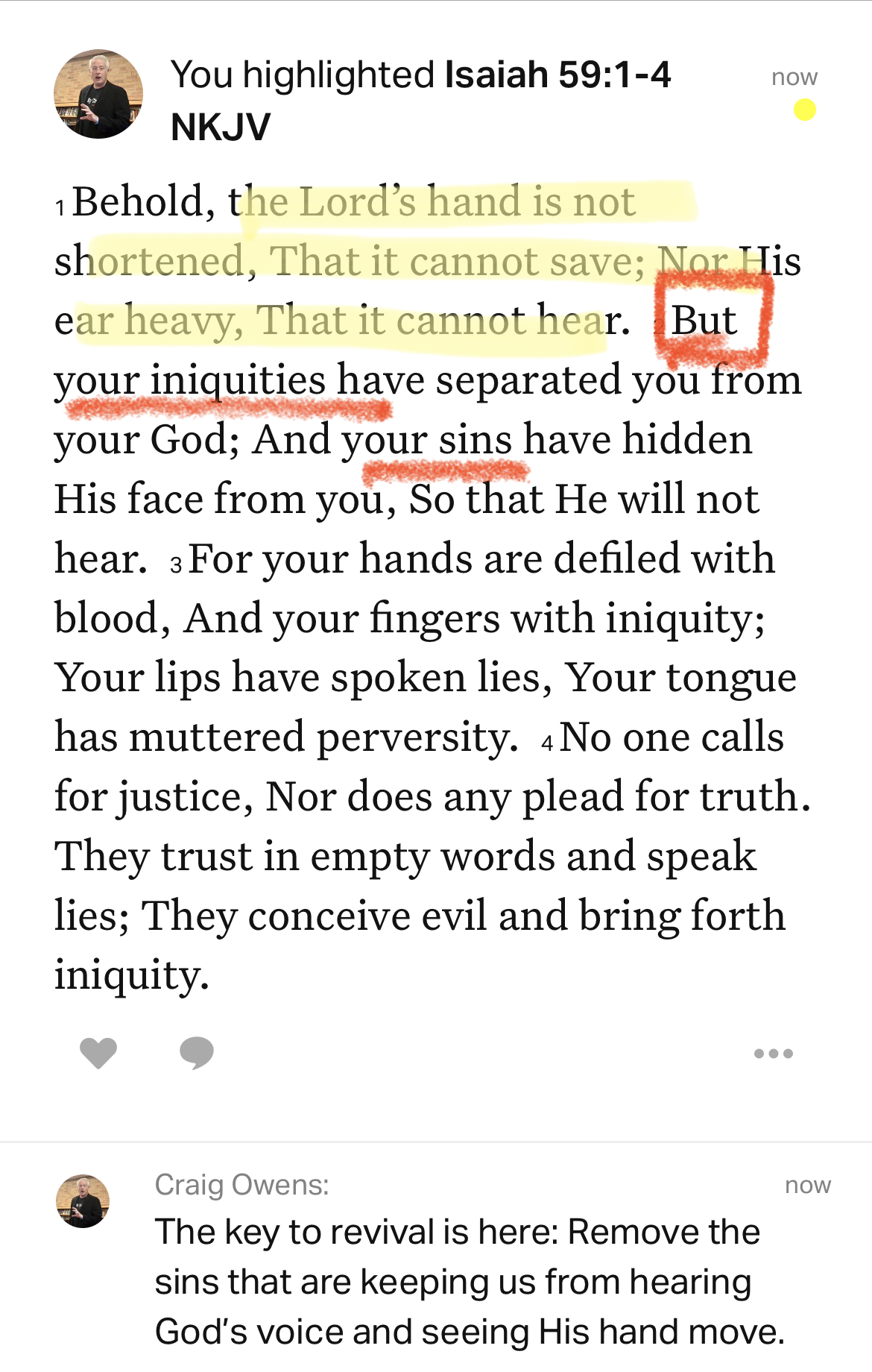
As Solomon neared the end of his writings in the Book of Ecclesiastes, he made this observation, “Of making many books there is no end, and much study wearies the body” (12:12). How true that is. Have you walked through a bookstore lately?! There is no end to the opinions that people want to share with you. 

But there is one thing that all of the books in all of the bookstores and all of the libraries have in common: not one of them is given to us by “the mouth of the Lord.” 

There are certainly many, many books that are saturated in Scripture, but they are still the opinions of man. We need to make sure that everything we read, or every wise person that we listen to, or even every conversation that we have with ourselves are all proven to be true or false based on what God has spoken.

Jesus told us that the Holy Spirit would remind us of everything God’s mouth had spoken to us (John 14:26), and that He would guide us into all truth (John 16:13). 

So go ahead and search out wise, godly books and wise, godly counselors. But remember that their word is not the final word—only the words that come from the mouth of the Lord are the authoritative words you should apply to your life.

►► Would you please prayerfully consider supporting this ministry? My Patreon supporters get behind-the-scenes access to exclusive materials. ◀︎◀︎

Anointed To Minister

Listen to the podcast of this post by clicking on the player below, and you can also subscribe on AppleSpotify, or Audible. 

Last week I shared this key thought: The Holy Spirit’s empowerment ignites and then alines our light-bearing to a disaster-prone world. 

Despite what some people try to say, this empowerment from the Holy Spirit isn’t just for a select few. Jesus not only prayed for all of His followers to know this, but Peter also brought this out in his Pentecost Day sermon (John 17:20-23; Acts 2:21, 38-39). 

So why are some people not baptized in the Holy Spirit? I think there are numerable reasons, but allow me to share four broad headings: 

  1. They have impenetrable hearts to the Holy Spirit’s wooing (Acts 7:51)
  2. They are ignorant of the fact that this baptism is available to them (Acts 19:1-2) 
  3. They have impure motives regarding the baptism in the Holy Spirit (Acts 8:9-19) 
  4. They are too impatient (Luke 11:9-13)  

(Check out all of the above passages by clicking here.)

The bottom line: God wants to baptize you in His Spirit, Jesus wants you to be anointed with the same power He used, and the Spirit wants to bring out greater Jesus-exalting fruitfulness from your life. 

Two years ago in this series, I said that when it comes to the Holy Spirit’s involvement in a Christian’s life: In > On. 

In the Old Testament, Samson had the Spirit of God ON him, but he never allowed the Holy Spirit to come IN him and make important changes. Three times we read that “the Spirit of the Lord came upon him” (Judges 14:6, 19; 15:14), but after every one of these times we see Samson reverting to his childish, selfish, pouting ways again. 

By contrast, consider the life of Jesus. After He was baptized by John we read that Jesus was “full of the Holy Spirit” and “led by the Spirit.” That word for “full” means complete or lacking nothing. Jesus yielded to the Holy Spirit and allowed Him to lead and direct, as well as supply everything that was needed for ministry. Just a few verses later we read that “Jesus returned to Galilee, in the power of the Spirit.” And in His first recorded sermon, Jesus read from the prophet Isaiah about the Holy Spirit anointing Him for ministry (Luke 4:1, 14, 18). 

That word for “anointed” is chiro, from which we get the word Christ. That is the same root word in us as CHRISTians. 

We see this in Peter, Stephen, Barnabas, and Paul (Acts 4:8; 6:3, 5; 7:55; 11:24; 13:9). And then Paul writes that this anointing is for all Christians—“Now it is God who makes both us and you stand firm in Christ. He anointed us [that’s the word chiro again], set His seal of ownership on us, and put His Spirit in our hearts as a deposit, guaranteeing what is to come” (2 Corinthians 1:21-22). 

The anointing that characterized the life of Jesus in Acts 10:38—“How God anointed Jesus of Nazareth with the Holy Spirit and power, and how He went around doing good and healing all who were under the power of the devil, because God was with Him”—is the same anointing for ministry for all CHRISTians today! 

So…

Don’t dabble—dive in! 

Don’t settle for on—allow the Holy Spirit fully in! 

When we are yielded and baptized in the Holy Spirit, we have the anointing to shine brightly for Jesus in our generation. 

If you’ve missed any of the messages in our series We Are: Pentecostal, you can check them all out by clicking here. 

►► Would you please prayerfully consider supporting this ministry? My Patreon supporters get behind-the-scenes access to exclusive materials. ◀︎◀︎
Links & Quotes

William Perkins defined theology as, “The science of living blessedly forever.” He also had this word for pastors as they teach theology: “The ‘demonstration of the Spirit’ becomes a reality when, in preaching, the minister of the Word conducts himself in such a way that everyone—even those who are ignorant of the gospel and are unbelievers—recognize that it is not so much the preacher who is speaking but the Spirit of God in him and by him…. This is what makes his ministry living and powerful.”

“Self-trust is the first secret of success.” —Ralph Waldo Emerson

80 Years Ago: The Assemblies of God was a founding member of the National Association of Evangelicals, and remains the largest of the 40 denominations that are members of the NAE today.

John Piper identifies five digital dangers and gives us strategies for combating them. I especially thought these insights on pornography were powerful: “More insidious that X-rated videos, we can now not only watch but join the perversity in the privacy of our own den. Interactive porn will allow you to ‘do it’ or make them ‘do it’ virtually. I have never seen it. Nor do I ever intend to. It kills the spirit. It drives God away. It depersonalizes women. It quenches prayer. It blanks out the Bible. It cheapens the soul. It destroys spiritual power. It defiles everything. Resolution: I will never open any app or website for sexual stimulation, nor purchase or download anything pornographic.”

“I could well believe that it is God‘s intention, since we have refused milder remedies, to compel us into unity, by persecution even and hardship. satan is without doubt nothing else than a hammer in the hand of a benevolent and severe God. For all, either willingly or unwillingly, do the will of God: Judas and satan as tools or instruments, John and Peter as sons.” —C.S. Lewis

“The response of Jesus to those guilty of sexual sin is not to condemn nor condone the sin. I see in His example [John 8:10-12] a good pattern: (1) Love first—‘I don’t condemn you’; (2) Speak the truth—‘Sin no more.’” —Kevin Berry. The world has made “love” mean accepting whatever the other person is doing, and “truth” now means agreeing with the other person. With the Holy Spirit’s help, we can speak the truth in love without condemning nor condoning.