
Winning Souls, Not Arguments

Listen to the podcast of this post by clicking on the player below, and you can also subscribe on Apple, Spotify, or Audible. 

The men who were guarding Jesus mocked Him and beat Him. They blindfolded Him and hit Him again and then demanded, “Prophesy! Who hit You?” And it wasn’t just the physical abuse, but they heaped mocking insult upon mocking insult upon Jesus (Luke 22:64-65). 

All four of the Gospel writers recount how Jesus responded to both the physical and verbal abuse: 

  • To the false charges before the Sanhedrin, Jesus remained silent (Matthew 26:57-63) 
  • To the spitting and hitting by the members of the Sanhedrin, Jesus remained silent (Matthew 26:67-68) 
  • To the physical abuse of the guards, along with their mocking insults, Jesus remained silent (Mark 14:65; Luke 22:64-65) 
  • To the mocking He endured before King Herod, Jesus remained silent (Luke 23:9-11) 
  • To the false charges announced to Governor Pilate, Jesus remained silent (Matthew 27:12-14) 
  • To the insults and mocking thrown His way as He hung on the Cross, Jesus remained silent (Matthew 27:38-44; Mark 15:29-32; Luke 23:35-36) 

His only verbal response was after being slapped in the face by one of the officials in the Sanhedrin. Jesus said, “If I said something wrong, testify as to what is wrong. But if I spoke the truth, why did you strike Me?” (John 18:22-23). 

These are what we call an ad hominem attack. That is attacking the person, instead of confronting the ideas or arguments the person is presenting. 

The self-control of Jesus here is absolutely astounding! Peter records, “When they held their insults [and their fists and their spit] at Him, He did not retaliate; when He suffered, He made no threats. Instead, He entrusted Himself to Him who judges justly” (1 Peter 2:23). 

Even as His trial got underway, Luke records, “the council of the elders of the people…met together, and Jesus was led before them” (Luke 22:66).

Dr. Henry Halley points out that extra-biblical sources have told us that this trial violated at least four of the Sanhedrin’s own rules:

  1. Meeting on the morning of a festival 
  2. Meeting in Caiaphas’ personal residence 
  3. Trying a defendant without defense 
  4. Passing the verdict of a death sentence in one day instead of two days 

I would add a fifth rule which is found in Scripture: At least two witnesses need to be in agreement with their testimony for there to be a death sentence (Deuteronomy 17:6, 19:5; Mark 14:55-59). 

When the Sanhedrin then hauled Jesus before Pontius Pilate, even their charges made before the governor in Luke 23:1-2 were flimsy at best: 

  1. Subversion—there is no proof for this 
  2. Opposing taxes to Rome—this was false (see Luke 20:20-25) 
  3. Jesus was a rival to the Roman throne—not true 

And still Jesus remained almost completely silent! He only spoke when asked a direct question, but He remained silent throughout the false accusations, the verbal taunts, and the physical abuse. 

When I am treated unfairly, when the rules are bent against me, when false charges are lodged against me, I get angry! I want to defend myself! I want to put my accusers or abusers in their place! 

Could Jesus have prevented His arrest? Yes (Matthew 26:53)! 

Could Jesus have defended Himself before the Sanhedrin, Pilate, and King Herod? Yes! 

Could Jesus have come down from the Cross to prove His power? Yes! 

But Jesus wasn’t trying to win a momentary argument; He was winning souls for eternity! 

Jesus came not to be served, but to serve, and to give His life as a ransom for many (Mark 10:45). So, “for the joy set before Him He endured the Cross, scorning its shame, and sat down at the right hand of the throne of God.” 

When anger boils up because of the mistreatment we are enduring, we must “consider Him who endured such opposition from sinners, so that you will not grow weary and lose heart” (Hebrews 12:2-3). 

Like Jesus, let’s not try to win just a momentary argument that may result in the loss of a soul for all of eternity. There is a time to speak and there is a time for silence. As we keep our eyes on Jesus, we will know what time it is. 

(You can check out all of the Scriptures I referenced in this post by clicking here.)

P.S. You may also be interested in a previous blog post Winning the Argument or the Battle or my short video How Should Leaders Handle Pushback. 

►► Would you please prayerfully consider supporting this ministry? My Patreon supporters get behind-the-scenes access to exclusive materials. ◀︎◀︎
The Most Effective Leadership Tool

Listen to the podcast of this post by clicking on the player below, and you can also subscribe on Apple, Spotify, or Audible. 

One of the most effective leadership tools is, sadly, one of the tools that is used the least by most leaders. Let’s figure out how to make it work for you.

Check out this episode of The Podcast.

Some resources from this episode:

I shared a clip from a Craig and Greg Show episode. You can check out that full episode here.

The Scripture I referenced is John 10:3-5. I unpack this idea in much greater depth in my book Shepherd Leadership: The metrics that really matter.

My new book When Sheep Bite is available for pre-order!

Here are a bunch of ways to get in touch with me and follow along with other projects on which I am involved

►► Would you please prayerfully consider supporting this ministry? My Patreon supporters get behind-the-scenes access to exclusive materials. ◀︎◀︎

No Need To Prove It

Listen to the podcast of this post by clicking on the player below, and you can also subscribe on Apple, Spotify, or Audible. 

“Who gave You this authority,” the chief priests twice demanded of Jesus in Luke 20:1-8. 

Worldly minded people are always looking for a résumé of accomplishments or the stamp of approval from a superior, so they can demand the unquestioned loyalty from those who report to them. In other words, they are looking for authority from their position that allows them to prove to others that they are in charge. 

The “chief priests and the teachers of the law, together with the elders” (v. 1) had earned their positions, or so they thought. They are, therefore, asking Jesus to, “Prove it!” They want to know why Jesus gets to say and do the things He says and does.

Jesus had every right to flex on them! But He knew that His words and deeds spoke for themselves. He “knew that the Father had put all things under His power” (John 13:3) so there was nothing for Him to prove to anyone. 

In my book When Sheep Bite, I have a chapter about sheep questioning the authority of their shepherd. In that chapter I wrote—

     When our conversation with criticizing sheep hasn’t gone well, and when those unhealthy sheep begin to gossip and then slander, it’s inevitable that they will eventually began to question your authority as a shepherd. Perhaps they think you’re too young and naive, or too old and out of touch. They may question your motives, or the vision you’ve imparted for the church, or your ability to follow through on what you have already shared. Whatever the case, these biting sheep seem to be implying that they know better than you do how this pasture should be run. During times like these, it is tempting to want to “prove” that we are qualified, that we do know what we’re doing, and that we can indeed successfully pursue the vision we’ve articulated for them. Once again, it’s natural to want to say, “I’ll show you just how qualified I am!” 

     Before we respond, we need to recognize the source of our authority. … Far greater than positional authority is moral authority. This is authority that comes not merely from a title or position, but from who conferred that title or position on the leader. If God has called us and appointed us to this pasture, that is all the authority we need.

Jesus didn’t answer the “Prove it!” demand, but went right on teaching and serving. We need to remember that there is only One to whom we must give an answer. There is only One who can say to us either, “Depart for Me,” or “Well done, good and faithful servant!” 

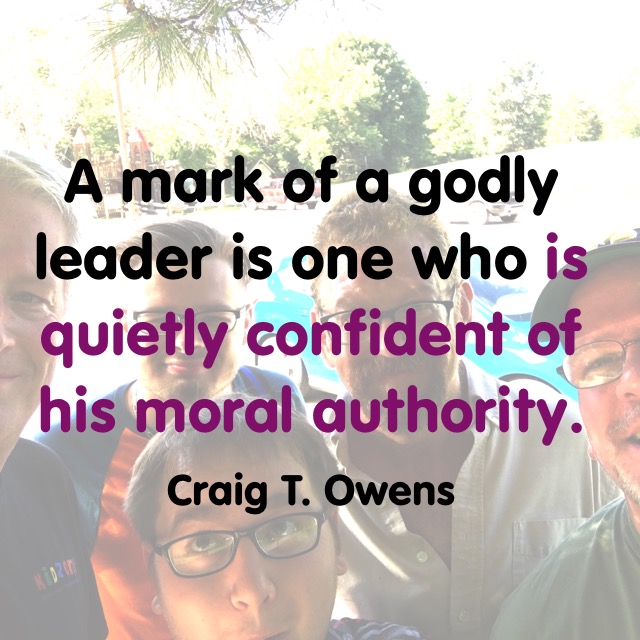
A mark of a godly leader is one who is quietly confident of his moral authority. 

As a result, that leader no longer feels the need to prove anything. 

This is part 78 in my series on godly leadership. You can check out all of my posts in this series by clicking here. 

You can order my book When Sheep Bite here. 

►► Would you please prayerfully consider supporting this ministry? My Patreon supporters get behind-the-scenes access to exclusive materials. ◀︎◀︎

Unusually Usual

Listen to the podcast of this post by clicking on the player below, and you can also subscribe on Apple, Spotify, or Audible. 

If you want to experience something usually powerful in your life, you may need to add something usual to your life.

Check out this episode of The Podcast.

Some resources from this episode:

The Scriptures I reference: Luke 22:39-43; Mark 1:35; Luke 5:16; Daniel 6:1-23; John 18:1-2, 12:49, 5:19; Luke 4:1-12

Here are a couple of blog posts about how Jesus prayed: 4 Practical Prayer Tips from Jesus and Pray Like Jesus.

My new book When Sheep Bite is available for pre-order!

Here are a bunch of ways to get in touch with me and follow along with other projects on which I am involved

►► Would you please prayerfully consider supporting this ministry? My Patreon supporters get behind-the-scenes access to exclusive materials. ◀︎◀︎
Always Ready

Listen to the podcast of this post by clicking on the player below, and you can also subscribe on Apple, Spotify, or Audible. 

A large crowd surrounded Jesus. “He welcomed them and spoke to them about the kingdom of God, and healed those who needed healing. Late in the afternoon the Twelve came to Him and said, ‘Send the crowd away so they can go to the surrounding villages and countryside and find food and lodging, because we are in a remote place here.’ He replied, ‘You give them something to eat’” (Luke 9:11-13). 

Why did the crowds seek out Jesus? They came to Him because they knew He had wisdom, healing, and food for them. As disciples of Jesus, we never know when people will be around us that are in need. In fact, the closer we walk with Jesus, the more needy people will begin to gravitate toward us.

Jesus never intends that we simply give them a verbal blessing like, “Go, be filled and be warm” (James 2:16).

Jesus wants us to give them something substantial.

This means we need to both prepare and stock up ahead of time (be proactive) and we need to be sensitive to the prompting of the Holy Spirit in each encounter we have with a needy person (be reactive).

Jesus told us that the Holy Spirit would remind us of His words (John 14:26), but that means we have to study His words ahead of time. The Holy Spirit can then give us those words to share in the heat of the moment (Matthew 10:19–20). 

Jesus also instructed us to have available both old and new treasures to share with people around us (Matthew 13:52). The old speaks to being proactive, and the new is reactive to each thing that we are learning and experiencing.

One of my life’s mottos is: Leave every place better than I found it.

That means I also want to leave every person better than they were before we crossed paths. 

In order to do this, I have to have something substantial—something eternally significant—to give to them. When needy people show up, it is too late for me to prepare.

I want to be always ready. That means I need to be always abiding with my Savior. I need to be learning at the feet of Jesus, filled with the power of the Holy Spirit, and saturated in the love of God, so that I always have something good to give. 

Jesus, when you tell me, “Give them something to eat,” I want to give them You. Help me to proactively prepare so that I am ready to react in a way that glorifies You every single time.

►► Would you please prayerfully consider supporting this ministry? My Patreon supporters get behind-the-scenes access to exclusive materials. ◀︎◀︎
God In The Footnotes?

Listen to the podcast of this post by clicking on the player below, and you can also subscribe on Apple, Spotify, or Audible. 

Can we trust our Bibles? There are some things that skeptics point to that we need to be able to defend—even in this model prayer that we have been studying. We come to the last verse of this prayer, which many of you probably learned or heard as, “For Yours is the kingdom and the power and the glory forever. Amen.” Yet some Bibles have a footnote here that notes that this doxology is not seen in all biblical manuscripts. 

How are we to handle this observation, and others like it in places like Mark 16:9-20 and John 7:53-8:11? 

Let’s start with how we got the Bibles we have today, because it is very instructive. 

We don’t have the autographs (original writings) but we have manuscripts (copied by a trained scribe from the autograph, and then copied from by yet another reliable scribe, and so forth). The oldest calfskin manuscript we have goes back to 1500 BC, and the oldest papyrus manuscript goes back to 2400 BC. 

The scribes were incredibly talented and disciplined men. They became a recognized group called the Sopherim (scribes) in about 500 BC. By AD 100, the Talmudic scribes eclipsed them, and then the Masoretic scribes—the most stringent scribes of all—dominated from AD 500-900. 

Let’s turn our attention first to the manuscripts that compromise what we call the Old Testament. What did Jesus—and others that lived in His time—call those 39 books of the Old Testament? They were called Scripture. Those books were not in doubt even before Jesus was on earth. 

Dr. Peter Flint notes, “The biblical Dead Sea Scrolls are up to 1,250 years older than the traditional Hebrew Bible, the Masoretic text. We have been using a one-thousand-year-old manuscript to make our Bibles. We’ve now got scrolls going back to 250 BC. … Our conclusion is simply this—the scrolls confirm the accuracy of the biblical text by 99 percent.” 

In the New Testament era, the disciples of Jesus went out in pairs. Their oral transmission of the news of Jesus and the quoting of Scripture was verified by their traveling partners. Even for those who happened to be by themselves (e.g. Philip in Samaria), there was always follow up by other church leaders. 

So the New Testament epistles were written to verify the spoken words—James was the earliest (probably AD 45). The number of manuscripts we have of these New Testament words are simply astounding! 

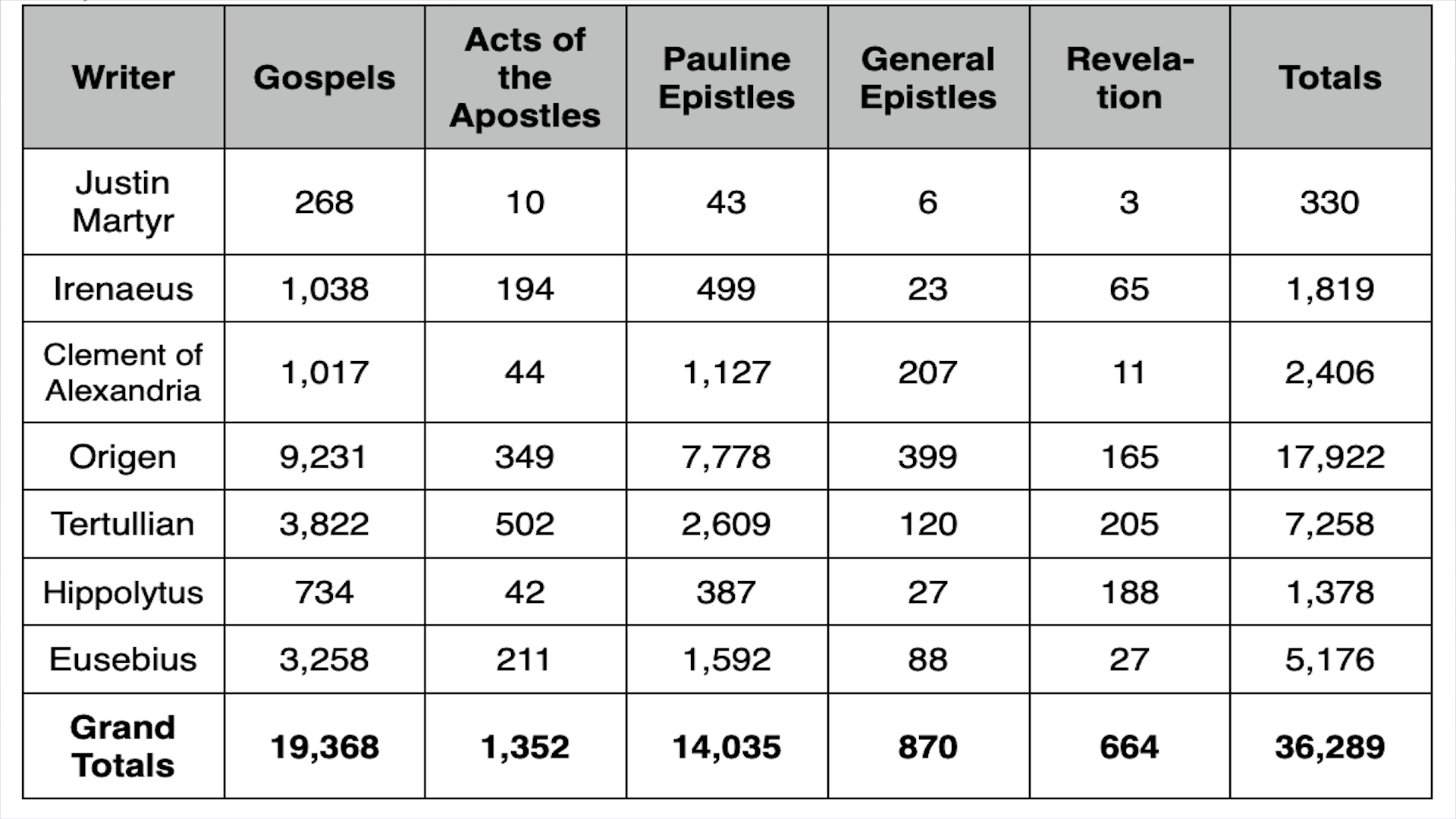
After the canon of the New Testament was completed, the church fathers quoted so much of the New Testament in their letters and books that we could completely reconstruct those 27 books just from their writings. 

With this many manuscripts in existence, is it likely that there would variations in manuscripts? Yes. But none of the variations ever discovered have been fundamental enough to change anything in the meaning. Josh McDowell states, “Compared with other ancient writings, the Bible has more manuscript evidence to support it than the top ten pieces of classical literature combined.” 

So how do we handle these places where scholarly footnotes tell us of a discrepancy in the existing manuscripts? 

  1. Get the context—does this fit with what is happening around it? 
  2. Is there corroboration—can we cross-reference it from elsewhere in the Bible? 

In the conclusion of the powerful model prayer Jesus has given us, the closing words appear to be a doxology. But I think we can trust this because for three main reasons: 

  1. This doxology seems to come full circle with how the prayer begins in: Our Father in heaven, hallowed be Your name, Your kingdom come, Your will be done, on earth as it is in heaven (vv. 9-10). 
  2. These words are found almost verbatim in the words of David: Yours, Lord, is the greatness and the power and the glory and the majesty and the splendor, for everything in heaven and earth is Yours. Yours, Lord, is the kingdom; You are exalted as head over all (1 Chronicles 29:11). 
  3. Finally, these words are similar (if not identical) to the words that John records he heard in Heaven—Revelation 4:11; 5:12-13; 7:12; 11:15-17 

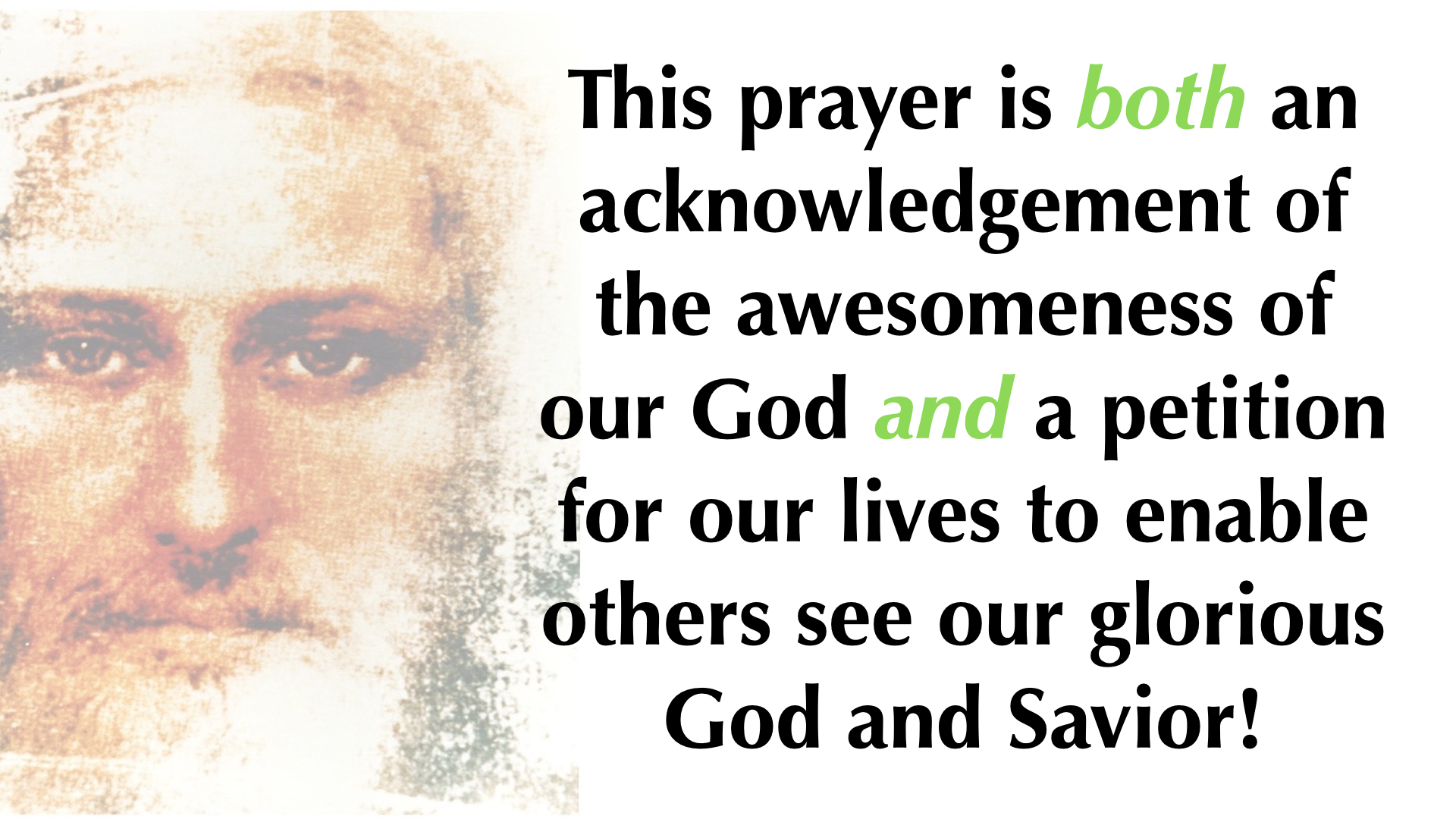
As we have noted throughout this prayer series, the focus of this prayer is two-fold: It is both an acknowledgement of the awesome, praiseworthy glory of our God, and it is a petition for our lives to be empowered to help others see our glorious God and Savior for themselves. 

For these reasons, this doxology, I believe, is an indispensable part of this majestic prayer. 

If you missed any of the other messages in this series, you can check them all out here. 

►► Would you please prayerfully consider supporting this ministry? My Patreon supporters get behind-the-scenes access to exclusive materials. ◀︎◀︎

Shut The Door On The Devil’s Lies

Listen to the podcast of this post by clicking on the player below, and you can also subscribe on Apple, Spotify, or Audible. 

There is a way we can keep the door cracked open for the devil to whisper his slander to us, and there is a way to slam the door shut! Jesus said one of the best ways to shut the door on the slanderous lies of the devil is to forgive people who have injured us.

The verses I reference in this clip are John 10:10; John 8:44; Revelation 12:10; Luke 17:-5; Psalm 103:12; Isaiah 1:18; 2 Corinthians 5:21.

The full sermon that this clip comes from is Faith to Forgive. 

And check out this post where I talk about the Security we have in standing on God’s promises of forgiveness.  

►► Would you please prayerfully consider supporting this ministry? My Patreon supporters get behind-the-scenes access to exclusive materials. ◀︎◀︎

The Words Of Jesus

Listen to the podcast of this post by clicking on the player below, and you can also subscribe on Apple, Spotify, or Audible. 

After Jesus drove the merchants out of the temple, He began to teach those who gathered around Him. Luke records that “all the people hung on His words” (Luke 19:48). 

I believe that one of the main reasons His words had such authority and power to capture people’s attention was because He was so immersed in Scripture. As Jesus cleared the temple, He quoted from two Old Testament prophets. As He told a parable to the crowd in the temple—a parable that the religious leaders knew “He had spoken…against them”—He made a passage from Psalm 118 the foundational piece of His story. 

The words of Jesus are…

  • Scriptural 
  • authoritative 
  • loving
  • unswervingly truthful
  • practical
  • challenging 
  • unconventional (according to human standards) 
  • God-glorifying 
  • paradigm challenging
  • life changing

I want others to say of me what Charles Spurgeon said of John Bunyan, “Why, this man is a living Bible! Prick him anywhere—his blood is Bibline, the very essence of the Bible flows from him. He cannot speak without quoting a text, for his very soul is full of the Word of God.” 

Wouldn’t you want that said of your life too? I sure would!

Our first step is to read the Word of God. Next, we need to allow the God of the Word to transform our minds. And then we can rely on the Holy Spirit to help us apply the Bible to everything we say and do. 

Heavenly Father, I pray that people may hear the words of Jesus in all the words I speak. Holy Spirit, bring all of the Word I have read back to my mind (John 14:26; Mark 13:11) so that it is not my words that I am speaking but Yours. In the name of Jesus I ask this. Amen! 

(To go a little deeper on this topic, check out Whose Words Have Weight? and The Timeliest of Words.) 

►► Would you please prayerfully consider supporting this ministry? My Patreon supporters get behind-the-scenes access to exclusive materials. ◀︎◀︎

The Danger In Plenty

Listen to the podcast of this post by clicking on the player below, and you can also subscribe on Apple, Spotify, or Audible. 

Jesus is teaching us to pray as citizens of the Kingdom of Heaven, and each phrase of this prayer is a reminder of how we interact with the King of Heaven—Our Father in Heaven, hallowed be Your name. Your Kingdom come, Your will be done on earth as it is in Heaven.  

We all have a desire to feel secure—to feel our needs are going to be met. In fact, our anxiety level is usually tied directly to how insecure we may feel. The problem for many of us, however, is that we have mistaken wants for needs, and when those aren’t met as we think they should be, we again experience increasing levels of anxiety. 

We see this on full display in Luke 12. First, Jesus addresses a man who is greedily desiring his share of his father’s inheritance. Jesus says, “Life does not consist in an abundance of possessions.” 

To illustrate this point, Jesus tells a parable of a rich landowner who harvested more crops than he knew what to do with—a harvest which he calls “plenty.” His solution was to build bigger barns for his abundant harvest, to which God announced, “You fool” (Luke 12:13-21). 

This man was not called a fool because he was successful. He was not called a fool because he had plenty. Rather, he was called a fool because his “plenty” caused him to forget his heavenly Father.   

This is an invaluable lesson. Sadly, we tend to be a very forgetful people! 

After God delivered His people from their bondage in Egypt, and they almost immediately start worrying and then complaining about whether their needs will be supplied. God tells them that He will supply every day exactly what they need (Exodus 16:1-35). 

This provision of manna every single morning when they got up was intended to keep them reliant on God and thankful for His provision. But after a while they thought they deserved more—they wanted plenty (Numbers 11:4-6). Later on, Asaph would pinpoints the main culprit of the Israelites’ stumbled throughout their history: forgetfulness (Psalm 78:11, 22-25). 

Jesus taught us to come to God in prayer as Our Father. Just as Jesus was daily dependent on His Father, so He teaches us to have that same level of daily abiding. 

Jesus reminds us what the daily supply of manna really signified; namely, that He would be our Bread from Heaven for all of eternity (John 6:28-40)! 

So that’s why we pray, “Give us today our daily bread.” Once again, this is an acknowledgement that no one else can provide for us, and it is a request that we would stay daily dependent on Him. It’s not, “Give us today our weekly bread.” Or, “Give us today our daily wants.” Or even, “Give us today plenty of things.” 

We need our Father for daily bread so that we never, ever forget or vital, indispensable connection to Him!  

Even when we don’t have plenty, we are told not to worry but instead to look to our Heavenly Father for His daily supply (Luke 12:22; Philippians 4:6-7).

If you’ve missed any of the other messages in this series on prayer, you can check them all out here. 

►► Would you please prayerfully consider supporting this ministry? My Patreon supporters get behind-the-scenes access to exclusive materials. Like some exclusive quotes from a book I just reviewed. ◀︎◀︎

Held Back By Comparisons

Listen to the podcast of this post by clicking on the player below, and you can also subscribe on Apple, Spotify, or Audible. 

There’s one important thing that could be holding us back from living the way that God wants us to. 

Check out this episode of The Podcast.

Some resources from this episode:

Here are a bunch of ways to get in touch with me and follow along with other projects on which I am involved

►► Would you please prayerfully consider supporting this ministry? My Patreon supporters get behind-the-scenes access to exclusive materials. Like some exclusive quotes from a book I just reviewed. ◀︎◀︎