Listen to the podcast of this post by clicking on the player below, and you can also subscribe on Apple, Spotify, or Audible.
Have you every thought of Jesus as a gentleman?
Consider this question He asked of a Samaritan woman, “Will you give Me a drink?” (John 4:7).
As a Man, Jesus could have demanded to be served, but instead He asked her if she was willing to serve Him. He gave her dignity.
Jesus was tired and thirsty (v. 6), so He gave her an opportunity to be a blessing to Him. When Samaritans were so often overlooked or avoided or even derided by Jews, Jesus gave her a chance to help someone truly in need.
Jesus offered her living water. She was used to an angry look or a striking hand, not an offer of a blessing. He said, “I would like to bless you with living water, if you will just ask Me for it” (v. 10).
Once again, Jesus affirmed her dignity by giving her the option to take His blessing—it was right there for the asking. He didn’t force anything upon her, but allowed her to choose.
Jesus didn’t talk down to her. He didn’t demean her as a woman, a Samaritan, or a divorcée. He didn’t scold her for her religious beliefs. He treated her with love as a person of value and great worth.
Jesus is love.
Jesus is gentle.
Jesus wants to show us His favor.
And Jesus wants us to show His favor to others.
Are you treating others in this gentle, Christ-honoring way?
It’s an important question for you to ask and honestly listen to the answer from the Holy Spirit. Let’s be the kind of gentlemen and gentlewomen that represent Jesus well.
Listen to the podcast of this post by clicking on the player below, and you can also subscribe on Apple, Spotify, or Audible.
As missionaries, we are people sent on a mission. We are sent to everyone everywhere. We are to take Him to every street where God sends us.
“Main Street” (or Jerusalem) is a great place to start, and probably a place where we will always have work to do. These will typically be the people that are most like us—people with whom we will have the most in common.
There are others that need to hear the Good news of forgiveness that Jesus has made available. As our circle of witness widens, we may have less in common with those with whom we are interacting. This may take us out of our comfort zone, but since the Holy Spirit is in us we will never be out of our empowerment zone!
But you will receive power when the Holy Spirit comes on you; and you will be My witnesses in Jerusalem, and in all Judea… (Acts 1:8).
We need to ask two questions:
What did it mean then? Judea was still compromised of Jewish people, but it was the area slightly outside the neighborhood of Jerusalem.
What does it mean now? These are people very similar to people on Main Street, but we are starting to see more differences. These differences often become the source of controversies.
I’m going to describe some people in our Judea as cultural Christians but not biblical Christians. In the time of Jesus we could think of the Pharisees: People who would call themselves godly because they have set their own standards.
Lombard Street in San Francisco is a short, curvy street. This is a one-way street and motorists are only supposed to drive 5 mph, and still there are frequent controversies on the right-of-way between homeowners, motorists, work crews, bicyclists, and pedestrians. Everyone thinks their way is the right way.
How do we take the message of Jesus to those on our “Lombard Street”?
(1) Distinguish the biblical from the non-biblical.
Both the Pharisees that interacted with Jesus and today’s cultural Christians seem to quote more from their own traditions than they do from the Scripture, so we need to distinguish that the source of our beliefs is from God’s inspired Word. (I share more about the concept of biblical, unbiblical, and non-biblical in this post.)
A great example for us is how Jesus answered two questions from an expert in the Mosaic law: How do I earn eternal life? Who is my neighbor? See Luke 10:25-37.
(2) Stick to Scripture and your personal story.
Remember that the person with an experience is never at the mercy of the person with an argument. When the Sanhedrin questioned the legitimacy of the healing of a lame man, Luke wrote, “But since they could see the man who had been healed standing there with them [Peter and John], there was nothing they could say” (Acts 4:14)!
Love the personal story of the healed blind man in John 9!
Judea can be translated “he shall be praised.” We glorify Jesus not by arguing with those on Lombard Street, but by simply proclaiming biblical truth and our personal testimony.
Sing to the Lord, all the earth; proclaim good news of His salvation from day to day. Tell of His glory among the nations, His wonderful deeds among all the peoples. (1 Chronicles 16:23-24)
As we stick with the Scripture and our personal testimony, the Holy Spirit will use our witness to open minds to the Good News of Jesus (2 Corinthians 3:18-4:5).
Follow along with all of the streets we are looking at in our series Takin’ Him to the streets by clicking here.
Listen to the podcast of this post by clicking on the player below, and you can also subscribe on Apple, Spotify, or Audible.
Just as assuredly as Jesus fulfilled God’s promise of His crucifixion and resurrection, we Christians are fulfilling God’s promise that we would take the message of forgiveness of sins to the whole world (Luke 24:45-48). We are taking Him to every street where God sends us. There is a song written by Michael McDonald called “Takin’ it to the streets.” One verse says—
Take this message to my brother
You will find him everywhere
Wherever people live together
Tied in poverty’s despair
We know what the “it” is. He is a Savior, a God, a Redeemer, a Father who has made it possible for everyone everywhere to be in a personal relationship with Him for all of eternity!
When anyone talks about taking the Good News of Jesus to people, our minds typically think “missionary.”
What is a missionary? What comes to mind when you think of a missionary?
Quite simply, a missionary is a person sent on a mission (see Luke 24:47; Matthew 28:19-20).
We are not sent on our mission unprepared, but Jesus promised us both His authority and the indwelling power of the Holy Spirit (Matthew 28:18-19; Luke 24:49; Acts 1:8). In both Luke and Acts, Jesus says that our witness is to begin in Jerusalem.
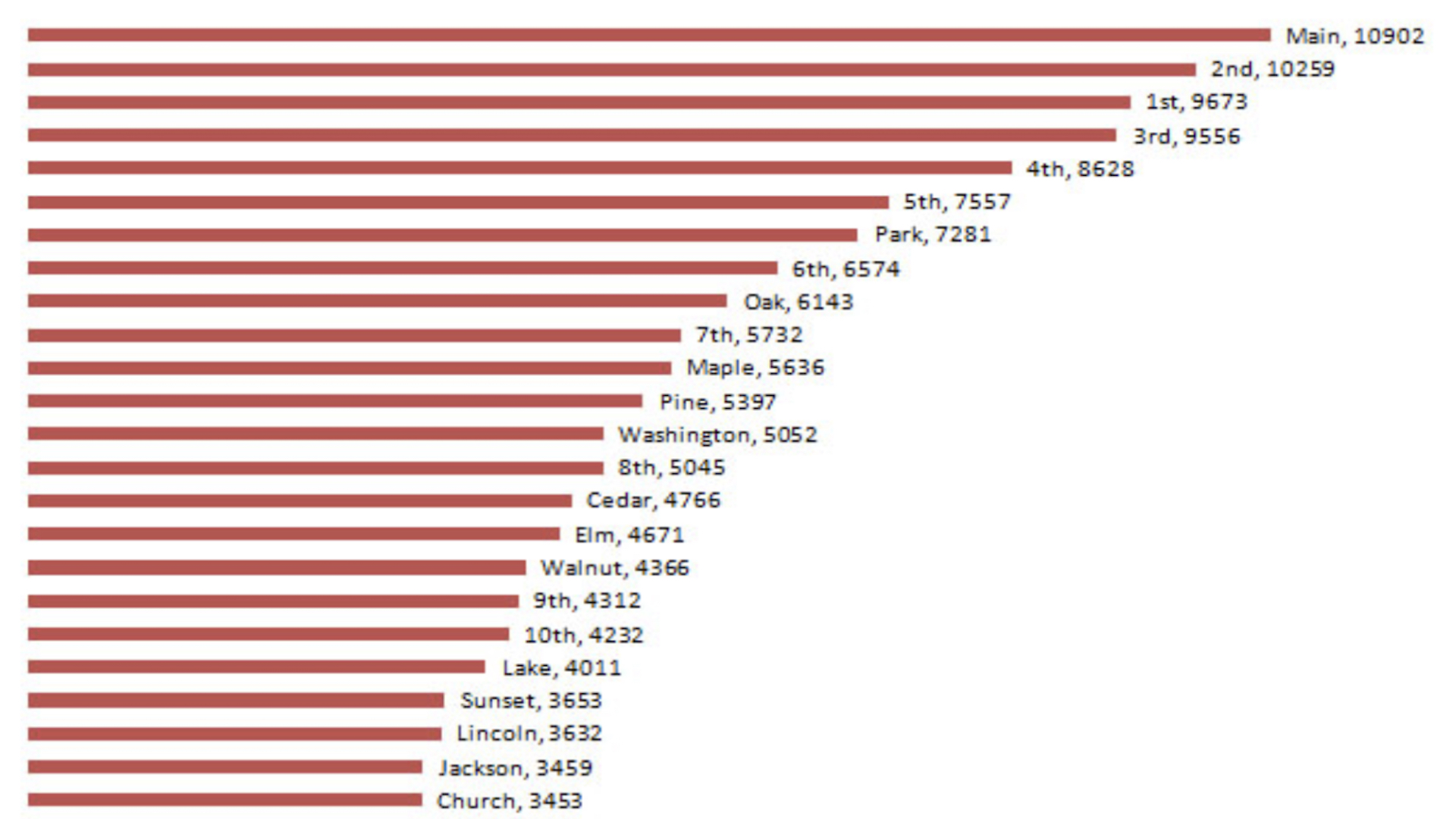
I recently looked up a list of the most common street names in America. I found that the most common street name is “Main Street.” But Main Street is also used as a way for people to describe the average setting in the USA.
Going to “Jerusalem” or “Main Street” first is foretold in the Old Testament (Ezekiel 3:4-5). We’re not first sent to people with an unknown language or obscure customs, but to people we know and understand. These are people to whom we can easily find common interests.
There are two simple steps when we take Jesus to our Main Street.
Ask the Holy Spirit to reveal truth to you today and every day.
You cannot give to others what you do not first have yourself, so you need to hear what the Holy Spirit is saying to you first. Pray before reading the Bible to ask the Spirit to give you insight (Psalm 119:18).
Find a friend and tell them what was revealed to you.
After Jesus was revealed to Andrew, he found Peter and told him what he had discovered. And after Philip met Jesus, he found Nathanael and brought him to Jesus (John 1:35-46).
Every person with whom you interact today is precious to God. Our mission is to help them realize that awesome truth.
So get filled up with the wisdom from the Spirit and then find a friend on Main Street and bring them to Jesus!
Follow along with all of the messages in this series Takin’ Him To The Streets by clicking here.
Look at the profound humility of John! His birth was foretold by an angel, his ministry was so powerful that people wondered if he was the Messiah or possibly Elijah, yet he never let all these accolades go to his head.
“I am such a lowly servant of Jesus that I don’t even have the right to take off His sandals.”
As C.S. Lewis said, “Humility is not thinking less of yourself, it’s think of yourself less.” John was too focused on making sure people saw Jesus that he had no time to think about himself.
Jesus said John was the greatest of the prophets (Matthew 11:11; Luke 7:28). The applause of the world means nothing. All that matters is the applause from nail-scarred hands, and the voice of the Master saying, “Well done, good and faithful servant.”
Listen to the podcast of this post by clicking on the player below, and you can also subscribe on Apple, Spotify, or Audible.
The Gospel of John introduces John the baptizer to us like this, “He himself was not the Light; he came only as a witness to the Light” (John 1:8).
John had a similar birth announcement as Jesus had (Luke 1:11-14, 28-33)
John’s birth prompted a Holy Spirit-inspired song from his father that resonates with Mary’s Magnificat (Luke 1:46-55, 68-70)
The early years of John are described in much the same terms as how Luke describes the early years of Jesus (Luke 1:80, 2:52)
John quoted Scripture and taught with very similar authority as Jesus did (Matthew 3:1-12; Luke 3:1-19)
Yet for all their similarities, John knew that he was only a herald of Jesus (John 1:19-27).
John was not the Light—he was only a witness to the Light.
I am not the Light—I am only a witness to the Light.
You may think that this statement is pretty obvious, and I did too. But as I read these words from John 1:8 again, it caused me to reevaluate just how much I really believe this.
Do I remember this when no one compliments my sermon? Do I remember this when what I thought was an insightful comment on a verse of Scripture gets hardly any “likes” on my social media channels? Do I remember this when I am complemented and my posts are appreciated?
Who exactly am I trying to make look good: me or Jesus?
I want John’s desire to become my desire and my prayer: “Jesus must increase, but I must decrease” (John 3:30).
Listen to the podcast of this post by clicking on the player below, and you can also subscribe on Apple, Spotify, or Audible.
Jesus hung on the Cross for about 6 hours. He was mostly silent during this time—His seven statements from the Cross would have taken less than a minute to say them all back-to-back.
He hung silently and thoughtfully. I know He was thoughtful because John records, “Later, knowing that all was now completed, and so that the Scriptures would be fulfilled, Jesus said, ‘I am thirsty’” (John 19:28).
Movie directors will often show a flashback scene where their character looks back to remember what came before. I think during this silent time on the Cross, Jesus reviewed His public ministry. He reviewed every jot and tittle of every promise His Father had made, and He knew that each and every one had been completed.
This culminating event on the Cross was the fulfillment of the big picture that God had been painting all along. The system of sacrifices centered in the tabernacle or the temple had been trying to show us something.
There were daily sacrifices and annual sacrifices; there were sacrifices for willful sins and sacrifices for unintentional sins; there were sacrifices for priests and for laypeople. Day after day, week after week, month after month, year after year, decade after decade, century after century these sacrifices continued, never feeling like the work was finished.
These practices were only a shadow, but a shadow that foretells the Reality—
The law is only a shadow of the good things that are coming—not the realities themselves. For this reason it can never, by the same sacrifices repeated endlessly year after year, make perfect those who draw near to worship. … The reality, however, is found in Christ. (Hebrews 10:1; Colossians 2:17)
Jesus knew that He had come as the Reality (John 13:1), but before this final event on the Cross that would fully reveal the Reality, Jesus had one last thing to do: He wanted to share a final meal with His friends (Luke 22:7-15).
Jesus said that eagerly desired to eat the Passover meal with them. This Passover remembrance looked backwards to the deliverance from Egypt and was celebrated year after year, decade after decade, century after century.
The events were so long ago that they may have seemed like fading shadows to those who were celebrating this meal over a millennia after the fact. Jesus brought Reality.
Jesus knew He was the most powerful Person on earth, but He also knew that He had come to serve (Mark 10:45; John 13:3-5). To demonstrate His servanthood…
He washed the feet of His betrayer
He washed the feet that would run away from Him in terror
He prepared them for what was coming
Peter boldly declared that he would never run away, and Matthew and Mark record that all of the other disciples declared the same thing—(Luke 22:33; Matthew 26:35; Mark 14:31). But Jesus knew the prophecy that said, “I will strike the Shepherd, and the sheep of the flock will be scattered (Matthew 26:31).
So Jesus prepared them by praying for them, and He prepared them by showing them the Reality of all those daily, weekly, monthly, annual, and Passover sacrifices (Luke 22:17-20, 31-32).
Jesus was the completion of this sacrifices (Hebrews 7:26-28, 9:11-14)!
The prophecy God gave in Jeremiah was completed in Christ’s broken body and spilled blood on the Cross—“For I will forgive their wickedness and will remember their sins no more” (Jeremiah 31:31-34; Hebrews 8:12).
The purpose of this Last Supper—this meal that completes so many jots and tittles—is to remember. The devil wants you to remember what YOU did. Jesus wants you to remember what HE did.
Good Friday and the celebration of Communion helps us remember correctly that Jesus paid in-full the penalty for our sins, so now our forgiven sins are forgotten sins. The moment we sin, there is already the remedy for our sins that has been paid for. We repent, ask forgiveness, and receive His immediate cleaning.
Such amazing love!
If you have missed any of the messages in this series looking at some of the jots and tittles of prophecy that are fulfilled in Jesus, you can check them all out by clicking here.
Listen to the podcast of this post by clicking on the player below, and you can also subscribe on Apple, Spotify, or Audible.
I would like to make a case for you to really slow down this week.
Check out this episode of The Podcast.
Here are some helpful resources from this episode:
I have two series of messages focusing on the Passion Week that will help you go deeper in your Bible study time: Christ’s Passionate Journey (which I mentioned in this podcast) and Bold Claims.
Listen to the podcast of this post by clicking on the player below, and you can also subscribe on Apple, Spotify, or Audible.
I’ve noticed over the years that some people get quite nervous—even fearful—with the thought of God coming close to then. Some people have told me, “I can’t go to church—the roof will fall in on me!”
If I’m honest, I had a time in my life when I feared God’s approach. I didn’t want to pray, “God, use me however You want to” because I just knew He was going to send me somewhere I didn’t want to go, or ask me to give up something that was special to me.
But from the the birth of Jesus until His ascension, the consistent message is: Fear not! and Rejoice!
Matthew 21:4 says that Christ’s arrival on a donkey was “to fulfill” another one of the jots and tittles. And John adds, “Jesus found a young donkey and sat upon it, as it is written, ‘Do not be afraid, O Daughter of Zion; see, your King is coming, seated on a donkey’s colt’” (John 12:14-15).
Typically, conquerors came with a show of overwhelming force, not a show of humility. But Jesus came to Jerusalem with the same message repeated at His birth, “Fear not.”
This is elaborated on in the original prophecy found in Zechariah 9:9-14, where the opening word is, “Rejoice!” We rejoice because He is coming to take away the instruments of war that the occupying forces used to keep the citizens in bondage. He is coming to bring freedom He is coming to announce hope and restoration.
With all of these jot-and-tittle prophecies, we have been asking three questions.
(1) What did it mean then? Quite simply, on that first Palm Sunday it meant that this was not the time for judgment.
(2) What does it mean now? Since the final judgment has not taken place, it must mean it still is not a time of judgment, but a time of favor. God is still drawing people to Himself by His kindness (Romans 2:4).
Zechariah 9:14 makes it clear that there will be a day of judgment. And Peter says that God’s not being slow about this, but He is demonstrating His patience so that none will have to perish without Him (2 Peter 3:9-10).
(3) What does it mean for me? It means that I don’t have to fear the approach of God.
First, there is no fear when God calls me to stand before Him because my sins have been forgiven (Romans 8:1).
Second, there is no fear when God asks me to give something to Him because God has equipped me ahead of time to respond obediently. When Jesus sent His disciples ahead of Him to bring back the donkey that He would ride into Jerusalem, Jesus must have already informed the donkey’s owners that this would be coming. The disciples were simply to say, “The Master needs the donkey now.”
God has already prepared me to say, “Yes” to whatever He calls me to do (Psalm 139:16).
Finally, there is no fear when God asks me to give something to Him because I’m only giving back to Him what is already His. You and I are just stewards of what God has given us. When the disciples talked to the steward of the donkey, they assured him, “The Lord needs it and will send it back here shortly” (Mark 3:11). And the prophecy in Zechariah, God says, “Now I announce that I will restore twice as much to you” (Zechariah 9:12). Maybe not here on earth, but the rewards in Heaven will be incalculable for His faithful servants!
Those who know Jesus as their Master can live as fearless stewards.
We don’t fear the requests of our King, but we rejoice to allow Him access. We don’t fear the approach of our Judge, but we rejoice to stand before Him forgiven and rejoicing!



 Have you every thought of Jesus as a gentleman?