The Core Curriculum Of The Spirit

“The Law of God teaches us how to love Him and our neighbors (Matthew 22:34-40). The Law of God is critical for seeking the Kingdom of God (Matthew 5:17-19). The Law of God liberates us from the blinding and binding power of sin (James 2:8-13). The Law of God marks the path of love that Jesus walked, and that all must walk who would follow Him (1 John 2:1-6; 5:1-3). The Law of God provided the framework within which the apostles ordered their churches (cf. 1 Corinthians 5, 9; James 2:5; 1 John 5). The Law of God is the core curriculum of the Spirit, as He brings us into the presence of God’s glory and transforms us into the image of Jesus Christ (Ezekiel 36:26-27; 2 Corinthians 3:12-18). Neglecting the Law of God is a major cause for the decline of true and selfless love in the world; it licenses the progress of evil; and it threatens to render the prayers of Law-neglecting believers an ‘abomination’ or, we might say, ‘a dead and a useless thing’ (Matthew 24:12; Proverbs 28:4, 9). 

[all Scriptures from the above paragraph are here]

“It’s no wonder the psalmist, echoing Moses, insisted that the righteous person, the one who embodies the goodness of God in all his ways, meditates on the Law of God day and night, hides it in his heart and embodies it in all his ways (Psalm 119:9-11; Deuteronomy 6:1-9), keeps it diligently, delights in and loves it, and hastens to make sure his feet follow in its path (cf. Psalm 1; Psalm 119:4, 5, 35, 59, 60, 97). 

[all Scriptures from the above paragraph are here]

“If you are missing the Law of God in your relationship with Jesus, you are depriving yourself of a most important resource for bringing the goodness of God to light in the land of the living. The good works outlined in the Law of God are those ‘ordained of old’ which God intends us to do in all our ways (Ephesians 2:10). Yes, understanding the Law can be difficult. But we can learn from the prophets, Jesus, and the apostles how to read, study, and meditate in this most important corpus of Biblical literature, and thus we can discover the true freedom for goodness and love that God has prepared for us.” —T.M. Moore 

God Is The Majority

…all of them were leaders of the Israelites (Numbers 13:3). 

Caleb and Joshua were two of the ten leaders who were sent out to explore the land of Canaan in advance of the Israelites’ crossing the Jordan River.

One of their areas of exploration was Hebron, the city where God first promised this land to Abraham and his descendants. It was here that the explorers saw the giants of Anak. Next, they went to the Valley of Eschol and took a sample of the gigantic-sized fruit. The explorers all experienced the same journey, but they did not all come to the same conclusion.

Ten of the explorer said, “The food is gigantic but so are the people. We cannot defeat them!” (13:26-29)

“Then Caleb silenced” those naysayers and said, “We can do it!” And Joshua joined Caleb in declaring, “Their protection is gone, but the Lord is with us. Do not be afraid of them” (13:30; 14:6-9).

The majority rules, right?

No! God did not send them in as a committee to vote on His plan. God had already said, “Take possession of the land”—that wasn’t up for debate or vote!

The naysayers said, “It looks like a good land, but….” 

Caleb and Joshua said, “They look like giants, but….” 

The majority saw the negatives and made excuses. They saw their situation as bigger than God.

The minority saw God as bigger than the giants. God by Himself is always the Majority. Always. My vote doesn’t change a thing. In fact, I don’t even get a vote! My only decision is whether or not to trust God and obey Him. Obedience—faithful, trusting obedience in God’s word—puts me on God’s side.

A mark of a godly leader is one who makes sure he is always on God’s side. 

This is part 48 in my series on godly leadership. You can check out all of my posts in this series by clicking here.

7 Quotes From “Faith Of Our Founding Fathers”

Parents, please download a FREE copy of this book to help educate your children on the biblical faith that informed the decisions of our Founding Fathers (link in the book review). You can read my complete book review of Faith Of Our Founding Fathers by clicking here. 

“The Bible is the best of all books, for it is the word of God, and teaches us the way to be happy in this world and in the next. Continue therefore to read it, and to regulate your life by its precepts.” —John Jay 

“Only a virtuous people are capable of freedom. As nations become corrupt and vicious, they have more need of masters.” —Benjamin Franklin 

“While we are zealously performing the duties of good Citizens and Soldiers we certainly ought not to be inattentive to the higher duties of Religion. To the distinguished Character of Patriot, it should be our highest Glory to add the more distinguished Character of Christian.” —George Washington 

“In this situation of this assembly, groping as it were in the dark to find political truth, and scarce able to distinguish it when presented to us, how has it happened, sir, that we have not hitherto once thought of humbly applying to the Father of lights, to illuminate our understandings? … I have lived, Sir, a long time; and the longer I live the more convincing Proofs I see of this Truth, That God governs in the Affairs of Men! And if a Sparrow cannot fall to the Ground without His Notice, is it probable than an Empire can rise without His Aid?—We have been assured, Sir, in the Sacred Writings, that ‘except the Lord build the House, they labor in vain that build it.’ I firmly believe this; and I also believe that without His concurring Aid we shall succeed in this political Building no better than the Builders of Babel…. I therefore beg leave to move, That henceforth Prayers, imploring the Assistance of Heaven, and its Blessing on our Deliberations, be held in this Assembly every Morning before we proceed to Business.” —Benjamin Franklin 

“And can the liberties of a nation be thought secure when we have removed their only firm basis, a conviction in the minds of people that these liberties are of the gift of God? That they are not to be violated but with His wrath? Indeed, I tremble for my country when I reflect that God is just; that His justice cannot sleep for ever….” —Thomas Jefferson 

“The diminution of public virtue is usually attended with that of public happiness, and the public liberty will not long survive the total extinction of morals.” —Samuel Adams 

“Neither the wisest constitution nor the wisest laws will secure the liberty and happiness of a people whose manners are universally corrupt.” —Samuel Adams

Personalizing The Prayers Of The Bible

Much of the Bible is given to us in a conversational format, and many of those conversations are between humans and God.

My desire is that we wouldn’t just read through the Bible, but we would learn to pray through the Bible. The Scripture is full of prayers people have already prayed. We have the benefit of seeing the setting that led to the prayer, the prayer itself, and then the outcome of the prayer. 

The Holy Spirit can help us make each prayer in the Bible our own prayer. They can become personalized to the situations we face. 

In this 5-minute video, I demonstrate how I turned Psalm 27 into a prayer. Below the video is the text of this psalm so you can see how I began the prayer. After watching this video, I encourage you to begin to use God’s Word as a launching point for your prayers for your situations. 

The Lord is my light and my salvation—whom shall I fear? The Lord is the stronghold of my life—of whom shall I be afraid?

When the wicked advance against me to devour me, it is my enemies and my foes who will stumble and fall.

Though an army besiege me, my heart will not fear; though war break out against me, even then I will be confident.

One thing I ask from the Lord, this only do I seek: that I may dwell in the house of the Lord all the days of my life, to gaze on the beauty of the Lord and to seek Him in His temple.

For in the day of trouble He will keep me safe in His dwelling; He will hide me in the shelter of His sacred tent and set me high upon a rock.

Then my head will be exalted above the enemies who surround me; at His sacred tent I will sacrifice with shouts of joy; I will sing and make music to the Lord.

Hear my voice when I call, Lord; be merciful to me and answer me.

My heart says of You, “Seek His face!” Your face, Lord, I will seek.

Do not hide Your face from me, do not turn Your servant away in anger; You have been my helper. Do not reject me or forsake me, God my Savior.

Though my father and mother forsake me, the Lord will receive me.

Teach me Your way, Lord; lead me in a straight path because of my oppressors.

Do not turn me over to the desire of my foes, for false witnesses rise up against me, spouting malicious accusations.

I remain confident of this: I will see the goodness of the Lord in the land of the living.

Wait for the Lord; be strong and take heart and wait for the Lord.

8 Quotes From “Warnings To The Churches”

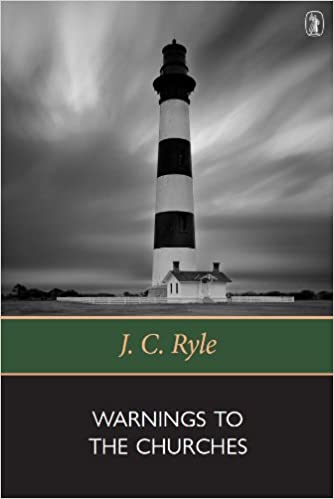
This hard-hitting, no-pulled-punches book is directed primarily at pastors and other church leaders. However, I think anyone who loves Christ and His Bride will find much to ponder in Warnings To The Churches by J.C. Ryle. You can read my full book review by clicking here. 

“Go forward, beloved brethren, and fear not the adversary. Only abide in Christ and the victory is sure. Marvel not at the hatred of the gates of hell. ‘If you were of the world, the world would love you as its own’ [John 15:19]. So long as the world is the world, and the devil is the devil, there must be warfare, and believers in Christ must be soldiers! The world hated Christ, and the world will hate true Christians as long as the earth stands. As the great reformer, [Martin] Luther, said, ‘Cain will go on murdering Abel so long as the Church is on earth.’” 

“He who cannot lie has pledged His royal word that all the powers of hell shall never overthrow His Church. It shall continue, and stand, in spite of every assault. It shall never be overcome.” 

“Weak as this true Church may appear to the eye of man, it is an anvil which has broken many a hammer in times past, and perhaps will break many more before the end. He who lays hands on it is touching the apple of God’s eye!” 

“We corrupt the Word of God most dangerously when we throw any doubt on the absolute inspiration of any part of Holy Scripture.” 

“We corrupt the Word of God when we make defective statements as doctrines. We do so when we add to the Bible the opinions of the Church or of the Church Fathers, as if they were of equal authority. We do so when we take away from the Bible for the sake of pleasing men. We do so when from a feeling of false liberality, keep back any statement which seems narrow, or harsh, or hard. We do so when we try to soften down anything that is taught about eternal punishment or the reality of hell. We do so when we bring forward doctrines in their wrong proportions.” 

“May we never care what men say of us so long as we walk in the light of God’s Word! May we strive and pray to be wholly independent of, and indifferent to, man’s opinion, so long as we please God!” 

“Chosen as believers are by God the Father, justified as they are by the blood and righteousness of Jesus Christ, sanctified as they are by the Holy Spirit, believers are still only men—they are still in the body and still in the world. They are ever near temptation. They are ever liable to misjudge, both in doctrine and in practice. Their hearts, though renewed, are very feeble; their understanding, though enlightened, is still very dim. They ought to live like those who dwell in an enemy’s land, and every day to put on the armor of God. The devil is very busy: he never slumbers or sleeps.” 

“Like the fruit of which Eve and Adam ate, at first sight it looks pleasant and good, and a thing to be desired. ‘Poison’ is not written up on it and so people are not afraid. Like counterfeit coin it is not stamped ‘bad.’ It passes for the real thing, because of the very likeness it bears to the truth. Let us be on our guard against the very small beginnings of false doctrine.” 

Hope-Filled Declarations

Whether it’s a doctor’s diagnosis of cancer, or a rapidly-spreading virus, or a painful relationship, Lynn Eib helps us keep these unexpected things in perspective. These may have taken us by surprise, but nothing takes God by surprise. No diagnosis nor prognostication can limit God’s power and love. 

As David learned in his painful time: “God has spoken once, twice have I heard this: that power belongs to God. Also to You, O Lord, belong mercy and loving-kindness” (Psalm 62:11-12). He is All-Powerful and All-Loving. 

Let these declarations Lynn made when receiving her cancer diagnosis help put things in perspective for you—

I refuse to believe my diagnosis is a death sentence.

I believe God is on the side of my healing because His unbreakable Word says so.

I believe treatment is effective against this illness, especially the skillful efforts of scientific medicine with my strategies for replacing lying thoughts with truth.

I believe my hormones and immune system are on the side of my healing and are even now working to overcome this illness.

I believe I am personally responsible for my treatment and for managing it.

I believe hope is a choice. I choose hope, not hopelessness.

My major aim is to have a mind fully submitted to the Spirit of God and His truth, not just to see better lab results or improvement in physical symptoms.

I believe I am on earth to share Christ, hope, and joy with others. I am here only to love others, regardless of my physical condition.

I believe that God’s will is good. 

I believe that He loves me and wants only the best for me—whatever He is allowing me to experience right now.

I can recover from this illness and live a rich, productive life of service. But whether I recover or not, I am going to leave this life someday regardless. Until then I can live a full life of service every day for as long as I am given. 

—Lynn Eib, in Peace In The Face Of Cancer 

George Mueller On Meditation

“I saw more clearly than ever, that the first great and primary business to which I ought to attend every day was, to have my soul happy in the Lord. The first thing to be concerned about was not, how much I might serve the Lord, how I might glorify the Lord; but how I might get my soul into a happy state, and how my inner man may be nourished…. I saw that the most important thing I had to do was to give myself to the reading of the Word of God and to meditation on it. The first thing I did, after having asked in a few words for the Lord’s blessing upon His precious Word, was to begin to meditate on the Word of God, searching, as it were, into every verse to get blessing out of it; not for the sake of the public ministry of the Word, not for the sake of preaching on what I had meditated on, but for the sake of obtaining food for my own soul. … So that, though I did not, as it were, give myself to prayer, but to meditation, yet it turned almost immediately more or less into prayer.” —George Mueller, in his Autobiography (emphasis mine)

God Keeps His Word

…as He had said… (Genesis 21:1-7).

This thought—and even the phrase itself—permeates the Bible. From the very beginning of Time itself, whatever God says—happens!

His word is His bond: What He had promised (v. 1b). There are no loopholes, no equivocations. When God says it, it is signed, sealed, delivered!

When is His word accomplished? From the moment He says it. His word cannot be altered nor delayed. We simply wait for its fulfillment: At the very time God had promised (v. 2).

This also means that I must obey what God says. If His word is immutable, my faith and obedience must be just as steadfast. Just like Abraham: Abraham circumcised him, as God commanded him (v. 4).

Jesus said that the Holy Spirit would help remind us of everything God has said. The same Word that tells us God’s promises is also the same Word that sparks the faith to believe His Word (Romans 10:17). 

Get God’s Word.
Believe He will fulfill it in His timing. 
Obey everything He says.
Laugh in joy when you see His word accomplished: God has brought me laughter (v. 6)! 

Praying The Word

The more consistently we pray on the ordinary days, the more prepared we will be to pray on the extraordinary days. But some people say, “I don’t know how to pray” or “I don’t know what to ask for.” That ignorance hinders a lot of people—even someone like Peter who not only spent huge amounts of time with Jesus but was with Him when He was in one of His most glorious states (Luke 9:28-33). As Jesus is transfigured before his very eyes, both Mark and Luke say this about the statement Peter blurted out: He did not know what he was saying. 

While Peter was still speaking from his ignorance, God the Father gave him (and us) some invaluable advice: This is My Son, whom I have chosen; listen to Him. 

So when the disciples ask Jesus to teach them to pray, Jesus didn’t reprimand them for asking. In fact, He told us how much He wants us to pray and how much His Father wants to answer our prayers (Luke 11:1-13; 12:32).  

There is a consistent theme about the “name” of God that permeates all that Jesus teaches about prayer. We see Him instructing us to address our prayer to our “Heavenly Father” and to pray “in My name” (Luke 11:2; John 14:13-14; 15:7; 16:23-24). This doesn’t mean that simply saying, “Dear Heavenly Father” at the beginning of a prayer or “in the name of Jesus, amen” at the end of a prayer makes our prayer magical. 

It’s about praying in the character of Jesus, directing our prayer to the only One who can help us, all with the guidance of the Holy Spirit. 

To help us do this, we have an invaluable prayer resource preserved for us in the pages of the Bible. The Scriptures are inspired by the Holy Spirit—the same Holy Spirit that lives in a Christian and helps the Christian pray according to God’s will. The same Spirit who inspired the Word can illuminate the Word to us, so we need to get into the Word and let the Holy Spirit get the Word into us! 

No matter what you’re going through, you can apply God’s Word to your situation. Look through the prayers of the Psalms, read the prayers of other great saints throughout the Scriptures, check out the prayers the apostles prayed in the New Testament, and even read the prayers of Jesus Himself. Then make those prayers your prayers!

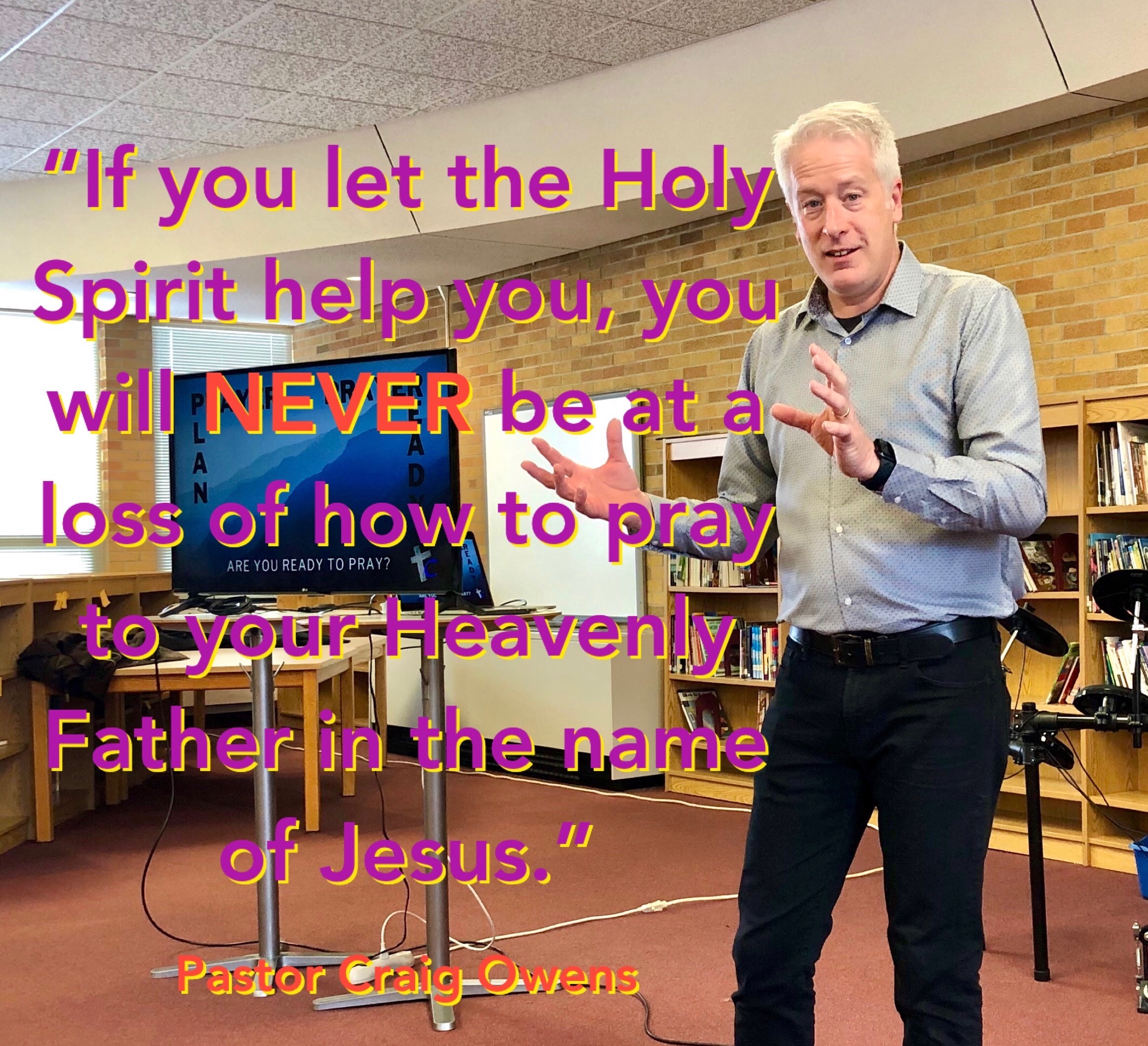
If you let the Holy Spirit show you how the Bible applies to your situation, you will NEVER again be at a loss of how to pray to your Heavenly Father in the name of Jesus!

Join me this Sunday as we continue to learn how to to be ready to pray by making our plan to pray. 

Quest Study Bible (book review)

I was excited to get my copy of The Quest Study Bible. As I began to leaf through it and notice its unique format, I was suddenly transported back more than 20 years into my past…

“Daddy, what are you doing,” my young son asked, as I bent over some forms spread across my desk. 

“I’m filling out these tax forms,” I explained.

“Why?”

“So that I make sure I’m sending the right amount of tax money in to our government.”

“Why?”

“Because I don’t want to have to pay any late fees.” 

“Why?” 

“So we can keep more of my hard-earned money.” 

“Why?” 

“Go ask your mother….”

Any parent or grandparent knows that the incessant questions of kids is how they learn. Our youngsters are processing the world around them, asking questions, trying to make sense of how everything fits together. As our Heavenly Father’s children, we still learn about His world in much the same way. 

Some of the best-known catechisms of history have been handed down to us in a question-and-answer format like the Westminster Catechism—Q: What is the chief end of man? A: Man’s chief end is to glorify God, and to enjoy Him forever. 

The Quest Study Bible preserves this Q&A learning format for those of us that are (hopefully) lifelong learners of God’s Word. Each book starts off with the basic Who, Why, When, and To Whom questions that many of us are asking. Then every single page contains the catechism-like Q&As that query the text you’re reading. For example, in the first chapter of Matthew’s Gospel we are treated to questions like: “Why give the genealogy of Jesus the Messiah?” and “What’s the significance of calling Jesus the Messiah?” 

To help you more quickly find some of the answers you may be seeking, I also appreciate the quite extensive “Index to Subjects” at the back of this Bible.

If you are looking for a unique way to engage with Scripture—especially if you have an eager-to-learn mind—you will really enjoy The Quest Study Bible. 

I am a Zondervan book reviewer.