Thursdays With Spurgeon—God’s Part, Our Part

This is a weekly series with things I’m reading and pondering from Charles Spurgeon. You can read the original seed thought here, or type “Thursdays With Spurgeon” in the search box to read more entries.

God’s Part, Our Part

     The lesson is clear to all: The wind turns mills that men make. It fills sails that human hands have spread. And the Spirit blesses human effort, crowns with success our labors, establishes the work of our hands upon us, and teaches us all through that ‘the hand of the diligent makes rich’ (Proverbs 10:4). And ‘if anybody will not work, neither shall he eat’ (2 Thessalonians 3:10). … 

     Let us do our part faithfully, spread every sail, make all as perfect as human skill and wisdom can direct, and then in patient continuance in well-doing await the Spirit’s propitious gales, neither murmuring because He tarries nor being taken unawares when He comes upon us in His sovereign pleasure to do that which seems good in His sight.

From The Holy Spirit Compared To The Wind 

We cannot do what only God can do, and God will not do what we are supposed to do. It is the Holy Spirit who can help us keep those two thoughts clear. 

It’s wrong to say, “God only helps those who help themselves.” But it’s equally as wrong to say, “I don’t need to do anything except wait for God.” In example after example in the Bible we see people doing their part while at the same time believing for God to do something miraculous:

We don’t take matters into our own hands, but neither do we sit idle waiting for something miraculous to happen. We plant, and water, and tend, and then God brings the harvest.

Thursdays With Spurgeon—Do Not Fear The Spirit’s Wind

This is a weekly series with things I’m reading and pondering from Charles Spurgeon. You can read the original seed thought here, or type “Thursdays With Spurgeon” in the search box to read more entries.

Do Not Fear The Spirit’s Wind 

The wind blows where it wishes, and you hear the sound of it, but cannot tell where it comes from and where it goes. So is everyone who is born of the Spirit. (John 3:8) 

     Sometimes the wind comes with a sweep as though it were going on forever. It comes past and dashes through the trees, sweeping away the rotten branches. Then away it goes across the Alps, dashing down an avalanche in its course, still onward. And as it flies, it blows away everything that is frail and weak. And on, on, on it speeds its way to some unknown goal. And thus it is sometimes the Spirit of God will come right through us, as if He were bearing us away to that spiritual heritage that is our sure future destiny, bearing away coldness, barrenness, everything before it. We do not lament then that we do not pray. We do not believe that we cannot pray. ‘I can do everything’ is our joyful shout as we are carried on the wings of the wind. …  

     The lower branches of the trees are scarcely moved, but the top branches are rocked to and fro by it. [The wind] is a great leveler! So is the Holy Spirit. He never sees a man high but He brings him down. He makes every high thought bow before the majesty of His might. … Now do not let this make you fear the Holy Spirit. It is a blessed thing to be rocked so as to have our hopes tested, and it is a precious thing to have our carnal confidences shaken. And how blessedly the wind purifies the atmosphere! …  

     So the Spirit of God comes and cleanses out our evil thoughts and vain imaginations, and though we do not like the hurricane, yet it brings spiritual health to our souls. …  

     The Holy Spirit is the great testing power, and the result of His operations will be to show men what they are. … Thus also we try the doctrines of men; we bring the breath of inspiration to bear upon them. … True Christians and sound doctrines have ballast and weight in them; they are not moved nor driven away. But empty professors and hollow dogmas are scattered like chaff before the wind when the Lord will blow up on them with the breath of His Spirit. Therefore examine yourselves; try the doctrines and see if they are of God.

From The Holy Spirit Compared To The Wind 

We are wise to fear the Wind of God. 

By fear I mean a holy reverencing, an appreciation of the awful weightiness of God’s presence, an ever-growing awareness of the awesomeness of the thought of standing before The Judge of the Universe—the All-holy and All-righteous King of kings. I don’t mean cowering in the corner, afraid to approach God, nor afraid of Him approaching us. 

In the first Church in the book of Acts, we see a married couple trying to lie to the Holy Spirit, a sorcerer thinking he could learn “the tricks” of the Holy Spirit, and King Herod trying to claim the majesty of God’s presence for himself (Acts 5:1-11, 8:18-24, 12:21-23). The Holy Spirit dealt powerfully and decisively with all of these pretenders. The result: the power of the Holy Spirit was unmistakably and unquestionably acknowledged! So great fear came upon all the church and upon all who heard these things. 

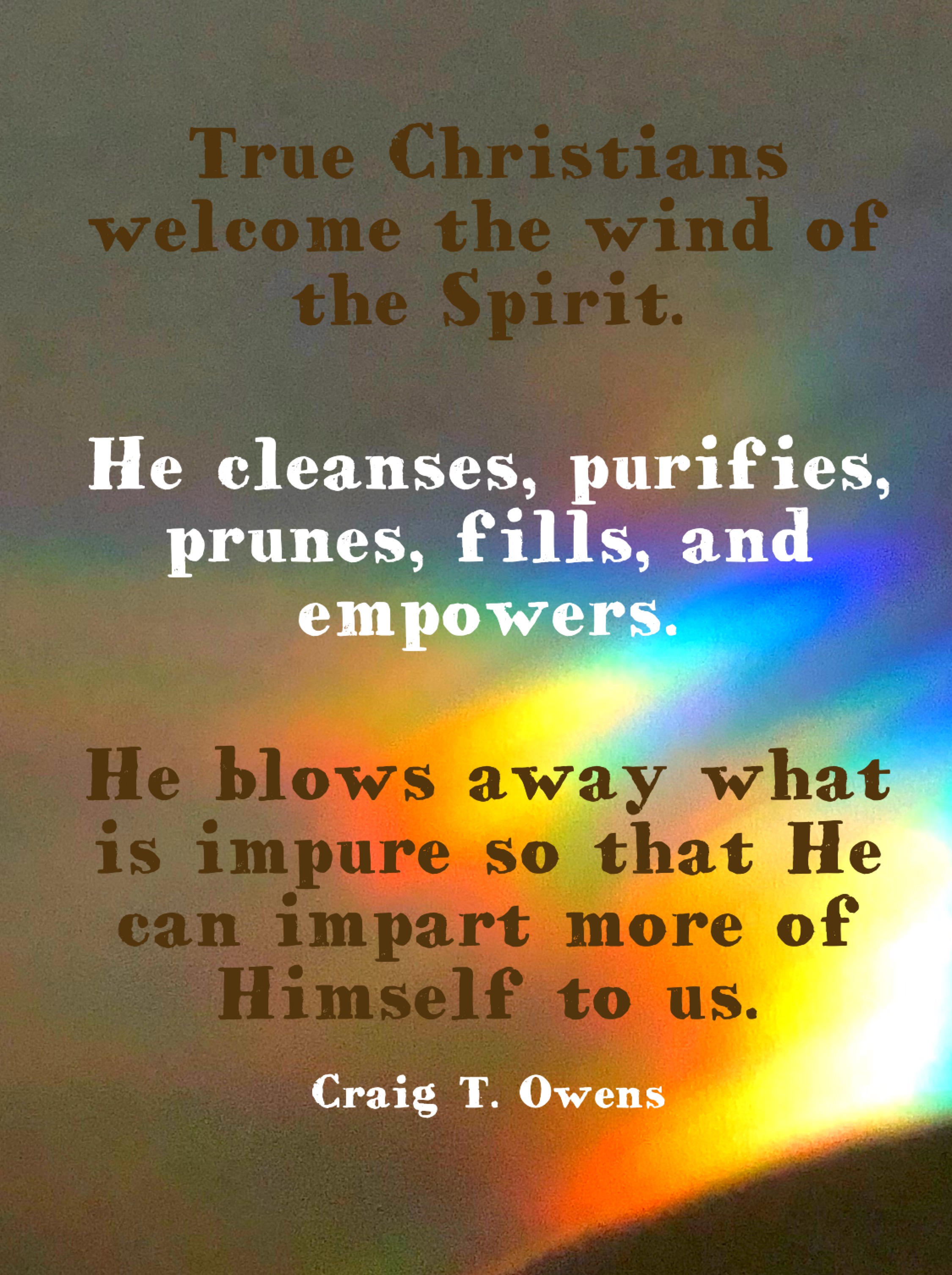
True Christians welcome the wind of the Spirit. He cleanses, purifies, prunes, fills, and empowers. He blows away what is impure so that He can impart more of Himself to us. 

Let us never, ever treat the Holy Spirit lightly. Let us never, ever try to put the Holy Spirit in our own little boxes. But let us be open to whenever and however He wants to blow His wind through our hearts. 


Poetry Saturday—An Exercise For The Mind Of Christ

The mind—ah!, what a precious gift!
But what a task each day to sift
from every thought just those that lift
and raise us to God’s glory.

But take from Paul each day one phrase,
and seek just one of many ways
which someone dear its truth displays,
and note it, to God’s glory.

Then, when the day at last is through,
share what this person means to you,
how in this one this phrase is true,
for God’s delight and glory.

The mind is precious, but untrained
unless its ways are all constrained
to serve the Lord. Thus shall be gained
for us, eternal glory! —T.M. Moore, inspired by Philippians 4:8

Poetry Saturday—The Creator Is Far Nobler

The mirror of the creatures lacks space
To bear the image of the Infinite.
‘Tis true the Lord has fairly writ His name,
And set His seal upon creation’s brow.

But as the skillful potter much excels
The vessel that He fashions on the wheel,
E’en so, but in proportion greater far,
Jehovah’s Self transcends His noblest works.

Earth’s ponderous wheels would break, her axles snap,
If freighted with the load of deity.
Space is too narrow for the Eternal’s rest,
And time too short a footstool for His throne. —Charles Spurgeon

*Charles Spurgeon explained in one of his sermons when and why he wrote this poem: “I have often heard the earth spoken of as the mirror of God’s image. But when I was traveling among the Alps and saw many of the grandest phenomena of creation such as glaciers, avalanches, and tempests, I was so impressed with the narrowness of visible things in comparison with God that I wrote such lines as these.”

Thursdays With Spurgeon—Be A Reflector

This is a weekly series with things I’m reading and pondering from Charles Spurgeon. You can read the original seed thought here, or type “Thursdays With Spurgeon” in the search box to read more entries.

Be A Reflector 

For it is the God who commanded light to shine out of darkness, who has shone in our hearts to give the light of the knowledge of the glory of God in the face of Jesus Christ. (2 Corinthians 4:6) 

     It is by the heart that we know God and Christ, and as our affections are purified, we become sensible of God’s presence in Christ. … Our beholding Him has purified the eyes that have gazed upon His purity. His brightness has helped our eyesight so that we see much already and will yet see more. …  

     Why did not everybody see the glory of God in Jesus Christ when He was here? It was conspicuous enough. Answer: It matters not how brightly the sun shines among blind men. … What, then, has happened to us? To eternal grace be endless praise! God Himself has shined into our hearts. That same God who said, ‘Light be,’ and light was, has shined into our hearts! … If you can delight in God in Christ Jesus, then remember, no man can say that Jesus is the Christ but by the Holy Spirit, and you have said it [Matthew 16:13-17]! …  

     You must not hoard up the light within yourself—it will not be light to you if you do. Only think of a person when his room is full of sunlight saying to his servant, ‘Quick, now! Close the shutters and let us keep this precious light to ourselves.’ Your room will be in the dark, my friend! … 

     A man of God, when he receives the light of Christ, can become so perfect a reflector that to common eyes, at any rate, he is brightness itself! … Scatter your light in all unselfishness. Wish to shine, not that others may say, ‘How great he is,’ but that they, getting the light, may rejoice in the Source from which it came to you and to them.

From The Glory Of God In The Face Of Jesus Christ

As the old hymn reminds us, “’Twas grace that taught my heart to fear, and grace my fears relieved; how precious did that grace appear the hour I first believed.” It is by God’s grace alone that we have been given light to see Jesus and to place our faith in Him! 

That light continues to grow within us the longer we gaze at the glory of God in the face of Jesus. Immerse yourself in the Gospels. Don’t read your Bible just to know the Word of God, but read to get to know the God of the Word better. Let the Holy Spirit purify your vision. 

Then you will become a reflector of God’s glory. The love and light of God are too wonderful to hoard to yourself! Ask God to bless you with a greater capacity to reflect the light of His Son to a dark, groping world.


Thursdays With Spurgeon—Seeing God In Jesus

This is a weekly series with things I’m reading and pondering from Charles Spurgeon. You can read the original seed thought here, or type “Thursdays With Spurgeon” in the search box to read more entries.

Seeing God In Jesus 

For it is the God who commanded light to shine out of darkness, who has shone in our hearts to give the light of the knowledge of the glory of God in the face of Jesus Christ. (2 Corinthians 4:6) 

     Paul knew not merely God, but God in Christ Jesus! Not merely ‘the glory of God,’ but ‘the glory of God in the face of Jesus Christ’ (2 Corinthians 4:6). The knowledge dealt with God, but it was Christward knowledge! He pined not for a Christless theism but for God in Christ! This, beloved, is the one thing that you and I should aim to know. …  

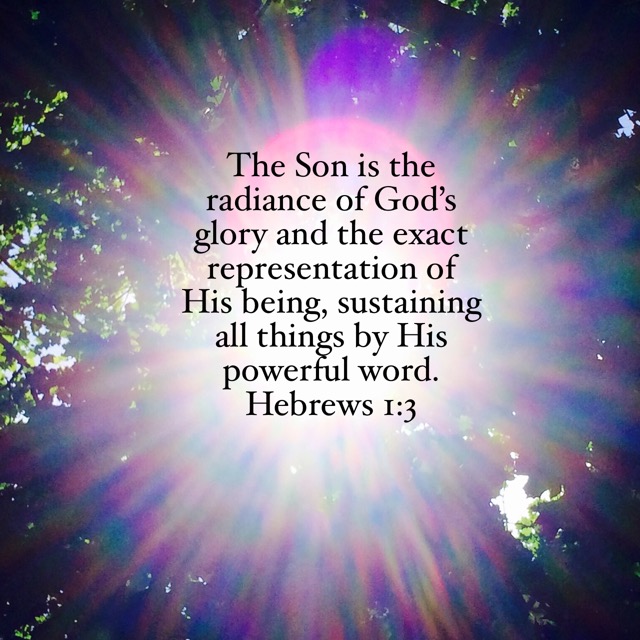
     Even when your thought sweeps round the stars and circumnavigates space, you feel that heaven, even the heaven of heavens, cannot contain Him. Everything conceivable falls short of the inconceivable glory of God! When you come, however, to gaze upon the face of Christ Jesus, how different is the feeling! Now you have a mirror equal to the reflection of the eternal Face, ‘in Him dwells in the fullness of the Godhead bodily’ (Colossians 2:9). His name is ‘Wonderful, Counselor, Mighty God’ (Isaiah 9:6). He is the image of God, ‘the brightness of His glory and the express image of His person’ (Hebrews 1:3). If your conception of Christ is truthful, it will coincide with the true idea of God and you will exclaim, ‘This is the true God and eternal life’ (1 John 5:20). Like Thomas, you will salute the wounded Savior with the cry, ‘My Lord and my God!’ (John 20:28). …  

     How softly breaks the divine glory through the human life of Jesus; a babe in grace may gaze upon this brightness without fear! When Moses’ face shone, the people could not look at him, but when Jesus came from His transfiguration, the people ran to Him and saluted Him! Everything is attractive in God in Christ Jesus! In Him we see God to the fullest, but the Deity so mildly beams through the medium of human flesh that mortal man may draw near and look and live. 

From The Glory Of God In The Face Of Jesus Christ

If you would like to know God more intimately, look more closely at Jesus. 

Read through the Gospels slowly, focusing on what Jesus was saying and doing. Let the Holy Spirit transport you to those dusty Israelite roads, where you can walk with Jesus and get a new glimpse of the majestic glory of God.

Thursdays With Spurgeon—Christ’s Momentary Pain, Your Eternal Gain

This is a weekly series with things I’m reading and pondering from Charles Spurgeon. You can read the original seed thought here, or type “Thursdays With Spurgeon” in the search box to read more entries.

Christ’s Momentary Pain, Your Eternal Gain

After Jesus said this, He looked toward heaven and prayed: “Father, the hour has come. Glorify Your Son, that Your Son may glorify You. (John 17:1) 

     The Son of God was glorified while He was dying, and it was one part of His glory that He should be able to bear the enormous load of human guilt. As a race we lay crushed beneath it.

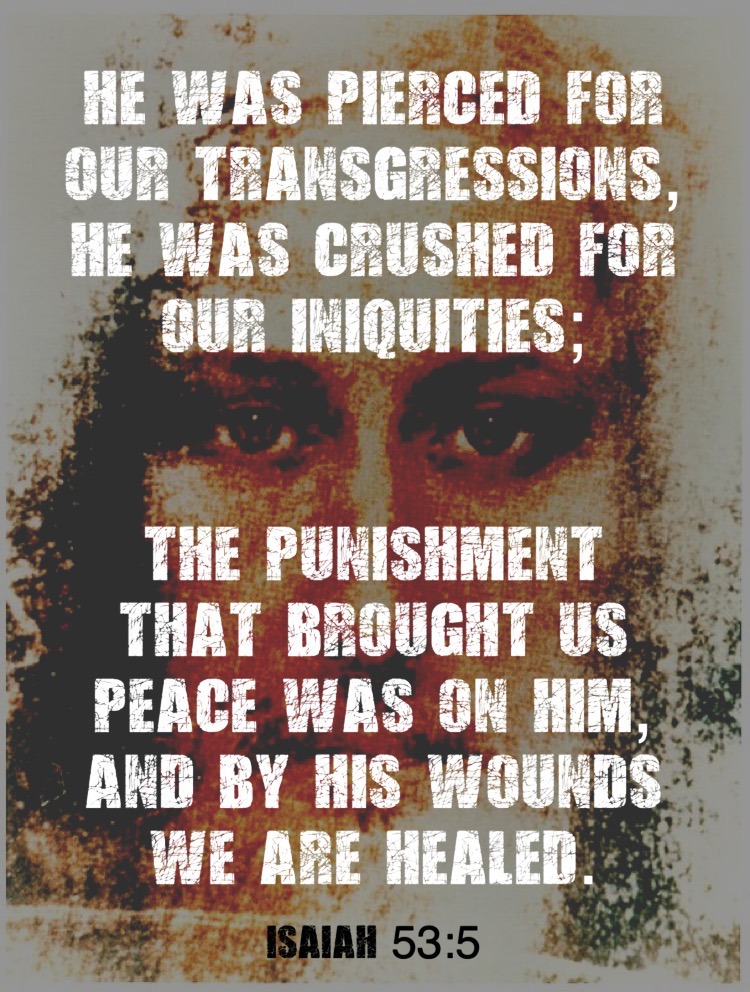
     A thousand Samsons could not relieve us! Angels and archangels, cherubim and seraphim could never lift the stupendous mass! But this one Man alone, with no help, in weakness of body and in death pains, bore away the enormous load of human guilt! The chastisement of our peace was upon Him. The Lord laid on Him the iniquity of us all! What a load it was! And that He could bear it was, indeed, a display of His glory. The lost in hell cannot bear the wrath of God! An eternity of suffering will not have discharged the dreadful penalty, and yet He bore that burden in an hour! Oh, marvelous strength of the incarnate God! Glorious are You indeed, O Christ, upon Your Cross! …  

     I say He was glorified in His passion and His prayer was heard! The Father did glorify His Son even on the Tree! It was an hour of glory that might dazzle angels’ eyes; that hour when He said, ‘It is finished!’ (John 19:30) and gave up the ghost. What had He finished? He had finished that which saved His people! He had peopled heaven with immortal spirits who will delight in Him forever and had shaken the gates of hell! God indeed glorified His Son in enabling Him to bear, and bear so well, all the weight of sin and the penalty that was due to it. …  

     When He died, He did not render the redemption of His people possible, but He ransomed them completely. By His agonies and death He did not merely give a bare hope of the pardon of sin, but He hurled the sin of all His elect into the depths of the sea in that same moment! He did not merely make the salvation of men a possibility if they would, but He saved His people then and there! He finished the work that He came to do, and proof of it is written that ‘this Man, after He had offered one sacrifice for sins forever, sat down at the right hand of God’ (Hebrews 10:12).

From The Son Glorified By The Father And The Father Glorified By The Son 

The enemy of your soul would love for you to believe his lies that you have to do something to secure your salvation, or that your most recent sin somehow made your salvation iffy, or that God is angry with you. 

THOSE ARE ALL LIES! 

Jesus didn’t make your salvation possible; He made it yours. This is what glorifies God: when you believe that the death of Jesus is all that is needed for your complete and eternal salvation! 

Jesus paid it all
All to Him I owe
Sin had left a crimson stain
He washed it white as snow

Thursdays With Spurgeon—“The Hour Has Come”

This is a weekly series with things I’m reading and pondering from Charles Spurgeon. You can read the original seed thought here, or type “Thursdays With Spurgeon” in the search box to read more entries.

“The Hour Has Come” 

After Jesus said this, He looked toward heaven and prayed: “Father, the hour has come. Glorify Your Son, that Your Son may glorify You. (John 17:1) 

     Father, the hour is come.’ This is the hour ordained in the eternal purpose. The hour prophesied of which Daniel sought to know. The hour toward which all hours had pointed. The central hour—the hour up to which man dated and from which they will date again if they read time right. The hinge, pivot, and turning point of all human history! The dark yet delivering hour! The hour of vengeance and of acceptance! ‘The hour is come.’ …  

     You and I look into the hour of darkness, as a frequent rule, and see no further, for our eyes are dim through unbelief. But [Jesus] goes on beyond the hour and His prayer is, ‘Glorify Your Son, that Your Son also may glorify You.’ He fixes His eyes upon the glory that was yet to be revealed and for joy of which He counts even His death to be but an hour—looking upon it as soon to be over and lost in the glory of His Father! 

     In all this, brothers and sisters, let us imitate our Lord and let us keep our eyes not on the present, but on the future; not on this light affliction, which is but for a moment, but on the far more exceeding and eternal weight of glory that will come of it. And let us with holy confidence, whenever our hour of darkness arrives, resort to our God in secret. The best preparation for the worst hour is prayer! The best remedy for a depressed spirit is nearness to God! 

From The Son Glorified By The Father And The Father Glorified By The Son 

Solomon became depressed when his gaze went no higher than “under the sun.” We, too, can become quite overwhelmed by our trials if our eyes only look at the present hour of darkness. 

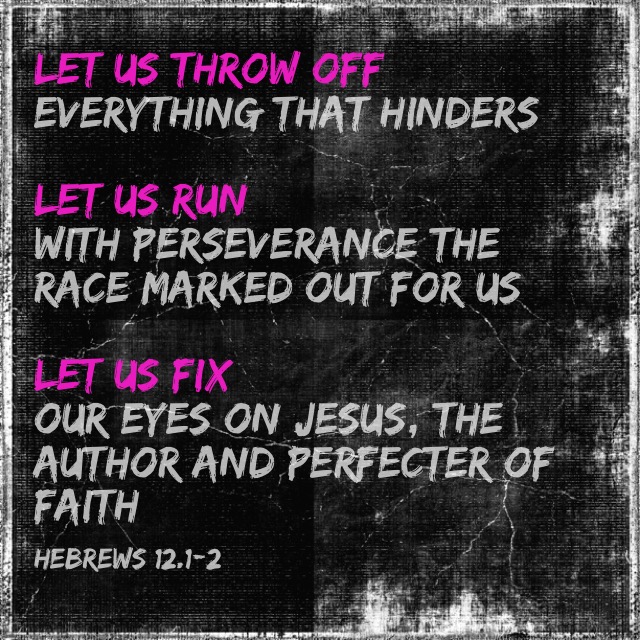
The writer of Hebrews tells us to keep our eyes on Jesus who conquered in His hour of darkness—Fixing our eyes on Jesus, the pioneer and perfecter of faith. For the joy set before Him He endured the Cross, scorning its shame, and sat down at the right hand of the throne of God. Consider Him who endured such opposition from sinners, so that you will not grow weary and lose heart (Hebrews 12:2-3). 

No matter what you are going through, keep your eyes on Jesus. Don’t give in to the darkness because Jesus has made you more than a conqueror if you will remain in Him (Romans 8:37-39). 


Poetry Saturday—Lord Of All Being

Lord of all being, throned afar,
Thy glory flames from sun and star;
Center and soul of every sphere,
Yet to each loving heart how near!

Sun of our life, Thy quickening ray,
Sheds on our path the glow of day;
Star of our hope, Thy softened light
Cheers the long watches of the night.

Our midnight is Thy smile withdrawn;
Our noontide is Thy gracious dawn;
Our rainbow arch, Thy mercy’s sign;
All, save the clouds of sin, are Thine.

Lord of all life, below, above,
Whose light is truth, whose warmth is love,
Before Thy ever blazing throne
We ask no luster of our own.

Grant us Thy truth to make us free,
And kindling hearts that burn for Thee,
Till all Thy living altars claim
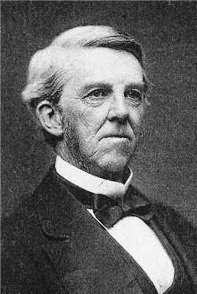
One holy light, one heavenly flame. —Oliver Wendell Holmes

Poetry Saturday—Majesty Divine

Full of glory, full of wonders,
Majesty Divine! 
‘Mid Thine everlasting thunders 
How Thy lightnings shine! 
Shoreless Ocean! who shall sound Thee? 
Thine own eternity is round Thee, 
Majesty Divine!

Timeless, spaceless, single, lonely,
Yet sublimely Three, 
Thou art grandly, always, only 
God in Unity! 
Lone in grandeur, lone in glory, 
Who shall tell Thy wondrous story, 
Awful Trinity?

Speechlessly, without beginning,
Sun that never rose! 
Vast, adorable, and winning, 
Day that hath no close! 
Bliss from Thine own glory tasting, 
Everliving, everlasting, 
Life that never grows!

Thine own Self forever filling
With self-kindled flame, 
In Thyself Thou art distilling 
Unctions without name! 
Without worshipping of creatures, 
Without veiling of Thy features, 
God always the same!

In Thy praise of Self untiring
Thy perfections shine; 
Self-sufficient, self-admiring,—
Such life must be Thine;—
Glorifying Self, yet blameless
With a sanctity all shameless
It is so Divine!

‘Mid Thine uncreated morning,
Like a trembling star 
I behold creation’s dawning 
Glimmering from far; 
Nothing giving, nothing taking, 
Nothing changing, nothing breaking, 
Waiting at time’s bar!

One with life and love diurnal
See myself in Thee, 
All embalmed in love eternal, 
Floating in Thy sea: 
‘Mid Thine uncreated whiteness 
I behold Thy glory’s brightness 
Feed itself on me.

Splendors upon splendors beaming
Change and intertwine!
Glories over glories streaming
All translucent shine! 
Blessings, praises, adorations
Greet Thee from the trembling nations
Majesty Divine! —Frederick Faber