Miserable

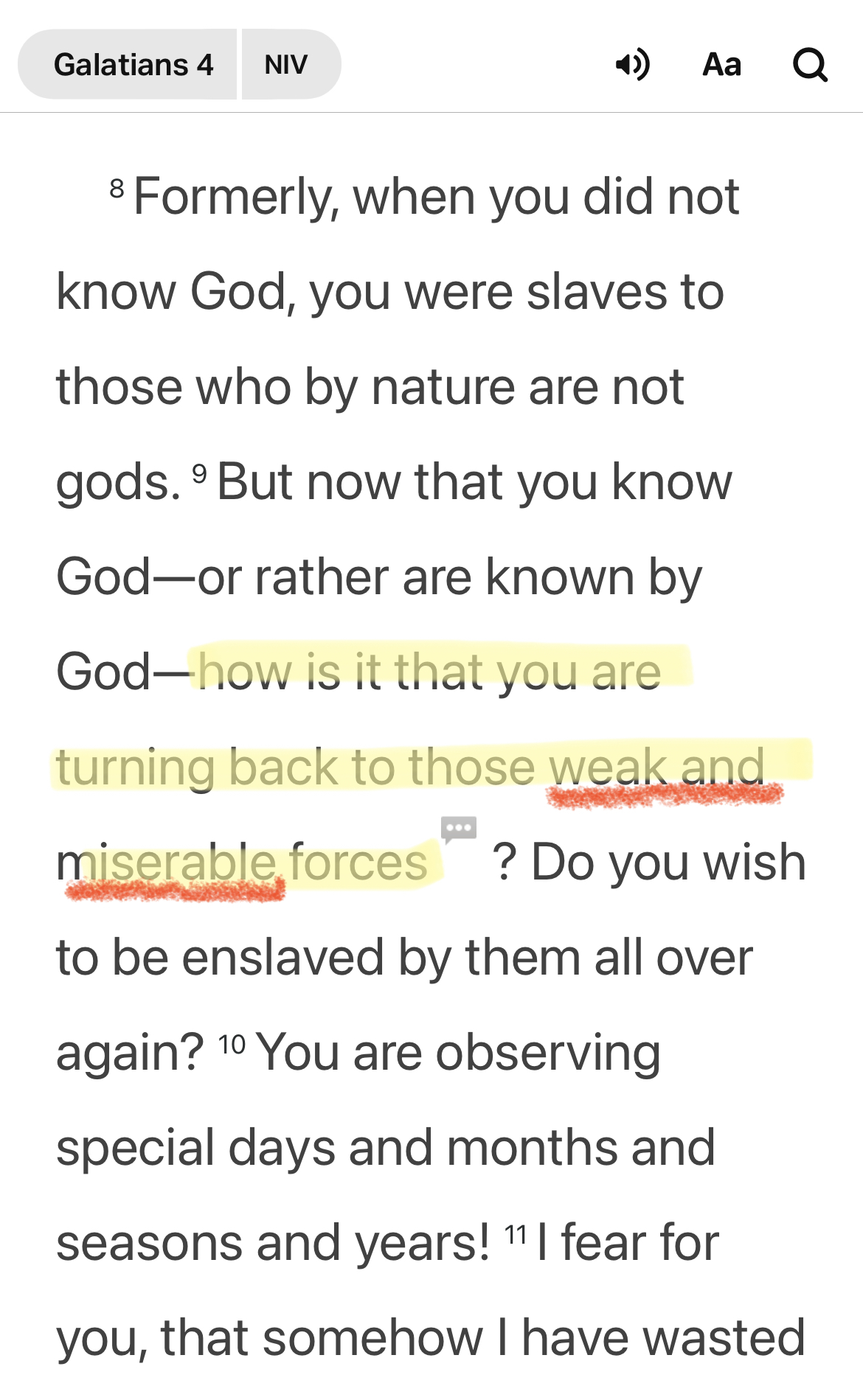
The Apostle Paul asked the Christians in Galatia an important question:

How is it that you are turning back to those weak and miserable principles? (Galatians 4:9)

The two words together in the Greek—weak and miserable—imply things that impoverish us and reduce us to lowly paupers and beggars. That’s not a pretty picture!

Look at the contrast between the princely life and the pauper’s life.

Those who follow Christ:

  • Are called sons of God (Galatians 4:6a)
  • Experience Abba Father’s favor (4:6b)
  • Are heirs to God’s Kingdom (4:7)

Those who don’t follow Christ:

  • Live as slaves (4:7)
  • Are separated from God’s favor (4:1-3)
  • Live as miserable beggars (4:9)

Why would anyone choose the miserable beggar’s life?

Here’s the principle: Everyone serves someone! I will either serve God and be called His son, or I will serve myself (my desires, my passions, my way of doing things) and be called a stranger to God.

Do I want to be in control, or do I want to let God be in control? When I try to control my own life, not only am I not in control, but I actually become a slave to my own passions. Ironic, isn’t it?

The choice is simple, but the choice must be made every day. I must choose to serve God in every moment of every day. It’s the only way to avoid the miserable life, and live the blessed life God has for me.

Thursdays With Oswald—Seeing And Hearing “Holy”

This is a weekly series with things I’m reading and pondering from Oswald Chambers. You can read the original seed thought here, or type “Thursdays With Oswald” in the search box to read more entries.

Seeing And Hearing “Holy” 

     The Bible places in the heart everything that the modern psychologist places in the head. … 

     God does alter the desire to look at the things we used to look at; and we find our eyes are guarded because He has altered the disposition of our soul life. …I will always hear what I listen for, and the ruling disposition of the soul determines what I listen for, just as the ruling disposition either keeps the eyes from beholding vanity or makes them behold nothing else. 

From Biblical Psychology

Solomon wrote, “Above all else, guard your heart, for it is the wellspring of life” (Proverbs 4:23). This is where Chambers gets the thought about our hearts doing what psychologists want our heads to do.

The more I fill my heart with God’s Word (Psalm 119:11), the more the Holy Spirit can remind me of that Word (John 14:26). The more I am tuned in to that sanctifying instruction of the Holy Spirit (Ephesians 5:26), the more holy I will live (Romans 8:4; Galatians 5:16; 1 Thessalonians 4:7).

This “tuning in” in the spiritual realm (the heart) absolutely affects the physical realm (the head). I have written before about the reticular activating system (RAS) in our brains (you can read about this here and here). The combination of the Word and the Spirit reprograms our RAS so that our eyes and ears are looking and listening for what pleases and glorifies God.

Do you want to live a holy life? Start by guarding your heart. You do this by filling your heart with the Word of God.

Thursdays With Oswald—Not Self-Conscious, But God-Conscious

This is a weekly series with things I’m reading and pondering from Oswald Chambers. You can read the original seed thought here, or type “Thursdays With Oswald” in the search box to read more entries.

Not Self-Conscious, But God-Conscious

     When I am lifted by the Atonement into oneness with God I do not lose my personal identity, my identity becomes that of conscious union with God. Man’s relationship with God in the beginning was such that the consciousness of union with Him was a delight: as soon as sin entered that went and man became self-conscious: he realized he was no longer in union with God and tried to hide himself from His presence.

From Biblical Ethics

For to me, to live is Christ… I have been crucified with Christ and I no longer live, but Christ lives in me. The life I live in the body, I live by faith in the Son of God, Who loved me and gave Himself for me. (Philippians 1:21; Galatians 2:20)

A great way to remember the meaning of the word Atonement is like this: At one-ment. Jesus paid the price for me to be at one-ment with the Father. He did not die so I could become more aware of myself, but so I could become more aware of God.

Christ’s Atonement makes me dead to me, and alive to Him; dead to trying to figure out myself, and alive to learn more of Him; dead to self-consciousness, and alive to God-consciousness.

And I would much rather be more aware of Him than I am of me!

Thursdays With Oswald—Beautiful Grapes

This is a weekly series with things I’m reading and pondering from Oswald Chambers. You can read the original seed thought here, or type “Thursdays With Oswald” in the search box to read more entries.

Beautiful Grapes

     If we believe in Jesus, it is not what we gain but what He pours through us that really counts. God’s purpose is not simply to make us beautiful, plump grapes, but to make us grapes so that He may squeeze the sweetness out of us. Our spiritual life cannot be measured by success as the world measures it, but only by what God pours through us—and we cannot measure that at all.

From My Utmost For His Highest

The fruit of the Spirit is love, joy, peace, patience, kindness, goodness, faithfulness, gentleness and self-control. (Galatians 5:22-23)

The Holy Spirit wants to bring to maturity ALL of these fruit in my life. Not so that I can pat myself on my back and say, “Look at how fruitful I am!” But so that God may squeeze me out where He needs me.

So I’m pondering…

  • Am I allowing the Holy Spirit to develop this fruit in me?
  • When I am fruitful, am I allowing God to squeeze me? Or do I run from it?
  • What good is to be a Christian without bearing fruit?
  • What good is it to have the fruit but not let God squeeze it?

Codependent?

Modern psychologists have coined the term codependent to mean someone who allows their life to be controlled by another person, much like the moon controls the tides on the earth’s oceans. Almost always this relationship ends up being a lose-lose relationship: both the person being controlled and the person doing the controlling are headed the wrong way.

Codependent is not a biblical term.

But there is a concept in Scripture that is the anti-codependent. I would call it interdependent. Here’s a couple of verses to back it up…

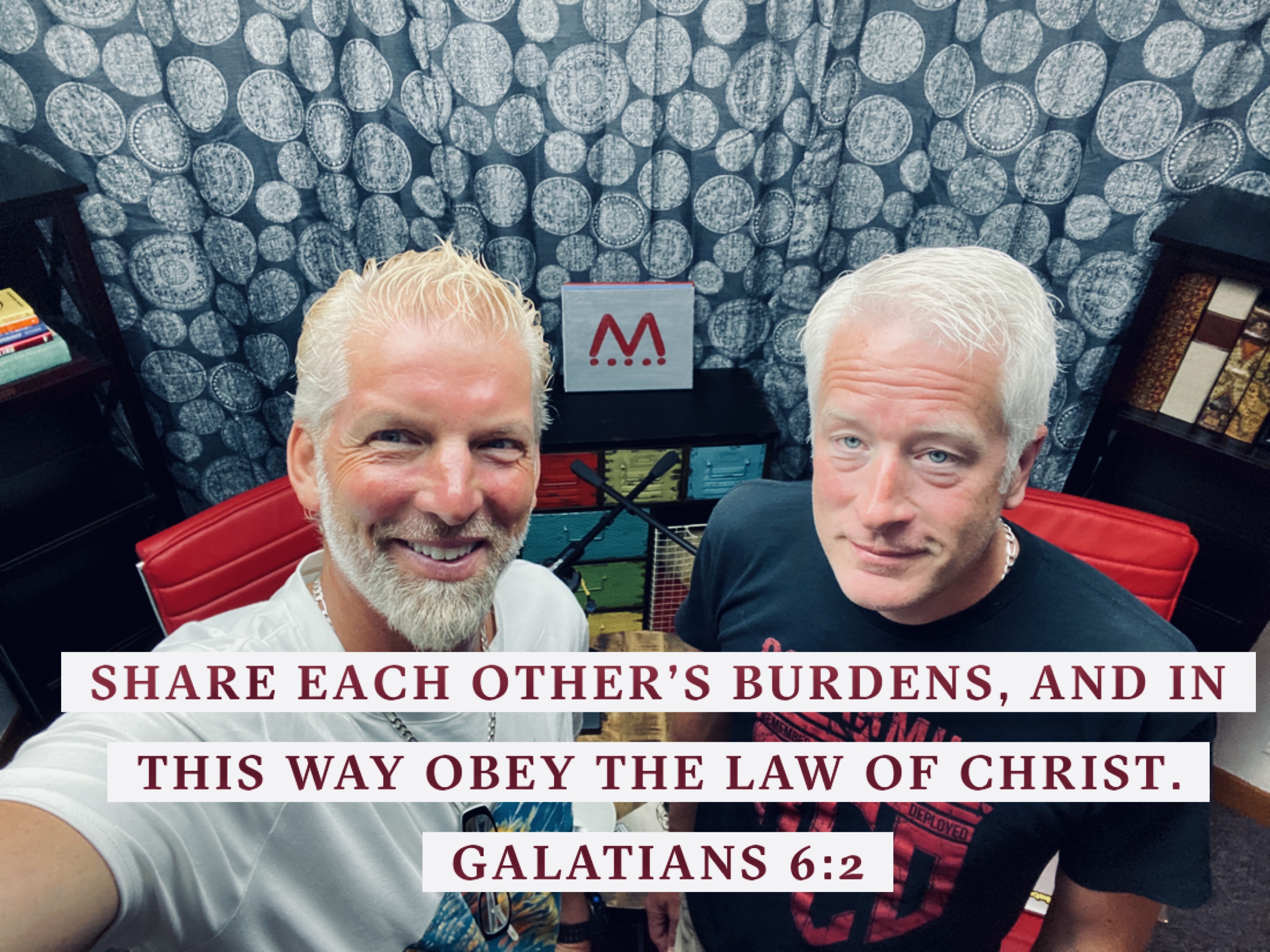
Dear brothers and sisters, if another believer is overcome by some sin, you who are godly should gently and humbly help that person back onto the right path. And be careful not to fall into the same temptation yourself. Share each other’s burdens, and in this way obey the law of Christ. (Galatians 6:1-2)

Wounds from a friend can be trusted, but an enemy multiplies kisses. (Proverbs 27:6)

It is absolutely clear that God has called you to a free life. Just make sure that you don’t use this freedom as an excuse to do whatever you want to do and destroy your freedom. Rather, use your freedom to serve one another in love; that’s how freedom grows. (Galatians 5:13)

God has given each of you a gift from His great variety of spiritual gifts. Use them well to serve one another. (1 Peter 4:10)

This isn’t excusing bad behavior, or winking at poor choices, or rescuing someone from the consequences of sin. Excusing, winking, and rescuing are symptoms of codependency.

Interdependency is saying, “I need you to be stronger—to be healthy—because I may need to lean on you someday.”

Christians try to get stronger and develop their own spiritual gifts so that they can help a friend-in-need get stronger and develop his/her spiritual gifts.

The Body of Christ needs you to be interdependent, which completely trumps codependent.

The Power Of -Ing

Have you ever heard someone say something like:

  • “Wow, look at her. She arrived in style!”
  • “I think I’ve finally arrived.”

This is weird because arriving implies stopping. When I’m driving to the store and I arrive at the store, I don’t keep on driving; I stop at the store. That’s the whole reason I left my house in the first place.

So when we talk about people arriving, do we really mean that they are supposed to stop and park? Correct me on this, but I think the only time we stop in life is when life stops. In other words: We’re dead!

We don’t really want to arrive, do we? We want to hit goals and then keep on going. We want to keep on “ing”ing. Here’s how I’m trying to leverage the power of ing:

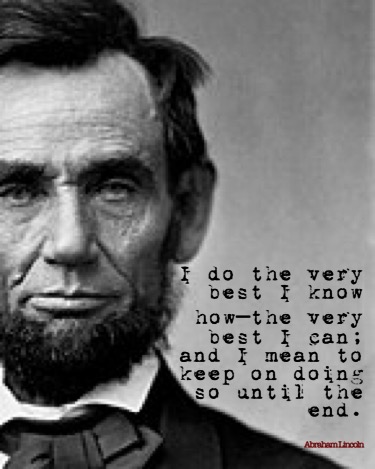
I love the words of Abraham Lincoln, who knew the power of ing:

“I do the very best I know how—the very best I can; and I mean to keep on doing so until the end.”

Don’t arrive. Don’t stop. Keep on “ing”ing the right things—God’s things—and see how God will bless your efforts. There is an incredible power in ing!

Naked Before God

Imagine: You and your wife are the only people on the face of the earth. No bills, no employer, no economic downturn, no kids, no school, no traffic. Just you and God. That was Adam and Eve in the Garden of Eden. The Bible gives this commentary, “Now the man and his wife were both naked, but they felt no shame.”

Nothing to hide from God. Nothing to hide from each other. A perfect relationship with God. A perfect relationship with each other.

Then the temptation, and the bite of the forbidden fruit. Sin enters. Now, something changes when God comes to talk with His favorite couple: “Then the man and his wife heard the sound of God as He was walking in the garden in the cool of the day, and they hid from God among the trees.”

“Why are you hiding from Me?” God asks.

“Uh,” Adam stammers, “because we’re naked.”

Sin made mankind uncomfortable in God’s presence. Sin made them want to hide from God. They knew He was there, but they tried to pretend He wasn’t. This is why I think many of us don’t come into God’s presence in prayer: we’re uncomfortable because of our sin.

We should not run away from God, instead, we should run to Him. “If we confess our sins to Him, He is faithful and just to forgive us our sins and to cleanse us from all wickedness” (1 John 1:9).

What happens when we’re forgiven? We’re re-clothed. God Himself clothes us. He made clothes for Adam and Eve, and He clothes us, too, in the righteous robes of Jesus. “And all who have been united with Christ in baptism have put on Christ, like putting on new clothes” (Galatians 3:27).

And when we’re clothed in Christ, we no longer have to hide from God, nor feel uncomfortable in His presence. Instead, we can “come boldly to the throne of our gracious God. There we will receive His mercy, and we will find grace to help us when we need it most” (see Ephesians 3:12 and Hebrews 4:16).

Perhaps the reason we don’t spend enough time in prayer is that we feel self-conscious, sinful, uncomfortable… naked.

You don’t have to be naked. You can be clothed in Christ. You can enter into God’s presence without shame and find the mercy and grace and help that you need.

Spiritual Cross-Training

Several years ago the term “cross-training” became more popular in physical fitness circles. The idea was that training or working out in a secondary sport better prepared the athlete for their primary sport. For example, a long-distance cyclist playing basketball would help develop some of the fast-twitch muscles needed for quick bursts on the bike. This was valuable insight and has helped many athletes excel.

It’s just as true spiritually.

The Apostle Paul encourages us to, “Carry each other’s burdens.” No small task in itself. In fact, that usually requires some very heavy lifting. But if I’m going to be prepared for the heavy lifting, I’ve got to put in some spiritual cross-training time.

It’s no secret that if I don’t eat right, my body doesn’t have the fuel to burn. If I don’t sleep enough hours, my body doesn’t have the stamina to function properly. If I’m not handling stress right, my mind and emotions will be clouded in their processing capabilities.

All of these areas are just as true spiritually. If I’m not getting the right spiritual food, rest, and peace, I’m going to break down. I won’t be any good to myself or others.

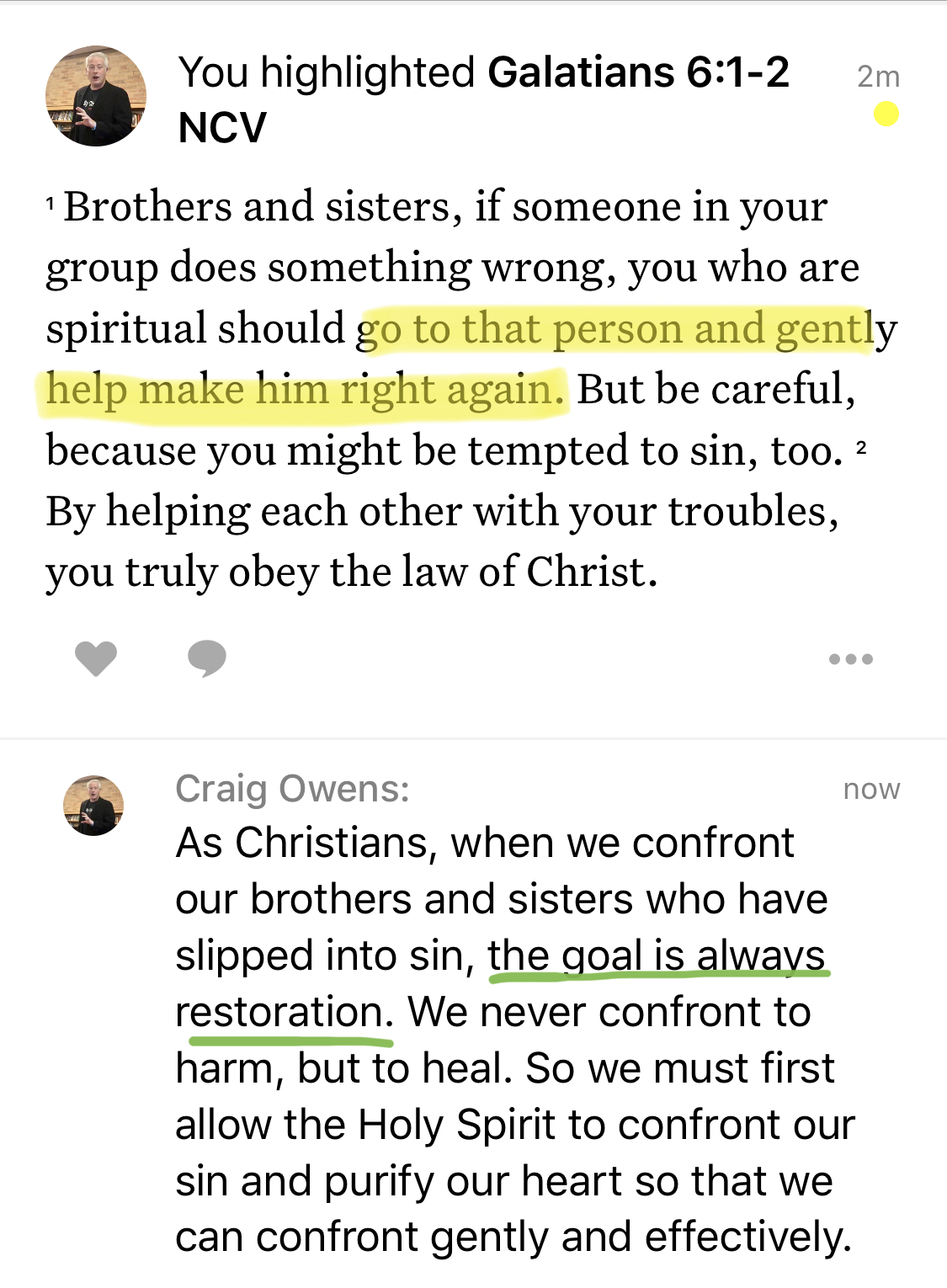
In the same burden-carrying / cross-training passage, Paul says, “Brothers, if someone is caught in a sin, you who are spiritual should restore him gently. But watch yourself, or you also may be tempted.”

Yesterday I did some cross-training. I was having lunch with a B.T.D.T. pastor friend (been there, done that). I was soaking up his counsel on vision-casting for my church, enjoying his encouragement for the road ahead of me, and just generally being filled up.

As our lunch was wrapping up, I received a call from another friend who needed help. This friend was in trouble and needed me to help shoulder a burden. I spent the next three hours doing some very heavy lifting.

Here’s the deal: if I hadn’t been doing some spiritual cross-training to prepare myself, I may not have been able to lift that burden. Or, worse yet, I may have been tempted to take shortcuts and fall into the same trap as my struggling friend.

It doesn’t always happen back-to-back like this. But I know the joy of being able to carry a heavy burden for a brother because I have done my cross-training time, and I (unfortunately) also know the heartache of not being a very effective lifter because I didn’t make the time for cross-training.

We never know when we’ll be called upon by a friend. So we need to stay in tip-top spiritual fitness all the time. Your spiritual cross-training regime should include time with God’s Word and time in prayer; reading good books; spending time with encouraging, uplifting people; plenty of rest, good food, and physical exercise; and an attentive ear to those in need.

Cross-train regularly so you can be a great burden-lifter when a friend-in-need calls on you.

Gentle Restoration

I’m struggling with this one. I have a dear friend who is perplexed by an ongoing drug addiction. He appeared to have it under control until things in his life started spiraling out of his control, and he gave in to his old habit again.

So the Bible says that if one of my brothers slips up I’m supposed to restore him gently. How exactly does one do that? I bounced between so many emotions during the last 48 hours: anger at this addiction, sorrow for what my friend is going through, heaviness at what he’s doing to himself and his family, hatred at the devil for his evil tricks, and a passion to see him whole and healthy and free again. Then my own thoughts have baffled me: “How do I gently restore my brother? What does restoration look like?”

Restoration is an interesting Greek word. It can mean setting a broken bone; mending torn fishing nets; manning a fleet of ships; or supplying an army with its provisions.

Restoration is NOT canceling a debt or removing the consequence for someone’s actions. I like what Dave Anderson wrote, “One of the best lessons you can teach your people is that when they choose a behavior they choose the consequences for that behavior.”

Restoration is feeling the pain of what’s been broken or defeated, learning the lesson from that, and then repairing the break or deficiency in such a way that it won’t break or be defeated again. I have the responsibility and the privilege of doing some mending for my friend.

What about gentle? Over time this word has come to mean something like wishy-washy, no backbone, no guts. Gentle originates from the Latin word gentilis which means belonging to the same family or clan. To be gentle is to be strong enough to respond in a controlled manner to someone who is just like me. Gentleness is strength under control.

I hope I’m gentle enough to restore my friend, to mend what is broken in him so he never has to be defeated by this addiction again. He has some consequences to face. But I am committed to helping him carry this heavy load all the way to the finish line.

Check it out—

Brothers, if someone is caught in a sin, you who are spiritual should restore him gently. But watch yourself, or you also may be tempted. Carry each other’s burdens, and in this way you will fulfill the law of Christ. (Galatians 6:1-2)

Gentle restoration is hard work. But it’s so worth the effort!

If you have any thoughts on how to gently restore a friend, I’d love to have you share them with me in the comments section.

What’s Your Work?

When I’m at business functions, I along with all of the other attendees are typically walking around with the “Hello, My Name Is” label stuck to my chest. The idea is that as I shake hands with new people I can glance down and say, “Nice to meet you, uh, Bob!”

Nine times out of ten, after the initial introduction is made the very next question people have for me is, “So, what do you do?” All of us usually give an answer related to our jobs: I’m a pastor, I’m a graphic designer, I’m a teacher, I’m a blogger, etc. Yes, that’s what you do; that’s your job. But what do you work at?

I’ve been thinking about this over the past couple of days. And what got me thinking were two “interruptions” to my job.

On Wednesday night I was teaching a Bible study. I was just getting to the pay-off—the part of the lesson where the attendees would really be challenged to apply the lesson to their real-life situations—when my lesson was interrupted. A friend had slipped out of his seat and was standing at the back. All of a sudden he was clutching his chest and saying, “I need help!” Immediately my lesson stopped, I was at his side trying to recall some of my medical training, and then asking someone to call 911.

I didn’t finish my “job” on Wednesday evening, but I did my work as a friend.

Today I had planned to devote the better part of my day to preparing a message for Sunday morning. It’s my “job” as a pastor to come to church prepared with a timely, relevant message. But after talking with a friend on the phone, I could hear the heavy despondency in his voice, and I knew I needed to go see him face-to-face.

I put my job on hold to go do my work as a friend.

Bill Hybels wrote, “Keep the ‘church’ in church work.” My work—as a member of the Church, as a friend—should always trump my “job.”

The Apostle Paul wrote, “Carry each other’s burdens, and in this way you will fulfill the law of Christ” (Galatians 6:2).

At the end of my life, I don’t think God is going to ask me how good my sermons were. But He is going to ask me how well I did my work as His servant.

Then the King will say to those on His right, “Come, you who are blessed by My Father, inherit the Kingdom prepared for you from the creation of the world. For I was hungry, and you fed Me. I was thirsty, and you gave Me a drink. I was a stranger, and you invited Me into your home. I was naked, and you gave Me clothing. I was sick, and you cared for Me. I was in prison, and you visited Me. … I tell you the truth, when you did it to one of the least of these My brothers and sisters, you were doing it to Me!” (Matthew 25:34-36, 40).

How’s your work going today?