Listen to the podcast of this post by clicking on the player below, and you can also subscribe on Apple or Spotify.
You who answer prayer … You answer us with awesome and righteous deeds, God our Savior…. Shout for joy to God, all the earth! (Psalm 65:2, 5; 66:1).
Psalms 65 and 66 tell of God’s awesome involvement in our lives. He is both globally involved and personally involved. He’s not too big to care for my needs, and He’s not so preoccupied with me that He is unaware of global events.
Look at the grandeur of our Creator—
You answer us with awesome deeds of righteousness
You are the hope of all the ends of the earth
You formed the mountains by Your power
You stilled the roaring of the seas
You care for the land and water it; You enrich it abundantly
Your carts overflow with abundance
all of creation shouts for joy and sings praise to You
all the earth says, “How awesome are Your deeds!” and bows down to You in praise
You rule forever by Your power, Your eyes watch the nations
how awesome are Your works on man’s behalf!
And yet He is not just God of global events, but He is intimately involved with each and every person. He notices me!
The psalmist says, “Come and listen, all you who fear God; let me tell you what He has done for me.” Then he tells how God…
forgave my sin
listened to my prayer
honored my prayer
has not withheld His love from me
Oh, come and see! See how awesome God is that the earth trembles before Him. See how awesomely loving He is that He stoops to listen to me. He is indeed a global God but He is also an intimately personal God.
The more we know our God in both His majesty and His intimacy, the more we will praise Him.
This is a weekly series with things I’m reading and pondering from Charles Spurgeon. You can read the original seed thought here, or type “Thursdays With Spurgeon” in the search box to read more entries.
Listen to the podcast of this post by clicking on the player below, and you can also subscribe on iTunes or Spotify.
Never Give Up On Grace And Mercy
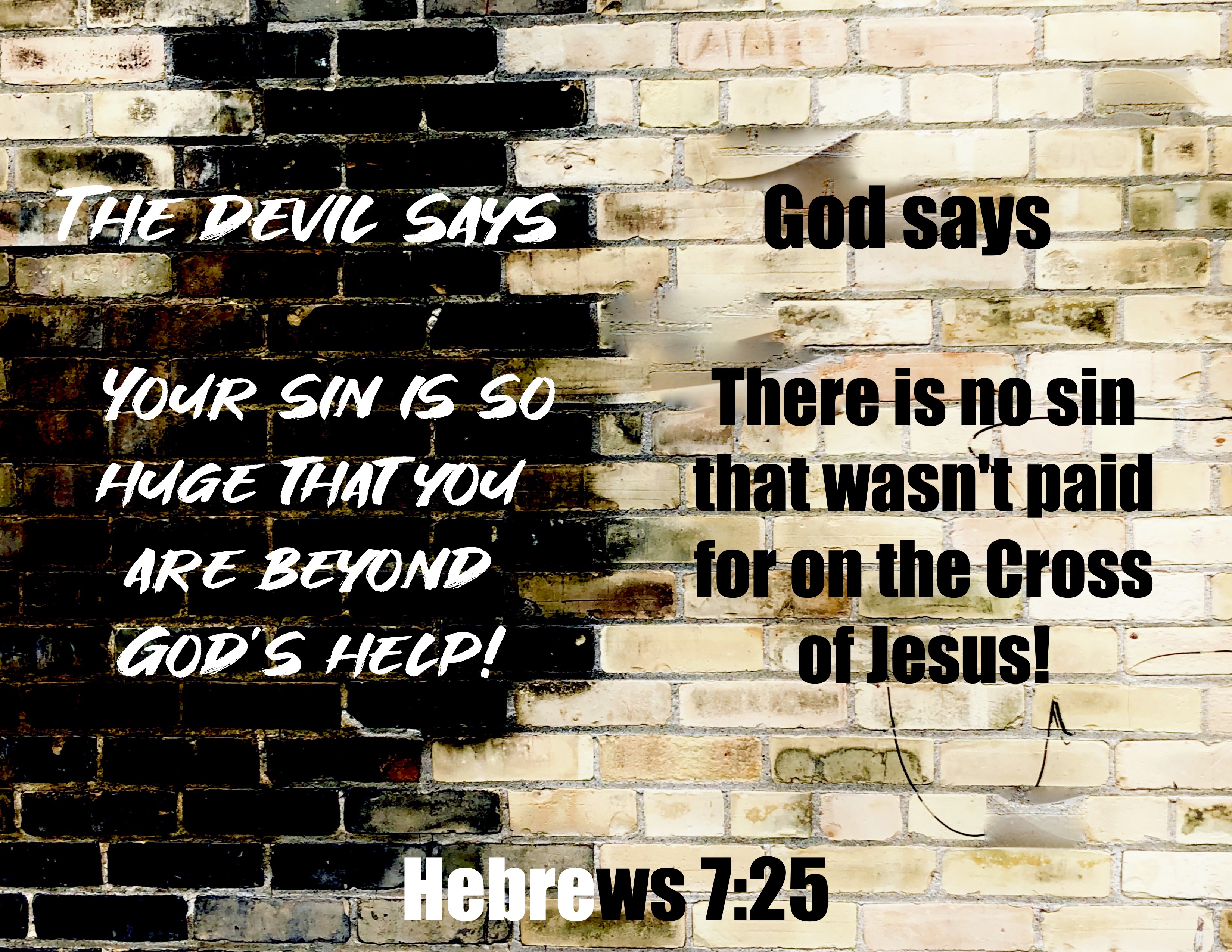
Therefore He is also able to save to the uttermost those who come to God through Him, since He always lives to make intercession for them. (Hebrews 7:25)
My friends, it is one thing to go to church or chapel. It is quite another thing to go to God. …
Coming to God is not what some of you suppose, that is, now and then sincerely performing an act of devotion but giving to the world the greater part of your life. You think that if sometimes you are sincere, if now and then you put up an earnest cry to heaven, God will accept you. And though your life may be still worldly and your desires still carnal, you suppose that for the sake of this occasional devotion God will be pleased, in His infinite mercy, to blot out your sins. I tell you, sinners, there is no such thing as bringing half of yourselves to God and leaving the other half away. …
If I should see a sinner staggering on his progress to hell, I would not give him up, even when he had advanced to the last stage of iniquity. Though his foot hung trembling over the very edge of perdition, I would not cease to pray for him. And though he should in his poor drunken wickedness go staggering on till one foot was over hell and he was ready to perish, I would not despair of him. Till the pit had shut its mouth upon him I would believe it is possible that divine grace might save him. See there! He is just upon the edge of the pit, ready to fall. But before he falls, free grace bids, ‘Stop that man!’ Down mercy comes, catches him on her broad wings, and he is saved—a trophy of redeeming love.
From Salvation To The Uttermost
My friend, if you don’t have a personal relationship with God through the forgiving work that Jesus accomplished on the Cross, I implore you to come to Him before another minute passes. When Jesus said from this Cross, “It is finished,” He told you that He paid in full your debt that would have kept you separated from God forever.
Now you just need to come to Him in faith. Simply pray something like this: “God, I acknowledge that I am a sinner separated from You. But I believe that Jesus paid the penalty for all of my sins when He died on the Cross. Because of that payment, I am asking You to forgive me and bring me into a full relationship with You. I pray this in the name of Jesus. Amen.”
And let me speak to you, my Christian brother or sister who has been praying earnestly for the salvation of someone dear to you. Let me encourage you to not give up! God’s mercy and God’s grace are so swift that even with the last breath they can swoop in to save. Never cease to pray for them and know that Jesus is interceding for them before God’s throne too!
Listen to the podcast of this post by clicking on the player below, and you can also subscribe on Apple or Spotify.
Just before Jesus said, “I am thirsty,” John tells us that Jesus knew everything written about Him in the law had been completed and all of the prophecies about Him had been fulfilled. Jesus knew this to be true but no one else standing there would have said “Aha!” because of that statement. But Jesus left no doubt for any of us when He next said, “It is finished!”
These three English words are just one word in Greek: tetelestai. It’s in the perfect tense, telling us that nothing more needs to be added to Christ’s work. It not only shares the same root word that John uses for completed and fulfilled, but it closes the circle of another dying declaration of Jesus when He quoted Psalm 22:1: “My God, My God, why have You forsaken Me?” His “It is finished” statement is also the last verse of Psalm 22.
The root word telos translated as completed, fulfilled, and finished has a very rich meaning. Here are three definitions we should consider:
(1) To complete or bring to a conclusion
Jesus told His Father that He had finished (telos) His mission (John 17:4). Q: How do we know His mission was completed? A: Jesus sat down! Think about this: There were no chairs in the Old Testament temple because a priest never rested, there was always more work to do. But when Jesus finished His work, He sat down (see Hebrews 10:1-4, 11-12).
(2) To discharge a debt
Since Jesus was the only One who could make the final “once for all” payment, that means that we were hopeless debtors prior to that. God foretold of His forgiveness using the picturesque language of a debt being “doubled up” when it was paid in full (see this video where I explain this concept more fully). Here’s what Jesus did:
Having cancelled and blotted out and wiped away the handwriting of the note with its legal decrees and demands which was in force and stood against us. This note with its regulations, decrees, and demands He set aside and cleared completely out of our way by nailing it to His cross. (Colossians 2:14 AMP)
In this case, Jesus took what was missing by switching cups with us. He drank the cup of God’s righteous wrath—which was justly ours—and gave us His cup of righteousness in its place! (see Isaiah 51:17-22; Matthew 26:39).
Q: How do we know we have a cup of righteousness in place of a cup of wrath? A: Dead saints of God were resurrected when Jesus died. “It is finished” was not Jesus giving up, but death giving up … it was not Jesus defeated, but death defeated!
Jesus paid it all! There is nothing I can do to add to His completed—tetelestai—work, so I can now do what formerly was impossible: I can live a holy life for God’s glory. I can now finish (telos) my race on earth and receive the rewards God has stored up for me (see 2 Timothy 4:7-8).
Christ’s tetelestai confession is our empowerment to live holy!
This is a weekly series with things I’m reading and pondering from Charles Spurgeon. You can read the original seed thought here, or type “Thursdays With Spurgeon” in the search box to read more entries.
Listen to the podcast of this post by clicking on the player below, and you can also subscribe on iTunes or Spotify.
Never Beyond God’s Love
Lost, perishing sinners, hear the voice of God, for it speaks to you.
“Where art thou? for I am come to seek thee.”
“Lord, I am in such a place that I cannot do anything for myself.”
“Then I am come to seek thee and do all for thee.”
“Lord, I am in such a place that the law threatens me and justice frowns upon me.”
“I am come to answer the threatenings of the law, and to bear all the wrath of justice.”
“But, Lord, I am in such a place that I cannot repent as I would.”
“I am come to seek thee, and I am exalted on high to give repentance and remission of sins.”
“But, Lord, I cannot believe in Thee, I cannot believe as I would.”
“A bruised reed I will not break, and a smoking flax will I not quench; I am come to give thee faith.”
“But, Lord, I am in such a state that my prayers can never be acceptable.”
“I am come to pray for thee, and then to grant thee thy desires.”
“But, Lord, Thou dost not know what a wretch I am.”
“Yes, I know thee. Though I asked thee the question, ‘Where art thou?’ it was that thou mightest know where thou art, for I know well enough.”
“But, Lord, I have been the chief of sinners; none can have so aggravated their guilt as I have.”
“But wherever thou mayest be, I have come to save thee.”
“But I am an outcast from society.”
“But I am come to gather together the outcasts of Israel.”
“O but I have sinned beyond all hope.”
“Yes, but I have come to give hope to hopeless sinners.”
“But, then I deserve to be lost.”
“Yes, but I have come to magnify the law and make it honorable, and so to give thee thy deserts in the person of Christ, and then to give thee My mercy because of His merits.” —Charles Spurgeon
My friend, there isn’t anything you can do to make God love you any less or any more—God IS Love. You are never beyond His love!
There is never a hole so deep, or a burden so heavy that God cannot rescue you—God IS All-mighty. You are never beyond His rescue!
You cannot escape the powerful love of your Heavenly Father. Jesus purchased your salvation with His blood, and the Holy Spirit is calling to your heart today. Will you come to Him in faith? O, please, my friend, receive God’s love today!
Listen to the podcast of this post by clicking on the player below, and you can also subscribe on Apple or Spotify.
Contend, Lord, with those who contend with me; fight against those who fight against me. (Psalm 35:1).
This psalm is in a category called an imprecatory psalm, which is the theological way of saying, “Get ‘em, God!”
Does it sound unusual to your ears to pray a prayer like that? After all, aren’t we as Christians commanded to forgive those who offend us? How do we square that teaching of Jesus with these brutally honest prayers that David offers up?
Always remember that imprecatory psalms are spoken exclusively to God, notto our enemies. So when we pray these prayers, we are really turning the matter over to God. God does the contending and the vindicating—He knows best how to dispense the appropriate judgment.
David also shares with us several introspective prayers throughout the Book of Psalms, where he asks the Holy Spirit to search him. This heart-searching is interwoven in this imprecatory prayer of Psalm 35, as it should be with our prayers too.
Notice that David can only say these things with integrity because he had already allowed the Spirit to search his heart, and then he had asked forgiveness and he had repented from any sin (see Psalm 139:23-24; Matthew 5:22-24; 6:12, 14-15). David could point out with a clear conscience what his enemies were doing because David was innocent of these actions himself. Things like…
their attack was without cause (v. 7)
their accusations were purposefully designed to entrap him (v. 11)
they were repaying David’s good work with evil deeds (v. 12)
David had attempted to treat them well (vv. 13-14)
they gleefully piled on more slander when David stumbled (v. 15)
the enemy’s mocking was malicious (v. 16)
they hated me without reason (v. 19)
they invented false accusations against David (v. 20)
After his imprecatory prayer, David resolves to turn his eyes from the bad guys to God. He declares that worship of God will be his comfort (v. 28). What a great example for us still today!
When you are falsely, unfairly attacked, take these three actions:
Introspection. Ask the Holy Spirit to search your heart, and then quickly take action where necessary: Ask forgiveness, and repent from sinful thoughts, words, and actions.
Pray. Remember to share your hurts with God alone. There is no need to unleash your anger on those who have attacked you.
Worship. As long as my focus is on my trespassers, my focus is off my God. I cannot be consumed by thoughts of “them” because then I rob myself of thoughts of Him!
Please keep these God-honoring action steps in mind the next time you are unfairly attacked.
This is a weekly series with things I’m reading and pondering from Charles Spurgeon. You can read the original seed thought here, or type “Thursdays With Spurgeon” in the search box to read more entries.
Listen to the podcast of this post by clicking on the player below, and you can also subscribe on iTunes or Spotify.
Mercy Finds The Loophole
And the Lord smelled a soothing aroma. Then the Lord said in His heart, “I will never again curse the ground for man’s sake, although the imaginationof man’s heart is evil from his youth; nor will I again destroy every living thing as I have done.” (Genesis 8:21)
To begin, then, with the text, we have here a most painful fact that man’s nature is incurable. ‘The imagination of man’s heart is evil from his youth.’ You will remember, before the flood, in the fifth verse of the sixth chapter, it is written, ‘Then the Lord saw that the wickedness of man was great in the earth, and that every intentof the thoughts of his heart was only evil continually’ (Genesis 6:5). After the flood it was just the same. …
You might have hoped that after so terrible a judgment, when only a picked and peculiar few, that is, eight, were saved by water, that man began anew with better stock.… It is not one wit so. The same God who, after looking at men, declared that his imagination was evil before the flood, pronounces the very same verdict upon them afterward. …
I believe that God might justly have condemned the whole race of Adam on account of Adam’s sin and their own guilt. But I do think that this was a blessed loophole through which His mercy could, as it were, come fairly to the sons of men. ‘No,’ He says, ‘I made them not distinct individuals but a race. They fell as a race; they will rise as an elect race. “For as in Adam all die, even so in Christ all shall be made alive” (1 Corinthians 15:22). And ‘For as by one man’s disobedience many were made sinners, so also by one Man’s obedience many will be made righteous” (Romans 5:19).’ …
I must have more than nature can give me. More than my mother gave me, more than my father gave me, and more than flesh and blood can produce under the most favorable circumstances. I must have the Spirit of God from heaven.
From Human Depravity And Divine Mercy
When Adam and Eve sinned, God wasn’t scrambling to come up with a Plan B. Jesus is described as the Lamb slain from the foundation of the world (Revelation 13:8), meaning that God had His merciful plan of redemption ready before He even created humans!
The atoning sacrifice Jesus made on the Cross was the “loophole” that God’s mercy used to pardon our sins. We can never earn our salvation because we are still people with evil hearts. But we can put our faith in the One who took our punishment upon Himself so that His righteousness can be our righteousness.
O what a Savior! O what mercy God has shown! O how great is His love for us! How shall we escape appropriate retribution if we neglectand refuse to pay attention to such a great salvation…? (Hebrews 2:3)
Listen to the podcast of this post by clicking on the player below, and you can also subscribe on Apple or Spotify.
I recently shared my book review on the heroic story of the ten Boom family during the Nazi occupation of Holland, as told in the story The Hiding Place. This story is a must-read! Please check out my full book review by clicking here.
These are some quotes from these godly sisters.
“Worry does not empty tomorrow of its sorrow. It empties today of its strength.” —Corrie ten Boom
“Any concern too small to be turned into prayer is too small to be made into a burden.” —Corrie ten Boom
“When Jesus Christ tells us to forgive our enemies, He gives us the power He demands of us.” —Corrie ten Boom
“We must tell people how good God is. After the war, we must go around telling people. No one will be able to say that they have suffered worse than us. We can tell them how wonderful God is, and how His love will fill our lives, if only we will give up our hatred and bitterness.” —Betsie ten Boom
“At that moment when I was able to forgive, my hatred disappeared. … Forgiveness is the key which unlocks the door of resentment and the handcuffs of hatred. It is a power that breaks the chains of bitterness and the shackles of selfishness. What a liberation it is when you can forgive.” —Corrie ten Boom
“Never be afraid to trust an unknown future to a known God.” —Corrie ten Boom
“When a train goes through a tunnel and it gets dark, you don’t throw away the ticket and jump off. You sit still and trust the engineer.” —Corrie ten Boom
“If they can be taught to hate, they can be taught to love.” —Betsie ten Boom, speaking to Corrie about the Nazi prison guards
“We never know how God will answer our prayers, but we can expect that He will get us involved in His plan for the answer. If we are true intercessors, we must be ready to take part in God’s work on behalf of the people for whom we pray.” —Corrie ten Boom
“Holiness is the Holy Spirit, a holy God in my heart, which makes me similar to Jesus.” —Betsie ten Boom



 Upon a Life I have not lived,









 Craig T. Owens