When You’re Unfairly Attacked

Listen to the podcast of this post by clicking on the player below, and you can also subscribe on Apple or Spotify.

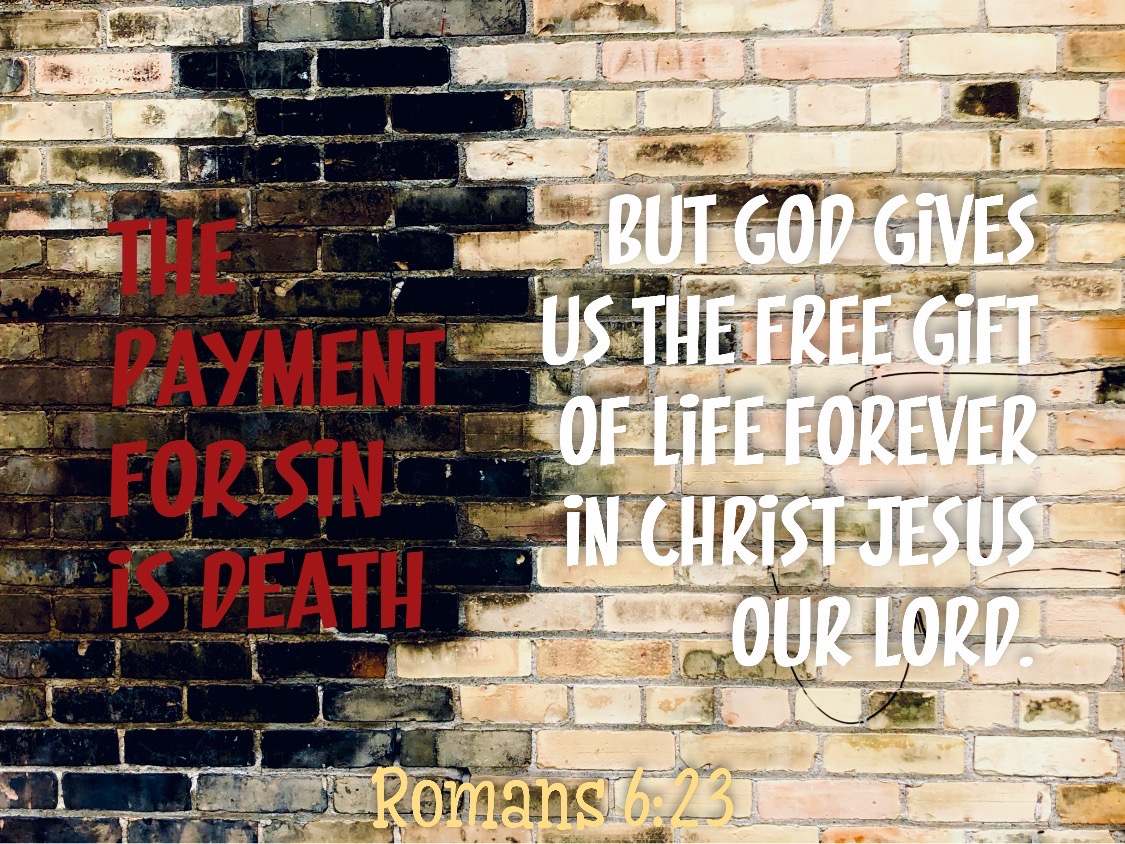
Contend, Lord, with those who contend with me; fight against those who fight against me. (Psalm 35:1). 

This psalm is in a category called an imprecatory psalm, which is the theological way of saying, “Get ‘em, God!” 

Does it sound unusual to your ears to pray a prayer like that? After all, aren’t we as Christians commanded to forgive those who offend us? How do we square that teaching of Jesus with these brutally honest prayers that David offers up? 

Always remember that imprecatory psalms are spoken exclusively to God, not to our enemies. So when we pray these prayers, we are really turning the matter over to God. God does the contending and the vindicating—He knows best how to dispense the appropriate judgment. 

David also shares with us several introspective prayers throughout the Book of Psalms, where he asks the Holy Spirit to search him. This heart-searching is interwoven in this imprecatory prayer of Psalm 35, as it should be with our prayers too. 

Notice that David can only say these things with integrity because he had already allowed the Spirit to search his heart, and then he had asked forgiveness and he had repented from any sin (see Psalm 139:23-24; Matthew 5:22-24; 6:12, 14-15). David could point out with a clear conscience what his enemies were doing because David was innocent of these actions himself. Things like… 

  • their attack was without cause (v. 7) 
  • their accusations were purposefully designed to entrap him (v. 11) 
  • they were repaying David’s good work with evil deeds (v. 12) 
  • David had attempted to treat them well (vv. 13-14) 
  • they gleefully piled on more slander when David stumbled (v. 15) 
  • the enemy’s mocking was malicious (v. 16) 
  • they hated me without reason (v. 19) 
  • they invented false accusations against David (v. 20)

After his imprecatory prayer, David resolves to turn his eyes from the bad guys to God. He declares that worship of God will be his comfort (v. 28). What a great example for us still today! 

When you are falsely, unfairly attacked, take these three actions: 

  1. Introspection. Ask the Holy Spirit to search your heart, and then quickly take action where necessary: Ask forgiveness, and repent from sinful thoughts, words, and actions. 
  2. Pray. Remember to share your hurts with God alone. There is no need to unleash your anger on those who have attacked you. 
  3. Worship. As long as my focus is on my trespassers, my focus is off my God. I cannot be consumed by thoughts of “them” because then I rob myself of thoughts of Him! 

Please keep these God-honoring action steps in mind the next time you are unfairly attacked. 

►► Would you please prayerfully consider supporting this ministry? ◀︎◀︎

Poetry Saturday—Truth

Listen to the podcast of this post by clicking on the player below, and you can also subscribe on Apple or Spotify.

Since the dear hour that brought me to Thy foot,
And cut up all my follies by the root,
I never trusted in an arm but Thine,
Nor hoped, but in Thy righteousness divine:
My prayers and alms, imperfect and defiled,
Were but the feeble efforts of a child;
Howe’er perform’d, it was their brightest part,
That they proceeded from a grateful heart:
Cleansed in Thine own all-purifying blood,
Forgive their evil and accept their good:
I cast them at Thy feet—my only plea
Is what it was, dependence upon Thee:
While struggling in the vale of tears below,
That never fail’d, nor shall it fail me now.
Angelic gratulations rend the skies,
Pride fall unpitied, never more to rise,
Humility is crown’d, and Faith receives the prize. —William Cowper

►► Would you please prayerfully consider supporting this ministry? ◀︎◀︎

Thursdays With Spurgeon—Mercy Finds The Loophole

This is a weekly series with things I’m reading and pondering from Charles Spurgeon. You can read the original seed thought here, or type “Thursdays With Spurgeon” in the search box to read more entries.

Listen to the podcast of this post by clicking on the player below, and you can also subscribe on iTunes or Spotify.

Mercy Finds The Loophole

And the Lord smelled a soothing aroma. Then the Lord said in His heart, “I will never again curse the ground for man’s sake, although the imagination of man’s heart is evil from his youth; nor will I again destroy every living thing as I have done.” (Genesis 8:21) 

     To begin, then, with the text, we have here a most painful fact that man’s nature is incurable. ‘The imagination of man’s heart is evil from his youth.’ You will remember, before the flood, in the fifth verse of the sixth chapter, it is written, ‘Then the Lord saw that the wickedness of man was great in the earth, and that every intent of the thoughts of his heart was only evil continually’ (Genesis 6:5). After the flood it was just the same. … 

     You might have hoped that after so terrible a judgment, when only a picked and peculiar few, that is, eight, were saved by water, that man began anew with better stock.… It is not one wit so. The same God who, after looking at men, declared that his imagination was evil before the flood, pronounces the very same verdict upon them afterward. …

     I believe that God might justly have condemned the whole race of Adam on account of Adam’s sin and their own guilt. But I do think that this was a blessed loophole through which His mercy could, as it were, come fairly to the sons of men. ‘No,’ He says, ‘I made them not distinct individuals but a race. They fell as a race; they will rise as an elect race. “For as in Adam all die, even so in Christ all shall be made alive” (1 Corinthians 15:22). And ‘For as by one man’s disobedience many were made sinners, so also by one Man’s obedience many will be made righteous” (Romans 5:19).’ … 

     I must have more than nature can give me. More than my mother gave me, more than my father gave me, and more than flesh and blood can produce under the most favorable circumstances. I must have the Spirit of God from heaven.

From Human Depravity And Divine Mercy

When Adam and Eve sinned, God wasn’t scrambling to come up with a Plan B. Jesus is described as the Lamb slain from the foundation of the world (Revelation 13:8), meaning that God had His merciful plan of redemption ready before He even created humans! 

The atoning sacrifice Jesus made on the Cross was the “loophole” that God’s mercy used to pardon our sins. We can never earn our salvation because we are still people with evil hearts. But we can put our faith in the One who took our punishment upon Himself so that His righteousness can be our righteousness. 

O what a Savior! O what mercy God has shown! O how great is His love for us! How shall we escape appropriate retribution if we neglect and refuse to pay attention to such a great salvation…? (Hebrews 2:3)

►► Would you please prayerfully consider supporting this ministry? ◀︎◀︎

 

10 Quotes From The Ten Booms

Listen to the podcast of this post by clicking on the player below, and you can also subscribe on Apple or Spotify.

I recently shared my book review on the heroic story of the ten Boom family during the Nazi occupation of Holland, as told in the story The Hiding Place. This story is a must-read! Please check out my full book review by clicking here. 

These are some quotes from these godly sisters. 

“Worry does not empty tomorrow of its sorrow. It empties today of its strength.” —Corrie ten Boom 

“Any concern too small to be turned into prayer is too small to be made into a burden.” —Corrie ten Boom 

“When Jesus Christ tells us to forgive our enemies, He gives us the power He demands of us.” —Corrie ten Boom 

“We must tell people how good God is. After the war, we must go around telling people. No one will be able to say that they have suffered worse than us. We can tell them how wonderful God is, and how His love will fill our lives, if only we will give up our hatred and bitterness.” —Betsie ten Boom 

“At that moment when I was able to forgive, my hatred disappeared. … Forgiveness is the key which unlocks the door of resentment and the handcuffs of hatred. It is a power that breaks the chains of bitterness and the shackles of selfishness. What a liberation it is when you can forgive.” —Corrie ten Boom 

“Never be afraid to trust an unknown future to a known God.” —Corrie ten Boom 

“When a train goes through a tunnel and it gets dark, you don’t throw away the ticket and jump off. You sit still and trust the engineer.” —Corrie ten Boom 

“If they can be taught to hate, they can be taught to love.” —Betsie ten Boom, speaking to Corrie about the Nazi prison guards 

“We never know how God will answer our prayers, but we can expect that He will get us involved in His plan for the answer. If we are true intercessors, we must be ready to take part in God’s work on behalf of the people for whom we pray.” —Corrie ten Boom 

“Holiness is the Holy Spirit, a holy God in my heart, which makes me similar to Jesus.” —Betsie ten Boom 

►► Would you please prayerfully consider supporting this ministry? ◀︎◀︎

By the way, another great book of recollections from Corrie is I Stand At The Door And Knock. 

“Father, Forgive Them”

Listen to the podcast of this post by clicking on the player below, and you can also subscribe on Apple or Spotify.

In our system of law, special attention is given to someone’s dying declaration. If our legal system gives such weight to the last words of an imperfect man, it seems to me that we should take special note of the dying declarations of the only truly innocent Man who ever walked this earth: Jesus Christ. 

After being nailed to the Cross, the first dying declaration from Jesus was: Father, forgive them, for they do not know what they are doing (Luke 23:34). 

Let’s say that Billy is dying on a hospital bed after being fatally shot, and all he can muster the strength to do is point at Johnny and whisper, “He… shot… me….” We would know who the “he” was in that situation, but who exactly is the “them” in this declaration of Jesus? 

Who offended Jesus? Who mortally wounded Him? Who caused Him such anguish? Maybe it was…

  • His disciples who couldn’t stay awake to pray with Him 
  • Judas who betrayed Him with a kiss 
  • the nine disciples who ran away 
  • Peter who denied three times that he knew Jesus 
  • the false witnesses in Caiaphas’ house
  • the members of the Sanhedrin who hit Him and spit on Him 
  • the members of the Sanhedrin who were silent 
  • the temple guards who mocked Him 
  • those who spewed lies when Jesus stood before Pilate
  • those who lied about Jesus when He stood before Herod 
  • Herod and his soldiers who mocked Him 
  • the Roman soldiers who abused Him 
  • the Roman soldiers who stripped Him naked and crucified Him 

To all of the above, Jesus said, “Father, forgive them”!  

Listen to how Peter described the response of Jesus to all of this: When they hurled their insults at Him, He did not retaliate; when He suffered, He made no threats… (1 Peter 2:23). That word for insults means to heap abuse on Him or to pile on. This was a fulfillment of a 700-year-old prophecy: He was oppressed and afflicted… (Isaiah 53:7). Isaiah uses similar words, where oppressed means tyrannized, and afflicted means a humiliating, painful loss of dignity. 

Christ’s own disciples afflicted Him, and so did the temple guards, and Pilate, and King Herod, and the Roman soldiers… and you and me. All of this mistreatment and humiliation and tyrannizing was handed out by us too (see Isaiah 53:6; 1 Peter 2:24-25). That’s why His arms were spread so wide when He said, “Father, forgive them,” because there were so many that needed forgiveness! 

When Jesus said forgive, He was asking His Father to take away our guilt that kept us out of God’s presence. Think of a courtroom scene where God the Father is the Judge, satan is the prosecutor, Jesus is the victim, and I am the defendant. The evidence is overwhelming and incontrovertible, and I am pronounced guilty. My punishment is a death sentence. When Jesus says, “Father, forgive him,” He is taking the death penalty in my place! 

In another beautiful fulfillment of an Old Testament practice, Jesus became both our sin offering and our scapegoat, making atonement for us at the mercyseat in the Most Holy Place, and allowing us to be welcomed into God’s holy presence (Leviticus 16:15-16, 20-22; Hebrews 9:12-14). 

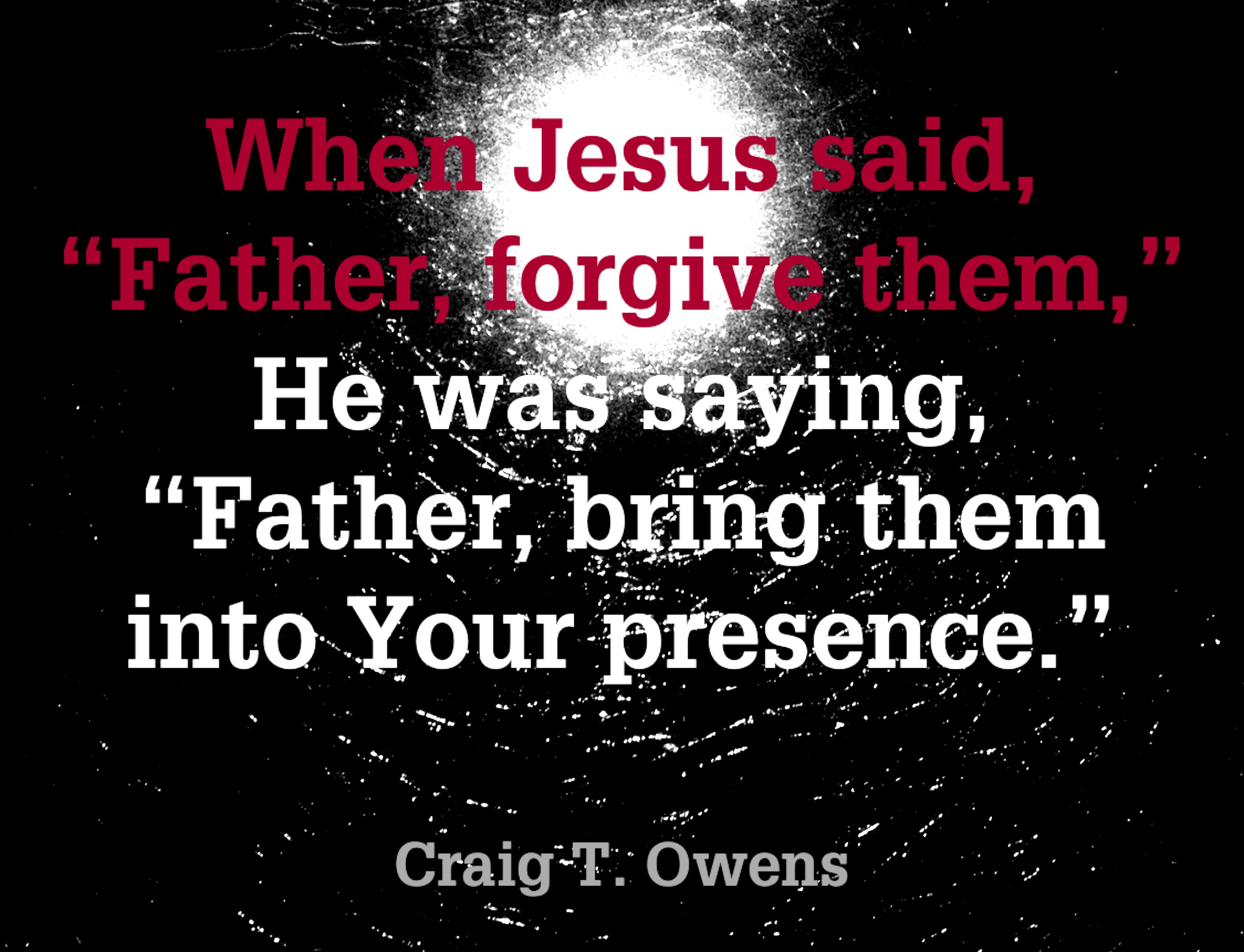
When Jesus said, “Father, forgive them,” He was saying, “Father, bring them into Your presence!” 

You and I need to accept by faith the atoning work done on the Cross, the forgiveness of sins that was purchased for us. Jesus didn’t come to condemn us, but to lovingly restore us, and for that we are eternally and humbly grateful. 

Please don’t miss out on any of these dying declarations from Jesus. You can find my thoughts on all of the confessions of this dying Man by clicking here.

►► Would you please prayerfully consider supporting this ministry? ◀︎◀︎

Poetry Saturday—Arise, My Soul, Arise

Listen to the podcast of this post by clicking on the player below, and you can also subscribe on Apple or Spotify.

Arise, my soul, arise,
shake off your guilty fears;
The bleeding sacrifice,
in my behalf appears;
Before the throne my Surety stands,
My name is written on His hands.

He ever lives above,
for me to intercede;
His all redeeming love,
His precious blood, to plead;
His blood atoned for every race,
And sprinkles now the throne of grace.

Five bleeding wounds He bears;
received on Calvary;
They pour effectual prayers;
they strongly plead for me:
“Forgive him, O forgive,” they cry,
“Nor let that ransomed sinner die!”

The Father hears Him pray,
His dear anointed One;
He cannot turn away
the presence of His Son;
The Spirit answers to the blood,
The Spirit answers to the blood
And tells me I am born of God.

My God is reconciled;
His pardoning voice I hear;
He owns me for His child;
I can no longer fear
With confidence I now draw nigh,
And “Father, Abba, Father,” cry. —Charles Wesley

►► Would you please prayerfully consider supporting this ministry? ◀︎◀︎
First In Forgiveness

Listen to the podcast of this post by clicking on the player below, and you can also subscribe on Apple or Spotify.

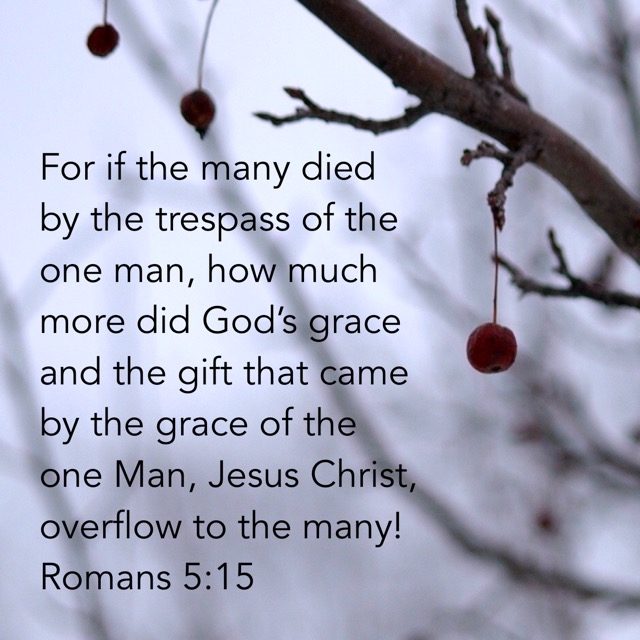
From David’s bookend prayers to Jesus making prayer the central, empowering practice of the Christian lifestyle, I hope you’re beginning to see that prayer starts it, prayer sustains it, prayer successfully concludes it! 

There is another thing both David and Jesus agree upon. They both tell us that there is one thing that can block our prayer: unconfessed, unrepented sin. 

David wrote, “If I regard iniquity in my heart, the Lord will not hear.” The Hebrew word translated “regard” means to be aware of something. David teaches us that we have to be made aware of our sin in order to confess our sin and ask forgiveness. We become aware of our sin through prayer and reading the Bible (Psalm 139:23; James 1:25; Romans 7:7-12). 

The NIV translates the same Hebrew word in Psalm 66:18 as “cherished.” After becoming aware of our sin, we have to be careful not to make excuses or justifications for it. And then the NLT translates the same word “not confessed.” After becoming aware of our sin and accepting responsibility for it, then we can confess it to God. 

In teaching us to pray, Jesus said our forgiveness of others had a direct correlation to the forgiveness we would receive from our Heavenly Father (Matthew 6:12, 14-15). Jesus further expounds this thought when He tells Peter to forgive others “seventy times seven times”; in other words: countless times. 

Think of it this way: Have you asked God’s forgiveness more than seven times? How about more than seven times for the same sin? I have! So Jesus is really asking Peter, “Do you want God to put a limit on how many times He will forgive you? If not, then don’t you put a limit on how many times you will forgive others.” 

The Amplified Bible has a great definition of forgiveness in Matthew 6:12—left, remitted, let go of the debts, and have given up resentment against. The Hebrew word David uses in Psalm 32:1 has a similar feel—lifted up, taken away, carried off. 

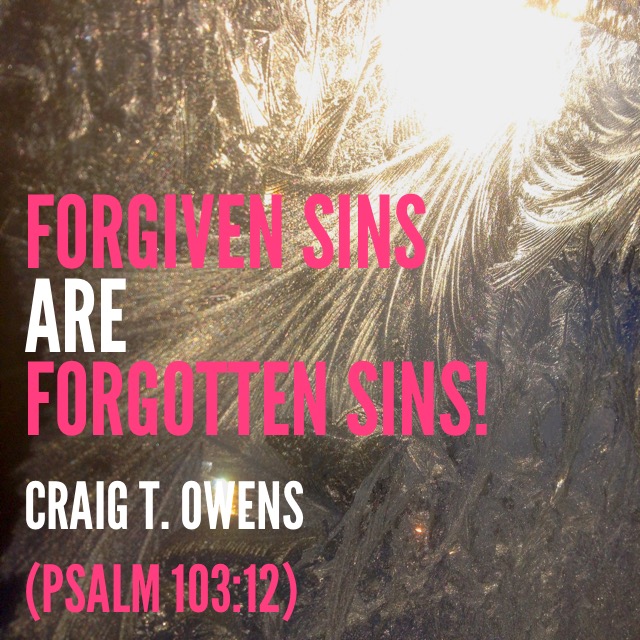
Our forgiven sins are forgotten sins. Every time we come to God for forgiveness, it’s like it is the first time. And Jesus says this is the same way we need to treat others. 

Let’s all strive to be first responders in confessing our own debts to God so we can be forgiven, AND then let’s also be first responders in forgiving the debts others have incurred against us. 

As I’ve said before: A mark of a maturing saint is one who is closing the gap between awareness of his sin and making his confession of that sin. 

But this is just as true: 

A mark of a maturing saint is one who is closing the gap between being injured and forgiving the offender. 

We do this again and again and again—countless times!—because that’s how often our Heavenly Father forgives us. 

Be a first responder in both asking for forgiveness and giving forgiveness.
Don’t let your debts block your prayers.
Don’t let your unreceived forgiveness weigh you down.
Don’t let your ungiven forgiveness weigh others down.

If you’ve missed any of the other messages in this series on prayer, you can find the full list by clicking here. 

Would you please prayerfully consider supporting this ministry?

Thursdays With Spurgeon—God Wants To Bless You

This is a weekly series with things I’m reading and pondering from Charles Spurgeon. You can read the original seed thought here, or type “Thursdays With Spurgeon” in the search box to read more entries.

Listen to the podcast of this post by clicking on the player below, and you can also subscribe on iTunes or Spotify.

God Wants To Bless You

     It delights God to bestow His goodness. The cost was paid long ago on Calvary’s Cross, and that is over. Since the great sacrifice has been presented, God freely gives all the blessings of divine grace to us with a willingness that shows that His heart goes with them. …  

     Come along with you, you needy saint or sinner. The more you can take in, the better pleased will the Lord be with you. … The Lord desires you to open your mouth wide and He will fill it—it is easier for Him to give than for you to open your mouth. He encourages and requests you to bring large petitions with you when you come before His mercy seat. …  

     ‘How can I apprehend these blessings and make them my own?’ … ‘The natural man does not receive the things of the Spirit of God’ (1 Corinthians 2:14). The power to receive the things of God lies not in high gifts or attainments. … Do not sit down and say, ‘I am a poor stupid man and cannot be taught of God.’ Or, ‘I am a humble countryman, or a poor woman keeping house for others. I cannot know these precious things.’ It is not so. Read the words of Paul in the first chapter of this Epistle: ‘For you see your calling, brethren, that not many wise according to the flesh, not many mighty, not many noble, are called’ (1 Corinthians 1:26). The power to receive the blessings of God does not lie in talent at all, but it lies in the Spirit of God. …

     Grace is not tied to the rare gifts of genius, nor to the precious acquirements of experience, nor to the high attainments of learning. … The power to receive is still of the Holy Spirit, and the Holy Spirit does not find good in us but brings it to us.

From Grace For Grace

I truly believe that God wants to bless us more than we want to receive God’s blessings. Far too many times I encounter people who want to talk themselves out of their worthiness to receive anything from God. 

But remember this verse: Since He did not spare even His own Son but gave Him up for us all, won’t He also give us everything else? (Romans 8:32). If God the Father would give up His Son to make it possible for you to be reconciled to Him, why would He hold anything back from you. 

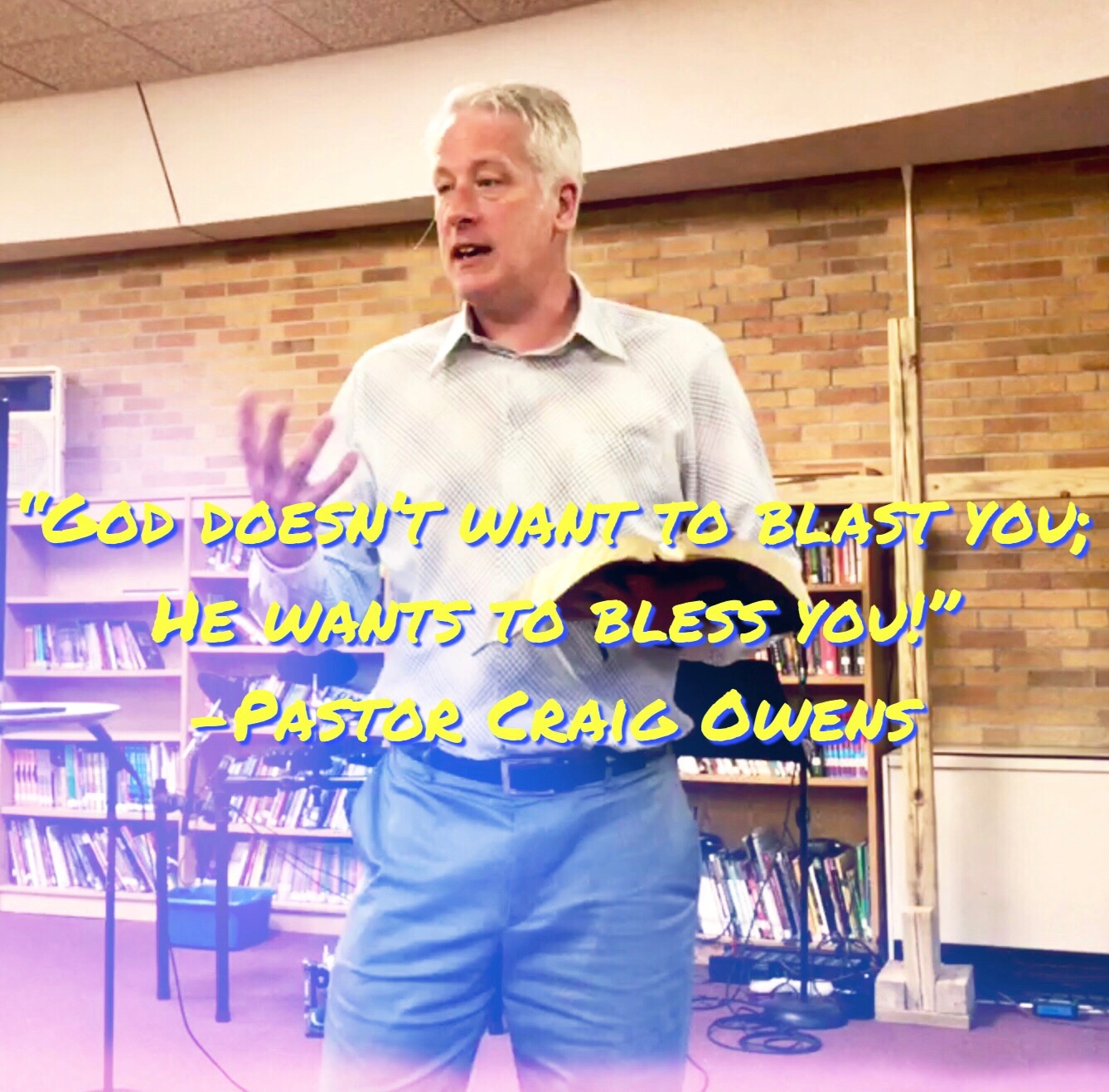
God’s doesn’t want to blast you, He wants to bless you!

Please, my friend, let Him bless you. His blessings aren’t because of anything you or I have done to deserve them. The definition of “grace” is an undeserved gift. God gives and He enables us to receive. Let Him pour out His blessings on you today!

Thursdays With Spurgeon—The Greatest Gift

This is a weekly series with things I’m reading and pondering from Charles Spurgeon. You can read the original seed thought here, or type “Thursdays With Spurgeon” in the search box to read more entries.

Listen to this post as a podcast by clicking here:

The Greatest Gift

Come…buy wine and milk without money and without price. … The gift of God is eternal life in Christ Jesus our Lord…. (Isaiah 55:1; Romans 6:23) 

     The free grace of God would be insulted by being put up for auction or set forth for sale. … It is a gift and not a prize. There are heavenly prizes to be run for, to be fought for, and to be obtained by divine help. There is a recompense of reward to which we are to look and a crown for which we are to strive, but the divine grace that forgives sin and works faith is no prize for exertion but rather a gift for those without strength. ‘It is not of him who wills, nor of him who runs, but of God who shows mercy’ (Romans 9:16). … 

     The blessings of salvation are freely given us of God; therefore they are not a loan, handed to us for a time and to be one day recalled. Our heavenly heritage is not held on lease, upon terms of annual payment. It is an unencumbered freehold to every man who has by faith put his foot upon it. … When He has given it, the deed is done outright and can never be reversed. O believer, if your sin is blotted out, it can never be written in again! God has declared that He has forgiven our transgressions. And then He adds, ‘Their sins and iniquities will I remember no more’ (Hebrews 10:17). … 

     God is unchangeable, and therefore what He has given He will give again. ‘Still there’s more to follow’ is a popular way of putting a great truth. The stream that has begun to flow will never cease flowing. The more the Lord gives, the more we may expect. Every blessing is not only in itself a mercy, but it is a note for more mercies.

From Grace For Grace

I shared a series of messages on God’s favor—His free gift that we call grace—that was one of the most downloaded and watched of any series I have presented. It almost seems inconceivable to people that God would give so freely and lavishly without expecting some sort of payment in return. 

Why would God “not spare even His own Son but [give] Him up for us all” (Romans 8:32)? Because if you feel distant from Him, how can you glorify Him? If you feel disconnected from His love, how will you draw others to Him? If you feel like your relationship with Him is hanging by a thread, how can you happily abide in His presence? 

Knowing God’s favor—His free gift—is the key to living the abundant life Jesus purchased for you on the Cross!

God Delights In Me

It’s been said that the bookends of success are starting well and finishing well. I believe that! 

David started well when he lifted up a prayer of thankfulness to God when he became king over the united nation of Israel. Prayer at the the beginning puts us on a path toward success. 

Have you ever begun to assemble a child’s toy or a piece of furniture, gotten completely stumped, and only then read the instruction manual? We’ve all been there! There are many things in life that we start on our own and then hit our knees in prayer only after we’ve exhausted all of our human resources. Fortunately, after we pray and God answers, we often end up finishing well with a prayer of praise and thanksgiving. The question is: what do we do when we again get ready to start something else? Do we pause to start well with prayer, or do we dive in on our own again? 

I think one of the biggest reasons we don’t go to prayer quickly is because we feel unworthy to go into the presence of a holy, righteous God. 

One commentator said about Psalm 18 that David probably prayed this “before he committed his terrible sin” with Bathsheba and Uriah. That may be, but with very few minor changes, David prayed this exact same prayer (2 Samuel 22) at the very end of his reign. His reign as king was bookended with the same prayer. 

Between the bookend prayers of Psalm 18 and 2 Samuel 22, David prayed another prayer—this one was after he had sinned against God, Bathsheba, and Uriah. David truly believed that God forgave that sin and wiped the slate clean, so much so that he noted this great blessing on his life: “He brought me out into a spacious place; He rescued me because He delighted in me. 

He rescued me because He delighted in me?! Yes! 

David knew that God had told us that He delights in those who obey Him. The example of God’s delight was seen in Jesus. Because Jesus paid the price for the forgiveness of my sins, I can be completely cleansed. Then Jesus comes in me, and takes me into Him, and takes both of us into the Father. So now when our Heavenly Father looks at a forgiven sinner, He sees only the righteousness of Jesus—something He utterly delights to see! (Check out all of the biblical passages I’m referencing by clicking here.)  

David said his sin had been washed “whiter than snow” (Psalm 51:7), So now look at what he could claim—

The Lord has dealt with me according to my righteousness; according to the cleanness of my hands He has rewarded me. For I have kept the ways of the Lord; I am not guilty of turning from my God. All His laws are before me; I have not turned away from His decrees. I have been blameless before Him and have kept myself from sin. The Lord has rewarded me according to my righteousness, according to my cleanness in His sight” (2 Samuel 22:21-25). 

…according to my cleanness in His sight. 

In GOD’S sight! The devil wants to accuse me. He wants my sight to dominate. The devil doesn’t want me to see myself as God sees me. But I declare it out loud: I am clean IN HIS SIGHT! 

This cleanness allows me full, bold, confident access to Almighty God! I can take everything to God in prayer because I am clean in His sight! 

If you would like to read more of the posts in our prayer series called Be A First Responder, please click here.