5 Quotes From “How To Read A Book”

how-to-read-a-bookIf you want to get more out of your book reading time, I’d highly recommend How To Read A Book to you. Check out my review here, and then check out some of the quotes I especially appreciated.

“We do not have to know everything about something in order to understand it; too many facts are often as much of an obstacle to understanding as to few. There is a sense in which we moderns are inundated with facts to the detriment of our understanding.”

“Good books are over your head; they would not be good for you if they were not. And the books that are over your head weary you unless you can reach up to them and pull yourself up to their level. It is not the stretching that tires you, but the frustration of stretching unsuccessfully because you lack the skill to stretch effectively. To keep on reading actively, you must have not only the will to do so, but also the skill—the art that enables you to elevate yourself by mastering what at first sight seems to be beyond you.”

“Perhaps you were beginning to see how essential a part of reading it is to be perplexed and know it. Wonder is the beginning of wisdom in learning from books as well as from nature. If you never ask yourself any questions about the meaning of a passage, you cannot expect the book to give you any insight you do not already possess.”

“Many persons believe that they know how to read because they read at different speeds. But they pause and go slow over the wrong sentences. They pause over the sentences that interest them rather than the ones that puzzle them. Indeed, this is one of the greatest obstacles to reading a book that is not completely contemporary.”

“‘State in your own words!’ That suggests the best test we know for telling whether you have understood the proposition or propositions in the sentence. If, when you are asked to explain what the author means by a particular sentence, all you can do is repeat his very words, with some minor alterations in their order, you had better suspect that you do not know what he means. Ideally, you should be able to say the same thing in totally different words. The idea can, of course, be approximated in varying degrees. But if you cannot get away at all from the author’s words, it shows that only words have passed from him to you, not thought or knowledge. You know his words, not his mind. He was trying to communicate knowledge, and all you received was words.”

On This Day (book review)

on-this-dayI truly believe George Santayana’s maxim about learning from history so that we don’t have to repeat its painful lessons. On This Day: 365 Amazing and Inspiring Stories about Saints, Martyrs and Heroes by Robert Morgan not only helped me learn history, but see that history through a biblical lens.

Each day of the year Robert Morgan will introduce you to someone who played a key part in church history. Some of the names will be well-known to you, and some of them will be brand new; some of the stories will make you smile, and some will break your heart. But all of the stories reinforced two major themes for me—(1) All of history is God’s story, and (2) God uses ordinary people to accomplish His extraordinary purpose.

Each day’s entry is short enough that you can easily add it to your daily schedule. If you are a teacher or a parent, these stories would be a great way to talk about current events in light of what God has already done in past history. Either by yourself or with others, you will gain a greater appreciation for God and the gifts He gives to men and women.

How To Read A Book (book review)

how-to-read-a-bookIt’s amazing with all the books I’ve read that I’ve never before read How To Read A Book by Mortimer J. Adler and Charles Van Doren.

This book was originally published in 1940, but there is a reason it has stood the test of time. You may have been reading before, but this book will show you how to really read a book for all it’s worth. The opening paragraph states it well: “This is a book for readers and for those who wish to become readers. Particularly, it is for readers of books. Even more particularly, it is for those whose main purpose in reading books is to gain increased understanding.”

If you read simply to be entertained or to escape reality, don’t waste your time on this book. However, if you read to learn new things, expand your worldview, or increase your understanding, then the science and insight packed into How To Read A Book will revolutionize your approach to reading.

This is a challenging read, and a couple of times I almost gave up on getting through all of the information. But I’m glad I persevered!

If you’re ready to read better than before, please spend some time with this classic.

Religious Liberty In School

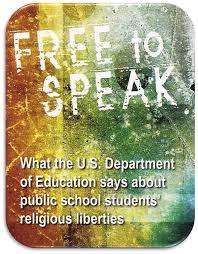
free-to-speakAs our students are heading back to their schools, it is a great time to be reminded of the religious liberties they have while in school. With all of the talk of so-called “separation of church and state,” I think many parents and students are reluctant to say anything that sounds remotely Christian, for fear of getting in trouble with the powers-that-be.

But we don’t have to tread so carefully!

Gateways To Better Education has some great resources. I ordered a couple hundred of their “Free To Speak” pamphlets. I gave them to our school superintendent, and as many parents as as I could. This short pamphlet summarizes the US Department of Education’s guidelines on what is allowed in school. In short, the Seven Freedoms are:

  1. Students can pray, read their Bibles or other religious material, and talk about their faith at school.
  2. Students can organize prayer groups and religious clubs, and announce their meetings like any other club.
  3. Students can express their faith in their class work and homework.
  4. Teachers can organize prayer groups with other teachers.
  5. Students may be able to go off campus to have religious studies during school hours.
  6. Students can express their faith at a school event.
  7. Students can express their faith at a graduation ceremony.

Don’t be intimidated. Don’t be uninformed. Know your rights as a US citizen.

The Gospels Side-By-Side (book review)

Gospels Side By SideI love reading. But hands-down, without a doubt, my favorite book to read is the Bible. So I’m always intrigued by any resource that can help me get more out of my time in the Scriptures. In The Gospels Side-By-Side by Rose Publishing, I found a goldmine.

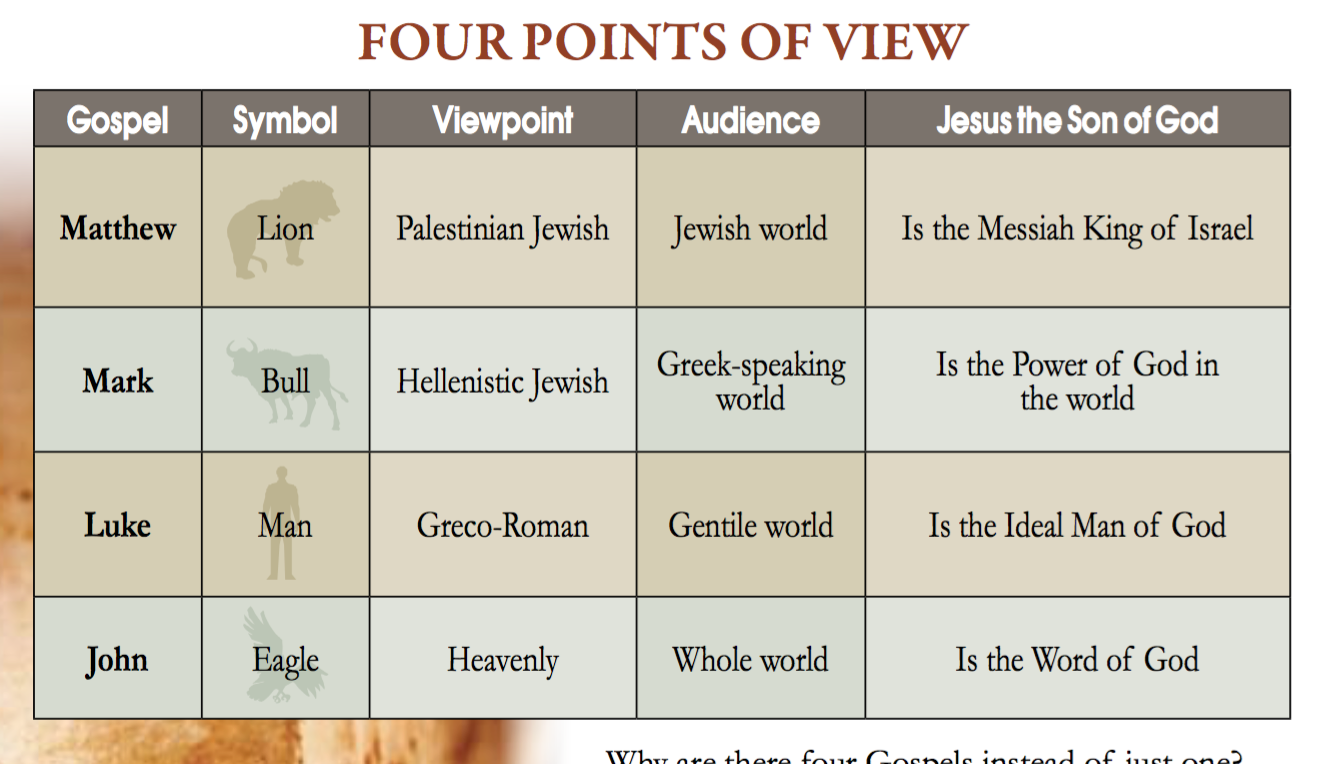
This short pamphlet is chockfull of graphics, charts, maps and historical background information  that helped me see the bigger picture of the story of Jesus that the Gospel writers were conveying to us. It begins with the unique perspective of each Gospel writer, and launches us deeper into the Bible from there.

In this book you will see things like:

  • The events of Christ’s life, and which Gospel tells particular events
  • The miracles of Jesus
  • The parables of Jesus
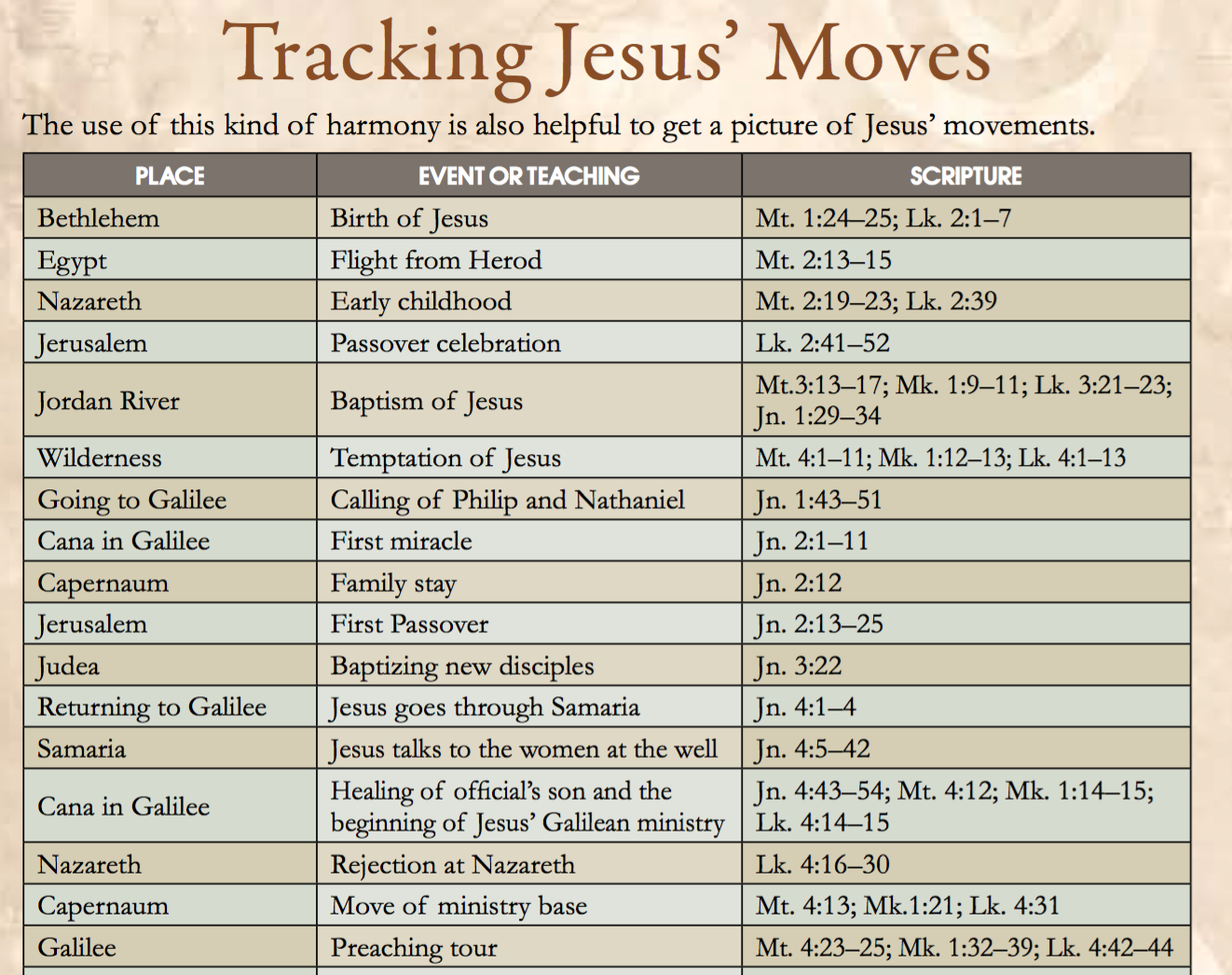
  • The chronological movements of Jesus
  • How Jesus celebrated Passovers during His public ministry
  • How these biblical biographies compare to other biographies of the era
  • Even the historical harmony of the Gospel message in the post-apostolic age

This should bring new life to any Bible student’s reading time! I highly recommend you check out not only this pamphlet, but many of the other resources available at Rose Publishing.

Here are a couple of screenshots from the book…


Screen Shot -Christ's movesScreenshot - gospel writers

Notes From The Global Leadership Summit

I had an amazing time last week at the Willow Creek Global Leadership Summit. Every year I came away with some many thoughts, and a brand new passion for the various leadership roles in which I get to serve.

Below are just a few of my notes that I jotted down during an intense two days.
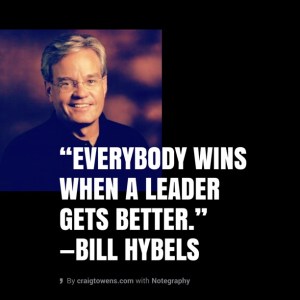
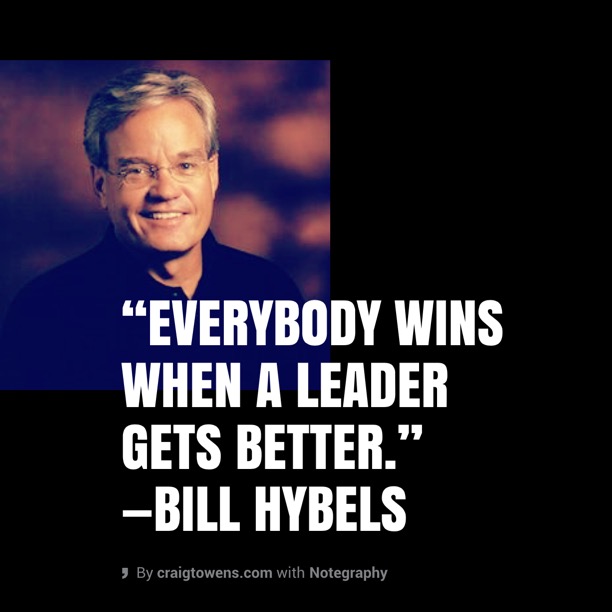
Hybels - everybody winsBill Hybels—The Lens Of Leadership

“Everybody wins when a leader gets better.”

“Armed with enough humility, leaders can learn from anyone.”

Hybels discussed four leadership lenses:

1.   Passionate leader (depicted by vibrant bright red frames)

  • They understand unbridled passion in leadership.
  • “Passion is like protein for the team.”
  • A motivated worked will outperform an unmotivated worker by 40%.
  • People are more motivated by working for a passion-filled leader than they are by compensation or perks.
  • Passion comes from a mountain-top dream, or a valley-deep frustration of current settings.

2.   People leader (cool frames, but cracked lenses)

  • An organization will only be as healthy as the top leader wants it to be.
  • This world needs more pastors of businesses, factories, medical offices, military units, etc.

3.   Performance leader (self-adjusting glasses)

  • Leaders ask: what progress should be made? how do we measure this? what doesn’t need to be measured?
  • Every worker wants to know how they are doing. For the leader, it’s cruel to hire someone and never let them know how they’re doing. Every staff member should get an update at least every six months.

4.   Legacy leader (sunglasses with a rearview mirror [cyclist])

  • Every once in awhile we need to look behind to see what legacy we’re leaving behind.
  • Leaders should reflect on this annually.
  • If my leadership assignment were to end today, what legacy would I leave?
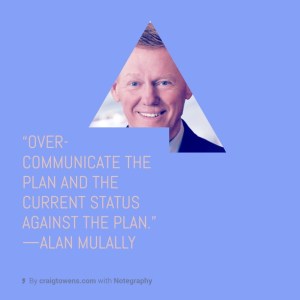
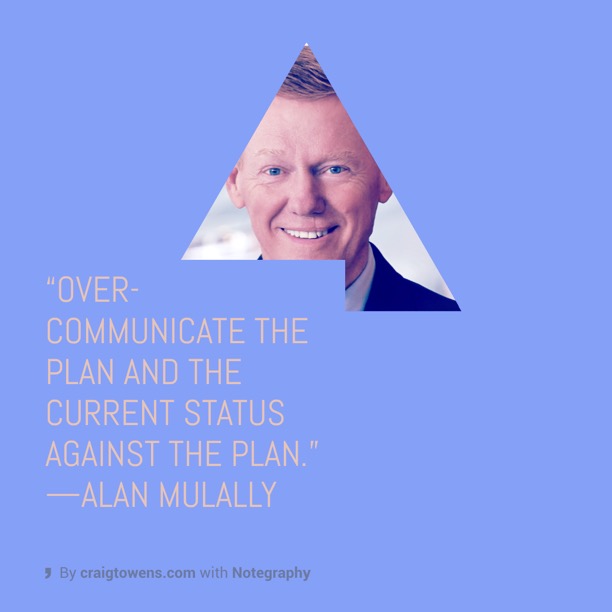
Mulally - overcommunicateAlan Mulally—CEO Boeing and Ford Motor Company

An average commercial airline has 4 million parts!

  • People first
  • Include everyone
  • Create a compelling vision
  • Present a workable strategy
  • Set clear performance goals
  • Relentless implementation
  • Share lots of data
  • “Over-communicate the plan and the current status against the plan.”
  • Instill a positive can-do attitude
  • Keep your emotional resilience
  • Have fun


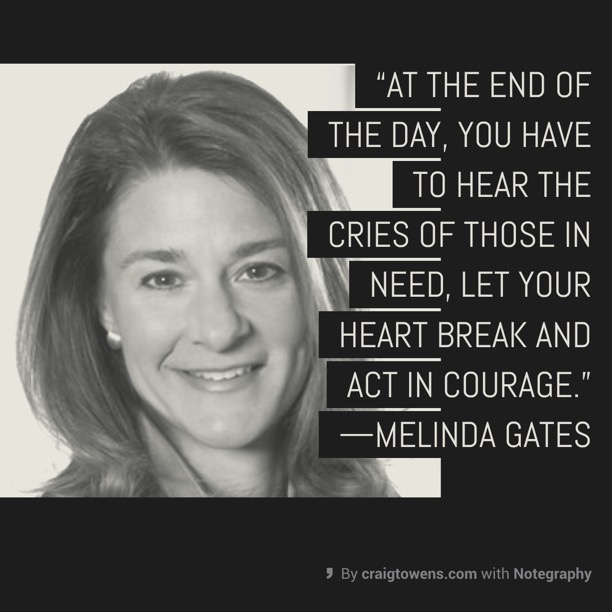
Melinda Gates - hear the criesMelinda Gates—Gates Foundation

Melinda says of herself, “I am an impatient optimist. We are changing the world, but we need to change it faster.”


“At the end of the day, you have to hear the cries of those in need, let your heart break and act in courage.”

Jossy Chacko—Empart

“All of us have been entrusted with something. What are we doing to leverage it?”

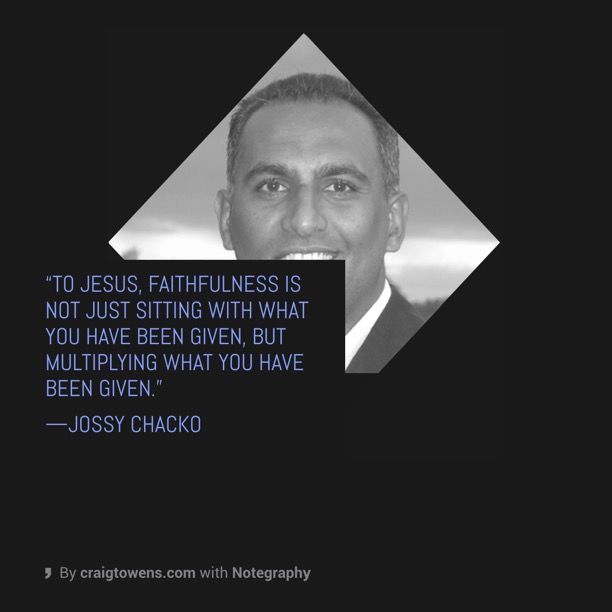
In thinking about the parable of the talents … “To Jesus, faithfulness is not just sitting with what you have been given, but multiplying what you have been given. God’s mission is not maintaining.”

“Playing it safe is not enough for a follower of Jesus Christ.”

Three principles for expanding our leadership reach:
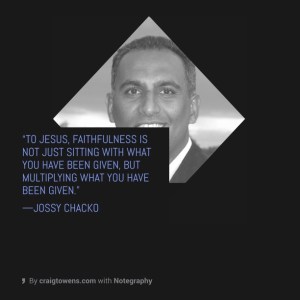
Jossy Chacko - faithfulness1. Enlarge your vision

  • “When people hear my vision, they should know the size of my God.”
  • “An enlarged vision should keep us driven.”
  • “Do not be confused about what people say about your vision; trust what God has said to you.”

2. Empower your people

  • “Leadership is about taking wise chances and giving people opportunities.”
  • “Your leadership reach will be determined by your empowerment choices.”
  • Three things to keep in mind: (1) Focus on building their character before empowering them; (2) Empowerment has to be through relationship; and (3) Make sure we have agreed on the right outcomes, and have the right way to measure them.

3. Embrace risk

  • Faith = risk. Without faith it is impossible to please God = without taking risks it is impossible to please God.
  • Paradigms to be changed: (1) See risk as your friend to love, not as your enemy to be feared; (2) See comfort and safety as your enemies; and (3) Increase your pain threshold.
  • “Your leadership capacity is in direct relationship to your pain threshold.”
  • “Don’t allow the fear of losing what we have to lose what God has in store for you.”
  • “By me not taking risks, who is missing out?”
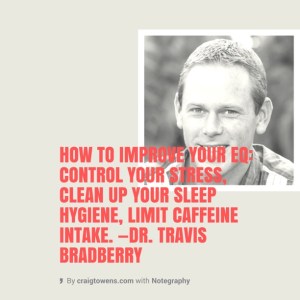
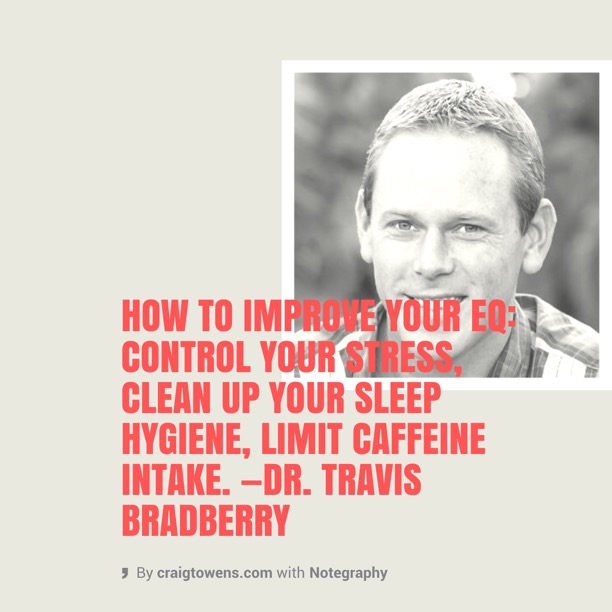
Bradberry - EQDr. Travis Bradberry—TalentSmart

All inputs into the brain travel through the limbic system first (emotional center) before the inputs travel to the frontal cortex. The EI (emotional intelligence) center is in the front of the brain, just above the left eye.

Only 36% of people are able to accurately identify their emotions as they happen.

EQ (the Emotional Quotient that measures emotional intelligence) is not IQ.

EQ can be improved all throughout life.

Four components of emotional intelligence:

 1. Self-awareness: knowing my emotions, and knowing my tendencies. I need to lean into my discomfort if I want to improve.

   2. Self-management: what I do with this increased self-awareness. This is not “stuffing” my feelings. The biggest mistake is only trying to manage negative emotions; positive emotions need to be managed too.

   3. Social awareness: focusing more on others than on myself.

   4. Relationship management: using the first three skills in concert. Seeing how my behavior is affecting the other person, and then adjusting accordingly.


How to increase my EQ:

  1. Control stress—stress under control is healthy; chronic stress is unhealthy. Gratitude reduces the stress hormone cortisol.
  2. Clean up my sleep hygiene—sleep cleans up toxic hormones in the brain. To get better sleep: (1) Don’t take any kind of sleeping pill; and (2) Reduce “blue lights” in the evening.
  3. Reduce my caffeine input—especially after noon.
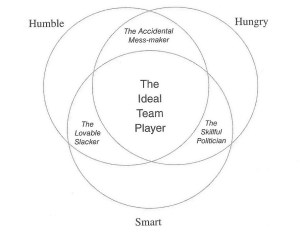
Ideal team playerPatrick Lencioni—Author

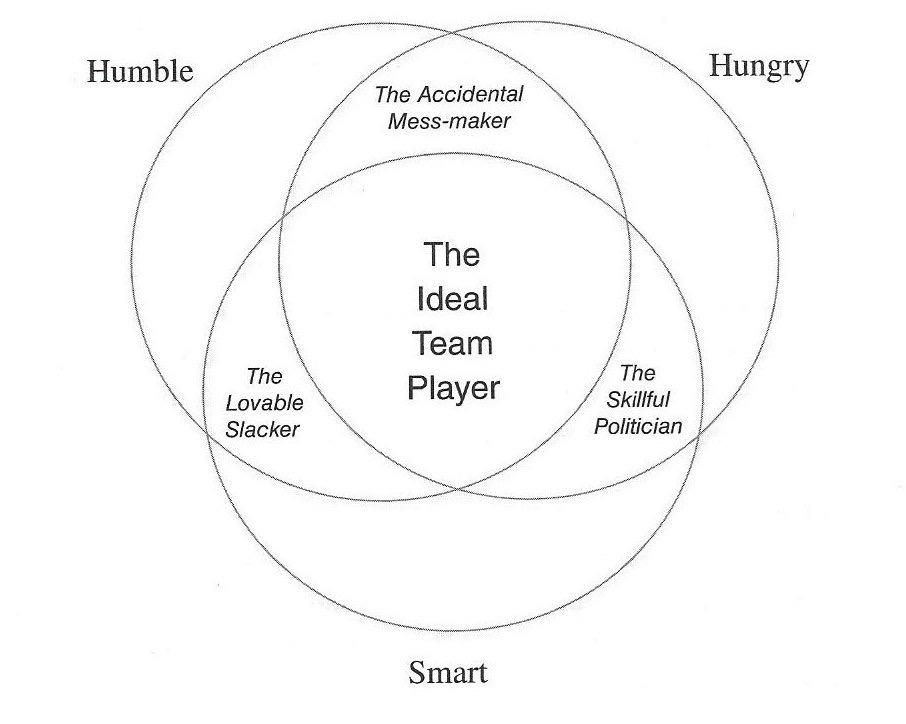
Three qualities of an ideal team player:

1.   Humble

  • Lacking self-confidence is not humility.
  • “Denying skills and downplaying abilities is not humility.”

2.   Hungry

  • Strong work ethic
  • Driving hard

3.   Smart

  • Not intellectual smarts, but people smarts = EQ

“To develop people, we have to have the courage to humbly and constantly talk to people about their ‘stuff.’”
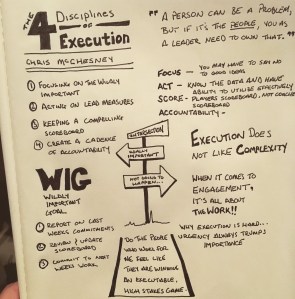
McChesney - execution disciplinesChris McChesney—Franklin Covey

Rahm Charan asked:

  • Q: Do leaders struggle more with strategy or execution? A: Execution.
  • Q: Are leaders more educated in strategy or execution? A. Strategy.

“The hardest thing a leader will ever do is drive a strategy that changes someone’s behavior.”

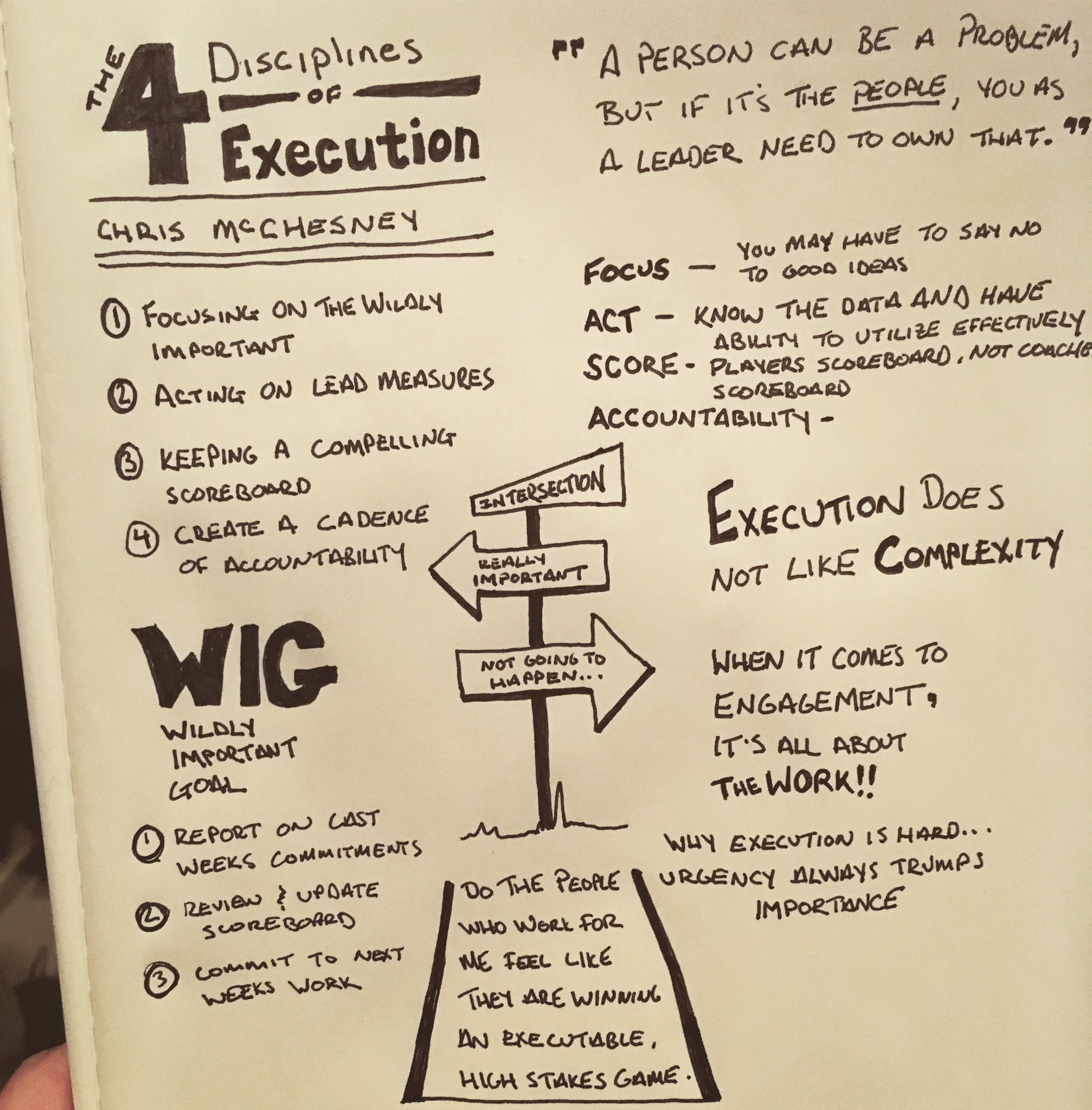
There are four disciplines for making changes in human behavior:

1.  Focus

  • “Focus on the wildly important.”
  • If a team focuses on 2-3 goals, they are likely to get them done. But if there are 4-10 goals, momentum is killed. At 11+ goals, the team is going backward.
  • We narrow the focus by coming up with a WIG: wildly important goal (this lives at the intersection of ‘really important’ and ‘not going to happen’).

2.  Leverage

  • “What are the fewest number of battles necessary to win the war?”
  • “When you want to go big, don’t think big, think narrow.”
  • One WIG per team at the same time. Everything else is in sustainment mode.
  • Make goals like this—“From x to y by when.”

3.  Engagement

  • “The biggest driver of engagement is when people feel like they’re winning.”
  • “Do the people who work for me feel like they’re playing a winnable game?”

4.  Accountability

  • Everyone needs to answer: “What are the things I do that have the biggest impact on the WIG?”
  • After sharing the scoreboard, allow people to determine what they need to do next. The people need to determine their own next moves, not the leader. The leader pulls this out of people.
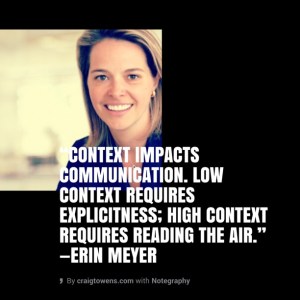
Erin Meyer - contextErin Meyer—INSEAD

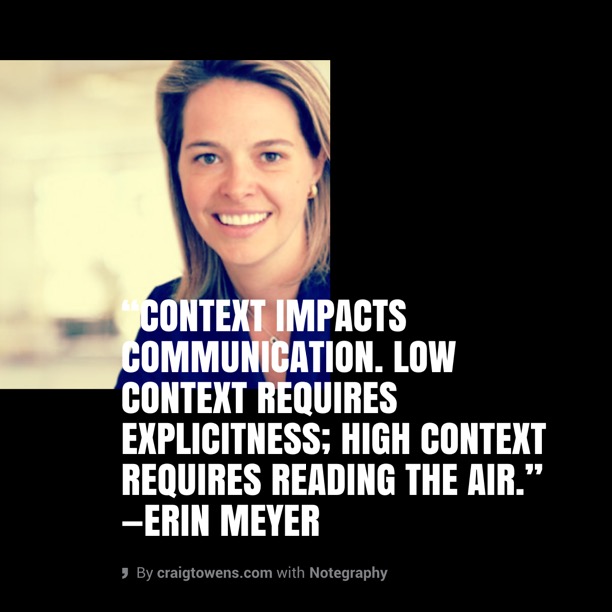
On The Culture Map communication is divided into Low vs. High Context:

  • Low = feel we don’t have the same context or relationship. We feel we need to explain things very simply and explicitly.
  • High = we assume we have a larger body of shared reference points. We feel communication is more implicit or nuanced.

Anglo-Saxon countries are typically low context.

Latin American are mid-low.

Asian countries are usually high context.

In low context we tend to nail things down in writing, where in high context we leave things more open to later interpretation.

“Context impacts communication. … We need to read both the messages ‘in the air’ as well as the explicitly stately messages.”

“In a high context culture, repeat things less, ask more questions, learn to ‘read the air.’”
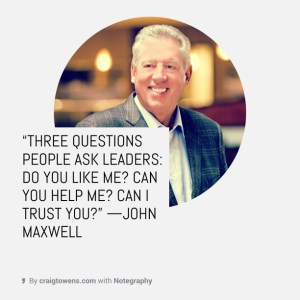
 

Maxwell - 3 questionsJohn Maxwell—Author 

“Good leaders lift.”

“You have to find the people before you lead the people.”

“The one thing leaders have to get right—they must intentionally add value to people every day.”


Five things that intentionally adds value to people:

  1. Value people—“God values people I don’t know; He even value people I don’t like.” “Are we going to spend our lives connecting with people, or correcting them?”
  2. Think of ways to add value to people—“Intentional living is thinking upfront on how to help people.”
  3. Look for ways to add value to people.
  4. Do things that add value to people.
  5. Encourage others to add value to people.

If you attended the GLS, please share in the comments below something amazing / challenging / paradigm-busting that you learned. Let’s all keep on learning!

12 Quotes From “The Place Of Help”

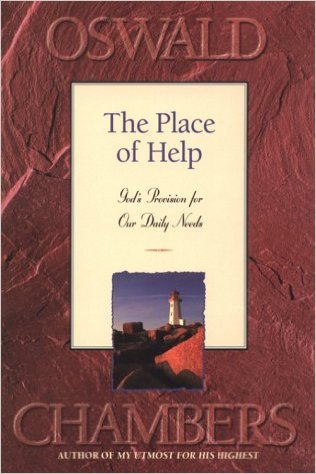
The Place Of HelpAs always, any Oswald Chambers book I read is thoroughly highlighted. There is always so much great content! On this blog, I have a weekly series called “Thursdays With Oswald” where I share quotes and thoughts from his book I’m currently reading. Be sure to check that out. Below are just a few of the quotes I noted from The Place Of Help. (By the way, you can read my review of this book by clicking here.)

“This is the age when education is placed on the very highest pinnacle. In every civilized country we are told that if we will educate the people and give them better surroundings, we shall produce better characters. Such talk and such theories stir aspirations, but they do not work out well in reality. The kingdom within must be adjusted first before education can have its true use. To educate an unregenerate man is but to increase the possibility of cultured degradation.”

“Not what the disciple says in public prayer, not what he preaches from pulpit or platform, not what he writes on paper or in letters, but what he is in his heart which God alone knows, determines God’s revelation of Himself to him. Character determines revelation (see Psalm 18:24-26).”

“Our Lord never gives private illuminations to special favorites. His way is ever twofold: the development of character, and the descent of Divine illumination through the Word of God.”

“The voice of the Lord listened to in darkness is so entrancing that the finest of earth’s voices are never afterwords mistaken for the voice of the Lord.”

“Jesus Christ distinctly stated that He came to do the will of His Father. ‘I must work the works of Him that sent Me.’ His first obedience was not to the needs of men, but to the will of God. He nowhere chose the altar of His sacrifice, God chose it for Him. He chose to make His life a willing and obedient sacrifice that His Father’s purpose might be fulfilled. … ’For we preach not ourselves, but Christ Jesus as Lord, and ourselves as your servants for Jesus’s sake,’ as Paul says in 2 Corinthians 4:5. We are the servants of men, says Paul, not primarily because their needs have arrested us, but because Jesus Christ is our Lord.” 

“If you become a necessity to a soul you have got out of God’s order, your great need as a worker is to be a friend of the Bridegroom. Your goodness and purity ought never to attract attention to itself, it ought simply to be a magnet to draw others to Jesus.”

“Suppose you talk about depending on God and how wonderful it is, and then others see that in your own immediate concerns you do not depend on Him a bit, but on your own wits, it makes them say, ‘Well, after all, it’s a big pretense, there is no Almighty Christ to depend on anywhere, it is all mere sentiment.’ The impression left is that Jesus Christ is not real to you.” 

“The highest Divine love is not only exhibited in the extreme amazement of the tragedy of Calvary, but in the laying down of the Divine life through the thirty years at Nazareth, through the three years of popularity, scandal, and hatred, and furthermore in the long pre-incarnate years (cf. Revelation 13:8).”

“The Cross is the supreme moment in Time and Eternity, and it is the concentrated essence of the very nature of the Divine love. … The Self-expenditure of God for His enemies in the life and death of our Lord Jesus Christ, becomes the great bridge over the gulf of sin whereby human love may cross over and be embraced by the Divine love, the love that never fails.” 

“Christian experience does not mean we have thought through the way God works in human lives by His grace, or that we are able to state theologically that God gives the Holy Ghost to them that ask Him—that may be Christian thinking, but it is not Christian experience. Christian experience is living through all this by the marvelous power of the Holy Ghost. The Holy Ghost working in me does not produce wonderful experiences that make people say ‘What a wonderful life that man lives’; the Holy Ghost working in me makes me a passionate, devoted, absorbed lover of the Lord Jesus Christ.”

“It is not the baptism of the Holy Ghost that changes men, but the power of the Ascended Christ coming into men’s lives by the Holy Ghost that changes men. The baptism of the Holy Ghost is the evidence of the Ascended Christ.” 

“There is only one Lover of the Lord Jesus and that is the Holy Ghost; when we receive the Holy Ghost He turns us into passionate human lovers of Jesus Christ. Then out of our lives will flow those rivers of living water that heal and bless, and we spend and suffer and endure in patience all because of One and One only.”

More quotes from this book coming soon…

Links & Quotes

link quote

“You have no idea the number of people that God may want to influence through you.” —Andy Stanley

“Proclaiming the gospel to a lost world cannot be just another activity to add to the church’s crowded agenda. It must be central to who we are. It forms our identity.” —Francis Chan

If you are job hunting, here is something to consider: Job recruiters don’t care about your GPA.

Ever wonder why politicians continue to fund the murderous practices of Planned Parenthood? Just follow the money. Look how much money Planned Parenthood gives to these politicians.

Max Lucado asks, “Does one prevailing problem stalk your life? Where does satan have a hook in you?” Read more in Max’s post Strongholds.

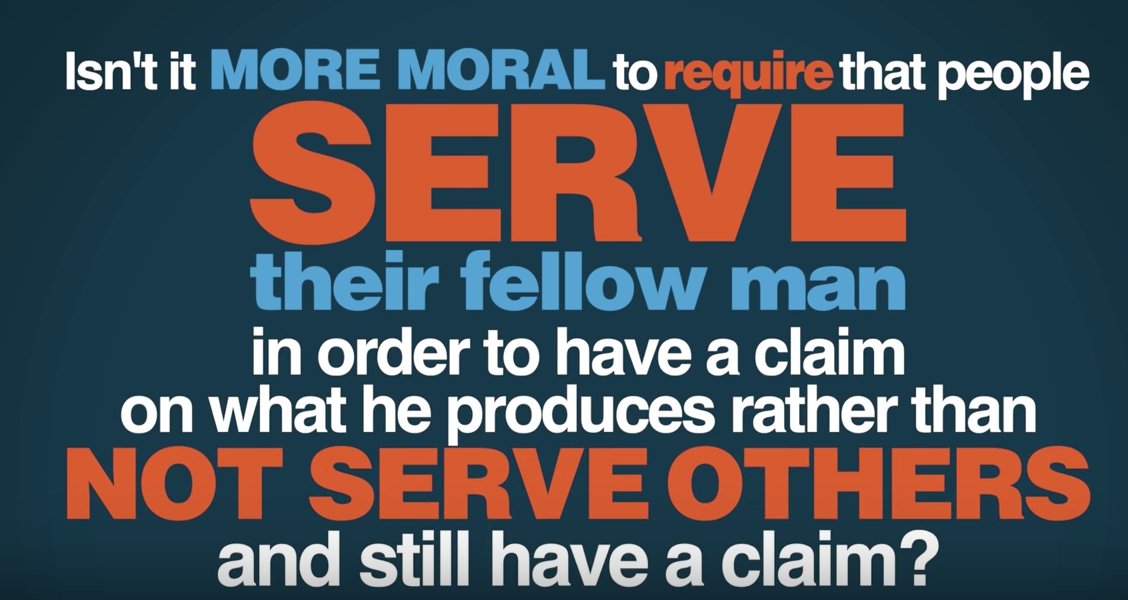
Is Capitalism Moral?

Morality of capitalismThis is an absolutely brilliant description by Professor Walter Williams of the morality and viability of free-market capitalism. Please take just 5 minutes to get educated on this.

Reconnecting the Disconnection

DisconnectThere is a disconnection problem in the United States of America. Consider this:

  • John Adams, one of our nation’s founding fathers said, “The general principles on which the fathers achieved independence were the general principles of Christianity.”
  • Every president from George Washington to Barak Obama has invoked the name of God in his inaugural address.
  • 96% of Americans say they believe in God.
  • 80% of Americans call themselves Christians.

And yet:

  • Our grade schools make no mention of “God”, some even to the point of not reciting the pledge of allegiance.
  • Higher education is openly antagonistic toward God and Christians.
  • The entertainment industry normalizes lifestyles that are openly unbiblical.
  • Even our US government has done things like legalizing murder in the form of abortion, and sanctioning homosexuality by calling their unions “marriage.”

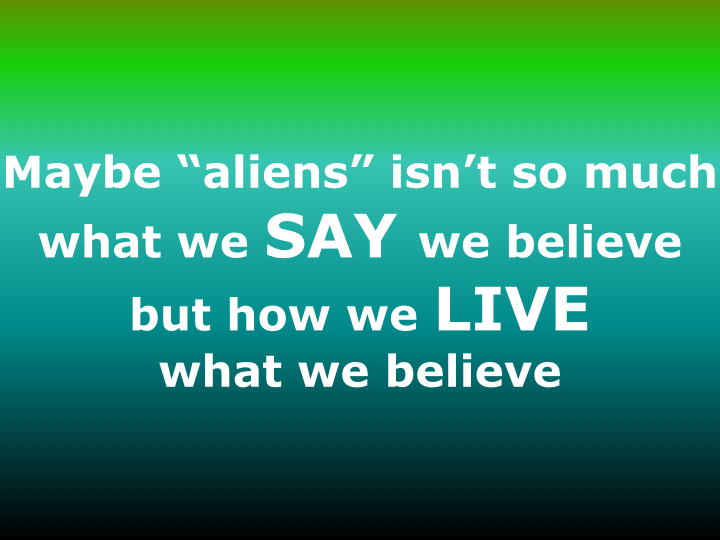
The Bible calls Christians “aliens and strangers in the world.” Perhaps the term “aliens” is not so much for what we say we believe, but how we live what we believe. 

So Peter opens his letter to “strangers in the world” by telling Christians how to live in a way that can reconnect this disconnection.

  • Humble—because we sinners have been chosen (v. 2a) to become citizens of Heaven.
  • Confident—because of the foreknowledge of God the Father (v. 2b) that can never be thwarted.
  • Teachable—because the process of the sanctifying work of the Spirit and obedience to Jesus Christ (v. 2c) requires us to be humbly-confident, teachable servants.
  • Graceful and peaceful (v. 2d)—because what we believe about God’s invitation to come to Him, Christ’s payment that makes that possible, and the Holy Spirit’s sanctification should be lived out in graceful and peaceful lives.

Would your Earthling family members say you are graceful and peaceful? 

Would your Earthling coworkers say you promote grace and peace on the job? 

Would your Earthling neighbors say you make the neighborhood graceful and peaceful? 

Would the Earthling business owners you frequent say your gracefulness and peacefulness is more evident than in the citizens of Earth?

Search me, God, and know my heart test me and know my anxious thoughts. See if there is ANY offensive way in me, and lead me in the way everlasting. (Psalm 139:23-24).

If you’ve missed any messages in this series, you may find the complete list by clicking here.