Refuge From The Shoving

Listen to the podcast of this post by clicking on the player below, and you can also subscribe on AppleSpotify, or Audible. 

I don’t know when the last was that you may have tried to get a dozen little kids lined up, but it’s quite an experience! Everyone is vying for their spot. Someone gets mad and yells out, “He cut!” And then the reply is yelled back, “No, I didn’t. She was saving my spot!” This usually results in lots of pushing and shoving as each person tries to reclaim their rightful place in line. 

This is the backdrop for Psalm 7. The introduction tells us that Cush is causing David grief. Maybe because Cush is from the tribe of Benjamin like King Saul, and he doesn’t want David cutting in line so he is shoving him back to his proper place. 

(Check out all of the Scriptures in this post by clicking here.)

There’s a musical term David uses, which isn’t used in any other psalm: shiggaion. This means a rhythm that isn’t normal—it’s a freewheeling, irregular, impassioned beat. This also helps set the atmosphere for what’s happening in David’s life. The root word for shiggaion implies a shakeup (or a shoving and pushing) that could lead to someone losing their way. 

David tries to do the right thing. He asks for God’s help (v. 1) so that he doesn’t get ripped to shreds (v. 2). He even takes time to ask himself if he has done anything that led to Cush’s shoving (vv. 3-5). But notice these are all David’s attempts to make things right. 

Remember that this is a Royal Psalm, but we haven’t heard anything about God as King yet. But now we come to the end of v. 5, which is also the end of David’s own striving. It’s marked by the word Selah. 

My little friends push and shove to try to get their place. But all of that stops when I say, “Johnny is my line leader, and this is the way the rest of you are going to line up behind him.” David’s Selah pause was a call to switch from doing things on his own to yielding to the King to sort things out. He was saying, “The King of kings is the Leader and He knows my place in line.” 

It’s only after the Selah that we see the royal terms for the Undisputed Leader:

  • He is the One who will decree justice (v. 6) 
  • He will rule…from on high (v. 7) 
  • He is the Supreme Judge (vv. 8, 11) so David yields his introspection to Him (vv. 3-4, 8-9) 
  • He is God Most High (vv. 10, 17) 

Our King has no rival. No one can shove Him. No one can contradict Him. No one can hide anything from Him (vv. 11-16). 

We must bow only to the King of kings (Philippians 2:10-11). 
We mistakenly bow our knee to man when…

  • …we aren’t willing to own our mistakes 
  • …we try to administer our own “shove” of justice 
  • …we make our own refuge 

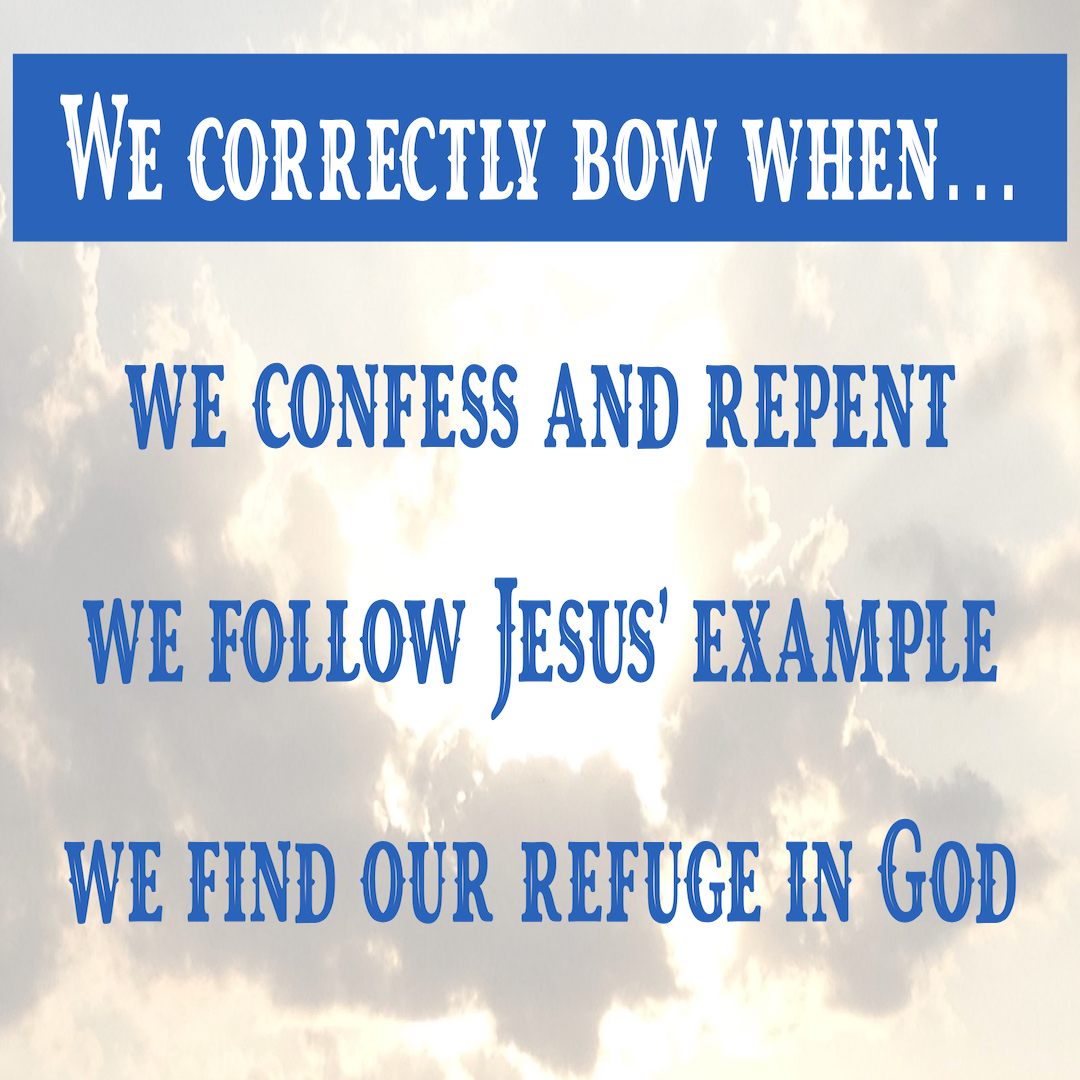
So we bow to the King when…

  • …we acknowledge, confess, and repent of our sins (vv. 3-5; Psalm 19:12, 69:5)
  • …we follow the example of Jesus when we’re shoved around (1 Peter 2:21-23)
  • …find our refuge solely in God (v. 1; c.f. 2:12; Ephesians 6:12; James 4:7)

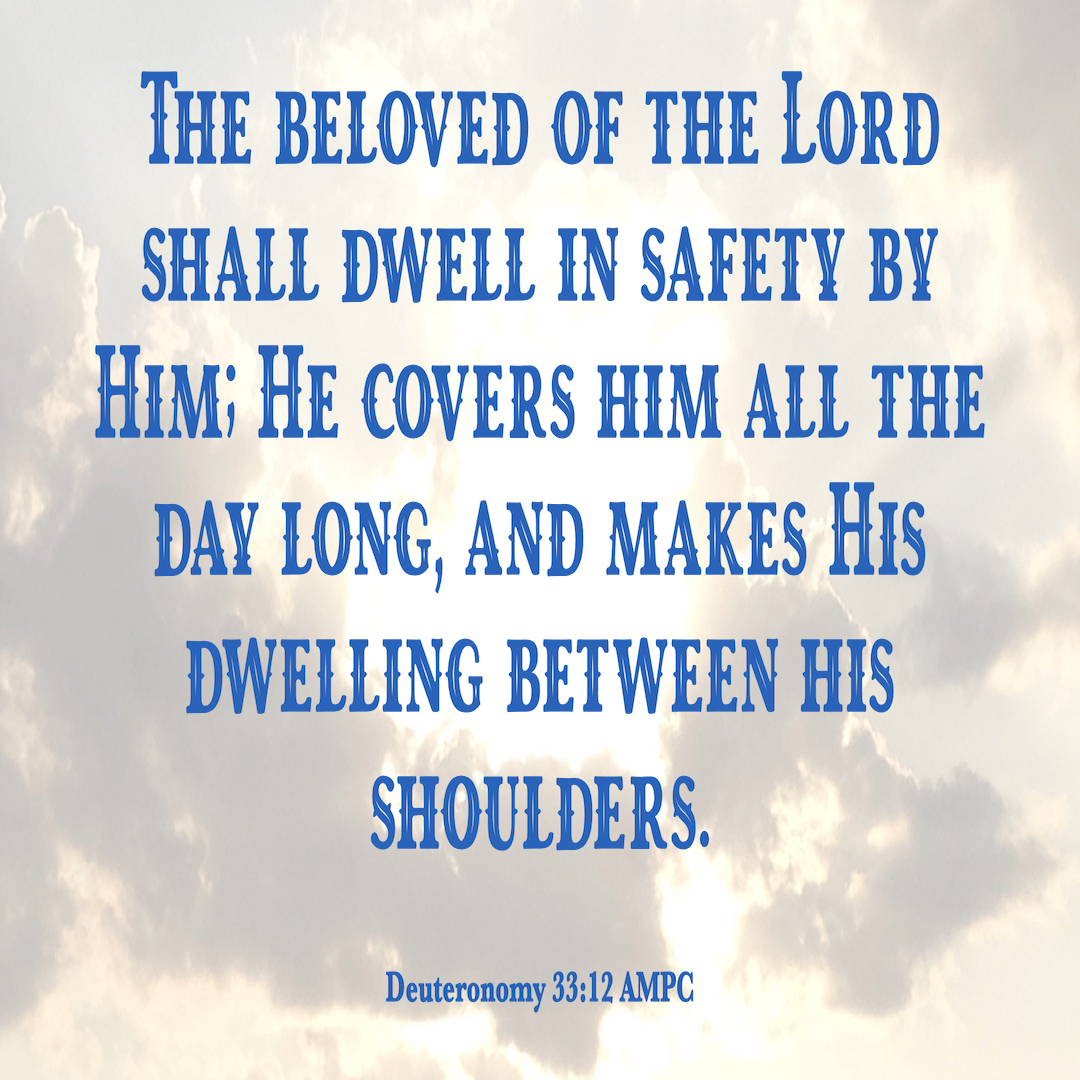
Our best response in troublesome times—when you feel like you are being shoved around—is to fall to your knees in reverence to the King of kings (v. 17)! The beloved of the Lord shall dwell in safety by Him; He covers him all the day long, and makes His dwelling between his shoulders (Deuteronomy 33:12 AMPC). 

If you’ve missed any of the other messages in our series looking at the royal psalms, you can catch up by clicking here. 

►► Would you please prayerfully consider supporting this ministry? My Patreon supporters get behind-the-scenes access to exclusive materials. ◀︎◀︎
Grief From God

Listen to the podcast of this post by clicking on the player below, and you can also subscribe on AppleSpotify, or Audible. 

The insidious thing about leprosy is that it kills the body’s pain receptors. Lepers may walk on a broken ankle, utterly mangling their foot. Or they may stick their hand in the first without realizing it.  

Pain is important to us—it tells us that something isn’t right and that we should seek help. Just as there is a danger if we ignore physical pain, there is a greater danger if we ignore spiritual pain. It’s a greater danger because eternal separation from God is far more deadly than mere physical death. 

Moses warned the Israelites of the danger of spiritual complacency, or we could call it spiritual leprosy. Check out the warning in Deuteronomy 8:10-14, 17. It didn’t take too long for this spiritual numbness to set it (see the fulfillment of Moses’ words in Judges 2:10-15). 

(Check out all of the Scriptures in this post by clicking here.) 

When we read in Judges 2, “The hand of the Lord was against them,” this is actually a very loving statement. Think about it: What would happen if God continued to give them success in their sinful endeavors? 

We can see this a little more clearly in Isaiah 63:7-10 where we see that God’s love is both redemptive and corrective. His fighting against His people caused them to recall God’s ways and wait on Him once again (63:11; 64:4-5). Notice the last question of verse 5, “How can we be saved?” 

It starts with remembering—that’s what Moses said at the beginning of this journey, and it’s also what Jesus says at the end (Revelation 2:5). 

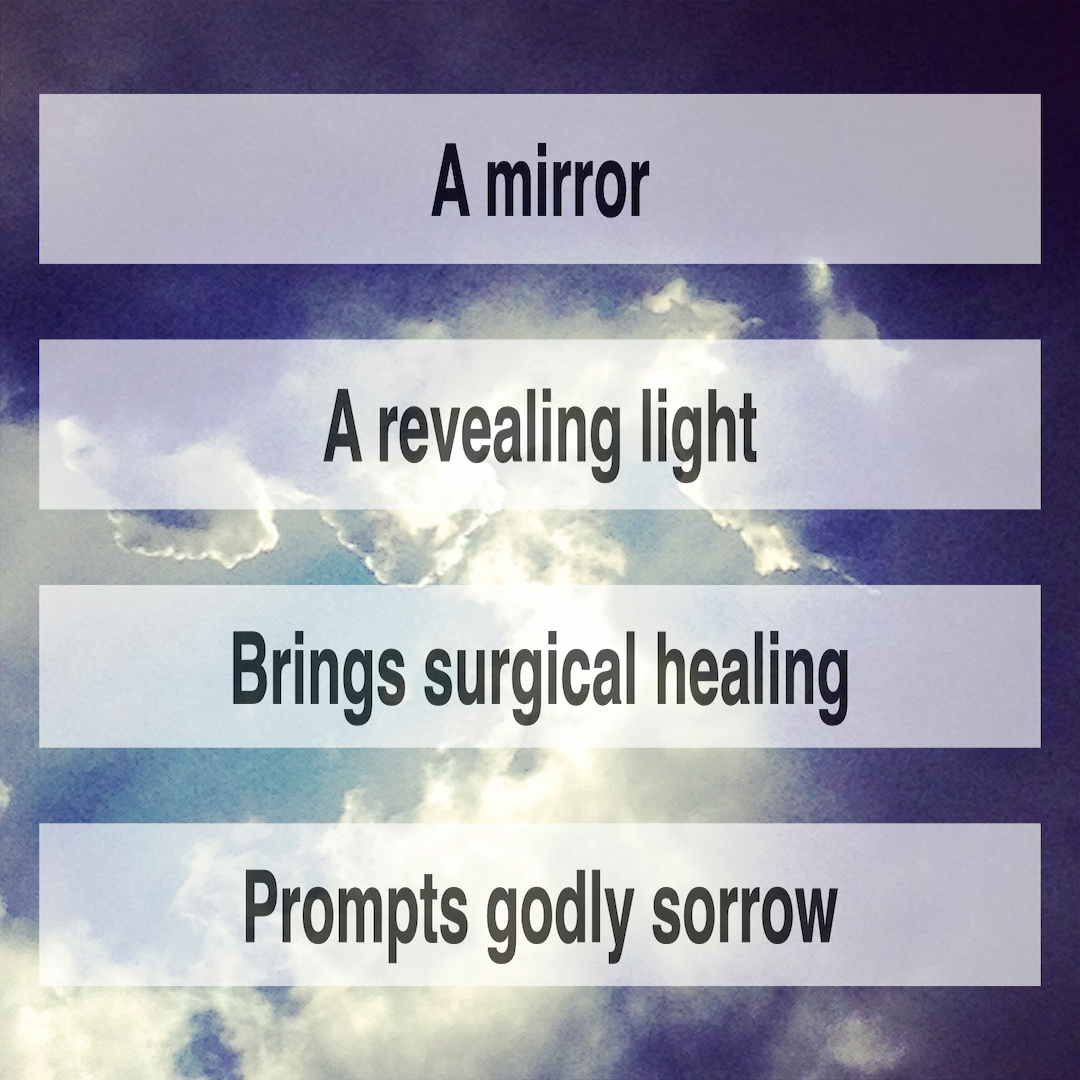
We have to meditate on God’s Word because it…

  • …is a mirror (James 1:22-25) 
  • …is a bright, revealing light (Psalm 90:8 AMPC) 
  • …surgically brings healing (Hebrews 4:12-13; Psalm 119:67, 70) 
  • …prompts godly sorrow without condemnation (Romans 8:1-2; 2 Corinthians 7:8-9) 

Only when this grief is turned to joy again can God use us to minister to others. We are able to comfort and redirect others because God has comforted and redirected us back onto His path. 

David became enamored with his spiritual success and forgot God’s laws. His sin caused God to turn and fight against him. In his deep grief, David cried out to God (Psalm 51:7-13). It was only after David repented that his grief was lifted and he was able to teach others about our loving God. 

Let’s not ignore our grief, but instead let’s ask God what He is trying to tell us through that grief. Remember, in our distress He is distressed and will carry us. But if our spiritual leprosy has taken us away from God, He will lovingly fight against us to get us to return to Him! 

You can check out all of the other messages in this series by clicking here. 

►► Would you please prayerfully consider supporting this ministry? My Patreon supporters get behind-the-scenes access to exclusive materials. ◀︎◀︎
Again And Again And Again

Listen to the podcast of this post by clicking on the player below, and you can also subscribe on AppleSpotify, or Audible. 

I don’t know if this ever happens to you, but I’ve lost count of the number of times that this happens to me. I open up my Bible and begin reading right where I left off the day before, and as I’m reading, my attention is riveted by words that seem to pop off the page! 

I look at them again and see that this passage contains highlights or underlining or notations from when I read here before. Yet I’m left scratching my head saying, “How did I miss this when I read this passage earlier?!” 

I know this is because I’m a different person now than I was the last time I was reading this passage. I’ve learned some things and hopefully I have grown in the process. Quite simply, the Holy Spirit knew I wasn’t ready earlier for the new concept that jumped off the page at me. 

The other day I was reading in the Book of Romans and I noticed something that Paul wrote—

     And, moreover, that the Gentiles might glorify God for His mercy. As it is written: “Therefore I will praise You among the Gentiles; I will sing the praises of Your name.” Again, it says, “Rejoice, you Gentiles, with His people.” And again, “Praise the Lord, all you Gentiles; let all the peoples extol Him.” And again, Isaiah says, “The Root of Jesse will spring up, One who will arise to rule over the nations; in Him the Gentiles will hope.” (Romans 15:9-12) 

Look at that wording: “As it is written … again it says … and again … and again….” Paul is telling us that God tells us the same thing in different ways, at different times, and through different voices. It’s the same message, but it resonates a little differently in each place. As God’s Word speaks to us again and again and again, we see the richness and fullness of the message. 

In v. 9, Paul quotes David in 2 Samuel 22:50 and Psalm 18:49. 

In v. 10, the quotation is from Moses in Deuteronomy 32:43.

In v. 11, an anonymous psalmist in Psalm 117:1 is quoted. 

And in v. 12, Paul quotes the prophet Isaiah in Isaiah 11:10. 

(Check out all of these Scriptures for yourself by clicking here.)

The Jews considered the Holy Scripture to be divided into three sections: The Law, the Prophets, and the Writings. Look again what Paul did: 

  • He quotes Moses from the Law 
  • He quotes Isaiah from the Prophets
  • He quotes David and the anonymous psalmist from the Writings

Jesus said, “Do not think that I came to destroy the Law or the Prophets. I did not come to destroy but to fulfill” (Matthew 5:17). And after His resurrection, as He walked and talked with a couple of disciples, He reminded them, “This is what I told you while I was still with you: Everything must be fulfilled that is written about me in the Law of Moses, the Prophets and the Psalms” (Luke 24:44). 

One of the reasons that the consistent message of the Scripture is repeated again and again and again is so that everyone will have a chance to hear it and believe it. 

There is such a beauty in this! I encourage you to take the time to look up the cross-references that many Study Bibles have put together. As you read the “it is written” statements in the Bible, I hope you will be encouraged as you see it throughout all the Bible again and again and again! 

Check out the book reviews I’ve shared on these study Bibles: 

I would also recommend 3 Bible studies for you to try and 2 more Bible studies for you to try. 

►► Would you please prayerfully consider supporting this ministry? My Patreon supporters get behind-the-scenes access to exclusive materials. ◀︎◀︎

Not Forsaken

Listen to the podcast of this post by clicking on the player below, and you can also subscribe on AppleSpotify, or Audible.

Although some people are afraid of this, the Bible makes it clear that God doesn’t forsake us. But the Bible also makes it equally as clear that we can forsake God. 

Listen to the words God spoke through Moses—

     And the Lord said to Moses, “Behold, you shall sleep with your fathers, and this people will rise up and play the harlot after the strange gods of the land where they go to be among them; and they will forsake Me and break My covenant which I have made with them. Then My anger will be kindled against them in that day, and I will forsake them and hide My face from them. And they shall be devoured, and many evils and troubles shall befall them, so that they will say in that day, ‘Have not these evils come upon us because our God is not among us?’ And I will surely hide My face in that day because of all the evil which they have done in turning to other gods.” (Deuteronomy 31:16-18 AMPC)

To forsake means to depart from someone or to neglect them. 

While we are following God, He will never forsake us. But when His people turn aside in fascination of sinful things, they forsake God by no longer following Him. We read this in the words of God’s people, “Our God is not among us.” 

When we don’t follow God, He still never forsakes us. However, God refuses to bless people who persist on doing their own thing. 

God’s blessing is reserved for those who continue to follow Him. In the language of the New Testament, God’s blessing only flows into the branches that continue to abide in Jesus (see John 15:1-8). 

When we forsake God, we cut ourselves off from His life flow. It is not the Vine who has left us, but we who have severed ourselves from the Vine. 

If God feels distant from you, be assured that He hasn’t forsaken you. Perhaps you could pray a couple of prayers that David prayed. Maybe a prayer asking for the Holy Spirit to reveal to you where you may have detached yourself from the Vine of God (Psalm 139:23-24). Or perhaps a prayer of forgiveness and assurance of God’s forgiveness and restoration (Psalm 51:1-10). 

Don’t give into the feelings of despair, but run back into the embrace of the One who loves you—the One who never leaves you nor forsakes you:

     Be strong, courageous, and firm; fear not nor be in terror before them, for it is the Lord your God Who goes with you; He will not fail you or forsake you. (Deuteronomy 31:6) 

►► Would you please prayerfully consider supporting this ministry? My Patreon supporters get behind-the-scenes access to exclusive materials. ◀︎◀︎

Firstfruits

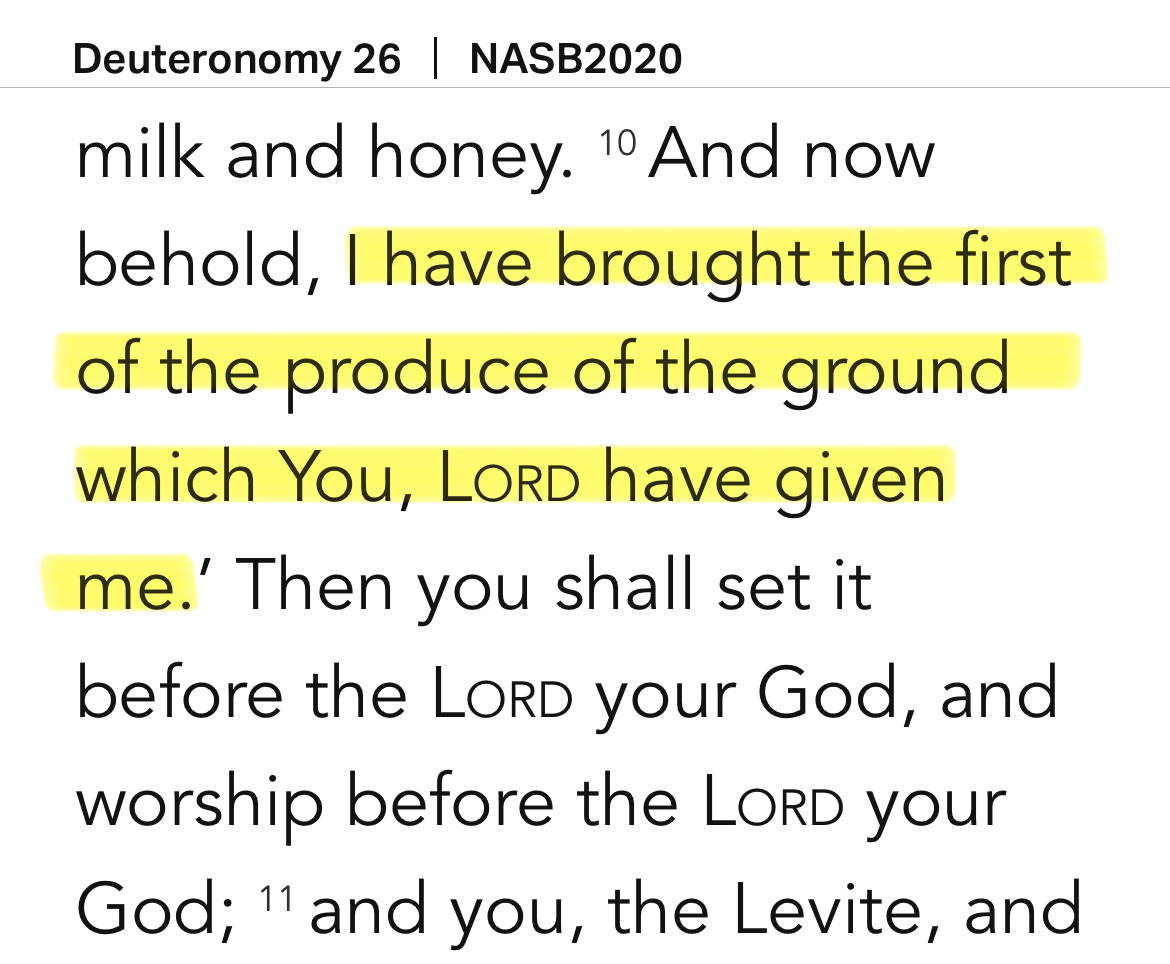
     You shall take some of the first of all the produce of the soil which you harvest from the land the Lord your God gives you and put it in a basket, and go to the place [the sanctuary] which the Lord your God has chosen as the abiding place for His Name [and His Presence]. And you shall go to the priest who is in office in those days, and say to him, “I give thanks this day to the Lord your God that I have come to the land which the Lord swore to our fathers to give us. … And now, behold, I bring the firstfruits of the ground which You, O Lord, have given me.” And you shall set it down before the Lord your God and worship before the Lord your God. (Deuteronomy 26:2-3, 10 AMPC)

When we give God the firstfruits, we acknowledge and celebrate His provision. When we wait to give God the leftovers, we signal that we believe we have to provide for ourselves. This isn’t just a one-and-done gift, but it should be ongoing

Some people live as if the Bible says, “God helps those who help themselves.” In actuality, the Bible teaches that God helps those who realize they cannot help themselves. Those who know God as the Provider of even their next breath are those who abide in Him and are fruitful and are provided for through Him. 

Who Is Your Provider?

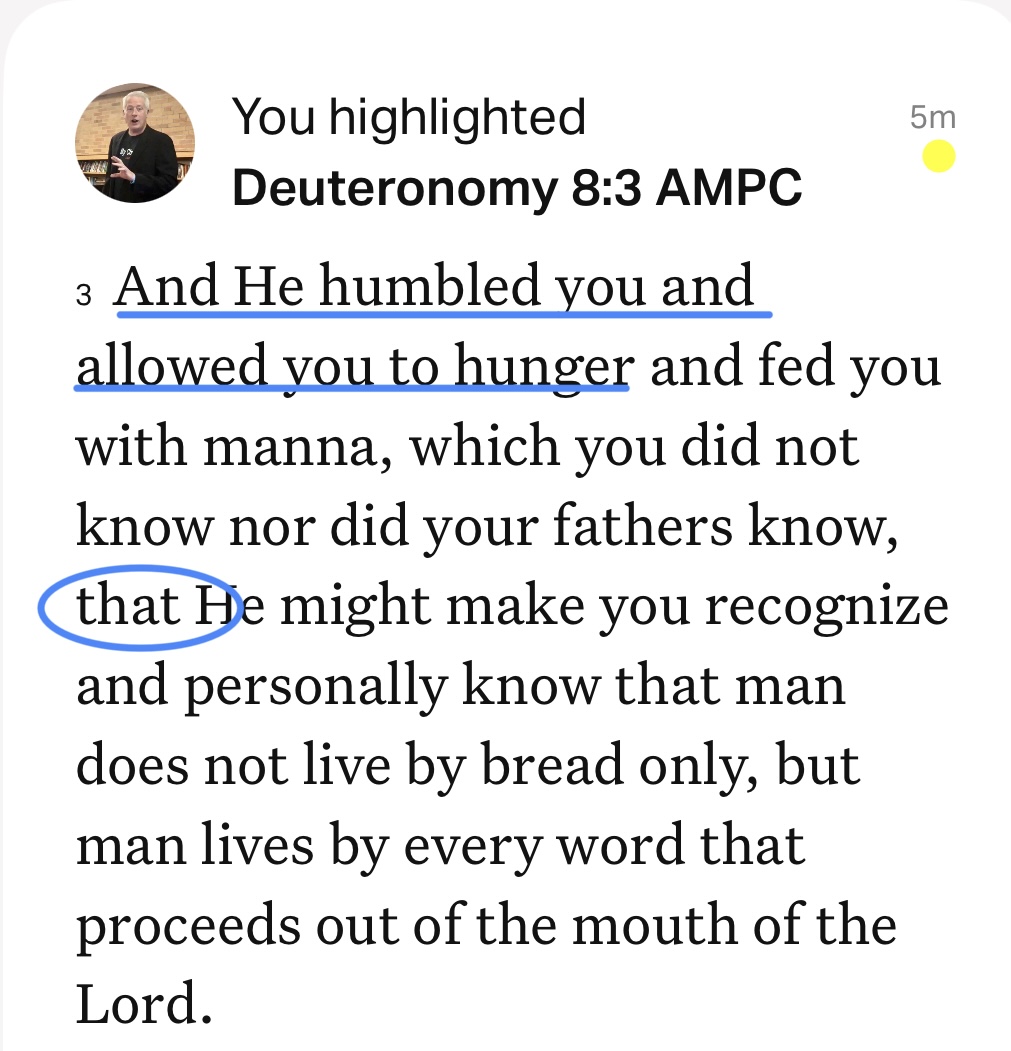
And [God] humbled you and allowed you to hunger and fed you with manna, which you did not know nor did your fathers know, that He might make you recognize and personally know that man does not live by bread only, but man lives by every word that proceeds out of the mouth of the Lord. … Know also in your [minds and] hearts that, as a man disciplines and instructs his son, so the Lord your God disciplines and instructs you. (Deuteronomy 8:3, 5 AMPC)

God allows us to be humbled and hungry so that we can learn that He is our only source. Proud people will not open their hearts and minds to learn because they see themselves as know-it-alls. 

Because He loves us, God humbles us. If we will yield, we can learn from God and grow in intimacy with Him. “Know also in your minds and hearts that, as a man disciplines and instructs his son, so the Lord your God disciplines and instructs you” (Deuteronomy 8:5). But the proud are deprived of all of these blessings. 

Verses 11-20 add a warning about forgetfulness. Success tends to make us think we have accomplished something in our own power, which stokes our pride. Twice we are told to “beware”…

  • …of forgetting that God is our Provider 
  • …of thinking we are our own provider 

Humility keeps us dependent on God and increasingly intimate with Him. Pride pushes God away. 

Check out my series of posts about forgetfulness called Fading Gratitude. 

I address the pride issue for leaders in a post called Don’t Putrefy Your Leadership, and in a video Healthy Leaders Ask For Help.

Our Gigantic Problems

Listen to the podcast of this post by clicking on the player below, and you can also subscribe on AppleSpotify, or Audible. 

Listen to these words of instruction Moses gave the Israelites— 

     A people great and tall, the sons of the Anakim, whom you know and of whom you have heard it said, “Who can stand before the sons of Anak?” Know therefore this day that the Lord your God is He Who goes over before you as a devouring fire. He will destroy them and bring them down before you; so you shall dispossess them and make them perish quickly, as the Lord has promised you. (Deuteronomy 9:2-3 AMPC) 

With those encouraging words, Moses readied the Israelites to go into the Promised Land for a second time. The first time ended disastrously, as the people ran away in fear of these giants. 

What gigantic problems might you be facing? Maybe you’re facing them again and again? 

  • that addiction that’s always there? 
  • that temptation that always seems to pull you down? 
  • that depression that turns your whole world dark? 
  • that satanic attack at the most inopportune times? 
  • that relationship that seems to wreck every family get-together? 
  • that monstrous financial debt that overshadows everything? 

There’s no doubt about it: Those problems are gigantic! 

It feels like they’re crushing you. It feels like they’re undefeatable. 

That’s because they are. 

Let me be more clear: YOU cannot defeat them on your own. 

But listen again to what God said through Moses, “I will defeat them, I will subdue them, so that you can finish them off.” 

James says it this way, “Submit yourselves, then, to God. Resist the devil, and he will flee from you” (James 4:7). 

The devil isn’t scared of you. The gigantic problems looming over you don’t tremble at your name. But every knee must bow to the King of kings. Every problem must crumble and give way before the Lord of lords! 

Don’t try to tackle these giants on your own. Instead, submit to God. What plan does He have for this battle? What has He already spoken to you in the Scripture that will give you assurance of His victory? 

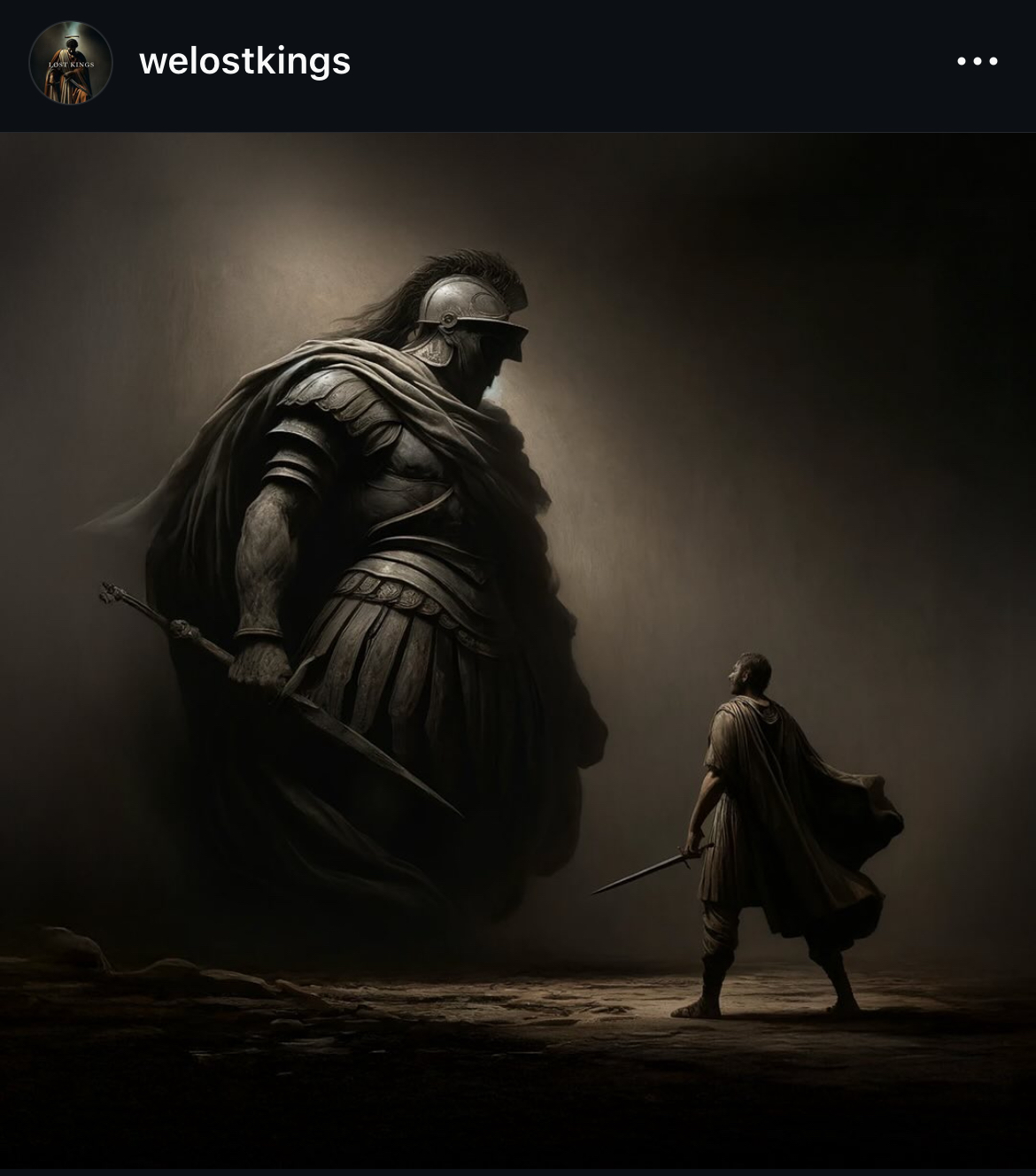
I love this photo from We Lost Kings. The caption says—

“To defeat the obstacles before us requires more than mere strength—it demands a deliberate strategy. A man must approach his trials with discernment, understanding that raw power alone rarely conquers what lies ahead. Strategy calls us not to rush headlong, but to see clearly, to step wisely, and to strike with purpose. Every obstacle is a lesson in mastery, and every victory a testimony to the power of wisdom applied.” 

It’s not your muscle or smarts or sheer determination that will overcome your gigantic problems. But your invincible, undefeated, and undefeatable God will knock every giant down to size, setting you up for the inevitable victory. 

Kneel before God. Listen to His voice. Feel His power. Then—and only then—can you step forward in assured victory! 

►► Would you please prayerfully consider supporting this ministry? My Patreon supporters get behind-the-scenes access to exclusive materials. ◀︎◀︎
How Long?

Listen to the podcast of this post by clicking on the player below, and you can also subscribe on AppleSpotify, or Audible. 

Last week we saw that if we make prayer our priority, we can expect that our eyes will be opened to the answers that God has for us. Hagar and Eliezer seemed to get pretty quick answers. Nehemiah had to wait four months for the answer to his prayer. 

We saw in Psalm 5 that David laid his requests before God first thing in the morning, and then he went out of his prayer closet in expectation of an answer (Psalm 5:1-3). But how long did he wait? 

(Check out all of the Scriptures in this post by clicking here.) 

Psalm 6 may not happen historically right after Psalm 5, but listen to David’s heart, “Have mercy on me, LORD, for I am faint; heal me, LORD, for my bones are in agony. My soul is in deep anguish. How long, LORD, how long? (Psalm 6:2-3). And then again in Psalm 13:1-3, David asks, “How long?” four times in the first two verses! 

When we read the training Jesus gave His disciples about prayer in Luke 11:9-10, we see how He implores them (and us) to keep on praying. It becomes even more emphatic in the Amplified Bible—

So I say to you, ask and keep on asking and it shall be given you; seek and keep on seeking and you shall find; knock and keep on knocking and the door shall be opened to you. For everyone who asks and keeps on asking receives; and he who seeks and keeps on seeking finds; and to him who knocks and keeps on knocking, the door shall be opened. 

But once again we have to ask: how long are we to continue asking, seeking, and knocking? This is what Job asked in the middle of his trial (Job 6:8, 11-13). 

Charles Spurgeon said, “God has measured the crosses of all His children: Israel in Egypt, 430 years; Joseph in prison, 3 years; Judah in Babylon, 70 years.” That means that God knows what He is doing, God knows His timing for answering, and that our part is to simply to continue to ask, seek, and knock as we throw our total trust on Him! 

I remember my affliction and my wandering, the bitterness and the gall. I well remember them, and my soul is downcast within me. Yet this I call to mind and therefore I have hope. Because of the LORD’s great love we are not consumed, for His compassions never fail. They are new every morning; great is Your faithfulness. I say to myself, “The LORD is my portion; therefore I will wait for Him.” (Lamentations 3:19-24) 

During these times of waiting, we need to keep recalling what we know:

  1. God’s love is unfathomable—Romans 5:5, 8:38-39 
  2. God’s timing is perfect—Deuteronomy 32:4 
  3. God’s method is flawless—Romans 8:28 
  4. God’s gifts are good—Luke 11:11-13, 12:32  

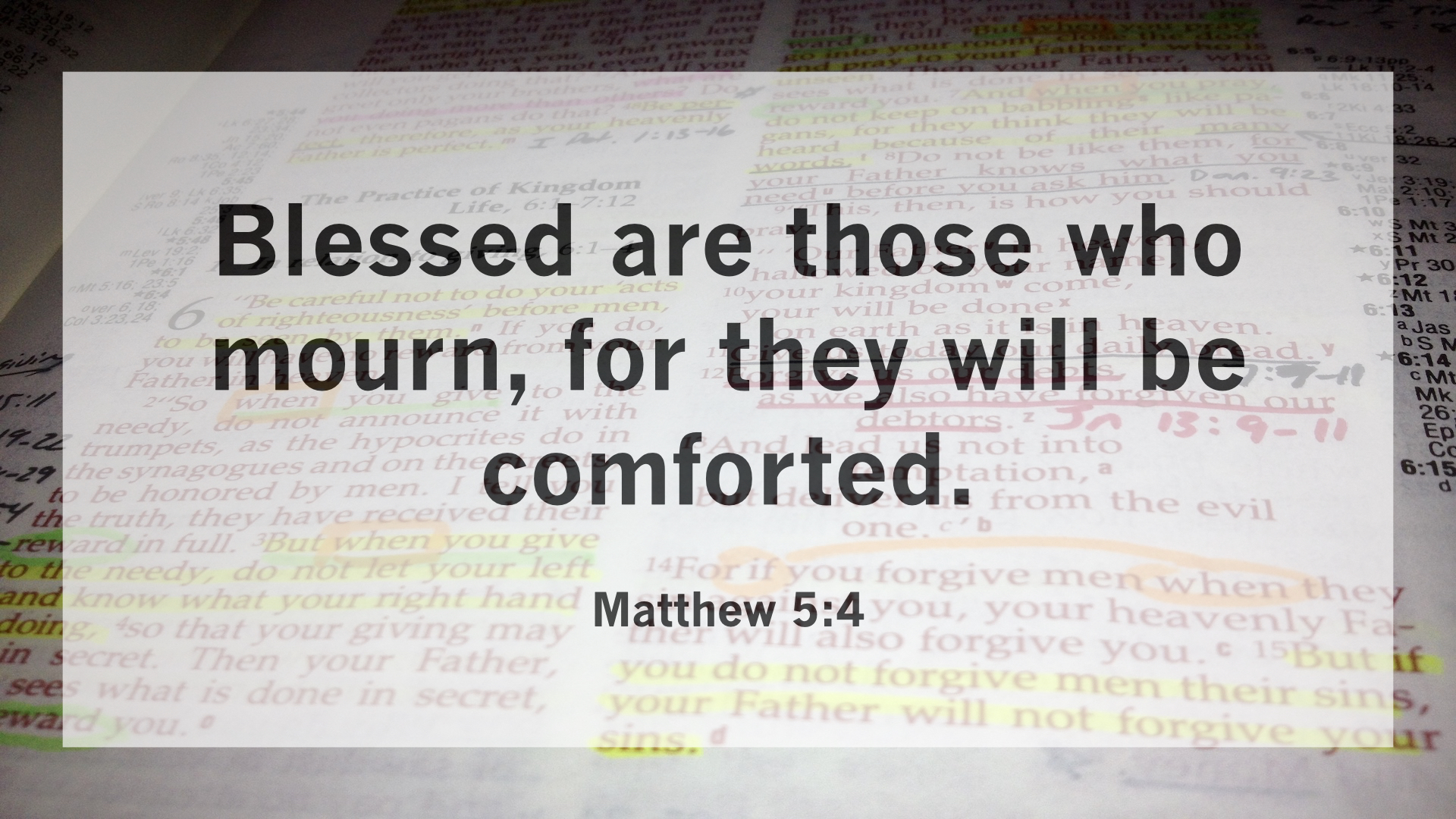
In Psalms 6 & 13, David doesn’t record any answers from God, but listen to this assurance from Jesus, “Blessed are those who mourn, for they will be comforted” (Matthew 5:4). 

Jesus doesn’t tell us how or when God will bring us comfort, but He does assure us that we will be comforted! 

In a couple of the examples from David, you can see this assurance as he continues his prayers (Psalm 6:2-4, 8-10; 13:1-6). Paul also experienced this confidence (2 Corinthians 12:7-10), and so did Jesus (Matthew 26:38-39, 50-54). 

The writer of Hebrews assures us that Jesus was heard in His, “How long?” cries, and therefore He knows exactly how to intercede for us today as we lift up the same cry (Hebrews 5:7-8; 2:10, 14, 17-18)! 

How long? Quite simply stated: Until God answers or until He lifts our burden. 

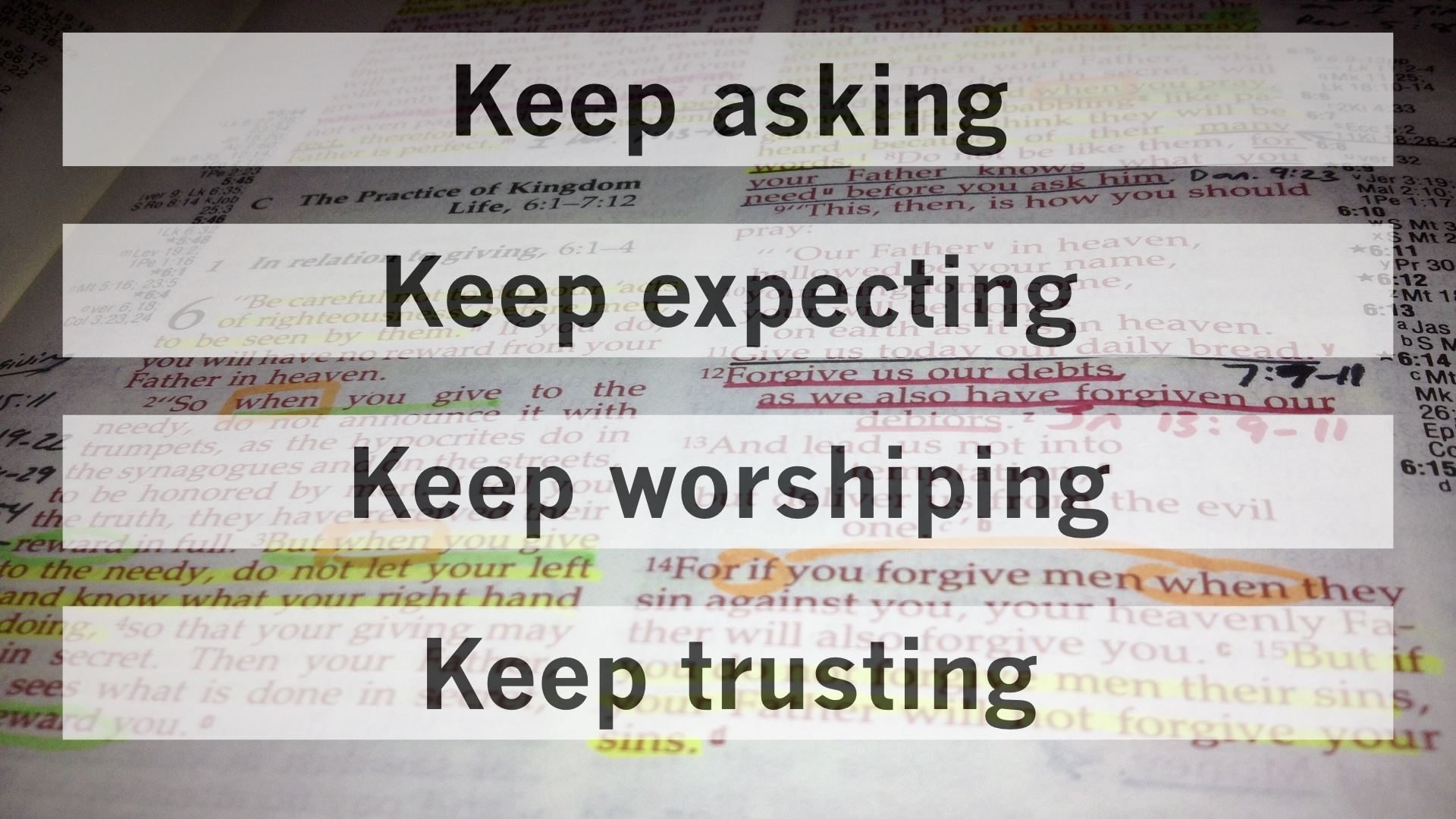
In the meantime, the examples in Scripture and the assurance of Christ’s intercession for us us encourages us to…

  1. Keep asking with full confidence that God hears you 
  2. Keep expecting an answer 
  3. Keep worshiping God for Who He is 
  4. Keep trusting that your Heavenly Father wants to give you the very best!  

If you have missed any of the other messages in our prayer series, you can find them all here. 

►► Would you please prayerfully consider supporting this ministry? My Patreon supporters get behind-the-scenes access to exclusive materials. ◀︎◀︎
Empowered For Obedience

Listen to the podcast of this post by clicking on the player below, and you can also subscribe on AppleSpotify, or Audible. 

In the 40 days between His resurrection and His ascension, we read that Jesus was with His disciples “giving instructions through the Holy Spirit” (Acts 1:2). 

I think this word “instructions” in the NIV is too soft. The other translations say things like:

  • commandments (NKJV) 
  • orders (NASB & NET) 
  • instructed and commanded (AMPC) 

The Greek word Luke uses in Acts 1:2 is entellomai and it is a word that carries weight. Throughout the New Testament this word is used to identify…

  • …the words of God (Matthew 4:6, 15:4; Luke 4:10; Acts 13:47; Hebrews 9:20) 
  • …the words of Moses (Matthew 19:7; Mark 10:3; John 8:5) 
  • …the words of Jesus (Matthew 17:9, 28:20; Mark 11:6; John 14:31; 15:14, 17; Acts 1:2, 13:47) 
  • …the words of recognized leaders (Mark 13:34; Hebrews 11:22) 

(Check out all of the above Scriptures by clicking here.)

In the Septuagint (the Greek translation of the Old Testament) this word is used seven times. Five of these times link together the words “command” and “covenant” (Deuteronomy 4:13; Joshua 23:16; Judges 2:20; Psalm 111:9–10; Jeremiah 11:3–4). The other two times express God’s strong promise-keeping power that is awe-inspiring (Psalm 90:11, 91:11). 

In other words, these aren’t just any words, but they carry an awesome authority with them. These are binding commands. They are not merely wise counsel or suggestions for godly living. They are indispensable to the Christian life. 

Luke points out that Jesus gave these commands “through the Holy Spirit” because it is only through the Holy Spirit that you and I can understand them, apply them, and be empowered to obey them. 

Jesus uses the same word entellomai in the Great Commission (Matthew 28:20) as well as in Acts 1:2. Clearly, the Scripture is telling us that we are powerless to understand and powerless to obey without the Holy Spirit’s daily empowerment. Jesus would never give us commands that we were unable to carry out, which is why He gives us instructions through the Spirit, and then the Spirit gives us the power to joyfully obey those commands. 

Don’t ever think that you are on your own in trying to figure out what Jesus said, and how you are going to live it out.

I discuss the role of the Holy Spirit in a Christian’s life in much greater detail in my series called We Are: Pentecostal. 

►► Would you please prayerfully consider supporting this ministry? My Patreon supporters get behind-the-scenes access to exclusive materials. ◀︎◀︎

An Eye For An Eye

Listen to the podcast of this post by clicking on the player below, and you can also subscribe on AppleSpotify, or Audible. 

We have to be very attentive when we hear anyone say something that they claim is a word from God. The first question we need to ask is, “Is that in the Bible?” If it is, then the next question is, “Is that statement being used in its proper context—does it conform with the whole counsel of God’s Word?” 

So here is statement #14 in our series—An eye for an eye, and a tooth for a tooth. Is that in the Bible? Yes.  

This first shows up in Exodus 21:24, and it is a part of the legal code God gave through Moses (Exodus 21:1). This code was entrusted to capable men (i.e. judges) in Exodus 18:19-22, 25. 

(Check out all of the Scriptures I reference in this post here.) 

This has been referred to as “the law of exact retribution.” Later on the Romans would name it lex talionis—the law of the tooth. This was to prevent one-upmanship or escalating retaliation, and it also applied to false witnesses who were trying to get someone else in trouble (Deuteronomy 19:15-21). 

By the time of Jesus, this legal maxim was so well known that when Jesus quoted it to His audience, everyone knew what it meant (Matthew 5:38). 

One of the most innate responses that we humans have to threats or to an attack is fight-or-flight. 

In this case, flight would be sweeping it under the run or pretending it didn’t happen. But it did happen, and there is a sense of justice in us that wants to see retribution. If this offense isn’t acknowledged and dealt with appropriately, the desire for retribution will allow unforgiveness to fester. This shows up in all sort of negative ways—physically and emotionally—and often there is a breaking point where the injured party lashes out. 

Fight would be taking the law into our own hands. I want everyone to know that I was wronged by you, and I want you to suffer more than you made me suffer. But the first time this law is given, God calls for precise compensation (Exodus 21:22-25). 

God’s means for carrying our the lex talionis today is exactly the same—a legal code administered by trained judges (Romans 13:1-4). 

This is the law of the land—the natural law—but Jesus calls on us to respond supernaturally. Not to be the judge or jury, but to remember that God perfectly judges and vindicates (Luke 8:17; Deuteronomy 32:35). 

Jesus continually calls us forego the natural reaction for the supernatural response. Notice the repeated pattern of, “You have heard that it was said” and then, “But I tell you…” in Matthew 5:21-22, 27-28, 31-32, 33-37, 43-44 and specifically vv. 38-42. 

If our eyes are on the one who injured us, our eyes are off of the only One who can vindicate and heal us (Romans 12:17-21). 

Natural people merely react out of innate instinct. Supernatural people are able to respond with Christlike love. 

Don’t give in to the merely natural reaction, but submit to the Holy Spirit who can help you respond supernaturally. 

Check out all of the other topics we have covered in our “Is that in the Bible?” series. 

►► Would you please prayerfully consider supporting this ministry? My Patreon supporters get behind-the-scenes access to exclusive materials. ◀︎◀︎