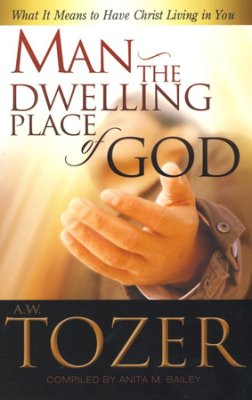
11 Quotes From “Man—The Dwelling Place Of God” by A.W. Tozer

A.W. Tozer’s 50-year-old publication Man—The Dwelling Place Of God still rings with timely truth for today. You can check out my full book review by clicking here.

“I long ago decided that I would rather know the truth than be happy in ignorance. If I cannot have both truth and happiness, give me truth. We’ll have a long time to be happy in heaven.”

“Shakespeare may be enjoyed without penitence; we may understand Plato without believing a word he says; but penitence and humility along with faith and obedience are necessary to a right understanding of the Scriptures.”

“Faith and morals are two sides of the same coin. Indeed the very essence of faith is moral. Any professed faith in Christ as personal Savior that does not bring the life under plenary obedience to Christ as Lord is inadequate and must betray its victim at the last. The man that believes will obey; failure to obey is convincing proof that there is not true faith present.”

“There are two kinds of love: the love of feeling and the love of willing. The one lies in the emotions, the other in the will. Over the one we may have little control. It comes and goes, rises and falls, flares up and disappears as it chooses, and changes from hot to warm to cool and back to warm again very much as does the weather. Such love was not in the mind of Christ when He told His people to love God and each other. … The love the Bible enjoins is not the love of feeling; it is the love of willing, the willed tendency of the heart.

“Let no one interpret the Scriptures for you in such a way as to rule out the Father’s gift of the Spirit. Every man is as full of the Spirit as he wants to be. Make your heart a vacuum and the Spirit will rush in to fill it.”

“I am among those who believe that our Western civilization is on its way to perishing. It has many commendable qualities, most of which it has borrowed from the Christian ethic, but it lacks the element of moral wisdom that would give it permanence. Future historians will record that we of the twentieth century had intelligence enough to create a great civilization but not the moral wisdom to preserve it.”

“The church today is suffering from the secularization of the sacred. By accepting the world’s values, thinking its thoughts and adopting its ways we have dimmed the glory that shines overhead. We have not been able to bring earth to the judgment of heaven so we have brought heaven to the judgment of the earth. Pity us, Lord, for we know not what we do!”

“David Brainerd once compared a man without the power of the Spirit trying to do spiritual work to a workman without fingers attempting to do manual labor. The figure is striking but it does not overstate the facts. The Holy Spirit is not a luxury meant to make deluxe Christians, as an illuminated frontispiece and a leather binding make a deluxe book. The Spirit is an imperative necessity.”

“I do not believe that it is the will of God that we should seek to be happy, but rather that we should seek to be holy and useful. The holy man will be the useful man and he’s likely to be a happy man too; but if he seeks happiness and forgets holiness and usefulness, he’s a carnal man.”

“That religion may be very precious to some persons is admitted, but never important enough to cause division or risk hurting anyone’s feelings. In all our discussions there must never be any trace of intolerance; but we obviously forget that the most fervent devotees of tolerance are invariably intolerant of everyone who speaks about God with certainty. And there must be no bigotry, which is the name given to spiritual assurance by those who do not enjoy it.”

“The truly spiritual man is indeed something of an oddity. He lives not for himself but to promote the interests of Another. He seeks to persuade people to give all to his Lord and asks no portion or share for himself. He delights not to be honored but to see his Savior glorified in the eyes of men. His joy is to see his Lord promoted and himself neglected.”

Viewing Abortion As Slavery

In our American history, we have many valuable lessons. Some of these lessons come from sad chapters that now we have the benefit of hindsight to see the error of our ways. But with this hindsight, there should come insight into the issues which currently face us.

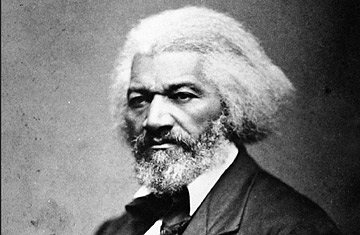
Slavery was an abhorrent evil that plagued our country. Thankfully there were strong men who forcefully and persuasively spoke out against the horrors of slavery; men like Frederick Douglass. His address “What To The Slave Is The Fourth Of July?” is a masterpiece of statesmanship!

Those under the oppression of slavery had no choice. They weren’t allowed speak for themselves, so they depended upon free men and women to speak for them.

Much the same today, babies who are aborted in the womb have no choice, no voice. They cannot speak for themselves, so it is up to us to speak out for them against this abhorrent evil that plagues our country.

I would ask you to consider some of the words of Frederick Douglass where the terms for slavery are replaced with the terms for abortion.

“Standing with God and the crushed and bleeding [aborted baby] on this occasion, I will, in the name of humanity which is outraged, in the name of liberty which is fettered, in the name of the Constitution and the Bible, which are disregarded and trampled upon, dare to call in question and to denounce, with all the emphasis I can command, everything that serves to perpetuate [abortion]—the great sin and shame of America! … 

“The feeling of the nation must be quickened; the conscience of the nation must be roused; the propriety of the nation must be startled; the hypocrisy of the nation must be exposed; and its crimes against God and man must be proclaimed and denounced. … 

“Let it be thundered around the world, that, in tyrant-killing, king-hating, people-loving, democratic, Christian America, the seats of justice are filled with judges, who hold their offices under an open and palpable bribe, and are bound, in deciding in the case of [an unborn baby’s] liberty, hear only [the abortionist]! … 

“A religion which favors [‘choice’] against the [unborn baby]; which exalts the proud above the humble; which divides mankind into two classes, [pro-choice] and [pro-life]; which says to the [baby in the womb, you don’t matter]; and to the [abortionist, continue on]; it is a religion which may be professed and enjoyed by all the robbers and [killers] of mankind; it makes God a respecter of persons, denies His fatherhood of [all human life], and tramples in the dust the great truth of the brotherhood of man. … 

“The American church is guilty, when viewed in connection with what it is doing to uphold [abortion]; but it is superlatively guilty when viewed in connection with its ability to abolish [abortion]. The sin of which it is guilty is one of omission as well as of commission. … Let the religious press, the pulpit, the Sunday school, the conference meeting, the great ecclesiastical, missionary, Bible and tract associations of the land array their immense powers against [abortion]; and the whole system of crime and blood would be scattered to the winds….

“O! had I the ability, and could I reach the nation’s ear, I would, to-day, pour out a fiery stream of biting ridicule, blasting reproach, withering sarcasm, and stern rebuke. For it is not light that is needed, but fire; it is not the gentle shower, but thunder. We need the storm, the whirlwind, and the earthquake. The feeling of the nation must be quickened; the conscience of the nation must be roused; the propriety of the nation must be startled; the hypocrisy of the nation must be exposed; and its crimes against God and man must be proclaimed and denounced.”

I ❤️ My Church Family

We have so much fun together!

This slideshow requires JavaScript.

If you live near Cedar Springs and don’t have a church family, I would love for you to join us! Click here to get all the details, or leave me a comment if you have questions.

10 More Quotes From “When A Nation Forgets God”

Erwin Lutzer shares valuable history lessons in his book When A Nation Forgets God. In this book, he reveals some scary parallels between Nazi Germany and the current trends in the United States. To help bolster his case, Dr. Lutzer shares many historical quotes. Here are a few of them.

“The gas chambers of Auschwitz were the ultimate consequence of the theory that man is nothing but the product of heredity and environment—or as the Nazis like to say, ‘Of blood and soil.’ I’m absolutely convinced that the gas chambers of Auschwitz, Treblinka, and Maidanek were ultimately prepared not in some ministry or other of Berlin, but rather at the desks and in the lecture halls of nihilistic scientists and philosophers.” —Victor Frankl, psychologist and Holocaust survivor

“It would be misleading to give the impression that the persecution of Protestants and Catholics by the Nazi state tore the German people asunder or even greatly aroused the vast majority of them. It did not. A people who had so lightly given up their political and cultural and economic freedoms were not, except for a relatively few, going to die or even risk imprisonment to preserve freedom of worship.” —William Shirer, in The Rise And Fall Of The Third Reich

“Any society that would give up a little liberty to gain a little security will deserve neither and lose both.” —Benjamin Franklin

“We all declare for liberty; but in using the same words we do not all mean the same thing. With some the word liberty may mean for each man to do as he pleases with himself, and the product of his labor; while with others the same word may mean for some men to do as they please with other men, and the product of other men’s labor. Here are two, not only different, but incompatible things, called by the same name—liberty. And it follows that each of the things is, by the respective parties called by two different and incompatible names—liberty and tyranny.” —Abraham Lincoln

“This generation is not accidental; each step logically follows from what has preceded: the loss of the Bible leads to the loss of God, for in the Bible God is most clearly revealed; the loss of God leaves man at the naked mercy of his fellows, where might makes right.” —John Warwick Montgomery

“How fortunate for governments that the people they administer don’t think!” —Adolf Hitler

“Create a critical mass of people who cannot discern meaning and truth from nonsense, and you will have a society ready to fall for the first charismatic leader to come along.” —Richard Terrell

“The desire to believe something is much more persuasive than rational argument.” —Winston Churchill

“The magnitude of a lie always contains a certain factor of credibility, since the great masses of the people in the very bottom of their hearts tend to be corrupted rather than consciously and purposely evil, and that, therefore, in view of the primitive simplicity of their minds, they more easily fall a victim to a big lie than to a little one, since they themselves lie in little things, but would be ashamed of lies that were too big.” —Adolf Hitler, in Mein Kampf

“There is no problem in the wider culture that you cannot see in spades in the Christian Church. The rot is in us, and not simply out there. And Christians are making a great mistake by turning everything into culture wars. It’s a much deeper crisis.” —Os Guinness

You can read my review of When A Nation Forgets God by clicking here. And I also shared some quotes from Dr. Lutzer, which are posted here.

10 Quotes From “When A Nation Forgets God”

Dr. Erwin Lutzer discovers some scary parallels in the culture that gave rise to the Nazis and what is happening in America today. Please check out this book! You can read my review by clicking here.

“The role of the church [in Nazi-controlled Germany] was minimized by privatizing faith and instituting laws about what could or could not be said from a pulpit.”

“The American Civil Liberties Union (ACLU) believes that God must be separated not just from government, but from every sphere of American life. Religion—particularly Christianity—must be ousted from government, from law, education, and the workplace.

“Thus with the so-called public square free of any hint of religious values, the vacuum is then filled with secular values: the cheapness of human life (abortion and euthanasia), the promotion of all forms of immorality (including homosexual marriages), and the sexualization of schoolchildren (often with pornography and the ridicule of traditional values).”

“As Americans we must keep in mind that the First Amendment was not intended to mean that atheists and agnostics have veto power over all those who believe in God.”

“Of course the United States is not Germany, and, as we have observed, parallels between us and the Nazi era can easily be overdrawn. But there is this abiding lesson: satan was right when he said, ‘All that and man has he will give for his life’ (Job 2:4). Survival is a powerful drive within us all, and most of us are willing to compromise our values in order to live. And if the government can guarantee our financial future, we support that government even if we intuitively suspect we are being led down a dangerous path.” 

“Moral relativists who believe that laws are nothing more than the result of social conditioning, subject to the whim of leaders and nations, would have to agree with Goehring, Hitler’s designated successor, when at Nuremberg he insisted, ‘This court has no jurisdiction over me, I am German!’ By what laws then, should the Nazis be tried? And what would be the basis of such laws? At Nuremberg, Robert H. Jackson, chief counsel of the United States, argued that there was ‘a law about the law’ that stood in judgment of all men in all countries and societies.”

“We are not required to win our political battles; we are expected to show our commitment even in the face of threats and sanctions. We must not permit the lawmakers or the courts of America to discourage us from doing what we must: representing Christ in our personal and corporate witness. As our freedoms are curtailed, our witness becomes more focused, more challenging. Let us be obedient to a higher law, the law as given us by the Supreme Court of the Universe.”

“When Hitler starved children, he called it putting them on a ‘low-calorie diet.’ And the extermination of Jews was called ‘cleansing the land.’ Euthanasia was referred to as ‘the best of modern therapy.’ Children were put to death in ‘Children’s Specialty Centers.’ … Sanitized terms were used to camouflage unspeakable crimes. Planned massacres were spoken of in clinical terms to mislead the naïve and to assuage the conscience of the perpetrators.”

“Important though the right leaders might be, we must always remember that God is neither Republican nor Democrat. When the Cross is wrapped in the flag of a political party, it is always distorted or diminished.”

“I believe that the spiritual climate of America will never be changed unless we have a revival of what we used to call ‘the laymen.’ That is, we need ordinary people living authentically for Christ in their vocations, among their neighbors, and in positions of influence.”

I will be sharing some more quotes from When A Nation Forgets God soon. Stay tuned, or better yet, subscribe to my blog so you will be notified as soon as these new quotes are posted.

Good Religion Must Be Practical

“Religion which has no practical impact on our daily lives quickly becomes a vague, abstract notion that amounts to nothing. Yet many have nothing more than an empty profession to prove they are Christians. …

“A good Christian but a nagging wife, a godly man but a negligent father—these are contradictions that cannot be reconciled. The man who does not walk uprightly in his own house is nothing more than a hypocrite at church. If you are not a Christian in your shop, you are not a Christian in your closet—even though you may pray there.” —William Gurnall, in The Christian In Complete Armor

More quotes from this book can be found here and here.

8 Quotes From “Born After Midnight”

A.W. Tozer’s writings are nearly five decades old, but they still ring with prophetic truth for this generation. Check out my book review of Born After Midnight by clicking here. Below are a few of the quotes from this book.

“It may be said without qualification that every man is as holy and as full of the Spirit as he wants to be. He may not be as full as he wishes he were, but he is most certainly as full as he wants to be. … The problem is not to persuade God to fill us, but to want God sufficiently to permit Him to do so.”

“In of book of Acts, faith was for each believer a beginning, not an end; it was a journey, not a bed in which to lie while waiting for the day of our Lord’s triumph. Believing was not a once-done act; it was more than an act, it was an attitude of heart and mind that inspired and enabled the believer to take up his cross and follow the Lamb whithersoever He went.”

“I am afraid we modern Christians are long on talk and short on conduct. … Our Lord and His apostles were long on deeds. The Gospels depict a Man walking in power, ‘who went about doing good, and healing all that were oppressed of the devil; for God was with Him’ (Acts 10:38). The moral relation between words and deeds appears quite plainly in the life and teachings of Christ; He did before He spoke, and all the doing gave validity to the speaking.”

“We settle for words in religion because deeds are too costly. It is easier to pray, ‘Lord, help me to carry my cross daily’ than to pick up the cross and carry it.”

“‘Whoever will be great among you, let him be your minister,’ said our Lord (Matthew 20:26), and from these words, we may properly conclude (and the context strongly supports the conclusion) that there is nothing wrong with the desire to be great provided (1) we seek the right kind of greatness; (2) we allow God to decide what is greatness; (3) we are willing to pay the full price that greatness demands; and (4) we are content to wait for the judgment of God to settle the whole matter of who is great at last.”

“God may allow his servant to succeed when He has disciplined him to a point where he does not need to succeed to be happy. The man who is elated by success and cast down by failure is still a carnal man. … God will allow His servant to succeed when he has learned that success does not make him dearer to God nor more valuable in the total scheme of things.”

“While we cannot determine circumstances, we can determine our reaction to them. And there is where the battle is to be fought and the victory won.”

“To ‘accept the universe’ does not mean that we are to accept evil conditions as inevitable and make no effort to improve them. So to teach would be to cancel the plain teaching of the Scriptures on that point. Where a situation is contrary to the will of God, and there are clear promises concerning it in the Scriptures, it is our privilege and obligation to pray and labor to bring about change.”

More quotes from this book are coming soon…

Born After Midnight (book review)

A.W. Tozer spoke and wrote with a prophet’s voice. Though many of his books are nearly a half-century old, they ring with a timely message to which the church today must take heed. Tozer’s Born After Midnight is one of his most hard-hitting, but needed messages.

Tozer notes that many revivals in church history were born after midnight. Not that there is anything super-spiritual that takes place in the wee hours of the morning, but really this is a call to perseverance. Tozer spoke out strongly against cushy Christianity, against those who thought becoming a Christian was their key to an easy life, or those who expected God to work for them.

Those Christians who are ready to roll up their sleeves and go to work for Christ, Tozer preached, were those who were more in line with the very first Christians of the Bible. Tozer reminds us that “taking up a cross” to follow Jesus isn’t popular, nor is it a road to accolades from the world. But those who will persevere with Christ—even working late into the hours after midnight—will reap the blessings of God’s presence.

A.W. Tozer pulls no punches, but he doesn’t purposefully go out of his way to wound people either. His tone is both confident and humble. Listen to his words as he opens this book:

“To sit even for a moment in the chair of the teacher and write that which may affect the life and character of numerous persons is not only a lofty privilege but a grave responsibility as well.

“The only qualifications I bring to the writing of these pages are love for the Triune Godhead and a sorrowful concern for the spiritual welfare of the church, which our Lord purchased with His own blood.

“If there is anything here good or helpful to the children of God, it must be attributed to the operation of the Holy Spirit who often condescends to work through unworthy instruments. Whatever else may be found here is due to human weakness and is better forgotten.”

This is a fantastic book for our age, and I urge all Christians to read it.

I am a Moody Press book reviewer.

12 Quotes From “A New Kind Of Apologist”

A New Kind Of Apologist is edited by Sean McDowell and contains a collection of fabulous essays to prepare Christian apologists to be effective in this current generation. You can read my full book review by clicking here. These quotes mainly deal with the attitude that a Christian apologist should adopt.

“Truth must be wedded to grace, and what we say is important…but how we say it is equally critical.” —Sean McDowell 

“To listen to a person will require that we temporarily set aside our objections to what a person is saying and allow him or her to speak openly without fear of being challenged.” —Tim Muelhoff

“Our character and relationships with others have a greater capacity for attracting those around us to the Christian message than do our arguments or rhetoric.” —Ken Wytsma & Rick Gerhart 

“If our beliefs are not expressed in love and by example, we miss the greatest command of all, which is loving God and loving others.” —Dan Kimball

“The Barna Research Group found that twentysomethings who stay in church were twice as likely to have a close personal friendship with an adult inside the church. Those who had an adult mentor at church, aside from the pastor, were almost three times as likely to stay as those who did not.” —Jeff Myers

“Any fully-orbed presentation of the truth about ourselves and God’s plan for us cannot be a disembodied, purely intellectual truth; it must truthfully reflect our nature as created beings.

“Part of being incarnate means that it is good and right for us to have emotions and express them—as our Lord did, for example, by weeping at the tomb of Lazarus and getting angry with the money changers in the temple. The fact that little children wanted to come to Him suggests that He had a welcoming physicality and a warm personality that they instinctively trusted and found attractive. He wasn’t just a walking dictionary of Christian theology.” —Holly Ordway

“At its core, apologetics is the art and science of defending the faith. However, practically understood, the work of the apologist is simply to answer with integrity, clarity, and compassion the questions critics are asking about the gospel (1 Peter 3:15). The context of this passage implies a lifestyle on the part of the apologist that engenders and welcomes questions from their audience. The encouragement of Peter seems to be that we avoid the telemarketer approach of simply enduring questions solely for the sake of closing the deal. Rather, Peter calls us to anticipate and patiently answer the questions of our unbelieving friends, family members, and neighbors in an uncompromising and yet humble manner.” —Christopher Brooks

“We must be Christians first and apologists second, which means our intellectual lives must be primarily shaped by seeking to understand the faith we live within rather than debating, disputing, or even persuading those who do not believe it.” —Matthew Anderson 

“It is our responsibility to share the message of hope through Christ ‘with gentleness and respect’ and ‘with grace,’ as Peter and Paul taught. The gospel message is already offensive to some. We need not make it more offensive by presenting it in a manner that lacks gentleness, respect, and grace.” —Mike Licona

“Truth without grace is abusive and arrogant. Grace without truth is mushy sentimentalism. … As much as possible, always deal with the person in grace and the issue itself in truth.” —Glenn T. Stanton

“Paul doesn’t say that we ought to know how to answer each question [see Colossians 4:5-6]. He specifically teaches us to answer each person. … Paul tells us that we aren’t in the question-answering business. We are in the people-answering business. Today’s apologist must understand that questions don’t need answers; people need answers. … I am convinced that the key to apologetics today is to identify what non-Christians thirst for most and show how the Christian faith alone can slake that thirst.” —Abdu Murray

“The manner in which we communicate the gospel is not a minor add-on to the gospel itself [see 1 Peter 3:15-16]. Very often it is the nature of the communication that determines whether the gospel gets a hearing at all. …

“It remains true that it is not arrogant to make truth claims, it is not arrogant to pursue a knowledge of that truth, and to argue that we’ve found it. It is important that the content of our message is a genuine reflection of the gospel, and that the manner in which we communicate it doesn’t become a stumbling block.” —Tanya Walker

More quotes from A New Kind Of Apologist will be coming soon. You can also follow me on Tumblr and Twitter to read great quotes every single day.

10 Quotes From “The Broken Way”

All of us will deal with brokenness at some point in our lives. Ann Voskamp’s The Broken Way is a brilliant light shining in the darkness of brokenness and pain. Check out my review of Ann’s book by clicking here.

“When the church isn’t for the suffering and broken, then the church isn’t for Christ. Because Jesus, with His pierced side, is always on the side of the broken. Jesus always moves into places moved with grief. Jesus always seeks out where the suffering is, and that’s where Jesus stays. The wound in His side proves that Jesus is always on the side of the suffering, the wounded, the busted, the broken.”

“The body of Christ doesn’t offer you some clichés, but something to cling to—right here in our own scarred hands. His body doesn’t offer some platitudes, but some place for your pain—right here in our offered time. His body doesn’t offer some excuses, but we’ll be an example—right here in our bending down and washing your wounds.”

“A Wounded Healer uses nails to buy freedom and crosses to resurrect hope and He never treats those who hurt on the inside as less than those who hurt on the outside.”

“Get busy, get distracted, and you can forget God. Forget God, and you lose your mind and your peace. Forget God, and all you remember is anxiety. Anxiety can give you God-Alzheimer’s. Forget the face of God, and you forget your own name is Beloved.”

“The art of giving is believing there is enough love in you, that you are loved enough by Him, to be made enough love to give.”

“You can be glued to a screen or glued to your schedule or glued to your stuff—and maybe that’s just a bit of lost living. You can be a slave to getting ahead, a slave to the clock, a slave to convenience, a slave to some ill-advised American dream—and maybe that’s a lot of lost living. Maybe even in a bit of brokenness, grace moves in you to get up and give to people you love and people that you’re learning to love, to go to the park and laugh with your kids or any kids, to give an elderly woman a hand and a listening ear and the gift of presence—that’s large living.”

“The world is brokenhearted and full of suffering, and if you listen to what life needs instead of what you need from it, you could fill the brokenness with your own brokenhearted love—and this will in turn fill you. … You are where you are for such a time as this—not to make an impression, but to make a difference.”

“When you are filled to the brim with the enoughness of Christ, the only way you can possibly have more is to pour yourself out.”

“The wondrous order of Christianity isn’t ‘go and sin no more and Jesus won’t condemn you.’ The order of Christ and Christianity is ‘neither do I condemn you—go and sin no more.’”

“The only way to live a truly remarkable life is not to get everyone to notice you, but to leave noticeable marks of God’s love everywhere you go.”

I will be sharing more quotes from The Broken Way soon. If you would like to be notified as soon as these quotes are posted, please subscribe to my blog. And to read other inspiring quotes I share every day, follow me on Twitter or Tumblr (or both!).