The “If” Of Prospering God’s Way

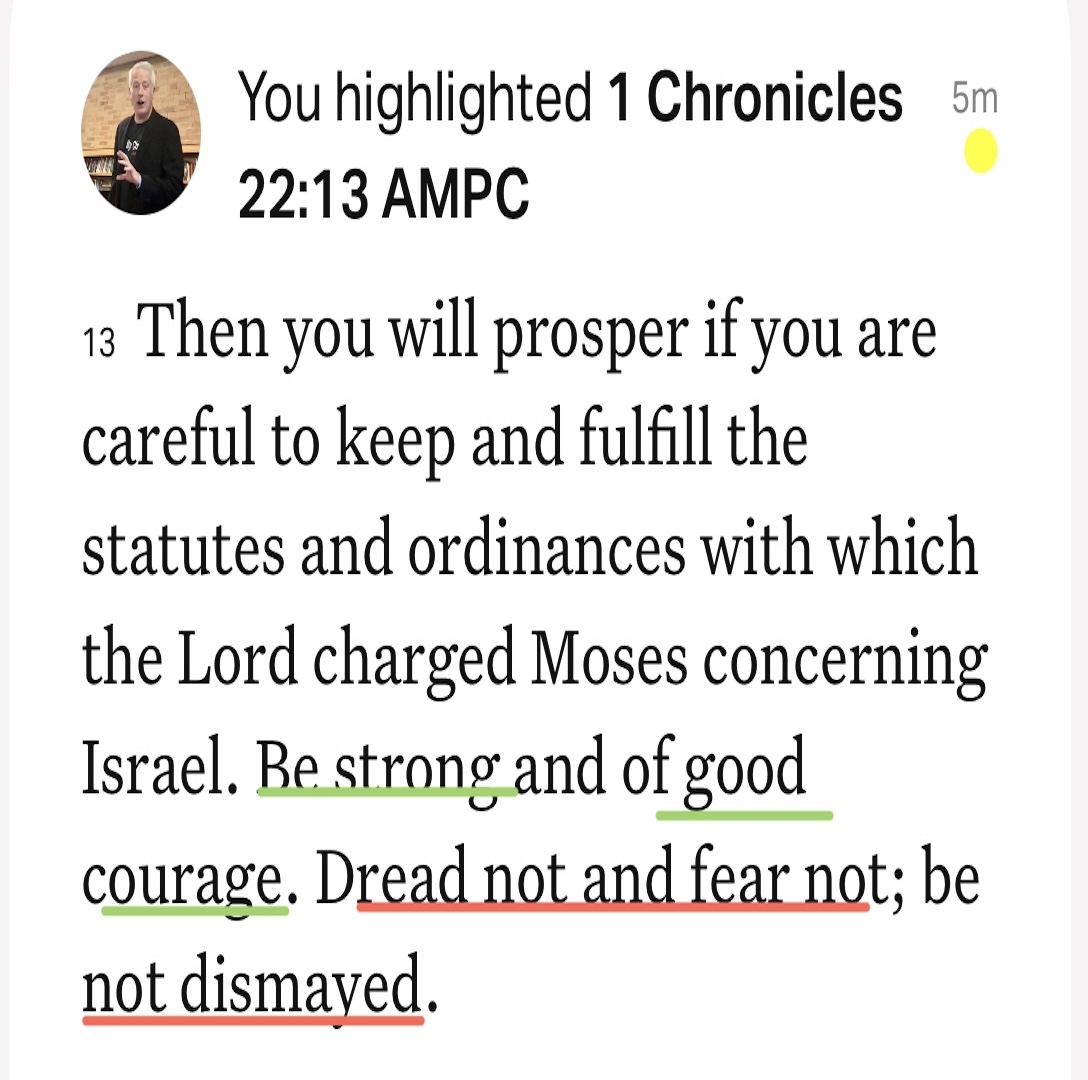
Then you will prosper IF you are careful to keep and fulfill the statutes and ordinances with which the Lord charged Moses concerning Israel. Be strong and of good courage. Dread not and fear not; be not dismayed. (1 Chronicles 22:13 AMPC)

True prospering can only come through carefully doing things God’s way. “I will obey God no matter what,” is easier said than lived. This is why David tells Solomon both the virtues to cultivate and the emotions to guard against:

✅ Strong character 

✅ Steadfast courage 

🚫 Fear of man 

🚫 Fear of failure

You may also be interested in my posts How Godly Leaders Prosper and True Prosperity.

Links & Quotes

Leaders would do well to remember that they lead a group of unique individuals. Let the unique gifts of those unique people be used in unique ways, and watch both the individuals and the organization grow! 

I have a lot of new video content on my YouTube channel every week. Please check it out and subscribe so you don’t miss anything.

“As Tyler Cowen wrote in The Free Press, ‘Whether or not you work in the AI sector, if you put any kind of content on the internet, or perhaps in a book, you are likely helping to train, educate, and yes, morally instruct the next generation of what will be this planet’s smartest entities. You are making them more like you—for better or worse.’ Now, maybe someone thinks, ‘I’ve hardly got any followers, who cares what I post? It probably won’t matter.’ But the principle means we should care. The philosopher Immanuel Kant famously offered his ‘categorical imperative’ as a test for ethical decisions: ‘Act only according to that maxim whereby you can at the same time will that it should become a universal law.’ In other words, we should only do what we think would be good for everyone to do.” —Axis.org

How much good inside a day?
Depends how good you live ’em.
How much love inside a friend?
Depends how much you give ’em. —Shel Silverstein

A fantastic mini-biography of Otto J. Klink who went from being a Christian, to an atheist socialist, to failed presidential assassin, to a Pentecostal author and evangelist. Wow!

“My acceptance of the universe is not optimism, it is more like patriotism. It is a matter of primary loyalty. The world is not a lodging-house at Brighton, which we are to leave because it is miserable. It is the fortress of our family, with the flag flying on the turret, and the more miserable it is the less we should leave it. The point is not that this world is too sad to love or too glad not to love; the point is that when you do love a thing, its gladness is a reason for loving it, and its sadness a reason for loving it more.” —G.K. Chesterton 

Marshall Segal said this about our daily Bible reading time, “I want to walk through a five-step prayer you could pray when you sit down with your Bible to meet with God. The five steps are built on an acronym for FEAST. Focus my mind; Enlighten my eyes; Address my sin; Satisfy my soul; Train my hands.”

“A man of character will make himself worthy of any position he is given.” —Mahatma Gandhi 

“A retentive memory may be a good thing, but the ability to forget is the true token of greatness. Successful people forget. They know the past is irrevocable. They’re running a race. They can’t afford to look behind. Their eye is on the finish line. Magnanimous people forget. They’re too big to let little things disturb them. They forget easily. If anyone does them wrong, they consider the source and keep cool. It’s only the small people who cherish revenge. Be a good forgetter. Business dictates it, and success demands it.” —Elbert Hubbard 

“Leadership is not about being in charge, but about taking care of the people in your charge.” —Simon Sinek 

Flowing Data has a fascinating look at how people spend their time during the day. Their adjustable chart shows activities by age, sex, and time of day. It reminds me of a blog post I shared about time management, where I noted, “You cannot add more Tick, Tocking! time to your day, but you can keep more of your day from Drip, Dropping! away.”

“We might think, ‘Well, hey, if I’m devoting myself all the time to looking out for others’ needs, who’s going to be looking out for mine?’ The Lord, of course, because He knows what you need even before you ask Him, and He has ways of meeting your needs that are more wonderful than you in your cleverness or strength could ever conjure or provide (cf. Matthew 6:25-34).” —T.M. Moore 

“We all know that exercise makes us feel better, but most of us have no idea why. We assume it’s because we’re burning off stress or reducing muscle tension or boosting endorphins, and we leave it at that. But the real reason we feel so good when we get our blood pumping is that it makes the brain function at its best, and in my view, this benefit of physical activity is far more important—and fascinating—than what it does for the body. Building muscles and conditioning the heart and lungs are essentially side effects. I often tell my patients that the point of exercise is to build and condition the brain.” —Dr. John Ratey 

T.M. Moore has a hard but good word for Christians: “If this day, and this expectation and hope [when we heard King Jesus say, ‘Well done, good and faithful servant’], are not the driving force for every aspect of our lives and work, then it is doubtful we have really understood the Good News of the Kingdom or received the salvation freely offered to us by the King. I say this again: If we are not motivated and driven, day by day, by the prospect of hearing ‘Well done, good and faithful servant,’ then we need to examine ourselves, whether we truly know the Lord of glory. That’s pretty hard language, I know, but let’s face the reality: If we have not submitted to Jesus as Lord of every area of our life, all the work we’ve been given to do, then we are still living for ourselves, not Him.” —T.M. Moore

What’s Inside?

Listen to the podcast of this post by clicking on the player below, and you can also subscribe on AppleSpotify, or Audible. 

Far too many leaders spend more time making sure things look good on the outside than they do addressing whether things are good on the inside. Of course, I’m talking about issues like character, and humility, and servant-mindedness. 

Greg and I addresses this on a recent episode of our leadership podcast The Craig and Greg Show. 

Check out the full conversation Greg and I had on this episode called Healthy Leaders. 

And I dive a lot deeper into the issue of true leadership coming from the inside out in my book Shepherd Leadership. 

►► Would you please prayerfully consider supporting this ministry? My Patreon supporters get behind-the-scenes access to exclusive materials. ◀︎◀︎

A Leader’s Commitment To Lifelong Learning

Listen to the podcast of this post by clicking on the player below, and you can also subscribe on AppleSpotify, or Audible. 

Bruce Barton said, “When you’re through changing, you’re through!” I think the same thing could be said about a leader’s learning—when you think you’ve learned it all, your leadership is beginning to crumble. 

I never want to get to the place where I think I have “arrived” as a leader, but I want to be humble enough to admit that there are so many things I have yet to learn. Jesus reminded us, “Every student of the Scriptures who becomes a disciple in the kingdom of heaven is like someone who brings out new and old treasures from the storeroom” (Matthew 13:52 CEV). 

“New and old treasures” tells me that there’s some good stuff we need to protect, and also some good stuff we haven’t yet learned. 

A mark of a godly leader is his commitment to being a lifelong learner. 

Here are three new things the Holy Spirit has recently taught me: 

Acts 6:3 says, “Choose seven men from among you who are known to be full of the Spirit and wisdom. We will turn this responsibility over to them.” 

My lesson: The résumé for those that are to be placed in ministry leadership positions should include servant-heartedness, Christlike character, wise experience for the task, and reliance on the Holy Spirit.

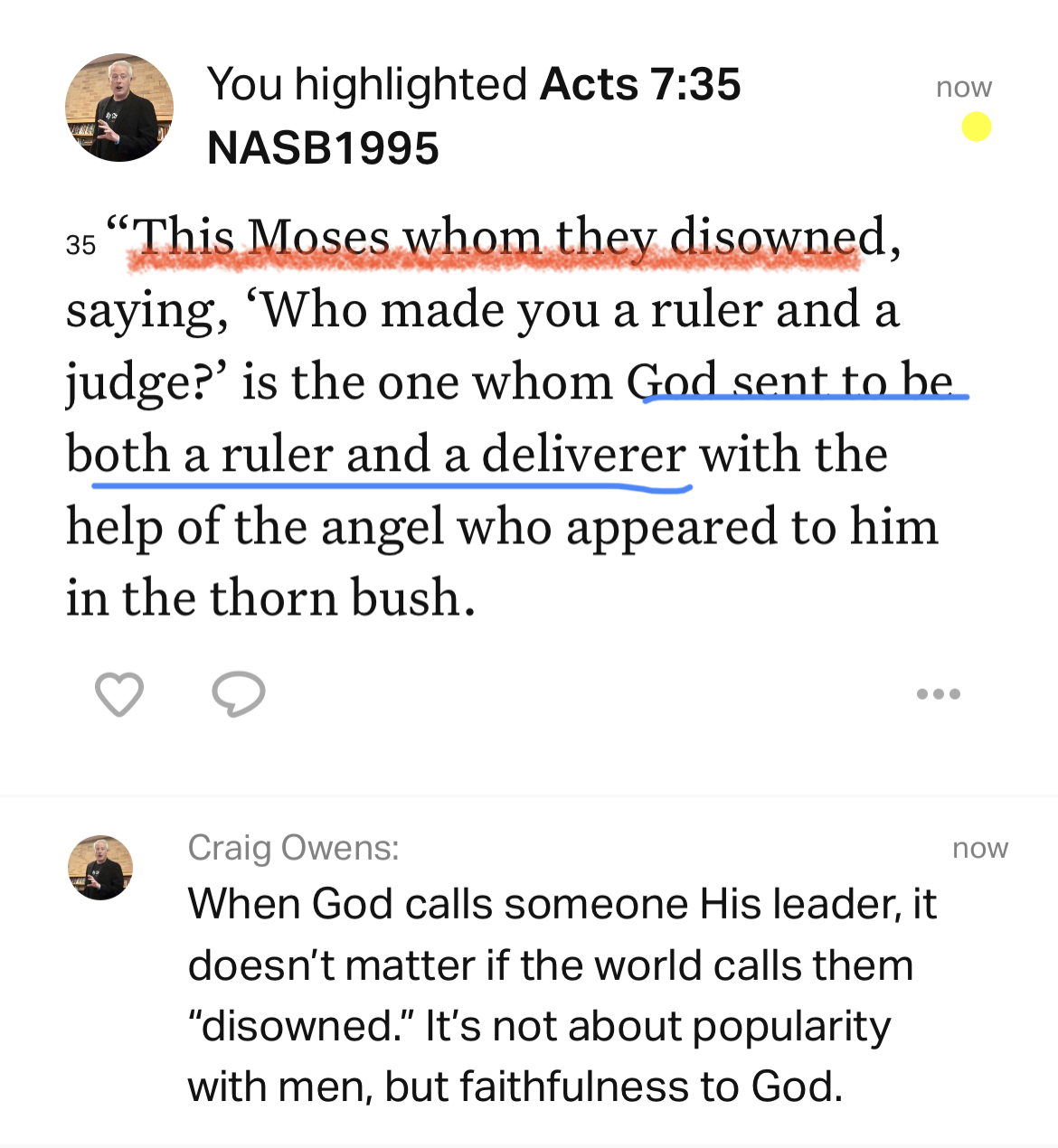
“This Moses whom they disowned…is the one God sent to be both a ruler and a deliverer” (Acts 7:35). 

My lesson: When God calls someone His leader, it doesn’t matter if the world calls them disowned. It’s not about popularity with men, but faithfulness to God.

Notice the plural pronoun “they” in 1 Kings 11:33. 

My lesson: When King Solomon sinned, he then gave license to the people to follow his example. As the leader goes, so go the people.

I hope you are learning new things every day. In fact, feel free to share in the comments something new you’ve learned. 

This is part 73 in my series on godly leadership. You can check out all of my posts in this series by clicking here.

►► Would you please prayerfully consider supporting this ministry? My Patreon supporters get behind-the-scenes access to exclusive materials. ◀︎◀︎

Poetry Saturday—As We Think

Listen to the podcast of this post by clicking on the player below, and you can also subscribe on AppleSpotify, or Audible.

The thought manifests the word;
The word manifests the deed;
The deed develops into habit;
And habit hardens into character.
So watch the thought and its ways with care,
And let them spring forth from love
Born out of compassion for all beings.
As the shadow follows the body, as we think,
So we become. —Juan Mascaro

►► Would you please prayerfully consider supporting this ministry? My Patreon supporters get behind-the-scenes access to exclusive materials. ◀︎◀︎

The Craig And Greg Show: Leaders And Friends

On this episode of “The Craig And Greg Show” we talk about: 

  • some people wear the cliche “It’s lonely at the top” like a badge of honor, but it’s not [0:40] 
  • the best leaders are always developing new leaders [1:25] 
  • do people say, “It’s lonely at the top” because they don’t want others alongside them or because they don’t know how to develop people? [1:55]
  • some people are talented in leading but not talented in friending … what kinds of friends do leaders need? [2:52]
  • what are the differences and similarities between friends, peers, and colleagues? [4:57]
  • a huge leadership challenge in a new position or a new organization is quickly identifying your allies [6:00]
  • a teammates’ participation in team sports can give a leader great insights into that teammates’ leadership potential [7:00]
  • leaders that try to fly solo set themselves up for failure … what are the common traits of leaders who successfully raise up new leaders? [8:08]
  • Greg confesses a leadership mistake he had to correct in himself [9:20]
  • character is vital in emerging leaders [10:59]
  • compassion is valuable in emerging leaders [11:44]
  • consistency helps emerging leaders develop into solid leaders, and it helps the team leader to excel … great insight from Patrick Lencioni about being present [12:15]
  • teams must embrace diversity and find commonality [13:08]
  • I elaborate on Greg’s point about a leader’s presence and consistency [14:10]
  • the team leader has to take the initiative in identifying and raising up new leaders [15:47]
  • leaders need to continue to replenish themselves [17:22]
  • Greg shares a great leadership example from the life of Moses [17:50]
  • we are here to encourage you—check out information on our leadership huddles [18:20]

Check out this episode and subscribe on YouTube so you can watch all of the upcoming episodes. You can also listen to our podcast on Spotify and Apple.

7 Quotes From “Faith Of Our Founding Fathers”

Parents, please download a FREE copy of this book to help educate your children on the biblical faith that informed the decisions of our Founding Fathers (link in the book review). You can read my complete book review of Faith Of Our Founding Fathers by clicking here. 

“The Bible is the best of all books, for it is the word of God, and teaches us the way to be happy in this world and in the next. Continue therefore to read it, and to regulate your life by its precepts.” —John Jay 

“Only a virtuous people are capable of freedom. As nations become corrupt and vicious, they have more need of masters.” —Benjamin Franklin 

“While we are zealously performing the duties of good Citizens and Soldiers we certainly ought not to be inattentive to the higher duties of Religion. To the distinguished Character of Patriot, it should be our highest Glory to add the more distinguished Character of Christian.” —George Washington 

“In this situation of this assembly, groping as it were in the dark to find political truth, and scarce able to distinguish it when presented to us, how has it happened, sir, that we have not hitherto once thought of humbly applying to the Father of lights, to illuminate our understandings? … I have lived, Sir, a long time; and the longer I live the more convincing Proofs I see of this Truth, That God governs in the Affairs of Men! And if a Sparrow cannot fall to the Ground without His Notice, is it probable than an Empire can rise without His Aid?—We have been assured, Sir, in the Sacred Writings, that ‘except the Lord build the House, they labor in vain that build it.’ I firmly believe this; and I also believe that without His concurring Aid we shall succeed in this political Building no better than the Builders of Babel…. I therefore beg leave to move, That henceforth Prayers, imploring the Assistance of Heaven, and its Blessing on our Deliberations, be held in this Assembly every Morning before we proceed to Business.” —Benjamin Franklin 

“And can the liberties of a nation be thought secure when we have removed their only firm basis, a conviction in the minds of people that these liberties are of the gift of God? That they are not to be violated but with His wrath? Indeed, I tremble for my country when I reflect that God is just; that His justice cannot sleep for ever….” —Thomas Jefferson 

“The diminution of public virtue is usually attended with that of public happiness, and the public liberty will not long survive the total extinction of morals.” —Samuel Adams 

“Neither the wisest constitution nor the wisest laws will secure the liberty and happiness of a people whose manners are universally corrupt.” —Samuel Adams

Practicing And Preaching In Difficult Times

…the things which happen to me have actually turned out for the furtherance of the gospel (Philippians 1:12).

About 4-5 years before Paul wrote this, he wrote to the church in Rome: “And we know that in all things God works for the good of those who love Him, who have been called according to His purpose” (Romans 8:28). 

Paul said, “All things” were being used in God’s plan for his life.

If I was one of those Philippian Christians I might respond, “Even in imprisonment?! C’mon, Paul, your liberty has been taken away and you can’t travel and preach anymore—can God use even that??” 

Paul would give me an emphatic “Yes! 

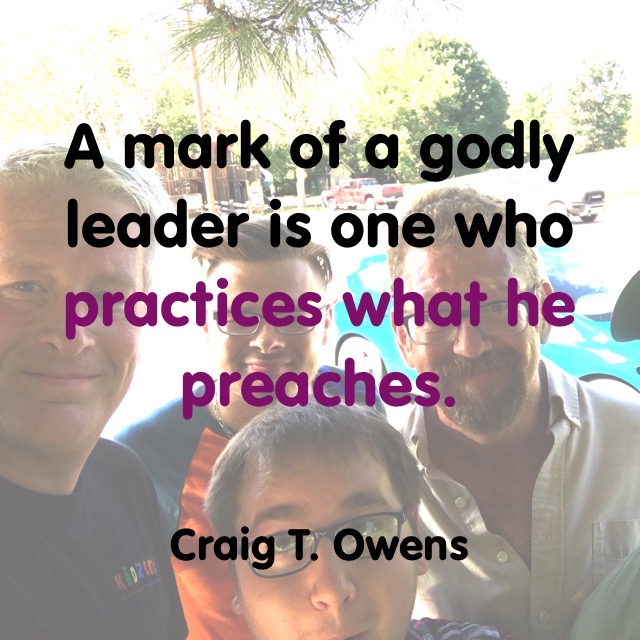
A mark of a godly leader is one who practices what he preaches.

Paul said even his imprisonment was being used by God…

  • … the palace guards heard the gospel  
  • … others became bolder in their Christian testimony
  • … more people began preaching the good news about Jesus (see Philippians 1:13, 14, 18)

It’s still true today: God has a plan for your life, which He will work out even in the most difficult trials. 

How powerful it is when a leader continues to practice what he preaches even in the toughest of circumstances!

This is part 40 in my series on godly leadership. You can check out all of my posts in this series by clicking here.

7 More Quotes From “Start With The Heart”

Dr. Kathy Koch has given parents—and anyone else who works with children—a marvelously helpful resource in her latest book Start With The Heart. Be sure to check out my full book review by clicking here. 

“God created you and your children with five core, basic needs that must be met. These needs are interrelated. The health of one influences the others:

  • Security—who can I trust?
  • Identity—who am I?
  • Belonging—who wants me?
  • Purpose—why am I alive?
  • Competence—what do I do well?” 

“Children who know their purpose will often choose to look for peers with similar goals and interests. They will want to hang out with people who affirm them and their purpose and be willing to end relationships that are not joyful and purposeful.” 

“When you parent so your children believe three things, their hearts will be impacted and they will be motivated to succeed. This translates into less stress and anxiety and more peace. … Children who believe these things don’t want to be average. They are willing to work for more. … Children’s character will be more Christlike. They’ll want to be more others-centered than self-centered. They’ll be compassionate, brave and able to stand up for themselves and others. 

  1. I have value. Children who do know they have value are often motivated intrinsically, from the inside. They internally recognize what is good for them and respond accordingly.
  2. Learning matters. When children believe they have worth, they are more likely to value learning. … Children who value learning will exhibit many positive character traits, including teachability. This will be true even when they are not convinced that your requests or planned activities are relevant. They’ll pay attention anyway because they know they matter and learning matters. These beliefs strengthen children’s purpose and give rise to competence.
  3. My future can be bright.” 

“Which is better: ‘Be on time!’ or ‘Don’t be late!’? Do you hear the difference? Which one is positive? ‘Be on time’ communicates ‘I believe you’re capable of this.’ It’s more hopeful. It’s about what you want your children to do. ‘Don’t be late’ reminds them of how they’ve frustrated you.” 

“Carol Dweck…has consistently found that children praised for using effort tackled more challenging tasks than those praised just for ability or for the quality of their work.” 

“Sometimes have children tell you what they think they did before you offer your opinions. If they are relatively accurate, affirm them specifically. When they’re not, have the conversation.” 

“Working to provide feedback that can be described with the following attributes will serve you and your children well—specific, believable, helpful, and thoughtful.” 

You can also check out the first set of quotes I shared from Start With The Heart by clicking here.

12 Quotes From “The Strenuous Life”

Teddy Roosevelt believed firmly that a nation rose or fell as individuals exercised strong character or lived a slothful life. He not only preached it, he lived it! The Strenuous Life is a collect of TR’s speeches that emphasized what he called “the manly characters.” Check out my full book review by clicking here. 

“We do not admire the man of timid peace. We admire the man who embodies victorious effort; the man who never wrongs his neighbor, who is prompt to help a friend, but who has those virile qualities necessary to win in the stern strife of actual life.” 

“A man’s first duty is to his own home, but he is not thereby excused from doing his duty to the State; for if he fails in this second duty it is under the penalty of ceasing to be a freeman. In the same way, while a nation’s first duty is within its own borders, it is not thereby absolved from facing its duties in the world as a whole; and if it refuses to do so, it merely forfeits its right to struggle for a place among the peoples that shape the destiny of mankind.” 

“If we stand idly by, if we seek merely swollen, slothful ease and ignoble peace, if we shrink from the hard contests where men must win at hazard of their lives and at the risk of all they hold dear, then the bolder and stronger peoples will pass us by, and will win for themselves the domination of the world. Let us therefore boldly face the life of strife, resolute to do our duty well and manfully; resolute to uphold righteousness by deed and by word; resolute to be both honest and brave, to serve high ideals, yet to use practical methods. Above all, let us shrink from no strife, moral or physical, within or without the nation, provided we are certain that the strife is justified, for it is only through strife, through hard and dangerous endeavor, that we shall ultimately win the goal of true national greatness.” 

“Scant attention is paid to the weakling or the coward who babbles of peace; but due heed is given to the strong man with sword girt on thigh who preaches peace, not from ignoble motives, not from fear or distrust of his own powers, but from a deep sense of moral obligation.” 

“Strive manfully for righteousness, and strive so as to make your efforts for good count.” 

“We are in honor bound to put into practice what we preach; to remember that we are not to be excused if we do not; and that in the last resort no material prosperity, no business acumen, no intellectual development of any kind, can atone in the life of a nation for the lack of the fundamental qualities of courage, honesty, and common sense.” 

“If a man permits largeness of heart to degenerate into softness of head, he inevitably becomes a nuisance in any relation of life. If sympathy becomes distorted and morbid, it hampers instead of helping the effort toward social betterment.” 

“The quality of self-help is so splendid a quality that nothing can compensate for its loss; yet, like every virtue, it can be twisted into a fault, and it becomes a fault if carried to the point of cold-hearted arrogance, of inability to understand that now and then the strongest may be in need of aid, and that for this reason alone, if for no other, the strong should always be glad of the chance in turn to aid the weak.” 

“The Bible always inculcates the need of the positive no less than the negative virtues, although certain people who profess to teach Christianity are apt to dwell wholly on the negative. We are bidden not merely to be harmless as doves, but also as wise as serpents. It is very much easier to carry out the former part of the order than the latter; while, on the other hand, it is of much more importance for the good of mankind that our goodness should be accompanied by wisdom than that we should merely be harmless. If with the serpent wisdom we unite the serpent guile, terrible will be the damage we do; and if, with the best of intentions, we can only manage to deserve the epithet of ‘harmless,’ it is hardly worth while to have lived in the world at all.” 

“The boy who is going to make a great man, or is going to count in any way in after life, must make up his mind not merely to overcome a thousand obstacles, but to win in spite of a thousand repulses or defeats.” 

“Softness of heart is an admirable quality, but when it extends its area until it also becomes softness of head, its results are anything but admirable.” 

“A man is worthless unless he has in him a lofty devotion to an ideal, and he is worthless also unless he strives to realize this ideal by practical methods. He must promise, both to himself and to others, only what he can perform; but what really can be performed he must promise, and such promise he must at all hazards make good.” 

More quotes from TR are coming soon, so stay tuned!