There’s something about gratitude that distinguishes people. Think about it: would you rather hang around with grumblers or grateful people?
The gratitude of Paul and Silas certainly made them stand out from the crowd when they were in Philippi. Wrongly accused, beaten, and thrown in prison, but instead of bellyaching, they were praising God. Later on, when Paul wrote his letter to the Christians in Philippi, the theme of gratefulness permeates his letter.
The distinguishing mark is actually in the title: The GReat ATTITUDE spells out GRATITUDE!
Join us this Sunday as we launch a series of messages perfectly timed for this season of Thanksgiving where we’ll be learning how great the attitude of gratitude truly is! We would love to have you join us in person, but you can also check out the messages at 10:30 each Sunday morning on Facebook and YouTube.
If you’ve missed any of the messagesin this series, check them out here:
Listen to the podcast of this post by clicking on the player below, and you can also subscribe on Apple, Spotify, or Audible.

Our cravings are implanted by God and are fulfilled solely in our relationship with Him. Sometimes the journey seems long. If you have been in the car with kids, you know they are infamous for asking, “Are we there yet?” just a couple of minutes into the trip. We adults aren’t much better. Perhaps we have a little more patience but if we’re honest we may find ourselves asking, “How long is this going to take? It seems like it’s soooo long!”
We’ve discussed that a maturing attitude shift for us is exchanging “have to” for “get to.” This is when we begin to understand that something good—something far better than what we have now—is coming. This is the starting point to help us to wait well, to not get frustrated and bail out.
Jesus did this: “For the joy set before Him He endured the Cross” (Hebrews 12:2). He could see what was coming so He wouldn’t accept any lesser substitutes. But that same verse also calls us to be “looking away from all that will distract to Jesus” (Hebrews 12:2 AMP).
This attitude exchange helps us in three ways:
Maturing self-control
Understanding the rewards of delayed gratification
Having a joyful expectation of both what’s coming and what’s happening now
Self-control, delayed gratification, and joyful expectation are also the key components of a satisfying relationship. These then allow me to make another important exchange: “don’t” for “won’t.”
For example, in my relationship with my wife Betsy, no one has to tell me, “Don’t speak to her unkindly.” I won’t speak to her unkindly because that would damage our relationship. No one has to tell me, “Don’t flirt with other women.” I won’t do that because I know that would jeopardize our relationship, perhaps causing me to look elsewhere to satisfy my craving for a meaningful relationship.
In the book called Song of Solomon, the word “lovely” is used frequently between lovers who only have eyes for each other. Paul uses this keyword when he talks about us only having our eyes, and heart, and mind on Jesus—“Whatever is true, whatever is noble, whatever is right, whatever is pure, whatever is lovely, whatever is admirable—if anything is excellent or praiseworthy—think about such things” (Philippians 4:8).
David, who is described as a man after God’s own heart, wrote several psalms expressing his longing to be in God’s presence both now and for all eternity. Especially in Psalm 16 and Psalm 37, David shows us the don’t-for-won’t exchange (Psalm 16:1-11; 37:1-4).
Sometimes we will experience some lovely things here on earth, but those are nothing compared to the eternal rewards awaiting us. C.S. Lewis wrote, “Our Father refreshes us on the journey with some pleasant inns, but will not encourage us to mistake them for home.”
Even if we experience unpleasant things here, the apostle Paul reminds us, “But what of that? For I consider that the sufferings of this present time—this present life—are not worth being compared with the glory that is about to be revealed to us and in us and for us and conferred on us!”(Romans 8:18 AMP).
The marshmallow test is a famous experiment. Kids were given the choice to eat one marshmallow immediately or be rewarded with a second marshmallow if they waited. Researchers found that those who practiced self-control, delayed gratification, and joyful expectation faired much better later in life.
So I would encourage you to keep your marshmallow somewhere you will see it often. It will harden, but it will not mold or spoil. Every time you look at it, let it remind you that what’s coming is so much more than anything you could ever find here! Let this reminder help you exchange don’t for won’t as the Holy Spirit helps you keep your eyes only on Jesus.
We also said that although we would all like to have the job that was wonderful, even the crummy jobs deserve our best attitude and our best effort.
This is very much the same for our relationships. We would all love to only have relationships in our lives that are energizing, fulfilling, and win-win. But the reality is that many of our relationships may be the exact opposite of this.
Jesus said our love for others would show the world that we are His disciples. Oh yeah, and the love we show is supposed to be a “10” on the Jesus Love Scale (John 13:34-35). Why? Because that’s how Jesus loved us:
Now it is an extraordinary thing for one to give his life even for an upright man, though perhaps for a noble and lovable and generous benefactor someone might even dare to die. But God shows and clearly proves His own love for us by the fact that while we were still sinners, Christ (the Messiah, the Anointed One) died for us. (Romans 5:7-8 AMP)
Remember we said that God is Love? But love needs to have both a lover and beloved—someone reaching out and someone receiving. God is Father, Son, and Holy Spirit so God is Relational. The Father loving the Son and Spirit, the Son loving the Spirit and the Father, the Spirit loving the Father and the Son. All loving and promoting the Other.
God is also Happy in this Relationship.
Because we are created in God’s image, we have a God-implanted craving to love and to be loved, to have meaningful companionships (Genesis 1:26; 2:18).
Remember that Jesus was all-in for us so that we could have this love relationship with God.This same passage calls us to have the same attitude as Jesus had. But we can also back up just a couple of more verses to find out what fuels the relationships that satisfy our craving for companionship and please God (Philippians 2:1-11). Those characteristics include:
being like-minded in striving to find agreement with others
having the same love as Jesus demonstrated
being one in spirit—this unique Greek word reminds us we all have immortal souls. As C.S. Lewis reminded us, “It is a serious thing to live in a society of possible gods and goddesses, to remember that the dullest and most uninteresting person you talk to may one day be a creature which, if you saw it now, you would be strongly tempted to worship, or else a horror and a corruption such as you now meet, if at all, only in a nightmare. All day long we are, in some degree, helping each other to one of these destinations.”
being one in purpose
giving up selfish ambitions as we trade “me” for “we”
not indulging in vain conceit, but thinking more highly of others
being humble
always striving to find the win-win
When Alexander Dumas wrote The Three Musketeers his Musketeers have been given a famous line: “All for one and one for all, united we stand divided we fall.” This is actually quite biblical because the Bible only has saints in the plural form, never in the singular. And the apostle Paul reminds us, “And if one member suffers, all the parts share the suffering; if one member is honored, all the members share in the enjoyment of it” (1 Corinthians 12:26 AMP).
God is pleased when our attitude about our fellow saints is all for one and one for all—when all the saints love and nurture the individual saint, and when each individual saint loves and supports all the other saints.
We were created for this. We crave this. God is pleased when we live and love like this. And this is the only way we will experience the joy of God’s favor on our relationships.
Listen to the podcast of this post by clicking on the player below, and you can also subscribe on Apple, Spotify, or Audible.
A couple of weeks ago I asked a question about a fictitious job. Which job would you rather have: a job that’s (a) boring, not utilizing your skills, where you’re treated as a cog in the wheel, or (b) energizing, calling out your best talents, a place where you are making a difference?
As a follow up I asked, “Which of those jobs are you more likely to be happy to go to? Which job is going to inspire you to give your best work ethic?”
We all want that ideal job, but the reality is that in this fallen world there are no perfect jobs, so it’s very likely that we’re going to have the challenging jobs. Even when we have that kind of job, Christians are called to work with excellence and to find joy in that work (Colossians 3:23).
Work originated with God. At the conclusion of every day of Creation, God looked at His magnificent handiwork and pronounced it good. When God placed Adam and Eve in the Garden of Eden, He gave them instructions to work, and even after their sin, He repeated the call to work (Genesis 2:15, 3:17-19).
Whether we are called to be gardeners or evangelists, plumbers or salespeople, teachers or doctors, we are to work well. William Tyndale wrote, “There is no work better than to please God; to pour water, to wash dishes, to be a cobbler, or an apostle, all are one; to wash dishes and to preach are all one, as touching the deed, to please God.”
Let me give you two examples of good workers.
The first is Joseph whom we meet in the first book of the Bible. Out of their jealousy of their father’s preferential treatment of Joseph, his brothers sold him into slavery. Joseph ended up in Egypt working for a man named Potiphar. I don’t think anyone would have blamed Joseph for grumbling about his condition and giving the least effort possible, but instead, Joseph so excelled in his work that Potiphar promoted him over all his household.
After being framed for a crime he didn’t commit, Joseph found himself in prison. Once again, this innocent man could have sulked and complained and shirked his work responsibility. But once again, Joseph did such excellent work that the warden promoted him to a trustee position over all the other prisoners.
Eventually, Joseph was promoted to second in command in all of Egypt, where he continued to do excellent and innovative work. Joseph’s good attitude and impeccable work ethic allowed God to place him in a position where he could save his people from starvation (see Genesis 39-50).
What about the example of Jesus? He was fully God, yet He gave up His divine prerogatives to work as a carpenter and to eventually perform the most important work of all: the willing sacrifice for the sins of all humankind. Paul describes the servanthood and willing attitude of Jesus in Philippians 2, adding an important “therefore” when he tells us that the excellent work of Jesus allowed God to place Him in a position where He could save His people from eternal separation from God (Philippians 2:6-11).
But Paul also has an important word for us in the verse preceding this passage: “Let this same attitude and purpose and humble mind be in you which was in Christ Jesus” (v. 5 AMP).
I may not be able to choose my job, but I can always choose to have a God-glorifying attitude about my job. When I choose this attitude and live it out with an excellent work ethic, God is pleased.
So allow me to give you four attitude-checking questions about your own work ethic:
Do I feel like I have to go to work? I should so crave God’s glory and God’s rewards that I have a get to attitude about my work.
Am I living for T.G.I.F.? We shouldn’t be focused on just getting things done, but we should make the most of every day of work that we have been given. We should be living out T.G.I.T.—Thank God It’s Today (Psalm 90:12, 17)!
Let me repeat an important principle: I may not be able to choose my job, but I can always choose to have a God-glorifying attitude about my job. When you have this kind of attitude, you will experience the joy of a fulfilled craving that God has put in all of us—the desire to do meaningful and God-honoring work. This is the attitude and work ethic God delights to reward.
Listen to the podcast of this post by clicking on the player below, and you can also subscribe on Apple, Spotify, or Audible.
There’s a misconception that many people have about God’s laws: they think that they are intended to rob us of enjoyment, that they restrict our lives and remove our pursuit of happiness.
In actuality, the exact opposite is true. God is love (1 John 4:8). That means everything God does is rooted in His love for us. Including the laws He gives us. He loves us and wants us to stay in the place where we don’t experience the heartache, pain, and disappointment of missing out on His blessings.
God is also happy. Paul calls it “the glory of the blessed God” (1 Timothy 1:11). The word “blessed” can easily be translated as happy. God is happy and He wants us to share in this ultimate happiness.
Consider the blessings that are in first and last of the Ten Commandments:
The first commandment says there is only one God. Far from this being restrictive, it’s a huge blessing. I don’t have to search and compare, I don’t have to make a list of pros and cons and then settle on the best option, but I can enjoy the one and only true God.
The tenth commandment says I don’t need to crave anything outside of what God has given me. Again, this is a huge blessing because it tells me that my loving Father has given me all that I need, that He alone satisfies my cravings.
John Piper gave the essence of idolatry in this line: “Preferring other things above God.” This is why God delights for us to delight in Him. When we do, He is our sole focus. When He is our focus, we enjoy Him immensely and we reject anything that would remove our gaze from Him.
That’s why there is a continuous linkage in all 176 verses of Psalm 119 between God’s laws and our delight—between obedience and satisfaction. When we obey God, we experience His happiness.
The apostle Paul called Christians to live this way: “Whatever happens, conduct yourselves in a manner worthy of the gospel of Christ” (Philippians 1:27). Gospel literally means “good news.” What good news are we supposed to proclaim? The good news that God is happy and that He wants to say to us, “Come and share your Master’s happiness” (Matthew 25:21)!
When I was a kid I struggled with this question: Do I love God just because He first loved me? I thought, “That seems like a cop out. Am I really saying that the only reason I have for loving Him is that He went first?” But then I realized it couldn’t be any other way. How could I love an angry God? How could I ever expect to approach a God who knew all my sins and had the final say on my punishment, and was just waiting for a chance to get His hands on me?
I can only love a loving God. I can only love Him because He first loved me (see Romans 5:8).
In a similar way, I can only crave God because He first craved a relationship with me. Otherwise I’m setting myself up for unimaginable heartbreak and disappointment!
Jesus said it was His Father’s “good pleasure” to reveal Himself to us. No one knows the Son except the Father, and no one knows the Father except the Son. Our heavenly Father craved a relationship with us, so He revealed His Son Jesus to us so that Jesus could reveal the Father to us (see Matthew 11:25-30; John 14:7).
Just as we could only love God because He loved us first, we could only crave a relationship with God because He craved a relationship with us first. It was always His plan to adopt us into His family—this is what gives Him great pleasure (Ephesians 1:5). Then God works in us to fulfill His craving for us, which empowers us to find our deepest longings satisfied exclusively in Him (Philippians 2:13).
Sometimes we get a small taste or experience of earthly pleasure that quickly fades away. C.S. Lewis reminded us, “If I find in myself a desire which no experience in this world can satisfy, the most probable explanation is that I was made for another world.”
Our craving for God is only satisfied in the knowledge that God first craved a relationship with us. Only the intimacy of our Savior will fulfill our cravings. Anything else will end only in utter disappointment.
Listen to the podcast of this post by clicking on the player below, and you can also subscribe on Apple, Spotify, or Audible.
In Romans 3:23 we read, “For all have sinned and fall short of the glory of God.”What does it mean to “fall short” of God’s standard? John Piper describes it this way: “It means that none of us has trusted and treasured God the way we should. We have not been satisfied with His greatness and walked in His ways. We have sought our satisfaction in other things, and treated them as more valuable than God.”
A couple of chapters earlier in Romans, Paul tells us about an exchange that people make. They exchange a relationship with the eternal God for things which they can grab immediately. Sadly, these immediate things are only temporal things that fall short of God’s awesome glory and leave us perpetually unsatisfied (Romans 1:21-25).
We were created by God to crave. Craving is what gives us staying power and brings fulfillment. Think of it this way: Would you rather…
…go to a job that is mundane, boring, and only focused on making money OR go to a job that is fascinating, using our talents, and trying to make a difference in the world?
…eat food that tastes like cardboard OR eat savory food?
…serve a god that is temporary, fickle, and unreliable OR serve a God that is eternal, faithful, strong, and loving?
Or think of it another way: Which of those jobs would you want to go to? Which job would call out your best effort? Which food would you want to eat? Which food would make you want to praise the chef? And which God would you want to spend eternity with? Which God would want to invite others to worship?
God gives us cravings that can only be satisfied in Him. The devil perverts these cravings to get us to go for quick, easy, self-made pleasures. Just think about how he tempted Adam and Eve (Genesis 3:1-6).
Both the Old Testament and New Testament tell us of the joys of eternal cravings being satisfied and the consequences of giving in to temporal cravings. For example:
God gives a craving for future meat, but satisfies us with manna while we wait. The devil temps us to have our meat now (Deuteronomy 12:20; Psalm 106:12-14; Numbers 11:34).
God gives a craving for satisfying relationships. The devil tempts us to indulge our passions now by grabbing the most alluring relationship (Proverbs 5:18-19; Deuteronomy 5:21; Romans 1:24, 26).
God gives a craving for success and significance in His timeframe. The devil tempts us to get ahead now (1 Kings 11:37-38; Genesis 3:6).
It’s a terrible exchange when we give up the glorious eternal for the fading temporal! Romans 1 describes the results as sinful, degrading, shameful, unnatural. That’s because the things of earth are temporary; only God is eternal.
For all that is in the world—the lust of the flesh—craving for sensual gratification—and the lust of the eyes—greedy longings of the mind—and the pride of life—assurance in one’s own resources or in the stability of earthly things—these do not come from the Father but are from the world itself. And the world passes away and disappears, and with it the forbidden cravings (the passionate desires, the lust) of it; but he who does the will of God and carries out His purposes in his life abides (remains) forever. (1 John 2:16-17 AMP)
We have to trust the One who gave us His unshakable promises—Be delighted with the Lord. Then He will give you all your heart’s desires (Psalm 37:4 TLB). Be delighted with Him and He will—not “may” or “hopefully He will” but He will—give you ALL your heart’s desires!
There is an ultimate reward in Heaven but there are incredibly satisfying rewards along the journey to Heaven as well. Rewards like happiness, security, insight, and divine counsel from the Holy Spirit (2 Timothy 4:8; Psalm 119:2, 10, 16, 18, 24).
If we will resist the temptation to satisfy our cravings by exchanging the eternal for the temporal, we will be rewarded with divine satisfaction here and rewards beyond imaging forever in God’s presence!
Listen to the podcast of this post by clicking on the player below, and you can also subscribe on Apple, Spotify, or Audible.
Jesus told us twice, “Your Father knows what you need before you ask Him” (Matthew 6:8, 32). He knows the good we need.
When we were children, our parents tried to give us good-for-you food, but sometimes it wasn’t necessarily good. It might have given us nutrients, but perhaps it wasn’t as tasty as we would have liked. Let’s be honest: most junk food tastes really, really good—probably better than the good-for-you food. As a result, sometimes we eat just to eat. We eat because we have to. We choke down the vegetables just so we can get to the dessert.
As parents, we want our kids to have good-for-you food. God wants that too, but He wants more than that for us: He wants it to be savory as well. Jesus talked about how evil parents knew enough to give good things to their children, but then He reminded us how much more does God want to give us (Luke 11:11-13)!
It usually takes much longer to prepare food than it does to eat it. This is especially true for more savory gourmet meals. When we gulp down our food, we don’t really appreciate or savor the tastes, the subtle hints the chef has mixed in, and certainly not the time involved to prepare such a lovely feast.
When we gulp down our food without savoring it…
…we don’t honor the one who prepared the food
…we don’t savor the goodness so we don’t appreciate the goodness
…we move on to dessert (or junk food) before our body is ready for it
In Psalm 106 we read a history lesson of Israel’s ups-and-downs—the trouble they were in and the deliverance God prepared for them. The psalmist directly connects their lack of savoring God’s good things to their rebellion and their carnal, godless cravings. Instead of slowing down to be grateful for what God had given them, they just wanted to move on to the next dessert. That attitude may have been what was behind the spoiled girl named Veruca Salt in the movie “Willy Wonka and the Chocolate Factory” who sang the song “I Want It NOW!”
David gives us the antidote for this tasteless gulping of God’s good and good-for-us food: “Taste and see that the Lord is good…” (Psalm 34:8a). This deliberate tasting allows us to see how excellent the things of God are, better than anything else the world has to offer!
David concludes his counsel with these words, “Blessed is the man who takes refuge in Him. Fear the Lord, you His saints, for those who fear Him lack nothing” (Psalm 34:8b).
In the New Testament, the apostle Peter gives us a similar word: “Like newborn babies, you must crave pure spiritual milk so that you will grow into a full experience of salvation. Cry out for this nourishment, now that you have had a taste of the Lord’s kindness” (1 Peter 2:2-3 NLT).
It’s this savoring that will help us appreciate the sweet and the bitter. It’s this appreciation that brings glory to God and keeps us craving more of the ultimate good that only He has for us.
If we will slow down to savor God’s Word, if we will delight to spend time in prayer, if we won’t rush through the good-for-you trials, we will taste and see that there is nothing that can satisfy like our Savior!
Listen to the podcast of this post by clicking on the player below, and you can also subscribe on Apple, Spotify, or Audible.
We see a pattern throughout the history of the Israelites in the Old Testament: They wanted to have all their bases covered, so they kept up the pretense of worshiping Jehovah, but they also added the idolatrous practices of the nations around them. It got pretty vile (see Jeremiah 2:23-25 as an example).
These cravings for more than God had provided led to their punishment. As we quoted last week from Isaiah, they lost their “matchless, unbroken companionship” with God (Isaiah 30:18 AMP).
Craving for our self-created idols creates anxiety in our hearts that shows up in three nagging questions.
(1) What will others think of me if they have things I don’t have?
Worrying about what others think of us has always been a trap. We play games, posture, and frequently hide the truth so that we “look right” to others. But this dishonesty only hurts us in the long run.
Dr. Tony Evans noted, “satan uses our legitimate need for acceptance in an illegitimate way that can result in us living under a false identity.” Jesus warned us not to show off to try to get others to think well of us (Matthew 6:1) and He lived this out in His own life. He said, “I receive not glory from men—I crave no human honor, I look for no mortal fame” (John 5:41 AMP).
To avoid this trap remember: Recognition from God > Recognition from men. We should be living to hear Jesus say, “Well done, good and faithful servant!” (Matthew 25:21, 23).
(2) Will I have enough to survive?
Because the things of this earth pass away, it is natural to think that our supply may just <poof!> be gone in an instant. So we can crave the security of having our shelves fully stocked for the future.
Jesus twice tells us that our Heavenly Father knows what we need (Matthew 6:8, 32). Then over a span of ten verses, Jesus tells us four times, “Do not worry” (Matthew 6:25-34). He can assure us of this because of this rock-solid reality: Heaven’s provisions > Earth’s provisions.
(3) Will God accept me?
Just as satan tried to get Jesus to doubt that He was the Son of God, the devil will also try to get you to doubt whether or not you measure up in God’s sight. But in the Sermon on the Mount, Jesus emphasizes the Fatherhood of God thirteen times—usually calling Him “your Father.”
This tells me that we can cling to this: Being accepted by your Father > Being accepted by anyone else. Paul uses a wonderful description in Ephesians when he tells us we are “accepted in the Beloved” (Ephesians 1:6 NKJV).
Isaiah told us that God longs to be gracious to us, and Jesus emphasizes that idea when He says, “Only aim at and strive for and seek His kingdom, and all these things shall be supplied to you also. Do not be seized with alarm and struck with fear, little flock, for it is your Father’s good pleasure to give you the kingdom!” (Luke 12:31-32 AMP)
Just as God craves to bless you, so you are to crave your fulfillment in what He alone can supply. You must crave the only One Who can eternally satisfy you, Who longs to reward you, and Who delights to give you the inestimable rewards of His kingdom!
Listen to the podcast of this post by clicking on the player below, and you can also subscribe on Apple, Spotify, or Audible.
There is a mistaken belief that urges or yearnings or cravings that humans have are sinful and must be quickly squelched. To that end, many will deny themselves absolutely anything that brings them pleasure.
But what God creates, He calls “good” and even “very good” (Genesis 1:4, 10, 12, 18, 21, 25, 31). In one part of the Creation account, we read that God created “trees that were pleasing to the eye and good for food” (2:9). Things used in the way God created them are both good and good for us. The Creator knows the best uses, and He shares these with us. He also knows the harmful misuses, and He warns us of these.
He still uses the same tactic today: he attempts to turn a craving for a legitimate good into an irresistible, entitled pursuit for more. This is what he did with Adam and Even in the Garden of Eden, trying to get them to doubt God’s wisdom in forbidding them from eating that one tree (Genesis 2:16-17, 3:1-6).
Adam and Eve needed food, and God gave them a craving for good food. But they didn’t need the fruit from the Tree of the Knowledge of Good and Evil—they just wanted that forbidden fruit.
When wants become “needs,” “needs” become idols.
Once again, satan tried the same strategy with Jesus. Jesus had a craving for food after 40 days of fasting, but His Father said, “Not yet.” Notice how satan again tried to get Jesus to question God’s wisdom with his “if” questions at each temptation. He even quotes a Scripture out of context to try to legitimize turning a want into a need (Luke 4:3, 7, 9).
When wants become “needs,” “needs” become idols. And when “needs” become idols, our unfulfilled cravings create anxiety. And when anxiety persists, sin is usually not too far behind.
So any anxiety in our hearts should alert us to the idols of wants-turned-to-“needs.” In other words, make sure what you are calling “needs” aren’t just wants in disguise.
How can you do this? By asking yourself these four questions:
Is this an earthly craving or an eternal craving? Cravings for earthly things will ultimately fail because this world is temporary (1 John 2:17).
If I don’t get this thing, will I die? If I answer “no,” it’s probably a want.
Will this craving bring me closer to God? Jesus said, “Your Father knows what you need before you ask Him” (Matthew 6:8). So let’s ask ourselves, “If this longing is fulfilled, will it make me more dependent on God?” If the answer is “no,” then it’s probably a want.
Will this craving glorify God’s name? Jesus taught us to begin our prayer with an attitude of longing for God’s name to be glorified (Matthew 6:9-10). We can definitely spot wants we’ve turned into “needs” when we are looking for personal gain. Check out this verse from the prophet Isaiah—
And therefore the Lord earnestly waits, expecting, looking, and longing to be gracious to you; and therefore He lifts Himself up, that He may have mercy on you and show loving-kindness to you. For the Lord is a God of justice. Blessed—happy, fortunate, to be envied—are all those who earnestly wait for Him, who expect and look and long for Him—for His victory, His favor, His love, His peace, His joy, and His matchless, unbroken companionship! (Isaiah 30:18 AMP)
God longs to be gracious to you, so He puts cravings in your heart that can only be satisfied by His presence. Lucifer and Adam and Eve all lost God’s “matchless, unbroken companionship” when they tried to appease the wants-turned-to-“needs” idol. It doesn’t have to be like that for us! Ask the Holy Spirit to help you spot those wrong cravings and turn them into cravings that only God can satisfy.
Listen to the podcast of this post by clicking on the player below, and you can also subscribe on Apple, Spotify, or Audible.
I was playing golf with a pastor and a missionary when the starter asked if a single player could join us to make a foursome. We happily agreed. About 4-5 holes into our game, our guest asked what we did. My pastor friend started out, “I’m a pastor, and this guy is a missionary, and—”
Our guest interrupted and blurted out, “You guys are Christians?! I’ve never had so much fun! I always heard Christians were boring.”
When did it come about that people thought of Christians as boring—or even worse, as sourpusses and killjoys? Sadly, too many Christians have helped cement this idea in people’s minds. I think this is largely because those Christians are misinformed and frustrated. This frustration, I believe, comes from the mistaken idea that Christians are supposed to squelch any urges or cravings that we have.
But check out this Q&A from the Westminster Catechism—
Q: What is the chief end of man?
A: To glorify God and to enjoy Him forever.
Glorifying God is supposed to result in enjoyment—enjoying both God’s presence and the life He has given us. We are created to crave the fuel of His Spirit that satisfies and energizes us.
Just as your car would at best under-perform if you attempted to run it with anything else but gasoline, so our lives will under-perform and feel like drudgery if we are trying to fuel our cravings with anything other than God.
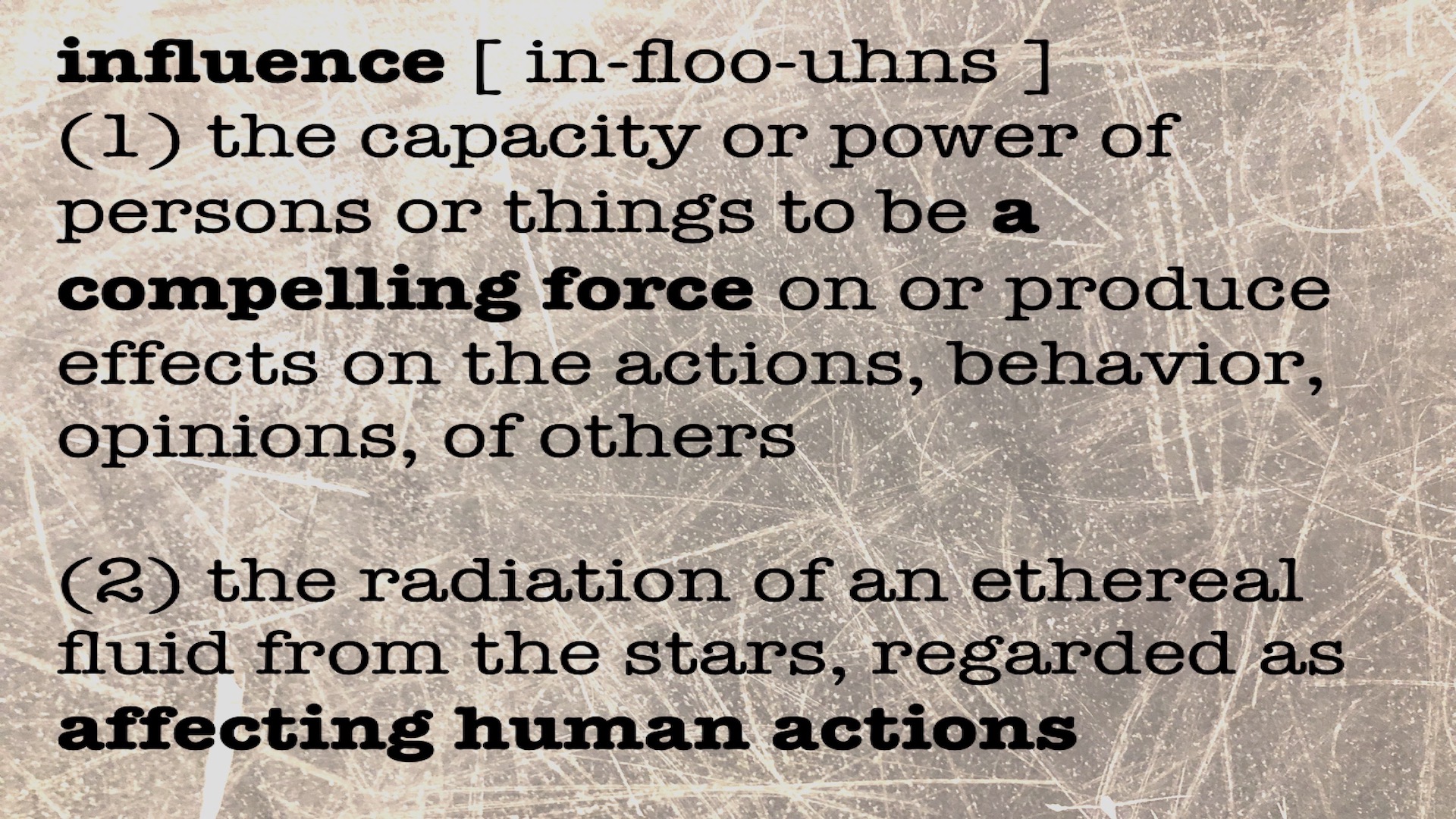
The dictionary defines “craving” as a great or eager desire, or a yearning. But I believe the Bible defines God-honoring craving as the longing for an intimate relationship with God that is implanted by God Himself.
The people of Judah had gone astray from God and were trying to satisfy their urges with foreign gods and pagan idolatry. When King Asa called these backsliders back to God, here’s how he did it—
[Asa] commanded Judah to seek the Lord, the God of their fathers—to inquire of and for Him and crave Him as a vital necessity—and to obey the law and the commandment. (2 Chronicles 14:4 AMP)
Contrast this with the temporary cravings of earth—
But those who crave to be rich fall into temptation and a snare and into many foolish, useless, godless, and hurtful desires… (1 Timothy 6:9 AMP)
This world is fading away, along with everything that people crave. But anyone who does what pleases God will live forever (1 John 2:17 NLT).
Nowhere are godly cravings and earthly cravings better contrasted than in James 4:1-6.
In this passage, the Greek word for desires (v. 1) and pleasures (v. 3) is hedone. This is where we get our English word “hedonism.” There is nothing wrong with pleasure—for God Himself takes pleasure—but it’s what pleasures we are craving that can make them ungodly. James rightly points out that the wrong hedonism is a craving to fulfill “your desires,” “your pleasures,” and to desire “friendship with the world” (v. 1, 3, 4)
Jesus talked about worldly cravings—using the same word hedone—when He said, “The seed that fell among thorns stands for those who hear, but as they go on their way they are choked by life’s worries, riches and pleasures [hedone], and they do not mature” (Luke 8:14).
Notice the same thing in Isaiah 58:2 where God declares that people “seem eager” to delight in God, but it’s only a show for them to satisfy fleshly cravings. John Piper noted, “God means they are delighting in their business and not in the beauty of their God. He does not rebuke their hedonism. He rebukes the weakness of it. They have settled for secular interests and thus honor them above the Lord.”
Instead, notice the fulfilled cravings when we seek God: “If you keep your feet from breaking the Sabbath and from doing as you please on My holy day, if you call the Sabbath a delight and the Lord’s holy day honorable, and if you honor it by notgoing your own way and notdoing as you please or speaking idle words, then you will find your joy in the Lord, and I will cause you to ride in triumph on the heights of the land and to feast on the inheritance of your father Jacob. For the mouth of the Lord has spoken” (Isaiah 58:13-14).
I like that reminder that “the mouth of the Lord has spoken.” The origin of the word craving is the Old Norse word krefja, which means to lay claim on something because of a promise. God has promised, and so we can claim it.
James assures us that the spirit God implanted in us envies intensely (James 4:5). We were made to crave God’s presence, we were made to find ultimate satisfaction in His presence, we were made to find eternal delight in knowing Him more intimately!
The proud person says, “God, I know what I want. Give it to me.” The humble person says, “God, I know Your presence is the only thing that will satisfy me. Give it to me.”
The craving in our spirit can be redirected from earthly yearnings to God-honoring yearnings by yielding to the Holy Spirit. I would humbly suggest that our prayer should be something like this—
“Father, grant that my cravings are for Your name to be hallowed, Your kingdom to be made visible, and Your will to be done. Let the enjoyment I have in Your presence shine out of me in a way that invites others to be dissatisfied with their earthly cravings and find their ultimate satisfaction in a personal relationship with You through Jesus Christ. Holy Spirit, continue to refine and redirect all of my cravings away from earthly things to eternal pleasures. In Jesus’ name I pray, Amen.”