Takin’ Him To Hollywood Boulevard

Listen to the podcast of this post by clicking on the player below, and you can also subscribe on AppleSpotify, or Audible. 

Jesus sent us and the Holy Spirit empowers us to take the Good News to all nations—all the streets (Luke 24:47-49; Acts 1:8)—even the streets of Samaria where we will have more differences than similarities. 

There is one street that has infiltrated and affected every other street more profoundly than any other: Hollywood Boulevard. The constant bombardment of messages through movies, television programs, music, literature, and the arts is almost immeasurable. 

I think Christians rarely stop to ponder how much of the culture on Main Street is influenced by the content from Hollywood Boulevard. Probably because so few Christians are involved in the artistic or creative communities.  

Here’s what we need to remember: All of this creativity is God-given. The opening words in the Bible say, “In the beginning God created…” (Genesis 1:1). 

We specific examples of God-given creative skills in:

  • Bezalel—Exodus 31:1-5 
  • Oholiab—Exodus 31:6, 35:34 
  • craftsmen and craftswomen—Exodus 31:6; 35:10, 22, 25 
  • Huram—1 Kings 7:13-14 
  • food administrators—Acts 6:3 
  • Tabitha—Acts 9:36-39 

(You can check out all of the Scriptures mentioned in this post here.) 

In more modern times, we see notable creative people giving credit to God for their abilities. 

  • William Shakespeare’s use of biblical themes—and even exact phrases—throughout his work is easy to spot. In the opening line of his last will and testament, he wrote, “I commend my soul into the hands of God my Creator, believing through the merits of Jesus Christ, my Savior, to be made a partaker of life everlasting.” 
  • Johan Sebastian Bach, considered by many to be the greatest composer to ever live, placed “S.D.G.” on every one of his musical compositions, which stands for Sola Deo Gloria: only for the glory of God. 

The apostle James tells us that every good and beautiful gift has come to us from God our Creator (James 1:17). And then this is my paraphrase of a similar thought the apostle Peter—

Each of you should use whatever gift you have received to serve others, as faithful stewards of God’s grace in its various forms. If anyone speaks [writes, paints, composes, sculpts], they should do so as one who speaks [writes, paints, composes, sculpts] the very words of God. (1 Peter 4:10-11)

So, here are four thoughts about how we can take the Good News of Jesus to Hollywood Boulevard. 

  1. Create a beautiful culture in your home, your Main Street, your workplace, your school. Ask the Holy Spirit to help you answer the question, “What can I do so that the love and beauty of Jesus will be felt here?” 
  1. Use your creative skills—write poems, compose music, paint a picture, sew clothing, bring innovation to your job.
  1. Support beautiful authors, musicians, moviemakers, painters, etc. Hollywood produces what they think will make money, so if you are supporting creators of beautiful things, they will produce more of those things. 
  1. Leverage Hollywood’s culture to talk to others about heavenly culture. Point out biblical themes, challenge the rationale behind unbiblical lyrics, etc.  

“Christians need to ask themselves a few key questions to help us respond to the society around us. First, what is good in our culture that we can promote, protect, and celebrate? Second, what’s missing in our culture that we can creatively contribute? Third, what’s evil in our culture that we can stop? And fourth, what’s broken in our culture that we can restore?” —John Stonestreet 

Don’t complain—create something better. 

Don’t compromise—promote what is beautiful and edifying. 

The Holy Spirit can empower us to take the Good News of Jesus even to Hollywood Boulevard! 

If you’ve missed any of the other messages in our series Takin’ Him to the Streets, you can find them all here. 

►► Would you please prayerfully consider supporting this ministry? My Patreon supporters get behind-the-scenes access to exclusive materials. ◀︎◀︎

Takin’ Him To Easy Street And Skid Row

Listen to the podcast of this post by clicking on the player below, and you can also subscribe on AppleSpotify, or Audible. 

Jesus sent us and the Holy Spirit empowers us to take the Good News to all nations—all the streets (Luke 24:47-49; Acts 1:8). As we move away from Jerusalem and into Judea, we should expect to see more differences with our audience. And then as we move into Samaria, there will probably be more differences than similarities. Regardless of how little we may have in common with those on other streets, the Holy Spirit still empowers us to witness there. 

(You can find all of the Scriptures I reference in this post by clicking here.) 

When we don’t live on someone else’s street, we tend to make some pretty big assumptions about them. For example, until I married a school teacher, I thought, “How nice it must be to be done with work by 3:00 every afternoon and have three months off in the summer!” 

Mistakenly, we think we can so easily fix the problems people on other streets have—we think we can show them how simple it is to correct anything out of balance on their street. These are natural thought patterns when so little of our circles overlap.

If you live on Main Street, two streets which are quite different from you are Easy Street and Skid Row. When it comes to finances, there tends to be extremes in our thoughts about the Samaritans that live on those streets—

  • Those on Easy Street only cares about themselves
  • Those on Skid Row should work harder 
  • Those on Easy Street have too much—it’s not fair! 
  • Those on Skip Row don’t have enough—it’s not fair! 

But here’s the thing: It’s really not about the money but it’s about our attitude about the money. 

In Luke 21:1-6, Jesus saw both rich people from Easy Street placing their tithe in the temple treasury, and a poor widow from Skid Row doing the same. Jesus said this widow put in more than anyone else. He was talking in terms of quality, not quantity. 

While they were still in the temple, the disciples pointed out how beautifully embellished the temple was. These decorations came from the money those on Easy Street had contributed. Jesus told them not to focus on the temporal temple but on the eternal Kingdom of God.  

As I said, Jesus doesn’t have a problem with money, but He does warn us about our ungodly attitude toward money (Luke 8:1-3; Matthew 27:57; Acts 4:32-5:4; Exodus 20:17; Luke 12:13-22).  

Even though Easy Street and Skid Row seem to be at opposite ends of the spectrum, I think we are effective witnesses for Jesus on these streets in exactly the same way. 

(1) Guard your attitude about money. Remember that Gad often provides for us by giving us a skill, and then making a job available that can use our skill. So let’s be thankful for our God-given jobs. Then we guard our attitude about money by tithing regularly, and making sure that when we bless others financially, we do it without expecting any fanfare (Colossians 3:23; Malachi 3:10; Matthew 6:2-3). 

(2) Let God be unique as unique with these folks on Easy Street and Skid Row as He is with you on Main Street. Don’t try to be someone else, and don’t expect others to be you—simply obey what God has spoken to your heart, just as you allow others to obey what God has spoken to their hearts. 

(3) Don’t tell, but show how you use the resources God has given to you. It’s not our place to “preach” to others about how they should or shouldn’t be handling their finances, but simply live out the biblical principles outlined above, and let your life show your godly attitude. 

(4) Always turn the focus to the eternal. Just as Jesus did with His disciples in the temple, He always reminded people that this world with its perks or tragedies is only temporary. What ultimately matters is where we will spend eternity (Luke 13:1-5). 

Money is always a touchy subject with people, so let’s make sure we have our own attitude aligned with Scripture before we try to bring the subject up with others. 

If you’ve missed any of the other messages in our Takin’ Him To The Street series, you can find them all here. 

►► Would you please prayerfully consider supporting this ministry? My Patreon supporters get behind-the-scenes access to exclusive materials. ◀︎◀︎

Responding To The Invitations

Listen to the podcast of this post by clicking on the player below, and you can also subscribe on AppleSpotify, or Audible.

The apostle Paul shows us how simply sharing the good news about Jesus opened a door for him to speak to a very influential group in Athens. I experienced something similar that I think will be helpful for you to hear. 

The Scripture I reference in this video is Acts 17:16-34. 

You can watch the full sermon this clip came from by clicking here.

►► Would you please prayerfully consider supporting this ministry? My Patreon supporters get behind-the-scenes access to exclusive materials. ◀︎◀︎
Takin’ Him To Rodeo Drive

Listen to the podcast of this post by clicking on the player below, and you can also subscribe on AppleSpotify, or Audible. 

Jesus has sent us on-mission (which means we are missionaries) to every street. We don’t go in our power, but we are empowered by the baptism of the Holy Spirit (see Luke 24:46-49). 

Jesus said our missionary work would take us to every street, starting with Jerusalem—which we have called Main Street. These are people very similar to us. Then our mission will expand into all Judea (Acts 1:8). These are people that have less in common with us. Last week we talked about taking the message of Jesus to Lombard Street: Talking with people who have knowledge of the Bible, but tend to twist and turn with the popular traditions of the day. 

Remember that our mission is to be witnesses—share the Scripture and our personal story. It’s not our responsibility to try to open people’s minds so they can repent, but the Holy Spirit opens minds and calls people to repentance. 

The apostle Paul reminded us that, “The god of this age has blinded the minds of unbelievers” (2 Corinthians 4:4). The Holy Spirit uses our witness as the catalyst to open minds. This clash of light and darkness creates acceptance and anger. Notice these contrasts in one short segment of Paul and Silas’ missionary journey in Acts 16:13-24 and 17:1-13:

  • Acceptance—Acts 16:13-15 
  • Anger—16:16-24 
  • Acceptance—17:1-4 
  • Anger—17:5-6 
  • Acceptance—17:10-12 
  • Anger—17:13 

The opposition in Philippi brought Paul and Silas to Thessalonica, and the opposition in Thessalonica brought them to Athens. 

Athens was named for the goddess Athena, and it has been called “the university city of the Roman world.” Philo (a Jewish historian) called the Athenians “keenest in intellect.” It was the center of art, literature, and philosophy 

I’m going to call Athens “Rodeo Drive.” 

Rodeo Drive is called “the intersection of luxury, fashion and entertainment.” Kay Monica Rose, the Rodeo Drive Committee President, said, “There is nothing in the world comparable to Rodeo Drive. The legendary street’s magic continues thanks to the exemplary craftsmanship from today’s greatest fashion houses and brands, the architect-designed boutique spaces, the spectacular window displays, artist collaborations and pop ups, and our unrivaled customer service. At the heart of my vision for Rodeo Drive is the preservation and advancement of an unmatched legacy.”  

A marketing professor once told me, “When advertising, you have to remember that everyone has radio station WIFM playing in their head—What’s in it for me?” The people on Rodeo Drive are self-focused and self-assured. 

How do we take the message of Jesus to those Judeans on Rodeo Drive? Let’s learn from Paul’s time there (Acts 17:16-34). 

  1. Control your anger. Even though Paul was “greatly distressed,” he didn’t let his anger control him, but he kept his distress under control. 
  2. Use measured words. Paul “reasoned” with the people there, which means he engaged in meaningful dialogue with them.  
  3. Don’t argue. Some to the Athenians “disputed with him [Paul]” but he didn’t dispute back. Instead he was preaching the good news about Jesus and the resurrection. 
  4. Start where they are. Paul noted that the Athenians were “very religious.”  He doesn’t condone their idolatry, but he simply uses it as a conversation starter. 
  5. Move to the eternal issue. He then proceeds to point them to Jesus as the “unknown god” that they are worshiping, bringing everything back to His resurrection from the dead.  
  6. Be ready for acceptance and anger. As in Philippi and Thessalonica, there were some who accepted the Gospel message and some who got angry when they heard it.  

Remember: We don’t change minds—the Holy Spirit does by using our words as a catalyst. 

If you’ve missed any of the other “Streets” we have discussed in this series, please click here to get caught up. 

►► Would you please prayerfully consider supporting this ministry? My Patreon supporters get behind-the-scenes access to exclusive materials. ◀︎◀︎
Takin’ Him To Lombard Street

Listen to the podcast of this post by clicking on the player below, and you can also subscribe on AppleSpotify, or Audible. 

As missionaries, we are people sent on a mission. We are sent to everyone everywhere. We are to take Him to every street where God sends us.

“Main Street” (or Jerusalem) is a great place to start, and probably a place where we will always have work to do. These will typically be the people that are most like us—people with whom we will have the most in common. 

There are others that need to hear the Good news of forgiveness that Jesus has made available. As our circle of witness widens, we may have less in common with those with whom we are interacting. This may take us out of our comfort zone, but since the Holy Spirit is in us we will never be out of our empowerment zone! 

But you will receive power when the Holy Spirit comes on you; and you will be My witnesses in Jerusalem, and in all Judea (Acts 1:8). 

We need to ask two questions: 

  1. What did it mean then? Judea was still compromised of Jewish people, but it was the area slightly outside the neighborhood of Jerusalem. 
  2. What does it mean now? These are people very similar to people on Main Street, but we are starting to see more differences. These differences often become the source of controversies. 

I’m going to describe some people in our Judea as cultural Christians but not biblical Christians. In the time of Jesus we could think of the Pharisees: People who would call themselves godly because they have set their own standards. 

Lombard Street in San Francisco is a short, curvy street. This is a one-way street and motorists are only supposed to drive 5 mph, and still there are frequent controversies on the right-of-way between homeowners, motorists, work crews, bicyclists, and pedestrians. Everyone thinks their way is the right way. 

How do we take the message of Jesus to those on our “Lombard Street”?

(1) Distinguish the biblical from the non-biblical. 

Both the Pharisees that interacted with Jesus and today’s cultural Christians seem to quote more from their own traditions than they do from the Scripture, so we need to distinguish that the source of our beliefs is from God’s inspired Word. (I share more about the concept of biblical, unbiblical, and non-biblical in this post.) 

A great example for us is how Jesus answered two questions from an expert in the Mosaic law: How do I earn eternal life? Who is my neighbor? See Luke 10:25-37.

(2) Stick to Scripture and your personal story.  

Remember that the person with an experience is never at the mercy of the person with an argument. When the Sanhedrin questioned the legitimacy of the healing of a lame man, Luke wrote, “But since they could see the man who had been healed standing there with them [Peter and John], there was nothing they could say” (Acts 4:14)! 

Love the personal story of the healed blind man in John 9! 

Judea can be translated “he shall be praised.” We glorify Jesus not by arguing with those on Lombard Street, but by simply proclaiming biblical truth and our personal testimony. 

Sing to the Lord, all the earth; proclaim good news of His salvation from day to day. Tell of His glory among the nations, His wonderful deeds among all the peoples. (1 Chronicles 16:23-24) 

As we stick with the Scripture and our personal testimony, the Holy Spirit will use our witness to open minds to the Good News of Jesus (2 Corinthians 3:18-4:5). 

Follow along with all of the streets we are looking at in our series Takin’ Him to the streets by clicking here.

►► Would you please prayerfully consider supporting this ministry? My Patreon supporters get behind-the-scenes access to exclusive materials. ◀︎◀︎
Takin’ Him To Main Street

Listen to the podcast of this post by clicking on the player below, and you can also subscribe on AppleSpotify, or Audible. 

Just as assuredly as Jesus fulfilled God’s promise of His crucifixion and resurrection, we Christians are fulfilling God’s promise that we would take the message of forgiveness of sins to the whole world (Luke 24:45-48). We are taking Him to every street where God sends us. There is a song written by Michael McDonald called “Takin’ it to the streets.” One verse says—

Take this message to my brother 
You will find him everywhere 
Wherever people live together 
Tied in poverty’s despair

We know what the “it” is. He is a Savior, a God, a Redeemer, a Father who has made it possible for everyone everywhere to be in a personal relationship with Him for all of eternity! 

When anyone talks about taking the Good News of Jesus to people, our minds typically think “missionary.” 

What is a missionary? What comes to mind when you think of a missionary? 

Quite simply, a missionary is a person sent on a mission (see Luke 24:47; Matthew 28:19-20). 

(You can read all of the Scriptures I reference in this post by clicking here.)

We are not sent on our mission unprepared, but Jesus promised us both His authority and the indwelling power of the Holy Spirit (Matthew 28:18-19; Luke 24:49; Acts 1:8). In both Luke and Acts, Jesus says that our witness is to begin in Jerusalem. 

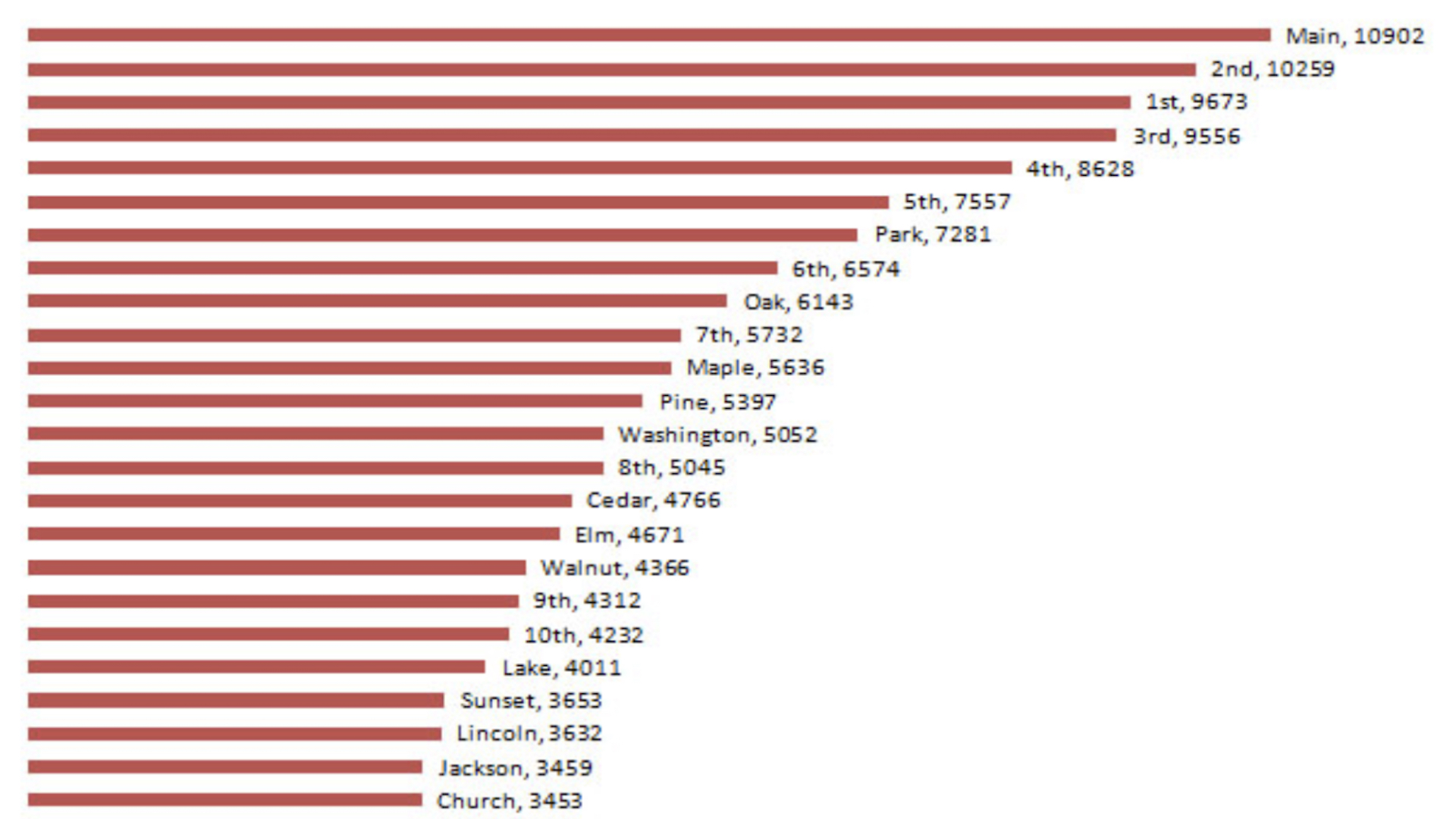
I recently looked up a list of the most common street names in America. I found that the most common street name is “Main Street.” But Main Street is also used as a way for people to describe the average setting in the USA. 

Going to “Jerusalem” or “Main Street” first is foretold in the Old Testament (Ezekiel 3:4-5). We’re not first sent to people with an unknown language or obscure customs, but to people we know and understand. These are people to whom we can easily find common interests. 

There are two simple steps when we take Jesus to our Main Street.

  1. Ask the Holy Spirit to reveal truth to you today and every day. 

You cannot give to others what you do not first have yourself, so you need to hear what the Holy Spirit is saying to you first. Pray before reading the Bible to ask the Spirit to give you insight (Psalm 119:18). 

  1. Find a friend and tell them what was revealed to you.   

After Jesus was revealed to Andrew, he found Peter and told him what he had discovered. And after Philip met Jesus, he found Nathanael and brought him to Jesus (John 1:35-46). 

Every person with whom you interact today is precious to God. Our mission is to help them realize that awesome truth. 

So get filled up with the wisdom from the Spirit and then find a friend on Main Street and bring them to Jesus! 

Follow along with all of the messages in this series Takin’ Him To The Streets by clicking here. 

►► Would you please prayerfully consider supporting this ministry? My Patreon supporters get behind-the-scenes access to exclusive materials. ◀︎◀︎

The Catalyst Of Our Witness

Listen to the podcast of this post by clicking on the player below, and you can also subscribe on AppleSpotify, or Audible. 

Jesus fulfilled all of the jots and tittles of prophecy, showing that God is the Promise Maker is God the Promise Keeper. 

We need to be careful of overlooking details we think might be insignificant because we can easily think that our small lives are somehow insignificant. They are not! As Tom Kaastra reminded us last week, we are here on purpose and for a purpose; our lives are eternally significant.  

Immediately after His resurrection, the followers of Jesus struggled to wrap their minds around what they had just experienced. Just before His ascension, Jesus explained to them both what had happened already, and what was about to happen (Luke 24:44-49). 

Jesus said He had already fulfilled the promised about His crucifixion and resurrection. Luke writes that Jesus “opened their minds so they could understand” (v. 45). 

Notice two important things:

  1. The Spirit of Jesus—the Holy Spirit—opens minds 
  2. He opens minds to grasp the truth in Scripture 

Jesus also says that we are still fulfilling the “what is written” (v. 46) in the the proclamation of the death and resurrection of Jesus. We are fulfilling the prophecy that says the message of Jesus will be preached everywhere to all peoples, so that they also can receive the forgiveness Jesus paid for and repent of their Godless ways. 

Who opens minds? The Holy Spirit. 

What does the Spirit use as a catalyst to open minds? Our witness. 

Who empowers our witness? The same Holy Spirit (see Luke 24:47-49; Acts 1:4-8). 

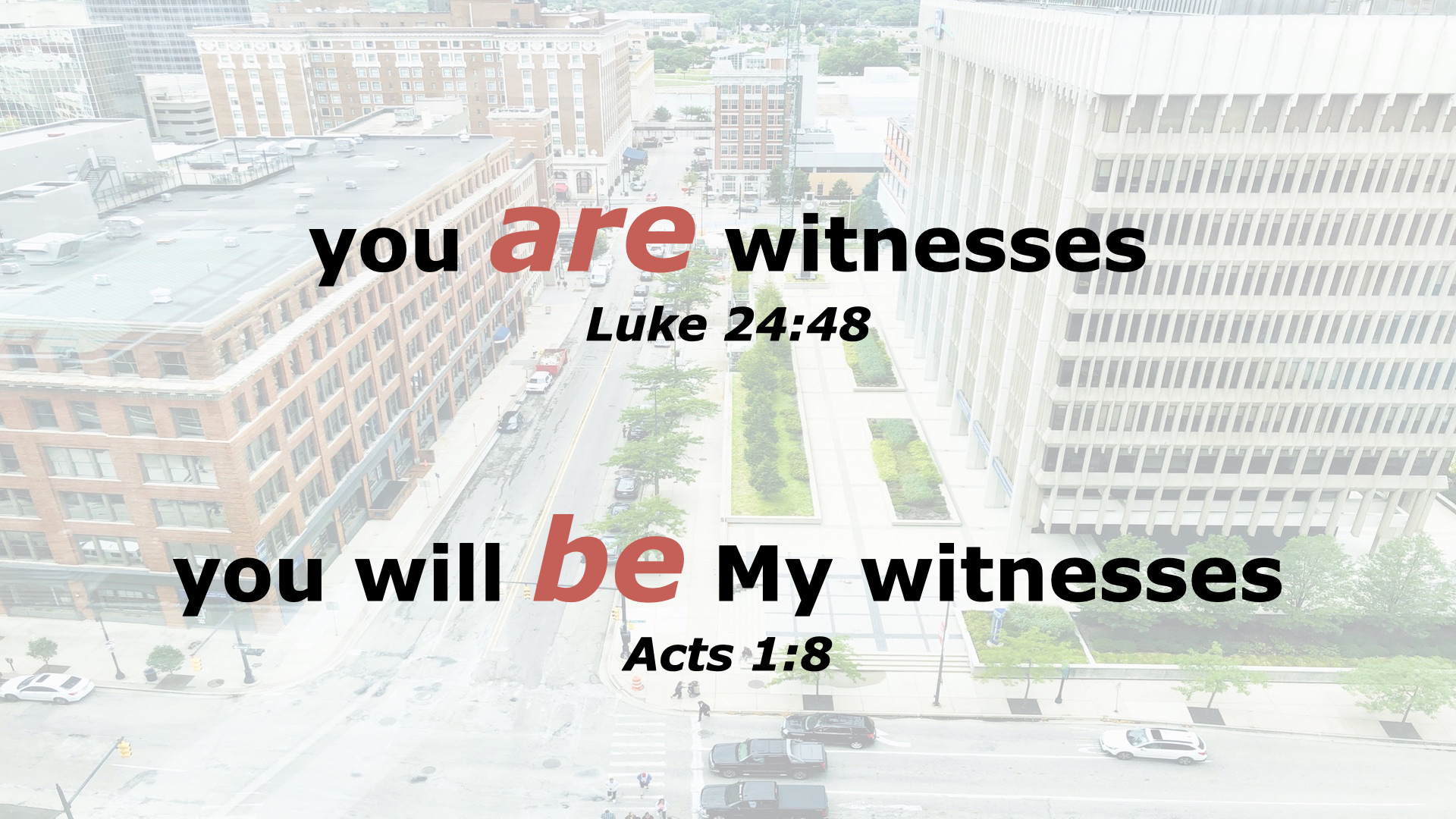
A witness is a truth-teller, who tells their firsthand story and who amplifies their verbal testimony by their Christ-honoring lifestyle. Jesus used two phrases to remind us that witnessing is not something we do, but it is who we are: 

  • you ARE witnesses (Luke 24:48) 
  • you will BE My witnesses (Acts 1:8) 

Holy Spirit-baptized Christians are empowered to take Jesus to every street. God has strategically and purposefully placed us on our “streets” to proclaim our witness. From Easy Street to Skid Row, and everywhere in between, we are to fulfill the prophecy of proclaiming this good news to all nations (see 1 Corinthians 9:20-22).

The Holy Spirit opens minds closed to God. He uses our witness as the catalyst for people to repent from their sin and receive the forgiveness that Jesus made available. 

So don’t stop at just receiving Jesus as your Lord and Savior, but also receive the empowering gift He promised—the baptism in the Holy Spirit! 

Please follow along with all of the messages in this series called Takin’ Him to the streets by clicking here. 

►► Would you please prayerfully consider supporting this ministry? My Patreon supporters get behind-the-scenes access to exclusive materials. ◀︎◀︎
God In The Footnotes?

Listen to the podcast of this post by clicking on the player below, and you can also subscribe on AppleSpotify, or Audible. 

Can we trust our Bibles? There are some things that skeptics point to that we need to be able to defend—even in this model prayer that we have been studying. We come to the last verse of this prayer, which many of you probably learned or heard as, “For Yours is the kingdom and the power and the glory forever. Amen.” Yet some Bibles have a footnote here that notes that this doxology is not seen in all biblical manuscripts. 

How are we to handle this observation, and others like it in places like Mark 16:9-20 and John 7:53-8:11? 

Let’s start with how we got the Bibles we have today, because it is very instructive. 

We don’t have the autographs (original writings) but we have manuscripts (copied by a trained scribe from the autograph, and then copied from by yet another reliable scribe, and so forth). The oldest calfskin manuscript we have goes back to 1500 BC, and the oldest papyrus manuscript goes back to 2400 BC. 

The scribes were incredibly talented and disciplined men. They became a recognized group called the Sopherim (scribes) in about 500 BC. By AD 100, the Talmudic scribes eclipsed them, and then the Masoretic scribes—the most stringent scribes of all—dominated from AD 500-900. 

Let’s turn our attention first to the manuscripts that compromise what we call the Old Testament. What did Jesus—and others that lived in His time—call those 39 books of the Old Testament? They were called Scripture. Those books were not in doubt even before Jesus was on earth. 

Dr. Peter Flint notes, “The biblical Dead Sea Scrolls are up to 1,250 years older than the traditional Hebrew Bible, the Masoretic text. We have been using a one-thousand-year-old manuscript to make our Bibles. We’ve now got scrolls going back to 250 BC. … Our conclusion is simply this—the scrolls confirm the accuracy of the biblical text by 99 percent.” 

In the New Testament era, the disciples of Jesus went out in pairs. Their oral transmission of the news of Jesus and the quoting of Scripture was verified by their traveling partners. Even for those who happened to be by themselves (e.g. Philip in Samaria), there was always follow up by other church leaders. 

So the New Testament epistles were written to verify the spoken words—James was the earliest (probably AD 45). The number of manuscripts we have of these New Testament words are simply astounding! 

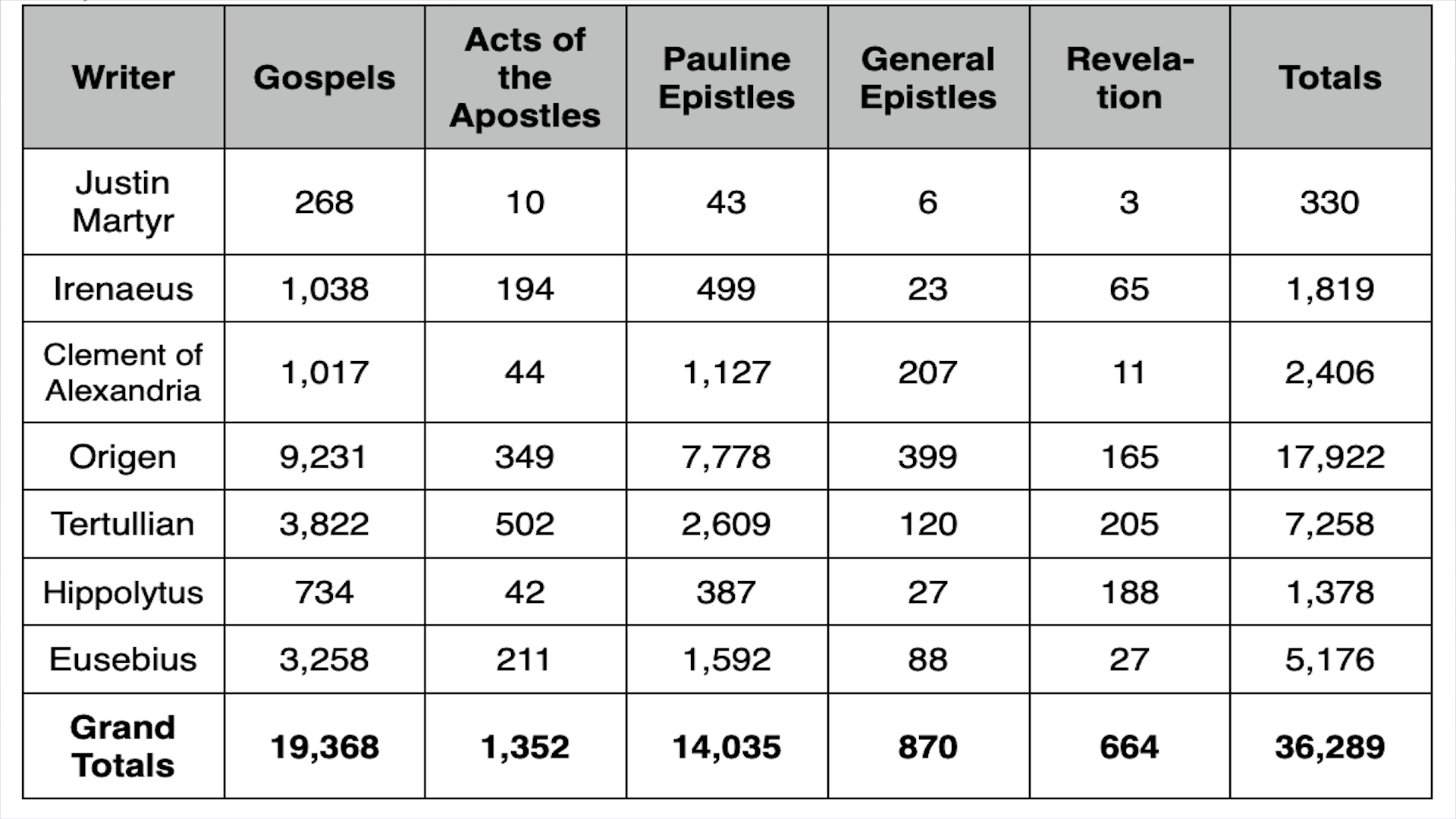
After the canon of the New Testament was completed, the church fathers quoted so much of the New Testament in their letters and books that we could completely reconstruct those 27 books just from their writings. 

With this many manuscripts in existence, is it likely that there would variations in manuscripts? Yes. But none of the variations ever discovered have been fundamental enough to change anything in the meaning. Josh McDowell states, “Compared with other ancient writings, the Bible has more manuscript evidence to support it than the top ten pieces of classical literature combined.” 

So how do we handle these places where scholarly footnotes tell us of a discrepancy in the existing manuscripts? 

  1. Get the context—does this fit with what is happening around it? 
  2. Is there corroboration—can we cross-reference it from elsewhere in the Bible? 

In the conclusion of the powerful model prayer Jesus has given us, the closing words appear to be a doxology. But I think we can trust this because for three main reasons: 

  1. This doxology seems to come full circle with how the prayer begins in: Our Father in heaven, hallowed be Your name, Your kingdom come, Your will be done, on earth as it is in heaven (vv. 9-10). 
  2. These words are found almost verbatim in the words of David: Yours, Lord, is the greatness and the power and the glory and the majesty and the splendor, for everything in heaven and earth is Yours. Yours, Lord, is the kingdom; You are exalted as head over all (1 Chronicles 29:11). 
  3. Finally, these words are similar (if not identical) to the words that John records he heard in Heaven—Revelation 4:11; 5:12-13; 7:12; 11:15-17 

As we have noted throughout this prayer series, the focus of this prayer is two-fold: It is both an acknowledgement of the awesome, praiseworthy glory of our God, and it is a petition for our lives to be empowered to help others see our glorious God and Savior for themselves. 

For these reasons, this doxology, I believe, is an indispensable part of this majestic prayer. 

If you missed any of the other messages in this series, you can check them all out here. 

►► Would you please prayerfully consider supporting this ministry? My Patreon supporters get behind-the-scenes access to exclusive materials. ◀︎◀︎
Living In Kingdom Power

Listen to the podcast of this post by clicking on the player below, and you can also subscribe on AppleSpotify, or Audible. 

Last week I shared a quote about this Kingdom Prayer from the YouVersion reading plan The Prayer That Turns The World Upside Down. Let me remind you of one phrase: “This prayer is dangerous, overturning the kingdom of the principalities and powers of this world.” 

We live on Earth but we are citizens of the Kingdom of God. This prayer is a desire for that eternal Kingdom to be seen by Earthlings so that they will also obtain citizenship. So we saw last week that the phrase “Hallowed be Your name” is both an acknowledgement of God’s greatness and a request that we would display His greatness in our lives. The next phrase—Your Kingdom come (Matthew 6:10)—has that same two-part motivation: acknowledgment and request. 

I wrote Shepherd Leadership to address the non-biblical practices in our churches that had taken on biblical weight. I think this is something that invades many Christian’s thinking about what “the Kingdom of God” actually is. 

Here’s two things I know for sure: (1) Kingdom power ≠ political power, and (2) Kingdom power ≠ religious power. 

A.W. Tozer wrote—

“In Christian circles today, the church that can show an impressive quantitative growth is frankly envied and imitated by other ambitious churches. Numbers, size and amounts seem to be very nearly all that matters…. The great goddess, Numbers, is worshiped with fervent devotion, and all things religious are brought before her for examination. Her Old Testament is the financial report, and her New Testament is the membership roll. To these she appeals as the test of spiritual growth and the proof of success or failure in most Christian endeavors. A little acquaintance with the Bible should show this up for the heresy it is.” 

Jesus was clearly focused on His Father’s Kingdom. The phrase “Kingdom of God” is used over 50 times in the Gospels, and Jesus uses words like “Heaven,” “Hell,” and “eternal life” over 120 times. 

In teaching us to pray, Jesus called us to focus on the eternal. We want people to see “Our Father in Heaven”—in all His hallowed majesty and glory—not merely in the ways we attempt to “Christianize” life on Earth. 

Alan Redpath said, “Before we can pray, ‘Lord, Thy Kingdom come,’ we must be willing to pray, ‘My Kingdom go.’” 

Jesus constantly taught like this, “The Kingdom of Heaven is like….” He said, “The coming of the Kingdom of God is not something that can be observed” (Luke 17:20). Or better stated: The Kingdom of God doesn’t arrive because I oversee something and announce it. 

Peter summed up the ministry of Jesus like this, “How God anointed Jesus of Nazareth with the Holy Spirit and power, and how He went around doing good and healing all who were under the power of the devil, because God was with him” (Acts 10:38).

Jesus told us to live the same way—“When Jesus had called the Twelve together, He gave them power and authority to drive out all demons and to cure diseases, and He sent them out to proclaim the kingdom of God and to heal the sick” (Luke 9:2). 

The early Church was known for living differently—cared for the poor, the young, the sick, the elderly; honored marriage; built hospitals. They were not known because they had political clout. 

Our living Kingdom-focused is the answer to our prayer for God’s Kingdom to come. 

For the kingdom of God is not a matter of talk but of power. (1 Corinthians 4:20) 

We hallow God’s name and we make His Kingdom visible when we seek Him as our only priority. Both of these phrases are acknowledgments of His absolute sovereignty and our desire to be empowered to be anointed by the Holy Spirit to go around doing good and delivering all who are under the power of the devil. 

I love this short verse from A.B. Simpson—

Help me to work and pray, 
help me to live each day, 
that all I do may say, 
‘Thy kingdom come.’

Check out the other messages in our series Kingdom Praying by clicking here. 

►► Would you please prayerfully consider supporting this ministry? My Patreon supporters get behind-the-scenes access to exclusive materials—like this recent Bible study insight from the Gospels. ◀︎◀︎

Helping Skeptics See The King

Listen to the podcast of this post by clicking on the player below, and you can also subscribe on AppleSpotify, or Audible. 

I once worked with a guy that was the epitome of “all talk and no action.” After a while people just stopped listening to him or believing anything he said. But something worse is someone who says he will do something but doesn’t have the power to finish what he started. In that case, you may have believed him and not taken any steps of your own, so when he finally admits defeat, you are totally unprepared to step in to help finish the task. 

I think that comes close to the two attitudes people had prior to the First Advent of Jesus in Bethlehem. Some people thought all of God’s promises had just become “all talk and no action.” 

But after Jesus began His public ministry, His skeptics may have originally thought He was also “all talk and no action,” but when they saw how the people responded to Him, they realized He at least had the power to sway a crowd. But they certainty didn’t think He could finish what He started. 

The religious elite—the Sanhedrin—had their own plans in the works, and it appeared to them that Jesus was just going to get in the way. So they hatched a plan to have Pontius Pilate, the Roman governor, have Jesus crucified. As Jesus is hanging on the Cross, you can hear the skepticism and derision in the voices of these religious elite—

In the same way the chief priests, the teachers of the law and the elders mocked Him. “He saved others,” they said, “but He can’t save Himself! He’s the King of Israel! Let Him come down now from the Cross, and we will believe in Him. He trusts in God. Let God rescue Him now if He wants Him, for He said, ‘I am the Son of God.’” (Matthew 27:41-43)

After all, they had experienced “messiahs” before (Acts 5:35-37) so they thought this Jesus from Nazareth was just the next in a long line of pretenders. “King of Israel, indeed! Ha!” 

But when someone tells you what they are going to do, and then they actually do it, skeptics are turned into believers. We see this happen in people like Nathaniel, a whole village of Samaritans, and one of the thieves that was crucified alongside Jesus (John 1:43-51; John 4:9-42; Luke 23:39-42)

Even though Jesus told His disciples exactly what was going to happen to Him in Jerusalem—and then it did!—they were still skeptical of the claims of His resurrection until they saw it for themselves (Matthew 20:18-19; John 20:3-8). 

Just like the prophets told us how Jesus would come from a virgin and be born in Bethlehem—and then it happened!—so Jesus foretold His death and resurrection. 

There is a common theme here that turned all these skeptics into believers:

  • Philip said to Nathaniel, Come and see Jesus” 
  • The Samaritan woman said to her fellow townsfolk, “Come and see Jesus”  
  • The criminal saw and heard Jesus’ loving words when He forgave His crucifers 
  • And the doubting disciples ran to the tomb and “saw and believed” 

(See John 1:46; John 4:29; Luke 23:34; John 20:8) 

Skeptics need to see and hear for themselves that Jesus has the power to do what He says He will do. We are the ones that preach this Good News to them by the way we live. 

We have to live as good citizens of the King of kings so that people will “come and see” what a good and loving King He is. For those who are skeptical of the claims of Jesus the King, we have to live in a way that makes it real. We have to help them see the King of kings! 

Advent isn’t just a long-ago event that we fondly remember. The First Advent is proof that God has the power to keep His word. And just as we have seen the First Advent, so we will see the Second Advent. 

If you’ve missed any of the messages in this Advent series, you can check them all out here. 

►► Would you please prayerfully consider supporting this ministry? My Patreon supporters get behind-the-scenes access to exclusive materials. Like this video where I explain what the Bible means when we “examine” our lives. ◀︎◀︎