Is That In The Bible?

A meme that makes me chuckle every time I see it is a “quote” attributed to Abraham Lincoln in which he says, “The problem with quotes found on the internet is that they are often not true.” 

(Not to spoil the joke for you, but unless Lincoln knew how to time travel to the future, I don’t think he knew about the modern internet! 😂) 

I love this meme because it captures something that so many people fall into: a quick acceptance of a statement without verifying its source or thinking through the implications of the statement’s truthfulness. 

Some insightful comments sound Shakespearean, but William never wrote them. 

Some pieces of wisdom sound Socratic, but Socrates never taught them. 

Some religious maxims sound godly, but the Bible never recorded them. 

I would like to invite you to join me in a new series we are beginning this Sunday called Is That In The Bible? I think you may be surprised to discover just how many phrases we call biblical aren’t, and how many phrases there are that we never realized are actually in the Bible. 

By the way, if you have a phrase that you would like to have us explore in this series, please leave it in a comment below. 

In this installment of this series, we asked: Is this in the Bible…

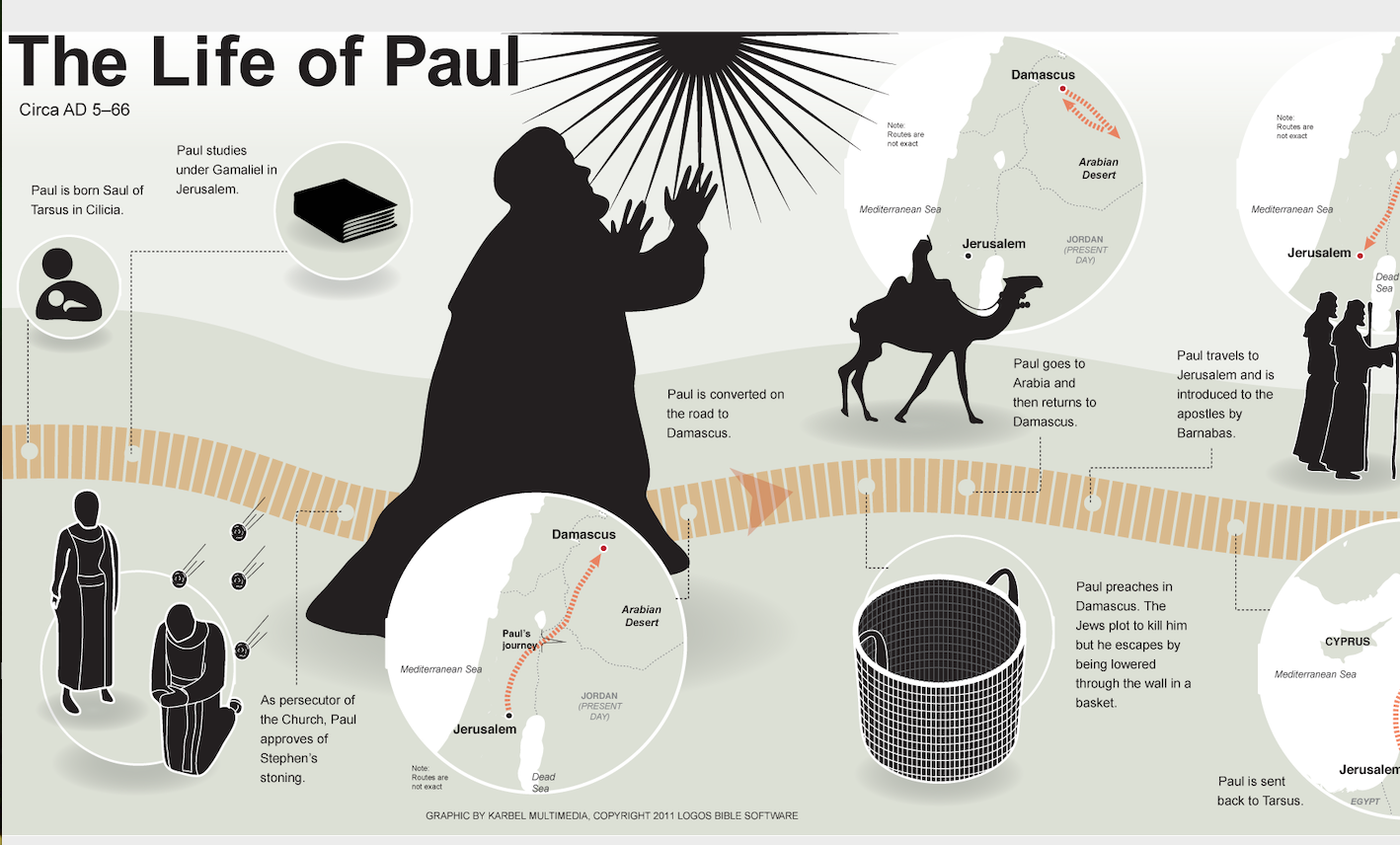
A Chronology Of The Life Of Paul

The Apostle Paul is a fascinating figure that looms so large across the New Testament and beyond.

I recently came across these amazingly helpful study tools to put the life of Paul into perspective. These are both from the Faithlife Illustrated Study Bible, which I highly recommend to you for adding a new depth to your Bible study time.

This is an illustrated timeline of the key dates and events of Paul’s life. Click on the graphic to view it better, or check it out on the Biblia website.

If you would like to research both the biblical texts and the attestations of Paul’s ministry outside of the New Testament, you may want to download this PDF chart → Apostle Paul Chronology

And it’s worth repeating: get a copy of the Faithlife Illustrated Study Bible for yourself as soon as you can!

Thursdays With Spurgeon—A Firm Doctrine

This is a weekly series with things I’m reading and pondering from Charles Spurgeon. You can read the original seed thought here, or type “Thursdays With Spurgeon” in the search box to read more entries.

A Firm Doctrine

     If a tree has to be taken up two or three times a year, you will not need to build a very large loft in which to store the apples. When people are always shifting their doctrinal principles, they are not likely to bring forth much fruit to the glory of God. It is good for young believers to begin with a firm hold upon those great fundamental doctrines that the Lord has taught in His Word.

From The Autobiography Of Charles Spurgeon 

This is true of any endeavor—can you imagine constantly shifting the way you learn math, or biology, or cooking, or anything else? There’s always a “learning curve” in every new endeavor that brings a momentary setback before there are new gains.

Thankfully, the Bible has a consistent message from Genesis to Revelation. Getting into the Word regularly and attending a Bible-preaching church will help you immensely. 

There is no “right way” to read the Bible. In fact, Spurgeon had a great response to a man who told him that he “read my Bible on my knees.” Spurgeon said—

“I think you read the Bible in a very uncomfortable posture, and if you had read it in your easy chair, you would have been more likely to understand it. Pray, by all means, and the more, the better, but it is a piece of superstition to think there is anything in the posture in which a man puts himself for reading.”

The point is not in what posture you read the Bible, or in what translation, or at what time of day, but the point is that you are regularly reading God’s Word. Get into the Word, and let the Holy Spirit get the Word into you. 

Life In The Spirit Study Bible (book review)

I love to read, averaging about 30 books per year. In addition to books, I have a lot of news feeds that I check daily. But hands down, everything else comes in a distant second place to my number-one read: the Bible. 

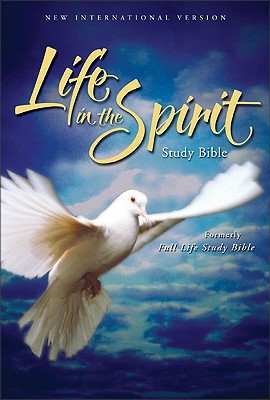
I read the Bible for myself. I read the Bible to prepare my Sunday messages. I read the Bible to teach classes. I read the Bible to confirm or refute what I am reading in other books and news feeds. And with all that Bible reading, I have also gravitated toward my favorite study Bible—The Life In The Spirit Study Bible. 

At one time people referred to this Bible as “the fire Bible” because of the graphic on the front cover depicting the fire that fell on praying Christians at the Pentecost celebration immediately following Christ’s ascension into heaven. That fire still falls in my heart every time I read God’s Word!

The study notes in this Bible are fantastic! But don’t be deceived by the name: these are not study notes that focus on the Holy Spirit out of proportion; rather, the role of the Spirit is merely noted where others have ignored it. Far too many people don’t ponder very much about the Holy Spirit’s involvement, except for perhaps the Book of Acts and maybe Paul’s instruction on the operational gifts of the Spirit in 1 Corinthians. The Life In The Spirit Study Bible simply seeks to make us aware of the Spirit’s involvement. 

In addition to the short commentary notes at the bottom of each page, there are several insightful and scholarly articles throughout this whole book that will make the Scripture come alive in new ways. 

This is my “preaching Bible” that I take with me for every sermon I deliver, which means it is the Bible I am diving deep into each day as I study. I cannot recommend this Bible to you highly enough. 

4 Holy Spirit-Enhanced Habits

According to Paul, there are only two ways people can live: in the flesh or in the Spirit. That is—(1) operating separate from God, or (2) with a soul/body that is operating with God’s full involvement. 

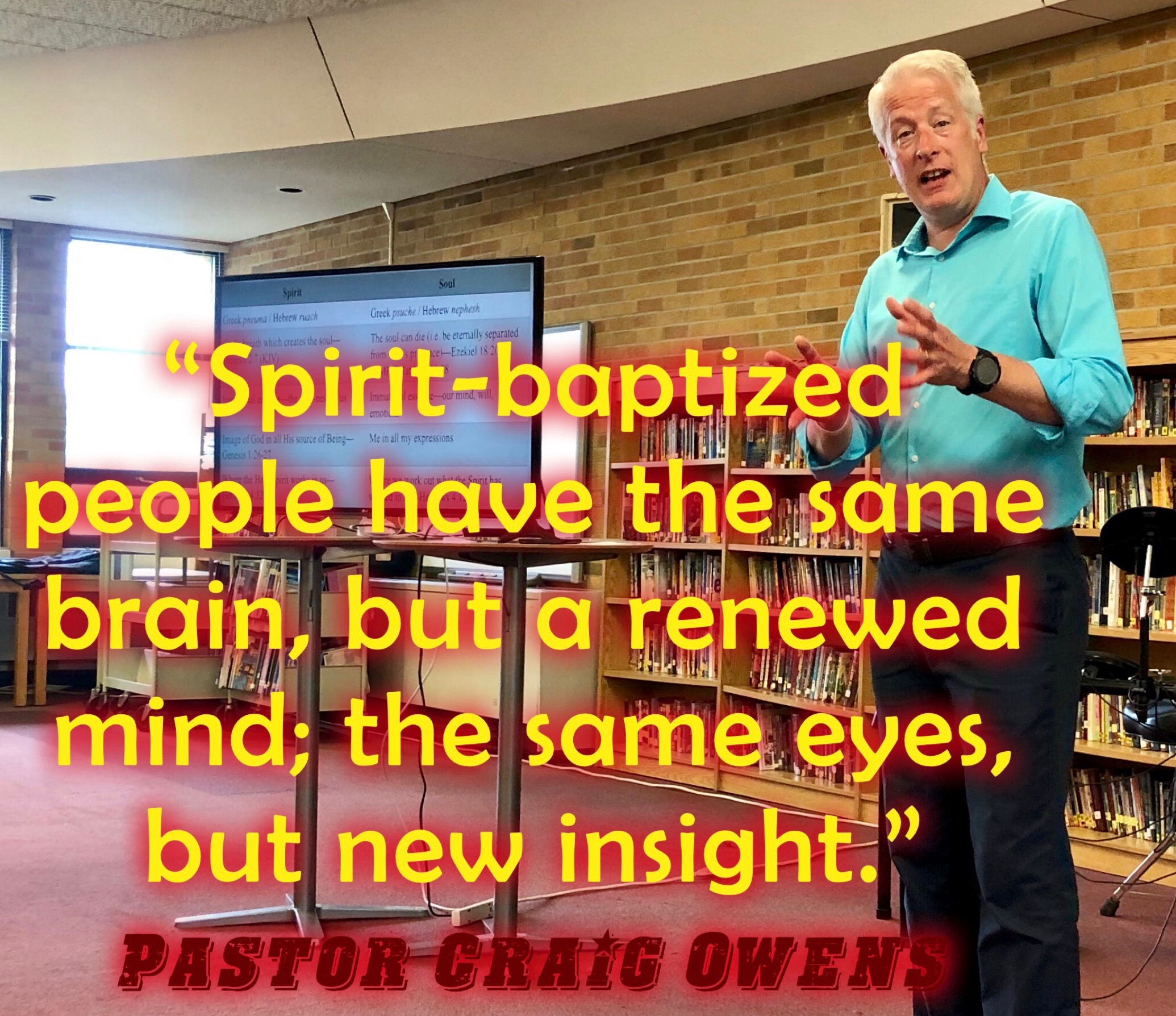
The trouble is: we’re always—as long as we’re alive—still in the flesh because we need these bodies to carry around our soul and spirit. But changes begin to occur first at salvation (when the connection of our spirit to God’s Spirit is reestablished), and even more so after being baptized in the Holy Spirit (when we are not trying to work out things on our own). 

As a result, we have the same brain, but a mind that is being renewed; the same eyes, but insight that is being expanded; the same ears, but learning new ways to hear what the Holy Spirit is saying. 

Remember that Jesus promised that the baptism in the Holy Spirit would empower us TO BE His witnesses (Acts 1:8). Not just to do things differently, but to have our spirit so enlivened by the Holy Spirit that we are living, breathing, walking, talking witnesses of a life transformed.

Have you noticed that there wasn’t a steep “learning curve” for the disciples of Jesus following Pentecost? Part of that is due to four key habits that the Holy Spirit helped form in their lives. 

  1. Correct biblical application—We immediately see people going from “They didn’t understand from the Scriptures” to quickly applying biblical texts to their current situations. This is exactly what Jesus promised would happen (John 20:6-9; Acts 2:16, 25, 34; John 14:26). 
  1. Intercessory prayer—To intercede is to take someone else’s needs to God on their behalf. The Holy Spirit can help us apply Scripture to our prayers, and can even help us without words at all (Acts 4:24-26; Romans 8:26-27). 
  1. Creative thinking—Christians should be the most creative thinkers in the world (Psalm 119:99; Jeremiah 33:3; 1 Corinthians 2:10). 
  1. Healthy conflict resolution—We’re all different, so not seeing eye-to-eye is bound to happen, but Spirit-empowered Christians will be able to resolve conflicts faster and with better results (Acts 6:1-8; Acts 15:1-31). 

“Your life as a Christian should make unbelievers question their disbelief in God.” —Dietrich Bonhoeffer

Amen! Your life as a Christian that is living out daily habits that have been empowered by the Spirit should make everyone around you want to go deeper and deeper into all that the Holy Spirit has in store for them too. 

If you missed any of the messages in this series, you can access the full list of messages by clicking here

Thursdays With Spurgeon—The Life-Changing Power In The Bible

This is a weekly series with things I’m reading and pondering from Charles Spurgeon. You can read the original seed thought here, or type “Thursdays With Spurgeon” in the search box to read more entries.

The Life-Changing Power In The Bible

     When the Spirit came with His divine life and quickened the entire Book to my newly enlightened soul, the inner meaning shone forth with wondrous glory. … Whatever I found to be in His Word, I received with intense joy. … Moreover, I have found that those points of my character that were most weak have been strengthened, while strong passions have been subdued, evil propensities have been kept under, and new principles have been implanted. I am changed; I am as different from what I was as a man could be who had been annihilated and had then been made over again. Nor do I claim any of the credit for this change—far from it. God has done great things for me, but He has done the same for others and is willing to do it for any soul who seeks His face through Jesus Christ and His great atoning sacrifice. …  

     An idea has long possessed the public mind that a religious man can scarcely be a wise man. It has been the custom to talk of infidels, atheists, and deists as men of deep thought and comprehensive intellect, and to tremble for the Christian controversialist as if he must surely fall by the hand of his enemy. But this is purely a mistake, for the gospel is the sum of wisdom, an epitome of knowledge, a treasure house of truth, and a revelation of mysterious secrets. In it we see how justice and mercy may be married; here we behold inexorable law entirely satisfied and sovereign love bearing away the sinner in triumph. Our meditation upon it enlarges the mind, and as it opens to our soul in successive flashes of glory, we stand astonished at the profound wisdom manifest in it.

From The Autobiography Of Charles Spurgeon 

As Spurgeon experienced, all Christians can experience. Think about this—the same Holy Spirit that inspired the written words of the Bible is the same Holy Spirit in you that can illuminate and apply the words of the Bible to your life! 

Bible-reading, Spirit-empowered Christians should be the most informed, creative, wise people you will ever meet. Not because they have studied nature, but because they are getting to know Nature’s God intimately. The Creator can open up the mysteries of creation better than any scientist or philosopher. 

But we don’t read the Bible just to know God’s Word, but we read the Bible to get to know the God revealed in the Word. He said He would reveal Himself to those who earnestly seek for Him. Ask the Holy Spirit to open your eyes, your mind, your heart as you read your Bible. 

9 Quotes From “Shepherding God’s Flock”

T.M. Moore has given pastors a phenomenal training resource in Shepherding God’s Flock. Please be sure to check out my full book review by clicking here. 

“The work of church leaders today—and especially of that class of leaders called elders, with which this study is concerned—has been shaped and conditioned more by the temper of our times than by the teaching of God’s Word.” 

“According to Paul, any church that does not have in place elders—and other leaders working with them—who are functioning as shepherds is a church that is not in order.… A church without a strong ministry of shepherding is a flock without genuine pastoral care, oversight, and equipping. It may be very active, even happy, and may be ‘growing’ in what some consider impressive ways. But without shepherding as the framework and integrating dynamic, such a church will always be something less than what God intends.” 

“Where the work of shepherding is being faithfully pursued, the gospel goes forth with power, lost sheep are located, and the flocks of God grow as He adds new souls to the fold.” 

“Where faithful shepherds are at work, the Lord’s sheep will be well fed. Both milk and the meat of the Word will be their daily diet, according to the needs and callings of each. Well-fed sheep are healthy, strong, and fruitful in their own contributions.” 

“The work of shepherding begins in relationships of mutual love and trust, spiritual friendships where sheep and shepherd know, love, and care about one another.” 

“Only when the people feel known and loved, and only when they know and love those who are called to lead them—only then will they be willing to follow where the shepherds of the church are seeking to take them.” 

“In the Christian life, people tend to live up to or achieve, not the level of their abilities, for their abilities are virtually limitless, given the presence of the indwelling Spirit of God. Rather, they tend to live up to the level of their vision—of what they see for their lives in Christ. Unless we are leading them into God’s vision for their lives, the people of God will settle for something less than the prize of the upward call of God in Christ Jesus.” 

“When temptation arises we can follow one of two courses. Either we will fall through temptation into sin, or we will grow through temptation into a higher stage of sanctification. … The shepherd’s task is twofold: first, he must help the Lord’s sheep to recognize temptation, by grounding them firmly in the law and Word of God; second, he must equip and encourage them in finding the way of escape from temptation, so that they may grow as the Lord intends.” 

“Jesus’ approach to bearing witness was thus energetic, proactive, continuous, compassionate, and pioneering. Should we expect anything less from the shepherds He has left to bring other lost sheep into His fold?”

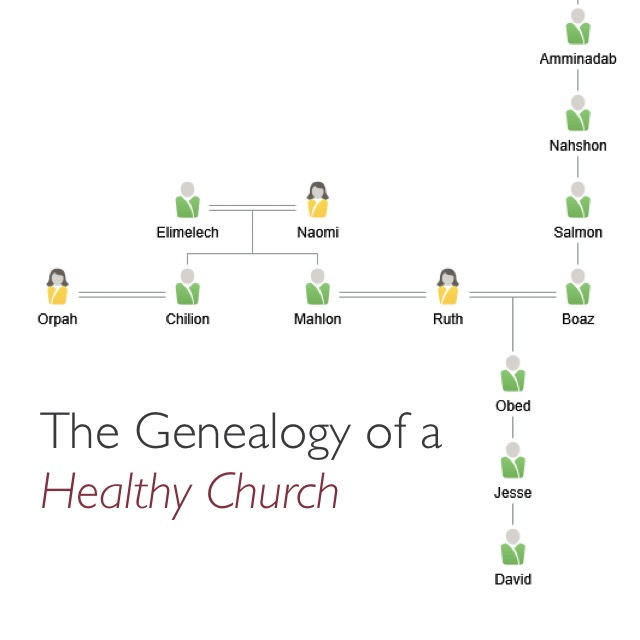
The Genealogy of a Healthy Church

And the things you have heard me say in the presence of many witnesses entrust to reliable people who will also be qualified to teach others. (2 Timothy 2:2)

Paul list four generations in this healthy church—Paul ➡️ Timothy ➡️ faithful Christians ➡️ others. 

We all have a role to play, and every role is vital in a healthy church. Are you a…

Paul: a first generation Christian that needs to start the ball rolling?

Timothy: one who needs to pass along what you have learned to the next generation?

faithful Christian: someone that is actively living out what has been taught to you?

member of the Body of Christ: one that needs to reach out to someone who isn’t a part of the Body yet?

Every single role is indispensable if the Church is going to remain healthy. If any part of this genealogy is lost, the whole Church suffers.

Missionary God, Missionary Bible (book review)

Technically speaking, Missionary God, Missionary Bible by Dick Brogden is a pre-book. It is being released through 2019 as a daily email and then it will be published as a book next year. But I urge you to jump in on these stirring thoughts today! 

God is a missions-minded God, so it makes sense that the Bible would be a missions-centered text, speaking to the hearts of both those who don’t know Jesus as Savior yet, and to the hearts of those Christians who should be missional in their lives. 

Dick is a veteran missionary, and he brings his decades of ministry experience to this monumental work. Dick is using The Chronological Study Bible to take us through the Bible in one year and to look at every text through a missionary lens. The Chronological Study Bible is a fascinating read in itself, as it places the biblical texts in the order in which the events happened, but then when Dick’s insights are added to those historical events, something even more powerful stirs in my heart. 

Each day’s devotional also includes a prayer focus for an unreached people group, along with the vital statistics about these precious people who need to hear the Good News of Jesus. 

This study Bible, read alongside Dick’s missional insights, and then combined with a prayer for a group that needs to receive the Gospel, makes for a life-changing devotional time. You will definitely want to get the book when it is published, but please don’t wait until then to begin to have your missionary heart enlarged and engaged in this fantastic daily study. 

You can subscribe to the daily emails by clicking here.

Thursdays With Spurgeon

Nearly 10 years ago I began a series of posts called “Thursdays With Oswald,” in which I shared the thoughts that were working their way through my heart and mind as I journeyed through the complete works of Oswald Chambers. Now, almost a decade later, I have finished all 1500 pages of his wisdom. 

I think it is wise to frequently spend time with the “old guys”—those whom the years have proven their godly wisdom to be true. So I am now moving on to another prolific writer and speaker, the man called the Prince of Preachers: Charles Haddon Spurgeon. 

As with my series with Oswald Chambers, I will be sharing some passages from the Spurgeon book or sermon I am reading. On some, I will offer some thoughts that I’m contemplating in light of that reading, and on others, I will simply let the Prince’s words speak for themselves. 

Let me begin with three simple quotes: 

“The words of God have more power over me than ever David’s fingers had over his harp strings.” 

“It is better to preach five words of God’s Word than five million words of man’s wisdom.” 

“There is a power in God’s gospel beyond all description.”

I love how completely Spurgeon’s thoughts are grounded on God’s Word! Spurgeon had no formal theological training, but he expounded on Scriptures as few ever did or ever have.