Whatever

Listen to the podcast of this post by clicking on the player below, and you can also subscribe on AppleSpotify, or Audible. 

Colossians 3 is a catalog of heart changes that reveal themselves as behavior changes. Intermingled in these instructions Paul gives some summary “whatever you do” mile markers.


Whatever virtues the Holy Spirit is developing in my life, my motivation for sticking with the sanctification process must be love. Love for God and love for those around me must be my motivator. And over all these virtues put on love, which binds them all together in perfect unity (Colossians 3:14). 

Whatever behaviors the Holy Spirit is prompting me to add, or change, or remove from my life, I must be able to say “yes” to each item on this list:

  • Am I doing what Jesus would do? 
  • Am I thankful that I am doing what I am doing? 
  • Am I doing what I am doing wholeheartedly? 

And whatever you do, whether in word or deed, do it all in the name of the Lord Jesus, giving thanks to God the Father through Him (Colossians 3:17). 

One attitude check—am I operating in love?—and the three behavior checks listed above, should be something I regularly review. I want to make sure that whatever I do, I am working at it with all my heart, as working for the Lord, not for men (see Colossians 3:23). 

It’s wonderful to make changes in my life, but I have to make sure that whatever I am changing is supported by the right attitude and pursuing the right goal, so that Jesus is glorified in my life. 

►► Would you please prayerfully consider supporting this ministry? My Patreon supporters get behind-the-scenes access to exclusive materials. ◀︎◀︎

Consequences For Children

Dr. Kathy Koch has some great insights in her book Start With The Heart for anyone who works with children.

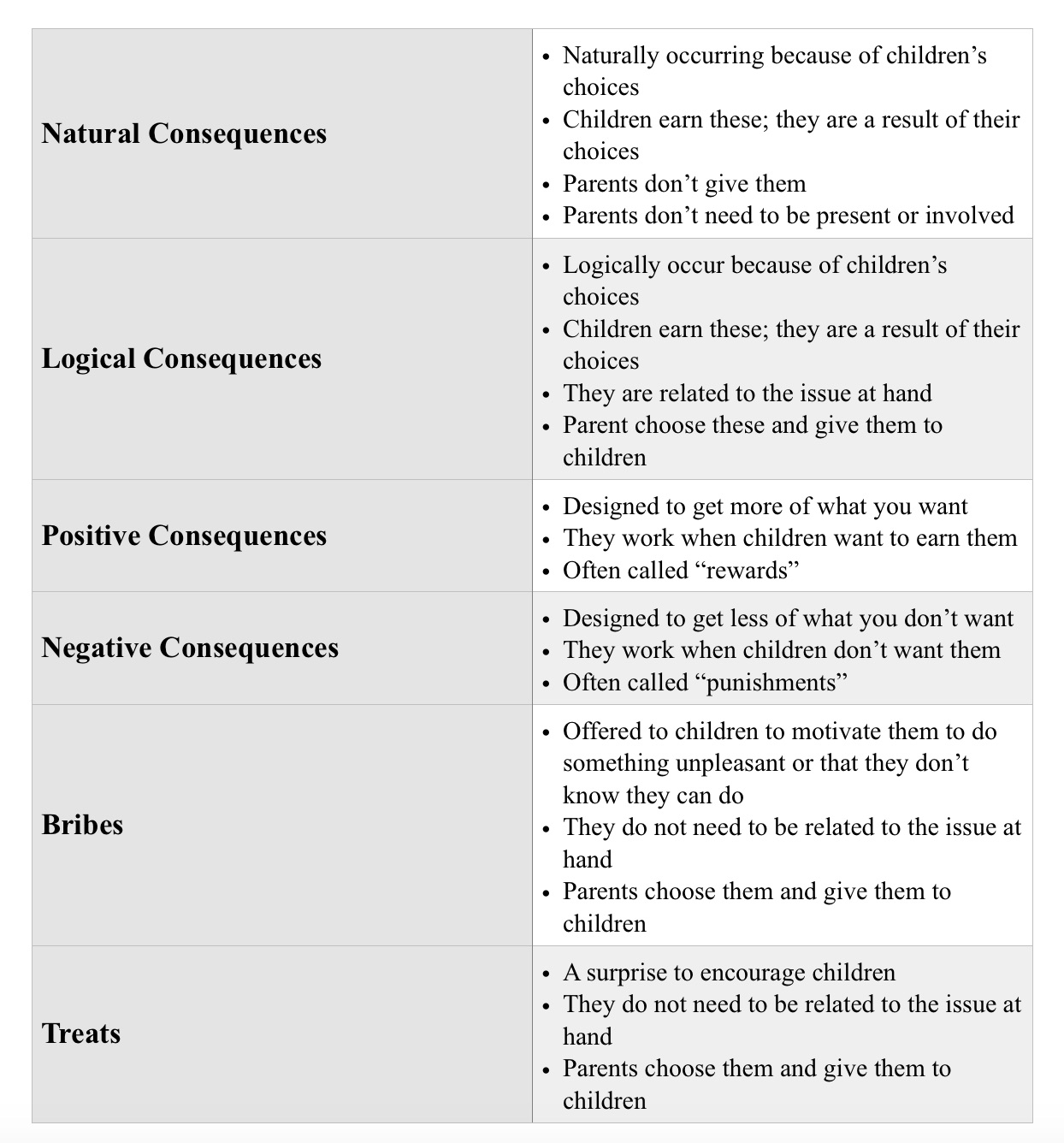
“Rather than using the words ‘rewards’ and ‘punishments,’ I recommend using the word ‘consequences.’ This small change helps children own their responsibility in changing negative behavior and maintaining positive behavior. Rewards and punishments are things we give children. Consequences are what children earn because of their choices.” —Dr. Kathy Koch

Check out my book review of Start With The Heart by clicking here. You can also read some other quotes from this book here and here.

10 Quotes From “Start With The Heart”

Kathy Koch has given parents, teachers, and anyone who works with younger children, and excellent resource to improve your relationship with your kiddos and empower them to greater success. Check out my full book review of Start With The Heart by clicking here. 

“For your children to want what you want for them, for changes to occur, and for improvements to remain, your hearts must be intertwined. Your motivational power and influence over their obedience comes out of the love you have for each other.” [see Proverbs 23:26] 

“Affirm your children when they do use the character qualities you’re emphasizing and correct them when they don’t. … Specifically, look for gratitude and joy. The lack of one or both of these emotions causes children (and adults) to use character qualities inconsistently.” 

“Here is my list of understandings that can secure children’s hearts and increase your influence so you’ll be able to motivate them to be responsible, brave, and so much more.

  • Parent by faith
  • Parent with grace and mercy
  • Forgive quickly and often
  • Ask to be forgiven quickly and often
  • Tell your children you are confident in God
  • Prioritize children, not their behavior
  • You can dislike what children do while you still like and love them
  • Be who you want your children to be
  • Raise the children you were given, not the children you wish you had
  • Remember needs and wants are different
  • Listen when children are little if you want them to talk with you when they’re older
  • When children have a problem, remember they are not the problem
  • Teach children to fail well
  • Prioritize progress, not perfection” 

“Children are even more susceptible to the influences around them. We should have and model solid character so our behavior, attitudes, and decisions glorify God. We should also prioritize our character so we don’t lead a child astray. Making every effort to use these qualities ourselves matters. And, of course, apologizing when we don’t is key to maintaining a positive relationship.” 

“The desire to develop self-control is birthed in self-respect. Self-control makes it possible to use other character qualities successfully.” 

“Do we choose to see our children’s circumstances and respond appropriately? Although consistency is usually appropriate when raising and motivating children, if we don’t have compassion and individualize our reactions and decisions when it’s appropriate, why would our children? Modeling this character quality matters tremendously.” 

“Initiative: Children may never develop this quality if you remind them of everything they must do. Rather, it’s birthed when you help them grow in appropriate independence. … Is it possible that your children may not be motivated as you’d like because you rescue them to early, too often? … I know you value the things you worked hard for. Don’t rob children of that same satisfaction. Allow them to persevere.” 

“Prayer is a powerful tool—use it! Your personal and specific prayers for your children communicate your deep love for them and your dependence on God. Your prayers are a significant way your children learn who you hope they’ll be and what you hope they’ll do. Pray they’ll develop a heart for Christ. Model and teach what they need for their heart to be transformed into His likeness. This will change their character and, therefore, their motivation and motives, too.” 

“Just making statements like these can be empowering:

  • I need to take off arguing and put on first-time obedience.
  • I need to take off bullying and put on kindness.
  • I need to take off distractions and put on focus.
  • I need to take off ‘I don’t want to’ and put on ‘do it anyway.’” 

“This might surprise you, but all children are motivated. … It doesn’t help to ask, ‘How do I get my kids motivated?’ Rather, we need to ask, ‘How can I redirect their motivation?’” 

Stay tuned: more quotes coming soon…

20 Useful Maxims

Useful MaximsI thoroughly enjoyed reading Useful Maxims by Brian Ridolfi (check out my review of his book by clicking here). Here are 20 of Brian’s useful maxims that caught my highlighter.

  1. Going to church is good; going to God is better.
  2. Progress is not good if you are progressing in the wrong direction.
  3. Good demeanor does not validate bad behavior.
  4. Broken commandments break down integrity.
  5. The Bible’s meaning is not hidden from men; men hide from its meaning.
  6. Actions are better indicators of character than rhetoric.
  7. The indifferent make no difference.
  8. Remaining weak takes strength. It takes power not to use power.
  9. Great men step in when everyone else steps out.
  10. Moral arguments which are entirely material are entirely immaterial.
  11. Peacemakers and saltshakers dispense enrichment.
  12. A grudge will keep you deep in sludge. Points of contention are points of retention.
  13. Revenge is hard to reverse.
  14. Never put faith in people who have no faith.
  15. Everything goes when anything goes.
  16. Your sin is not just your problem.
  17. Parental neglect prompts government parenting.
  18. Where no one fears God, everyone fears man.
  19. The right battle is lost with the wrong weapon.
  20. Insecurity secures instability.

Watch for more maxims soon. Or follow me on Twitter and Tumblr to read some of Brian Ridolfi’s maxims.

The Rewards For Getting Along With Difficult People

How To Get Along With OthersHere’s a shocking statement—Difficult people are difficult to get along with. I know, I probably just blew your mind with that one, but sometimes it’s important to state the obvious.

Christians should be the best at getting along with others. First of all, because they have the Holy Spirit to help them, and, second, because the world is watching to see if having a relationship with Jesus really does make a difference.

We’ve already learned that in order to change our behavior toward difficult people, we can’t change our behavior (check out my post on that topic here). Instead, we need to change our thoughts first. One thought to change is about ourselves, and another thought to change is the fact that Jesus promised rewards for those who loved difficult people—

If you love those who love you, what credit is that to you? Even sinners love those who love them. And if you do good to those who are good to you, what credit is that to you? Even sinners do that. And if you lend to those from whom you expect repayment, what credit is that to you? Even sinners lend to sinners, expecting to be repaid in full. But love your enemies, do good to them, and lend to them without expecting to get anything back. Then your reward will be great, and you will be children of the Most High, because he is kind to the ungrateful and wicked. (Luke 6:32-35)

One way to love others is by learning to “speak their language.” Most of us communicate with four different accents: Doer, People, Planner, Vision.

You can watch the video where I explain these styles in more detail, but you can learn their accent by listening for…

(1) How they handle stressful situations:

  • Doer—get hyper-focused
  • Planner—withdraw to plan
  • People—call a meeting
  • Vision—take time to daydream

(2) How they listen to others:

  • Doer—take short bullet points and then quick action
  • Planner—take detailed notes, and ask lots of detailed questions
  • People—make good eye contact, take very little notes, and then reiterate what was said
  • Vision—doodle, and express “ping pong ball” thoughts

(3) How they speak about folks with other “accents”:

  • Doer—this is taking too long; nothing ever gets done; they’re daydreamers
  • Planner—they jump the gun; they’re swayed by emotions; they’re unpredictable
  • People—why don’t they want to meet; they’re too aggressive; they’re too robotic
  • Vision—they don’t see the big picture; they’re too rigid; they’re too emotional

You CAN get along better with everyone. Romans 12:18 tells us that peaceful living with others depends on you and me. Let’s do this well so that Jesus is glorified!

How To Make New Communications Habits

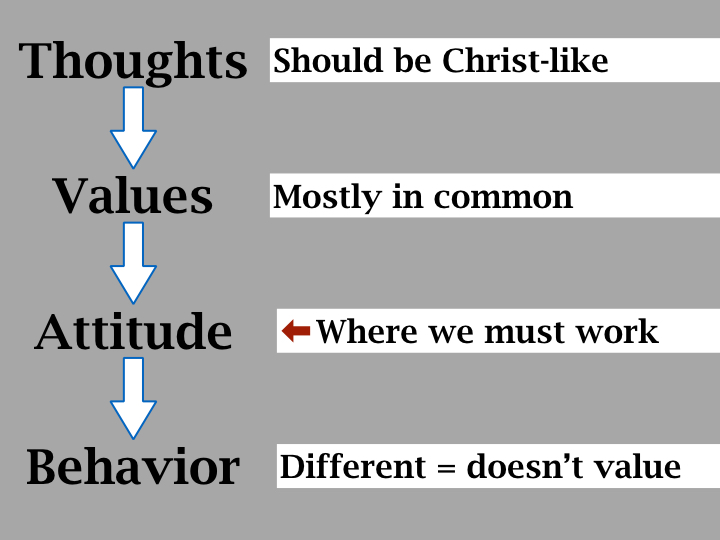
Making new habitsPreviously I wrote about NOT trying to change our bad behaviors. That’s because our behavior is a natural outcome of several other factors (read more about that by clicking here). The important progression goes like this: Thoughts → Values → Attitudes → Behaviors.

The two areas we can address are our thoughts and attitudes. When it comes to interacting with other people, notice carefully the words Jesus said: “Love your neighbor as yourself” (Mark 12:31).

Jesus says that our thoughts about ourselves can limit our thoughts about others. If your thoughts are limited, your value on people and healthy relationships will slide. If those values drop, your attitude about others will begin to sour. And with those thoughts, values and attitude dropping, isn’t it natural to expect that you will struggle getting along with others?

So you must get this clear—

  • God had a plan for you from before the beginning of time (Ephesians 2:10)
  • God knit you together in your mother’s womb (Psalm 139:13-18)
  • God put just the right gifts and talents in you to change the world (Romans 12:3-6; 1 Corinthians 12:4-7).
  • God made you unique (you-nique!).
  • You are a one-of-a-kind masterpiece!

Because you are you-nique, you hear and see the world uniquely, and you respond uniquely. You and I respond mostly by habit.

Habits are good when they are healthy. But unhealthy habits create assumptions and blind spots that can hinder our relationships.

To make new relationship habits requires three things:

  1. Knowledge (what do I need to do)
  2. Skill (how do I need to do it)
  3. Desire (I really want to make this change)

If you want to make some new communication habits, get knowledge from people who love you and from reading the Bible. Then read some books or attend some seminars that will give you new skills. Then combine those with your sincere desire to want to improve your relationship habits, and watch for great things to happen!

I am leading our church through a training on our communication styles. Please join us on Sunday as we learn how to better get along with others. I’d love for you to join us either in person or on our Periscope broadcast.

Don’t Try To Change Your Bad Behavior

Thoughts to beahviorsAs I wrote previously, I believe Christians should be the best at getting along with others. First of all, Christians have been empowered by the Holy Spirit with the skills necessary to live at peace with everyone, IF we will only allow the Spirit to do the necessary work in us. And second, the way Christians treat others goes a long way toward either attracting or repelling others from a relationship with Jesus.

But here’s an important thing: If you don’t get along well with others now, don’t try to change your behavior!

Stephen Covey wrote, “To try to change outward behaviors does very little good in the long run if I fail to examine the basic paradigms from which those attitudes and behaviors flow.”

You see, behavior is the fruit. If we want to change the fruit, we need to back up a few steps.

The Apostle Paul used the life of Jesus as an example for Christians on how we can get along with others. But notice this: most of what Paul discusses is the “inside stuff.”

The progression goes like this (see Philippians 2:1-13)—

Thoughts → Values → Attitudes → Behaviors

(1) Thoughts—These need to be humble thoughts about God’s love toward us (v. 1).

(2) Values—Paul tells us to be “one in spirit and purpose” with others (v. 2). The definition of the Greek words here mean valuing the well-being of everyone. Paul then explains how our humility can lead to these win-win relationships (vv. 3, 4).

(3) Attitudes—“Your attitude should be the same as Christ Jesus” (v. 5). Jesus showed us what it was to have an attitude related toward obedience to God’s will.

(4) Behavior—If our thoughts, values and attitudes are rightly aligned to God, then our behavior will naturally be Christ-like as well. We see the example of Jesus in verses 6-8, and God’s reward for that behavior in verses 9-11. Then Paul calls on Christians to follow that pattern in our own lives (vv. 12, 13).

Most decent, reasonably-thinking human beings share the same values. Harry Truman said, “When we understand the other fellow’s viewpoint—understand what he is trying to do—nine times out of ten he is trying to do right.”

The problem is this: When the other person behaves differently from me, my natural tendency is to assume he doesn’t value what I value. In other words, I’m judging his value system on the way I normally behave.

The break-down is in my attitude. That’s the area I need to address. That’s the attribute of Jesus that Paul told us to copy.

So if I want to get along better with others, I shouldn’t try to change my behavior, but my attitude. My prayer should be: “I want this same attitude to be in me which was also in Christ Jesus. He served God and others, so I too want to follow His example of obedience, and I want to demonstrate my appreciation for all that Jesus has done for me by working hard to better get along with others. Help me change my attitude!”

Check out this video of the full message…

I hope you can join us next Sunday as we continue learning how to get along with others. Please join us in person or on Periscope.

10 Quotes From “Christian Behavior”

Christian BehaviorAlthough written over 300 years ago, and written in Old English, John Bunyan’s instructions in Christian Behavior still ring true today. You can read my full book review by clicking here. Below are just a few quotes; I’ll be sharing more soon.

“Faith alone can see the reality of what the Gospel saith.”

“God’s people are faithful in good works according to the proportion of their faith. If they be slender in good works, it is because they are weak in faith. … Therefore the way to be a more fruitful Christian; it is to be stronger in believing.”

“I shall propound unto you what it is for a work to be rightly good. First, a good work must have the Word for its authority. Second, it must, as of afore was said, flow from faith. Third, it must be both rightly timed and rightly placed. Fourth, it must be done willingly, cheerfully.”

“Good things mistimed are fruitless, unprofitable, and vain.”

“There are three things that a man should have in his eye in every work he doth. First, the honor of God (1 Corinthians 6:20). Second, the edification of his neighbor (1 Corinthians 14:26). Third, the expediency or inexpediency of what I am to do (1 Corinthians 6:12).”

In a section to the head of the household—

“But mark, when the Word saith thou art to provide for thy house, it giveth thee no license to distracting carefulness; neither doth it allow thee to strive to grasp the world in thy heart, or coffers, nor to take care for years or days to come, but so to provide for them, that they may have food and raiment; and if either they or thou be not content with that, you launch out beyond the rule of God (1 Timothy 6:8; Matthew 6:34).”

“Take heed of driving so hard after this world as to hinder thyself and family from those duties towards God which thou art by grace obliged to: as private prayer, reading the Scriptures, and Christian conference. It is a base thing for men so to spend themselves and families after this world as that they disengage their heart to God’s worship.”

In a section to husbands—

“When husbands behave themselves like husbands indeed, then will they be not only husbands, but such an ordinance of God to the wife, as will preach to her the carriage of Christ to his spouse. There is a sweet scent wrapped up in the relations of husbands and wives that believe (Ephesians 4:32).”

“Oh! How little sense of the worth of souls is there in the heart of some husbands, as is manifest by their unchristian carriage to and before their wives! … Beware that she takes no occasion from any unseemly carriage of design to proceed in evil. And here thou hast need to double thy diligence, for she lieth in thy bosom, and therefore is capable of his espying the least miscarriage in thee.”

“If she behave herself unseemly and unruly, as she is subject to do, being Christless and graceless, then labor thou to overcome her evil with thy goodness, her forwardness with thy patience and meekness. Take fit opportunities to convince her. Observe her disposition, and when she is most likely to bear, then speak to her very heart. When thou speakest, speak to purpose. Let all be done without rancor, or the least appearance of anger.”

More quotes from Christian Behavior coming soon…

What To Do When You’re Burning Mad

Angry“Speak when you are angry, and you will make the best speech you’ll ever regret.” ―Laurence J. Peter

Of course we all get angry. If we let it out we might burn up the people around us, but if we hold it in we might blow up inside. What are we to do when we’re burning mad?

Nehemiah was in the midst of a massive building program, with enemies of Israel threatening to attack at any moment, and then people start coming to him with reports of the ungodly lifestyle among some of Israel’s leading families.

To say Nehemiah was hot is an understatement (Nehemiah 5:6). The Hebrew word means boiling mad, scorching hot! We would do very well to notice how he handled this situation.

First, “I pondered these accusations in my mind…” (v. 7a). He didn’t fire off the first thoughts that came to mind.

Second, “…then I accused the nobles and officials. I told them, ‘You are loan-sharking your own countrymen’” (v. 7b). He made a very specific point without elaborating on all the gory details.

Third, he gave them an opportunity to respond (v. 8).

Fourth, he called them all together and said, “What you’re doing isn’t right. You are not following God’s ways, and you are giving God a bad reputation to those outside our community” (v. 9).

Fifth, he used his personal lifestyle as an example (v. 10).

Finally, he asked them to change their behavior (v. 11).

Pretty simple:

  • Wait
  • Think
  • Make the accusation simple
  • Give them a chance to respond
  • Hold them to a high standard
  • Live out the standard yourself
  • Ask for a change of behavior

The next time you’re burning mad, try this and see what happens.

15 Quotes From “Mansfield’s Book Of Manly Men”

Mansfield's Book Of Manly MenFrankly, fellas, there are just way too many passages I highlighted to share them all here, but I did want to give you a taste of some of the manly wisdom in Mansfield’s Book Of Manly Men. You can read my full book review by clicking here, but I suggest every red-blooded male who wants to be a manly man go get this book! You’ll be reading a lot more from me in the next few weeks that is inspired from this book.

“What makes a man a warrior is his willingness to place himself between what he holds dear and anything that threatens it. Honor is the chief motivator for the warrior. Dishonor is unthinkable. He does the right thing without expectation of reward because honor is an intrinsic value that, when manifested in one’s life, provides its own rewards.” —William Boykin

“By words like manly and manhood, I don’t mean the kind of behavior we see in the fake masculinity that surrounds us today. There’s nothing manly about a guy downing booze until he throws up in the street. There’s nothing manly about cruising for women like some predatory beast and then devouring them for pleasure before casting them aside. There’s nothing manly about making a child but then running like a coward before that child is born. There’s nothing manly about dominating a woman or treating her like a servant or leaving her with burdens that aren’t rightly hers. To think these actions make up true manhood is like thinking the average ‘gentleman’s club’ is actually for gentlemen. It’s not. Instead, it is a Palace of Perpetual Adolescence where incomplete males go to get on the cheap what they don’t have the guts to fight for righteously and make their own. … I am talking about the kind of manhood that makes a family whole, a woman safe, a child confident, and a community strong.” —Stephen Mansfield

“All it takes for a contagious manly culture to form is for one genuine man to live out genuine manhood. It creates a model, something for other men to feed upon and pattern themselves after. It also gives other genuine men a vital connection that sustains and extends who they are.” —Stephen Mansfield

“A man cannot fulfill his purpose if he is living for applause, approval, and affirmation in this world.” —Stephen Mansfield

“If a man does not have an ideal and try to live up to it, then he becomes a mean, base and sordid creature, no matter how successful.” —Theodore Roosevelt, in a letter to his son Kermit 

“Honorable men refuse to wallow in the small and the bitter. Honorable men refused to hate life because something once went wrong. Honorable men don’t build monuments to their disappointments, nor do they let others brand into them and curse them to their destruction. Honorable men seek out the highest definition of their lives, the nobler meaning granted by heritage, by their ancestors’ dreams and their parents’ hopes. Honorable man cry out to God until curses are broken and a grander purpose is achieved. Honorable man don’t settle for lives of regret.” —Stephen Mansfield

“Nothing great will ever be achieved without great men, and men are great only if they are determined to be so. For glory gives herself only to those who have always dreamed of her.” —Charles de Gaulle

“True friends stand in harm’s way for each other. True friends take the hits for one another. … Genuine men stand with their friends and look on the scars that result has signs of manly honor.” —Stephen Mansfield

“Weak men assume what they need to know will seek them out. Men of great character and drive search out the knowledge they need.” —Stephen Mansfield

“For a man to become a great man, he will have to defeat the force of bitterness in his life. No one escapes it. There is enough offense and hardship in the world to assure that all of us will be wounded and betrayed, all of us will have opportunity to drink the sweet-tasting poison of bitterness against those who have wronged us. The art of surviving untainted is to learn the art of forgiveness.” —Stephen Mansfield

“The question we all face is not whether or not we have defects. We do. Everyone of us. The question is whether we are capable of envisioning a life defined by forces greater than the weight of our flaws. The moment we can—the moment we can envision a life beyond mere compromise with our deformities—that is the moment we take the first steps toward weighty lives. Manly men know themselves, work to understand their God-ordained uniqueness and their unique brand of damage, and accept they will always be a work in progress, always be a one-man construction project that is never quite finished in this life. They don’t despair. They don’t settle. They don’t expect perfection of themselves. They understand that destiny is in the hand of God. They also understand that these destinies are fashioned in a man’s struggle against the enemies of his soul.” —Stephen Mansfield

“Every man must decide whether he will walk in the light of creative altruism or in the darkness of destructive selfishness.” —Martin Luther King Jr.

“Virtue is a state of war, and to live in it we have always to combat with ourselves.” —Jean-Jacques Rousseau

“Adversity toughens manhood, and the characteristic of the good or the great man is not that he has been exempt from the evils of life, but that he has surmounted them.” —Patrick Henry

“The man, whom I called deserving the name, is one whose thoughts and exertions are for others rather than himself.” —Walter Scott