Listen to the podcast of this post by clicking on the player below, and you can also subscribe on Apple, Spotify, or Audible.
Doctors and scientists have repeatedly shown how important sleep is for us physically, mentally, emotionally, and even spiritually. So it’s an important question to ask: Are you getting enough sleep?
Listen to the podcast of this post by clicking on the player below, and you can also subscribe on Apple, Spotify, or Audible.
King Herod Antipas was the son of King Herod the Great. Herod the Great is the one who tried to kill Jesus shortly after He was born, and in the process murdered numerous infant boys in and around Bethlehem (Matthew 2:16).
Herod Antipas seduced his sister-in-law Herodias (who was married to his brother Philip), who then divorced her husband to marry Antipas, who had also divorced his own wife (Matthew 14:3). This is also the Herod who so desperately wanted to see Jesus perform a miracle (Luke 9:7-9, 23:6-10).
Antipas was no choir boy! And yet he had a strange fascination with spiritual matters. Not only did he want to see Jesus, but he liked hearing John the Baptist preach. At the same time, he hated John’s message that said he was living in sin (Mark 6:17-18; Leviticus 20:21). Herod wanted John dead, but he also feared the backlash from the people who thought John was God’s prophet. Later on, he tried to protect John from death, but in trying to save face with his guests, he had to have John killed (Mark 6:26; Matthew 14:5).
Herod Antipas continually flirted with sin—never killing it, never running away from it. And this eventually caught up with him.
The Gospel of Mark records, “Finally the opportunity came” (Mark 6:21). Herodias’ daughter performed a seductive dance for Herod on his birthday, which cause him to say in front of everyone, “I’ll give you whatever you want.” Prompted by her mother, this young lady seized the opportunity and said, “I want the head of John the Baptist on a platter!” Following in his father’s footsteps, Herod Antipas became a murderer.
If sin is left close, it will kill you. The Bible tells us sin is crouching nearby, always looking for an opportunity, always a part of the devil’s scheming plan to destroy us (Genesis 4:7; Luke 4:13; Ephesians 6:11; 1 Peter 5:8).
Let us not make the same fatal mistake that Herod Antipas made by flirting with our sin instead of killing it. Paul wrote, “So put to death the sinful, earthly things lurking within you. Have nothing to do with sexual immorality, impurity, lust, and evil desires. … [N]ow is the time to get rid of anger, rage, malicious behavior, slander, and dirty language” (Colossians 3:5, 8).
Or, as John Owen put it, “Be killing sin, or it will be killing you.”
Listen to the podcast of this post by clicking on the player below, and you can also subscribe on Apple, Spotify, or Audible.
Mobs are scary things! Almost anyone can get caught up in the ugly mentality, vile words, and inexcusable actions.
Even professional soldiers. When Jesus was arrested, He was turned over to “the governor’s soldiers” (Matthew 27:27). These are professional soldiers. Punishing people—even carrying out capital punishment—was their job. But they gave in to the mob’s thirst for blood and made a sport out of punishing Jesus, doing what was outside of their job description.
The mob outside Pilate’s courtroom was stirred up by the religious leaders, and they “shouted all the louder” for a murderer to be released to them instead of a Healer (vv. 20, 23).
Even as Jesus hung helpless and dying on the Cross, the religious leaders continued to incite the crowds with their taunting, prompting even other condemned men to join in (vv. 39–44).
How easy it is to get caught up with the loud voices of the hour and to join our voices and actions with theirs! Mobs are hungry things and they continually devour almost anyone around them.
But Jesus didn’t succumb to the mob mentality. He didn’t even say a single word to those who taunted Him so mercilessly. Instead, as Peter recorded for us,
“To this you were called, because Christ suffered for you, leaving you an example, that you should follow in His steps. ‘He committed no sin, and no deceit was found in His mouth.’ When they hurled their insults at Him, He did not retaliate; when He suffered, He made no threats. Instead, He entrusted Himself to Him who judges justly.” (1 Peter 2:21-23)
The unexpected way that Jesus responded got people’s attention. A professional soldier, a centurion, after watching how Jesus conducted Himself as He died, had to admit He was the Son of God.
It’s so tempting to join with the loud voices around us. It’s even more tempting to shout back at those who are insulting us. But let us remember the example of Jesus, and perhaps offer a prayer like this:
“Holy Spirit, help me to not succumb to the loud voices, nor to lash out against people who torment me. But, like Jesus, may I entrust myself “to Him who judges justly.” May my quiet lifestyle be a testimony that gets the attention of others. In the name of Jesus I pray this. Amen!”
Listen to the podcast of this post by clicking on the player below, and you can also subscribe on Apple, Spotify, or Audible.
Father’s Day can bring up a lot of different emotions for folks. Growing up, you might not have had a very good experience with your father or perhaps you didn’t have a father involved with you at all. Maybe you look back on your own history as a Dad and have some regrets. Perhaps you’re an empty-nester now or maybe you’ve never had kids of your own.
Regardless of your experience with your father or with your own circumstances, I think there are some things that we all naturally expect from our Dads. These are things that we should honor and things we as Dads should strive to demonstrate in our lives.
Luke introduces us to a man in the Book of Acts named Joseph. We don’t know if he is a biological father or not, but he is presented to us as a spiritual father that we would do well to emulate. In fact, we only know his name is Joseph from our first introduction to him. This man was such an inspiration to so many people that he was given the nickname Barnabas—the name that is used everywhere else in the New Testament.
When we think of our list of attributes of an ideal father, I think we all look to our fathers for these five things.
(1) Be there when we are getting started. Barnabas was there when Saul (later named Paul) first became a Christian and when the first Gentiles became Christians (Acts 9:26-28; 11:19-23).
(2) Provide for us financially. Barnabas is the first person mentioned by name that gave a significant and much-needed financial donation to the Church (Acts 4:34-37).
(3) Help us learn to leave our nest and fly on our own. Barnabas gave Paul his first leadership role in the Church (Acts 11:25-26).
(4) Step back as we learn to soar on our own. Barnabas took the lead in the first commissioned missionary journey, but then we see him stepping aside for Paul to take the lead (Acts 13:1-2, 13).
(5) Continue to “be there” for us even after we’ve left the nest. Barnabas also picked John Mark to accompany him and Paul on that first missionary endeavor, but when Barnabas stepped aside for Paul, Mark headed home instead of continuing on their trip. Later on, Barnabas wanted to give Mark another shot, but Paul was strongly against that. As a result, Paul and Barnabas parted company, with Barnabas taking Mark with him. From this point on, Luke doesn’t tell us anything else about Barnabas, but we know that Mark became the first one to write his Gospel account of the life of Jesus and that he became reconciled to both Paul and Peter, becoming an invaluable help to both of them. Although we don’t read what happened, I think it’s a good bet that all of this came about through the encouragement of Barnabas (Acts 13:13, 15:36-40; 2 Timothy 4:11; 1 Peter 5:13).
The name Joseph means “exalted.” Joseph was born into the tribe of Levi, placing him at the heart of the Jewish faith, yet he risked it all to not only acknowledge Jesus as the Messiah but to be so invested in the Christian Church that they called him Barnabas. Luke tells that his name means Son of Encouragement.
The word “encourage” literally comes from in + courage—to put courage into someone, to inspire others with the courage or confidence they need to do something great.
The word “encouragement” in Acts 4:26 in Greek is paraklesis: the same word used for the Holy Spirit.
Fathers can only put in others what is already in themselves.
Acts 11:24 tells us that Barnabas was “a good man, full of the Holy Spirit and faith.” Because He was full of the Spirit of God, he could put that courage and security in others around him.
Guys, it’s the same for us today. We have to be filled with the security, the joy, and the courage that springs eternally from the Holy Spirit. Only when we are filled with the Spirit can we put something truly impactful into the lives of our kids—both our biological and spiritual children.
We don’t know how old Barnabas was. We don’t know if he had children of his own or not. All we know is that he was a good man that was full of the Holy Spirit, and that gave him the courage to put into others.
What a great example for all of us to follow!
If you’ve missed any of the other messages in our series We Are: Pentecostal, where we’ve been learning about the blessings that come to those who are baptized in the Holy Spirit, you can find all of those messages here.
Listen to the podcast of this post by clicking on the player below, and you can also subscribe on Apple, Spotify, or Audible.
We’ve just looked at two back-to-back bold statements of Jesus. To the Sanhedrin, He said, “I am the I AM,”and to Pontius Pilate, He said, “I am a king.” Christ’s third bold claim essentially amounts to, “And I don’t have to prove either of these to you; I don’t have to argue with you about it.”
After He was arrested, there was a back-and-forth shuttling of Jesus from the Sanhedrin to Pilate, then from Pilate to King Herod, and then back to Pilate again. Pilate told the Sanhedrin, “I find no basis for a charge against Him.” But the Sanhedrin countered, “But He is stirring up trouble all the way from Galilee to here in Jerusalem!” (see Luke 22:67-23:11).
Pilate was looking for “an out”—a way he could safely discharge or punish Jesus that would keep both the Sanhedrin and his Roman superiors happy. So when Pilate heard that Jesus was from Galilee, he was more than happy to pass this “hot potato” to King Herod. When Jesus was hauled before Herod, we read that he was greatly pleased to see Jesus.
Why was that? To answer that question, we need to understand who Herod was. His name is Herod Antipas, and he was the son of Herod the Great. Herod the Great was king when Jesus was born, and he was the one who attempted to kill Jesus.
Herod Antipas was infamous for having seduced his sister-in-law Herodias, whom he married after divorcing his wife. Shortly after this, Herod arrested John the Baptist for calling out this marriage as sinful. Herodias especially was embarrassed by this and wanted John killed, but Herod feared the backlash from the people if he did this. Eventually Herodias got her way and Herod was forced to have John beheaded (Matthew 14:5; Mark 6:17-28).
When news about Jesus began to reach his ears, Herod thought that Jesus was John reincarnated and he wanted to see him (Luke 9:9). So now when Jesus is brought before him, Herod is looking for a magic trick—Jesus remains silent. Then the religious leaders resume their accusations against Jesus, and still He remains silent. Then Herod and his soldiers began mocking and ridiculing Jesus, and amazingly, He still doesn’t say a word.
Jesus knew the Scriptures that make it clear that there is nothing to be gained by bantering with fools. For instance, Solomon wrote,
Do not answer a fool according to his folly, or you yourself will be just like him. … Don’t waste your breath on fools, for they will despise the wisest advice. (Proverbs 26:4, 23:9).
So here is the next bold claim from Jesus: {Eloquent silence.}
Even in the face of accusation, ridicule, and mocking, Jesus refused to engage in meaningless arguing with Herod or the Sanhedrin’s false witnesses. His silence was so eloquent that it got the attention of Governor Pilate:
“Then Pilate asked [Jesus], ‘Don’t You hear the testimony they are bringing against You?’ But Jesus made no reply, not even to a single charge—to the great amazement of the governor.” (Matthew 27:13-14)
Let’s learn from Jesus: Sometimes the best thing to say is NO thing!
Peter pointed Christians to this example of Jesus when he wrote—
To this you were called, because Christ suffered for you, leaving you an example, that you should follow in His steps. “He committed no sin, and no deceit was found in His mouth.” When they hurled their insults at Him, He did not retaliate; when He suffered, He made no threats. Instead, He entrusted Himself to Him who judges justly. (1 Peter 2:21-23)
Jesus called us to let our good deeds shine brightly to bring glory to God. Fools will ridicule and mock and accuse us, just as the religious crowd did to Jesus. Let’s not let our bantering with fools put out the light of our testimony.
When I was a little kid in Sunday School, we used to sing a song called This Little Light Of Mine. We would hold up our pointer finger like a candle as we sang.But holding up our pointer finger across our lips is also a way to let our light shine too. Your silence in the face of foolish ridicule will speak so eloquently!
Let’s learn this lesson from Jesus. Instead of bantering with fools, entrust yourself to the perfect Judge who is perfectly keeping track of every word. He is the One who can add eloquence to your silence as you shine brightly for Him.
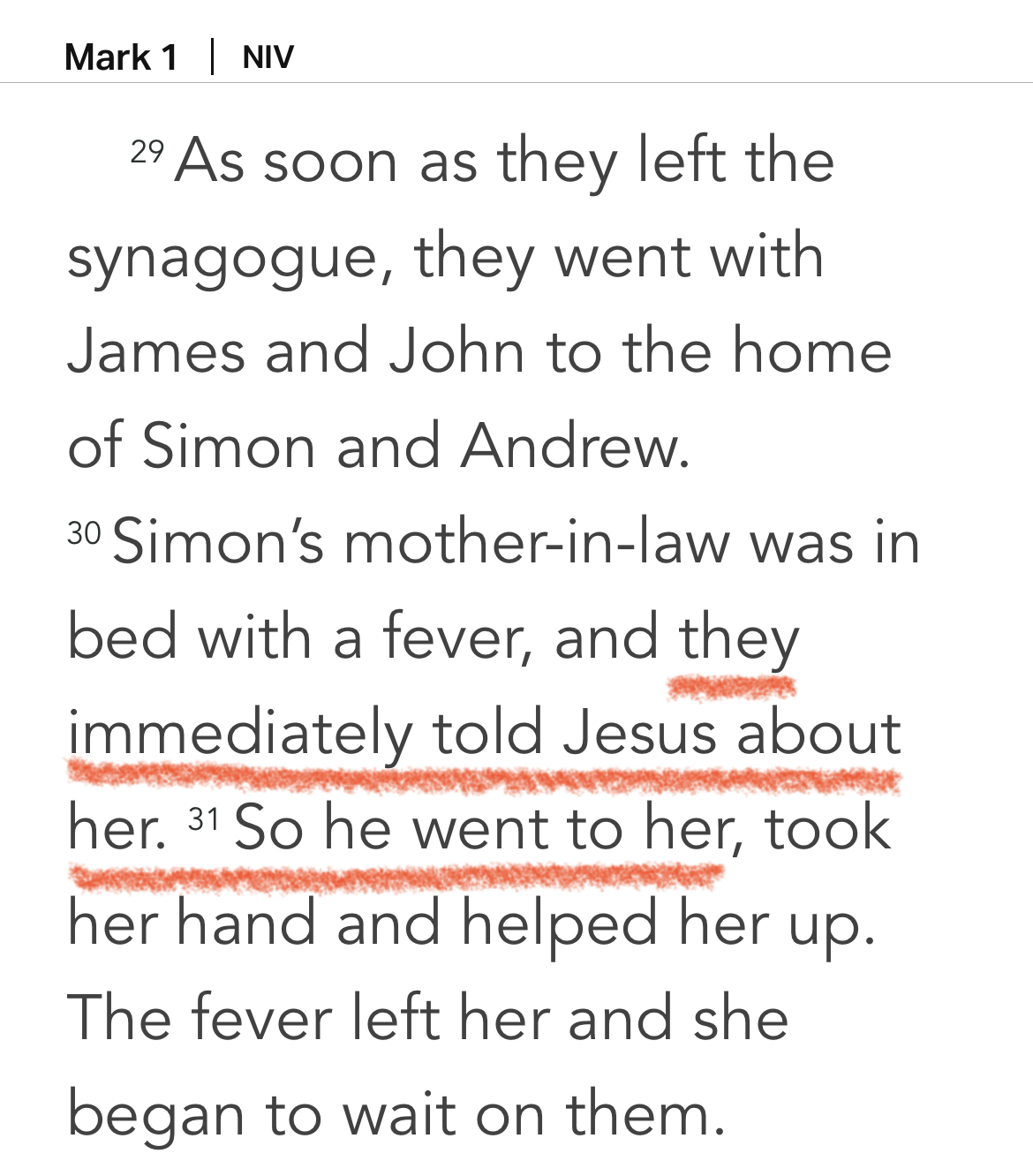
Peter’s mother-in-law was sick with a fever. “They immediately told Jesus about her. So He went to her…” (Mark 1:30-31).
They didn’t call a doctor first, or try a home remedy first, or consult a friend about how they treated a fever first. They immediately went to Jesus. And as soon as they did, Jesus went to the sick woman and healed her.
The old hymn What A Friend We Have In Jesus has a powerful reminder: “Oh, what peace we often forfeit—Oh, what needless pain we bear—all because we do not carry everything to God in prayer.”
What are we waiting for? Why do we try to help ourselves first when Jesus is standing right there waiting to help us?
Let’s respond differently. Let’s make going to Jesus our first—our immediate—response so that Jesus can come to our aid right away.
Listen to the podcast of this post by clicking on the player below, and you can also subscribe on Apple, Spotify, or Audible.
CEO stands for “chief executive officer” and usually designates the person who is at the top of the organization’s flowchart. Those who occupy that office frequently exhibit a top-down mindset, where everyone below them is only in that position to serve the CEO.
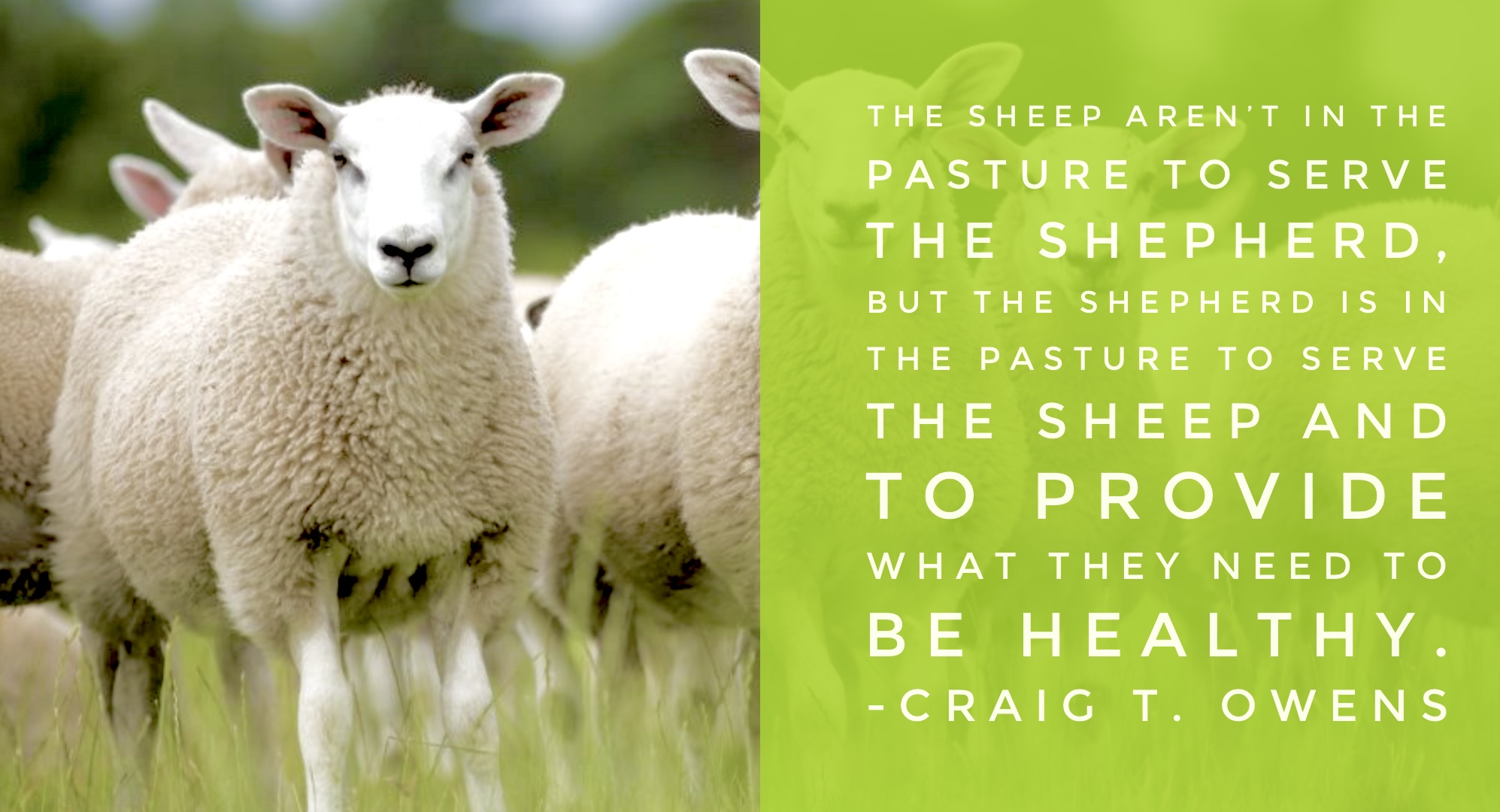
This may work well in the corporate world, but this is not at all the heart Jesus demonstrates toward us. Therefore, it shouldn’t be the mindset or practice of Christ’s under-shepherds—those whom He has called to pastor His sheep. The sheep aren’t in the pasture to serve the shepherd, but the shepherd is in the pasture to serve the sheep and to provide what they need to be healthy.
Check out this conversation I had when I joined a pastoral staff that is using my book Shepherd Leadership as a study guide.
Jesus was confident in who He was and what His Father’s plan was: “Jesus knew that the Father had given Him authority over everything and that He had come from God and would return to God” (John 13:3 NLT).
Yet Jesus also said, “For even the Son of Man came not to be served but to serve others and to give His life as a ransom for many” (Mark 10:45 NLT).
If you are a pastor, you have been charged with caring for the sheep under your care, and not the other way around—
Tend (nurture, guard, guide, and fold) the flock of God that is your responsibility, not by coercion or constraint, but willingly; not dishonorably motivated by the advantages and profits belonging to the office, but eagerly and cheerfully; not domineering—as arrogant, dictatorial, and overbearing persons—over those in your charge, but being examples (patterns and models of Christian living) to the flock (the congregation). (1 Peter 5:2-3 AMP)
Listen to the podcast of this post by clicking on the player below, and you can also subscribe on Apple, Spotify, or Audible.
God delights to show up when the situation seems hopeless from any human standpoint. When He does what no one else can do, He alone is glorified!
A very notable dark time took place in Israel about 700 BC as the nation was surrounded by enemies. Micah prophesied the arrival of the Messiah. But he also prophesied that before He came, there would be dark days. He talks about the siege of enemies surrounding them, Israel’s ruler being stuck on the cheek with a rod, not to mention the strongholds, witchcraft, and idolatry that plagued the nation within its own borders (Micah 5:1, 11-13).
But whenever it seems darkest, God is not the least diminished! He always gets the final word, the decisive word, the best word.
So into this inky darkness, Micah prophesies a ray of light—“But you, Bethlehem Ephrathah, though you are small among the clans of Judah, out of you will come for Me One who will be Ruler over Israel, whose origins are from of old, from ancient times” (Micah 5:2).
I’m sure many people thought that Bethlehem was too small of a village for anyone of significance to be born there.
The Last Battle is the final book in C.S. Lewis’ Narnia series. This story also portrays a similar dark time. Shift the ape has convinced Puzzle the donkey to wear an ill-fitting lion skin to pretend to be the great king Aslan. Through tricks, sleight of hand, deception, and the plans of some evil schemers, many of the Narnians come to believe that Puzzle is Aslan. But it’s confusing because this “Aslan” is not the kind, strong king they believed in, so many begin to just look out for themselves.
In a fitting setting, Puzzle is being hidden inside an old stable. A great battle takes place with the true Narnians ending up inside the stable, and yet once inside they discover not a dark stable, but a sunlit land spreading farther than their eyes can see. Lord Digory observes, “Its inside is bigger than its outside.”
But I love this line from Queen Lucy, “In our world too a stable once had something inside it that was bigger than our whole world.”
Inside that Bethlehem stable was born the Great Shepherd! Who was inside that stable and what He would accomplish became so much grander and more beautiful than any human had ever imagined!
Jesus is our Great Shepherd—He will stand and shepherd His flock in the strength of the Lord, in the majesty of the name of the Lord His God. And they will live securely, for then His greatness will reach to the ends of the earth (Micah 5:4).
Jesus is strong, majestic, and great (John 10:10-15).
Jesus equips us to be victorious (Hebrews 13:20-21).
Jesus walks with us every step of the way (Psalm 23:1-6).
And Jesus takes us Home to be with Him forever (1 Peter 5:4).
Our faith is not rooted in some mysterious thing with an uncertain history. It is a faith rooted in real historical events. The Great Shepherd being born in the town that was prophesied 700 years beforehand is one more proof that God is in control, that God loves you, and that God always gets the final word, the decisive word, the best word!
Listen to the podcast of this post by clicking on the player below, and you can also subscribe on Apple, Spotify, or Audible.
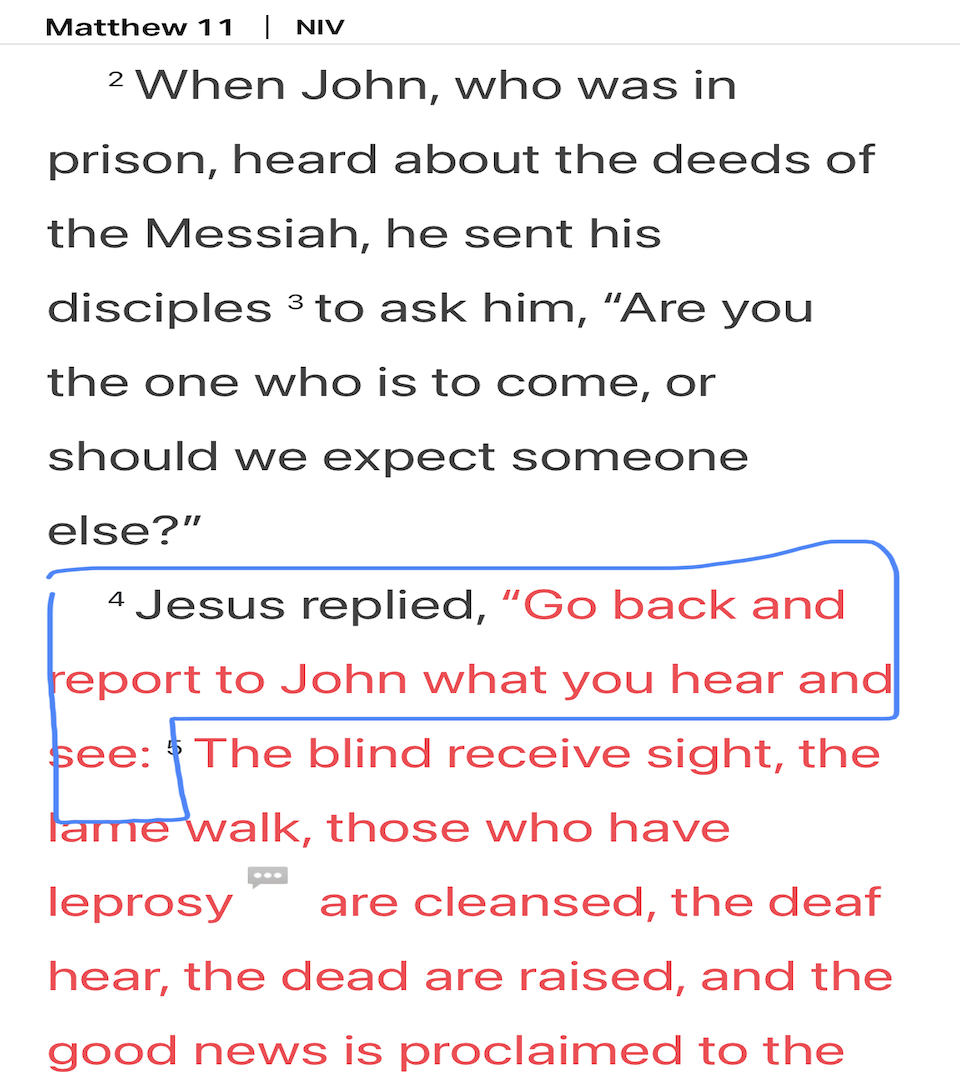
I had an encounter with my atheist college professor that has always stuck with me. I was reminded of that interaction when I was reading the question John the Baptist sent to Jesus from prison.
Always remember:
The one with a firsthand experience is never at the mercy of the one with only secondhand information.










 Craig T. Owens