And David knew the Lord has established him as king over Israel and that his kingdom had been highly exalted for the sake of His people Israel. (1 Chronicles 14:2)
“David knew” reminds me of “Jesus knew” in John 13:3.
Both knew God had placed them exactly where they were supposed to be.
Both knew the authority God had given them.
Both knew the power that was theirs to use.
Both knew they could do self-glorifying, self-promoting things with their power. Yet both used their authority and power to serve others: “for the sake of His people.”
David conferred with each of his officers…. He then said to the whole assembly of Israel, “If it seems good to you and if it is the will of the Lord our God…let us bring the ark of our God back to us….” The whole assembly agreed to do this, because it seemed right to all the people. (1 Chronicles 13:1-4)
David cast a vision, consulted with his inner circle of leaders, shared the vision with the people, and got unanimous agreement from everyone.
In the above verses, notice all of the plural pronouns: we and us. David worked hard to build a consensus among the people.
David was quick to notice that the ark of the covenant of the Lord wasn’t used to consult God during the reign of King Saul (v. 3), but that’s exactly what David didn’t do. He built a consensus among the people without getting a “yes” from God. Even a unanimous decision of the people will fail if God isn’t in it!
Thankfully, in chapter 15, David corrects this omission. We read phrases like:
“we did not inquire of [God] about how to do it in the prescribed way”
we should do this “in accordance with the word of the Lord”
I also notice that David no longer sought consensus but merely announced to the people what was happening. In this successful attempt to move the ark, David’s only consultation was with God. After that, he made arrangements with the Levites, gathered his inner circle of leaders, and then asked the people to join in the celebration.
God had already spoken about how the ark of the covenant was to be moved: it was written in His word. Therefore, as noble as it might sound, there was no reason for David to seek a consensus from the people.
Even if it is not an area or activity explicitly addressed in the Bible, God’s will is to be sought before others are consulted. If God says “yes,” the leader must proceed even if the people say “no.” And the leader must not listen to the people’s “yes” if God has said “no.”
Consensus is fine in its place, but only in its proper place.
A mark of a godly leader is one who knows when to seek consensus among the people.
This is part 53 in my series on godly leadership. You can check out all of my posts in this series by clicking here.
And David became more and more powerful because the Lord Almighty was with him (1 Chronicles 11:9).
David had followers from all twelve tribes of Israel—warriors, leaders, talented men, fierce men. David wasn’t recruiting them or promising them any rewards, but they volunteered, coming in “one accord” and creating “joy in Israel” in the process (12:1-40).
David was prepared to go alone. He fled from Saul without a single helper. David’s attitude was one of all-in trust in God, so all of these warriors came to David because of what he represented, not because of what he advertised. It was David’s wholehearted commitment to God that won the wholehearted commitment of these valiant men.
Their unity of purpose—“fully determined … one mind” (12:38)—was not because of a compelling vision that David cast but because of a mighty God David fully feared and loved.
A leader’s focus should never be on building a following or casting a compelling vision, but on wholehearted, single-minded love and commitment to God. Any power or following only comes “because the Lord Almighty was with him.”
A mark of a godly leader is his wholehearted devotion to God which creates a wholehearted devotion in his followers.
This is part 52 in my series on godly leadership. You can check out all of my posts in this series by clicking here.
In Psalm 50, we read the first-of-twelve psalms written by King David’s handpicked worship leader, aman named Asaph. On the day that Asaph first took up his position as worship leader, David gave him a special song, which definitely influenced Asaph’s songwriting.
Psalm 50 has a pretty easy outline: an introduction in the first six verses, followed by 17 verses of God speaking to His people—speaking to you and me! In between the introduction and God’s speaking is the word selah.
Selah means a time for us to pause and carefully consider. So Asaph is essentially saying, “God is getting ready to speak with us, so we need to selah—pause from what we are doing so that we can pay careful attention to His words!”
Asaph sets the stage in the first verse, telling us that the Mighty One, God, the Lordspeaks. The words that are about to be spoken come from THE I AM—the All-Sufficient One, the Omnipotent, the All-Knowing, All-Powerful Ruler of the Universe. Asaph also reminds us that He is coming as THE Judge.
When you hear that THE All-Powerful, All-Knowing One is THE Judge that has summoned you into His courtroom, it’s quite likely that your heart would skip a beat. Especially when God lists some of the sins you and I are guilty of breaking in verses 16-20.
It’s also possible that the news that you have to appear before THE Judge could cause you to rejoice. What? How can we rejoice at that?! David taught Asaph this concept in the song he gave him: God’s people should rejoice over God’s judgments.
You see, in Psalm 50 God says, “I do not rebuke you for your sacrifices, or for all your attempts to follow the rules.” It’s not in the practices of the law that we find salvation.
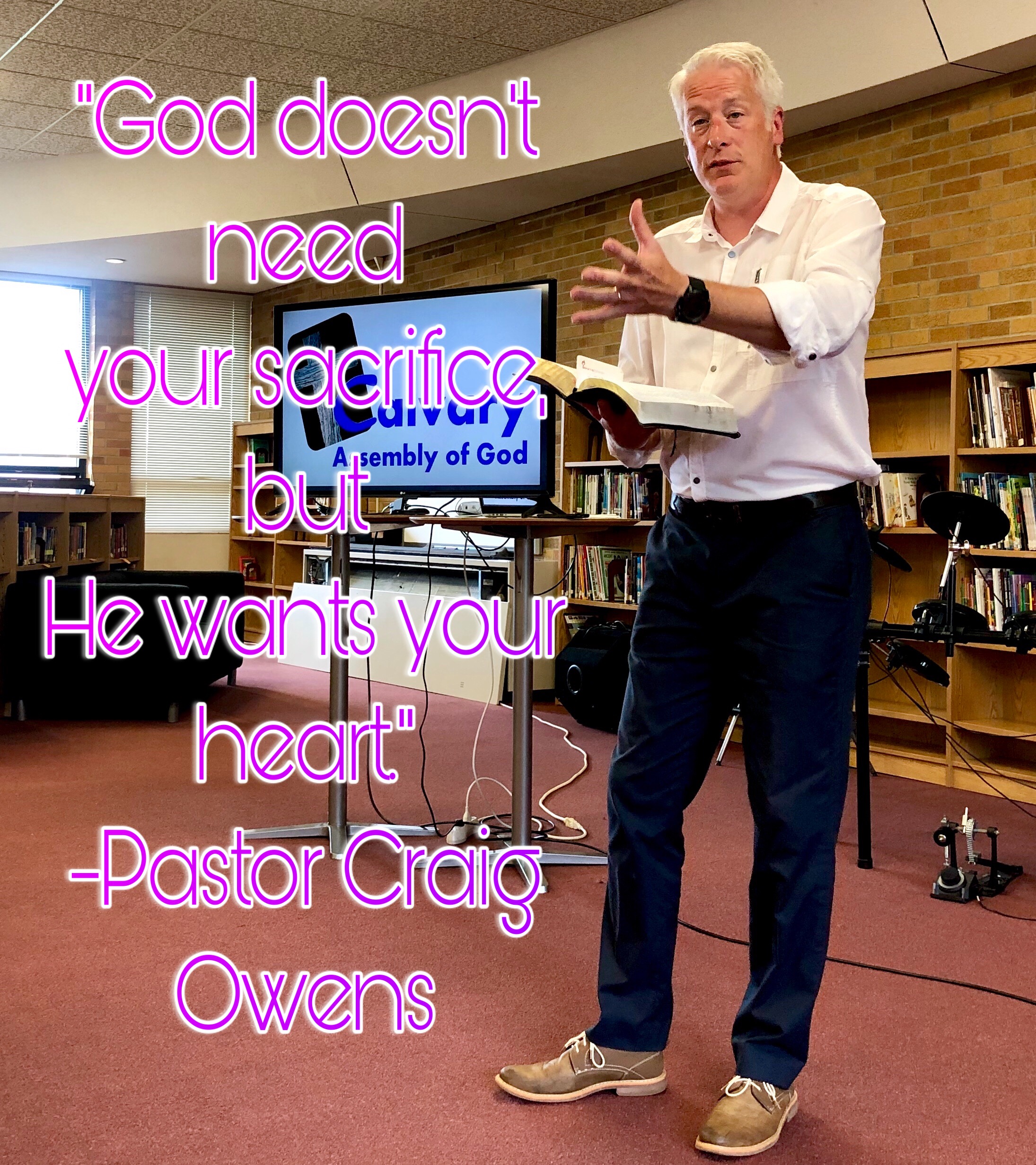
God doesn’t need our sacrifices, but He wants our hearts.
In order to win our hearts for Himself, THE Judge did something absolutely mind-blowing—THEI AM became flesh like us. And then He became the once-for-all sacrifice for our sins, paying our penalty Himself when He died on the Cross (see Hebrews 2:14-17; 7:17-27).
This is why we can rejoice when we hear we have to stand before THE Judge. When you have placed your faith in what Jesus did for you on the Cross, when THE Judge opens His perfect record book to your page He will read this inscription written in the crimson red blood of Jesus: PAID IN FULL!
This is why we can rejoice at the thought of seeing THE Judge face to face!
Join me next Sunday as we wrap up this summer looking at the Selahs in the Psalms. We plan to restart this series next summer, unless the Judge calls us home before then!
Well, this isn’t what I expected! David says his song in Psalm 9 is supposed to be sung to the tune of “Death Of The Son,” so I’m expecting a prayer that is loaded with minor notes. But instead, David gives us … this!
The opening verses show us David exploding in praise to God. Check out his vocabulary—
I will praise You—this literally means David is pumping his hands in the air
I will tell of all Your wonders—David is not doing this just one time but is ticking off a long list of God’s praiseworthy deeds and attributes
I will be glad—his face lights up with joy
I will rejoice—this word means a roar of praise (see 1 Chronicles 16:32)
I will sing praise—there is a new melody with every praise David lifts to God
Why this loud, exuberant, unexpected praise? Because David has noticed that whatever has “died” on earth is only a temporary loss, but God is forever!
There is an unusual word pairing at the end of verse 16: Haggaion and Selah. This is the only time these two words appear like this in all of Scripture, and it’s also the only time Haggaion is used without being translated.
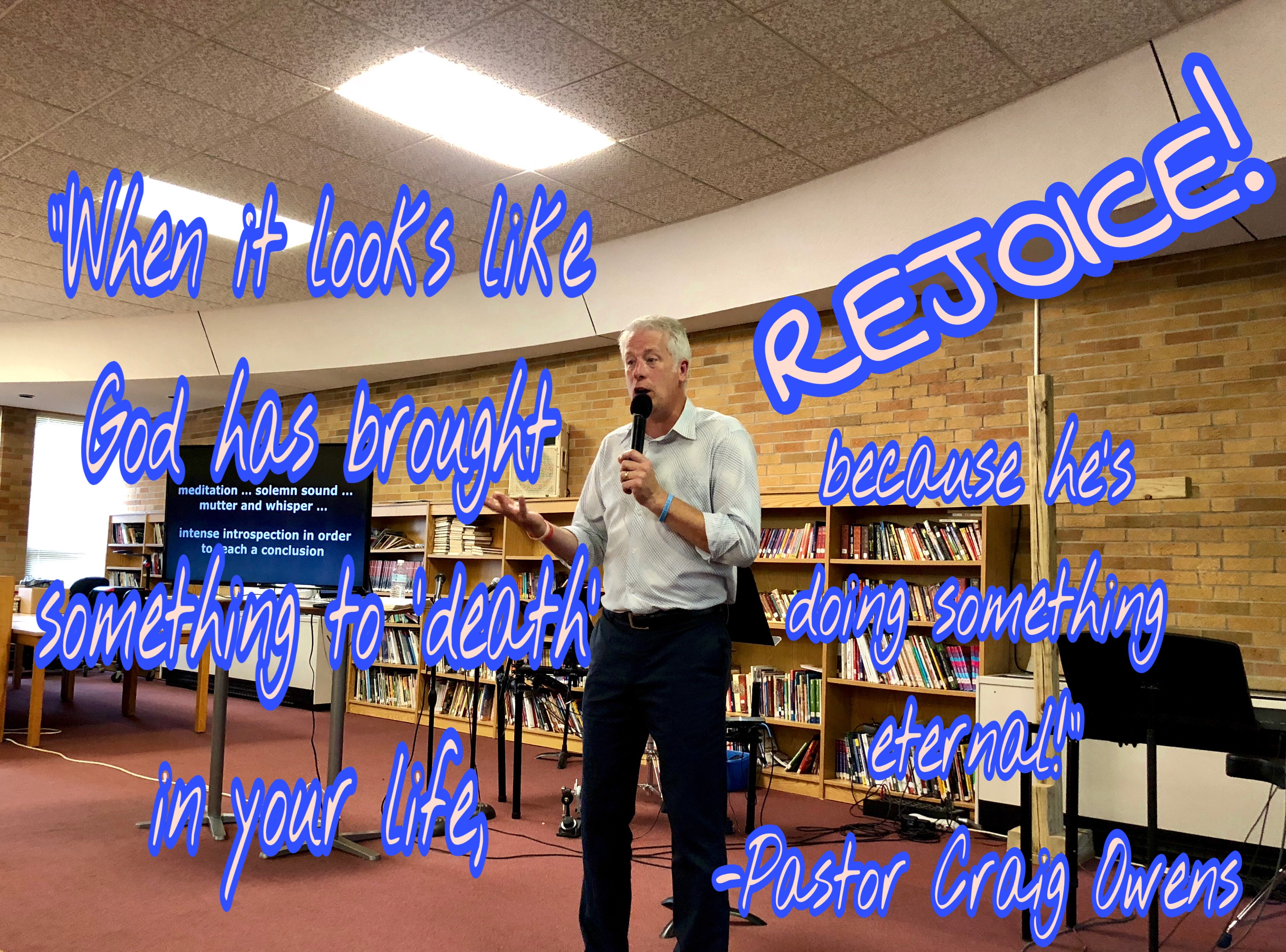
Haggaion appears just four times in the Bible—(a) in Psalm 19:14 where it is translated meditation; (b) in Psalm 92:3 where it is translated solemn sound; (c) in Lamentations 3:62 where it is translated whisper and mutter; and (d) here in Psalm 9 where it is untranslated.
By combining Haggaion and Selah, David is wanting us to solemnly meditate on an important contrast: God’s way vs. man’s way. In verses 3-16, David uses huge and eternal terms for God like righteous Judge, reigns forever, refuge, stronghold, merciful, and prayer-answerer.
Side-by-side with these eternal terms for God, David lists the temporary terms for man like stumble, perish, ruined, forgotten, and trapped. In fact, David ends this Psalm by reminding us evil men who do evil things are “mere men.” Other translations fill in the details:
make them realize their frail nature (AMP)
show them how silly they look (MSG)
merely human (NLT)
puny men (TLB)
Then David ends with a final Selah—one more call for us to allow this message to resonate with us, especially during the times others may call dark, depressing times. The message that should resonate in our hearts and cause us to throw our hands up in joyful celebration of God is…
these earthly things are temporary and God is eternal. He has never forsaken those who seek Him, and He has never forgotten those who call on Him for help.
When a dark time—a “death of a son”—tries to rock your world, don’t do what puny mortals expect, but throw your hands up in the air, and sing and roar a praise to the Almighty God Who cares for you!
Join me this coming Sunday as we continue our looks at the Selahs in the Book of Psalms. You can join me in person or on Facebook Live.
Later war broke out with the Philistines at Gezer. That was the time Sibbecai the Hushathite killed Sippai of the clan of giants. The Philistines had to eat crow.
In another war with the Philistines, Elhanan son of Jair killed Lahmi, the brother of Goliath the Gittite whose spear was like a ship’s boom.
And then there was the war at Gath that featured a hulking giant who had twenty-four fingers and toes, six on each hand and foot—yet another from the clan of giants. When he mocked Israel, Jonathan son of Shimea, David’s brother, killed him.
These came from the clan of giants and were killed by David and his men. (1 Chronicles 20:4-8)
All the experts said that it was humanly impossible for a human to run a mile in less than four minutes. They looked at all the data and concluded it just couldn’t be done.
But in 1954, Roger Bannister ran a mile in 3:59.4.
Since that time, over 1400 runners have been inspired by Bannister’s success and have also broken the “unbreakable” barrier of a 4-minute mile.
Before David faced the giant Goliath, the experts were probably all in agreement: giants just can’t be killed by normal-sized humans.
But David killed Goliath. And then, inspired by his success in doing the “impossible,” David’s fellow warriors began chopping down giants too!
What’s holding you back? What have you or other so-called experts declared “impossible” or “unbreakable” or “undoable”?
If God is calling you to take on the giant, DO IT!
Defy the so-called experts. Do the “impossible.” Don’t let what others say is un-doable hold you back from victory!
When David was settled in his palace, he summoned Nathan the prophet. “Look,” David said, “I am living in a beautiful cedar palace, but the Ark of the Lord’s Covenant is out there under a tent!”
Nathan replied to David, “Do whatever you have in mind, for God is with you.”
But that same night God said to Nathan, “Go and tell My servant David, ‘This is what the Lord has declared: You are not the one to build a house for me to live in.’” (1 Chronicles 17:1-4)
David’s desire to build a home for the Ark of the Covenant was a noble desire, and David’s passion for God was contagious! So much so that Nathan the prophet gave a hearty “Amen!” without a moment’s pause.
Except no one—not good King David or Nathan the righteous prophet—consulted God about this.
Nathan had to return to David with God’s word: “You’re not the one to build the Temple.”
Note this—
No matter how noble or God-honoring something sounds to us, God must be the one to give us permission to proceed.
DON’T say, “God, this is what I’m going to do, please bless it.”
But DO say, “God, what would You have me do? Because that is what You will bless.”
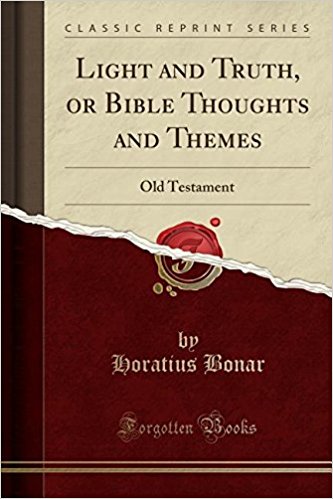
I like to think of Horatius Bonar as a tour guide as I read through the Bible, pointing out themes and insights I might have otherwise missed. Check out my full review of Light and Truth—Old Testament by clicking here.
“The elders[1 Chronicles 21:16]. They acknowledge the stroke and the sin: ‘It is the Lord.’ They clothe themselves in sackcloth, they fall upon their faces. So far as we know, they had not shared David’s sin, yet they at once place themselves by his side in confession and humiliation. David had sinned (v. 8), Israel had sinned (2 Samuel 24:1). They identify themselves with both. It is thus that we should take up a ruler’s sin, or a brother’s sin, or a nation’s sin; not blazoning it abroad in private gossip, or in the newspapers, but taking it on ourselves, and carrying it to God.”
“We do great injustice to the Old Testament saints and to their privileges, and no less so to the God who made them what they were, when we conceive of them as possessing an imperfect justification, or an imperfect and uncertain knowledge of their justification. Paul’s declaration was explicit on this point: ‘I know Whom I have believed’; and yet it was not a jot more explicit than that of Job: ‘I know that my Redeemer lives.’ When Paul said, ‘It is God that justifies, who is he that condemns?’ he was only speaking what Job had spoken in ages before: ‘I know that I shall be justified. Who is he that will plead with me?’” [Job 13:18-19]
“Everything in God’s character, has by the Cross of Christ been turned into a reason for trusting Him. The more man knows of Him the more he trusts. Trust is the natural and inseparable response of the soul to the divine revelation of the character of God. It is not what man sees in himself, of his good deeds or good feelings, of his graces, or his repentance, or his regeneration, or his faith; but what he sees in God, that calls out confidence.”
“It is with no distant, unheeding God that we have to do; but with that God who fixes the bounds of our habitation, who counts our hairs, who feeds the ravens, notes a sparrow’s death, clothes the lilies of the field. He is nearer to us than the nearest earthly object or being; more closely in contact with us than we are with one another.”
“We disjoined God from creation, and so see nothing in it of divine life and power. … The separation of God from His works is one of the awful features of human unbelief. How much more of Him should we know, were we to interpret His works aright. … These skies of His are not bent over us in beauty without a meaning. These seas of His do not roll for nothing. These flowers of His are not fragrant and fair for nothing. They do not say to us, ‘God is your enemy, He hates you’; but ‘God is your friend, He pities you, yearns over you, wishes to make you happy.’ How full a gospel does creation to preach to us, according to its kind and measure!”
Our week of prayer concludes today with this prayer focus—
Give praise to God for this powerful assurance that He is working out His plans and purposes in your life, both in the present and in the future.
All week long we have been praying God’s Word. Here’s a prayer thought you might want to pray today:
Father, I know that all plans you have for my life are plans to prosper me and not to harm me. They are plans to give me hope and a future [Jeremiah 29:11]. Sometimes it appears things have gotten off track, but I know that You are able to use even my “mistakes” to work out all the details of Your loving plan for my life [Romans 8:28].
Today I pray the same prayer You honored in the life of someone else who cried out to You for help: “Oh, that You would bless me and enlarge my territory! Let Your hand be with me, and keep me from harm so that I will be free from pain” [1 Chronicles 4:10]. I believe You are powerful enough to complete all You have determined to do for my life. In Jesus’ name, Amen.
We know the law is good if one uses it properly. (1 Timothy 1:8)
Whether laws are labeled spiritual or civil, the IF in that verse is very important. Law is intended to restrain unbecoming or immoral activities. Laws are aimed at lawbreakers. But in order for any law to carry weight, it has to be backed up by something more solid than a man’s opinion of what is “right” or “wrong.”
According to Scripture, a law must…
…be supported by sound doctrine(1 Timothy 1:10). What defines “sound doctrine” is the word of God, not man-made opinion. Jesus said about the Pharisees, “They worship Me in vain; their teachings are but rules taught by men” (Matthew 15:9). The New Living Translation renders this verse: “Their worship is a farce, for they teach man-made ideas as the commands of God.”
…conform to the gospel(1 Timothy 1:11). Literally this means filtered through Scripture. Any law that does not have its foundation set on a biblical principle is, by definition, an immoral, man-made law.
So what is the Christian’s role in the legislative process? I see four responsibilities for Christians:
1. Pray for our elected officials that they would have a God-fearing, biblically-sound perspective in their legislative activities (see 1 Timothy 2:1-2).
2. Stay informed on the law-making activities on both the local, state, and national levels (see Acts 17:11; 1 Chronicles 12:32).
4. Disobey immoral laws. The Bible commands us to “give to Caesar what is Caesar’s, and to God what is God’s” (Luke 20:25). We must never give to Caesar what is God’s (see Acts 5:29)!
I love Martin Luther King Jr’s Letter From Birmingham Jail where he addresses Christian pastors about the rightness of peacefully disobeying immoral laws. If you haven’t read this masterpiece, please take time to do so. In this letter, Dr. King wrote:
Over the last few years I have consistently preached that nonviolence demands that the means we use must be as pure as the ends we seek. So I have tried to make it clear that it is wrong to use immoral means to attain moral ends. But now I must affirm that it is just as wrong, or even more, to use moral means to preserve immoral ends.
Christian, you have a responsibility. Pray, be informed, respectfully speak out against immoral laws, and then peacefully disobey when it is necessary.



 “David knew” reminds me of “Jesus knew” in John 13:3.




 Craig T. Owens