The Delight Of Praise

C.S. Lewis at his desk“Just as men spontaneously praise whatever they value, so they spontaneously urge us to join them in praising it. ‘Isn’t she lovely? Wasn’t it glorious? Don’t you think that magnificent?’ The Psalmists in telling everyone to praise God are doing what all men do when they speak of what they care about.

“My whole, more general, difficulty about the praise of God depended on my absurdly denying to us, as regards the supremely Valuable, what we delight to do, what indeed we can’t help doing, about everything else we value. I think we delight to praise what we enjoy because the praise not merely expresses but completes the enjoyment; it is its appointed consummation. It is not out of compliment that lovers keep on telling one another how beautiful they are; the delight is incomplete till it is expressed. … This is so even when our expressions are inadequate, as of course they usually are. But how if one could really and fully praise even such things to perfection—utterly ‘get out’ in poetry or music or pain the upsurge of appreciation which almost bursts you? Then indeed the object would be fully appreciated and our delight would have attained perfect development. The worthier the object, the more intense this delight would be.” —C.S. Lewis, in Reflections On The Psalms

A Unique Look At “Church”

gods-people-are-the-saintsHave you ever noticed that nowhere in the New Testament do we see an “order of service” for a church congregation? It’s simply not there.

Neither is there a list of acceptable songs, or the design of a church building, or how or when Communion is served, or even what clothing the pastor is supposed to wear. Yet we modern-day Christians seem to spend a lot of time not only arguing about these non-essentials, but even (gasp!) evaluating the “churchness” of a church based on these things.

It’s understandable, then, when someone says, “I enjoy being a Christian, but I really don’t like going to church.” Or even insisting that they can be a Christian without attending a church.

But here’s where those statements miss the mark: “Church” was never intended to be merely a group of people who met at a designated address once a week.

The Church that Jesus described—and the Church the apostles were a part of—was a living organism. It was fellow followers of Jesus Christ interacting with each other as they worshiped the Lord.

The Apostle Peter describes a gathering of Christians in just one verse. In this verse he gives five descriptors of how Church should be done. To stress the point that every gathering of Christians is unique, three of Peter’s five descriptors are found nowhere else in Scripture.

  1. Live in harmony with one another (the first unique word)

One translation has this as “one mind.” Paul has a similar thought in 1 Corinthians 14:20. The bottom line—get on the same page working toward the same goal. What’s that goal? Pointing people to Jesus!

2.  Be sympathetic (the next unique word)

A definition we may better understand is “empathy.” This world literally means to “vibrate with others.” Be on in tune with what they’re going through that you can feel it just like it was happening to you.

      3.  Love as brothers

This is the Greek word philadelphos, which means to treat other Christians like they’re from the same womb as you.

4.  Be compassionate

That is: be strong enough to step into other people’s stuff. Keep on increasing your capacity to carry a bigger load for someone else (Galatians 6:2).

      5.  Be humble (the last unique word)

The King James Version translates this “courteous.” Not just being strong enough to help, but gentle enough that your help will be accepted.

Let me repeat: The Church is not a physical address where we gather once per week. YOU are the temple of God’s presence, which is why Jesus said if just two of His followers get together, He is right there with them. That’s right—two Christians can have “church” wherever they happen to meet

Don’t just go to church, BE the church. Don’t miss an opportunity to encourage, pray with, instruct, or learn from another Christ-follower whenever and wherever you happen to meet.

If you’ve missed any messages in this series, you may find the complete list by clicking here.

Poetry Saturday—See God In Everything

lake-michigan“Give me a new idea,” I said,
While musing on a sleepless bed;
“A new idea that’ll bring to earth
A balm for souls of priceless worth;
That’ll give men thoughts of things above,
And teach them how to serve and love,
That’ll banish every selfish thought,
And rid men of the sins they’ve fought.” 

The new thought came, just how, I’ll tell:
‘Twas when on bended knee I fell,
And sought from Him who knows full well
The way our sorrow to expel.
See God in all things, great and small,
And give Him praise whate’er befall,
In life or death, in pain or woe,
See God, and overcome thy foe.
I saw Him in the morning light,
He made the day shine clear and bright;
I saw Him in the noontide hour,
And gained from Him refreshing shower.
At eventide, when worn and sad,
He gave me help, and made me glad.
At midnight, when on tossing bed
My weary soul to sleep He led.

I saw Him when great losses came,
And found He loved me just the same.
When heavy loads I had to bear,
I found He lightened every care.
By sickness, sorrow, sore distress,
He calmed my mind and gave me rest.
He’s filled my heart with gladsome praise
Since I gave Him the upward gaze.
‘Twas new to me, yet old to some,
This thought that to me has become
A revelation of the way
We all should live throughout the day;
For as each day unfolds its light,
We’ll walk by faith and not by sight.
Life will, indeed, a blessing bring,
If we SEE GOD IN EVERYTHING.” —A.E. Finn

Thursdays With Oswald—A New Perspective Of Calvary

Oswald ChambersThis is a weekly series with things I’m reading and pondering from Oswald Chambers. You can read the original seed thought here, or type “Thursdays With Oswald” in the search box to read more entries.

A New Perspective Of Calvary

     If Jesus Christ were only a martyr, His Cross would be of no significance; but if the Cross of Jesus Christ is the expression of the secret heart of God, the lever by which God lifts back the human race to what it was designed to be, then there is a new attitude to things. … 

     There are any number of amateur skeptics, and the men who are seeing the difference between “believing their beliefs,” and “believing God,” men, who, through the turmoil and the stress, are seeing that rationalism is not the basis of thing. According to the Bible, the basis of things is tragedy, and the way out is the way made by God in Redemption. The New Testament does not say that the human race is evolving, but that the human race is a magnificent ruin of what it was designed to be. …

     Paul says the fundamental revelation of the New Testament is that God redeemed the whole human race when they were spitting in His face, as it were. … 

     The majority of people who have never been touched by affliction see Jesus Christ’s death as a thing beside the mark. When a man gets to his wits’ end and things go hard with him, his thick hide is pierced and he is stabbed wide awake, then for the first time he begins to see something else—“At last I see; I thought that He was stricken, smitten of God and afflicted; but now I see He was wounded for my transgressions.” … 

     Jesus Christ did not come to give us pretty ideas of God, or sympathy with ourselves; He came from a holy God to enable men, by the sheer power of His Redemption, to become holy.

From The Shadow Of An Agony

Oswald Chambers wrote these words in the midst of The Great War (what we now refer to as World War I), when everyone’s belief in rationalism was shaken to the core. Tragedy has a tendency to do that to us.

Chambers says that trouble in this world should point us to the unshakable, inescapable truth that this world is “a magnificent ruin of what it was designed to be,” and the only security and hope we have is a new life with God though the Redemption Jesus paid for at Calvary.

May any pain, suffering, or confusion you feel in this world help you see the Cross of Christ in a whole new light.

11 More Quotes From “Culture”

cultureA.W. Tozer wrote almost 50 years ago, but his words to the church still ring true today. Check out my review of Culture, and then enjoy some additional quotes from this book.

“To preserve life the physician and the druggist use words of fixed meaning common to both. How much more should the pulpit and the pew have a clear understanding about the words of eternal life. The modern effort to popularize the Christian faith has been extremely damaging to that faith. The purpose has been to simplify truth for the masses by using the language of the masses instead of the language of the church. It has not succeeded, but has added to rather than diminished religious confusion.”

“The hope of the church yet lies in the purity of her theology, that is, her beliefs about God and man and the relation to each other. These beliefs have been revealed to her by the inspiration of the Holy Spirit in the sacred Scriptures. Everything there is clear-cut and accurate. We dare not be less than accurate in our treatment of anything so precious.”

“I think we make two mistakes in our attitude toward our Christian leaders, one is not being sufficiently grateful to them and the other in following them too slavishly.”

“Today we evangelicals are showing signs that we are becoming too rich and too prominent for our own good. With a curious disregard for the lessons of history we are busy fighting for recognition by the world and acceptance by society.”

“That terrible zone of confusion so evident in the whole life of the Christian community could be cleared up in one day if the followers of Christ would begin to follow Christ instead of each other.”

“The difficulty we modern Christians face is not misunderstanding the Bible, but persuading our untamed hearts to accept its plain instructions.”

“Our churches these days are filled (or one-quarter filled) with a soft breed of Christian that must be fed on a diet of harmless fun to keep them interested. About theology they know little. Scarcely any of them have read even one of the great Christian classics, but most of them are familiar with religious fiction and spine-tingling films. No wonder their moral and spiritual constitution is so frail.”

“To accept the call of Christ changes the returning sinner indeed, but it does not change the world. The wind still blows toward hell, and the man who is walking in the opposite direction will have the wind in his face. And we had better take this into account when we ponder on spiritual things.”

“Christianity’s scramble for popularity today is an unconscious acknowledgment of spiritual decline.”

“The desire to stand well with our fellow man is a natural one, and quite harmless up to a point, but when that desire becomes so all-consuming that we cannot be happy apart from the praises of man, it is no longer harmless, it is sinful in itself and injurious in its effects.”

“A Christian’s standing before God does not depend upon his standing before men. A high reputation does not make a man dearer to God, nor does the tongue of the slanderer influence God’s attitude toward His people in anyway.”

To read some additional quotes I shared from Culture, click here. You may also follow me on Twitter and Tumblr to read quotes which I share daily from Tozer and other notable thinkers.

The Qur’an And The Bible

Answering JihadIn his outstanding book Answering Jihad, Nabeel Qureshi gives us an understanding of the beliefs which support the Islamic faith. One thing that is key for Muslims is their reliance on multiple sources for definitive answers to their faith. Nabeel explains it this way…

“The Qur’an that was the first Arabic book ever put into writing, and the Arabic script of the seventh century remained too deficient to capture the richness and complexities of its text. … Muslim biographers begin to write about Muhammad’s life around 770 A.D.” 

“By the middle of the ninth century, there were more than 500,000 traditions of Muhammad’s life in written and oral circulation, and Muslim scholars decided to undertake the effort of sifting through them and distilling the most authentic accounts.” 

“Since there are thousands of verses in the Qur’an and hundreds of thousands of hadith, it is expected that only trained Muslim jurists can engage in determining what sharia teachers. The jurist must give primacy to the Qur’an, then consider the actions (sunnah) and sayings (hadith) of Muhammad, followed by reviewing the consensus of Islamic scholars, or ijma, before using his own reasoning (qiyas). By following these four steps, a Muslim jurist can make a decision, or fatwa, about what sharia teaches on a given matter. The ultimate goal is to apply the teachings of sharia to Muslim life, and that is called fiqh.” 

“As is probably clear by now, at no point was the average Muslim expected to read the Qur’an to decide upon correct Islamic practices by himself or herself. Not only is Islam not a faith that upholds the sufficiency of scripture alone, the complexity of its foundations virtually necessitates a reliance on jurists and scholars for proper practice.” 

I prefer to pattern my life after the Bible, a book which I am free to read on my own. It’s authenticity has been well-established, and it doesn’t require me to find an “expert” in the texts and traditions to explain to me how to live my life.

I would highly recommend you read two books by Nabeel Qureshi: Seeking Allah, Finding Jesus and Answering Jihad. If you are curious about the claims of the Bible, you can check out God-Breathed and Questions Christians Hope No One Will Ask. And if you want to dig any deeper, search this website for the quotes I have posted from all four of these books.

Archeological Study Bible (book review—part 2)

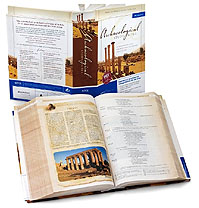
Archeological Study BibleI wrote a review on the Archeological Study Bible when I was roughly halfway through the Bible, but as I have now finished, I thought another review was in order.

Zondervan did an amazing job on this project! I love reading the Bible, and I love studying history, and this study Bible helped me to do both of those things without getting lost on too many “rabbit trails.” Some study Bibles I have read require a lot of page flipping to follow a thought or do a little research. But the ABS kept the historical articles, maps, and graphics close at hand to the biblical text I was reading, so page flipping was kept to a minimum.

At over 2300 pages, there is so much history that came alive as I read through the Bible. I also read through the Bible in chronological order, so I really felt like the ABS was helping me move seamlessly along the timeline of history.

Purchasing this Bible gives you access to an online gallery of many of the photos and other study materials. I also purchased the Kindle version of this Bible, to make searching for content much easier.

If you are looking for a fresh way to study the history surrounding the Scripture, I highly recommend the Archeological Study Bible to you.

An Audience With The King

Lettie Cowman shares this amazing story in her book Streams In The Desert.

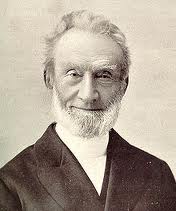
George MuellerI went to America some years ago with the captain of a steamer, who was a very devoted Christian. When off the coast of Newfoundland he said to me, “The last time I crossed here, five weeks ago, something happened which revolutionized the whole of my Christian life. We had George Mueller of Bristol on board. I had been on the bridge twenty-four hours and never left it. George Mueller came to me, and said, ‘Captain I have come to tell you that I must be in Quebec Saturday afternoon.’

‘It is impossible,’ I said.

‘Very well, if your ship cannot take me, God will find some other way. I have never broken an engagement for fifty-seven years. Let us go down into the chart-room and pray.’”

“I looked at that man of God, and thought to myself, ‘What lunatic asylum can that man have come from? I never heard of such a thing as this.’

‘Mr. Mueller,’ I said, ‘do you know how dense this fog is?’

‘No,’ he replied, ‘my eye is not on the density of the fog, but on the living God, who controls every circumstance of my life.’”

“He knelt down and prayed one of the most simple prayers, and when he had finished I was going to pray; but he put his hand on my shoulder, and told me not to pray. ‘First, you do not believe He will answer; and second I BELIEVE HE HAS, and there is no need whatever for you to pray about it.’”

“I looked at him, and he said, ‘Captain, I have known my Lord for fifty-seven years, and there has never been a single day that I have failed to get audience with the King. Get up, Captain, and open the door, and you will find the fog gone.’

“I got up, and the fog was indeed gone. On Saturday afternoon, George Mueller was in Quebec for his engagement.”

Christlike Wives And Husbands

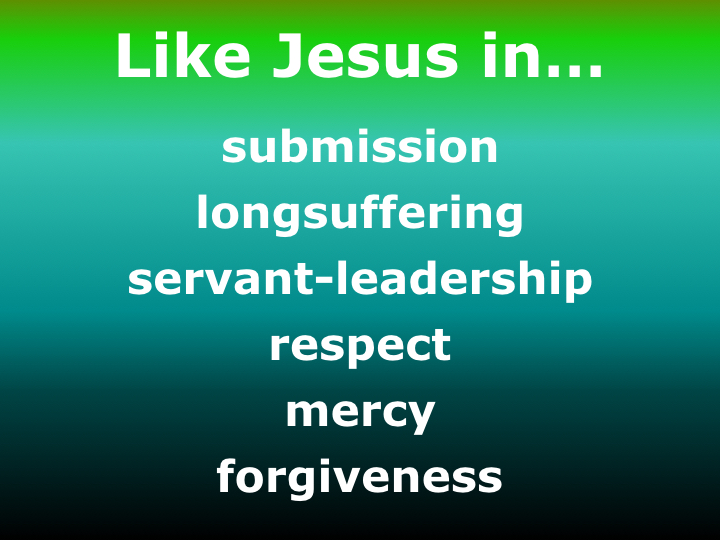
like-jesusTime after time Peter calls Christians to live a counter-cultural lifestyle. The most countercultural example we have ever seen is Jesus Christ.

Peter shows us how Jesus—in the most excruciating situation possible—lived. Heading into the torture of crucifixion

  • He was submissive to His Father’s will
  • He remained focused on the future glory, not just the immediate pain
  • He continued to be a servant-hearted leader
  • He spoke to those around Him respectfully
  • He extended mercy to His tormentors
  • He prayed for (and purchased with His blood) His tormentors’ forgiveness

Peter then tells Christian wives and husbands they are to behave in the same way as Jesus. Wow!

More specifically Peter challenges Christlike wives to be:

  1. Submissive to their husbands—I like how the Amplified Bible says this in verse 1: “subordinate, not as inferior, but out of respect for the responsibilities entrusted to husbands and their accountability to God, and so partnering with them.
  2. Christlike in their behavior.
  3. Distinctive by their purity.
  4. Reverent to God, by honoring the image of God in their husbands.
  5. Beautiful from the inside out.
  6. Consistently doing what is right
  7. Not swayed by fear—“do what is right without being frightened by any fear [that is, being respectful toward your husband but not giving in to intimidation, nor allowing yourself to be led into sin, nor to be harmed]” (v. 6 AMP).

Likewise Peter challenges Christlike husbands to be:

  1. Submissive to their wives—remember the in the same way phrase? That applies to the men too. Submit to one another out of reverence for Christ. … Husbands, love your wives, just as Christ loved the church and gave Himself up for her (Ephesians 5:21, 24).
  2. Considerate of her—the King James Version says, “dwell with them according to knowledge.” That word for knowledge means to study your wife and know what she likes and doesn’t like.
  3. Respectful in the way he treats his wife.
  4. Treating her as a partner and heir in your spiritual heritage.
  5. Understanding the part she plays in your spiritual development—“The same goes for you husbands: Be good husbands to your wives. Honor them, delight in them. As women they lack some of your advantages. But in the new life of God’s grace, you’re equals. Treat your wives, then, as equals so your prayers don’t run a ground” (v. 7 MSG).

Here are two questions I think Christian wives and husbands need to seriously consider: Are you thinking about your role as a husband or wife in biblical terms or cultural terms? If you are thinking in cultural terms, are you willing to try it God’s way?

Our Christian marriages should be “alien” to the way the world operates; they should be counter-cultural. That kind of marriage is what points people to a relationship with Jesus!

If you’ve missed any messages in this series, you may find the complete list by clicking here.

George Matheson On The Value Of Waiting

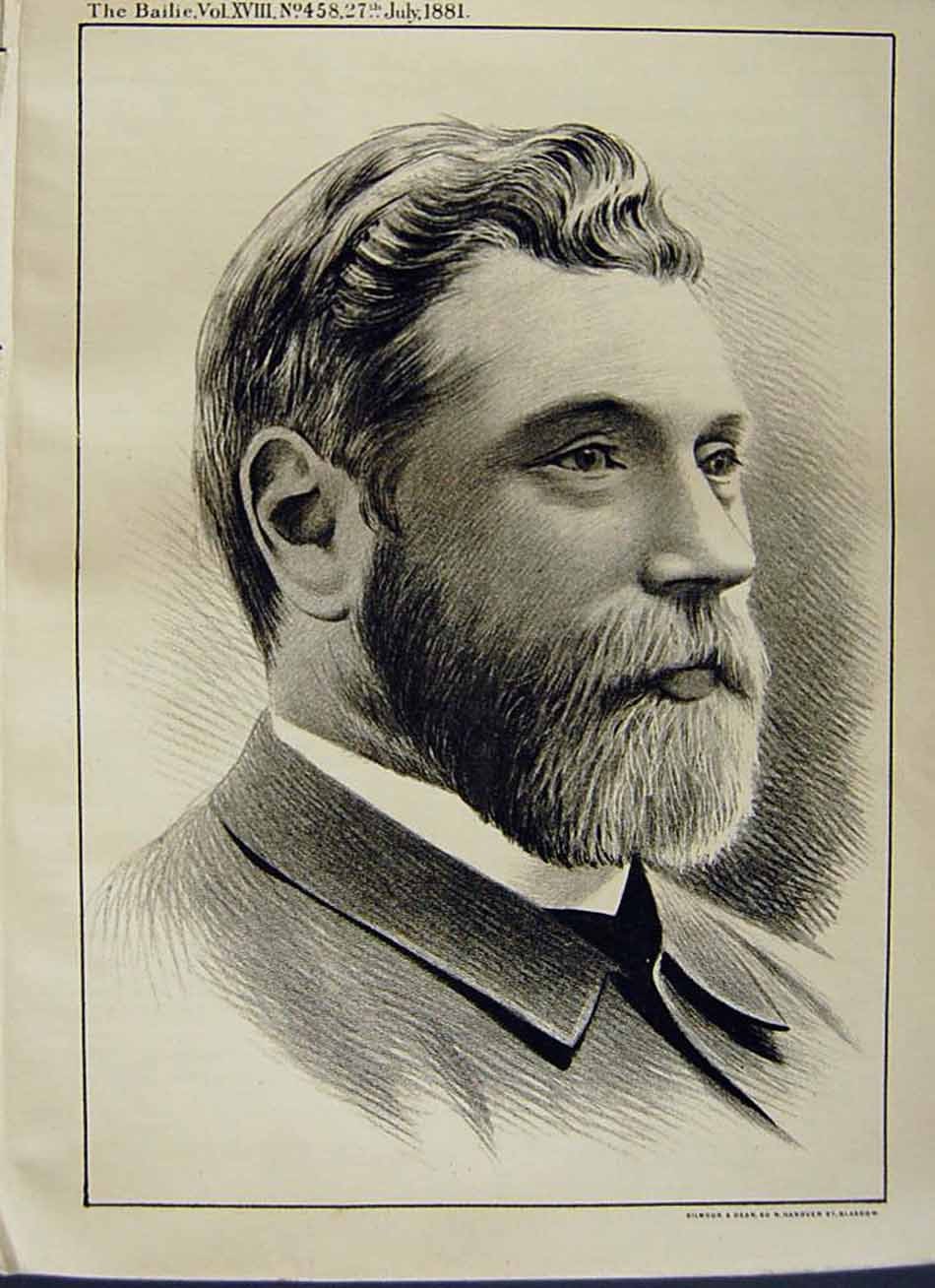
George Matheson“The Spirit requires not only a service of work but also a service of waiting.

“Dear Holy Spirit, my desire is still to be led by You. Nevertheless, my opportunities for usefulness seem to be disappointed, for today the door appears open into a life of service for You but tomorrow it closes before me just as I am about to enter. Teach me to see another door even in the midst of the inaction of this time. Help me to find, even in the area of service where You have closed a door, a new entrance into Your service. Inspire me with the knowledge that a person may sometimes be called to serve by doing nothing, by staying still, or by waiting.” —George Matheson