Poetry Saturday—Lean Hard

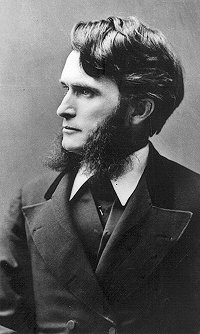
jeremiah-eames-rankin“Child of My love, lean hard,
And let Me feel the pressure of thy care;
I know thy burden, child. I shaped it;
Poised it in Mine Own hand; made no proportion
In its weight to thine unaided strength,
For even as I laid it on, I said,
‘I shall be near, and while she leans on Me,
This burden shall be Mine, not hers;
So shall I keep My child within the circling arms
Of My Own love.’ 
Here lay it down, nor fear
To impose it on a shoulder which upholds the government of worlds.
Yet closer come: Thou art not near enough.
I would embrace thy care;
So I might feel My child reposing on My breast.
Thou lovest Me? I knew it.
Doubt not then;
But Loving Me, lean hard.” —Jeremiah Eames Rankin

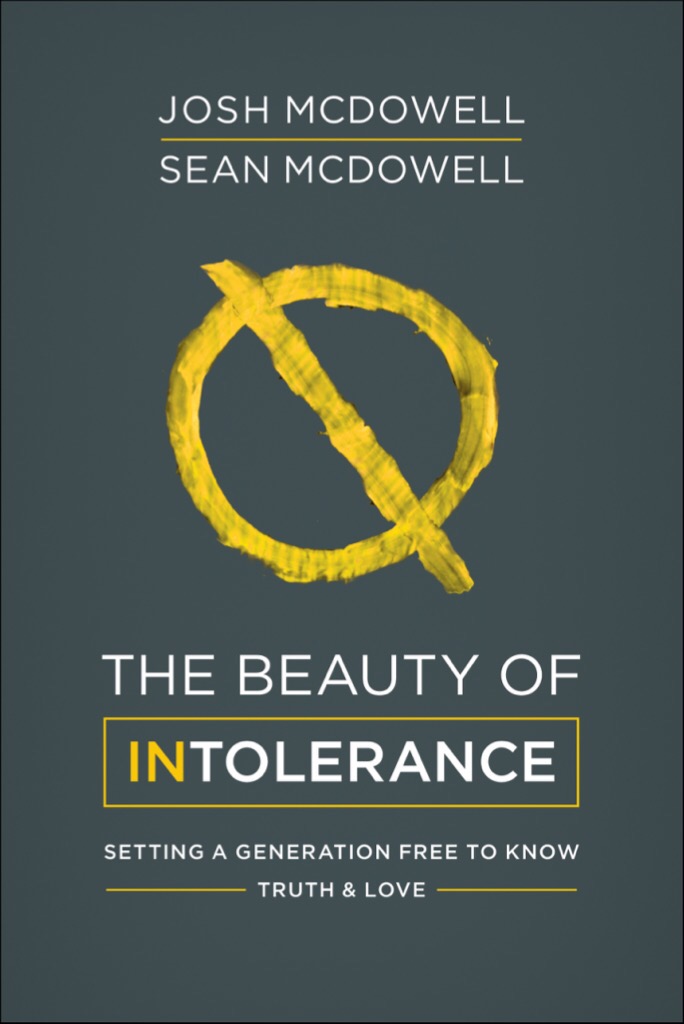
10 More Quotes From “The Beauty Of Intolerance”

Beauty Of IntoleranceI found Josh and Sean McDowell’s book The Beauty Of Intolerance to be such a timely book! Parents, teachers, pastors, and anyone who works with youth should definitely read this book to help navigate through the tolerance-saturated world we live in. You can check out my review of this book by clicking here.

“God gave Moses pages and pages of highly specific rules to govern the relationships and morality of His people. Each of those rules, which we call precepts, applies to a specific situation. But each is important because it is grounded in a principle, which is a fundamental, primary law from which other laws—the precepts—are derived. Each principle, in turn, is grounded in a Person—in the very character of God Himself. … God is not behind the principles and precepts simply to validate the rules; He is there as a Person for the purpose of relationship.”

“When moral truth becomes a matter of opinion, personal preference, or the individual’s views and feelings, then practically anything goes. … In a culture of tolerance where the individual decides morality, morality has no bounds.”

“An entire generation tends to go to the Bible not to discover the truth and bend their lives to it accordingly but to use it as sort of a self-help book to help them form their own version of what’s true and false, good and evil, right and wrong.”

“When you discuss the Bible, do not refer to it simply as a spiritual book that teaches us how to live, but as a road map leading one toward the discovery of true reality. … The one true God’s communication to humanity and the whole of Christianity as a religion is based on three primary realities supported by evidences: (1) The historic reliability of Scripture; (2) The deity of Christ; and (3) Christ’s bodily resurrection.”

“While we all may have a sense of what is evil and what is good, under the philosophy of cultural tolerance, evil and good can only be relative ideals. Without an objective truth—a set of universal moral values—good and evil are defined by the individual, community, or society. Therefore we have no moral basis by which to judge another person, community, or nation for what they do or don’t do.”

“Unless justice is rooted in a moral authority beyond those with the most power or even with the most votes, there cannot be true justice for all. … Justice, charity, and human rights are grounded in the fact that we are created in God’s image with value, dignity, and worth. … God’s mercy and justice as our model has fostered societal justice and provided more positive contributions to society in general than any other force in history.”

“The intolerance of the early Christians was a beautiful thing. They believed that everyone—including the poor, the homeless, the handicapped, the sick—was made in the image of God with dignity and worth. They were utterly intolerant of injustice, and they did whatever they could to correct the injustices they saw in society.”

“Real love—biblical, Godlike love—exposes cultural tolerance as the counterfeit of love because cultural tolerance fails to point people to a universal standard of morality designed to save them from serious harm. Cultural tolerance does not address what is in the best interest of a person—it possesses no moral standard that aligns to what is universally right and good. Real love, on the other hand, looks out for the best interest of others.”

“Every truth, every rule, and every guideline coming from God’s Word is issued from the loving heart and character of God for our own good.”

“Love is making the security, happiness, and welfare of another person as important as your own. Biblical love is not merely focused on another but on the good of another, even if the other does not recognize or accept the reality of the good.”

To read the first set of quotes I shared from The Beauty Of Intolerance, please click here. And be sure to follow me on Twitter and Tumblr to read more quotes from this book, and from lots of other profound thinkers, that I share daily.

Thursdays With Oswald—The Harmony Of Health

Oswald ChambersThis is a weekly series with things I’m reading and pondering from Oswald Chambers. You can read the original seed thought here, or type “Thursdays With Oswald” in the search box to read more entries.

The Harmony Of Health

     Health, or physical harmony, is a perfect balance between our organism and the outer world. … The great error of the healthy-minded cult is that it ignores a man’s moral and spiritual life. … The attitude to sickness in the Bible is totally different from the attitude of people who believe in faith-healing. The Bible attitude is not that God sends sickness or that sickness is of the devil, but that sickness is a fact usable by both God and the devil. 

   Happiness or moral harmony is a perfect balance between our inclination and our environment. … The Bible reveals that a man can have physical health at the cost of his moral welfare, and happiness at the cost of spiritual welfare. 

   Holiness, or spiritual harmony, is a perfect balance between our disposition and the law of God. … 

   The devil tries to make us think that when we have entered into the sanctified life, all is done; it is only begun. We have entered into Jesus Christ’s finished work, but remember, says Paul, you have attained to nothing yet; everything is perfectly adjusted, now began to attain and to “grow up into him in all things. These three things develop slowly together: first, the basis of spiritual holiness; second, the building of moral happiness; and third, the decoration of physical health. A full-grown man in Christ Jesus is one who has become exactly like Christ Jesus. “Till we all come…unto the measure of the stature of the fullness of Christ” (Ephesians 4:13). 

From The Philosophy Of Sin

Quite simply Oswald Chambers identifies health as a perfect balance:

  • Physical health balances outside germs against inside defenses.
  • Emotional health balances outside circumstances with inside coping mechanisms.
  • Spiritual health balances God’s law (outside) with our obedience to that law (inside).

Furthermore, Chambers says that Jesus Christ is our measuring stick. We must study God’s Word, and watch Jesus closely to see how He lived out the perfect balance of the Scriptural principles so that we can attain “unto the measure of the stature of the fullness of Christ.”

John Bunyan On The Relationship Between Church And State

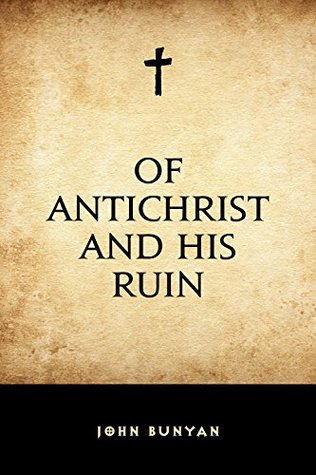
Of Antichrist And His RuinJohn Bunyan, as Charles Spurgeon said, was so steeped in Scripture, that he practically bled Bible! In his book Of Antichrist And His Ruin, Bunyan pointed out how God would use earthly governments to bring about the demise of Antichrist. In addition, Bunyan also shared these insights on how the Church should treat the governments of Earth.

“Take heed in laying the cause of your troubles in the badness of the temper of governors. … God is the chief, and has the hearts of all, even of the worst of men, in His hand. Good tempered men have sometimes brought trouble; and bad tempered man have sometimes brought enlargement to the churches of God: Saul brought enlargement (1 Samuel 14:28). David brought trouble (2 Samuel 12:10).) Ahab brought enlargement (1 Kings 21:29). Jehoshaphat and Hezekiah did both sometimes bring trouble (2 Chronicles 19:2; 20:35; 32:25). Therefore, the good or bad tempers of men sway nothing with God in this matter; they are the sins or repentances of His people, that make the church either happy or miserable upon earth.”

“The church therefore, as a church, must use such weapons as are proper to her as such; and the magistrate, as a magistrate, must use such weapons as are proper to him as such. … She [the church] may, and ought, with her faith and prayer, and holy life, to second this work of kings (Ezra 1:2, 3). When the king’s laws, and the law of their God, did at any time come in competition, they would indeed adhere to, and do the law of their God; yet with that tenderness to the king, his crown and dignity, that they could at all times appeal to the righteous God about it (Daniel 6:22). Nor did they lose by doing so; yea, they prospered; for by this means Mordecai was made a great man, and a savior of his people (Esther 2:21-23). By this means also was Daniel made a great man, and helpful to his brethren (Daniel 5:29).”

“Pray for kings to the God of heaven, Who has the hearts of kings in His hand: and do it ‘without wrath and doubting’; without wrath because thy self is not perfect; and without doubting because God governeth them, and has promised to bring down Antichrist by them. Pray for the long life of the king. Pray that God would always give wisdom and judgment to the king. Pray that God would discover all plots and conspiracies against his person and government. Pray also that God would make him able to drive away all evil and evil men from his presence….”

To read more quotes from this book, please click here. And to check out my review of this book, please click here.

12 Quotes From “Think On These Things”

think-on-these-thingsJohn Maxwell’s books always inspire me to think differently. In Think On These Things—the first book Maxwell wrote—we get to see the seed thoughts that would appear in fuller form in his later books. Be sure to check out my review of Think On These Things by clicking here, and then enjoy a dozen John Maxwell quotes.

“Your life today is a result of your thinking yesterday. Your life tomorrow will be determined by what you think today.”

“The truth of a man is known not by how he acts when he is in control but how he reacts when things are beyond his control.”

“Your willingness to learn and adjust positively from mistakes and shortcomings will largely determine how far you will travel the road to success.”

“A thankful heart is one that has had time to count blessings.”

“Our spiritual, physical, and emotional condition will greatly determine how we react to situations. The better we feel, the more capable we will be to evaluate difficult situations and make important decisions.”

“If you haven’t made any mistakes lately, I question if you are trying hard enough. … When you make a mistake, you can resolve never to make another one. But that is impossible. You can decide that mistakes are too costly and become fearful of them, that that fear will keep you from fulfilling your potential. You can constantly think about your mistakes and live with regret, but that is self-torture. Finally, you can learn from your mistakes and become a better person, and that is progress.”

“Success is never instantaneous. It is never an accident. Success is continuous. It takes growth and development. It is achieving one thing and using that as a stepping-stone to rise higher up the mountain of accomplishment.”

“No problem will leave you the same person after it has gone. Problems are the great dividers between success and failure. How you handle them will determine on which side you will live.”

“An experience is not a failure if it prods us to keep on trying. An experience is not a failure if through it we discover how we failed and put that knowledge to good use. An experience is not a failure if through it we discover our own true selves. An experience is not a failure if through it we become better-disciplined individuals.”

“Problems are reminders. They remind us that we need God’s help to handle the upheavals of life.”

“Experience is a hard teacher. She gives the test first and the lesson afterward. Experience is yesterday’s answer to today’s problems.”

“It is vitally important to realize that either the situations around us control our lives or we control them.”

Think On These Things (book review)

think-on-these-thingsWhat we think about all day long determines not only the kind of day we are going to have, but the kind of life we are going to live, as well as the legacy that we will leave behind. It would make sense, then, to make sure to think the right thoughts. A great book to help you develop right thinking patterns is Think On These Things by John Maxwell.

I have read numerous John Maxwell books, but only recently have I read his very first book. Unlike many of his later books, Think On These Things doesn’t have as many quotes from other authors and notable characters of history. In this book we get John Maxwell’s original thoughts. And they’re very good!

The chapters are shorter and easy to digest, but they are packed with easy-to-apply principles to help you change your thought patterns. Having read Dr. Maxwell’s books which were published in subsequent years, it’s easy to see that he’s been practicing what he’s been preaching!

If you feel your personal growth has been in a rut, or if you’re ready to launch out into bigger things, the thought-seeds in this book may be just the thing the doctor ordered!

God’s Design For Sex

gods-design-for-sexI recently completed a reading plan on YouVersion called God’s Design For Sex. This plan was put together by the staff at Focus On The Family, and was an excellent study! Here are six quotes that caught my attention.

“Pornography represents a departure from God’s design for sex in that it depersonalizes real people, strips them of their dignity, and turns them into sexual objects.”

“Sexual immorality inhibits us from focusing on our truest Lover, the Lord. … Chastity, then, is first and foremost a spiritual discipline. Like prayer, fasting, study, silence, charity, and giving, it’s something God asks us to practice, not because it will get us into heaven, but because it will help transform us into new creatures.This kind of purity is not the mere absence of illicit sex, but an active conforming of one’s body, soul, and mind to the image of Christ.”

“As theologian George Weigel explains, when we view God’s directives for our sexuality in this way, ‘the first moral question shifts from ‘What am I forbidden to do?’ to ‘How do I live a life of sexual love that conforms to my dignity as a human person?’ Sex, then, rightly understood and practiced, is in a very real sense fundamental to mankind’s function, purpose, and destiny within the miracle of God’s creation.” 

“Most critics and skeptics of Christian chastity argue that the Bible has ‘nothing to say’ about pre-marital sex. The problem, they say, is nothing negative is ever mentioned ‘condemning’ the practice or suggesting a ‘thou shalt not.’ But the Bible expresses its perspective on this matter primarily in positive terms.”

“It’s vital to add that God wants us to reserve sex for marriage not because it’s ‘bad’ or ‘dirty,’ but precisely because it’s such a unique, exclusive, and wonderful thing. Sex is a holy mystery. It’s a powerful bonding agent that shapes and affects the relationship between a man and a woman as nothing else can. To take sex outside of marriage is like taking the wine consecrated for Holy Communion and using it for a drinking party at a frat house. This is why the writers of Scripture so often compare idolatry to the sin of fornication or adultery.”

“All the best research indicates that the most sexually satisfied people in modern society are not the adventurous swingers, but rather faithful, monogamous married couples.”

Countercultural Marriage

my-thoughts-or-gods-thoughtsThe Apostle Peter uses an appropriate term for Christians living on Earth: “Aliens and strangers.” This means that those who call Jesus their Lord are to live a counter-cultural lifestyle. Not a lifestyle that changes with the popular culture, but one that stays true to God’s Word.

There probably has never been a more controversial subject in any day or culture than marriage and the relationship between the sexes. Why are these terms “controversial”? I suspect it is because we are naturally bent toward being pragmatic people.

In pragmatism, the outcome determines meaning. If I find something easy to do, convenient for me, and I seem to get applause from those around me, then what I did must be right. However, if it’s challenging to stick with something, and seemingly only a few people approve of how I do it, then it must be wrong. That is letting culture determine morality, instead of letting God determine it.

As Peter begins to address the topic of marriage, and the interaction between spouses, he uses two similar phrases—“Wives, in the same way … Husbands, in the same way (vv. 1, 7).”

In the same way as what? Actually, if you look at the five verses that come before this you will see that it’s not what but Whom. Those verses are talking about our example in Jesus. Peter points out that Jesus showed:

  • submission to God’s purpose—His prayer was, “Not My will, but Yours be done.
  • longsuffering—He did not retaliate nor threaten His persecutors, but for the joy set before Him, He endured the shame of the Cross.
  • servant-leadership—At the last meal He had with His followers before being crucified, He washed their feet, and told them He had given them an example of how they were to serve others.
  • respectful behavior—Jesus willingly suffered the penalty for the world’s sin. He fulfilled the prophecy of Isaiah which said He remained silent before His accusers.
  • mercy—This always means not getting the penalty we deserve. Jesus came to save us when we were the least worthy of His love.
  • forgiveness—As the spikes were being driven through His wrists, Jesus said, “Father, forgive them for they don’t know what they’re doing.

Pragmatism looks at God’s design and says, “Yes, I understand that, but….” Pragmatism tries to find an “out” or a “loophole” that let’s someone change a definition or skip out on doing something God’s way.

If anyone ever had the authority to say, “Yes, Father, I know what You want Me to do, but look how they’re treating Me” it was Jesus.

A wife with a difficult husband may want to say, “Yes, I know I’m supposed to submit to my husband, but….” A husband with a nagging wife may say, “Yes, I know I’m supposed to treat my wife with consideration and respect, but….”

But Peter says, “Wives and husbands, exhibit the same submission, longsuffering, servant-leadership, respectful behavior, mercy and forgiveness toward your spouse as Jesus exhibited toward you!” 

So the question we need to ask is: Am I thinking about marriage—a husband’s role, a wife’s role—in counter-cultural biblical terms or in popular cultural terms?

If I find I am thinking culture’s thoughts, am I willing to try God’s way?

Join me next Sunday as we look at this passage again, and see how a wife and husband can love and serve each other in a God-honoring, counter-cultural way. If you’ve missed any messages in this series, you may find the complete list by clicking here.

Brainwashed?

I shared this quote in my message this morning, and several people asked for me to share it here.

A.W. Tozer

A.W. Tozer

“We have been brainwashed to believe that we cannot read the Bible as we used to. We must now read it through glasses colored by change. We have been hypnotized by the serpent, the devil, into believing that we no longer have a trustworthy Bible.

“Has God changed? Are we going to accept it? Is there a change in the purpose of God? Have the changes in human society startled or shocked God? … We believe that God Almighty has not changed and that Jesus Christ is the same. He is victorious, and we do not have to apologize for Him. We do not have to modify, adjust, edit, or amend. He stands as the glorious Lord, and nobody needs to apologize for Him.” —A.W. Tozer

Poetry Saturday—My Heart Is Still

psalm-46-10I longed to walk along an easy road,
And leave behind the dull routine of home,
Thinking in other fields to serve my God;
But Jesus said, “My time has not yet come.” 

I longed to sow the seed in other soil,
To be unfettered in the work, and free,
To join with other laborers in their toil;
But Jesus said, “’Tis not My choice for thee.” 

I longed to leave the desert, and be led
To work where souls were sunk in sin and shame,
That I might win them; but the Master said,
“I have not called thee, publish here My name.” 

I longed to fight the battles of my King,
Lift high His standards in the thickest strife;
But my great Captain bade me wait and sing
Songs of His conquests in my quiet life. 

I longed to leave the uncongenial sphere,
Where all alone I seemed to stand and wait,
To feel I had some human helper near,
But Jesus bade me guard one lonely gate.

I longed to leave the round of daily toil,
Where no one seemed to understand or care;
But Jesus said, “I choose for thee this soil,
That thou might’st raise for Me some blossoms rare.” 

And now I have no longing but to do
At home, or else afar, His blessed will,
To work amid the many or the few;
Thus, “choosing not to choose,” my heart is still. —Anonymous