Missionary God, Missionary Bible (book review)

Technically speaking, Missionary God, Missionary Bible by Dick Brogden is a pre-book. It is being released through 2019 as a daily email and then it will be published as a book next year. But I urge you to jump in on these stirring thoughts today! 

God is a missions-minded God, so it makes sense that the Bible would be a missions-centered text, speaking to the hearts of both those who don’t know Jesus as Savior yet, and to the hearts of those Christians who should be missional in their lives. 

Dick is a veteran missionary, and he brings his decades of ministry experience to this monumental work. Dick is using The Chronological Study Bible to take us through the Bible in one year and to look at every text through a missionary lens. The Chronological Study Bible is a fascinating read in itself, as it places the biblical texts in the order in which the events happened, but then when Dick’s insights are added to those historical events, something even more powerful stirs in my heart. 

Each day’s devotional also includes a prayer focus for an unreached people group, along with the vital statistics about these precious people who need to hear the Good News of Jesus. 

This study Bible, read alongside Dick’s missional insights, and then combined with a prayer for a group that needs to receive the Gospel, makes for a life-changing devotional time. You will definitely want to get the book when it is published, but please don’t wait until then to begin to have your missionary heart enlarged and engaged in this fantastic daily study. 

You can subscribe to the daily emails by clicking here.

Don’t Stop At Salvation

The Holy Spirit is vital in everything concerning a Christian’s life. Dr. Donald Stamps emphatically said it this way: 

“It is essential that believers recognize the importance of the Holy Spirit in God’s redemptive purpose. Many Christians have no idea what difference it would make if there were no Holy Spirit in this world. Without the Holy Spirit there would be no creation, no universe, no human race (Genesis 1:2; Job 33:4). Without the Holy Spirit there would be no Bible (2 Peter 1:21), no New Testament (John 14:26; 15:26-27; 1 Corinthians 2:10-14), no power to proclaim the gospel (Acts 1:8). Without the Holy Spirit there would be no faith, no new birth, no holiness, no Christians at all in the world.” 

Sometimes I think we have in our mind that the “old” in Old Testament somehow means outdated or no longer applicable to our lives, and the “new” in New Testament should be our sole focus. But Jesus affirmed again and again that all of the Scriptures—what we now refer to as the Old Testament—all point to Him. 

The outpouring of the Holy Spirit on that Pentecost Sunday was not something new to the New Testament Christians. He was always a part of a believer’s life. Even 1000 years before Christ’s public ministry, David knew the importance of the Holy Spirit in both salvation, and in living a consistently holy lifestyle (Psalm 51:10-12, 143:10). 

The role of the Holy Spirit in Christ’s public ministry was foretold in the Old Testament Scriptures and then fulfilled in the New Testament era (see Isaiah 11:1-2; Luke 3:21-22; Isaiah 61:1-2; Luke 4:18-21). 

If Jesus needed the baptism in the Spirit to empower Him, direct Him, and give Him success, how much more do we need this?! That’s why Jesus imparted the Holy Spirit to His followers at their moment of salvation, but then admonished them to eagerly expect the baptism in the Holy Spirit as well (John 20:22; Luke 24:49; Acts 1:8). 

Quite simply Jesus is sayingDON’T STOP AT SALVATION

Jesus didn’t, the apostles didn’t, Paul didn’t, Apollos didn’t, the Ephesian Christians didn’t, I didn’t, and you shouldn’t either! 

Keep on going…

  1. Ask Jesus to forgive you of your sins
  2. Eagerly desire the baptism in the Spirit 
  3. Ask God to baptize you in His Spirit
  4. Expect that He will answer that prayer (Acts 2:38; Isaiah 44:3; John 7:37-39; Luke 11:13; Mark 11:24)

Join me again this Sunday as we continue to learn what it means for Christians today to be Pentecostal. 

If you missed any of the messages in this series, you can access the full list of messages by clicking here.

Poetry Saturday—Thanksgiving

We walk on story fields of white
And do not see the daisies, 
For blessings common in our sight 
We rarely offer praises. 
We sigh for some supreme delight 
To crown our lives with splendor, 
And quite ignore our daily store 
Of pleasures sweet and tender.

Our cares are bold and push their way 
Upon our thought and feeling; 
They hang about us all the day, 
Our time from pleasure stealing. 
So unobtrusive many a joy 
We pass by and forget it, 
But worry strives to own our lives, 
And conquers if we let it.

There’s not a day in all the year 
But holds some hidden pleasure, 
And, looking back, joys oft appear 
To brim the past’s wide measure. 
But blessings are like friends, I hold, 
Who love and labor near us. 
We ought to raise our notes of praise 
While living hearts can hear us.

Full many a blessing wears the guise 
Of worry or of trouble; 
Far-seeing is the soul, and wise, 
Who knows the mask is double. 
But he who has the faith and strength 
To thank his God for sorrow 
Has found a joy without alloy 
To gladden every morrow.

We ought to make the moments notes
Of happy, glad thanksgiving; 
The hours and days a silent phrase 
Of music we are living. 
And so the theme should swell and grow 
As weeks and months pass o’er us, 
And rise sublime at this good time, 
A grand thanksgiving chorus. —Ella Wheeler Wilcox

Stable In Any Circumstance

“Unstable people let circumstances control how they feel—cheerful in sunshine but depressed in rain. And this is the way of the unsound heart. A few trying situations weaken his spirit and destroy him as a cold winter kills feeble bodies. Afflictions, however, help the Christian grow by uniting him even more closely with Christ. Trouble sends him straight to the arms of the Lord, as the bee flies to her hive in a storm. He is glad who has such a comfortable pillow as the lap of Jesus.” —William Gurnall, in The Christian In Complete Armor

Thursdays With Spurgeon

Nearly 10 years ago I began a series of posts called “Thursdays With Oswald,” in which I shared the thoughts that were working their way through my heart and mind as I journeyed through the complete works of Oswald Chambers. Now, almost a decade later, I have finished all 1500 pages of his wisdom. 

I think it is wise to frequently spend time with the “old guys”—those whom the years have proven their godly wisdom to be true. So I am now moving on to another prolific writer and speaker, the man called the Prince of Preachers: Charles Haddon Spurgeon. 

As with my series with Oswald Chambers, I will be sharing some passages from the Spurgeon book or sermon I am reading. On some, I will offer some thoughts that I’m contemplating in light of that reading, and on others, I will simply let the Prince’s words speak for themselves. 

Let me begin with three simple quotes: 

“The words of God have more power over me than ever David’s fingers had over his harp strings.” 

“It is better to preach five words of God’s Word than five million words of man’s wisdom.” 

“There is a power in God’s gospel beyond all description.”

I love how completely Spurgeon’s thoughts are grounded on God’s Word! Spurgeon had no formal theological training, but he expounded on Scriptures as few ever did or ever have. 

Hope In The Storm

And in all we were two hundred and seventy-six persons on the ship … they all escaped safely to land (Acts 27:37, 44). 

Paul knew he would be spared dying at sea because God had already told him that he would testify in Rome (23:11). But no one else on that tempest-tossed ship had that same assurance. Luke (who was on the ship with Paul) even wrote, “All hope that we would be saved was finally given up” (27:20). 

Luke wrote those words only three days into the storm. Little did he know that the storm would rage for another 11 days!! 

On the storm’s fourteenth day, Paul called everyone together with good news: “An angel from God visited me. He assured me that the ship will be wrecked, but all of you will be saved. The only condition is you must stay on the ship with me. Therefore, take heart, men, for I believe God that it will be just as it was told me” (vv. 22-26). 

Just as Paul told them, the ship ran aground and all 276 people on board made it safely to the shores of Malta! 

When God gives a promise, hold fast to it. Don’t let the storms—no matter how many days they may rage on—cause you to give up hope. 

And when God graciously gives you a word for others, be quick to be the message of encouragement to your storm-tossed, hope-lost companions who so desperately need something to cling to. 

God’s word never fails. God’s word is never lost at sea or in any other calamity. Hold on … be encouraged … and give hope and courage to others too. 

Growth Problems

…the number of disciples was increasing… (Acts 6:1).

Growth is a nice problem to have. But it is still a problem that needs to be addressed, or else the growth can implode an organization. 

In this instance, the early Christian church was growing rapidly and attempting to address the need for getting food to widows. Apparently, some of the widows were being overlooked in that food distribution. 

To start the ball rolling on solving this growth problem, the apostles gave some simple parameters: We will focus on preaching, the rest of you should select administrators to oversee the food ministry (vv. 2-4). The job description was pretty simple too—they must have a good reputation, be full of the Holy Spirit, be wise, and (this is implied) be willing to serve.

Notice the trust the church leaders placed in that congregation: 

  • seek out from among you
  • they chose
  • they set them [the candidates] before the apostles

The congregation was pleased by both the apostles’ plan and the level of trust that was conferred on them. It appears that seven men were the unanimous selection of both the congregation and the church leaders. 

After these men were installed in their new administrative roles, look at the results:

  • more preaching
  • more salvations
  • more inroads into the Jewish religious leadership sect
  • more people fed
  • more miracles performed
  • and more persecution from those threatened by the church’s rapid growth

It’s interesting to note that Luke uses the word added to talk about the church’s growth in chapters 1-5, but after this growth problem is successfully resolved, Luke stops using added and only uses multiplication terminology. 

When handled the right way, growth problems—or any problems, for that matter—lead to more growth. 

A mark of a godly leader is one who handles growth problems correctly. 

This is part 36 in my series on godly leadership. You can check out all of my posts in this series by clicking here.

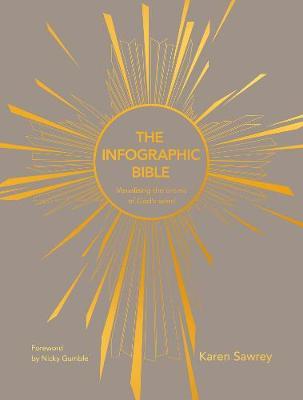
The Infographic Bible (book review)

I love studying the Bible! I enjoy reading it in different translations, consulting my atlas to see where certain events took place, studying the culture of the biblical settings, and even diving in to the Hebrew and Greek definitions of words. But I’ve never seen the biblical story portrayed as uniquely and so visually beautiful as Karen Sawrey has done it in The Infographic Bible.

The subtitle of this work is “visualizing the drama of God’s Word,” and Karen does this in ways you have never seen before. 

The Infographic Bible flows in the same order as the Biblical text, except that there is very little text involved. You will see how the biblical books were compiled and then walk through God’s story in both the Old and New Testaments.

In graphics that typically span the full two-page spread (and sometimes even more), you will see in vivid colors, bold designs, and memorable graphics how God set about to redeem His people and tell His story. You will see the two Genesis accounts of Creation portrayed side-by-side, you will understand genealogies better by seeing their timelines flow through generations, you will appreciate the biblical themes and fulfilled prophesies, and you will look forward to the hope of things to come in Revelation. 

There is so much to discover in this book! The Infographic Bible is a coffee-table-size book, and the beautiful graphics inside will definitely make it a conversation piece to leave on display for your guests. I commend Karen Sawrey for her outstanding work, and I highly recommend this book to you.

The Empowerment Of Pentecost

The Feast of Pentecost was an annual celebration for Jewish people for a long time, with nothing really noteworthy happening. Until…

…on the Day of Pentecost that took place just 10 days after Jesus ascended into heaven, a new breed of Christian was unleashed on the world. Those followers of Jesus who were baptized in the Holy Spirit on that day begin living a lifestyle that we now refer to as Pentecostal. 

Most people were familiar with water baptism is an outward sign of an inward commitment. It’s not something that was new to Christianity: Greek philosophy teachers and Jewish rabbis baptized their followers. So did John the baptizer (or the Baptist). 

But John, as the forerunner of Jesus, promised that there would be something more—a baptism in the Holy Spirit that Jesus would bring. Jesus Himself said this baptism was so important that He didn’t want His followers to even attempt to begin to evangelize the world until they received this baptism (Luke 3:3, 16; 24:44-49; Acts 1:4-8). 

What is important about this Holy Spirit baptism? What are its origins? To answer these questions, we have to go back to the very beginning of Time itself. When God created humans, the Holy Spirit was breathed into us, giving us a living soul (Genesis 1:26, 2:7). This Spirit-breath set us apart from all other living creatures (Job 33:4, 32:8; Proverbs 20:27).

We were created to be intimately connected with God, but our sin severed that. Our hearts became sin-calloused and selfish and stone-hard toward God. 

The Cross of Jesus allowed us to be reconciled to God. By placing our faith in what Jesus did for us on the Cross, we could receive forgiveness of our sins. We were now saved from the penalty of our sins, but Jesus wanted more for us—He wanted us also to be saved to a new life that was as intimately connected to God’s heart as His life was. 

So Jesus told His followers to wait and pray for the promised baptism in the Holy Spirit. 

They prayed. And on that Day of Pentecost, they were indeed baptized in the Holy Spirit (Acts 2:1-4). Actually, the word filled literally means “fulfilled”—the baptism in the Holy Spirit fulfilled what Jesus had promised. 

From that day forward, those who are baptized in the Holy Spirit are called Pentecostal people. I know there are some who would argue that was only for “back then,” but let me tell you from personal experience that there is no other way that I would try to live the Christian life than by being an unashamed Pentecostal! 

Jesus wants us to not only be water baptized to announce our faith in Him for forgiveness of sins, but also to be baptized in the Holy Spirit to empower us to live holy, extraordinary, fulfilling lives. If you haven’t been baptized in the Holy Spirit, you can be simply by asking God (Luke 11:13).

Join me next Sunday as we continue to explore what it means to live the Pentecostal lifestyle.

If you missed any of the messages in this series, you can access the full list of messages by clicking here.

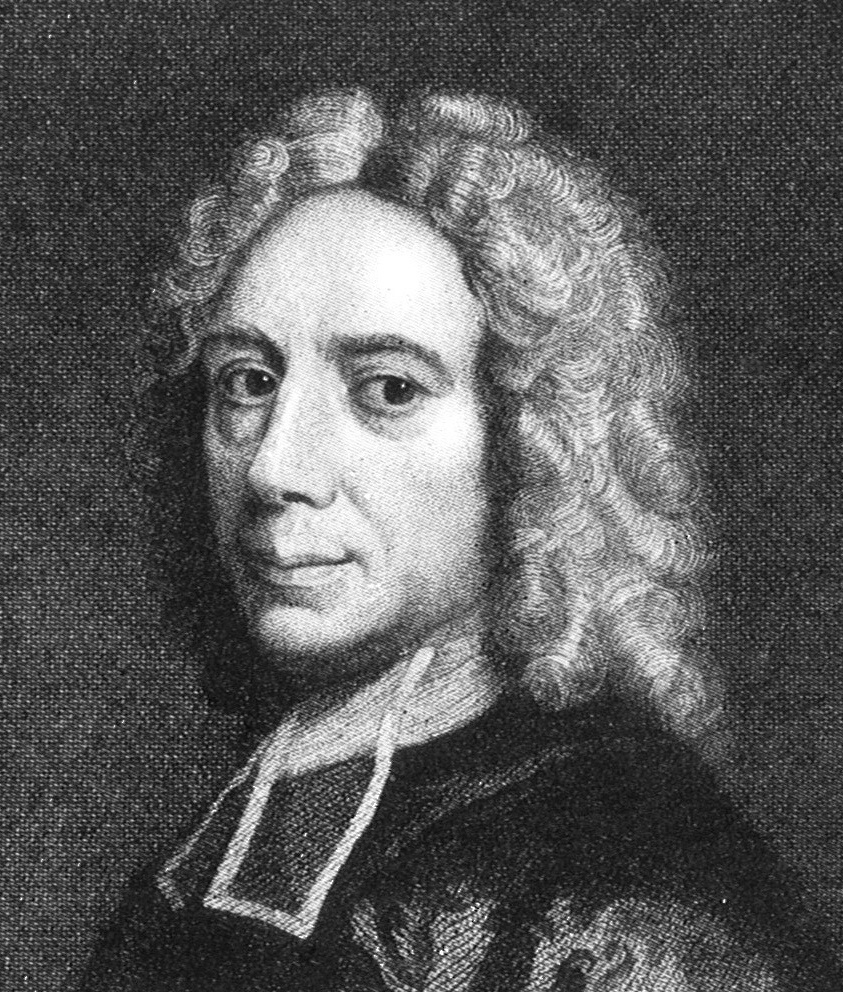
Poetry Saturday—Our Sins The Cause Of Christ’s Death

Infinite grief! amazing woe!
Behold my bleeding Lord!
Hell and the Jews conspired His death,
And us’d the Roman sword.

O the sharp pangs of smarting pain
My dear Redeemer bore,
When knotty whips, and ragged thorns,
His sacred body tore!

But knotty whips, and ragged thorns
In vain do I accuse;
In vain I blame the Roman bands,
And the more spiteful Jews.

‘Twas you, my sins, my cruel sins,
His chief tormentors were;
Each of my crimes became a nail,
And unbelief the spear.

It was you that pulled the vengeance down
Upon His guiltless head;
Break, break, my heart! O burst mine eyes!
And let my sorrows bleed.

Strike, mighty grace, my flinty soul,
Till melting waters flow,
And deep repentance drown mine eyes
In undissembled woe. —Isaac Watts