10 Quotes From “When A Nation Forgets God”

Dr. Erwin Lutzer discovers some scary parallels in the culture that gave rise to the Nazis and what is happening in America today. Please check out this book! You can read my review by clicking here.

“The role of the church [in Nazi-controlled Germany] was minimized by privatizing faith and instituting laws about what could or could not be said from a pulpit.”

“The American Civil Liberties Union (ACLU) believes that God must be separated not just from government, but from every sphere of American life. Religion—particularly Christianity—must be ousted from government, from law, education, and the workplace.

“Thus with the so-called public square free of any hint of religious values, the vacuum is then filled with secular values: the cheapness of human life (abortion and euthanasia), the promotion of all forms of immorality (including homosexual marriages), and the sexualization of schoolchildren (often with pornography and the ridicule of traditional values).”

“As Americans we must keep in mind that the First Amendment was not intended to mean that atheists and agnostics have veto power over all those who believe in God.”

“Of course the United States is not Germany, and, as we have observed, parallels between us and the Nazi era can easily be overdrawn. But there is this abiding lesson: satan was right when he said, ‘All that and man has he will give for his life’ (Job 2:4). Survival is a powerful drive within us all, and most of us are willing to compromise our values in order to live. And if the government can guarantee our financial future, we support that government even if we intuitively suspect we are being led down a dangerous path.” 

“Moral relativists who believe that laws are nothing more than the result of social conditioning, subject to the whim of leaders and nations, would have to agree with Goehring, Hitler’s designated successor, when at Nuremberg he insisted, ‘This court has no jurisdiction over me, I am German!’ By what laws then, should the Nazis be tried? And what would be the basis of such laws? At Nuremberg, Robert H. Jackson, chief counsel of the United States, argued that there was ‘a law about the law’ that stood in judgment of all men in all countries and societies.”

“We are not required to win our political battles; we are expected to show our commitment even in the face of threats and sanctions. We must not permit the lawmakers or the courts of America to discourage us from doing what we must: representing Christ in our personal and corporate witness. As our freedoms are curtailed, our witness becomes more focused, more challenging. Let us be obedient to a higher law, the law as given us by the Supreme Court of the Universe.”

“When Hitler starved children, he called it putting them on a ‘low-calorie diet.’ And the extermination of Jews was called ‘cleansing the land.’ Euthanasia was referred to as ‘the best of modern therapy.’ Children were put to death in ‘Children’s Specialty Centers.’ … Sanitized terms were used to camouflage unspeakable crimes. Planned massacres were spoken of in clinical terms to mislead the naïve and to assuage the conscience of the perpetrators.”

“Important though the right leaders might be, we must always remember that God is neither Republican nor Democrat. When the Cross is wrapped in the flag of a political party, it is always distorted or diminished.”

“I believe that the spiritual climate of America will never be changed unless we have a revival of what we used to call ‘the laymen.’ That is, we need ordinary people living authentically for Christ in their vocations, among their neighbors, and in positions of influence.”

I will be sharing some more quotes from When A Nation Forgets God soon. Stay tuned, or better yet, subscribe to my blog so you will be notified as soon as these new quotes are posted.


When A Nation Forgets God (book review)

“Forces of secularism lead inevitably to a totalitarian state to which everyone is expected to submit.” These are the ominous words in the introduction to Erwin Lutzer’s book When A Nation Forgets God. In this book, Dr. Lutzer shares seven lessons that America must learn from Nazi Germany.

This is not a scaremongering book, but it is a thoughtful look at the steps Adolf Hitler and the Nazis took to seize control of Germany. Many of the parallels between what they did and what we can see happening in America are quite chilling. Dr. Lutzer warns about how separating God from the government, an over-reliance on the economy, confusing legal and moral terminology, and replacing the role of parents with state mandates all set up a dangerous slide toward a totalitarian state.

Eric Metaxas, who wrote about Dietrich Bonhoeffer’s outspoken opposition to the Nazis right at the time they were coming to power, had this to say about Dr. Lutzer’s book—

“This great ‘experiment in freedom’ call the United States of America is not something that is self-sustaining. Freedom is not our natural condition. It is highly fragile and must be defended in every generation. So if we are unaware of what we have, we will not see it slipping away, as it is indeed doing at this time. That is precisely why Dr. Lutzer’s excellent book is so important. It clearly and powerfully explains what the parallels are between Germany’s fall from grace and the beginning of our own fall.”

Students of history, concerned citizens of the United States of America, and thoughtful Christians will all find When A Nation Forgets God a fascinating read.

I am a Moody Publishers’ book reviewer.

12 More Quotes From “Peace In The Face Of Cancer”

For anyone battling cancer or standing as a caregiver or friend to a cancer patient, Lynn Eib’s book Peace In The Face Of Cancer is an absolute must-read! I have already shared a few quotes from Lynn, but she also did a great job including quotes from other authors.

“To handle yourself, use your head; to handle others, use your heart.” —Eleanor Roosevelt

“Every tear you cried will be redeemed. God will give you indescribable glory for your grief, not with a general wave of the hand, but in a considered and specific way. Each tear has been listed; each will be recompensed.” —Joni Eareckson Tada

“Hoping for the good news makes me feel helpless and vulnerable because it is what it is and my hoping won’t change what it is. Hoping for accurate news keeps me focused on useful information that will help me deal with what is. Hoping for accurate news helps me prepare for any news.” —Wendy Harpham

“Our anxiety does not come from thinking about the future, but from wanting to control it.” —Kahlil Gibran

“Folks are usually about as happy as they make up their minds to be.” —Abraham Lincoln 

“What you believe and tell yourself can become a powerful medication in your personal pharmacy.” —Dr. William Backus

“The best way to show my gratitude to God is to accept everything, even my problems, with joy.” —Mother Teresa

“You give Me thanks (regardless of your feelings), and I give you joy (regardless of your circumstances).” —Jesus, in Sarah Young’s Jesus Calling

“Don’t count the days; makes the days count.” —Mohammad Ali 

“When a train goes through a tunnel and it gets dark, you don’t throw away the ticket and jump off. You sit still and trust the engineer.” —Corrie ten Boom

“In emotional and mental health, what you believe it is all important. It makes a difference what you believe. Other people, circumstances, events and material things are not what make you happy.” —Dr. William Backus and Marie Chapian

“The people who do the best are those who don’t battle the disease, but dance with it. That means you have to be flexible and you have to know and accept your limitations. You have to allow people to help you, but without surrendering to the disease.” —Dr. George Fisher

Check out my review of Peace In The Face Of Cancer here. And check out some quotes from Lynn Eib here.

The Promised Power Of Pentecost

When the Israelites were delivered from Egypt on the night of Passover, fifty days later they arrived at Mount Sinai where God delivered the Ten Commandments to them. This became the birth of the Jewish nation. For millennia following this, not only did the Jewish people observe Passover but they also celebrated “The Feast of Weeks” (also known as Pentecost) fifty days following Passover.

But on the first Pentecost after Christ ascended to Heaven, something amazing happened which was a game-changer for the new Christians. An event which became the birth of the Christian nation.

On that Pentecost Sunday, the Holy Spirit was poured out on Christ’s followers in a way never before seen in history. Although this had never been seen before, it was the fulfillment of something God had promised thousands of years before.

  1. Promised

This blessing of the Holy Spirit had been hinted at when God first called Abraham, as He promised that from Abraham would come a blessing for all peoples on earth (Genesis 12:3). Jesus said that this blessing would be realized with the outpouring of the Holy Spirit, and then Peter tied the Day of Pentecost experience to the fulfillment of those promises (Acts 2:38-39).

  1. Commanded

Jesus had this empowerment of the Holy Spirit and He wanted all of His followers to have it too, so His directive to His follower is not a suggestion. Twice when Jesus tells His followers to receive the baptism in the Holy Spirit, the verbs He uses are commands (see Luke 24:49 and Acts 1:4).

  1. Normal Experience

For the first Christians, the baptism in the Holy Spirit was a normal experience for them following salvation. This baptism gave them power to…

  1. Initial Evidence

The baptism in the Holy Spirit is accompanied by an initial physical evidence of speaking in a language you’ve never studied. This is to be an unmistakable proof—primarily to you—of the Spirit’s outpouring. But the ongoing development of Christlike character is the continual evidence of the baptism in the Holy Spirit.

So what’s the controversy? Why do people spend so much time arguing this baptism isn’t for us, or for now? If we start down that path, what else are we going to say is outdated or exclusive for some?

Doesn’t it seem much more logical to simply accept what God promised all His people?!

So here’s the question I would ask you—Have you been baptized in the Holy Spirit? If not, why not?

Poetry Saturday—Ready To Blaze

If we with earnest effort could succeed
   To make our life one long connected Prayer,
As lives of some perhaps have been and are:—
If—never leaving Thee—we had no need
Our wandering spirits back again to lead
   Into Thy presence, but continued there,
   Like angels standing on the highest stair
Of the sapphire throne―this were to pray indeed!
   But if distractions manifold prevail,
   And if in this we must confess we fail,
Grant us to keep at least a prompt desire,
   Continual readiness for Prayer and Praise—
An altar heaped and waiting to take fire
   With the least spark, and leap into a blaze! ―Richard Trench

Thursdays With Oswald—God’s Surgery

Oswald ChambersThis is a weekly series with things I’m reading and pondering from Oswald Chambers. You can read the original seed thought here, or type “Thursdays With Oswald” in the search box to read more entries.

God’s Surgery

     It is difficult to realize that it is God who arranges circumstances for the whole mass of human beings; we come to find, however, that in the Providence of God there is, as it were, a surgical knife for each one of us individually, because God wants to get at the things that are wrong and bring us into a right relationship to Himself. … 

     The nature of any dominating lust is that it keeps us from arriving at a knowledge of ourselves. For instance, a covetous man will believe he is very generous. Thank God for the surgery of providence by means of which He deals with these absurdities. … The surgery of the providence of God will break up all ignorance of ourselves. … 

     The Holy Spirit continually urges us to sign away our right to our individual self to Jesus. “Learn of Me,” says Jesus, “for I am meek and lowly in heart.” How few of us do learn of Him! We cling to our individuality like a drowning man to a straw. … Individuality must be transfigured by the indwelling of the Holy Spirit, and that means a sword going through the natural. … 

     God’s providence seems to pay no attention whatever to our individual ideas because He is after only one thing—“that they may be one, even as We are one.” It may look like a thorough breaking up of the life, but it will end in a manifestation of the Christian self in oneness with God. 

From The Soul Of A Christian

In Psalm 139 David confesses how thoroughly God already knows him, but then he prays, “Search me!” David recognizes that there may be part of his individuality that is keeping God from using him completely.

Jesus taught us to pray, “Your kingdom come; Your will be done.” That means my kingdom has to go, and my will has to be set aside.

Christian, we must continually allow the Holy Spirit to search our heart and then perform the necessary surgery to remove the unhealthy clinging to our own kingdom. This is the only way for us to fully know the manifestation of the Christian self in oneness with God.

13 Quotes From “No Limits”

John Maxwell has a unique and gifted way of challenging his readers to move forward by giving them both the motivation and the practical steps to do so. No Limits is no exception. You can check out my full review of his book by clicking here. Below are the first set of quotes from this book that I would like to share with you.

“What stops people from reaching their capacity often isn’t lack of desire. It’s usually lack of awareness.”

“Sad is the day for any man when he is absolutely satisfied with the life that he is living, thoughts that he is thinking, deeds that he is doing, until there ceases to be forever knocking on the door of his soul, a desire to do something greater for God and his fellow-man.”

“Dysfunctional people want others to function on their level. Average people want others to be average. High achievers want others to achieve.”

“Emotionally strong people honor their relationships while at the same time guarding against letting others control them, especially in difficult relationships.”

“What’s the fastest way to make a relationship better? Make yourself better so that you have more to give. That requires an abundance mind-set.”

“How can we make things better? If you’re already successful, this is a fantastic question to ask yourself and your team. Anytime we’re successful, there is a temptation to be lulled into a feeling a false security, to believe that we have arrived. But the greatest detriment to continual success is relying on past success.”

“No one has ever had to work at limiting their capacity. That happens naturally. The world tries to talk us out of working hard. We convince ourselves that we can’t get ahead. We feel down, and we watch our lives go downhill. There are even people who will tell you that others have put you there, that the system is rigged, that successful people have pushed you down and have gotten to the top by stepping on you. Well, I have good news for you … Your production capacity is within your own control.” 

“No one has ever stayed the same, while at the same time rising to a higher level. Being willing to change is one of the prices we pay to grow.”

“Repeated choices to take responsibility give you mental and emotional momentum, which only makes you feel stronger and better about yourself.”

“Everyone sees people’s success without realizing that 90 percent of what leads to it is unseen, yet that 90 percent is what makes it possible.”

“The bottom line is that you cannot manage your life if you do not manage yourself. You cannot maximize your capacity if you cannot increase your discipline.”

“Resilient people don’t focus on the negative experience. They focus on what they can learn from the experience.”

“Winning is overrated. Growing is underrated.”

I will be sharing another batch of quotes from No Limits soon, so stay tuned. To check out other quotes I share daily, please follow me on Twitter and Tumblr.

Just Christians

“I’m thinking we aren’t so unlike these soldiers [see John 19:23-24]. (I’m sorry to say.) We, too, play games at the foot of the Cross.

“We compete for members. We scramble for status. We deal out our judgments and condemnations. Competition. Selfishness. Personal gain. It’s all there. So close to the Cross, yet so far from the blood. We are so close to the world’s most uncommon event, but we act like common crapshooters huddled in bickering groups and fighting over silly opinions.

“We major in the trivial, constantly finding fault with others. We split into little huddles and then, God forbid, we split again. Another name. Another doctrine. Another ‘error.’ Another denomination. Another poker game.

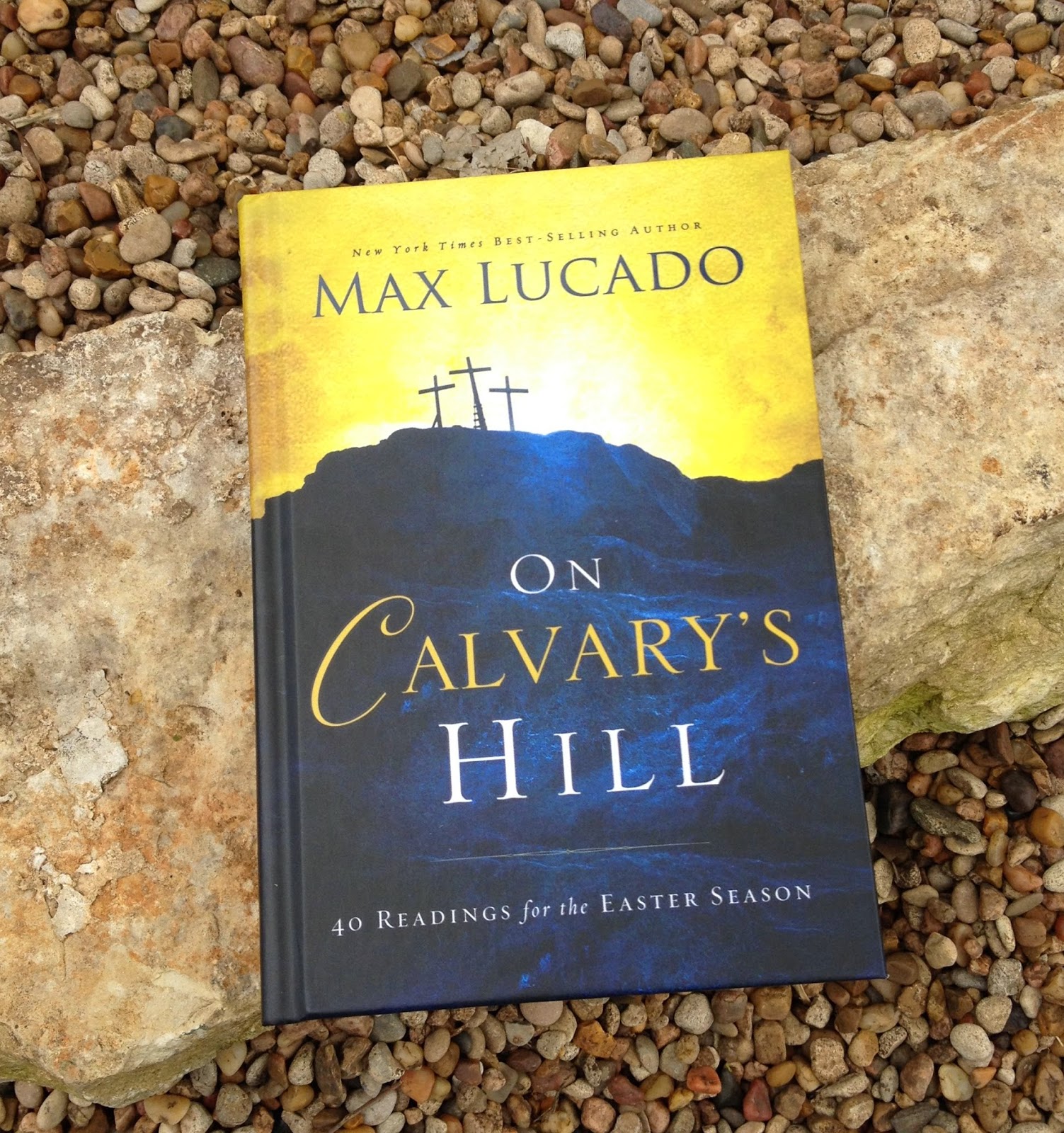
“So close to the Cross but so far from the Christ. ‘May they all be one,’ Jesus prayed. One. Not one in groups of two thousand. But one in One. One church. One faith. One Lord. Not Baptist, not Methodist, not Adventist. Just Christians. No denominations. No hierarchies. No traditions. Just Christ.” —Max Lucado, On Calvary’s Hill

No Limits (book review)

I always get excited when I get to read a John Maxwell book because I know right upfront that I’m going to be getting life-changing insights. As usual, No Limits lived up to my expectations!

The premise of this book is simple: Most of our limitations are self-imposed, but if we could see a way to blow the cap off those limitations there is no limit to the level of success we can achieve.

The book is built around John Maxwell’s capacity challenge, which says, “If you grow in your awareness, develop your abilities, and make the right choices, you can reach your capacity. In other words: Awareness + Ability + Choices = Capacity.”

No Limits is built around the three components in this capacity equation. First, you will learn how to become aware of what may be limiting you; then, you will learn how you have the ability to develop the capacities that you already have; and finally, you will learn how to make the daily choices that will maximize your capacity.

The book contains a link to a “Capacity Quiz,” which is a great help to identify the areas in which you especially need growth. It’s a good idea to take this quiz before diving into the material in the book so that you can pay special attention to the weakest areas as you are reading.

John Maxwell continues to stretch and mentor me in leadership growth like few other people have. I believe he will do the same thing for you, too, if you are willing to roll up your sleeves and go to work on blowing the cap off all your limits!

I am a Center Street book reviewer.

Last Full Measure Of Devotion

“But, in a larger sense, we can not dedicate—we can not consecrate—we can not hallow—this ground. The brave men, living and dead, who struggled here, have consecrated it, far above our poor power to add or detract. The world will little note, nor long remember what we say here, but it can never forget what they did here. It is for us the living, rather, to be dedicated here to the unfinished work which they who fought here have thus far so nobly advanced. It is rather for us to be here dedicated to the great task remaining before us—that from these honored dead we take increased devotion to that cause for which they gave the last full measure of devotion—that we here highly resolve that these dead shall not have died in vain—that this nation, under God, shall have a new birth of freedom—and that government of the people, by the people, for the people, shall not perish from the earth.” —Abraham Lincoln